
Touch Screen POS Security and Data Protection for Restaurants
Modern restaurants deploying interactive point-of-sale terminals face a complex threat landscape where card compromise, malware, insider risk, and regulatory requirements intersect; this guide synthesizes practical hardening, network segmentation, encryption, secure peripherals, compliance checkpoints (PCI DSS, ISO/IEC 27001), endpoint lifecycle management, and procurement criteria so operators and procurement teams can select and deploy resilient front‑of‑house systems with measurable risk reduction and operational ROI.
Modern restaurants deploying interactive point-of-sale terminals face a complex threat landscape where card compromise, malware, insider risk, and regulatory requirements intersect; this guide synthesizes practical hardening, network segmentation, encryption, secure peripherals, compliance checkpoints (PCI DSS, ISO/IEC 27001), endpoint lifecycle management, and procurement criteria so operators and procurement teams can select and deploy resilient front‑of‑house systems with measurable risk reduction and operational ROI.
Endpoint Hardening and Secure Configuration for Interactive Payment Terminals
Operating system and firmware lifecycle management
Restaurant operators should require vendors to deliver transparent OS and firmware update policies. Secure endpoints running hardened, vendor-signed images reduce the window for exploit development. Procurement teams must verify update frequency, rollback policies, and cryptographic signing mechanisms; these controls are necessary to satisfy long-term security and to align with frameworks such as ISO/IEC 27001 and the NIST Cybersecurity Framework. For touchscreen tills, locked-down bootloaders and secure update channels (TLS 1.2+/mutual authentication) are baseline requirements.
Application whitelisting and POS software integrity
Controls that restrict execution to approved payment and ordering apps drastically reduce malware risk. Application allow‑listing, code signing, runtime integrity checks, and least‑privilege execution prevent unauthorized binaries from running on front‑of-house devices. Auditable integrity checks should be part of contractual SLAs so operators can verify compliance during acceptance testing.
Physical tamper resistance and peripheral security
Securing the human‑facing terminal includes physical safeguards: tamper-evident seals, chassis intrusion detection, lockable cash drawers, and secure peripheral interfaces for card readers and receipt printers. Peripherals must support encrypted communications so magnetic stripe or chip readers never expose raw track data on the endpoint. Manufacturers should publish tamper policies and test reports for procurement review.
Network Design and Data Flow Controls for Food & Beverage Outlets
Segmentation between guest Wi‑Fi, POS networks, and back‑office systems
Network segmentation is a fundamental control: separate guest Internet from point‑of‑sale VLANs and isolate kitchen printers and handheld order devices. This containment prevents lateral movement if a customer device or BYOD endpoint is compromised. Segmentation combined with strict firewall rules and access control lists significantly lowers exposure for cardholder data environments.
Encryption in transit and at rest
All payment communications must be encrypted end‑to‑end. Use TLS 1.2+ for network transport and ensure cardholder data is either tokenized or encrypted at the earliest capture point. For stored transactional records, use full‑disk encryption or database field-level encryption and key management practices aligned with industry standards. The PCI Security Standards Council (PCI SSC) provides prescriptive requirements for encryption and tokenization in retail and hospitality.
Monitoring, logging, and incident response
Centralized logging with secure transmission to an immutable store enables rapid detection of anomalies (e.g., unexpected POS process launches, network connections to known bad IPs, or abnormal transaction patterns). Restaurants should contract for 24/7 monitoring or integrate with managed security services that understand hospitality use cases. An incident response playbook tailored to payment incidents, including forensic capture and regulatory notification triggers, is essential.
Procurement Criteria and Operational Controls for Venue Owners
Vendor assurance, certifications, and supply‑chain transparency
Buyers should evaluate vendors on formal certifications, secure development lifecycle (SDL) practices, and third‑party penetration testing results. Request attestations for secure manufacturing, component traceability, and firmware provenance. Publicly available validation, such as test reports or compliance attestations, is a strong differentiator during contract evaluation.
Role‑based access and POS administration workflows
Operational risk decreases when access to management consoles, administrative functions, and audit logs is controlled via role‑based access controls (RBAC), multi‑factor authentication, and session logging. Granular privileges prevent operational staff from performing administrative actions that could inadvertently expose cardholder data.
Deployment playbook and acceptance testing
Commercial rollouts should follow a documented deployment playbook: network diagrams, device hardening checklists, staging acceptance tests, and rollback procedures. Acceptance testing must include verification of encryption, network isolation, peripheral tamper protections, and logging configuration. These acceptance criteria should be embedded in purchase orders and SLAs to ensure accountability.
Emerging Threats, Best Practices, and Compliance Landscape
Shift to tokenization and contactless security
Migration to tokenized payments and contactless NFC reduces the value of intercepted data. Tokenization replaces sensitive PANs with non‑reversible tokens, limiting exposure even if a system is compromised. NFC and EMV contactless transactions further protect against skimming and replay attacks when correctly implemented.
Insider risk, training, and operational hygiene
Human error remains a leading cause of breaches. Regular staff training, change control governance, and separation of duties for cash handling and POS administration reduce insider risk. Operators should enforce passcode rotation policies, screen lock timeouts, and terminal supervision protocols during high-volume shifts.
Regulatory and compliance touchpoints
Hospitality operators must align with payment industry standards and regional privacy regulations. In addition to PCI requirements, data protection laws such as the EU GDPR or national privacy laws may impose additional controls on customer data handling. Reference frameworks like industry overviews and the NIST Cybersecurity Framework help map controls to business objectives.
| Security Feature | Legacy countertop registers | Modern touchscreen endpoints |
|---|---|---|
| Encryption | Often absent or limited; plain text exchanges possible | End‑to‑end TLS, field encryption, tokenization support |
| OS updates | Rare or manual | Signed firmware updates and over‑the‑air patching |
| Network segmentation | Single flat network | VLANs and microsegmentation support |
| Peripheral security | Legacy magnetic stripe readers | EMV/NFC readers with encrypted interfaces |
| Access controls | Simple PINs, shared logins | RBAC, MFA for admin consoles |
| Monitoring & logging | Local logs only | Centralized SIEM integration, immutable audit trails |
Evidence from industry reporting and standards underlines these recommendations: the PCI SSC defines mandatory controls for payment acceptance and storage; ISO/IEC 27001 provides information security management guidance; and the NIST Cybersecurity Framework offers risk management mapping useful for hospitality enterprises. For market-level trends and breach analysis, specialist reports such as the annual DBIR provide empirical context for attackers’ tactics and common failure modes.
FAVORPOS brings these technical and operational controls into a cohesive procurement offering. We design and deliver robust front‑of‑house solutions that incorporate secure firmware, support for EMV and NFC payment readers, centralized device management, and tamper-resistant hardware. Our product family supports a full hospitality stack—from countertop touchscreen terminals to handheld order devices—combined with peripherals such as thermal printers and lockable cash drawers.
Our engineering and product teams prioritize secure-by-design development: signed firmware, controlled update channels, and documented SDL practices that align with third‑party compliance frameworks. For customers requiring customization or integration, we provide OEM and ODM services to embed security controls directly into supplied devices, reducing integration risk for large-scale rollouts and franchise operations.
Operational efficiency and total cost of ownership are core commercial considerations. We supply centralized management consoles that enable staged deployments, remote patching, role-based administration, and audit logging—reducing on-site maintenance costs and accelerating incident response. Our handheld POS devices and price checkers are built to integrate with kitchen printers and thermal printers for consistent data flows, while our cash drawers and peripheral accessories meet common security and installation standards.
When selecting vendors, buyers should request third‑party test reports, a clear update SLA, and evidence of supply‑chain controls. We provide these documents during procurement and demonstrate how our solutions map to PCI requirements and organizational risk policies. FAVORPOS remains committed to quality, long-term support, and continued product improvement to help restaurateurs manage security while driving customer experience and revenue.
Deployment partners and brand owners can evaluate our offerings via proof-of-concept pilots that verify encryption, network isolation, peripheral integration, and acceptance testing criteria defined in purchase agreements. Our vision is to become the world's best manufacturer of point-of-sale systems by combining rigorous security posture, hardware reliability, and service excellence across retail, catering, and supermarket verticals.
For technical teams, recommended next steps include: incorporate tokenization for all card captures, enforce VLAN separation for payment devices, mandate cryptographic signing for device firmware, and require vendors to provide a documented incident response timeline tied to contractual remedies and notifications.
Industry references and guidance used in this advisory include authoritative standards and frameworks such as the PCI Security Standards Council, ISO/IEC 27001, and the NIST Cybersecurity Framework. Procurement teams should also consult sector incident reports (for example, large-scale breach analyses) when quantifying residual risk and required controls.
Contact FAVORPOS to schedule a technical briefing or request product specifications and compliance documentation for our handheld terminals, POS systems, price checkers, thermal printers, and cash drawers.
Frequently Asked Questions
What network segmentation is recommended for restaurants using touchscreen payment terminals?
Restaurants should separate guest Wi‑Fi, front‑of‑house payment VLANs, and back‑office systems. Segmentation with strict firewall rules and ACLs prevents lateral movement from a compromised guest device into the cardholder data environment.
How should payment data be protected in transit and at rest?
All payment communications must use strong transport encryption (TLS 1.2+). Cardholder data should be tokenized or encrypted at capture, and stored records must use field‑level encryption or full‑disk encryption with robust key management aligned to PCI requirements.
What procurement checks should buyers perform on POS vendors?
Buyers should request vendor attestations for secure development lifecycle practices, third‑party penetration test reports, firmware signing and update policies, documented SLAs for security patches, and evidence of supply‑chain controls or manufacturing traceability.
Which peripherals add to the security posture of a restaurant POS deployment?
Secure peripherals include EMV/NFC card readers with encrypted interfaces, thermal printers with authenticated connections, lockable cash drawers, and tamper‑resistant mounts. Peripherals that support encrypted data channels reduce the exposure of raw payment data.
What operational controls reduce insider risk at restaurants using POS terminals?
Operational controls include role‑based access, multi‑factor authentication for administrative functions, passcode rotation, session timeouts, separation of duties for cash handling and administration, and regular staff training on payment security policies.
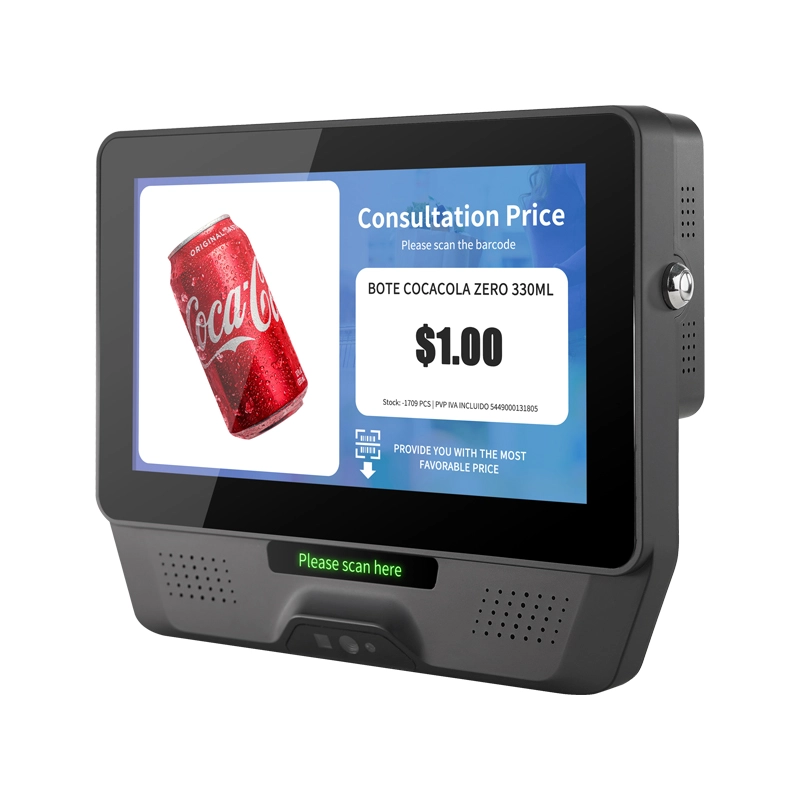
FAVORPOS 7 inch screen plastic price checker and custom check-in barcode scanner combines lightweight portability with reliable performance for retail and warehouse operations. Fast scanning, clear display, built to handle daily checkout demands.

FAVORPOS dual screen POS terminals deliver fast, reliable checkout performance for retail and hospitality businesses. Built by our commercial pos terminal manufacturer, these thin-profile systems streamline transactions while maximizing counter space—trusted by checkout pos systems factory operations worldwide.
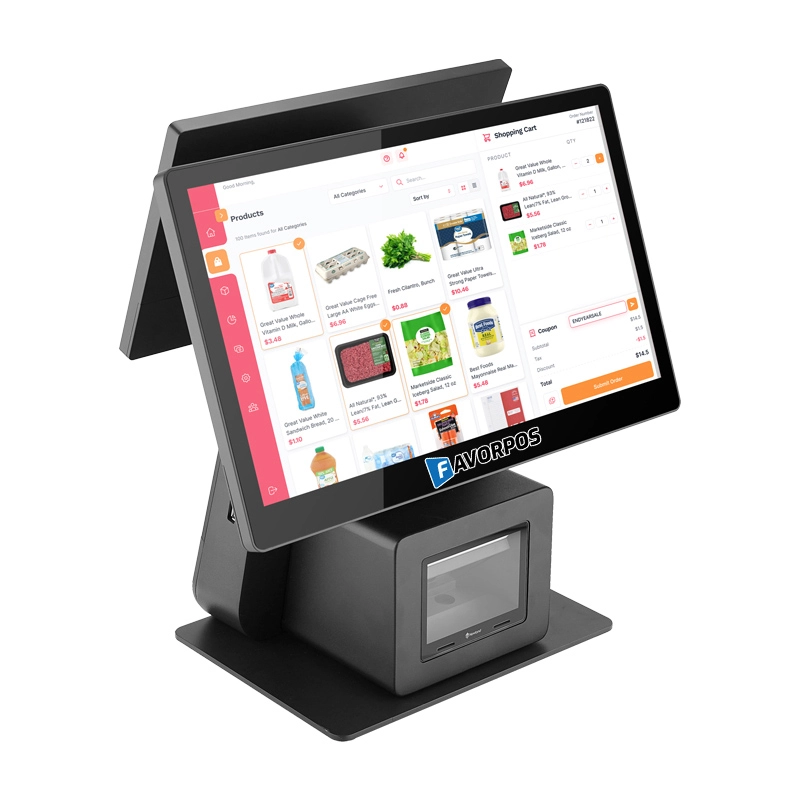
FAVORPOS: Your leading dual screen POS factory and manufacturer. Our desktop POS with barcode scanner offers 15.6/11.6 client screen options and OS flexibility. Get reliable, efficient dual screen POS with barcode scanner solutions directly from us.

FAVORPOS 11.6-inch capacitive touchscreen, specifically designed for POS machines to deliver a seamless and responsive user experience. This high-definition display offers vibrant visuals and crystal clear clarity, making it easy for staff to navigate through transactions efficiently. The capacitive technology ensures quick and accurate touch recognition, reducing wait times and enhancing customer satisfaction. Built to withstand the rigors of daily use, this touchscreen is perfect for retail and hospitality environments.


Copyright © 2025 Favorpos All Rights Reserved.
