
Wholesale dual touch screen pos manufacturer and supplier
Wholesale buyers sourcing dual touch screen POS systems need more than an attractive unit price: they need consistent hardware, dependable touch performance, compatible software environments, predictable production schedules, export-ready documentation, and a supplier capable of supporting repeat orders. A dual touch screen POS typically combines an operator display with a customer-facing display, improving transaction visibility, upselling, order confirmation, and checkout efficiency in retail, catering, supermarkets, and service businesses. For distributors and multi-site operators, FAVORPOS offers POS systems, peripherals, cash registers, handheld terminals, scanners, price checkers, thermal printers, and accessories, together with OEM and ODM development support for projects that require scalable and market-specific solutions.
Why Dual-Display POS Demand Is Growing in B2B Markets
Customer-facing interaction is becoming a purchasing criterion
A standard checkout screen is designed mainly for the cashier, while a dual touch screen POS gives the customer a clear view of items, quantities, prices, discounts, taxes, and payment totals. This configuration can reduce misunderstandings and create a more transparent checkout experience. In restaurants and cafés, the second display may support order review or promotional content; in retail, it can show loyalty prompts, product information, or digital receipts, subject to the software platform and local operating requirements.
For wholesale customers, the commercial value is not limited to the second screen. A well-designed dual-display POS terminal can help create a consistent store format across branches. Distributors can offer the same product family with different processors, memory, storage, operating systems, screen sizes, printer combinations, or mounting options. This enables channel partners to address multiple applications without managing an excessively broad inventory.
Common applications and configuration differences
Retail stores often prioritize a bright customer display, compact footprint, barcode scanner integration, cash drawer connectivity, and reliable operation during long trading hours. Restaurants may need spill-resistant design considerations, kitchen-printer or kitchen-display integration, fast order entry, and flexible placement. Supermarkets and convenience stores may place greater emphasis on scanner compatibility, receipt printing, payment terminal integration, and straightforward maintenance.
Buyers should define the intended application before requesting quotations. A dual touch screen POS intended for a low-volume boutique should not automatically be specified in the same way as a terminal for a supermarket checkout lane. Screen size, brightness, touch technology, processor class, I/O ports, enclosure material, stand design, operating system, and peripheral compatibility all influence cost and supply planning.
How to assess a supplier before requesting volume pricing
A credible manufacturer should be able to explain its product architecture, assembly process, component sourcing approach, testing procedures, packaging method, and support model. Buyers should ask whether the supplier manufactures the complete POS terminal, integrates selected modules, or primarily trades finished equipment. This distinction affects customization depth, engineering control, spare-parts planning, and response time when a design change is required.
Request a technical datasheet, product photographs from multiple angles, interface information, sample test results where available, and a clear list of included accessories. For regulatory planning, consult applicable market requirements and internationally recognized quality frameworks such as ISO 9001 quality management principles. Certification claims should be checked against the exact model, factory, and destination market rather than accepted as general statements about a product family.
How to Evaluate a Wholesale POS Factory
Production capacity, engineering, and MOQ planning
Minimum Order Quantity is one of the first concerns for a distributor. However, MOQ should be evaluated together with production capacity, component availability, customization scope, and forecast accuracy. A supplier may accept a small initial order for a standard dual touch screen POS but require a higher MOQ for a customized chassis, branded housing, special connector layout, or non-standard display configuration.
Ask the factory to separate standard-product MOQ from OEM and ODM MOQ. A practical purchasing discussion should cover sample quantity, pilot-order quantity, regular production quantity, and repeat-order quantity. It should also identify whether the MOQ applies per model, per color, per operating-system version, or across a mixed order. Mixed-model ordering may be possible, but this must be confirmed in writing because it can affect assembly efficiency and packaging.
Production capacity should be assessed through realistic lead-time commitments rather than a large headline number. Ask how long the supplier needs for sample approval, component preparation, assembly, testing, packaging, and final inspection. If a buyer has a seasonal sales cycle, the supplier should review a rolling forecast and reserve capacity only through a documented purchasing arrangement. Do not assume that a quotation guarantees production space during peak periods.
Tiered pricing and total landed cost
Wholesale pricing generally changes with order volume, customization, packaging, payment terms, and shipping method. The lowest unit price is not always the lowest total cost. Buyers should calculate product price, tooling or engineering fees, packaging, export documentation, inland transport, freight, insurance where applicable, import duties, taxes, customs clearance, installation, and after-sales inventory.
| Order stage | Typical commercial purpose | Key items to confirm | Pricing considerations |
|---|---|---|---|
| Sample order | Technical and software evaluation | Exact configuration, accessories, test period, sample freight | Usually the highest unit cost; confirm whether sample fees can be credited |
| Pilot order | Field testing and channel validation | Packaging, labeling, firmware, defect handling, inspection method | Useful for validating the real production process before scale-up |
| Standard bulk order | Regular distribution or multi-site deployment | MOQ, lead time, payment schedule, spare-parts ratio, warranty workflow | Lower unit cost may be available with stable specifications |
| Framework or repeat order | Long-term supply planning | Forecasts, price-review rules, capacity reservation, change control | Best suited to predictable demand and standardized configurations |
Ask for quotations using the same bill of materials so that suppliers can be compared fairly. A dual touch screen POS quotation should state processor, RAM, storage, display dimensions, touch technology, operating system, ports, wireless functions, stand, power adapter, customer display specification, printer or scanner inclusion, packaging, warranty, and trade terms. If a quotation only says POS terminal without defining these items, the comparison is not reliable.
OEM and ODM capability for distributors
OEM is generally appropriate when the buyer has an established specification and wants branding, packaging, labels, or selected configuration changes. ODM is more suitable when the buyer needs assistance with industrial design, mechanical changes, user interface adjustments, peripheral integration, or a product adapted to a specific vertical. Both models require written approval procedures for artwork, samples, firmware, labels, and final production units.
Brand owners should also clarify ownership and confidentiality for drawings, molds, software adaptations, and customized tooling. A professional supplier should identify which changes are technically feasible, which require a new engineering validation, and which may affect maintenance or certification. FAVORPOS positions its OEM and ODM services to support businesses seeking customized POS solutions, but buyers should still establish project milestones and acceptance criteria before placing a production order.
Quality Control and International Logistics for Bulk Orders
Building a repeatable quality-control plan
Quality consistency is more important than a successful sample. Before mass production, approve a golden sample or controlled reference unit that records the exact hardware and software configuration. The purchase agreement should define acceptable cosmetic tolerances, screen defects, touch response, boot behavior, port functionality, audio performance, thermal behavior, wireless connectivity, and packaging condition.
A practical inspection plan may include incoming component checks, assembly-line testing, burn-in or functional testing where appropriate, final appearance inspection, serial-number verification, accessory matching, and carton inspection. Buyers should agree on sampling methodology and defect classification before production. The ISO 2859-1 sampling standard is a recognized reference for attribute-based inspection systems, although the appropriate inspection level and acceptance criteria should be selected for the specific product and commercial risk.
Testing should reflect actual deployment. If the POS system will operate with a receipt printer, cash drawer, scanner, customer display, and payment device, test the complete combination rather than the terminal alone. Software compatibility also requires attention: confirm supported operating systems, drivers, APIs, screen orientation, peripheral protocols, and update procedures. POS equipment often sits at the center of a transaction workflow, so an isolated hardware test cannot reveal every operational issue.
Packaging, labeling, and documentation
Dual-display terminals require protective packaging because stands, screens, and protruding connectors can be vulnerable during handling. Ask for carton dimensions, gross and net weights, pallet information, drop-test or packaging validation details where available, and photographs of the packed product. Export cartons should carry accurate model, quantity, serial, and handling information required by the buyer or logistics provider.
Documentation should include a commercial invoice, packing list, transport document, product specification, user instructions, warranty terms, and any destination-market documents that are applicable. Product classification and import requirements vary by destination, so the importer of record should confirm tariff classification and regulatory obligations with its customs broker or competent authority. The World Customs Organization Harmonized System overview provides useful background on international goods classification, but it does not replace a destination-specific customs determination.
Choosing a logistics and after-sales model
For bulk shipments, compare air freight, sea freight, rail where available, and courier options according to urgency, shipment size, and inventory value. The selected Incoterm should be clearly stated, and both parties should understand which side manages export clearance, main carriage, insurance, import clearance, duties, and final delivery. Buyers should avoid comparing one quote on an ex-works basis with another quote that includes delivered services.
Lead time should be divided into manufacturing time and transportation time. It is also wise to plan buffer stock for replacement units, cables, adapters, stands, printers, and other failure-prone or model-specific parts. A warranty is more useful when the supplier provides a defined RMA process, remote troubleshooting, replacement policy, technical contact, and response target. Where the POS system is deployed across many locations, remote support documentation and standardized spare parts can reduce downtime.
For electronic equipment, buyers should also review applicable electromagnetic compatibility, electrical safety, radio, environmental, and recycling requirements in the destination market. Requirements differ by jurisdiction and product configuration. The International Electrotechnical Commission information on electromagnetic compatibility is a useful starting point for understanding why testing and installation conditions matter, while formal compliance should be confirmed for the exact model and market.
Bulk-order checklist for procurement teams
Before issuing a purchase order, confirm the exact model number, hardware bill of materials, operating system, language options, brand marks, packaging, accessories, warranty duration, inspection standard, payment milestones, production lead time, shipping terms, documents, and change-control process. Obtain written approval for any revised component, display, adapter, or software version. A change that appears minor to the factory may affect drivers, certification, inventory compatibility, or field service.
Procurement teams should maintain a supplier scorecard covering quotation clarity, sample performance, communication, engineering responsiveness, production reliability, defect rate, documentation quality, logistics execution, and after-sales resolution. This creates an evidence-based basis for repeat purchasing. It also helps distinguish a low initial quote from a dependable long-term wholesale partnership.
Frequently Asked Questions
What MOQ should I expect when buying a dual touch screen POS in bulk?
MOQ depends on whether the order uses a standard model or requires OEM and ODM changes. Standard configurations may support a smaller sample or pilot order, while custom housing, branding, packaging, or special components may require a higher quantity. Request separate MOQs for samples, pilot orders, and repeat production.
Can a supplier combine several POS configurations in one wholesale order?
Some suppliers allow mixed-model orders, but the rules may differ by processor, display, operating system, color, or packaging. Confirm whether MOQ is calculated per model or across the complete order, and ask how mixed configurations affect price and lead time.
How can I verify quality consistency after approving a sample?
Use an approved reference unit and a written bill of materials, then define functional, cosmetic, packaging, and sampling requirements before mass production. Request production test records or arrange an independent inspection when order value and risk justify it.
What information should appear on a wholesale quotation?
The quotation should identify the model, processor, memory, storage, screen specifications, touch technology, ports, operating system, customer display, accessories, packaging, warranty, MOQ, lead time, payment terms, shipping basis, and any tooling or engineering charges.
How should I plan shipping for a large POS system order?
Separate factory lead time from transit time and compare transport methods using total landed cost. Confirm carton dimensions, weights, pallet details, export documents, Incoterms, customs responsibilities, and any destination-market import or compliance requirements before shipment.
Does FAVORPOS support customized wholesale POS projects?
FAVORPOS provides POS systems and related peripherals for retail, catering, supermarkets, and other business segments, and offers OEM and ODM services intended to support customized requirements. Buyers should share their target application, forecast, specifications, branding needs, and destination market so the appropriate configuration and commercial proposal can be evaluated.
Contact FAVORPOS at favorpos.com for wholesale pricing, MOQ guidance, OEM and ODM options, and a bulk-order proposal tailored to your dual touch screen POS requirements.


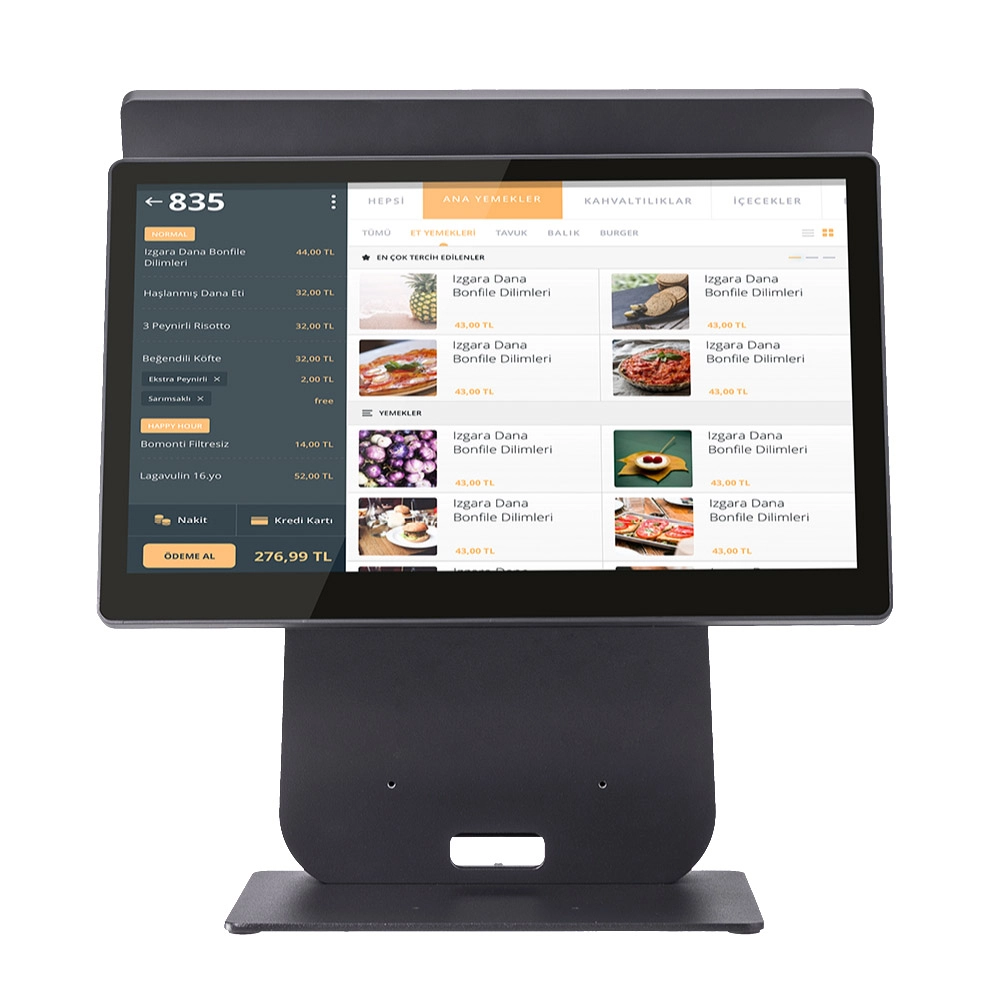
This dual-screen POS machine supports both Android and Windows systems, providing flexibility for various applications. The dual screens enhance customer interaction and streamline the checkout process, making transactions quicker and more engaging. Perfect for modern businesses looking to elevate their service and improve customer satisfaction, this POS machine is your ultimate partner in success!
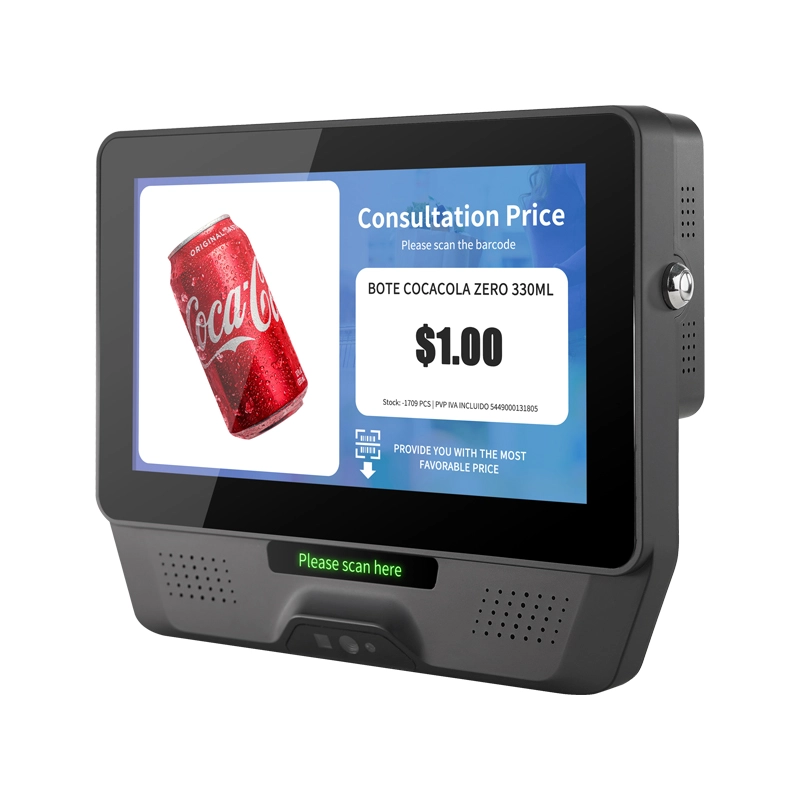
FAVORPOS 7 inch screen plastic price checker and custom check-in barcode scanner combines lightweight portability with reliable performance for retail and warehouse operations. Fast scanning, clear display, built to handle daily checkout demands.

FAVORPOS dual screen POS terminals deliver fast, reliable checkout performance for retail and hospitality businesses. Built by our commercial pos terminal manufacturer, these thin-profile systems streamline transactions while maximizing counter space—trusted by checkout pos systems factory operations worldwide.
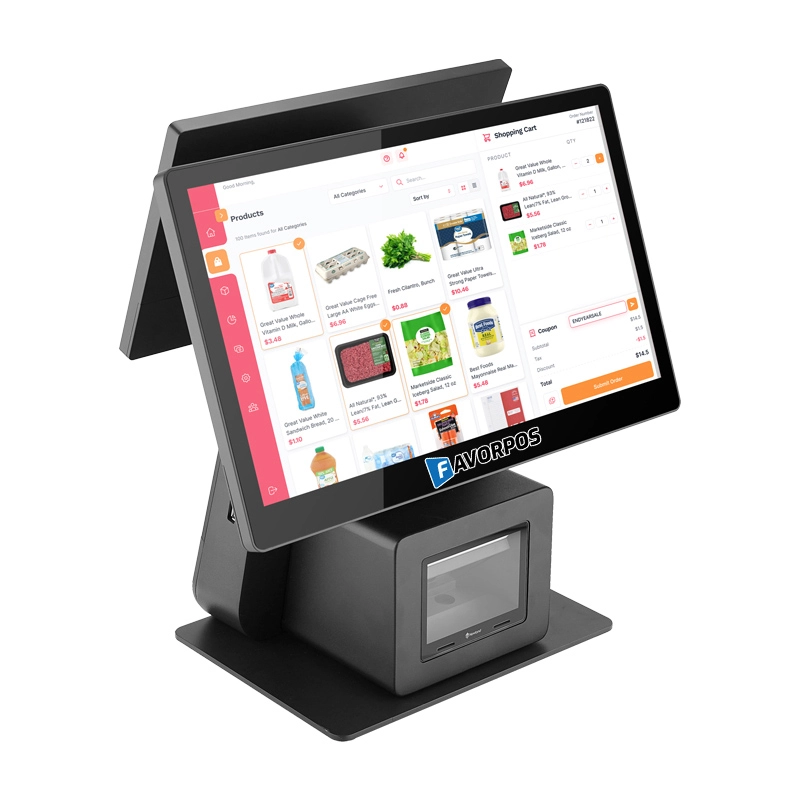
FAVORPOS: Your leading dual screen POS factory and manufacturer. Our desktop POS with barcode scanner offers 15.6/11.6 client screen options and OS flexibility. Get reliable, efficient dual screen POS with barcode scanner solutions directly from us.


Copyright © 2025 Favorpos All Rights Reserved.
