
Android vs iOS mobile POS devices: which is better for merchants?
- Is Android or iOS more durable for high-volume retail environments?
- How do peripheral integration capabilities differ between Android and iOS?
- Which OS offers better long-term total cost of ownership?
- Are there security differences when processing mobile POS payments?
- Can Android mobile POS devices handle complex inventory management better?
- Does the ecosystem lock-in affect future POS hardware scalability?
The debate between Android and iOS for mobile POS devices has shifted from simple UI preferences to complex considerations of hardware lifecycle, peripheral compatibility, and specialized industrial design. While consumer-grade tablets often dominate the conversation, professional merchants require a deeper analysis of how these operating systems handle high-volume transaction environments and integrated hardware components like thermal printers and 2D scanners.
Is Android or iOS more durable for high-volume retail environments?
When evaluating mobile POS devices for durability, Android holds a significant lead due to the availability of purpose-built industrial hardware. While iOS devices are restricted to Apple's sleek, consumer-focused designs that require third-party rugged cases, Android manufacturers like FAVORPOS engineer devices with built-in drop protection, IP-rated water resistance, and reinforced screens. In a high-volume environment, an enterprise-grade Android device is designed to withstand the rigors of 24/7 operation, whereas iOS devices often suffer from battery swelling or thermal throttling under continuous charging and heavy use.
How do peripheral integration capabilities differ between Android and iOS?
Peripheral connectivity is a critical pain point for merchants. iOS operates within a walled garden, often requiring expensive MFi (Made for iPhone/iPad) certified accessories or complex Bluetooth workarounds for receipt printers and cash drawers. Conversely, Android mobile POS devices offer extensive USB-OTG support and open-source drivers. This allows for seamless, plug-and-play integration with a wider range of affordable peripherals, including specialized weight scales and barcode engines, providing merchants with greater operational flexibility and lower hardware costs.
Which OS offers better long-term total cost of ownership?
While the initial purchase price of an iPad might seem competitive, the total cost of ownership (TCO) over a three-to-five-year cycle often favors Android. iOS devices require frequent, mandatory software updates that can eventually slow down older hardware, forcing a premature upgrade cycle. Android mobile POS devices designed for the enterprise allow for more granular control over OS updates, ensuring that your mission-critical POS software remains stable. Additionally, the cost of replacing specialized Android components is significantly lower than the flat-rate repair or replacement fees associated with the Apple ecosystem.
Are there security differences when processing mobile POS payments?
A common industry myth is that iOS is inherently more secure for payments. In reality, both platforms must adhere to the same PCI-DSS and EMV standards for payment processing. Modern Android mobile POS devices utilize Secure Elements (SE) and Trusted Execution Environments (TEE) that are architecturally equivalent to Apple's Secure Enclave. For merchants, the security of the payment application and the encryption of the card reader hardware are far more impactful than the underlying operating system itself.
Can Android mobile POS devices handle complex inventory management better?
Android's file system accessibility and multi-tasking capabilities often make it superior for complex back-office tasks performed on the floor. Many mobile POS devices running Android allow for direct integration with ERP systems and local database storage, enabling faster inventory lookups and offline processing. iOS applications are more sandboxed, which can sometimes limit the speed at which large datasets are synced or accessed locally, potentially slowing down staff during peak hours or in areas with spotty Wi-Fi.
Does the ecosystem lock-in affect future POS hardware scalability?
Choosing iOS often locks a merchant into a specific aesthetic and a limited range of form factors. If your business grows and requires a handheld device with a built-in printer, Apple has no native solution, forcing you to use bulky attachments. Android offers a vast spectrum of form factors, from 5-inch handhelds to 15-inch stationary terminals, all running the same software architecture. This scalability ensures that as your merchant needs evolve, your software investment remains protected across various mobile POS devices.
At FAVORPOS, we leverage over 15 years of industry expertise to bridge the gap between sophisticated software and rugged hardware. We understand that the choice between Android and iOS is not just about the interface, but about the long-term reliability and functional integration of your POS system. Our commitment to engineering high-performance, enterprise-grade mobile solutions ensures that merchants can operate with confidence, regardless of their environmental challenges.
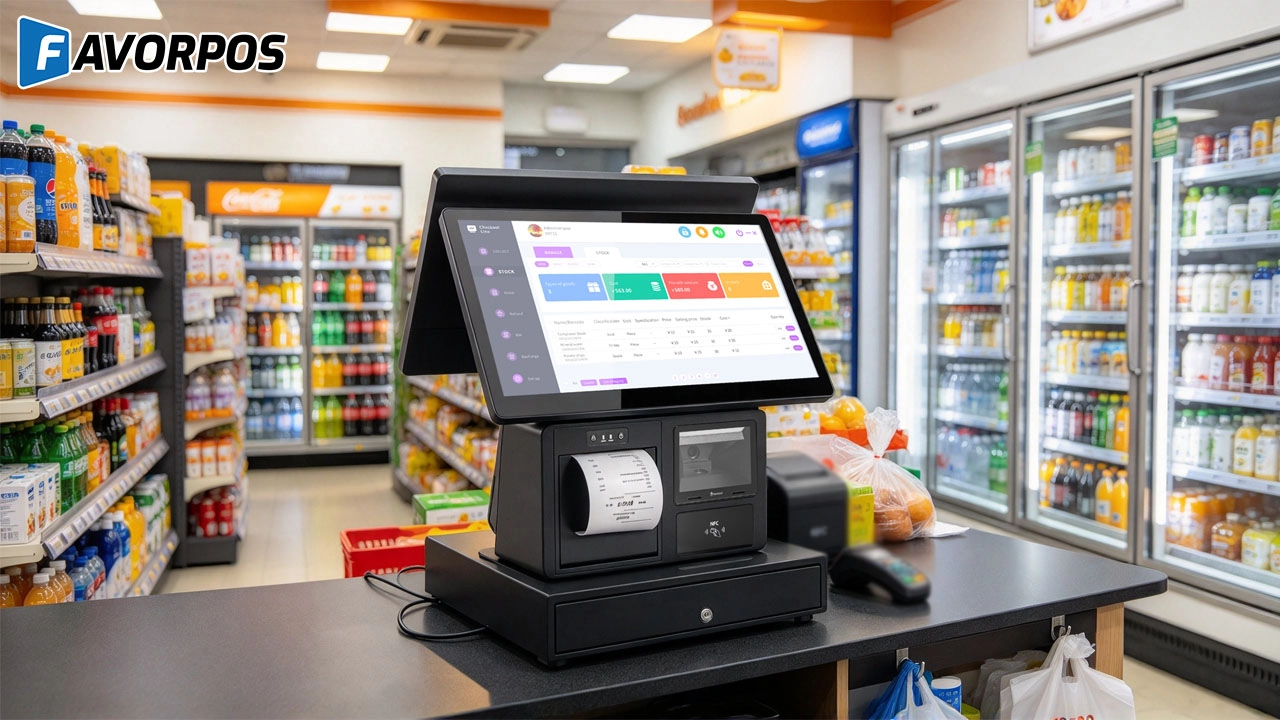
15.6-Inch All-in-One Dual-Screen POS: Planning Printer, Scanner, NFC and OS Integration
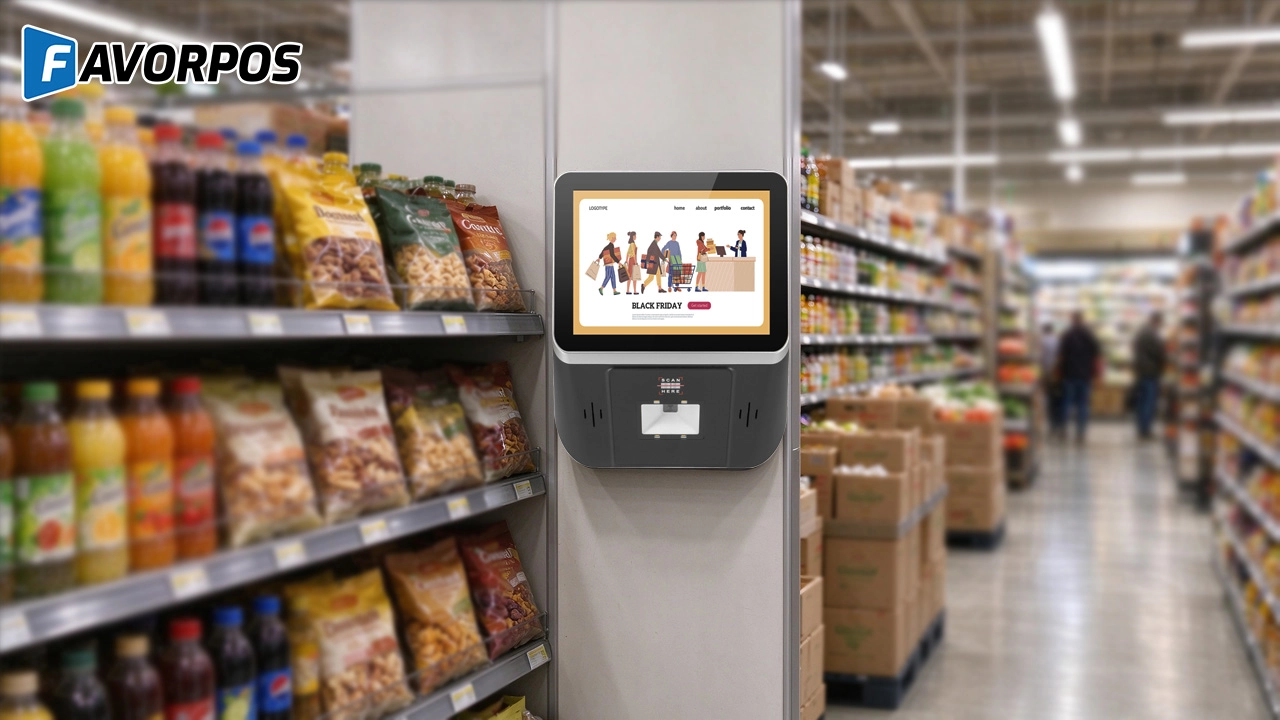
8-Inch Price Checker for Retail and Software-Based Check-In Workflows
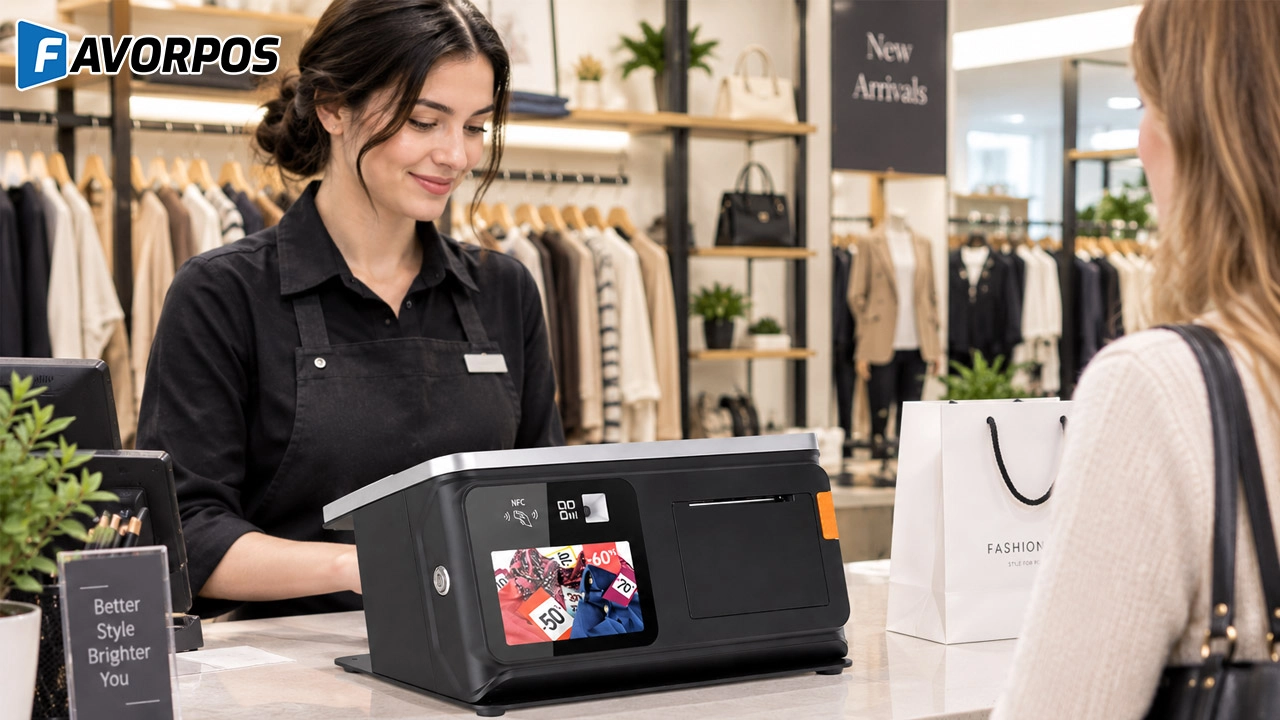
11.6-Inch All-in-One POS Terminal: Planning a Compact Checkout
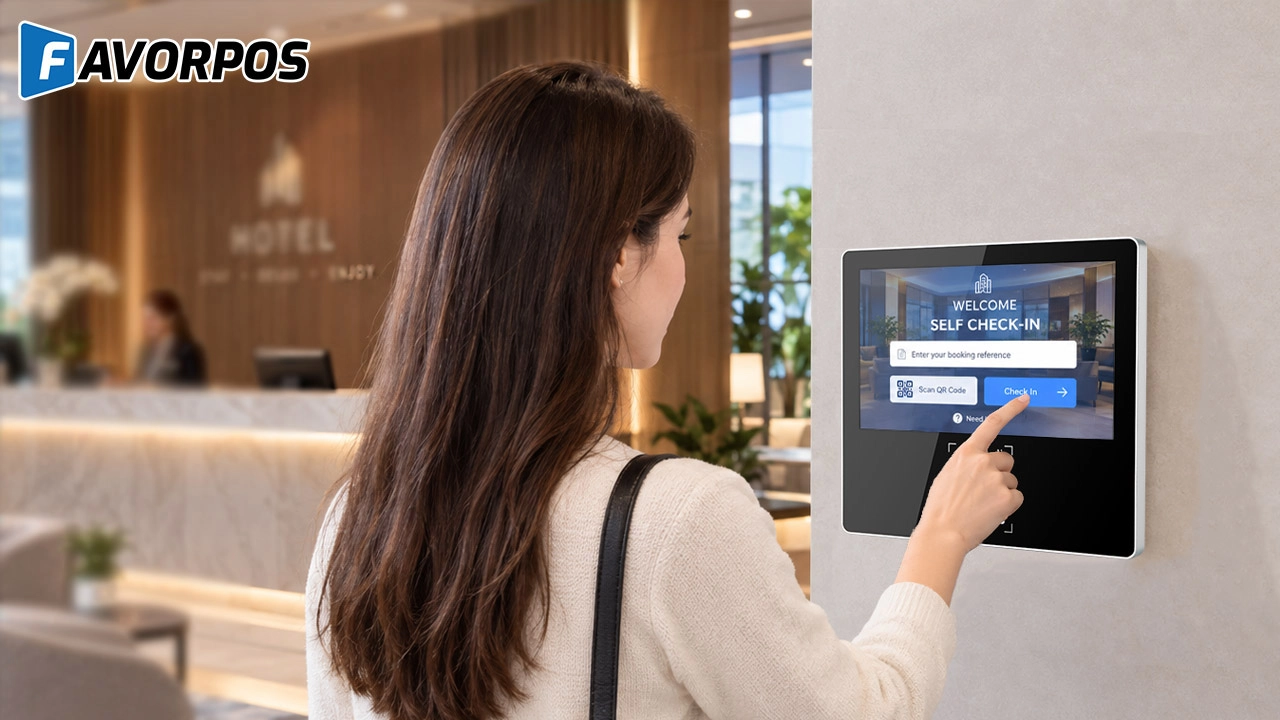
11.6-Inch Touchscreen Price Checker Deployment Guide: Wall, Desktop, Android or Windows
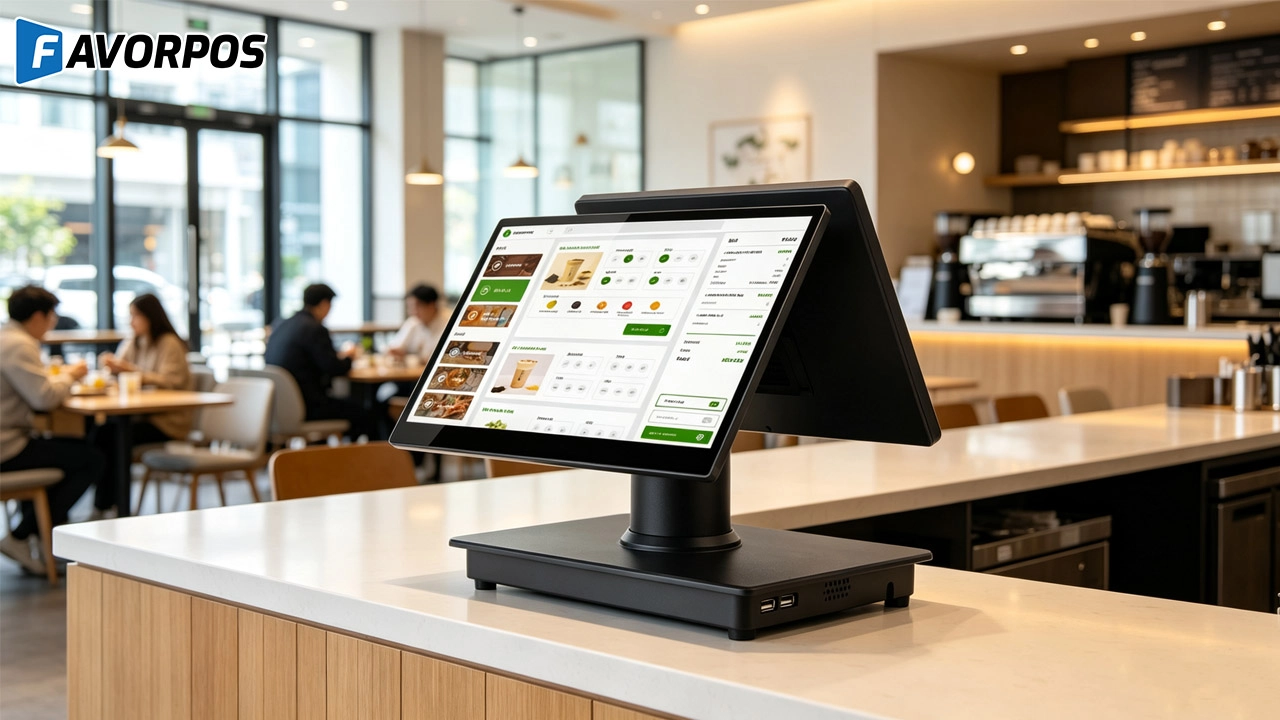
Full-Lamination Dual-Screen POS Terminal: What Retail Buyers Should Evaluate
For Hotels
Does your POS system support multi-currency payments?
Yes, our system supports multi-currency payments, making it convenient for international guests to pay in their preferred currency.
For OEM
How long is the delivery time for customizing POS machines?
The delivery time depends on the complexity of the order and the production scale. Generally speaking, the whole process from confirming the design to delivery may take 6 to 12 weeks. We will provide a detailed delivery schedule at the beginning of the project and try our best to meet your time requirements.
What is the minimum order quantity for customizing POS machines?
The minimum order quantity (MOQ) usually depends on the specific customization requirements and production scale. We recommend that you contact our sales representative to discuss your project requirements so that we can provide the most suitable production plan and MOQ.
Can the POS machine be customized with multiple functions?
Yes, we provide a wide range of functional customization options, including hardware configuration, software functions, brand design, etc. You can choose different processors, screens, connection options, payment modules, etc. according to your business needs.
For Beauty and Wellness
What support is provided after the system is deployed?
We provide 24/7 technical support and regular hardware maintenance to ensure that the system continues to operate efficiently.
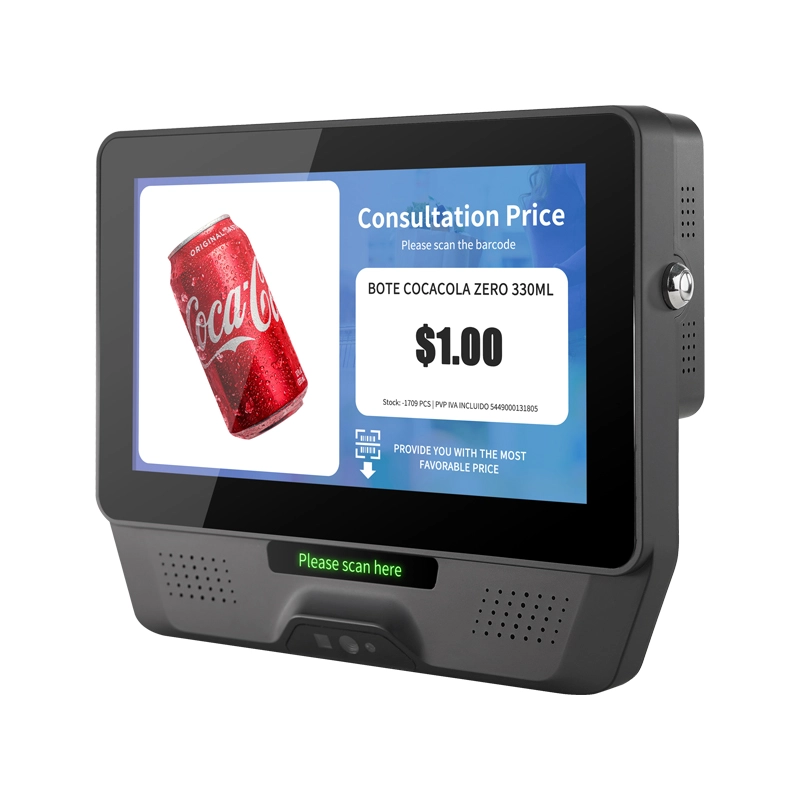
Factory 7 inch Screen Price Checker Check-in Barcode Scanner Light in Weight
FAVORPOS 7 inch screen plastic price checker and custom check-in barcode scanner combines lightweight portability with reliable performance for retail and warehouse operations. Fast scanning, clear display, built to handle daily checkout demands.

Dual Screen Thin Screen POS Systems Point of Sales Systems Manufacturer
FAVORPOS dual screen POS terminals deliver fast, reliable checkout performance for retail and hospitality businesses. Built by our commercial pos terminal manufacturer, these thin-profile systems streamline transactions while maximizing counter space—trusted by checkout pos systems factory operations worldwide.
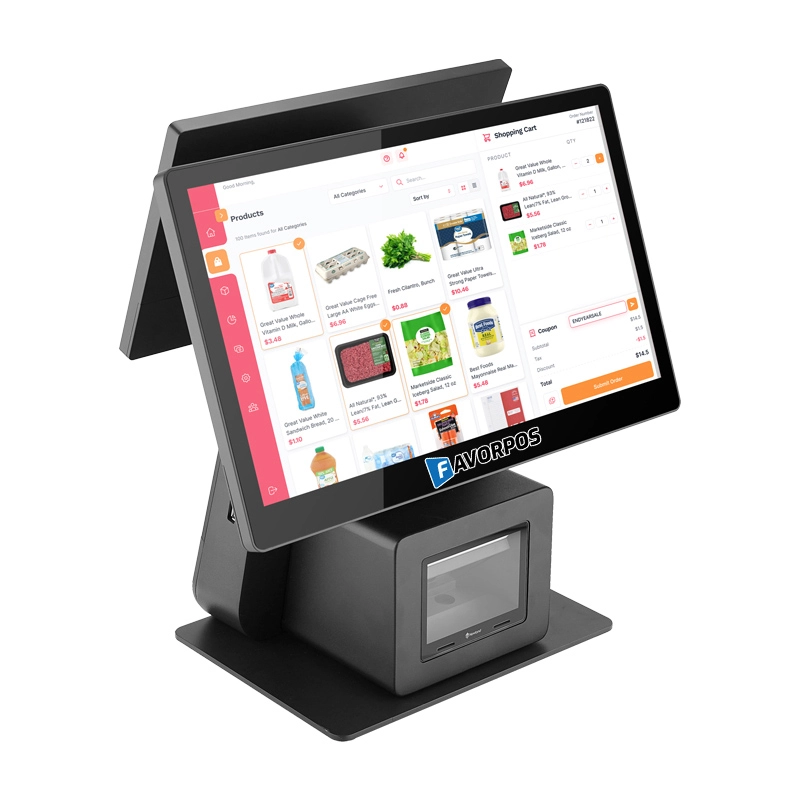
Dual Screen POS With Barcode Scanner Desktop POS Manufacturer POS Factory 15.6 11.6 Client Screen Optional
FAVORPOS: Your leading dual screen POS factory and manufacturer. Our desktop POS with barcode scanner offers 15.6/11.6 client screen options and OS flexibility. Get reliable, efficient dual screen POS with barcode scanner solutions directly from us.
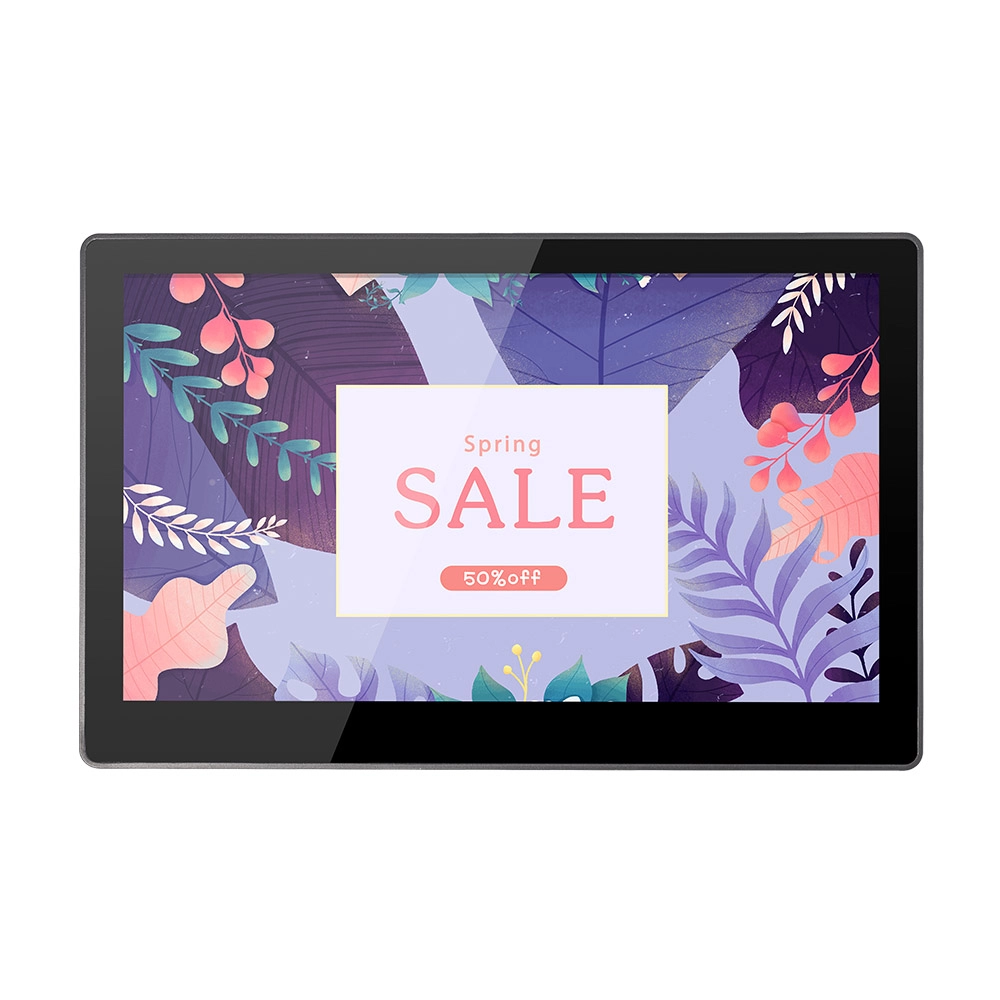
11.6 inch Capacitive Touchscreen for POS Machine POS Monitor
FAVORPOS 11.6-inch capacitive touchscreen, specifically designed for POS machines to deliver a seamless and responsive user experience. This high-definition display offers vibrant visuals and crystal clear clarity, making it easy for staff to navigate through transactions efficiently. The capacitive technology ensures quick and accurate touch recognition, reducing wait times and enhancing customer satisfaction. Built to withstand the rigors of daily use, this touchscreen is perfect for retail and hospitality environments.
Get in touch
Interested in becoming a POS system dealer? Contact us for more information and start the process of joining our dealer network.
We look forward to working with you to expand the market together.


Copyright © 2025 Favorpos All Rights Reserved.
