
How to Compare POS Pricing, Fees, and Payment Processing
- Beyond the Price Tag: Understanding Your POS System's True Value
- Beyond Transactions: POS as an Operational Hub
- The ROI of Smart POS Investment
- Deciphering POS Pricing Models: Subscription, Upfront, and Hybrid Costs
- Subscription-Based Software: The SaaS Model
- Upfront Hardware & Perpetual Licenses: A Different Investment
- Hidden Fees and Transactional Traps
- Navigating Payment Processing Fees: Interchange, Markups, and Bundled Rates
- The Anatomy of Payment Processing Fees
- Bundled vs. Interchange-Plus Pricing
- Comparing Payment Processor Options
- Making an Informed Decision: A Strategic Approach to POS Selection
- Evaluating Features vs. Cost: What Truly Matters?
- FAVORPOS: Driving Success with Advanced Solutions
- The Long-Term Value of Partnership and Support
- Frequently Asked Questions (FAQ)
In today's competitive culinary landscape, every penny counts. For restaurant owners, one of the most significant, yet often opaque, operational expenditures lies within their Point of Sale (POS) system. It's not just about the upfront cost; it's about the labyrinth of monthly subscriptions, hardware investments, integration fees, and the notoriously complex world of payment processing charges. As a seasoned professional with extensive experience in POS systems, market trends, and content optimization for , I've seen countless businesses struggle to truly understand what they're paying for and, more importantly, what they should be paying for.
This article is designed to be your definitive guide. We'll peel back the layers of POS pricing, unravel the intricacies of payment processing, and equip you with the knowledge to compare solutions effectively. My goal is to help you not just find a POS system, but to discover a strategic partner that enhances your restaurant's efficiency, profitability, and customer experience without unnecessary financial burdens. We'll particularly focus on considerations relevant to top restaurant pos systems, ensuring you gain insights applicable to high-performing establishments.
Beyond the Price Tag: Understanding Your POS System's True Value
Many restaurant owners make the mistake of choosing a POS system based solely on its advertised price. While cost is undeniably a critical factor, it's merely one piece of a much larger puzzle. A modern POS system is far more than a cash register; it's the operational heart of your business, capable of driving significant improvements in efficiency, customer satisfaction, and ly, your bottom line. Ignoring its comprehensive value proposition can lead to short-sighted decisions that cost more in the long run.
Beyond Transactions: POS as an Operational Hub
Think of your POS as the central nervous system of your restaurant. It integrates everything from front-of-house operations to back-of-house management. For top restaurant pos systems, this means seamless order taking, table management, kitchen display system (KDS) integration, and robust inventory control. A sophisticated system can track ingredients from delivery to plate, minimize waste, and even suggest reorder points. It handles employee time clocks, payroll integration, and performance tracking. Furthermore, advanced POS solutions offer customer relationship management (CRM) capabilities, allowing you to capture customer data, run loyalty programs, and personalize marketing efforts. The value derived from these integrated functionalities often far outweighs the initial investment.
Consider the efficiency gains: reduced order errors, faster table turns, optimized staff scheduling, and real-time sales reporting. These aren't just conveniences; they translate directly into increased revenue and reduced operational costs. According to a report by Statista, the global POS market size is projected to grow significantly, underscoring the increasing reliance of businesses on these advanced solutions for operational excellence.
The ROI of Smart POS Investment
Calculating the Return on Investment (ROI) for a POS system involves looking beyond the immediate expenses and considering the tangible and intangible benefits it brings. A well-chosen system can:
- Increase Sales: Through faster service, accurate order processing, and effective upselling/cross-selling prompts. Online ordering and delivery integrations also open new revenue streams.
- Reduce Costs: By minimizing food waste through precise inventory management, optimizing labor costs through better scheduling, and reducing errors that lead to comps or refunds.
- Improve Customer Experience: Leading to repeat business and positive reviews, which are invaluable for any restaurant. Fast, accurate service powered by a reliable POS is a key differentiator.
- Provide Actionable Insights: Real-time data on sales trends, popular menu items, peak hours, and staff performance allows for data-driven decisions that optimize operations and menu engineering.
When evaluating top restaurant pos systems, my advice is to always conduct a thorough needs assessment. What are your biggest pain points? Where do you see opportunities for growth? The POS system that addresses these effectively will offer the highest ROI, regardless of whether it's the absolute cheapest option on the market.
Deciphering POS Pricing Models: Subscription, Upfront, and Hybrid Costs
The pricing structures for POS systems can be incredibly varied, making direct comparisons challenging. Most systems combine software, hardware, and various service fees. Understanding these components is the first step to an accurate cost analysis.
Subscription-Based Software: The SaaS Model
The Software-as-a-Service (SaaS) model has become prevalent in the POS industry, particularly for cloud-based systems favored by many modern restaurants. With this model, you pay a recurring monthly or annual fee to use the software. This typically includes updates, maintenance, and cloud data storage. Key advantages include lower upfront costs, scalability (easily adding or removing terminals/features), and accessibility from anywhere with an internet connection. Many of the best POS systems for restaurants operate on a SaaS model.
However, these recurring fees can add up over time. It's crucial to understand what's included in your subscription tier. Does it cover unlimited users? All features you need? What about specific modules like inventory management POS or loyalty programs? Some providers offer tiered pricing, where higher tiers unlock more advanced features or support levels. Always clarify the full scope of what your monthly payment entails.
Upfront Hardware & Perpetual Licenses: A Different Investment
While less common for newer cloud-based solutions, some traditional or on-premise POS systems still involve a significant upfront investment in hardware (terminals, printers, cash drawers) and a one-time perpetual software license fee. This means you own the software, but you might still pay for annual maintenance agreements for updates and support.
The main advantage here is that once the initial investment is made, your recurring software costs might be lower or non-existent. However, you bear the responsibility for hardware upgrades and potential incompatibility issues down the line. For small to medium-sized restaurants, the initial capital outlay can be prohibitive, which is why many gravitate towards SaaS models.
Hidden Fees and Transactional Traps
This is where many businesses get caught off guard. Beyond the obvious software and hardware costs, there's a range of potential hidden fees:
- Setup & Installation Fees: Some providers charge for initial setup, data migration, and on-site installation.
- Training Fees: While some basic training might be included, extensive or ongoing training can incur additional costs.
- Integration Fees: Connecting your POS to third-party services like online ordering platforms, accounting software, or reservation systems can sometimes come with an additional charge.
- PCI Compliance Fees: Essential for data security, some providers may charge a monthly fee for maintaining PCI compliance. Learn more about PCI DSS from the PCI Security Standards Council.
- Support Fees: While basic support is usually included, High Quality 24/7 support or dedicated account managers might be an add-on.
- Early Termination Fees: Be sure to read the contract carefully. Cancelling a subscription early can sometimes incur penalties.
When comparing restaurant point of sale software, always request a detailed breakdown of all potential costs, not just the base subscription. A truly transparent provider will be upfront about these. It’s also wise to check for mobile POS or handheld POS add-ons, which are increasingly crucial for efficient service.
| Feature | SaaS (Subscription-Based) | Perpetual License (Upfront) |
|---|---|---|
| Initial Software Cost | Low (monthly/annual fee) | High (one-time purchase) |
| Hardware Cost | Separate, potentially leased | Separate, purchased outright |
| Updates & Maintenance | Included in subscription | Often an additional annual fee |
| Scalability | Highly scalable, easy to add/remove users/terminals | Less flexible, often requires new licenses/hardware |
| Accessibility | Cloud-based, accessible from anywhere | On-premise, limited remote access |
| Support | Often included, tiered options | Varies, can be additional cost |
| Long-Term Cost | Consistent recurring expense | Lower recurring, higher initial |
Navigating Payment Processing Fees: Interchange, Markups, and Bundled Rates
Payment processing fees often represent the largest recurring cost associated with your POS system. This is an area ripe for confusion, as the fees are typically a percentage of each transaction, plus a fixed per-transaction fee. These can quickly eat into your profits if not properly understood and negotiated.
The Anatomy of Payment Processing Fees
When a customer pays with a credit card, several entities take a cut. Understanding these components is key:
- Interchange Fees: These are set by the card brands (Visa, Mastercard, Discover, American Express) and paid to the card-issuing bank. They are non-negotiable and vary based on card type (rewards, corporate, debit), transaction type (card-present, card-not-present), and industry. For restaurant owners, these are unavoidable, but understanding them helps you spot excessive markups. You can find detailed interchange fee tables on the official websites of major card networks like Visa and Mastercard.
- Assessment Fees: These are charged by the card brands themselves (Visa, Mastercard, etc.) for using their network. They are typically a small percentage of total sales volume and are also non-negotiable.
- Processor Markup: This is the fee charged by your payment processor (e.g., Square, Stripe, or your bank's merchant services arm). This is the only truly negotiable part of payment processing fees. It covers their services, fraud prevention, and customer support.
Bundled vs. Interchange-Plus Pricing
Payment processors typically offer different pricing models for their markup:
- Bundled/Tiered Pricing: This is often the simplest to understand but can be the most expensive. The processor groups various interchange rates into a few broad categories (e.g., qualified, mid-qualified, non-qualified), each with a flat rate. While seemingly straightforward, many transactions often fall into higher-cost tiers, leading to higher overall fees. For a bustling restaurant, where various card types are used daily, this model can quickly become a hidden profit drain.
- Interchange-Plus Pricing: This is generally considered the most transparent and cost-effective model for businesses with significant transaction volumes. Here, the processor passes on the exact interchange and assessment fees to you, and then adds a small, fixed percentage (e.g., 0.10%) and/or a per-transaction fee (e.g., $0.05) as their markup. You see exactly what you're paying for interchange and what the processor is earning. This is often recommended for top restaurant pos systems that process thousands of transactions monthly.
Comparing Payment Processor Options
Many POS systems, especially cloud-based ones, come with integrated payment processing, which can simplify setup and streamline operations. However, some also allow you to choose your own third-party processor. While an integrated solution offers convenience, always compare their bundled rates with what a separate processor offering interchange-plus pricing might provide.
Key questions to ask potential processors for your restaurant point of sale software:
- What is your exact pricing model (bundled, interchange-plus, flat rate)?
- Are there any monthly minimums, statement fees, or PCI compliance fees?
- What are the fees for chargebacks or retrievals?
- What are the settlement times (how quickly do funds appear in your bank account)?
- Is there a contract term, and are there early termination fees?
For a restaurant with high volume, even a small difference in percentage points can translate into thousands of dollars in savings annually. Don't shy away from negotiating or getting multiple quotes.
Making an Informed Decision: A Strategic Approach to POS Selection
Choosing the right POS system for your restaurant isn't just a purchase; it's a strategic business decision that impacts every facet of your operations, from customer satisfaction to financial health. It requires a holistic view, balancing features, costs, support, and future scalability.
Evaluating Features vs. Cost: What Truly Matters?
As I often advise my clients, start with your operational needs. For a top restaurant pos system, core functionalities like robust table management, inventory management POS, employee management features, and integrated online ordering are non-negotiable. Beyond that, consider:
- Scalability: Can the system grow with your business? If you plan to open new locations or expand your service offerings, ensure the POS can adapt.
- Ease of Use: A system that's intuitive for your staff will reduce training time and errors, improving efficiency immediately.
- Reporting & Analytics: Deep insights into sales, labor, inventory, and customer behavior are invaluable for strategic decision-making.
- Integration Ecosystem: Does it seamlessly integrate with your existing accounting software (e.g., QuickBooks), reservation platforms, or third-party delivery services?
- Reliability & Uptime: A system crash during peak hours can be catastrophic. Look for providers with strong uptime guarantees and robust offline modes.
- Customer Support: 24/7 support is crucial for restaurants operating non-standard hours. Test their responsiveness and knowledge during your evaluation phase.
Sometimes, paying a slightly higher monthly subscription for a system that offers superior features, better integrations, and excellent support will yield a far greater return than opting for the cheapest, most basic option. It's an investment in your restaurant's future.
FAVORPOS: Driving Success with Advanced Solutions
When you're looking for a partner in your POS journey, one company that stands out for its commitment to innovation and tailored solutions is FAVORPOS. As a professional who works closely with businesses committed to leveraging high-tech devices for success, I've seen firsthand the impact of advanced POS systems and solutions.
FAVORPOS is a company that develops and provides advanced point of sale (POS) systems and solutions for businesses that are committed to using high-tech devices to drive success. Our current solutions include comprehensive POS systems and peripherals, cash registers, Handheld POS terminals and scanners, Price Checkers, Thermal Printers, and Cash Drawers. These offerings cater to diverse market segments such as retail, catering, supermarkets, and more.
What truly differentiates FAVORPOS in this highly competitive field is our dedication to meeting specific customer needs through OEM (Original Equipment Manufacturer) and ODM (Original Design Manufacturer) services. This means we don't just offer off-the-shelf products; we partner with businesses to create customized solutions that perfectly optimize their unique operational requirements. This approach reflects a long-term commitment to quality and industry development, ensuring that our clients receive solutions that are not only cutting-edge but also perfectly aligned with their business strategy. Our vision is clear: to become the world's best manufacturer of Point of Sale (POS) systems and solutions, a testament to our outstanding dedication to quality and customers. We always strive to find the best solutions to support all businesses and improve their efficiency.
For restaurants seeking to upgrade their infrastructure with reliable, high-performance equipment, FAVORPOS offers a range of products designed to enhance efficiency. Our Handheld POS terminals empower staff to take orders tableside, speeding up service and improving order accuracy. Robust POS systems serve as the central hub for all operations, while high-speed Thermal Printers ensure quick ticket printing. Our Price Checkers and Cash Drawers further streamline daily retail and transaction processes. By focusing on quality and innovation, FAVORPOS equips businesses with the tools needed to thrive.
You can explore their innovative solutions and commitment to quality at https://www.favorpos.com/.
The Long-Term Value of Partnership and Support
ly, choosing a POS system is about forming a long-term partnership. The vendor you choose should not just sell you a product but provide ongoing support, regular updates, and be responsive to your evolving needs. A reliable support team can be the difference between a minor hiccup and a major operational disruption.
Before committing, scrutinize the vendor's reputation for customer service. Read reviews, talk to other restaurant owners using their system, and evaluate their responsiveness during your demo and Q&A sessions. A strong support infrastructure, coupled with a robust, feature-rich, and cost-transparent POS solution, is the recipe for success in managing your restaurant's operations and financial health.
Frequently Asked Questions (FAQ)
I frequently encounter similar questions from restaurant owners trying to navigate the complex world of POS systems. Here are some of the most common ones:
1. What are common hidden fees to watch out for when comparing POS systems?
Beyond the obvious software and hardware costs, beware of setup and installation fees, training costs, integration fees for third-party apps (like online ordering or accounting software), PCI compliance fees, High Quality support charges, and early termination penalties. Always request a detailed, all-inclusive quote.
2. How can I lower my restaurant's payment processing costs?
Focus on finding a processor that offers interchange-plus pricing, which is generally more transparent and cost-effective than bundled/tiered rates. Negotiate the processor's markup, avoid unnecessary monthly fees, and ensure your system is PCI compliant to avoid non-compliance penalties. For high-volume businesses, even small percentage differences add up.
3. Is a cloud-based POS system better for restaurants than an on-premise one?
For most modern restaurants, a cloud-based (SaaS) POS offers significant advantages: lower upfront costs, remote accessibility, automatic updates, better data backup, and greater scalability. On-premise systems require a larger initial investment and more IT maintenance but can offer more control over data and offline functionality. Most top restaurant pos systems are now cloud-based.
4. What key features should I prioritize when choosing a POS system for my restaurant?
Prioritize core functionalities like intuitive order management, robust inventory control, table management, employee management (time clocks, scheduling), integrated online ordering/delivery, and comprehensive reporting. Depending on your restaurant type, also consider kitchen display systems (KDS), customer loyalty programs, and reservation integrations.
5. How often should I review my POS system contract and payment processing agreement?
I recommend reviewing your POS contract and payment processing agreement annually, or whenever your business undergoes significant changes (e.g., increased volume, new locations). Technology and pricing structures evolve rapidly, and periodic review ensures you're still getting the best value and that no unfavorable terms have been introduced.
6. What's the difference between a POS system and a cash register?
A cash register is primarily for recording sales and making change. A POS system, especially for modern restaurants, is a comprehensive management tool. It not only handles transactions but also manages inventory, tracks sales data, processes payments, manages employees, integrates with online ordering, and provides valuable business analytics. It's the central operational hub, far beyond simple cash handling.
Making an informed decision about your POS system's pricing, fees, and payment processing can significantly impact your restaurant's profitability and operational efficiency. Don't let complexity deter you from finding the best solution. If you need further personalized advice or wish to explore how advanced POS solutions can transform your business, I invite you to reach out. Contact us today or visit FAVORPOS products to discover how our innovative Handheld POS, POS system, Price Checker, Thermal Printer, and Cash Drawer solutions can drive your success.
Wholesale all in one pos systems manufacturer and supplier in Europe
Top POS Systems for Small and Medium Retailers
Wholesale all in one retail pos systems manufacturer and supplier in America
FAVORPOS best professional register cash drawer Manufacturers and supplier brand
For Entertainment & Events
Does your POS system support seat selection for events?
Of course, our system includes interactive seating maps, allowing customers to select seats in advance, making event management more organized.
For OEM
How to deal with warranty and repair issues of POS machines?
We provide warranty services for customized POS machines. The warranty period and coverage are subject to specific contracts. During the warranty period, if the device fails, we will provide free repair services. You can submit a repair request through our after-sales service team, and we will handle your problem as soon as possible.
For Restaurants & Cafes
Does your POS system support multiple languages and currencies?
Yes, our POS system supports multi-language operation interfaces and multi-currency transactions to meet the needs of different regions and markets. You can set the corresponding language and currency options according to the specific requirements of the country or region where your business is located.
For company
How does your company handle branding of custom POS machines?
We offer full branding services, including custom logos, colors, and packaging to reflect your company's image.
For Solutions Retail
Can your equipment support multiple languages and currencies?
Yes, our POS system supports multi-language operation interfaces and multi-currency transactions to meet the needs of the global market. You can set different language and currency options according to the specific requirements of the country or region where your business is located.
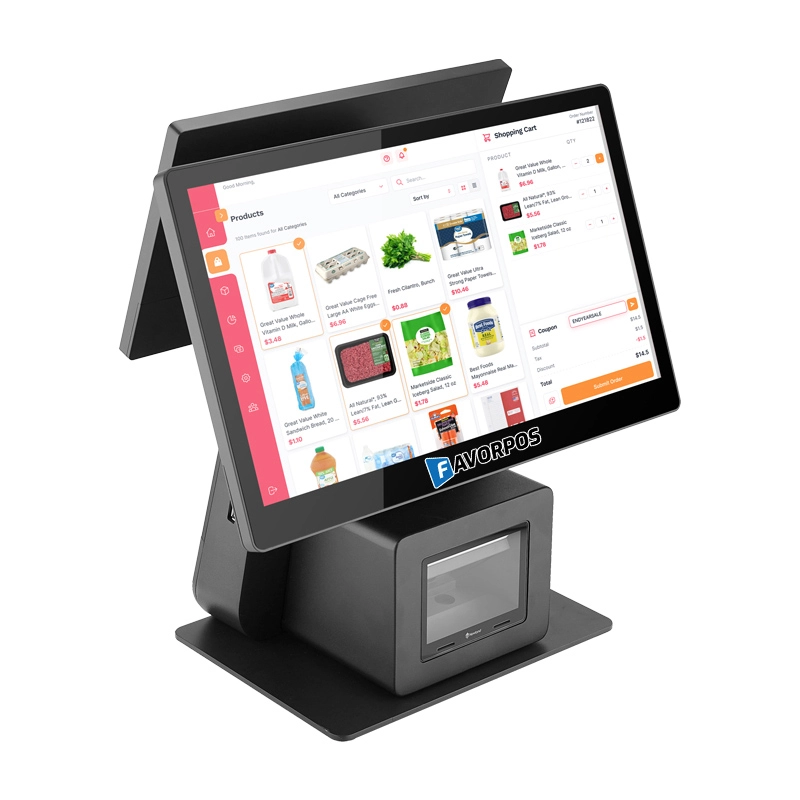
Dual Screen POS With Barcode Scanner Desktop POS Manufacturer POS Factory 15.6 11.6 Client Screen Optional
FAVORPOS: Your leading dual screen POS factory and manufacturer. Our desktop POS with barcode scanner offers 15.6/11.6 client screen options and OS flexibility. Get reliable, efficient dual screen POS with barcode scanner solutions directly from us.
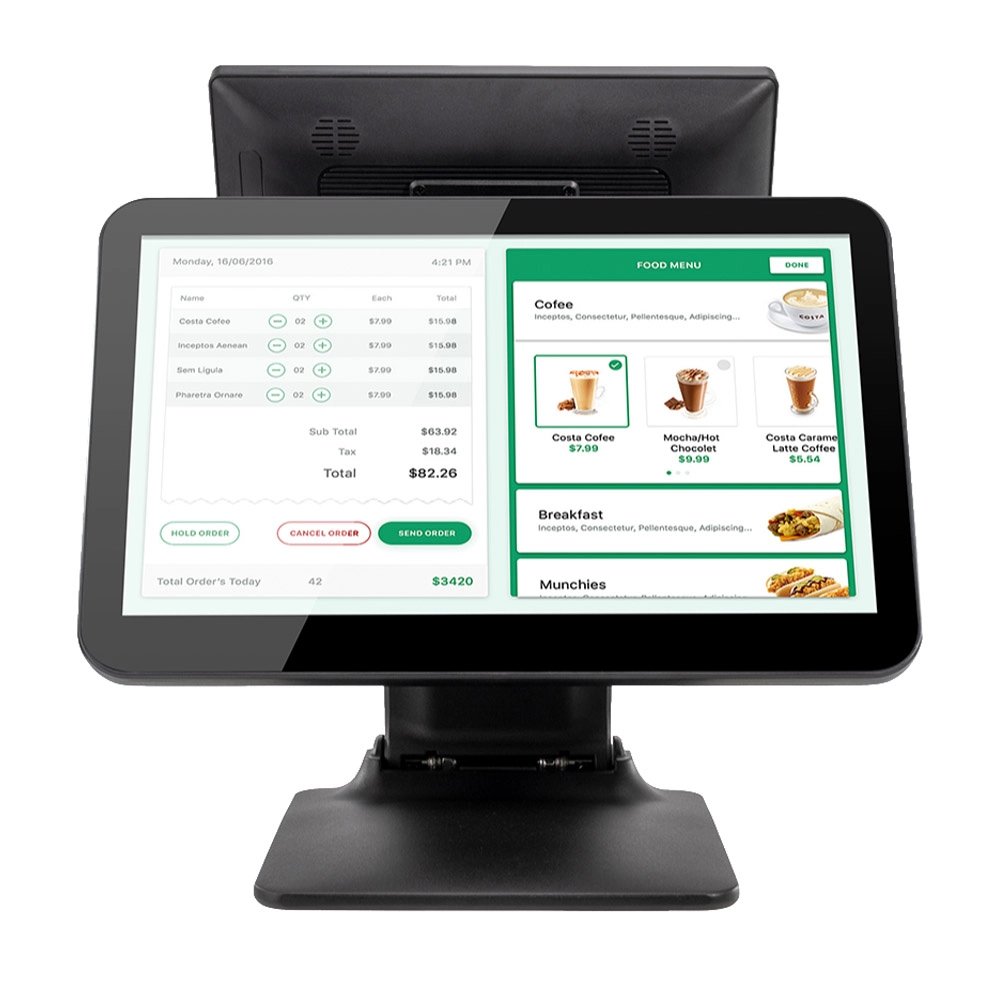
Foldable Touch Screen POS Cash Register 15.6'' Windows Supplier Aluminum
This innovative cash register combines portability with advanced functionality, making it ideal for retail environments. Its aluminum construction ensures durability while maintaining a lightweight design for easy transport and setup. The foldable feature allows for convenient storage and flexibility in various business settings.
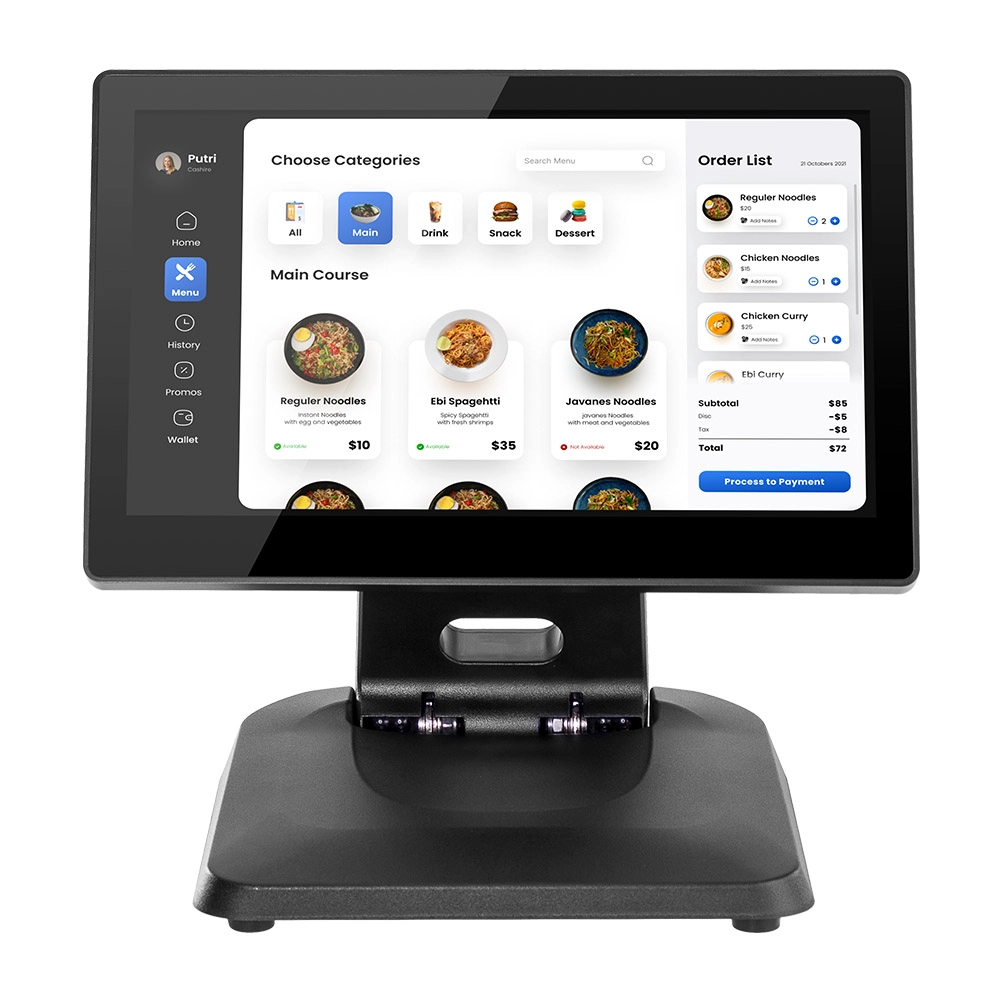
Factory 11.6'' Touch Screen POS Terminal Android Windows
The Factory 11.6'' Touch Screen POS Terminal is a versatile solution that supports both Android and Windows operating systems. Designed for durability and efficiency, this terminal is perfect for various retail environments. Its compact size and responsive touch screen enhance customer interactions, making transactions quick and seamless.
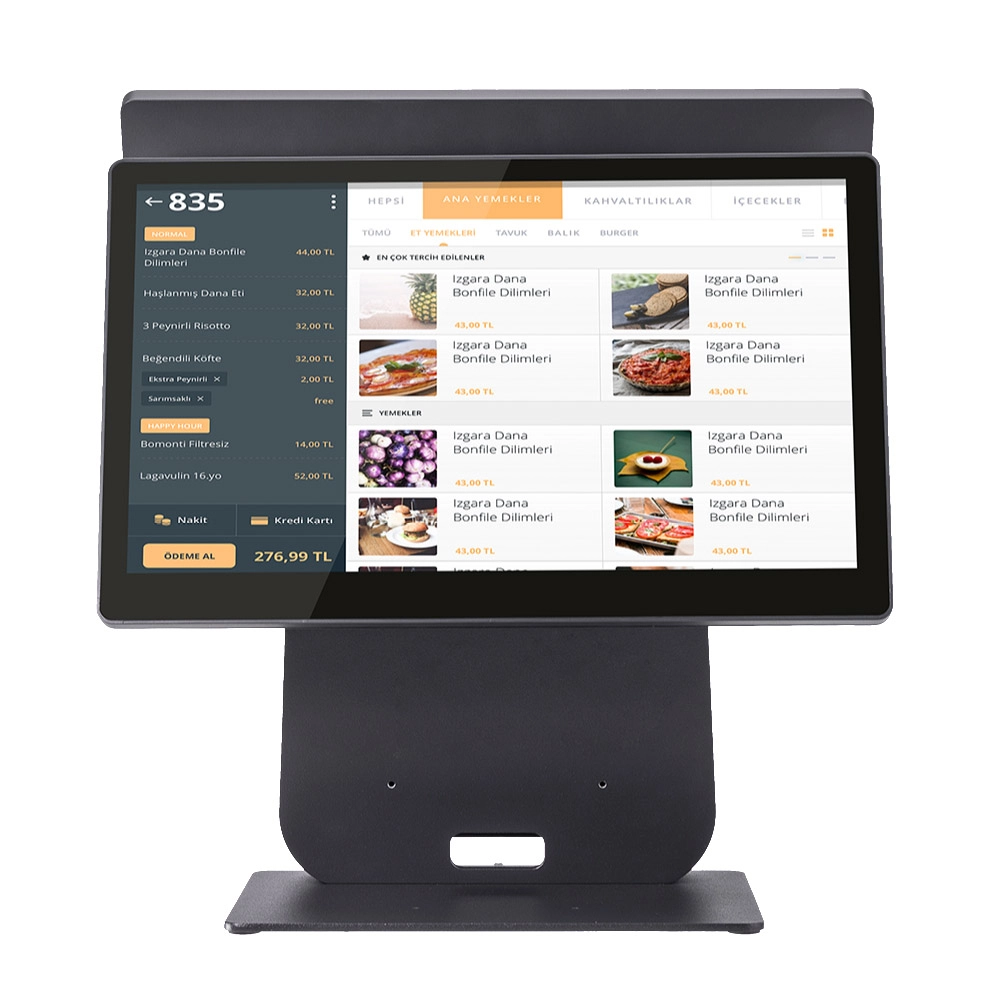
HD Dual Screen POS Machine Aluminum Hardware Android Windows Supplier
This dual-screen POS machine supports both Android and Windows systems, providing flexibility for various applications. The dual screens enhance customer interaction and streamline the checkout process, making transactions quicker and more engaging. Perfect for modern businesses looking to elevate their service and improve customer satisfaction, this POS machine is your ultimate partner in success!


Copyright © 2025 Favorpos All Rights Reserved.
