
EMV and PCI Compliance for Gas Station POS Systems
- Navigating the Evolving Landscape of Payment Security in Fuel Retail
- The Challenge of Data Breaches and Fraud
- The Cost of Non-Compliance
- Why Gas Stations Are Prime Targets
- Understanding EMV: The Foundation of Secure Transactions at the Pump
- What is EMV and Why It Matters
- EMV Transition for Fuel Retailers: Deadlines and Impact
- EMV Implementation Challenges and Solutions
- PCI DSS: A Holistic Approach to Protecting Cardholder Data
- The Pillars of PCI DSS Compliance
- Scopes and Levels for Gas Stations
- Best Practices for Maintaining PCI Compliance
- Choosing the Right POS System for Future-Proof Compliance and Operations
- Key Features of Compliant Gas Station POS Systems
- The Role of Integrated Solutions
- Partnering for Success: The FAVORPOS Advantage
- Conclusion
- Frequently Asked Questions (FAQ)
- Q1: What is the main difference between EMV and PCI DSS for a gas station?
- Q2: Do I really need to upgrade my gas pumps to EMV, even if it's expensive?
- Q3: How often do gas stations need to validate PCI compliance?
- Q4: Can a data breach really happen to a small gas station, or is it just for large retailers?
- Q5: What are the key things I should look for when choosing a new `gas station POS system` for compliance?
In the dynamic world of fuel retail, where transactions happen at lightning speed and customer trust is paramount, the twin pillars of EMV and PCI compliance stand as non-negotiable foundations for success. As a professional consultant deeply embedded in the realm of POS systems and payment security, I've witnessed firsthand the profound impact these standards have on businesses, especially those operating `gas station POS systems`. It's not just about adhering to rules; it's about safeguarding your entire operation, protecting your customers' sensitive data, and future-proofing your business against evolving threats and costly liabilities. Let me guide you through the intricacies of EMV and PCI DSS, offering insights derived from years of experience in helping businesses like yours thrive in a secure environment.
Navigating the Evolving Landscape of Payment Security in Fuel Retail
The fuel retail industry, with its high volume of transactions and often unattended payment points, presents a unique set of challenges when it comes to payment security. My experience shows that understanding these challenges is the first step toward building a robust defense.
The Challenge of Data Breaches and Fraud
Gas stations are unfortunately prime targets for cybercriminals and fraudsters. The sheer volume of credit and debit card transactions processed through `gas station POS systems`, both at the pump and inside the convenience store, creates an attractive target. Skimming devices, malware attacks, and phishing scams are constant threats that can compromise cardholder data, leading to devastating breaches. According to a 2023 IBM Cost of a Data Breach Report, the global average cost of a data breach reached a new high of $4.45 million, a figure that can be catastrophic for small to medium-sized businesses.
My work with various `fuel pump payment systems` has highlighted that these breaches not only incur significant financial penalties and legal costs but also severely damage customer trust and brand reputation. Rebuilding that trust can take years, if it's even possible. This is why investing in secure `convenience store POS` and pump systems is an investment in your business's longevity.
The Cost of Non-Compliance
Beyond the direct impact of fraud, failing to comply with EMV and PCI DSS standards carries its own heavy price. For EMV, liability shifts can leave you responsible for fraudulent transactions if your `gas station POS systems` are not EMV-enabled. For PCI DSS, non-compliance can result in hefty fines from payment brands and acquiring banks, ranging from $5,000 to $100,000 per month until compliance is met. These fines are designed to compel adherence but can easily cripple an unprotected business.
As a consultant, I often advise clients that these costs far outweigh the investment required to upgrade and secure their `payment terminals`. The financial penalties are just the tip of the iceberg; the operational disruption, forensic audits, and potential loss of ability to process credit card payments altogether can effectively shut down a business.
Why Gas Stations Are Prime Targets
Several factors contribute to gas stations being high-risk environments for payment fraud:
- Outdoor, Unattended Terminals: Fuel pumps, by their nature, are often unattended, making it easier for criminals to install skimmers or tamper with card readers without immediate detection.
- Legacy Infrastructure: Many `gas station POS systems` and fuel pump architectures are older, making them more vulnerable to modern cyber threats and costly to upgrade.
- High Transaction Volume: The sheer number of transactions provides more opportunities for fraudsters to capture data.
- Diverse Payment Methods: Gas stations typically accept a wide range of payment types, increasing the complexity of securing all touchpoints.
Recognizing these vulnerabilities is crucial for implementing targeted `data breach prevention` strategies. It's not enough to simply have a `POS system`; it must be a secure, compliant `POS solution for gas stations`.
Understanding EMV: The Foundation of Secure Transactions at the Pump
EMV (Europay, MasterCard, and Visa) represents a global standard for chip-based payment cards and terminals. It's a fundamental step in enhancing `credit card security` at your gas station.
What is EMV and Why It Matters
EMV technology embeds a microchip into payment cards, which generates a unique, one-time cryptogram for each transaction. This makes it incredibly difficult for fraudsters to create counterfeit cards from stolen data, unlike traditional magnetic stripe cards where data remains static. When a customer inserts an EMV chip card into a compliant `payment terminal`, the chip communicates securely with the POS system, verifying the card's authenticity and the transaction details.
The primary benefit of EMV for `gas station POS systems` is the liability shift. Before EMV, the card issuer bore the financial responsibility for fraudulent transactions. After the EMV liability shift (which took effect for gas stations in April 2021 for outdoor pumps), if a fraudulent transaction occurs on a chip card at a non-EMV compliant terminal, the merchant (you) is generally liable for the chargeback. This simple fact underscores why `EMV compliance` is not optional; it's a financial imperative.
EMV Transition for Fuel Retailers: Deadlines and Impact
While EMV has been standard for in-store transactions for years, `EMV compliance` for outdoor `fuel pump payment systems` presented unique challenges due to the complexity and cost of upgrading existing infrastructure. The major card brands set a final liability shift deadline for Automated Fuel Dispensers (AFDs) in April 2021. This means if your outdoor pumps are not equipped with EMV-certified `payment terminals`, you are now fully responsible for any fraudulent transactions made with a chip card at those pumps.
This transition has had a significant impact on `gas station pos systems`, prompting many owners to invest in new `fuel pump upgrades` and integrated `retail POS systems` that can handle EMV chip card processing. It's a complex undertaking, often involving trenching, wiring, and new pump hardware, but the long-term benefits in fraud `prevention` and liability protection are undeniable.
EMV Implementation Challenges and Solutions
Implementing EMV at the pump involves several hurdles:
- Cost: Upgrading pumps is a significant investment, involving new card readers, software updates, and sometimes entirely new pump dispensers.
- Downtime: The installation process can cause temporary pump shutdowns, impacting revenue.
- Integration: Ensuring the new EMV readers seamlessly integrate with existing `gas station POS systems` and `payment processing` networks requires careful planning.
Solutions often involve working with experienced vendors who specialize in `POS solutions for gas stations`. These partners can provide phased upgrade plans, offer financing options, and ensure that new `payment terminals` are fully integrated and certified. Furthermore, many modern `gas station POS systems` come with built-in EMV capabilities, simplifying the transition for in-store purchases.
PCI DSS: A Holistic Approach to Protecting Cardholder Data
While EMV focuses on securing individual transactions, the Payment Card Industry Data Security Standard (PCI DSS) provides a comprehensive framework for protecting cardholder data throughout your entire business operation.
The Pillars of PCI DSS Compliance
PCI DSS consists of 12 core requirements, organized into six logically related goals:
- Build and Maintain a Secure Network and Systems: Install and maintain a firewall configuration to protect cardholder data; do not use vendor-supplied defaults for system passwords and other security parameters.
- Protect Cardholder Data: Protect stored cardholder data; encrypt transmission of cardholder data across open, public networks.
- Maintain a Vulnerability Management Program: Protect all systems against malware and regularly update anti-virus software or programs; develop and maintain secure systems and applications.
- Implement Strong Access Control Measures: Restrict access to cardholder data by business need-to-know; assign a unique ID to each person with computer access; restrict physical access to cardholder data.
- Regularly Monitor and Test Networks: Track and monitor all access to network resources and cardholder data; regularly test security systems and processes.
- Maintain an Information Security Policy: Maintain a policy that addresses information security for all personnel.
For `gas station POS systems` and the associated networks, meeting these requirements means implementing robust firewalls, encrypting Wi-Fi, securing all devices, and regularly training staff on security best practices. Compliance isn't a one-time event; it's an ongoing process.
Scopes and Levels for Gas Stations
The scope of PCI DSS for a gas station depends on its transaction volume. Merchants are categorized into four levels:
| PCI Merchant Level | Annual Transaction Volume (Visa/Mastercard) | Typical Compliance Requirements |
|---|---|---|
| Level 1 | > 6 million transactions | Annual Report on Compliance (ROC) by a Qualified Security Assessor (QSA), Quarterly Network Scans by an Approved Scanning Vendor (ASV) |
| Level 2 | 1 million to 6 million transactions | Annual Self-Assessment Questionnaire (SAQ), Quarterly Network Scans by an ASV |
| Level 3 | 20,000 to 1 million e-commerce transactions | Annual SAQ, Quarterly Network Scans by an ASV |
| Level 4 | < 20,000 e-commerce transactions or up to 1 million non-e-commerce transactions | Annual SAQ, Quarterly Network Scans by an ASV |
Most independent `gas station POS systems` and convenience stores will fall into Level 4, requiring an annual Self-Assessment Questionnaire (SAQ) and quarterly network vulnerability scans performed by an Approved Scanning Vendor (ASV). However, the specific SAQ you must complete (e.g., SAQ A, A-EP, B, B-IP, C, C-VT, P2PE, D) depends on how your `POS systems` process payments. This is where professional guidance is often invaluable.
Best Practices for Maintaining PCI Compliance
Achieving and maintaining PCI compliance for `gas station POS systems` involves several key practices:
- Regular Training: Educate all staff on the importance of `customer data protection`, secure password practices, and how to identify suspicious activity.
- Network Segmentation: Isolate your POS network from other business networks (e.g., office Wi-Fi, surveillance cameras) to reduce the scope of PCI DSS.
- Strong Passwords and Multi-Factor Authentication: Implement complex, unique passwords for all systems and enforce MFA where possible.
- Patch Management: Keep all software, operating systems, and `POS solutions for gas stations` updated with the latest security patches.
- Secure Remote Access: If remote access is needed for support, ensure it's done via secure VPNs and strong authentication.
- Physical Security: Secure your `payment terminals` physically to prevent tampering or skimming.
- Vendor Management: Ensure any third-party vendors (like your POS provider or payment processor) are also PCI compliant.
By diligently following these practices, you not only meet compliance requirements but also significantly enhance your overall `fraud prevention` capabilities.
Choosing the Right POS System for Future-Proof Compliance and Operations
Selecting the appropriate `gas station POS systems` is perhaps the single most important decision a fuel retailer can make to ensure long-term compliance and operational efficiency. It's about finding a solution that grows with you and keeps pace with security demands.
Key Features of Compliant Gas Station POS Systems
When evaluating `POS systems`, especially for a gas station environment, I always look for specific features that directly support EMV and PCI compliance:
- Integrated EMV Capabilities: Built-in support for EMV chip card readers at both the indoor `convenience store POS` and outdoor `fuel pump payment systems`. This is non-negotiable.
- Point-to-Point Encryption (P2PE): This technology encrypts cardholder data from the moment it's swiped/inserted until it reaches the payment processor, significantly reducing the scope of PCI DSS by rendering the data unusable to criminals if intercepted.
- Tokenization: Replaces sensitive cardholder data with a unique, non-sensitive identifier (token), further protecting stored data.
- Secure Remote Access: The system should support secure, auditable remote access for troubleshooting and updates.
- PCI DSS Certification: Ensure the `POS system` itself, and the vendor, are compliant with the latest PCI standards.
- Robust Reporting & Auditing: The system should provide detailed logs and reports for audit trails, crucial for demonstrating compliance.
- Scalability & Updates: A system that can be easily updated to adapt to future compliance changes and offers scalability for business growth.
A truly modern `gas station POS system` acts as your first line of defense, integrating security seamlessly into daily operations.
The Role of Integrated Solutions
Fragmented systems often create security gaps. My advice to gas station owners is always to seek integrated `POS solutions for gas stations` that unify pump control, in-store sales, inventory management, loyalty programs, and payment processing under a single, secure platform. This not only streamlines operations but also centralizes `customer data protection` efforts. An integrated system simplifies compliance efforts, as you're managing fewer disparate components and relying on a single vendor for security updates and support.
For example, an integrated system can ensure that when `fuel pump upgrades` are performed, the new EMV readers communicate flawlessly with the in-store POS and back-office software, maintaining a consistent security posture across all touchpoints.
Partnering for Success: The FAVORPOS Advantage
Choosing a reliable technology partner is paramount in navigating the complexities of EMV and PCI compliance. This is where a company like FAVORPOS truly shines. FAVORPOS is a company that provides and develops advanced `point of sale (POS) systems` and solutions for businesses that are committed to using high-tech devices to drive success. Our current solutions include `POS systems` and peripherals, cash registers, `handheld terminals and scanners`, `price checkers`, `thermal printers`, and accessories for different market segments such as retail, catering, supermarkets, etc.
As a trusted company in the `POS system` industry, FAVORPOS provides OEM and ODM services to fully meet customer needs and optimize their business operations. We have a long-term commitment to quality and industry development. For `gas station POS systems`, this commitment translates into robust, secure, and adaptable solutions designed to meet the stringent demands of EMV and PCI DSS. Our dedication to developing high-tech devices means our `POS systems` are built with the latest security protocols, including EMV compatibility and features that support PCI compliance, such as robust encryption capabilities.
With an outstanding dedication to quality and customers, FAVORPOS always strives to find the best solutions to support all businesses and improve their efficiency in this highly competitive field. Our focus on `POS solutions for gas stations` and similar retail environments ensures that businesses can confidently process payments, protect customer data, and streamline operations. We offer `Handheld POS` devices for mobile convenience, advanced `POS systems` for comprehensive management, `Price Checkers` for efficient inventory and customer service, `Thermal Printers` for fast receipt printing, and secure `Cash Drawers` – all designed to integrate seamlessly and enhance your station's security posture and operational flow.
Our vision is to become the world's best manufacturer of `Point of Sale (POS) systems` and solutions, and this vision is underpinned by our commitment to delivering secure, innovative, and reliable technology that addresses real-world business challenges, including the evolving landscape of payment compliance. Visit us at https://www.favorpos.com/ to explore how our cutting-edge `POS systems` and solutions can empower your gas station to achieve unparalleled security and efficiency.
Conclusion
Navigating EMV and PCI compliance for `gas station POS systems` can seem daunting, but it is an absolutely essential undertaking for any fuel retailer today. By understanding the risks, embracing modern `payment terminals` and `fuel pump payment systems`, and partnering with a reputable provider like FAVORPOS, you can not only achieve compliance but also enhance operational efficiency, build customer trust, and secure your business for the long haul. Remember, compliance isn't just about avoiding penalties; it's about fostering a secure environment that allows your business to thrive in a competitive market.
Frequently Asked Questions (FAQ)
Q1: What is the main difference between EMV and PCI DSS for a gas station?
A: EMV (Europay, MasterCard, and Visa) is a technology standard for chip-based payment cards and terminals, primarily focused on preventing counterfeit card fraud at the point of sale. PCI DSS (Payment Card Industry Data Security Standard) is a set of comprehensive security requirements designed to protect all cardholder data throughout its lifecycle within a business's environment, covering networks, systems, storage, and processes. In essence, EMV secures the transaction itself, while PCI DSS secures the entire ecosystem where transactions occur and data is handled.
Q2: Do I really need to upgrade my gas pumps to EMV, even if it's expensive?
A: Yes, it is highly recommended and, from a liability standpoint, virtually mandatory. The EMV liability shift for outdoor fuel dispensers took effect in April 2021. This means if your pumps are not EMV-compliant, you, the merchant, are responsible for any fraudulent transactions made with a chip card. The cost of a few chargebacks from fraud can quickly outweigh the investment in `fuel pump upgrades`, not to mention the potential damage to your reputation and the loss of customer trust. Upgrading ensures you're protected from these liabilities and provides a more secure experience for your customers.
Q3: How often do gas stations need to validate PCI compliance?
A: Most gas stations, typically falling under PCI Merchant Level 4, need to validate compliance annually by completing a Self-Assessment Questionnaire (SAQ) relevant to their payment processing method. Additionally, they are required to perform quarterly network vulnerability scans by an Approved Scanning Vendor (ASV). It's crucial to understand that compliance is an ongoing process, not a one-time event, requiring continuous monitoring and adherence to security best practices.
Q4: Can a data breach really happen to a small gas station, or is it just for large retailers?
A: Absolutely, data breaches can and do happen to businesses of all sizes, including small gas stations. In fact, smaller businesses are often seen as easier targets by cybercriminals because they may have fewer resources dedicated to security. Criminals use automated tools that don't discriminate by business size. A single compromised `gas station POS system` or `payment terminal` can expose thousands of customer card details, leading to severe financial penalties and reputational damage. This is why robust `data breach prevention` and compliance are critical for everyone.
Q5: What are the key things I should look for when choosing a new `gas station POS system` for compliance?
A: When selecting a new `gas station POS system`, prioritize systems that offer integrated EMV chip card processing for both indoor and outdoor terminals, robust Point-to-Point Encryption (P2PE) and tokenization capabilities to secure cardholder data, and clear PCI DSS certification. Look for systems from reputable vendors that provide regular security updates, comprehensive audit trails, and strong access control features. Additionally, consider how well the `POS solution` integrates with your existing operations (e.g., fuel management, inventory) to create a unified and secure environment. A vendor like FAVORPOS, with its commitment to advanced, secure `POS systems` and OEM/ODM services, is an excellent example of a partner that can provide these critical features.
Ready to secure your gas station's future with cutting-edge POS technology and ensure seamless compliance? Contact us today for a personalized consultation or explore our range of secure POS systems and solutions designed for the modern fuel retail environment.
Wholesale price checking machine manufacturer and supplier
FAVORPOS best professional android pos system Manufacturers and supplier brand
What are the different types of cash register drawer for pos?
Wholesale pos touch monitor manufacturer and supplier
For Grocery and Supermarkets
Can your POS system handle the high volume of transactions in a supermarket?
Yes, our POS system is designed for high-volume environments like supermarkets, ensuring transactions are processed quickly and efficiently even during peak hours.
For Entertainment & Events
Can your POS system handle ticket sales and on-site catering at the same time?
Yes, our system can seamlessly manage ticket sales, catering services and merchandise, ensuring efficient and smooth online and on-site sales operations.
For Beauty and Wellness
How to ensure data security and compliance?
Our POS system meets industry data security and protection standards to ensure secure processing and storage of customer and transaction data. At the same time, it complies with relevant regulations and standards of the beauty and wellness industry.
For Hotels
Does your POS system support room service billing?
Absolutely, our system allows guests to charge services such as food and beverage, spa treatments, etc. directly to the room account, and all charges will be settled at the time of checkout.
For Healthcare
Can the POS system manage multiple locations?
Yes, our system supports multi-location management, allowing for centralized management of multiple facilities or departments.
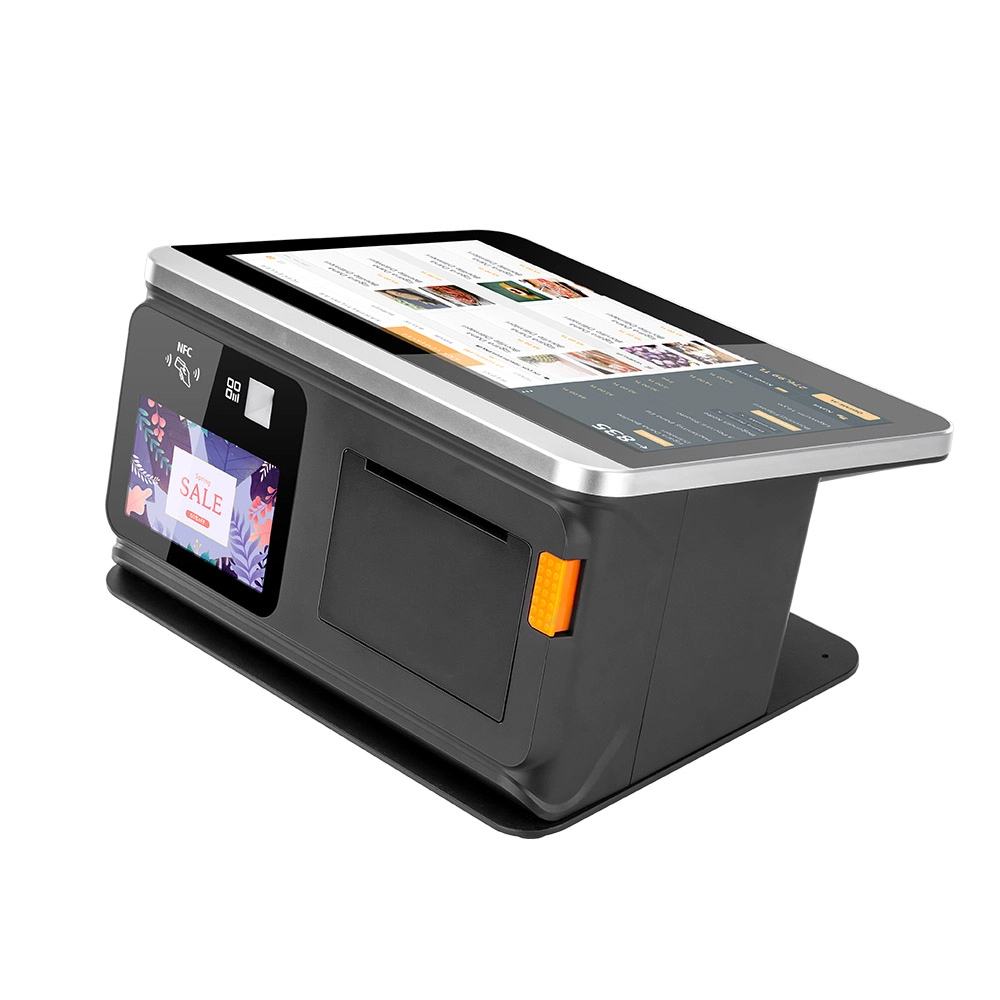
All in One POS Terminal Metal 11.6'' Touchscreen Android Windows with Printer
The All-in-One POS Terminal features an 11.6'' touchscreen display, compatible with both Android and Windows. This metal-constructed terminal combines durability with style, making it a perfect fit for any retail or hospitality environment. Equipped with a built-in printer, it streamlines transactions by allowing for instant receipt printing.
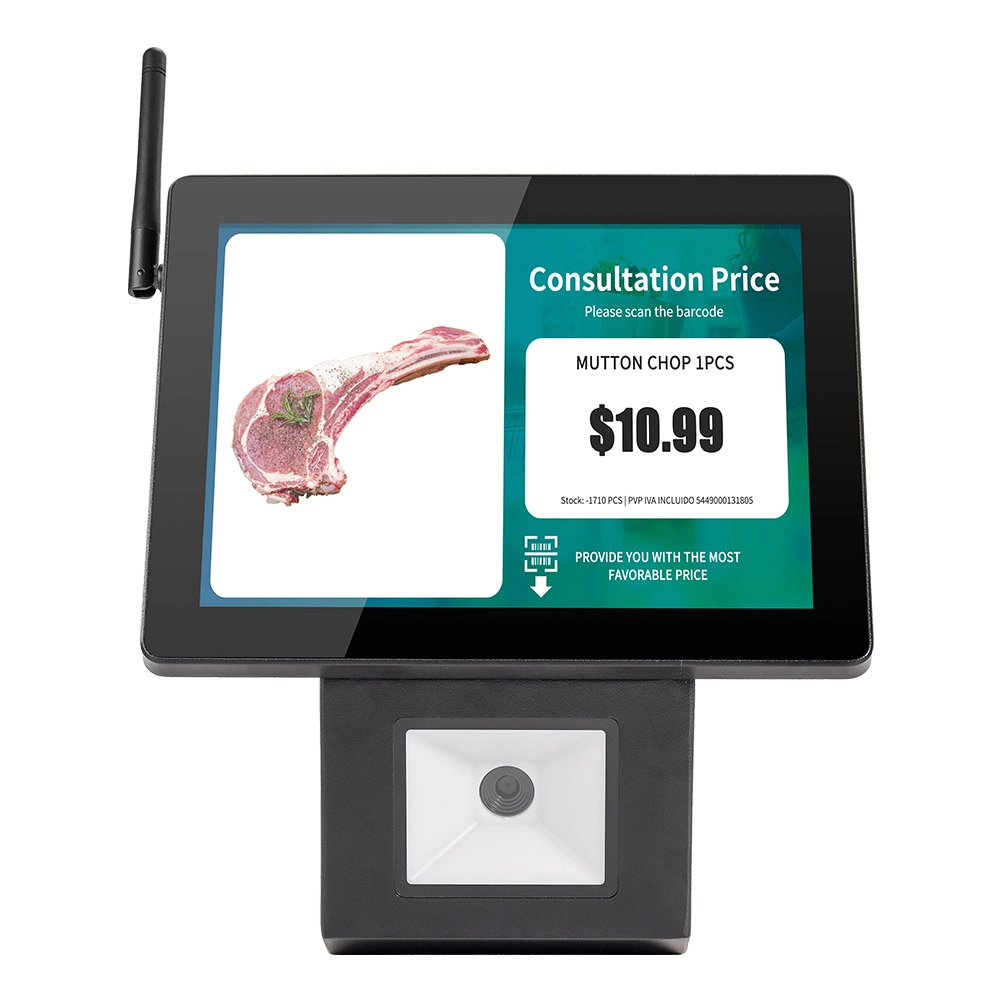
8 inch Touchscreen Price Checker Barcode Scanner Wifi Optional Android Win 10
FAVORPOS Touchscreen Price Checker offers a user-friendly interface, perfect for retail environments. With optional Wi-Fi connectivity, this device runs on Android or Windows, providing flexibility and ease of use. The integrated barcode scanner allows for quick price verification, enhancing the shopping experience for customers. Compact and efficient, it's designed to streamline operations and improve checkout speed.

Factory Fast Scan Barcode QR Code Scanner for Supermarket Price Check Device Manufacturer
FAVORPOS is a manufacturer specializing in Barcode/QR Code device. This new designed price check machine have thinner screen, more fashion appearance. 10.1 inch touch screen can bring convenience to customers. This machine can greatly improve the operational efficiency of a business environment.

New Dual Touch Screen Pos Factory Aluminum Adjustable Screen Pos Machine Manufacturer
This new-generation POS terminal features a durable aluminum alloy body and a flexible dual-screen design. The customer-facing secondary display can be adjusted vertically and horizontally to achieve the ideal viewing angle, with multiple screen size options available to meet different retail needs. Powered by either Windows or Android operating systems, the system offers strong compatibility with various POS software solutions. With its modern design, stable performance, and adaptable configuration, this POS machine is well suited for supermarkets, specialty retail stores, and other high-traffic commercial environments.


Copyright © 2025 Favorpos All Rights Reserved.
