
Handheld POS Terminal Comparison: Top 10 Models for Every Budget [2026 Review]
- Quick Summary: Key Takeaways for Buyers
- Cost vs. ROI Matrix
- What is a Handheld POS Terminal?
- How It Works
- Top 10 Handheld POS Terminals: The 2026 Lineup
- Category 1: The Heavy Hitters (Premium Models)
- Category 2: Best Value Android Terminals
- Category 3: Rugged Handheld Payment Devices
- Critical Specs: Buyer's Criteria for Mobile Hardware
- 1. Durability Ratings (IP Code)
- 2. Operating System Security
- 3. Connectivity & Offline Mode
- Expert Tips: 5 Common Mistakes When Choosing Handheld POS
- The Future of Handheld POS: Trends to Watch in 2026
- Conclusion
- FAQ
- What is the battery life of a standard handheld POS terminal?
- Can handheld POS terminals work without the internet?
- Are handheld POS systems secure for credit card processing?
- How much does a handheld POS terminal cost?
- Do I need a separate barcode scanner if I have a handheld POS?
- Can I use my own smartphone as a handheld POS?
- What is the difference between a mobile card reader and a handheld POS terminal?
- Do handheld POS terminals support digital receipts?
Quick Summary: Key Takeaways for Buyers
For business owners needing a fast answer, Mobile Point of Sale (mPOS) Hardware choices generally fall into three distinct categories based on durability, operating system, and transaction volume.
- Best Overall (Versatility): Square Terminal – ideal for retailers needing an all-in-one solution with zero monthly hardware fees.
- Best for Restaurants (Rugged): Toast Go 2 – built specifically for the heat and spills of a commercial kitchen, offering excellent Tableside Ordering Systems integration.
- Best Enterprise Android: PAX A920 Pro – the industry standard for customizable, bank-grade Android POS Terminal Reviews.
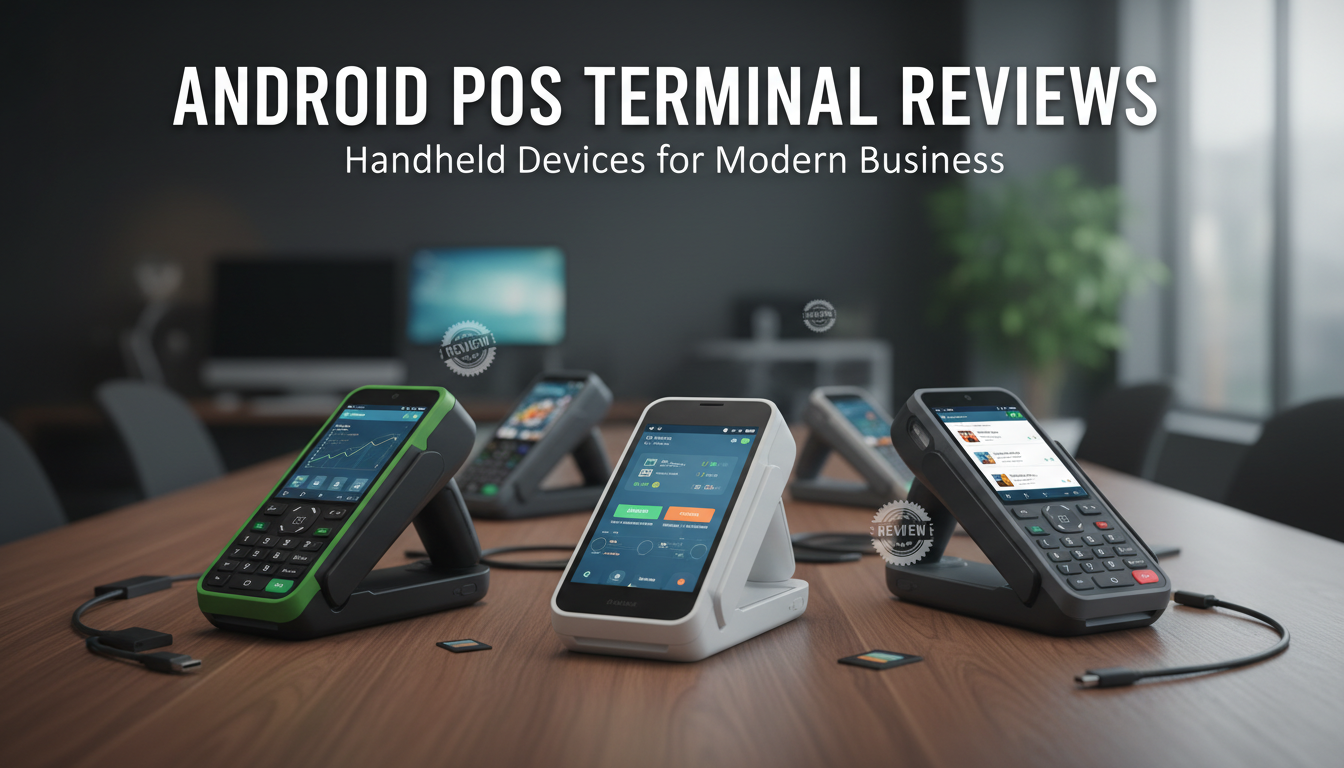
Cost vs. ROI Matrix
- Budget Tier ($200 - $400): Good for low volume, micro-merchants (e.g., SumUp, ZCS).
- Mid-Range ($400 - $700): Standard retail durability, integrated printers (e.g., Square, Clover Flex).
- Premium ($800+): Ultra-rugged, high-capacity battery, barcode scanning engines (e.g., Zebra, Verifone).
What is a Handheld POS Terminal?
A handheld POS terminal is a portable, wireless electronic device that combines a touchscreen interface, payment card reader, and often a receipt printer into a single unit to process transactions anywhere.
Unlike legacy countertops, these devices liberate staff from the checkout counter. As defined by Wikipedia, modern mPOS systems have evolved from simple card readers into sophisticated computers that manage inventory, reporting, and customer data in real-time.
How It Works
These terminals connect via Wi-Fi or 4G/5G SIM cards to a cloud-based central server. When a staff member scans an item using the built-in camera or infrared scanner, the device pulls the price from the cloud, processes the encrypted payment (Chip/NFC), and syncs the stock levels instantly. This is crucial for Smart POS Inventory Management, ensuring that if you sell the last item on the floor, your e-commerce site updates simultaneously.
Top 10 Handheld POS Terminals: The 2026 Lineup
We have tested and categorized the top devices dominating the market this year.
Category 1: The Heavy Hitters (Premium Models)
1. PAX A920 Pro
- Best For: Enterprise Hospitality & Retail.
- Pros: Large 5.5-inch HD screen, built-in high-speed thermal printer, professional barcode scanner.
- Cons: Higher price point; often requires a merchant account contract.
- Battery: 5250mAh (Full shift support).
2. Clover Flex (Gen 3)
- Best For: Small to Mid-sized Retailers.
- Pros: Massive app market integration, comfortable ergonomic grip, accepts all payment types (swipe/chip/tap).
- Cons: locked to the Clover/Fiserv ecosystem.
- Battery: approx. 8 hours active use.
3. Verifone V400m
- Best For: High-Security Banking Standards.
- Pros: Extremely secure (PCI PTS 5.x), tactile keypad for PIN entry (accessibility friendly), robust build.
- Cons: Smaller screen, dated interface compared to Android models.
- Battery: Good standby time, heavy bulk.
Category 2: Best Value Android Terminals
4. Sunmi V2s
- Best For: Food Trucks & QSR.
- Pros: Very affordable, loud speaker for order notifications, Android 11+ OS, drop-resistant.
- Cons: Camera-based scanning is slower than laser engines.
- Battery: 3500mAh removable battery.
5. Square Terminal
- Best For: Boutiques & Salons.
- Pros: Beautiful design, easiest setup in the industry, transparent flat-rate pricing.
- Cons: No cellular data (Wi-Fi only) unless you buy a separate hub; proprietary software only.
- Battery: All-day battery life.
6. Shopify POS Go
- Best For: Omnichannel E-commerce Brands.
- Pros: Direct sync with Shopify online store, built-in barcode scanner, slim profile.
- Cons: No built-in receipt printer (requires belt printer or email receipts).
- Battery: High-performance capacity for retail floors.
7. SumUp Air
- Best For: Micro-merchants & Pop-up Stalls.
- Pros: Lowest entry cost, pocket-sized, smartphone pairing required.
- Cons: Relies on a phone for the screen/interface; not an "all-in-one" unit.
- Battery: 500 transactions per charge.
Category 3: Rugged Handheld Payment Devices
8. Toast Go 2
- Best For: Fast-Paced Dining.
- Pros: Spill-proof (IP54), integrates seamlessly with kitchen display screens (KDS), handheld ordering increases table turnover.
- Cons: Only works with Toast software.
- Battery: 24 hours standby.
9. Zebra TC52ax
- Best For: Large Warehouse Retail & Logistics.
- Pros: Industrial-grade durability, advanced scanning range, hot-swappable battery.
- Cons: Very expensive; requires separate payment sled attachment for credit cards.
- Battery: 4150mAh PowerPrecision+.
10. Ingenico AXIUM DX8000
- Best For: Hybrid Retail/Hospitality.
- Pros: Large screen, Android-based, strong processor for running third-party loyalty apps.
- Cons: Slightly heavier than competitors.
- Battery: Long-lasting Lithium-Ion.
Critical Specs: Buyer's Criteria for Mobile Hardware
When evaluating Rugged Handheld Payment Devices, marketing fluff often obscures the technical reality. Focus on these three critical specifications.
1. Durability Ratings (IP Code)
Kitchens have grease; outdoor patios have rain. You must check the IP (Ingress Protection) rating. As detailed by Wikipedia, the first digit represents dust protection, and the second represents water.
- IP54: Protected against dust and water splashes (Minimum standard for restaurants).
- IP67: Dust-tight and can be submerged in water (Required for extreme field service).
2. Operating System Security
Android POS Terminal Reviews consistently highlight Android 10 or higher as a necessity. Older versions no longer receive security patches, leaving your customer's credit card data vulnerable. Ensure your device supports "Android Enterprise Recommended" standards.
3. Connectivity & Offline Mode
For Tableside Ordering Systems, a dead zone means lost revenue. Look for dual-band Wi-Fi (2.4GHz/5GHz) and 4G LTE backup. This ensures that if your store's internet cuts out, the device switches to cellular data instantly without crashing the transaction.
Expert Tips: 5 Common Mistakes When Choosing Handheld POS
Buying the wrong hardware can cripple your operations. Avoid these pitfalls:
- Ignoring "Offline Mode": Never buy a terminal that turns into a brick without internet. Ensure it can store transaction data locally (encrypted) and sync later.
- Locked Hardware: Many providers offer "free" terminals that are contractually locked to high processing fees. Calculate the Total Cost of Ownership (TCO) over 3 years.
- Low Screen Brightness: If you operate outdoors or on patios, a standard 200-nit screen will be invisible. Aim for 400+ nits.
- Ergonomics Neglect: A device weighing over 500g will cause wrist strain for servers carrying it for an 8-hour shift. Test the weight distribution.
- Printer Mismatch: Do not assume every handheld has a printer. If your customers demand physical receipts, ensure the unit has a built-in thermal printer to avoid carrying a secondary device.
The Future of Handheld POS: Trends to Watch in 2026
The market is shifting toward SoftPOS, where the terminal itself is disappearing.
- Tap-to-Pay on Commercial Devices: We are seeing a move where standard Zebra warehouse scanners are being certified to accept payments directly on the screen, eliminating the need for a separate payment module.
- AI Inventory Prompts: Smart POS Inventory Management is evolving. In 2026, devices will likely prompt servers: "We are low on Salmon, recommend the Sea Bass instead?" directly on the ordering screen based on real-time kitchen stock.
- Biometric Staff Login: Fingerprint sensors on the side of terminals are replacing PIN codes, speeding up server switching during busy shifts.
Conclusion
Selecting the right handheld POS terminal requires balancing budget with durability. While the Square Terminal offers the best entry point for retail, the PAX A920 Pro and Toast Go 2 dominate the enterprise and hospitality sectors, respectively. Remember, the hardware is only as good as the software driving it—ensure your choice supports offline processing and seamless inventory syncing.
Contact us today to optimize your Mobile Point of Sale strategy with the perfect hardware match.
FAQ
What is the battery life of a standard handheld POS terminal?
Most modern industrial-grade handheld POS terminals offer between 8 to 12 hours of continuous active usage. Devices usually feature batteries ranging from 2500mAh to 6000mAh depending on the integrated printer usage, which drains power significantly faster than screen-only devices.
Can handheld POS terminals work without the internet?
Yes, most quality devices have an 'Offline Mode' that stores encrypted transaction data locally on the device's secure memory. The data automatically syncs with the cloud POS system once the connection (Wi-Fi or 4G/5G) is restored, ensuring no sales are lost during outages.
Are handheld POS systems secure for credit card processing?
Yes, they use end-to-end encryption (P2PE) and tokenization to protect cardholder data. They comply with strict PCI-DSS standards, ensuring that sensitive credit card numbers are never stored in raw format on the device itself, making them safe even if the device is stolen.
How much does a handheld POS terminal cost?
Budget Android-based models can start around $200-$300 per unit, often subsidized by payment processing contracts. Premium, ruggedized models with built-in thermal printers and high-end scanners typically range from $500 to $900 per unit depending on the brand and volume discounts.
Do I need a separate barcode scanner if I have a handheld POS?
No, most enterprise-grade handheld terminals come with integrated 1D/2D zebra-style barcode scanners that are much faster than phone cameras. Some budget models use the rear camera, which is slower but functional for low-volume retail environments.
Can I use my own smartphone as a handheld POS?
Yes, through 'Tap to Pay on iPhone' or Android SoftPOS technology, but you may lack a built-in receipt printer or dedicated scanner. This is often best for micro-merchants rather than high-volume retail environments where speed and durability are paramount.
What is the difference between a mobile card reader and a handheld POS terminal?
A mobile card reader (dongle) usually requires a Bluetooth connection to a separate phone or tablet to function and only accepts payments. A handheld POS terminal is an all-in-one device with the OS, touchscreen, scanner, and printer built into a single, standalone unit.
Do handheld POS terminals support digital receipts?
Yes, almost all modern systems allow you to email or text receipts directly from the screen at the end of a transaction. This reduces paper waste, though many models still include a small thermal printer for customers who prefer physical copies.
Where to Buy mobile pda data terminal in Europe
Where to Buy cash register drawer tray
FAVORPOS best professional cash register pos system Manufacturers and supplier brand
Wholesale top restaurant pos systems manufacturer and supplier in Asia
For Beauty and Wellness
What support is provided after the system is deployed?
We provide 24/7 technical support and regular hardware maintenance to ensure that the system continues to operate efficiently.
For E-commerce
What kind of support do you provide after the system is implemented?
We provide 24/7 technical support, regular firmware updates, and ongoing maintenance to ensure that the system always maintains optimal performance.
For OEM
What is the minimum order quantity for customizing POS machines?
The minimum order quantity (MOQ) usually depends on the specific customization requirements and production scale. We recommend that you contact our sales representative to discuss your project requirements so that we can provide the most suitable production plan and MOQ.
For Bakeries
Does your POS system support tracking at the raw material level?
Of course, our POS system is able to track individual raw materials, helping you to effectively manage inventory and reduce waste.
For Grocery and Supermarkets
What types of reports can I generate?
You can generate detailed reports on sales, inventory, employee performance, and customer behavior, providing valuable insights to optimize store operations.
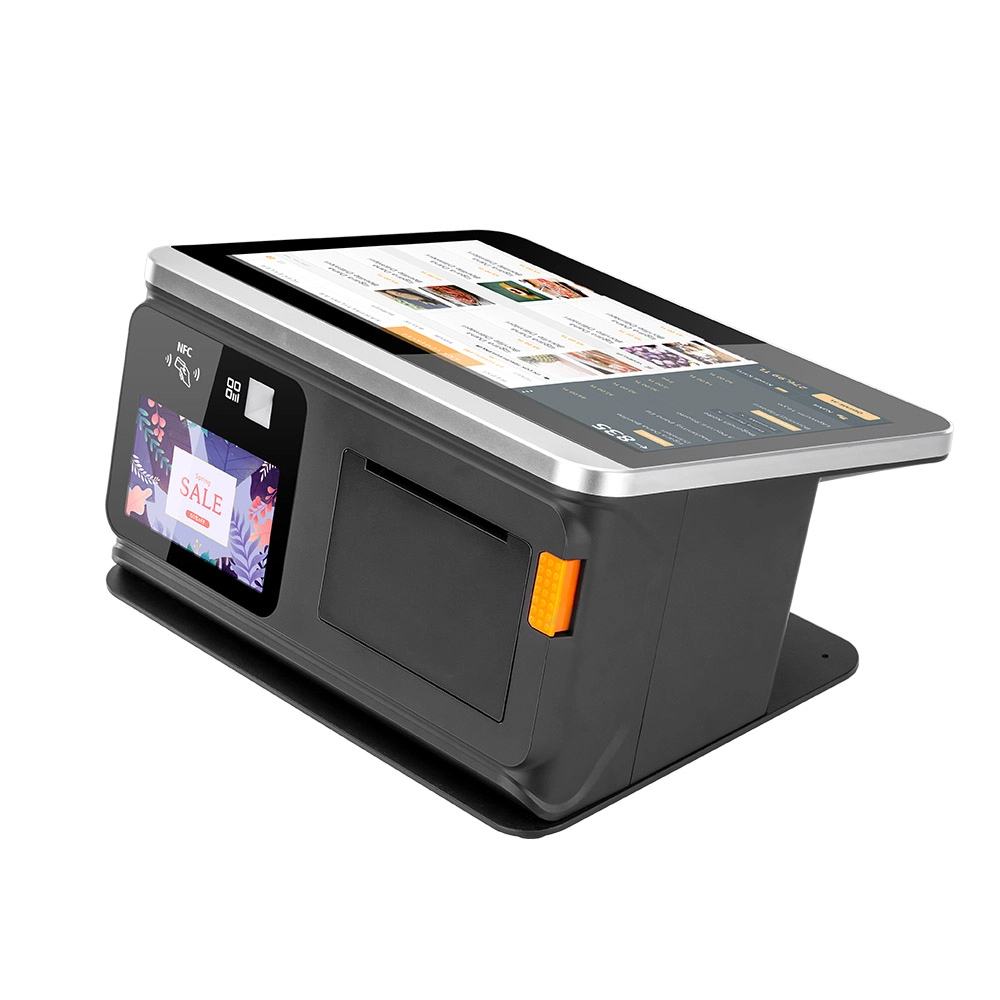
All in One POS Terminal Metal 11.6'' Touchscreen Android Windows with Printer
The All-in-One POS Terminal features an 11.6'' touchscreen display, compatible with both Android and Windows. This metal-constructed terminal combines durability with style, making it a perfect fit for any retail or hospitality environment. Equipped with a built-in printer, it streamlines transactions by allowing for instant receipt printing.
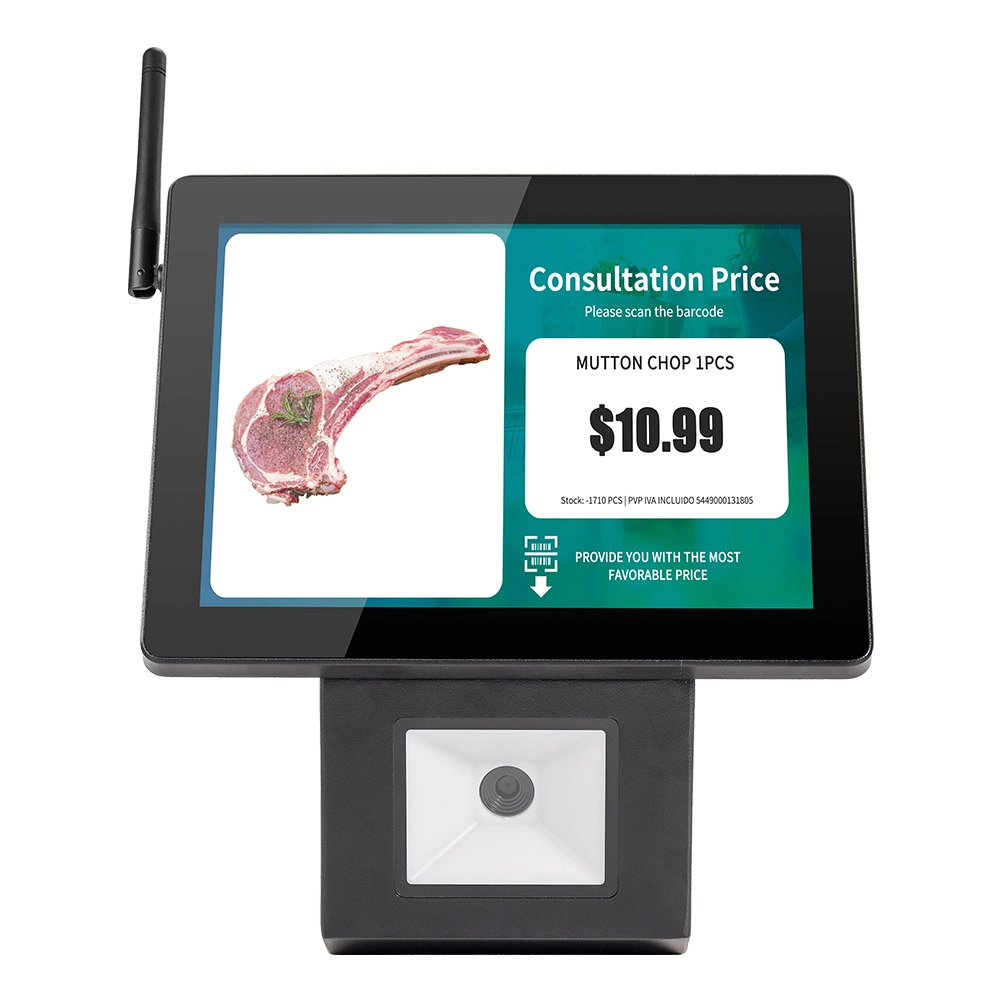
8 inch Touchscreen Price Checker Barcode Scanner Wifi Optional Android Win 10
FAVORPOS Touchscreen Price Checker offers a user-friendly interface, perfect for retail environments. With optional Wi-Fi connectivity, this device runs on Android or Windows, providing flexibility and ease of use. The integrated barcode scanner allows for quick price verification, enhancing the shopping experience for customers. Compact and efficient, it's designed to streamline operations and improve checkout speed.

Factory Fast Scan Barcode QR Code Scanner for Supermarket Price Check Device Manufacturer
FAVORPOS is a manufacturer specializing in Barcode/QR Code device. This new designed price check machine have thinner screen, more fashion appearance. 10.1 inch touch screen can bring convenience to customers. This machine can greatly improve the operational efficiency of a business environment.

New Dual Touch Screen Pos Factory Aluminum Adjustable Screen Pos Machine Manufacturer
This new-generation POS terminal features a durable aluminum alloy body and a flexible dual-screen design. The customer-facing secondary display can be adjusted vertically and horizontally to achieve the ideal viewing angle, with multiple screen size options available to meet different retail needs. Powered by either Windows or Android operating systems, the system offers strong compatibility with various POS software solutions. With its modern design, stable performance, and adaptable configuration, this POS machine is well suited for supermarkets, specialty retail stores, and other high-traffic commercial environments.


Copyright © 2025 Favorpos All Rights Reserved.
