
POS Hardware Essentials for Retail Stores: Terminals & Scanners
- The Foundation of Modern Retail: Understanding Your POS System's Core
- More Than Just a Cash Register: The Evolution of POS
- Why the Right Hardware Matters for Your Bottom Line
- Deciphering POS Terminals: Your Command Center
- All-in-One vs. Modular: Choosing the Right Setup
- Essential Features for a Robust POS Terminal
- The Power of the Scan: Selecting the Right Barcode Scanners
- Types of Barcode Scanners and Their Applications
- Key Considerations for Scanner Selection
- Integrating Your Hardware for a Seamless Retail Experience
- Beyond Terminals and Scanners: Essential Peripherals
- The Importance of Software-Hardware Compatibility
- Frequently Asked Questions (FAQ)
In today's fast-paced retail landscape, a store's ability to operate efficiently, manage inventory accurately, and provide a seamless customer experience hinges significantly on its Point of Sale (POS) system. But beyond the software, the physical hardware forms the backbone of these operations. As a professional consultant with extensive experience in SEO and , and deep knowledge of POS systems, I've seen firsthand how the right POS hardware essentials—from robust terminals to lightning-fast scanners—can transform a retail business. This article will guide you through the critical choices in POS terminals and scanners, helping you build the most effective setup for your retail store.
For any retail owner seeking to optimize their operations, understanding the foundational elements of their POS setup is paramount. It's not merely about ringing up sales; it's about creating a harmonious ecosystem where every transaction, inventory update, and customer interaction is handled with precision and speed. The journey to discovering the `best POS systems for retail stores` begins with a thorough evaluation of your hardware needs.
The Foundation of Modern Retail: Understanding Your POS System's Core
Before diving into specific hardware components, it’s crucial to grasp the overarching role of a POS system in modern retail. It's the central hub where sales transactions are processed, inventory is tracked, customer data is collected, and business insights are generated. Without reliable hardware, even the most sophisticated POS software will falter, leading to operational bottlenecks, frustrated staff, and dissatisfied customers.
More Than Just a Cash Register: The Evolution of POS
Gone are the days when a cash register was merely a place to store money and print receipts. Today's POS systems have evolved into comprehensive business management tools. According to Wikipedia, the concept of a point of sale system dates back to the 1970s with the introduction of electronic cash registers, but their capabilities have expanded exponentially, especially with the advent of touchscreens, networked systems, and cloud computing. This evolution means that the hardware you choose must be capable of supporting a wide array of functions, from integrated payment processing to detailed analytics.
Modern POS hardware is designed to handle complex tasks, such as managing loyalty programs, integrating with e-commerce platforms, and processing various payment methods including contactless and mobile payments. This interconnectedness is what makes a POS system truly powerful, allowing retailers to gain a holistic view of their business operations and customer behavior.
Why the Right Hardware Matters for Your Bottom Line
Investing in the appropriate POS hardware is not an expense; it's an investment in efficiency, accuracy, and customer satisfaction. The right terminals and scanners can:
- Accelerate Checkout Times: Faster transactions mean shorter queues and happier customers.
- Improve Inventory Accuracy: Real-time tracking reduces stockouts and overstocking, optimizing cash flow.
- Enhance Customer Experience: Seamless interactions, easy returns, and personalized service build loyalty.
- Boost Employee Productivity: Intuitive hardware allows staff to process sales and manage tasks more efficiently.
- Prevent Fraud and Errors: Integrated systems with robust security features minimize losses.
ly, the hardware you choose directly impacts your ability to compete and thrive. For any retail business, selecting components that contribute to the overall effectiveness of your `best POS systems for retail stores` is a strategic decision that pays dividends.
Deciphering POS Terminals: Your Command Center
The POS terminal is arguably the most critical piece of hardware in your retail store. It's the primary interface where sales are processed, orders are taken, and vital business data is accessed. Choosing the right terminal involves balancing functionality, durability, and cost.
All-in-One vs. Modular: Choosing the Right Setup
When it comes to POS terminals, retailers typically choose between all-in-one units and modular systems. Each has its own set of advantages and disadvantages:
| Feature | All-in-One POS Terminal | Modular POS System |
|---|---|---|
| Description | Integrates all core components (monitor, CPU, touchscreen, sometimes printer/card reader) into a single unit. | Separate components (monitor, CPU, printer, card reader) that can be connected as needed. |
| Space Efficiency | High; compact design saves counter space. | Lower; requires more space for individual components. |
| Setup Complexity | Low; plug-and-play simplicity. | Higher; requires connecting multiple peripherals. |
| Maintenance/Repair | If one component fails, the entire unit may need repair/replacement. | Easier to replace individual faulty components, reducing downtime and cost. |
| Flexibility/Scalability | Limited upgrade options; generally fixed configuration. | High; easily customizable and expandable with different peripherals as needs evolve. |
| Aesthetics | Sleek, modern, often preferred for High Quality retail environments. | Can appear more cluttered, though modern designs are improving. |
| Cost Implications | Higher initial cost, potentially higher replacement cost. | Lower initial cost for basic setup, but can increase with additional high-end peripherals. |
For small boutiques or restaurants with limited counter space, an all-in-one system might be the ideal choice for its aesthetic appeal and simplicity. Larger retail operations, however, might benefit from the flexibility and repairability of a modular system, allowing them to customize their `best POS systems for retail stores` to exact specifications.
Essential Features for a Robust POS Terminal
Regardless of whether you choose an all-in-one or modular setup, certain features are non-negotiable for a robust POS terminal:
- Durable Touchscreen: Retail environments are tough. Look for industrial-grade, spill-resistant touchscreens that can withstand constant use and occasional accidents. Resistive touchscreens are generally more durable, while capacitive ones offer a smoother, smartphone-like experience.
- Reliable Connectivity: Multiple USB ports, Ethernet, Wi-Fi, and Bluetooth are essential for connecting peripherals (scanners, printers, cash drawers) and ensuring stable network access. Power-over-Ethernet (PoE) can simplify cabling in some setups.
- Processor and RAM: Adequate processing power and RAM prevent lag, especially during peak hours or when running multiple applications. Aim for at least an Intel i3 processor and 4GB RAM for smooth operations.
- Storage: Solid State Drives (SSDs) are highly recommended over traditional Hard Disk Drives (HDDs) for their speed, durability, and quiet operation.
- Operating System Compatibility: Ensure the hardware is compatible with your chosen POS software, whether it's Windows, Android, or iOS-based.
- Payment Integration: Built-in or seamlessly connectable payment processing terminals for credit/debit cards, NFC (Apple Pay, Google Pay), and EMV chip cards are critical.
By prioritizing these features, you ensure your POS terminal is not just functional but also future-proof, capable of supporting the evolving demands of your retail business.
The Power of the Scan: Selecting the Right Barcode Scanners
Barcode scanners are the unsung heroes of retail efficiency. They reduce manual data entry errors, speed up checkout, and are vital for accurate inventory management. Choosing the right scanner depends on your product types, transaction volume, and operational environment.
Types of Barcode Scanners and Their Applications
Scanners come in various forms, each suited for different retail needs:
- Handheld Scanners: These are the most common type, offering flexibility for scanning items of various sizes and in different locations. They can be corded (USB, Serial) or cordless (Bluetooth, RF), providing mobility. Ideal for smaller stores or items that can't be easily brought to the counter.
- Presentation Scanners (Omni-directional): Designed for hands-free operation, these scanners have a wide scan field, allowing items to be quickly passed over them from any angle. They significantly speed up checkout in high-volume environments like supermarkets or convenience stores.
- In-Counter Scanners: Integrated directly into the checkout counter, these are typically found in large grocery stores. They offer the fastest scanning speeds and often combine with a scale for weighing produce.
- 2D Imagers: While traditional laser scanners read only 1D (linear) barcodes (like UPC/EAN), 2D imagers can read both 1D and 2D barcodes (like QR codes, Data Matrix). 2D barcodes hold more information and are increasingly used for loyalty programs, mobile coupons, and inventory tracking. According to GS1, the global standards organization for barcodes, the shift towards 2D barcodes in retail is accelerating due to their versatility. Investing in a 2D imager ensures compatibility with future trends.
- Wireless Scanners: Offer maximum flexibility, allowing staff to scan heavy or bulky items directly in the shopping cart or retrieve items from shelves without needing to be tethered to the POS terminal. Bluetooth connectivity is common, offering good range and reliability.
For a small boutique selling clothing, a simple corded handheld scanner might suffice. A busy grocery store, on the other hand, would benefit immensely from presentation or in-counter 2D imagers to handle high volumes and diverse product packaging quickly.
Key Considerations for Scanner Selection
When selecting barcode scanners, I advise my clients to consider the following:
- Scan Speed and Accuracy: Essential for high-volume retailers. Faster scanning reduces wait times and improves customer satisfaction.
- Durability: Scanners in a retail environment are often dropped or exposed to spills. Look for rugged designs with high IP ratings (Ingress Protection) for dust and water resistance.
- Connectivity: Ensure compatibility with your POS terminal (USB, RS232, Bluetooth). Wireless options offer greater mobility but require battery management.
- Barcode Symbologies: Confirm the scanner can read all the barcode types you use (1D, 2D, stacked, poor quality, screen-based codes).
- Ergonomics: For handheld scanners, comfort is key for staff who will be using them for extended periods.
- Integration with POS Software: The scanner must seamlessly communicate with your POS software for smooth data transfer. This is a crucial factor in building the `best POS systems for retail stores`.
Making an informed decision on scanners can significantly impact your operational efficiency and overall business performance.
Integrating Your Hardware for a Seamless Retail Experience
Beyond the core terminals and scanners, a truly effective POS system integrates several other peripherals to create a complete and cohesive retail solution. The synergy between these components is what elevates a basic checkout system to a powerful business management tool.
Beyond Terminals and Scanners: Essential Peripherals
To complete your `best POS systems for retail stores` setup, consider these additional hardware essentials:
- Thermal Printers: Fast, quiet, and reliable, thermal printers are standard for receipts, order tickets, and labels. They don't use ink, relying instead on heat to produce images, reducing ongoing costs and maintenance.
- Cash Drawers: A secure and robust cash drawer is fundamental for cash transactions. Look for models with durable construction, multiple compartments for different denominations, and secure locking mechanisms that integrate electronically with your POS software.
- Payment Processors/PIN Pads: These devices are crucial for accepting credit and debit card payments securely. Ensure they are EMV-compliant for chip cards and ideally support NFC/contactless payments. Integration with your POS system should be seamless to prevent manual errors and speed up transactions.
- Customer-Facing Displays: These displays show customers their order total, itemized list, and promotional messages, enhancing transparency and customer engagement.
- Price Checkers: Especially useful in larger stores, these allow customers to scan item barcodes themselves to check prices, reducing staff inquiries and improving customer autonomy.
The Importance of Software-Hardware Compatibility
No matter how advanced individual pieces of hardware are, their true potential is unlocked only when they work in perfect harmony with your POS software. Compatibility issues can lead to frequent glitches, data discrepancies, and significant downtime. Always verify that your chosen hardware is certified or explicitly supported by your POS software vendor.
This holistic approach to hardware selection and integration is where true expertise shines. As a trusted company in the POS system industry, FAVORPOS understands this intricate relationship. We are committed to using high-tech devices to drive success for businesses. Our current solutions span a comprehensive range, including POS systems and peripherals, cash registers, handheld terminals and scanners, price checkers, thermal printers, and accessories for diverse market segments such as retail, catering, and supermarkets.
At FAVORPOS, we don't just provide hardware; we develop advanced point of sale systems and solutions. Our dedication extends to offering OEM and ODM services, allowing us to fully meet customer needs and optimize their business operations. This commitment to quality and industry development is unwavering, ensuring that when you choose FAVORPOS, you're not just getting a product, but a reliable partner.
For example, our Handheld POS terminals offer mobility and versatility, empowering staff to serve customers anywhere on the sales floor. Our robust POS systems integrate seamlessly with our high-performance Thermal Printers for swift receipt printing and secure Cash Drawers. And for larger retail environments, our Price Checkers enhance customer autonomy, all contributing to a truly advanced and efficient retail ecosystem.
Our vision at FAVORPOS is to become the world's best manufacturer of Point of Sale (POS) systems and solutions. With an outstanding dedication to quality and customers, we always strive to find the best solutions to support all businesses and improve their efficiency in this highly competitive field. Our technological strength, combined with a deep understanding of market trends and user pain points, allows us to deliver solutions that are not only reliable but also innovative and future-proof. We differentiate ourselves through our commitment to customization and our long-term partnership approach, ensuring our clients always have access to the most effective and competitive POS solutions.
In conclusion, selecting the right POS hardware is a foundational decision that impacts every aspect of your retail operations. By carefully considering the various types of terminals and scanners, understanding their essential features, and ensuring seamless integration with other peripherals and software, you can build a robust, efficient, and future-ready POS system. This strategic investment will not only streamline your daily operations but also enhance the customer experience, ly driving growth and success for your retail business.
Frequently Asked Questions (FAQ)
Q1: What is the most important piece of POS hardware for a new retail store?
A1: While all components are vital, the POS terminal is arguably the most critical as it's the central interface for all transactions and data management. It needs to be reliable, powerful enough for your software, and user-friendly. Paired with a suitable barcode scanner, these form the core of any `best POS systems for retail stores`.
Q2: Should I choose a corded or cordless barcode scanner?
A2: This depends on your store layout and product types. Corded scanners are generally more affordable and don't require battery management, suitable for stationary checkout points. Cordless scanners offer greater flexibility and mobility, allowing staff to scan bulky items or assist customers away from the counter, but they are typically more expensive and require charging.
Q3: How often should I upgrade my POS hardware?
A3: There's no fixed rule, but typically, POS hardware has a lifespan of 5-7 years before technology advancements or wear and tear necessitate an upgrade. Factors like performance degradation, lack of compatibility with new software features, or frequent breakdowns are good indicators that it's time to consider an upgrade to maintain one of the `best POS systems for retail stores`.
Q4: Are all-in-one POS systems better than modular ones?
A4: Neither is inherently “better”; it depends on your specific needs. All-in-one systems are compact, stylish, and easy to set up, ideal for limited space. Modular systems offer greater flexibility, easier component replacement, and better scalability for growing businesses. Your choice should align with your budget, space constraints, and long-term business strategy.
Q5: What are 2D imagers and why are they becoming more popular?
A5: 2D imagers are advanced barcode scanners capable of reading both traditional 1D (linear) barcodes and newer 2D barcodes like QR codes and Data Matrix codes. They are gaining popularity because 2D barcodes can store more information, are used for mobile payments and loyalty programs, and can be read more reliably even if damaged. Upgrading to a 2D imager ensures your system is future-proof and can handle a wider range of data inputs.
Q6: How does FAVORPOS help businesses choose the right POS hardware?
A6: FAVORPOS acts as a professional consultant, leveraging extensive industry knowledge and a wide range of high-tech devices to recommend the optimal POS hardware and solutions tailored to each business's unique needs. We provide not just products like Handheld POS, POS systems, Price Checkers, Thermal Printers, and Cash Drawers, but also OEM/ODM services, ensuring seamless integration and optimized business operations that align with the goal of having the `best POS systems for retail stores`.
Ready to optimize your retail operations with cutting-edge POS hardware? Contact us today for a consultation or explore our range of advanced POS systems and peripherals.
Everything You Need to Know About register cash drawer
The pos machine stand Cost Guide
Where to Buy pos stand in Europe
How to start the pos kitchen monitor business in UK ?
For OEM
How to deal with warranty and repair issues of POS machines?
We provide warranty services for customized POS machines. The warranty period and coverage are subject to specific contracts. During the warranty period, if the device fails, we will provide free repair services. You can submit a repair request through our after-sales service team, and we will handle your problem as soon as possible.
What is the minimum order quantity for customizing POS machines?
The minimum order quantity (MOQ) usually depends on the specific customization requirements and production scale. We recommend that you contact our sales representative to discuss your project requirements so that we can provide the most suitable production plan and MOQ.
For Distributor
Are there any fees to become a reseller?
There may be initial costs associated with setup and training, but these details will be outlined in the reseller agreement. Our goal is to ensure that the partnership is mutually beneficial.
For Healthcare
Can the POS system be integrated with our existing EHR/EMR system?
Absolutely. Our POS solution is able to integrate with multiple electronic health record (EHR) and electronic medical record (EMR) systems to streamline operational processes.
For Entertainment & Events
Does the system support the management of multiple venues or locations?
Yes, our system supports multi-location management, allowing you to monitor and manage sales and inventory for all venues from a centralized dashboard.
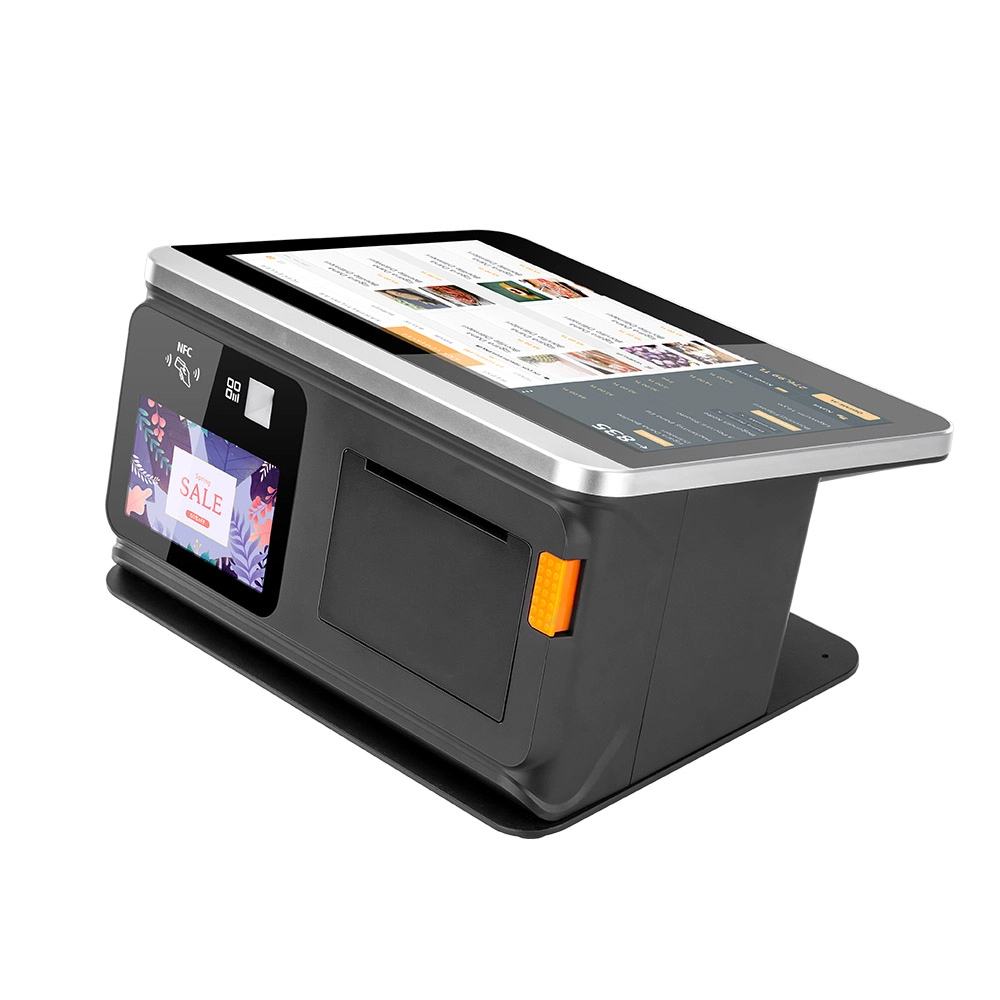
All in One POS Terminal Metal 11.6'' Touchscreen Android Windows with Printer
The All-in-One POS Terminal features an 11.6'' touchscreen display, compatible with both Android and Windows. This metal-constructed terminal combines durability with style, making it a perfect fit for any retail or hospitality environment. Equipped with a built-in printer, it streamlines transactions by allowing for instant receipt printing.
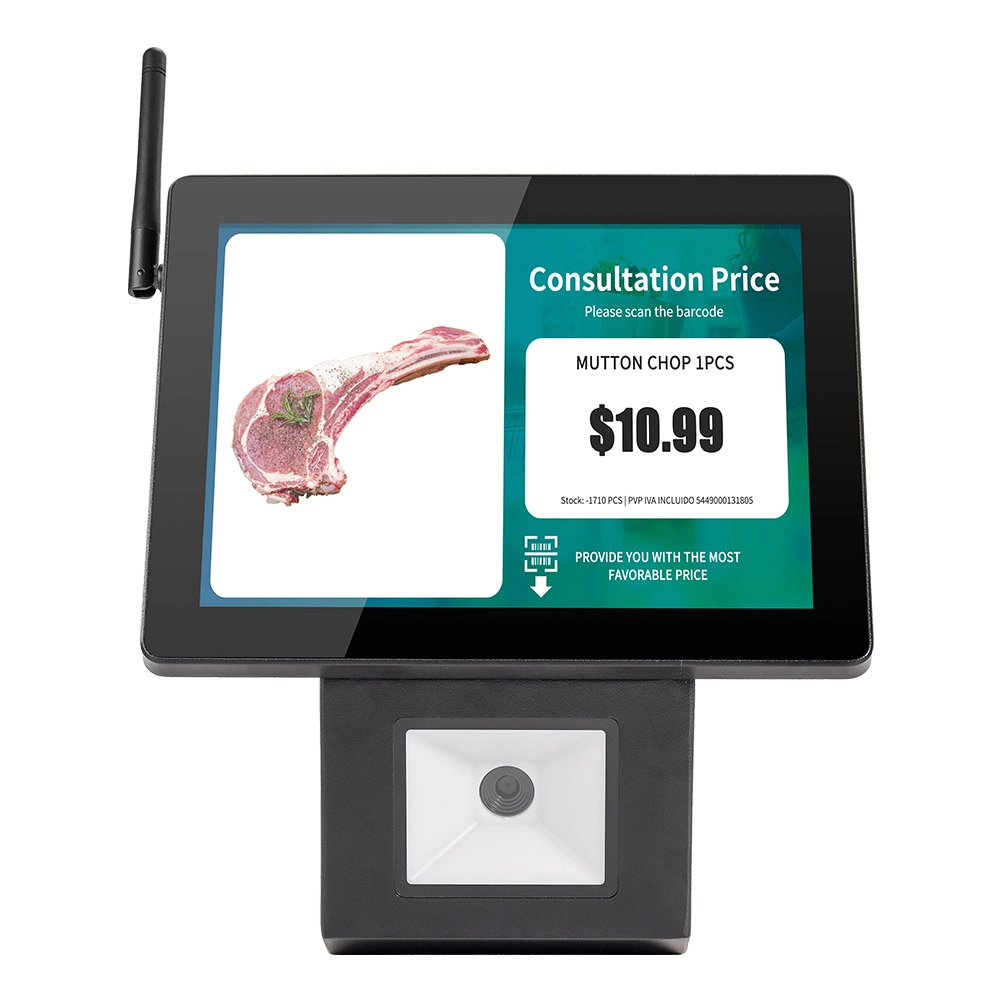
8 inch Touchscreen Price Checker Barcode Scanner Wifi Optional Android Win 10
FAVORPOS Touchscreen Price Checker offers a user-friendly interface, perfect for retail environments. With optional Wi-Fi connectivity, this device runs on Android or Windows, providing flexibility and ease of use. The integrated barcode scanner allows for quick price verification, enhancing the shopping experience for customers. Compact and efficient, it's designed to streamline operations and improve checkout speed.

Factory Fast Scan Barcode QR Code Scanner for Supermarket Price Check Device Manufacturer
FAVORPOS is a manufacturer specializing in Barcode/QR Code device. This new designed price check machine have thinner screen, more fashion appearance. 10.1 inch touch screen can bring convenience to customers. This machine can greatly improve the operational efficiency of a business environment.

New Dual Touch Screen Pos Factory Aluminum Adjustable Screen Pos Machine Manufacturer
This new-generation POS terminal features a durable aluminum alloy body and a flexible dual-screen design. The customer-facing secondary display can be adjusted vertically and horizontally to achieve the ideal viewing angle, with multiple screen size options available to meet different retail needs. Powered by either Windows or Android operating systems, the system offers strong compatibility with various POS software solutions. With its modern design, stable performance, and adaptable configuration, this POS machine is well suited for supermarkets, specialty retail stores, and other high-traffic commercial environments.


Copyright © 2025 Favorpos All Rights Reserved.
