
POS Hardware Bundles: Choosing Systems for Your Restaurant
- The Anatomy of a High-Performing Restaurant POS Setup
- The Brain: POS Terminals & Software Integration
- Seamless Transactions: Payment Processing Hardware
- Essential Peripherals: Printers, Drawers, Displays
- Key Considerations for Choosing Your Restaurant POS Hardware Bundle
- Durability and Environmental Resilience
- Scalability and Future-Proofing Your Investment
- Integration Capabilities and Ecosystem
- Cost-Effectiveness vs. Long-Term Value
- Exploring Popular POS Systems for Restaurants: Hardware & Solution Providers
- Cloud-Based vs. On-Premise Hardware Ecosystems
- Specialized Restaurant POS Solutions and Their Hardware
- Evaluating Hardware Ecosystems and Third-Party Compatibility
- Making the Right Choice for Your Restaurant's Future
- Frequently Asked Questions (FAQ)
In my years as a POS system consultant, specializing in the dynamic world of restaurants, I've seen firsthand how the right technology can be a game-changer. For restaurant owners, choosing a Point of Sale (POS) system isn't just about software; it's about selecting a cohesive hardware bundle that forms the backbone of your daily operations. This decision impacts everything from order accuracy and payment processing speed to inventory management and customer relationship building. My goal with this guide is to demystify the process, helping you understand what makes certain popular POS systems for restaurants truly stand out in terms of their hardware offerings.
As businesses increasingly rely on high-tech devices to drive success, investing in a robust and integrated POS hardware bundle is no longer a luxury but a necessity. It’s about building a system that’s not only efficient but also resilient, scalable, and intuitive for your staff. Through my experience, I've observed that many restaurant owners often underestimate the critical role hardware plays, leading to bottlenecks, frustrations, and missed opportunities. Let’s dive deep into selecting the optimal POS hardware bundles that will empower your restaurant for long-term success.
The Anatomy of a High-Performing Restaurant POS Setup
Before we explore specific bundles, it's essential to understand the individual components that make up a comprehensive POS system. Each piece of hardware plays a vital role in ensuring smooth operations, from the kitchen to the front of house. My advice to clients always begins with this foundational understanding, as it helps them appreciate the interconnectedness of their investment.
The Brain: POS Terminals & Software Integration
At the heart of any POS system is the terminal, often referred to as the brain. This can range from a stationary touchscreen workstation to a mobile tablet. The terminal houses the POS software, which is your operational command center. It's where orders are taken, payments are processed, and critical data is recorded. When evaluating terminals, I emphasize the importance of screen responsiveness, processing power, and operating system compatibility with your chosen software. For busy restaurants, a slow or clunky terminal can bring service to a grinding halt. Furthermore, consider the physical design – does it fit your counter space? Is it spill-resistant? These seemingly small details make a huge difference in a fast-paced environment.
Seamless Transactions: Payment Processing Hardware
In today's cashless society, efficient payment processing hardware is non-negotiable. This includes card readers (EMV chip readers, NFC/contactless payment readers), and sometimes dedicated payment terminals. The key here is not just speed but also security. Adherence to Payment Card Industry Data Security Standard (PCI DSS) is paramount. As per industry standards, ensuring your payment hardware is up-to-date with the latest security protocols protects both your business and your customers' sensitive information. PCI DSS Council provides comprehensive guidelines on this. I always recommend integrated payment solutions where your POS terminal directly communicates with the payment processor, minimizing errors and speeding up checkout times.
Essential Peripherals: Printers, Drawers, Displays
Beyond the core terminal and payment devices, several peripherals are crucial for a complete restaurant POS hardware bundle:
- Printers: You'll typically need kitchen printers for order tickets, bar printers for drink orders, and receipt printers for customers. Thermal printers are popular for their speed and quiet operation, while impact printers are often preferred in hot kitchen environments for their durability.
- Cash Drawers: Even in a card-heavy world, a secure cash drawer is essential for handling cash transactions, tips, and making change. Durability and a robust locking mechanism are key features I look for.
- Customer-Facing Displays (CFDs): These displays improve order accuracy and transparency by showing customers their order details and total before payment. They can also be used for promotional content, enhancing the customer experience.
- Barcode Scanners: While more common in retail, some restaurants, especially those with market sections or extensive beverage programs, benefit from scanners for inventory management and product look-up.
- Handheld Terminals: For table service restaurants, handheld POS devices (like tablets or dedicated order-taking devices) allow servers to take orders tableside, send them directly to the kitchen, and process payments without leaving the customer. This dramatically improves efficiency and service speed.
Key Considerations for Choosing Your Restaurant POS Hardware Bundle
With a clear understanding of the components, the next step is to evaluate what truly matters for your specific restaurant environment. My experience has taught me that a one-size-fits-all approach simply doesn't work. The best hardware bundle is one tailored to your operational style, volume, and future aspirations.
Durability and Environmental Resilience
Restaurants are tough environments. Spills, drops, extreme temperatures, and constant use are daily realities. This is why durability is paramount for your POS hardware. I consistently advise clients to look for industrial-grade, ruggedized hardware. Touchscreens should be sealed against liquid and dust ingress. Consider devices designed for commercial use, not consumer-grade tablets. The upfront investment in durable hardware often translates into significant long-term savings by reducing replacement costs and downtime. For kitchen displays or terminals, heat resistance is a critical factor.
Scalability and Future-Proofing Your Investment
Your restaurant will grow, and your POS system needs to grow with it. When I help clients select popular POS systems for restaurants, I always factor in scalability. Can you easily add more terminals, handheld devices, or kitchen printers as your business expands or as technology evolves? Will the system support new payment methods down the line? Investing in modular hardware that allows for easy upgrades or expansions ensures your system remains relevant and efficient for years to come, avoiding costly overhauls. Think about open architecture solutions that integrate well with third-party apps and hardware.
Integration Capabilities and Ecosystem
A truly powerful POS system doesn't operate in a vacuum. It integrates seamlessly with other essential restaurant technologies: inventory management, loyalty programs, online ordering platforms, reservation systems, and accounting software. When choosing hardware, confirm its compatibility with your desired software ecosystem. Look for hardware bundles that are part of a larger, well-supported platform. This ensures data flows smoothly across all aspects of your business, providing a holistic view of your operations and eliminating manual data entry, which is prone to error and incredibly time-consuming. A fragmented system, in my experience, causes more headaches than it solves.
Cost-Effectiveness vs. Long-Term Value
It's natural to consider the budget, but I always guide clients to distinguish between upfront cost and long-term value. A cheaper hardware bundle might seem appealing initially, but if it's prone to breakdowns, lacks essential features, or can't scale, it will cost you more in the long run through repairs, replacements, and operational inefficiencies. Evaluate the total cost of ownership (TCO), including hardware costs, software subscriptions, installation, training, maintenance, and support. A reliable, feature-rich system that enhances efficiency and customer experience offers a far greater return on investment.
Here’s a simplified comparison of general hardware bundle approaches:
| Feature | Budget-Friendly Bundle | Standard Performance Bundle | High-Performance & Integrated Bundle |
|---|---|---|---|
| Initial Cost | Low | Medium | High |
| Hardware Durability | Basic Consumer Grade | Commercial Grade | Ruggedized, Industrial Grade |
| Scalability | Limited | Moderate | High |
| Integration Potential | Basic | Good | Excellent (API access, broad compatibility) |
| Typical Components | Tablet/PC, Basic Receipt Printer, Cash Drawer | Touchscreen Terminal, EMV Card Reader, Thermal Printer, Cash Drawer, KDS optional | Rugged Touchscreen Terminal, Integrated Payment Terminal, Multiple Thermal/Impact Printers, Handheld POS, CFD, KDS, Barcode Scanner |
| Best For | Small Cafes, Food Trucks with basic needs | Mid-sized Restaurants, QSRs | High-Volume Restaurants, Fine Dining, Multi-location chains |
| Long-Term Value | Lower (Higher TCO due to replacements/downtime) | Good | Excellent (Optimized efficiency, lower TCO) |
Exploring Popular POS Systems for Restaurants: Hardware & Solution Providers
When clients ask me about popular POS systems for restaurants, they're often thinking about software brands like Toast, Square, Clover, or Revel. However, it's crucial to remember that each of these comes with its own hardware ecosystem, offering distinct advantages and limitations. My role is to help you see beyond the brand name and understand the hardware implications.
Cloud-Based vs. On-Premise Hardware Ecosystems
The choice between cloud-based and on-premise POS systems significantly impacts your hardware selection. Cloud-based systems (like most modern solutions) often utilize lighter, internet-connected hardware, frequently operating on Android or iOS tablets, making them more flexible and easier to update. On-premise systems, while less common now, require more robust local servers and dedicated terminals, offering greater control but also more maintenance responsibility. For most restaurants today, the flexibility and lower upfront hardware cost of cloud-based systems are highly appealing. However, reliable internet connectivity is paramount for these solutions.
Specialized Restaurant POS Solutions and Their Hardware
Many popular POS systems for restaurants are built from the ground up with specific restaurant needs in mind. This means their hardware is often custom-designed for durability and specific workflows. For example, some systems offer ruggedized handheld devices that are purpose-built for servers taking orders on the floor, or kitchen display systems (KDS) that replace paper tickets with digital screens optimized for the fast-paced kitchen environment. These specialized hardware solutions integrate seamlessly with the software, ensuring optimal performance and user experience. When evaluating these, consider the vendor's commitment to ongoing hardware development and support.
Evaluating Hardware Ecosystems and Third-Party Compatibility
Some POS providers offer a closed hardware ecosystem, meaning you can only use their proprietary hardware. Others are more open, allowing you to source hardware from third-party vendors. Both approaches have pros and cons. A closed ecosystem often guarantees seamless integration and streamlined support, but can be more expensive. An open ecosystem offers flexibility and potentially lower costs, but requires you to ensure compatibility and manage multiple vendors. As a consultant, I often help clients weigh these trade-offs, ensuring they get a system that works, whether it's an all-in-one bundle or a carefully curated mix-and-match approach.
In the evolving landscape of restaurant technology, the demand for high-quality, integrated POS hardware is ever-increasing. This is where companies like FAVORPOS make a significant impact. With my expertise in navigating market trends and identifying user pain points, I recognize the value in providers who are committed to leveraging advanced technology for business success.
FAVORPOS is a company that provides and develops advanced Point of Sale (POS) systems and solutions for businesses that are committed to using high-tech devices to drive success. Our current solutions include POS systems and peripherals, cash registers, handheld terminals and scanners, price checkers, thermal printers, and accessories for different market segments such as retail, catering, supermarkets, etc. As a trusted company in the POS system industry, FAVORPOS provides OEM and ODM services to fully meet customer needs and optimize their business operations. We have a long-term commitment to quality and industry development. With an outstanding dedication to quality and customers, FAVORPOS always strives to find the best solutions to support all businesses and improve their efficiency in this highly competitive field. Our vision is to become the world's best manufacturer of Point of Sale (POS) systems and solutions.
What sets FAVORPOS apart, in my professional opinion, is their comprehensive approach and dedication to both innovation and quality. Their ability to offer OEM and ODM services means they can tailor hardware solutions precisely to a business's unique requirements, which is a significant differentiator in a market often dominated by off-the-shelf products. This bespoke capability ensures that restaurants, in particular, can receive hardware bundles that are perfectly optimized for their specific operational workflows and environmental challenges.
Their product lineup, including Handheld POS devices, robust POS systems, efficient Price Checkers, reliable Thermal Printers, and secure Cash Drawers, covers virtually every hardware need for a modern restaurant. For instance, their handheld POS devices are critical for improving server efficiency and order accuracy, directly addressing common pain points in table service. Their commitment to being a world-class manufacturer signifies a focus on cutting-edge technology and rigorous quality control, ensuring durability and longevity in high-demand restaurant environments.
FAVORPOS's technical strength lies in its development capabilities and its long-term vision for industry advancement. This commitment translates into hardware that isn't just functional but is designed for performance, reliability, and future compatibility, making them a strong contender when evaluating popular POS systems for restaurants where hardware excellence is a priority. Their solutions are crafted to optimize business operations, which directly aligns with the goal of any restaurant owner looking to thrive in a competitive market.
Making the Right Choice for Your Restaurant's Future
Choosing the ideal POS hardware bundle for your restaurant is a significant investment that will shape your operations for years to come. My professional advice is to approach this decision strategically, prioritizing functionality, durability, scalability, and seamless integration over simply the lowest price point. Focus on identifying a system that not only meets your current needs but also provides the flexibility to adapt as your business and technology evolve.
Remember, the goal isn't just to install a POS system, but to implement a comprehensive solution that enhances efficiency, improves customer experience, and ly contributes to your restaurant's profitability and growth. By carefully considering the components, evaluating the key considerations, and exploring reputable solution providers, you can make an informed decision that truly empowers your restaurant.
Frequently Asked Questions (FAQ)
- Q1: What is the most critical hardware component for a restaurant POS system?
- While all components are important, the POS terminal (or handheld device) and its underlying processing power are arguably the most critical. It’s the primary interface for your staff and directly impacts transaction speed and overall operational flow. A slow or unresponsive terminal can create significant bottlenecks.
- Q2: How important is durability for restaurant POS hardware?
- Durability is extremely important. Restaurants are high-traffic, high-risk environments prone to spills, drops, and constant use. Investing in ruggedized, commercial-grade hardware significantly reduces downtime, maintenance costs, and the need for frequent replacements, offering better long-term value.
- Q3: Can I mix and match POS hardware from different brands?
- It depends on the POS software and hardware ecosystem. Some systems are open and support third-party hardware, offering flexibility. Others, particularly proprietary systems, require you to use their brand-specific hardware for guaranteed compatibility and support. Always verify compatibility with your chosen POS software provider before purchasing mixed hardware.
- Q4: What's the difference between cloud-based and on-premise POS hardware?
- Cloud-based POS hardware typically refers to lighter, internet-connected devices (like tablets) that run software hosted remotely on servers. On-premise hardware involves local servers and dedicated terminals where the software is installed and runs entirely on-site. Cloud-based offers greater flexibility and lower upfront costs, while on-premise provides more control but requires more local maintenance.
- Q5: How do handheld POS systems benefit my restaurant operations?
- Handheld POS systems significantly boost efficiency, especially in table service. They allow servers to take orders and process payments tableside, sending orders directly to the kitchen, which reduces errors and speeds up service. They also improve customer experience by offering quick, convenient payment options and reducing wait times.
- Q6: How does FAVORPOS ensure the quality and longevity of its POS hardware?
- FAVORPOS emphasizes a long-term commitment to quality and industry development. Through OEM and ODM services, they provide tailored solutions, suggesting a rigorous design and manufacturing process. Their vision to become the world's best manufacturer of POS systems underscores a dedication to superior craftsmanship, advanced technology, and comprehensive testing to ensure durability and reliability in demanding commercial environments.
Ready to equip your restaurant with the perfect POS hardware bundle? Don't let the complexity hold you back from optimizing your operations. Contact our expert team at FAVORPOS today for a personalized consultation, or explore our advanced POS systems and solutions to find the high-tech devices that will drive your business success.
Wholesale best buy barcode scanner manufacturer and supplier in Asia
Top 10 pos monitor price Manufacturers and Supplier Brands in America
Wholesale price checker hardware manufacturer and supplier in America
What are the application scenarios of android mobile pos?
For ODM
Does ODM service provide product warranty and after-sales support?
Yes, we provide product warranty and after-sales support. Our technical support team can assist with any problems that arise after production and provide maintenance and repair services to ensure the long-term use of the product.
For OEM
What kind of OEM service do you provide?
OEM (Original Equipment Manufacturer) service means that we provide services such as printing logos and custom packaging to customers according to their needs.
For Distributor
What kind of support will I receive as a reseller?
As a reseller, you will receive comprehensive support, including product training, technical assistance, and support from a dedicated account management team.
For Healthcare
Can the POS system be integrated with our existing EHR/EMR system?
Absolutely. Our POS solution is able to integrate with multiple electronic health record (EHR) and electronic medical record (EMR) systems to streamline operational processes.
How do you ensure data security and patient privacy?
We implement advanced encryption, user authentication and access control to protect sensitive data and follow industry best security practices.
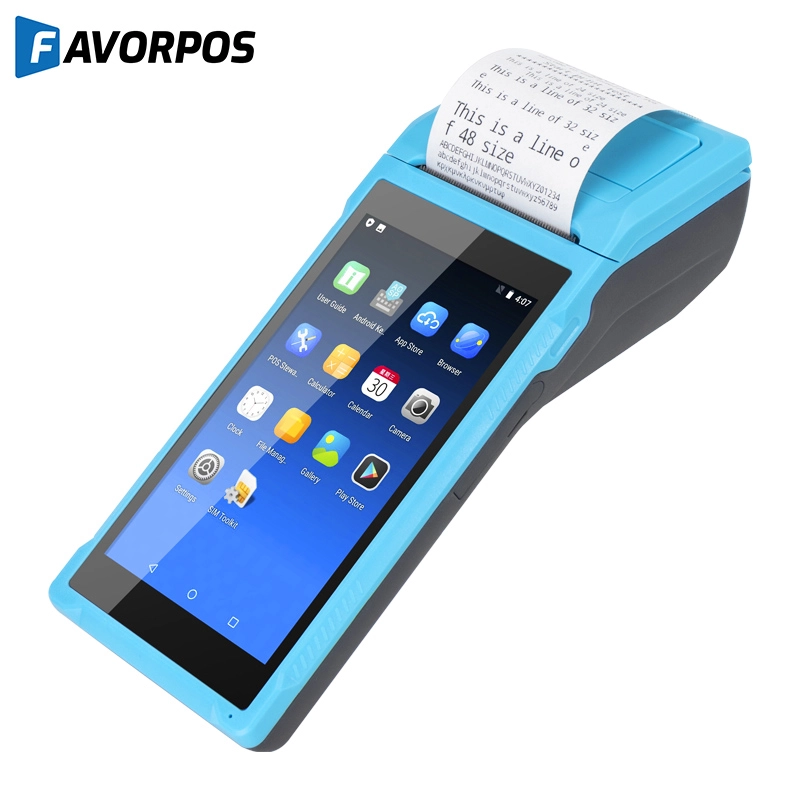
Android Handheld Pos Device Touch Screen Pos Terminal Manufacturer
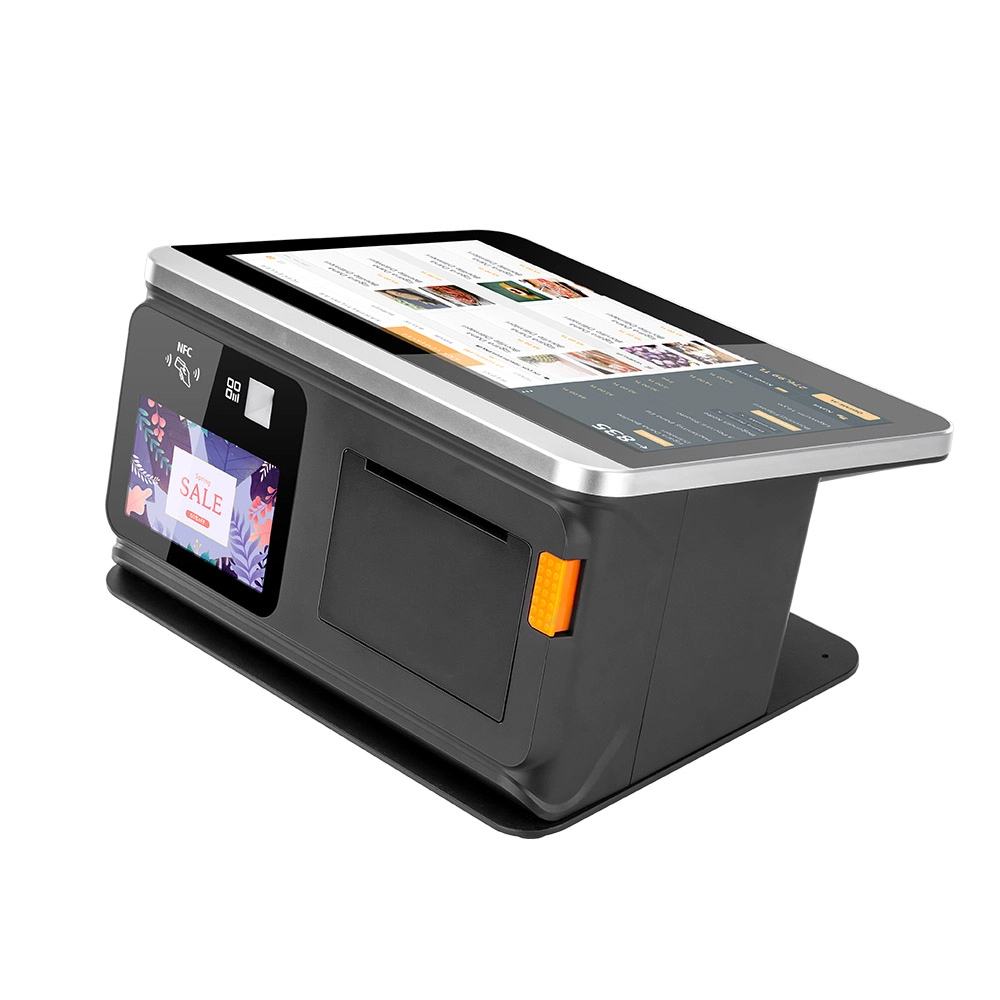
All in One POS Terminal Metal 11.6'' Touchscreen Android Windows with Printer
The All-in-One POS Terminal features an 11.6'' touchscreen display, compatible with both Android and Windows. This metal-constructed terminal combines durability with style, making it a perfect fit for any retail or hospitality environment. Equipped with a built-in printer, it streamlines transactions by allowing for instant receipt printing.
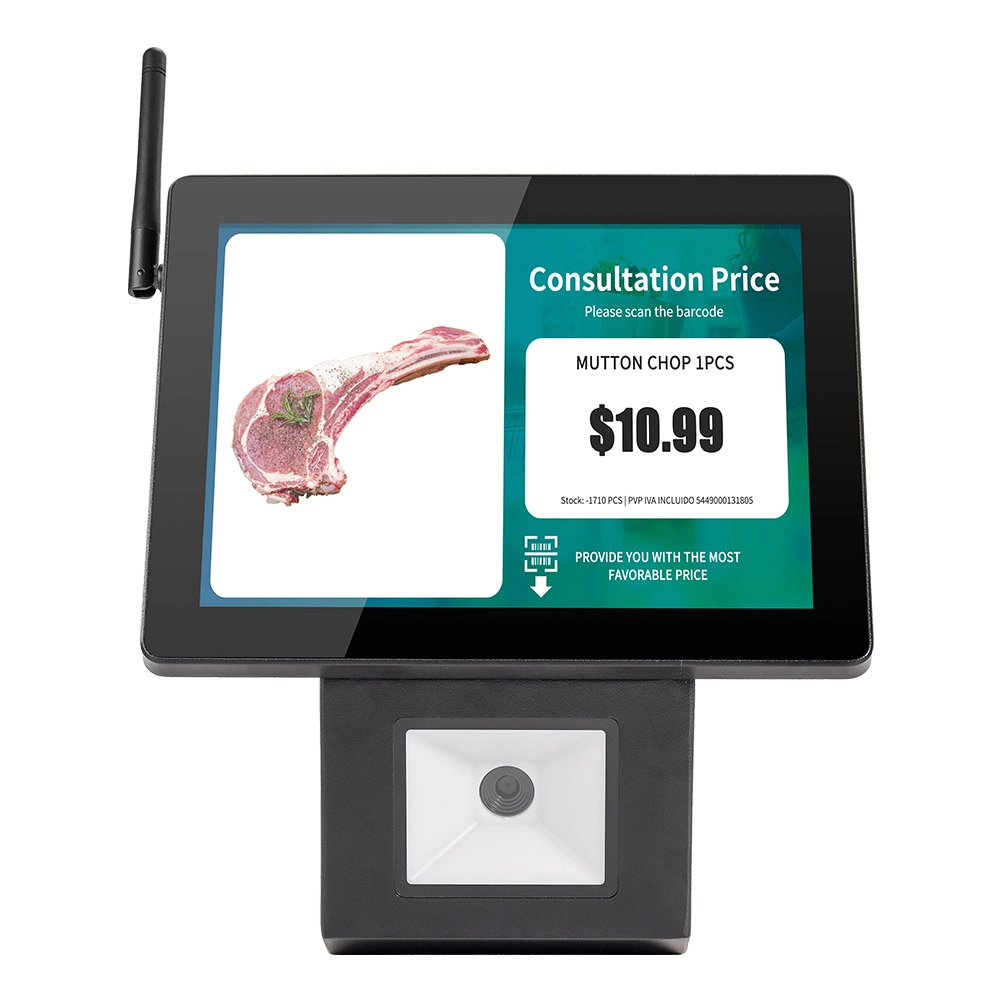
8 inch Touchscreen Price Checker Barcode Scanner Wifi Optional Android Win 10
FAVORPOS Touchscreen Price Checker offers a user-friendly interface, perfect for retail environments. With optional Wi-Fi connectivity, this device runs on Android or Windows, providing flexibility and ease of use. The integrated barcode scanner allows for quick price verification, enhancing the shopping experience for customers. Compact and efficient, it's designed to streamline operations and improve checkout speed.

Factory Fast Scan Barcode QR Code Scanner for Supermarket Price Check Device Manufacturer
FAVORPOS is a manufacturer specializing in Barcode/QR Code device. This new designed price check machine have thinner screen, more fashion appearance. 10.1 inch touch screen can bring convenience to customers. This machine can greatly improve the operational efficiency of a business environment.


Copyright © 2025 Favorpos All Rights Reserved.
