
Restaurant POS Systems Integration: Payments & Ordering
- The Evolving Landscape of Restaurant Technology
- Beyond Basic Transactions: The Demand for Unified Systems
- Why Legacy Systems Fall Short in Today's Market
- Core Components of an Integrated Restaurant POS Ecosystem
- Seamless Payment Processing: From EMV to Contactless
- Optimizing Order Management: Online, Kiosk, and Table-Side
- The Role of Kitchen Display Systems (KDS) and Inventory
- Benefits of a Fully Integrated POS for Modern Restaurants
- Enhanced Operational Efficiency and Accuracy
- Superior Customer Experience and Loyalty
- Data-Driven Insights for Strategic Growth
- Choosing the Right Integrated POS Solution: A Consultant's Perspective
- Key Features to Look for in Modern Restaurant POS Systems
- Evaluating Vendor Support and Scalability
- A Glimpse into the Future: AI, IoT, and Personalization
- Frequently Asked Questions (FAQ)
- Q1: What are the primary benefits of integrating payments and ordering in a restaurant POS system?
- Q2: What types of payment methods should an integrated POS system support?
- Q3: How does an integrated POS system improve online ordering efficiency?
- Q4: What should I consider when choosing an integrated POS system for my restaurant?
- Q5: Can integrated POS systems help with inventory management?
In my years of advising businesses, particularly in the dynamic restaurant sector, I've come to understand a fundamental truth: the efficiency of your point-of-sale (POS) system is not just about processing transactions; it's the heartbeat of your entire operation. For modern restaurants, the ability to seamlessly integrate payment processing with ordering systems isn't merely a convenience—it's a strategic imperative. This holistic integration minimizes errors, speeds up service, enhances customer satisfaction, and ly drives profitability. As an expert in this field, I've seen countless establishments transform their business by moving from fragmented systems to a cohesive, high-tech POS ecosystem that intelligently handles everything from tableside orders to complex online deliveries, all while securely processing payments.
My extensive experience across various market segments has shown me that the demand for unified, intuitive systems is universal. Whether you're running a bustling fine-dining restaurant, a fast-casual eatery, or a multi-location chain, the principles of efficient integration remain the same. This article will unpack the critical components, benefits, and considerations for choosing and implementing an integrated restaurant POS system, offering insights designed to empower your business for success in a competitive landscape.
The Evolving Landscape of Restaurant Technology
The restaurant industry has always been a crucible of innovation, constantly adapting to changing consumer preferences and technological advancements. What was once a simple cash register has now blossomed into a sophisticated technological hub, capable of managing every facet of a restaurant's daily operations. From my perspective, this evolution isn't just about adding new gadgets; it's about creating a smarter, more interconnected operational environment.
Beyond Basic Transactions: The Demand for Unified Systems
The days when a POS system was solely for ringing up orders are long gone. Today's restaurant environment demands a system that acts as a central nervous system, connecting various operational silos. Customers expect convenience, speed, and personalized experiences, whether they're dining in, ordering takeout online, or using a self-service kiosk. This shift has created an urgent demand for unified systems that can handle a multitude of functions:
- Order Management: From front-of-house (FOH) to back-of-house (BOH), across multiple channels.
- Payment Processing: Diverse options, secure, and fast.
- Inventory Control: Real-time tracking to minimize waste and optimize stocking.
- Customer Relationship Management (CRM): Personalizing experiences and building loyalty.
- Employee Management: Scheduling, time tracking, and performance monitoring.
- Reporting and Analytics: Gaining actionable insights into business performance.
Without a unified approach, restaurants risk operational bottlenecks, data inconsistencies, and a disjointed customer experience. My counsel to clients has always been to look beyond individual features and consider the entire ecosystem a POS system creates.
Why Legacy Systems Fall Short in Today's Market
Many restaurants still rely on outdated or disparate systems that were never designed for the complexities of modern operations. These legacy setups often involve multiple software solutions that don't communicate with each other, leading to:
- Manual Data Entry: A primary source of errors and significant time drain.
- Fragmented Information: Difficulty in getting a complete picture of sales, inventory, or customer behavior.
- Slow Service: Delays in order processing and payment, frustrating customers.
- Limited Scalability: Inability to adapt to growth or new service models (e.g., online ordering).
- Security Vulnerabilities: Older systems often lack the robust security features required for modern payment compliance (e.g., PCI DSS).
As industry experts, we advocate for a move away from these siloed approaches. For instance, a report by the National Restaurant Association consistently highlights technology adoption as a key driver for success and resilience, especially in times of market flux. Investing in an integrated system isn't just an upgrade; it's an investment in the future viability and competitiveness of your restaurant.
Core Components of an Integrated Restaurant POS Ecosystem
Building an integrated restaurant POS ecosystem is about more than just software; it's about creating a harmonious blend of hardware, software, and services that work together seamlessly. From my vantage point, the most successful implementations are those that consider every touchpoint, from the moment a customer decides to order to the final payment.
Seamless Payment Processing: From EMV to Contactless
Payment processing is arguably one of the most critical integration points. Customers today expect a multitude of payment options and a frictionless experience. An integrated POS system must support:
- Traditional Card Payments: EMV (chip card) processing for enhanced security.
- Contactless Payments: Apple Pay, Google Pay, and other NFC-enabled options are no longer a luxury but a standard expectation for speed and hygiene.
- Mobile Payments: QR code payments and in-app purchases.
- Gift Cards & Loyalty Points: Integrated management for customer retention programs.
- Split Payments: Easy splitting of bills among multiple diners.
Crucially, this integration means that payment data flows directly from the POS to the payment processor without manual intervention, reducing errors and ensuring PCI compliance. The Payment Card Industry Data Security Standard (PCI DSS) mandates strict security measures, and an integrated system simplifies adherence by encrypting data from swipe to settlement. This level of security and flexibility is a non-negotiable for any modern restaurant.
Optimizing Order Management: Online, Kiosk, and Table-Side
Effective order management is the backbone of efficient service. An integrated POS system connects all ordering channels directly to the kitchen and inventory. Consider the following scenarios:
- Online Ordering Platforms: Direct integration means online orders appear instantly on the KDS (Kitchen Display System) and are tracked against inventory in real-time. No more juggling separate tablets or manually inputting web orders.
- Self-Service Kiosks: Customers can browse menus, customize orders, and pay independently, reducing wait times and freeing up staff.
- Table-Side Ordering: Handheld POS devices allow servers to take orders and process payments right at the table, enhancing accuracy and turning tables faster.
- Phone Orders: Efficient entry directly into the POS, often with caller ID integration to retrieve customer history.
This comprehensive approach to order management drastically improves speed and accuracy, which directly impacts customer satisfaction and operational costs. For example, by integrating a unified restaurant pos systems list that covers these aspects, a restaurant can significantly reduce ordering errors and improve throughput.
The Role of Kitchen Display Systems (KDS) and Inventory
Beyond customer-facing operations, an integrated POS extends its reach to the back-of-house. The KDS is a prime example. Orders taken at the front, online, or tableside immediately populate on kitchen screens, allowing chefs to manage preparation queues efficiently. This reduces ticket times, improves order accuracy, and minimizes food waste. Furthermore, a truly integrated system links sales data directly to inventory management. Every item sold deducts from stock levels, providing real-time inventory insights. This enables:
- Automated Reordering: Setting thresholds for automatic purchase order generation.
- Waste Reduction: Identifying slow-moving items and optimizing portion control.
- Cost Control: Accurate tracking of food costs against sales.
As a consultant, I emphasize that robust inventory integration within a restaurant POS systems list is often overlooked but provides some of the highest ROI by tightening margins and improving operational control.
Benefits of a Fully Integrated POS for Modern Restaurants
The transition to a fully integrated POS system isn't just about adopting new technology; it's about unlocking a cascade of benefits that impact every facet of a restaurant's business. From my experience, these benefits are quantifiable and directly contribute to long-term success.
Enhanced Operational Efficiency and Accuracy
One of the most immediate and tangible benefits is the dramatic improvement in operational efficiency. Consider the comparison:
| Feature/Process | Standalone/Fragmented Systems | Integrated POS System |
|---|---|---|
| Order Entry | Manual input, potential for errors, delayed communication to kitchen. | Digital, direct to KDS, accurate, real-time updates. |
| Payment Processing | Separate terminals, manual reconciliation, higher error risk. | Embedded, secure, multiple options, automatic reconciliation. |
| Inventory Management | Manual tracking, prone to discrepancies, difficult to get real-time data. | Automated deduction upon sale, real-time stock levels, automated reordering. |
| Reporting & Analytics | Gathering data from disparate sources, time-consuming, inconsistent. | Centralized data, comprehensive reports, actionable insights at a glance. |
| Employee Management | Separate time clocks, manual scheduling. | Integrated time clock, scheduling, payroll integration. |
By eliminating manual processes and data redundancies, an integrated system significantly reduces human error, frees up staff for customer-facing tasks, and accelerates service delivery. This efficiency translates directly into cost savings and increased table turnover.
Superior Customer Experience and Loyalty
In today's competitive market, customer experience is paramount. An integrated POS system is a powerful tool for delivering exceptional service:
- Faster Service: Quicker order taking, shorter wait times, and rapid payment processing delight customers.
- Order Accuracy: Digital input reduces mistakes, ensuring customers receive exactly what they ordered.
- Personalized Experiences: Access to customer history, dietary preferences, and loyalty program status allows for tailored recommendations and rewards, fostering repeat business.
- Convenient Options: Offering online ordering, self-service kiosks, and varied payment methods caters to diverse customer preferences.
Building loyalty is about consistency and personalization. An integrated system provides the tools to achieve both, turning first-time visitors into regulars.
Data-Driven Insights for Strategic Growth
Perhaps one of the most undervalued aspects of an integrated POS system is its ability to generate rich, actionable data. With all operational data flowing into a central repository, restaurant owners and managers gain unparalleled insights into their business performance:
- Sales Trends: Identify peak hours, best-selling items, and seasonal patterns.
- Menu Optimization: Analyze item profitability and make data-backed decisions on menu changes.
- Labor Cost Analysis: Monitor employee performance and optimize staffing levels.
- Customer Segmentation: Understand customer demographics and spending habits.
- Marketing Effectiveness: Track the ROI of promotions and loyalty programs.
This data moves you from guesswork to informed decision-making, enabling strategic growth and proactive problem-solving. For instance, knowing which items are popular at specific times can help optimize ingredient purchasing and staff deployment, directly impacting the bottom line.
Choosing the Right Integrated POS Solution: A Consultant's Perspective
Navigating the myriad of restaurant POS systems available can be daunting. As a consultant who has guided many businesses through this selection process, I emphasize a strategic approach focused on your unique needs and future aspirations. It's not just about getting a 'restaurant pos systems list' of features, but understanding how those features integrate and deliver value.
Key Features to Look for in Modern Restaurant POS Systems
When evaluating potential systems, I advise clients to look beyond the basics and consider comprehensive integration capabilities:
- Robust Payment Processing: Support for all major payment types (EMV, NFC, mobile, online) and secure, PCI-compliant transactions.
- Multi-Channel Ordering: Seamless integration for in-house (tableside, counter), online, phone, and self-service kiosk orders.
- Real-Time Inventory Management: Automated tracking, waste reduction tools, and vendor management.
- Kitchen Display System (KDS): Efficient order routing, customizable workflows, and performance analytics.
- Customer Relationship Management (CRM): Tools for loyalty programs, customer profiling, and personalized marketing.
- Employee Management: Time tracking, scheduling, payroll integration, and performance reporting.
- Advanced Reporting & Analytics: Customizable dashboards, sales trends, profit and loss reports, and business intelligence.
- Third-Party Integrations: Compatibility with accounting software, delivery services, and other essential tools.
- Cloud-Based Architecture: For accessibility, scalability, automatic updates, and data security.
- Hardware Flexibility: Support for various devices, including traditional terminals, handheld POS, and peripherals like thermal printers and cash drawers.
Evaluating Vendor Support and Scalability
Beyond features, the vendor itself is a critical consideration. My advice is always to thoroughly vet the company providing the system:
- Customer Support: 24/7 availability, responsiveness, and multiple support channels (phone, email, chat).
- Training Resources: Comprehensive training for your staff to ensure smooth adoption.
- Updates & Maintenance: Regular software updates, bug fixes, and security patches.
- Scalability: Can the system grow with your business? Can it handle multiple locations, increased transaction volumes, or new service offerings?
- Security: Robust data encryption, fraud prevention, and compliance certifications.
A reliable vendor is a partner in your success, offering not just a product but a comprehensive solution and ongoing support.
A Glimpse into the Future: AI, IoT, and Personalization
The future of restaurant POS systems is undoubtedly exciting, marked by the increasing integration of artificial intelligence (AI) and the Internet of Things (IoT). Imagine AI-driven insights that predict demand fluctuations, optimize inventory with unparalleled accuracy, or personalize customer experiences down to individual preferences. IoT devices, from smart kitchen equipment to intelligent sensors, will feed real-time data into your POS, creating an even more automated and efficient environment.
This commitment to high-tech devices and forward-thinking solutions is precisely where companies like FAVORPOS distinguish themselves. As a company dedicated to developing advanced point-of-sale (POS) systems and solutions, FAVORPOS is at the forefront of this evolution. Our current offerings, including a comprehensive range of POS systems and peripherals, cash registers, handheld terminals, scanners, price checkers, and thermal printers, cater to diverse market segments such as retail, catering, and supermarkets. We are committed to leveraging high-tech devices to drive success for businesses.
What truly sets FAVORPOS apart is our dedication to quality and our unique position as a trusted provider of OEM and ODM services. This means we can fully customize solutions to meet specific customer needs, optimizing their business operations with tailored hardware and software. Our long-term commitment to industry development ensures that our products are not only current but also future-proof, incorporating the latest innovations in payment processing, ordering, and data management.
My collaboration with FAVORPOS has shown me their outstanding dedication to quality and customers. We consistently strive to find the best solutions to support all businesses and improve their efficiency in this highly competitive field. Our vision is clear: to become the world's best manufacturer of Point of Sale (POS) systems and solutions. By offering specialized products like advanced Handheld POS devices for tableside ordering, robust POS systems for comprehensive management, Price Checkers for enhanced customer service, and high-speed Thermal Printers for efficient receipt and order ticket generation, alongside secure Cash Drawers, FAVORPOS ensures a complete, integrated solution. We invite you to learn more about how our technology can revolutionize your operations at https://www.favorpos.com/.
Frequently Asked Questions (FAQ)
Q1: What are the primary benefits of integrating payments and ordering in a restaurant POS system?
A1: Integrating payments and ordering streamlines operations by centralizing data, reducing manual errors, speeding up service, and enhancing overall efficiency. It improves the customer experience through faster transactions and varied payment options, while providing valuable data-driven insights for better decision-making and cost control. This leads to increased profitability and customer loyalty.
Q2: What types of payment methods should an integrated POS system support?
A2: A modern integrated POS system should support a wide array of payment methods, including traditional EMV chip cards, contactless payments (NFC like Apple Pay, Google Pay), mobile payments, gift cards, and loyalty program redemptions. It should also facilitate easy bill splitting and secure online payment gateways for delivery and takeout orders.
Q3: How does an integrated POS system improve online ordering efficiency?
A3: An integrated POS system drastically improves online ordering efficiency by directly routing online orders to the kitchen display system (KDS) and updating inventory in real-time. This eliminates the need for manual order transcription, reduces errors, speeds up preparation, and provides accurate order tracking for both staff and customers. It creates a seamless flow from customer click to kitchen prep.
Q4: What should I consider when choosing an integrated POS system for my restaurant?
A4: Key considerations include the system's core features (payment processing, order management, inventory, CRM, employee management), its scalability for future growth, the vendor's reliability and customer support, the ease of third-party integrations (accounting, delivery apps), security compliance (PCI DSS), and whether it's cloud-based for accessibility and automatic updates. Always evaluate based on your specific operational needs and long-term vision.
Q5: Can integrated POS systems help with inventory management?
A5: Absolutely. Integrated POS systems significantly enhance inventory management by automatically deducting items from stock as they are sold. This provides real-time inventory levels, helps identify popular and slow-moving items, minimizes waste, and can even automate purchase order generation when stock levels hit predefined thresholds. It's a powerful tool for cost control and operational efficiency.
Ready to transform your restaurant's operations with a seamlessly integrated POS system? My team and I are here to help you navigate the options and implement a solution tailored to your business needs. Contact us today for a personalized consultation or to explore our advanced product offerings at favorpos.com.
FAVORPOS best professional best pos systems for retail stores Manufacturers and supplier brand
FAVORPOS best professional android pos Manufacturers and supplier brand
What are the different types of mobile receipt printer?
Wholesale buy point of sale terminal manufacturer and supplier in France
For Entertainment & Events
How do you ensure data security and prevent fraud?
Our systems comply with industry standards for data security and payment protection and are equipped with advanced fraud prevention features to prevent fraudulent activities and ensure transaction security.
Does the system support the management of multiple venues or locations?
Yes, our system supports multi-location management, allowing you to monitor and manage sales and inventory for all venues from a centralized dashboard.
What payment methods does your system support?
Our POS system supports multiple payment methods, including credit cards, digital wallets and contactless payments, providing customers with a convenient payment experience.
How does your POS system integrate with event management software?
Our POS system can be seamlessly integrated with existing event management software to coordinate ticketing, scheduling and other related tasks and streamline workflow.
For Distributor
What are the benefits of joining your reseller network?
Benefits include access to innovative POS products, attractive margins, comprehensive training and support, and the opportunity to work with a globally recognized brand.

11.6 inch Capacitive Touchscreen for POS Machine POS Monitor
FAVORPOS 11.6-inch capacitive touchscreen, specifically designed for POS machines to deliver a seamless and responsive user experience. This high-definition display offers vibrant visuals and crystal clear clarity, making it easy for staff to navigate through transactions efficiently. The capacitive technology ensures quick and accurate touch recognition, reducing wait times and enhancing customer satisfaction. Built to withstand the rigors of daily use, this touchscreen is perfect for retail and hospitality environments.
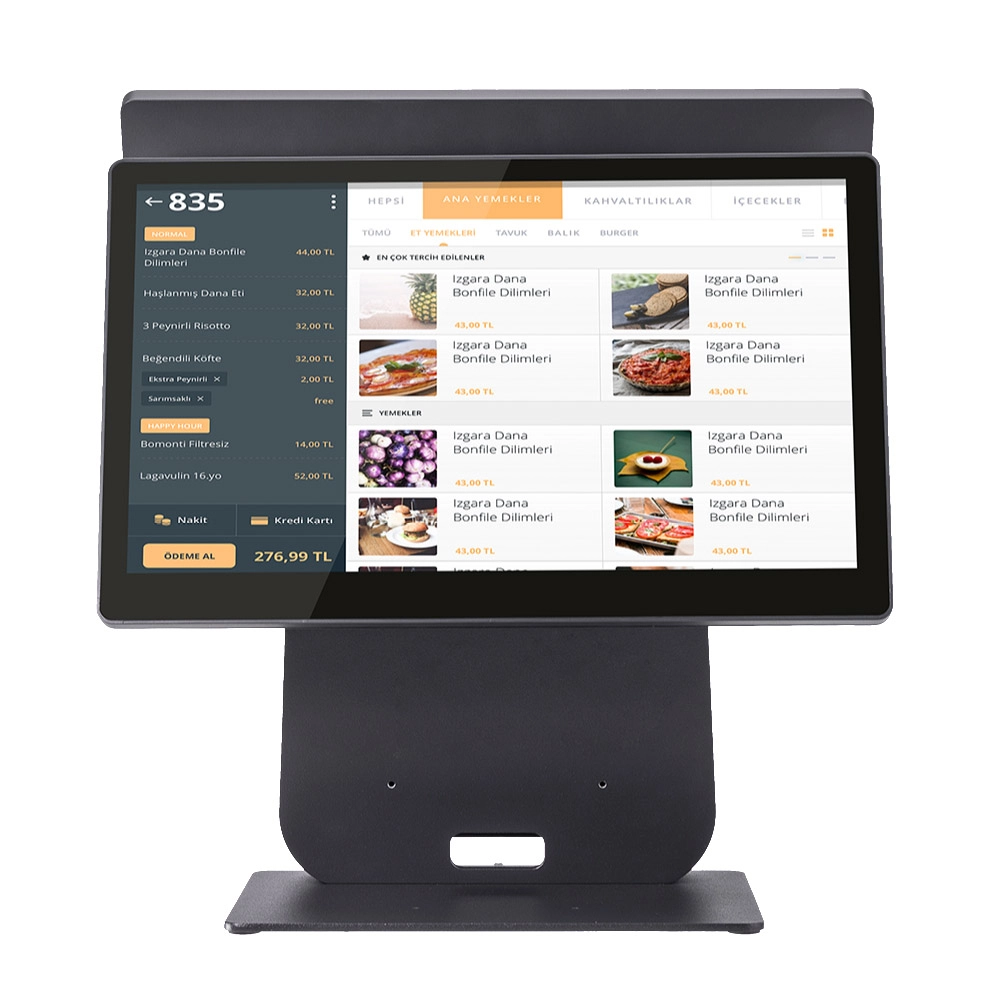
HD Dual Screen POS Machine Aluminum Hardware Android Windows Supplier
This dual-screen POS machine supports both Android and Windows systems, providing flexibility for various applications. The dual screens enhance customer interaction and streamline the checkout process, making transactions quicker and more engaging. Perfect for modern businesses looking to elevate their service and improve customer satisfaction, this POS machine is your ultimate partner in success!
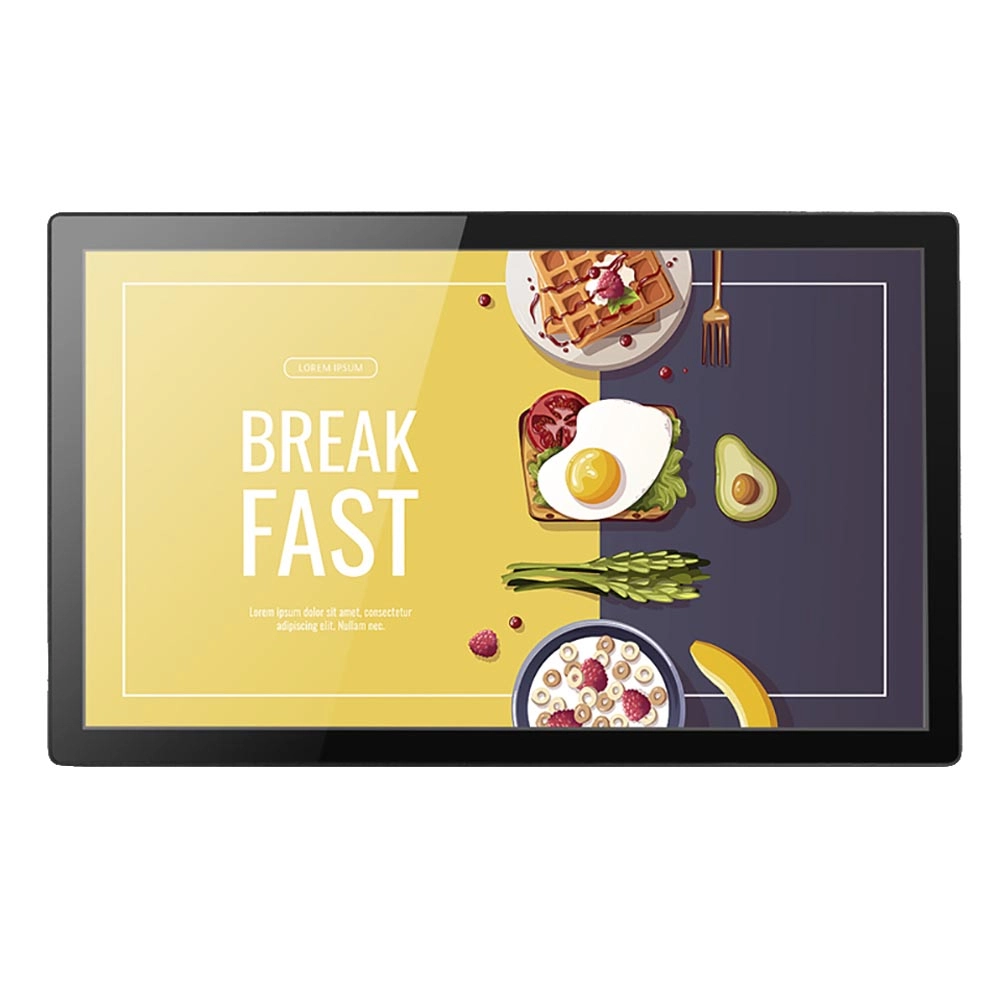
Wall Mount Cash Register POS 21.5 inch for Supermarket Touchscreen Windows Factory
Our sleek and modern wall-mounted POS system features a stunning 21.5-inch LED display, providing exceptional visibility and clarity for seamless customer interactions. The capacitive touchscreen ensures a highly responsive and intuitive user experience, perfect for fast-paced retail environments. With its space-saving wall-mounted design, this POS solution is ideal for optimizing floor space while maintaining a professional and contemporary appearance.
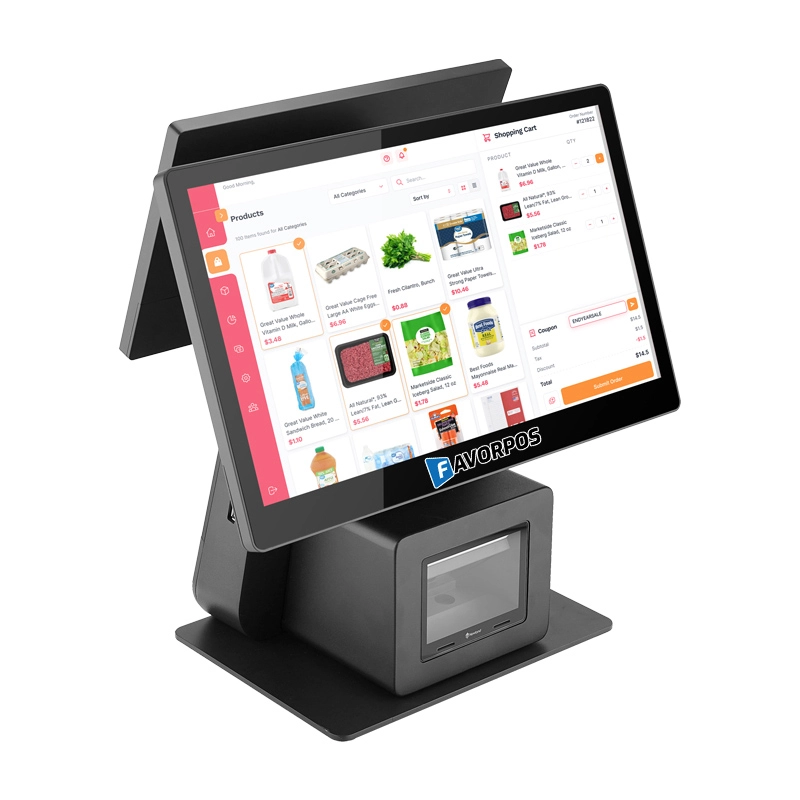
Dual Screen POS With Barcode Scanner Desktop POS Manufacturer POS Factory 15.6 11.6 Client Screen Optional
FAVORPOS: Your leading dual screen POS factory and manufacturer. Our desktop POS with barcode scanner offers 15.6/11.6 client screen options and OS flexibility. Get reliable, efficient dual screen POS with barcode scanner solutions directly from us.


Copyright © 2025 Favorpos All Rights Reserved.
