
Which touch screen POS terminal is best for small retail?
- Which touch screen POS terminal is best for small retail with limited counter space and offline reliability?
- How do I verify a touch screen POS terminal's payment security (EMV, PCI P2PE, PCI-PTS) before purchase?
- Can an Android-based touch screen POS terminal run my existing Windows POS software and legacy peripherals?
- What total cost of ownership (TCO) should I budget for the first 3 years for a countertop touch screen POS terminal?
- How do I ensure barcode scanner, receipt printer, cash drawer and scales integrate seamlessly with a touch screen POS terminal?
- Is a portable battery-powered touch screen POS terminal suitable for inventory counts and pop-up retail, and how to choose battery life and connectivity?
Which touch screen POS terminal is best for small retail with limited counter space and offline reliability?
For space‑constrained small retail, prioritize a compact countertop POS or a small-footprint all‑in‑one touchscreen POS terminal with integrated receipt printer and a small base. Key selection criteria:
- Screen size & ergonomics: 10–12-inch capacitive touchscreens balance readability and space. A tilt/swivel mount helps share the screen with customers for signatures and promos.
- Integrated peripherals: Choose models that bundle a thermal receipt printer and MSR or provide a single integrated cradle for peripherals to reduce cables and footprint. This reduces clutter and saves counter space.
- Offline transaction capability: Verify the terminal supports offline payment queuing and local transaction signing for EMV/contactless fallback. Test the offline workflow: disconnect network, process a card or contactless payment, then reconnect and confirm secure sync to the processor. Offline mode implementations vary — ensure it respects your payment processor’s rules and risk settings.
- Hybrid cloud/local architecture: Prefer terminals that offer hybrid operation (local POS engine + cloud sync) so core sales continue if WAN fails, and inventory sync resumes automatically.
- Power & cabling: A single power + Ethernet (PoE) capable model can minimize adapters and run everything through one cable if your store supports PoE.
Why this matters: Small retailers need reliable transactions and a tidy counter. Compact, hybrid touchscreen POS terminals that queue transactions offline and sync automatically reduce downtime and customer friction.
How do I verify a touch screen POS terminal's payment security (EMV, PCI P2PE, PCI-PTS) before purchase?
Payment security is non-negotiable. Ask vendors for verifiable certifications and follow this checklist:
- EMV and EMVCo: Confirm the terminal supports EMV chip transactions and is listed by EMVCo-compatible device vendors. Ask for the model number used in certification documentation.
- PCI PTS and P2PE: PCI PIN Transaction Security (PTS) certification demonstrates secure PIN entry and tamper resistance. Point-to-point encryption (P2PE) reduces scope by encrypting cardholder data at the terminal. Request the PCI PTS and P2PE certificate references for the exact SKU you will buy.
- PCI DSS & Processor Compliance: While PCI DSS is about your environment, confirm your payment processor approves the terminal model for use on their platform. Processors maintain terminal compatibility lists.
- Contactless (NFC) & Tokenization: For contactless payments, ensure the terminal supports EMV contactless and tokenization workflows from processors/gateways you plan to use.
- Firmware signing & OTA: Ensure the vendor uses digitally signed firmware updates and can perform secure over‑the‑air (OTA) updates to patch vulnerabilities quickly.
- Real checks to perform: Ask for the certificate references (not just a marketing image). Validate certificates on the issuing authority site (PCI SSC, EMVCo). Request a security/data sheet showing tamper response, secure element/SE architecture, and encryption flow.
Why this matters: Buying a certified terminal reduces your PCI scope and legal risk. Never accept verbal assurances—get cert references and confirm with the certification bodies or your payment processor.
Can an Android-based touch screen POS terminal run my existing Windows POS software and legacy peripherals?
Not directly. Android POS terminals run Android-native POS apps, so legacy Windows desktop POS software won’t run on them without changes. Here’s how to evaluate migration and ensure peripheral compatibility:
- Software strategy: If your current POS is Windows-only, you have three practical options: 1) keep Windows-based terminals (countertop Windows POS terminals), 2) port/replace your POS with an Android or cloud POS app that supports your workflows, or 3) deploy middleware/bridge software that exposes device functions over a network to your Windows backend.
- Peripheral drivers & protocols: Legacy printers, scales and barcode scanners often use OPOS/JavaPOS drivers for Windows. Android uses different drivers and typically exposes peripherals via USB/HID, Bluetooth, or vendor SDKs. Ask hardware vendors for Android SDKs or if they support standard protocols (HID, ESC/POS over USB/Network).
- Mixed-hardware hybrid: Many retailers run a mixed environment—Windows back office + Android touchscreen terminals. Ensure the back‑office server and cloud APIs support syncing inventory, sales, and reporting across OSes.
- Testing recommended: Before rolling out, request a loaner device or demo and replicate critical workflows: barcode scanning, receipt printing, refund, end‑of‑day batch, tax calculations, and third‑party integrations (loyalty, accounting). Validate SDK quality and documentation.
Why this matters: Migration without testing risks disrupting checkout operations. Prefer vendors who provide SDKs, reference integrations, and a clear migration path for peripherals and back-office sync.
What total cost of ownership (TCO) should I budget for the first 3 years for a countertop touch screen POS terminal?
TCO includes more than hardware sticker price. Break down costs into categories and estimate realistic recurring expenses:
- One-time hardware & installation: Terminal, optional customer-facing display, card reader (EMV/NFC), receipt printer, scanner, cash drawer, mounts. Choose wired (Ethernet) or Wi‑Fi models based on reliability and space.
- Software acquisition & licensing: POS software license or subscription (cloud POS), monthly SaaS fees, optional modules (inventory management, multi-location, advanced reporting), and SDK or API access costs.
- Payment processing fees: Card network interchange + processor markup, monthly gateway/merchant account fees, chargeback management fees. These vary widely by processor and transaction mix.
- Maintenance & warranty: Extended warranty, on-site service contracts, spare parts, and potential RMA costs.
- Connectivity & utilities: Broadband, cellular fallback SIM/data plan (if you use portable/backup cells), and PoE infrastructure if required.
- Security & compliance: Costs for validated P2PE, end-of-life replacements, and any consulting for PCI scope reduction.
- Training & rollout: Staff training time and potential productivity loss during onboarding.
Estimate approach: Instead of fixed dollar amounts, map each cost type to low/medium/high scenarios for your store size and transaction volume. Ask vendors for a three‑year cost worksheet with all line items and sample monthly totals. Request a reference customer in your region with a similar transaction profile and ask about real-world costs.
Why this matters: Vendors may advertise low hardware prices but recurring SaaS or processing fees can dominate. A clear 3‑year TCO comparison prevents surprises.
How do I ensure barcode scanner, receipt printer, cash drawer and scales integrate seamlessly with a touch screen POS terminal?
Ensure peripheral interoperability by validating protocols, interfaces, and firmware support before purchase:
- Identify interfaces: Confirm whether peripherals connect via USB HID, serial (RS‑232 over a USB adapter), Ethernet (LAN), Bluetooth, or Bluetooth LE. Match the terminal’s available ports and recommended connection types.
- Protocol compatibility: Receipt printers commonly use ESC/POS commands; confirm your printer supports ESC/POS or that the POS provider supports that printer model. Scales often use OPOS/JavaPOS or serial protocols—ask for protocol docs or a compatibility list.
- Vendor certified peripherals: Prefer vendors who certify peripheral models for the terminal SKU—this minimizes driver and firmware mismatches. Ask for a compatibility matrix.
- Driver & SDK availability: For Android terminals ask for vendor SDKs or standard APIs (HID-USB, Bluetooth SPP/BLE, network printing). For Windows terminals request OPOS/JavaPOS drivers. Confirm sample code and integration guides exist.
- Testing flow: Before committing, test these scenarios: open/close cash drawer on sale/refund; print multi-line receipts with logos and barcodes; scan quick item and bulk scanning; scale-based weighted-item pricing; and failover (printer offline) handling.
- Future proofing: Use networked printers or peripherals where possible — they can be shared across multiple terminals and are easier to maintain centrally.
Why this matters: Peripheral mismatches are a common cause of rollout delays. Insist on compatibility proofs and a tested integration checklist.
Is a portable battery-powered touch screen POS terminal suitable for inventory counts and pop-up retail, and how to choose battery life and connectivity?
Portable POS terminals are excellent for inventory audits, mobile checkout, and pop-up retail, but choose carefully:
- Use case defines requirements: For inventory counts you need long battery life, reliable barcode scanning (1D/2D), and local data caching. For pop-ups you need contactless EMV acceptance, receipts (email/BT printer), and robust connectivity.
- Battery life & charging: Look for devices with swappable batteries or at least 8–12 hours of mixed-use battery life for full‑day operations. Battery life estimates vary by screen brightness, Wi‑Fi/cellular usage, and scanner usage—ask the vendor for real-world test data and bring a device to your environment for a day test.
- Connectivity: Cellular LTE fallback (with an eSIM or physical SIM) is essential for pop-ups; for indoor inventory use Wi‑Fi with local sync. Verify roaming/cellular band support in your country and ask about offline queue behavior when cellular/Wi‑Fi drops.
- Scanning performance: Inventory tasks benefit from area imagers that can rapidly read damaged barcodes and 2D QR codes. Consider devices with an integrated trigger or a separate rugged Bluetooth scanner.
- Payment security & certifications: Portable terminals must still meet EMV, P2PE, and PCI PTS requirements—confirm certifications for the portable SKU.
- Ruggedness & ergonomics: For frequent handheld use, choose devices with rubberized bumpers, good handgrip, and at least IP52/54 ingress resistance for dust/light splash protection.
Why this matters: A portable touchscreen POS can expand revenue channels, speed inventory cycles, and enable line-busting, but must be chosen to meet battery, connectivity, and scanning expectations in your specific retail environment.
Conclusion: Advantages of choosing the right touch screen POS terminal
Picking the right touchscreen POS terminal — whether compact countertop, hybrid cloud-enabled, Android-based, or battery-powered portable — delivers faster checkouts, stronger payment security (EMV/P2PE/PCI), cleaner counter layouts, smoother peripheral integration (printers, scanners, cash drawers, scales), and lower downtime through offline queuing and hybrid sync. These benefits translate to higher throughput, fewer refunds, and better inventory accuracy. For small retail owners, focus on hybrid operation, verified security certificates, SDK and peripheral compatibility, realistic 3-year TCO, and on‑site testing before purchase.
For a customized recommendation and quote tailored to your store layout and transaction profile, contact us: www.favorpos.com or email sales2@wllpos.com.
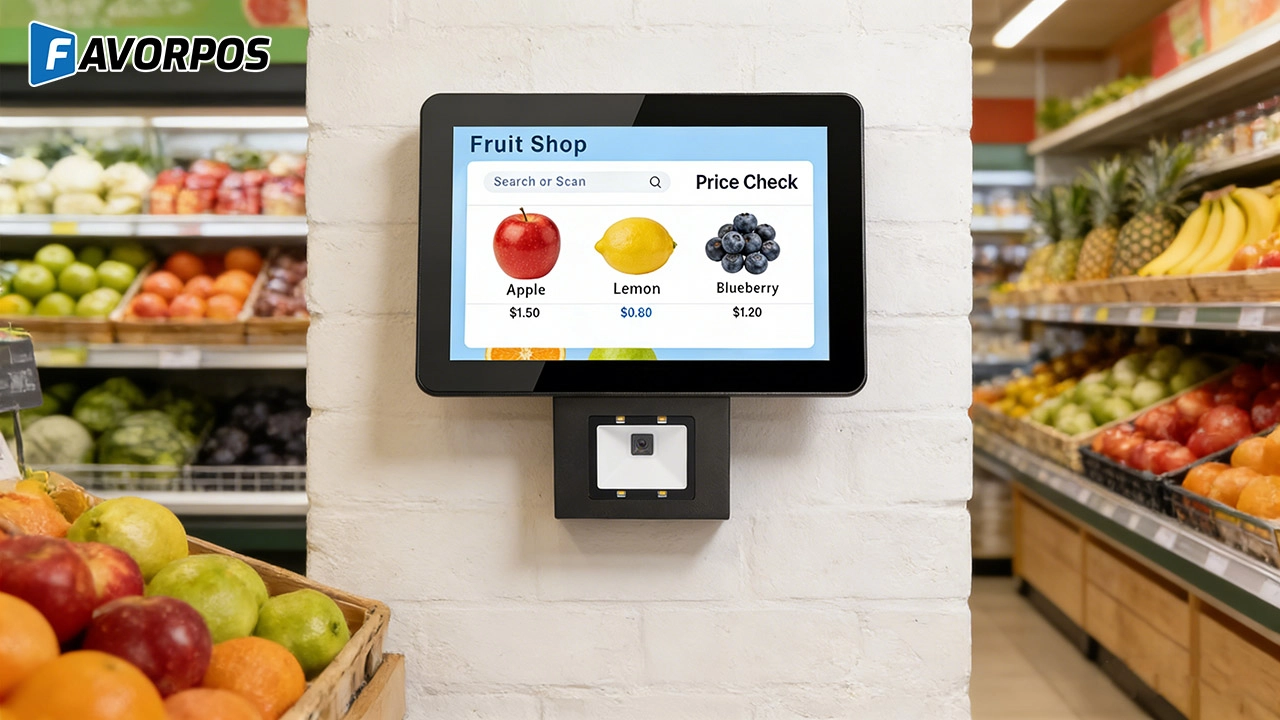
The Smart Way to Check Prices: How a 10.1-Inch Wall-Mounted Price Checker Transforms Retail Stores
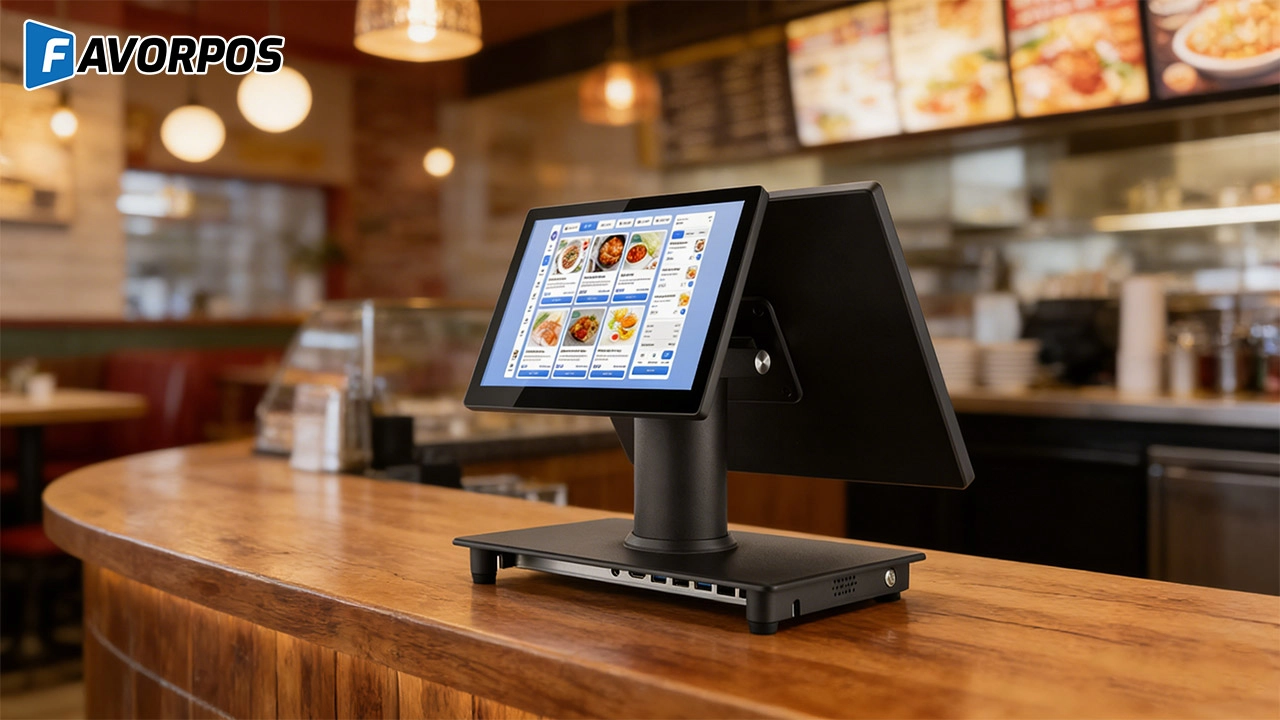
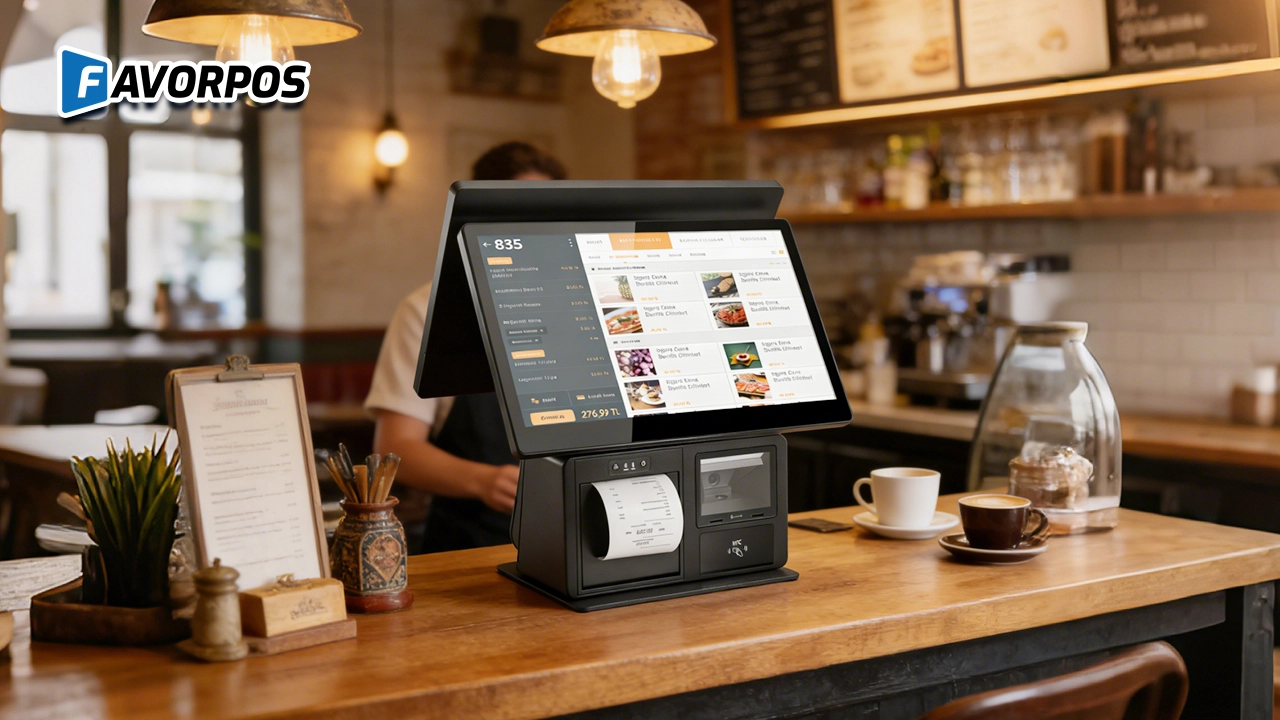
A Smarter Checkout Experience: The 15-Inch Dual-Screen POS Built for Modern Retail
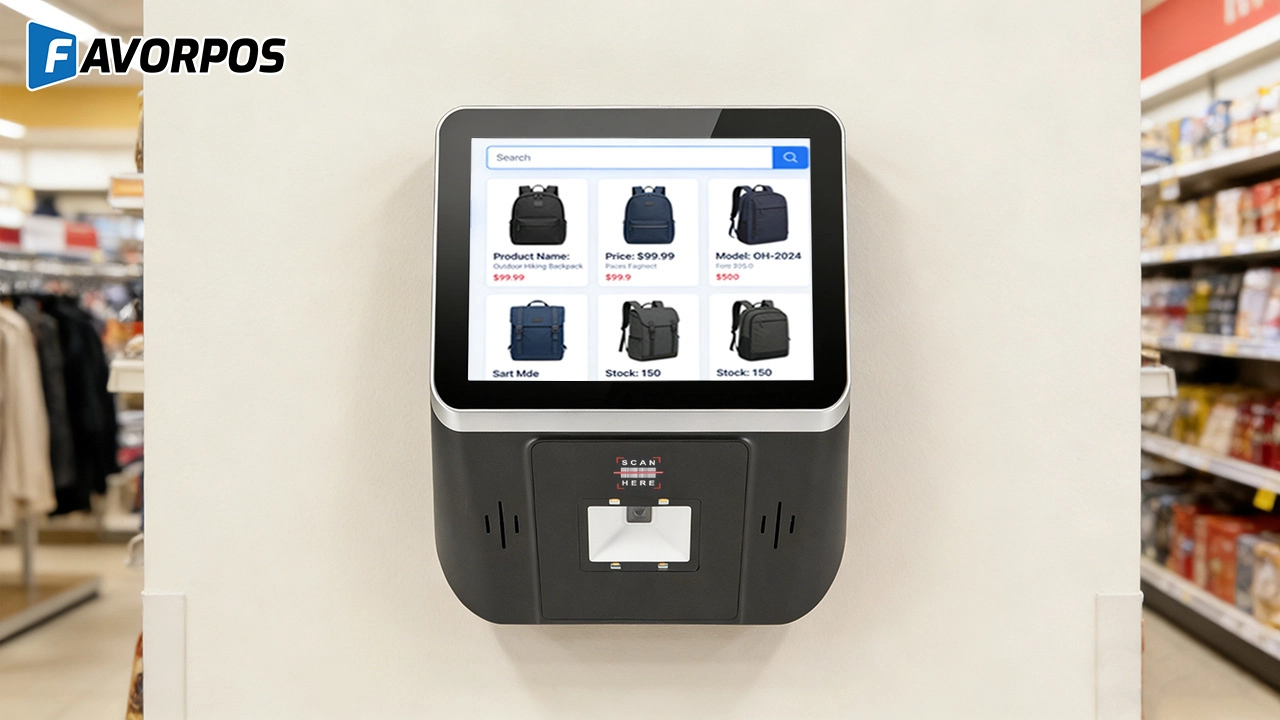
8-Inch Smart Price Checker: A Small Device Powering Smarter Retail Spaces
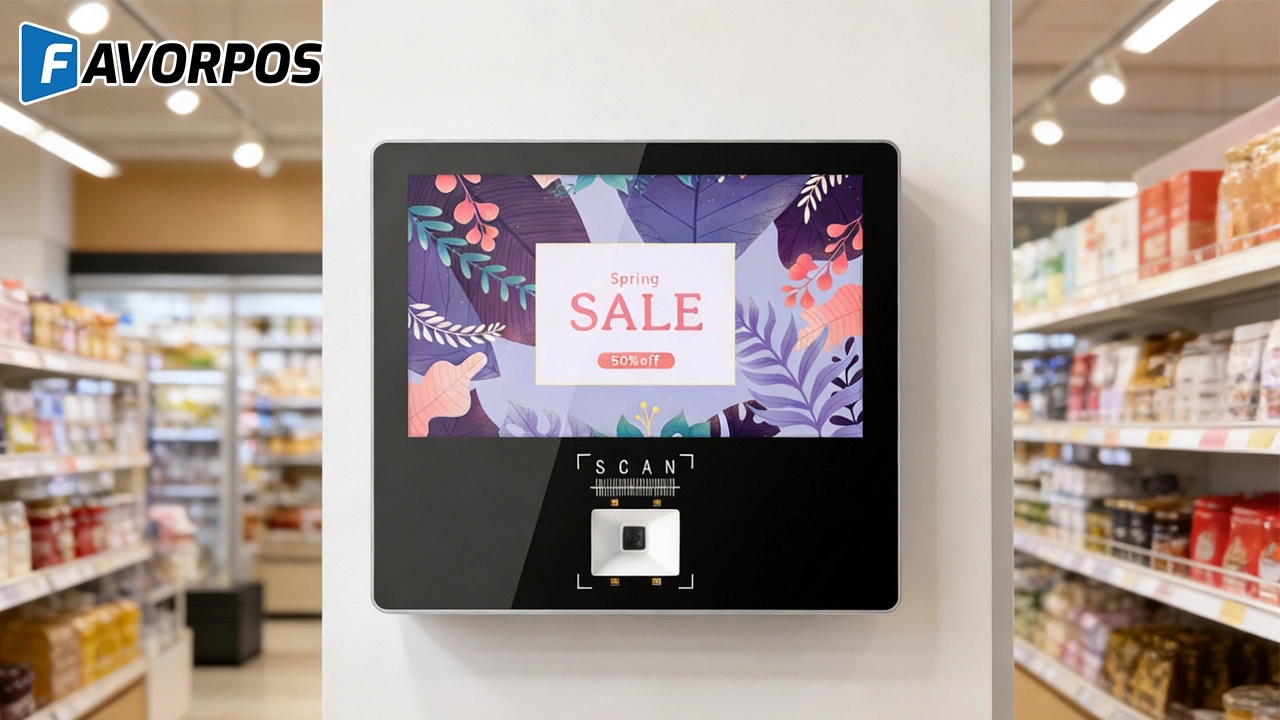
Built for Retail Precision: Manufacturing Excellence Behind the 11.6” Smart Price Checker
Building Stability in an Unstable Market: A 15.6-Inch All-in-One POS Designed for the Long Term
For Bakeries
Can you run a loyalty program through the system?
Yes, our POS system supports loyalty and rewards programs, and you can offer incentives such as discounts, free items, etc. to returning customers.
For OEM
How to deal with warranty and repair issues of POS machines?
We provide warranty services for customized POS machines. The warranty period and coverage are subject to specific contracts. During the warranty period, if the device fails, we will provide free repair services. You can submit a repair request through our after-sales service team, and we will handle your problem as soon as possible.
For Beauty and Wellness
Does your POS system support loyalty programs?
Of course, our POS solution includes the function of implementing and managing loyalty programs to reward returning customers and promote customer retention.
For Distributor
Can I distribute your products in multiple regions?
Yes, we support resellers who wish to operate in multiple regions. We will work with you to understand the regional market requirements and provide the necessary support to ensure successful operations.
For Entertainment & Events
Can your POS system handle ticket sales and on-site catering at the same time?
Yes, our system can seamlessly manage ticket sales, catering services and merchandise, ensuring efficient and smooth online and on-site sales operations.

Aluminum Dual Screen Pos Terminal Pos Systems 15.6 inch Touchscreen Pos
FAVORPOS Aluminum Dual Screen POS Terminal features a 15.6-inch touchscreen, ideal for seamless transactions. As a trusted OEM Windows POS manufacturer, we deliver durable, high-performance solutions tailored for retail and hospitality businesses.
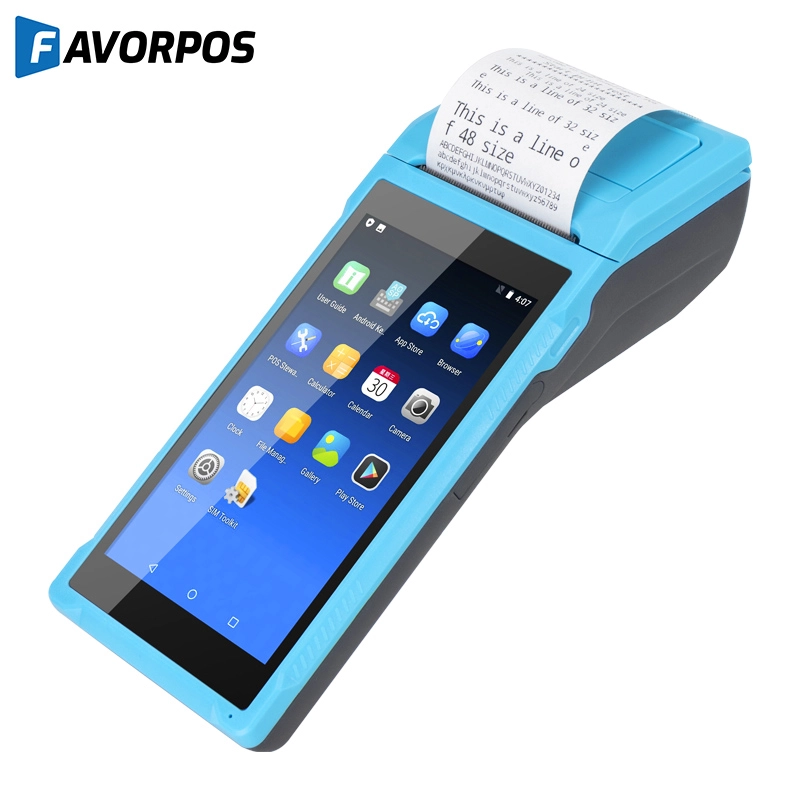
Android Handheld Pos Device Touch Screen Pos Terminal Manufacturer
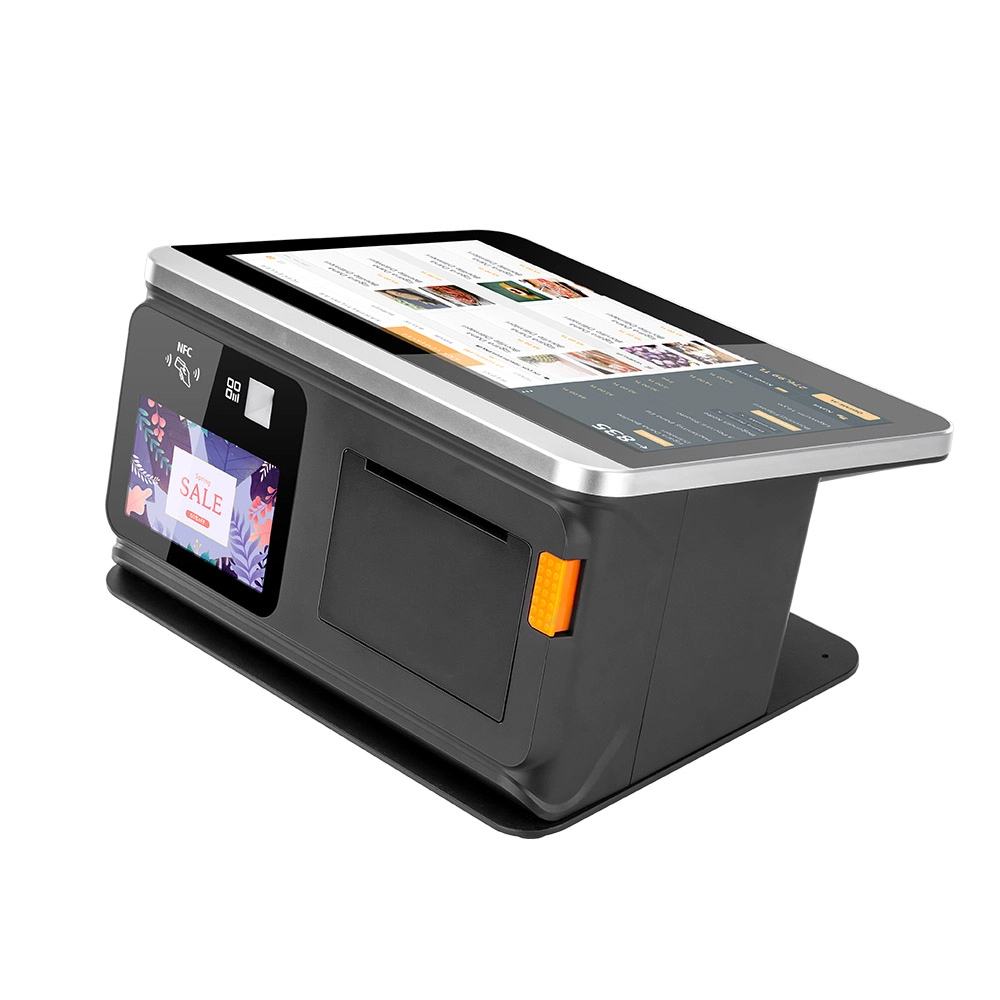
All in One POS Terminal Metal 11.6'' Touchscreen Android Windows with Printer
The All-in-One POS Terminal features an 11.6'' touchscreen display, compatible with both Android and Windows. This metal-constructed terminal combines durability with style, making it a perfect fit for any retail or hospitality environment. Equipped with a built-in printer, it streamlines transactions by allowing for instant receipt printing.
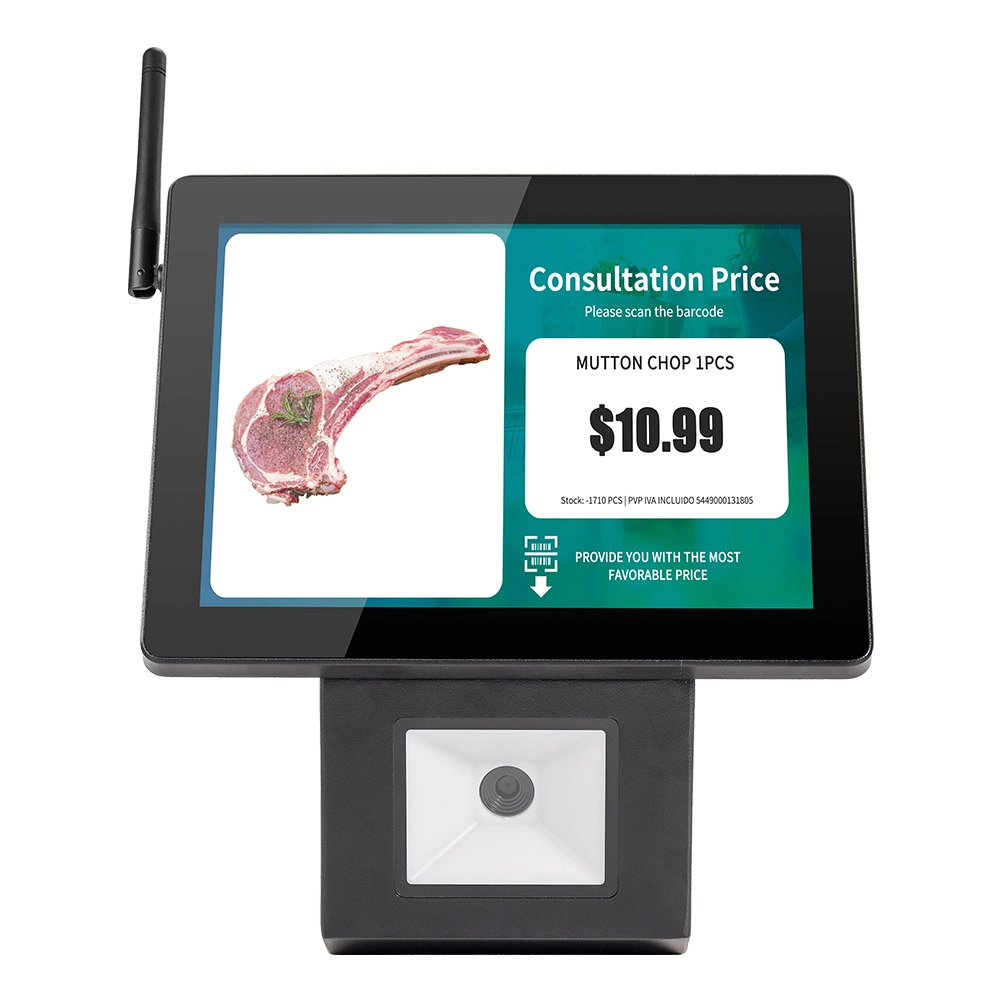
8 inch Touchscreen Price Checker Barcode Scanner Wifi Optional Android Win 10
FAVORPOS Touchscreen Price Checker offers a user-friendly interface, perfect for retail environments. With optional Wi-Fi connectivity, this device runs on Android or Windows, providing flexibility and ease of use. The integrated barcode scanner allows for quick price verification, enhancing the shopping experience for customers. Compact and efficient, it's designed to streamline operations and improve checkout speed.
Get in touch
Interested in becoming a POS system dealer? Contact us for more information and start the process of joining our dealer network.
We look forward to working with you to expand the market together.


Copyright © 2025 Favorpos All Rights Reserved.
