
What is the Difference Between Smart POS and Traditional POS?
Explore the key distinctions between smart POS and traditional POS systems with FAVORPOS. Smart POS offers advanced features like cloud connectivity and enhanced analytics, while traditional POS is known for basic transaction processing. Discover which solution best suits your business needs by diving into our detailed comparison. Enhance your payment processes with FAVORPOS today.
- What is a traditional POS system?
- Key Characteristics of Traditional POS Systems:
- What is a Smart POS System?
- Key Characteristics of Smart POS Systems:
- Key Differences Between Smart POS and Traditional POS Systems
- Advantages of Smart POS Systems
- Advantages of Traditional POS Systems
- Which System is Right for Your Business?
- Embrace the Future of POS with Smart Systems

In the fast-paced world of retail and service industries, point-of-sale (POS) systems have become essential tools for processing transactions, managing inventory, and improving customer service. Over the years, the POS landscape has evolved significantly, with two main types of POS systems dominating the market today: smart POS and traditional POS. While both serve the same basic purpose—facilitating sales and transactions—the way they operate, their features, and their benefits differ significantly.
In this article, we’ll explore the key differences between smart POS systems and traditional POS systems, helping businesses decide which solution best suits their needs.
What is a traditional POS system?
A traditional POS system typically refers to the older, more conventional form of POS systems used in retail or hospitality. These systems are often hardware-based, relying on dedicated devices like cash registers, receipt printers, barcode scanners, and credit card terminals. Traditionally, traditional POS systems are standalone setups that don’t integrate well with other systems and often require manual updates.
Key Characteristics of Traditional POS Systems:
Hardware-Centric: Traditional POS systems are usually built around dedicated, physical hardware. This includes cash drawers, barcode scanners, printers, and monitors.
Local Storage: Data is stored locally on the device, which means it may not be as accessible or secure as cloud-based options.
Limited Features: Traditional POS systems tend to focus on basic sales functions like processing transactions and printing receipts. Advanced features, like real-time reporting or customer analytics, are often unavailable or require additional software.
Costly Setup: These systems can be expensive to install and maintain due to their hardware and ongoing software updates.
What is a Smart POS System?
A smart POS system is a more modern and technologically advanced version of the traditional POS system. It typically combines hardware and software in a more flexible and integrated way. Smart POS systems often use tablets or smartphones as their central platform, allowing for cloud-based storage, real-time data syncing, and seamless integration with other business management tools.
Key Characteristics of Smart POS Systems:
· Cloud-Based: Smart POS systems store data in the cloud, allowing for real-time updates and easy access from multiple devices and locations.
· Mobile and Tablet Integration: Many smart POS systems are mobile-friendly, using tablets, smartphones, or mobile devices to process transactions. This flexibility allows businesses to accept payments anywhere, not just at a fixed counter.
· Advanced Features: In addition to basic transaction processing, smart POS systems often include features like inventory management, sales analytics, customer relationship management (CRM), and loyalty programs.
· Lower Initial Costs: Smart POS systems generally have lower upfront costs because they often don’t require specialized hardware. Instead, businesses can use existing mobile devices or tablets.
· Integration with Other Software: These systems can easily integrate with accounting software, e-commerce platforms, and marketing tools, providing businesses with a more comprehensive view of operations.
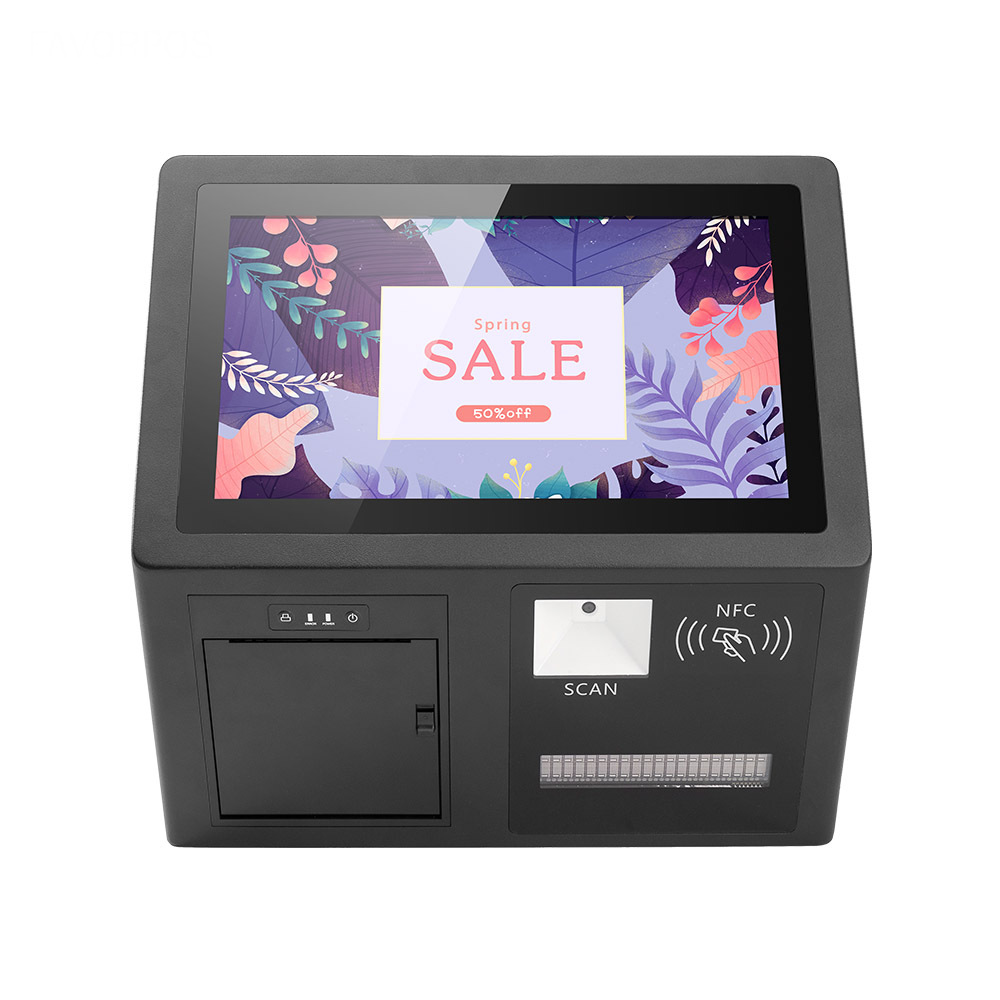
Key Differences Between Smart POS and Traditional POS Systems
|
Feature |
Traditional POS |
Smart POS |
|
Hardware |
Requires dedicated, fixed hardware (cash register, receipt printer, etc.) |
Uses mobile devices or tablets as the central platform |
|
Data Storage |
Local storage, limited access |
Cloud-based storage, accessible from multiple locations |
|
Flexibility |
Fixed location (typically tied to a counter) |
Portable, mobile, and flexible (can be used anywhere) |
|
Features |
Basic transaction processing, limited reporting |
Advanced features like CRM, inventory management, and analytics |
|
Cost |
High upfront costs for hardware and setup |
Lower initial costs, uses existing mobile devices |
|
Software Integration |
Limited integration with other business tools |
Easily integrates with accounting, e-commerce, and other software |
|
Maintenance |
Regular software and hardware maintenance required |
Software updates are automated; no hardware maintenance needed |
Advantages of Smart POS Systems
1. Cost-Effective and Scalable
Smart POS systems are generally more cost-effective, as they don’t require expensive, specialized hardware. You can start with a mobile device or tablet and expand as needed. The scalability of smart POS systems makes them ideal for businesses that plan to grow.
2. Cloud Integration and Remote Access
Since smart POS systems are cloud-based, businesses can access their data remotely, track sales in real time, and manage operations from anywhere. This is particularly useful for multi-location businesses or businesses with mobile operations like food trucks or pop-up shops.
3. Advanced Features and Insights
Smart POS systems often come with powerful software that offers inventory management, sales analytics, customer insights, and loyalty programs. This allows businesses to make more informed decisions, streamline their operations, and build stronger relationships with customers.
4. Increased Mobility
With a smart POS system, businesses are no longer tied to a single location. For example, in retail environments, staff can use smart POS systems to check out customers anywhere in the store, improving the customer experience and reducing wait times.
Advantages of Traditional POS Systems
1. Reliability
Traditional POS systems, being hardware-based, don’t rely on an internet connection to function. This makes them a reliable choice for businesses in areas with poor or inconsistent internet connectivity.
2. Security
Since data is stored locally on the device, traditional POS systems can be seen as more secure in environments where internet access may be a vulnerability. There’s no reliance on cloud storage or external networks for sensitive data.
3. Simple to Use
For businesses that don’t require the advanced features of a smart POS system, traditional POS setups are straightforward and easy to use. There’s no need to train staff on complex software, and they focus primarily on the transaction at hand.
Which System is Right for Your Business?
The decision between smart POS and traditional POS largely depends on the size and needs of your business.
Smart POS is ideal for businesses that value flexibility, cloud access, and advanced features. If you’re looking for a scalable solution with real-time reporting, customer management, and the ability to integrate with other systems, a smart POS system is the right choice.
Traditional POS may be more suitable for businesses that require a reliable, simple setup and have no immediate need for advanced software integrations or mobility. It’s a great option for businesses in areas with unstable internet connections or those that prioritize security in their transactions.
Embrace the Future of POS with Smart Systems
In summary, smart POS systems provide businesses with greater flexibility, advanced features, and cloud-based benefits, making them ideal for the modern, fast-paced business environment. On the other hand, traditional POS systems remain a reliable option for those who need basic functionality and offline capabilities.
Understanding the differences between these two systems can help you make an informed decision that suits the needs of your business. Whether you choose a smart POS or traditional POS, upgrading your system will lead to more efficient operations, better customer experiences, and a streamlined workflow.
Ready to take your POS system to the next level? Explore smart POS solutions today to improve your business efficiency, customer satisfaction, and long-term growth!
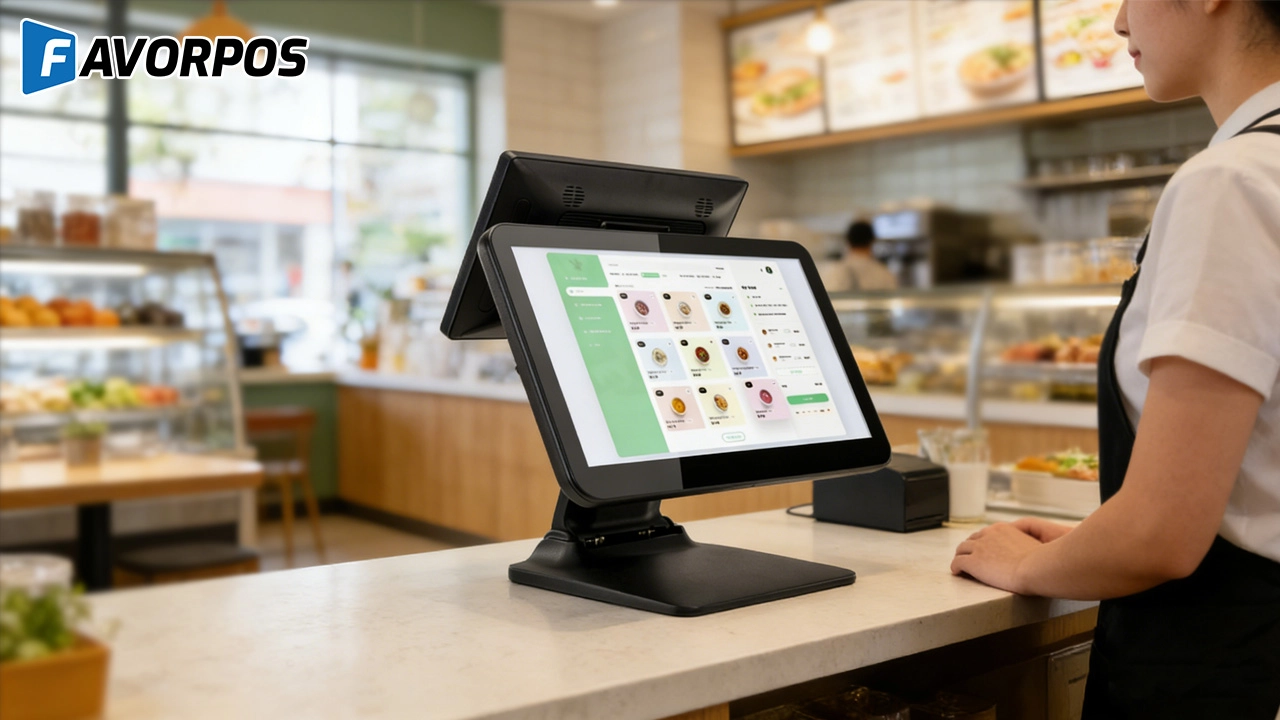
Beyond Checkout: How a 15.6-Inch Aluminum POS System Redefines Retail Efficiency
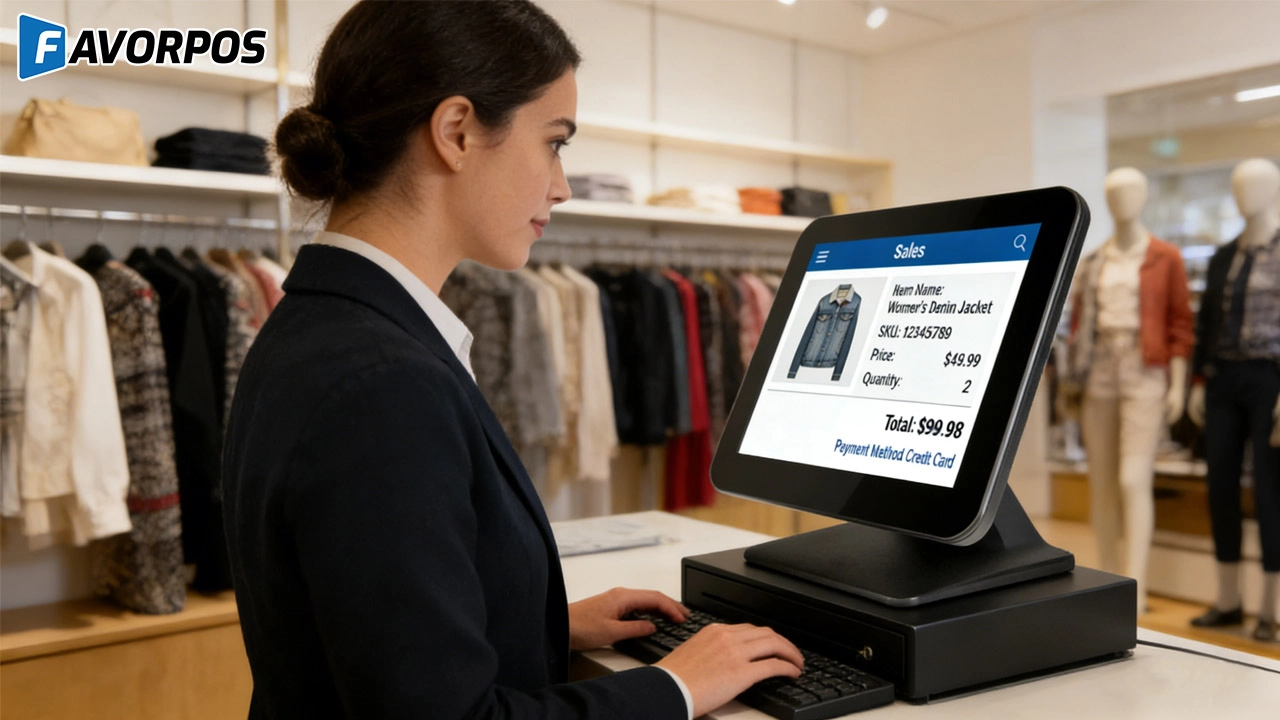
Understanding 15-Inch Aluminum POS Terminals in Modern Commercial Use
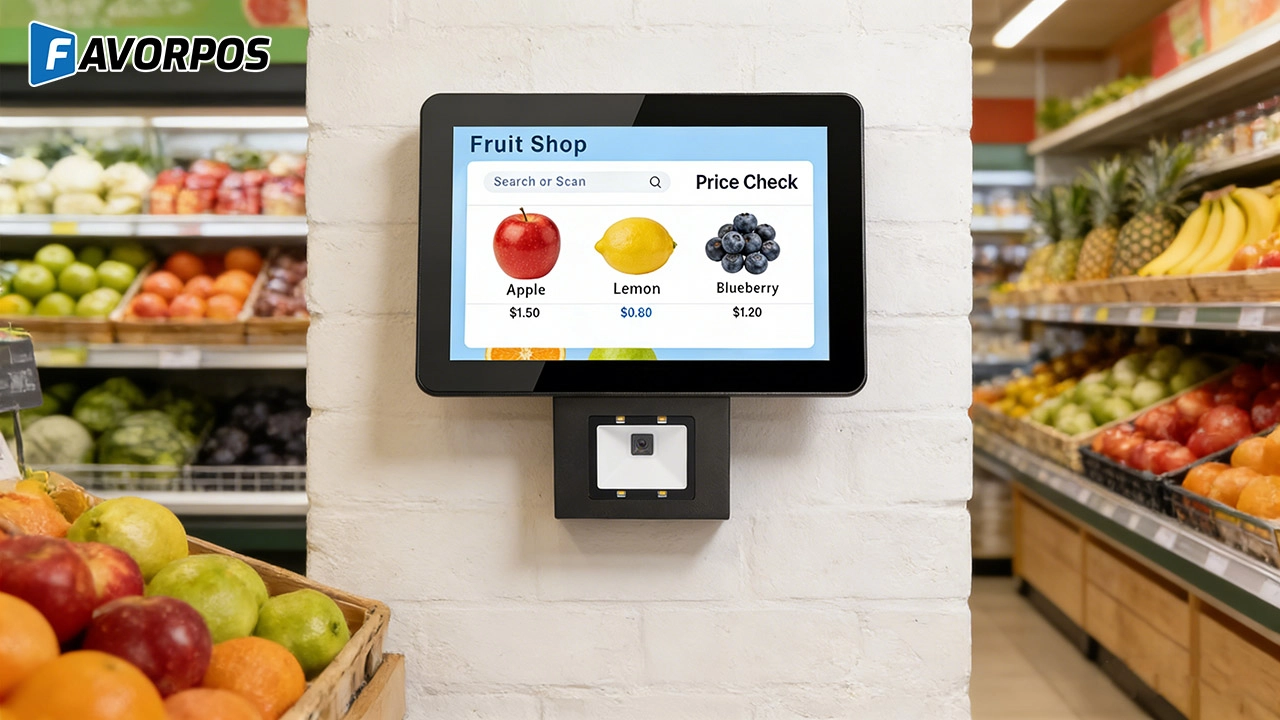
The Smart Way to Check Prices: How a 10.1-Inch Wall-Mounted Price Checker Transforms Retail Stores
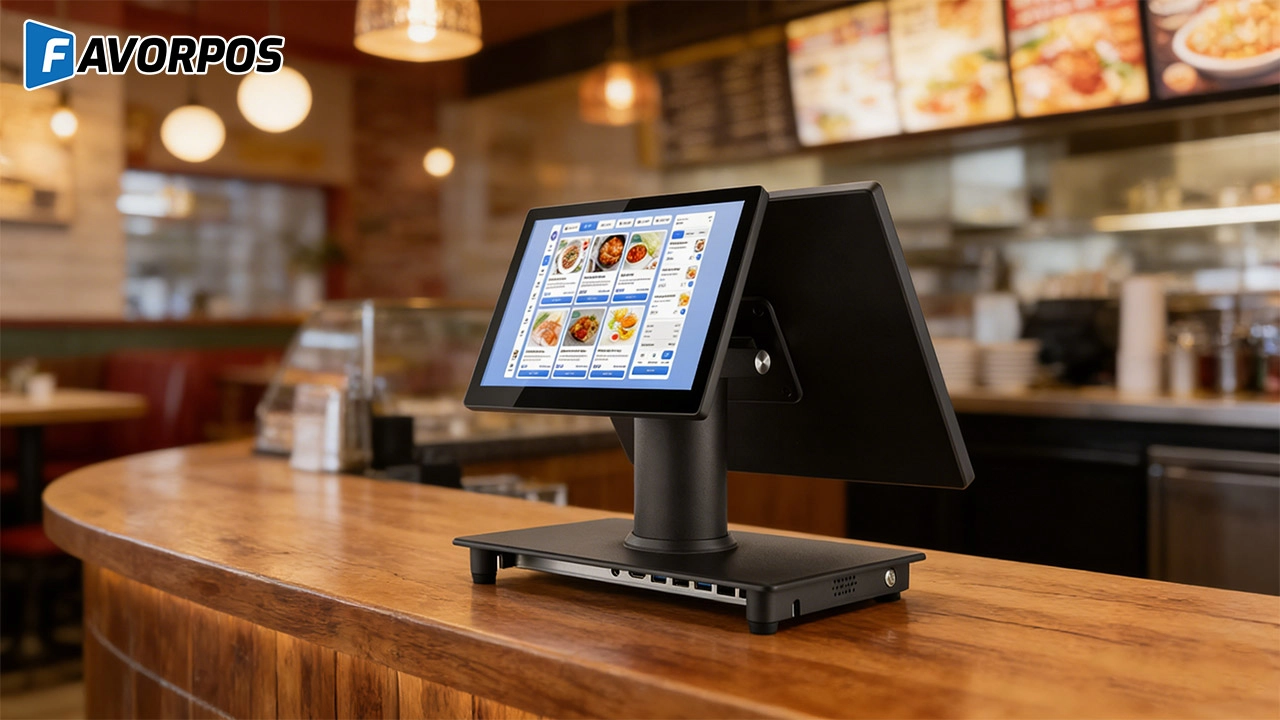
A Smarter Checkout Experience: The 15-Inch Dual-Screen POS Built for Modern Retail
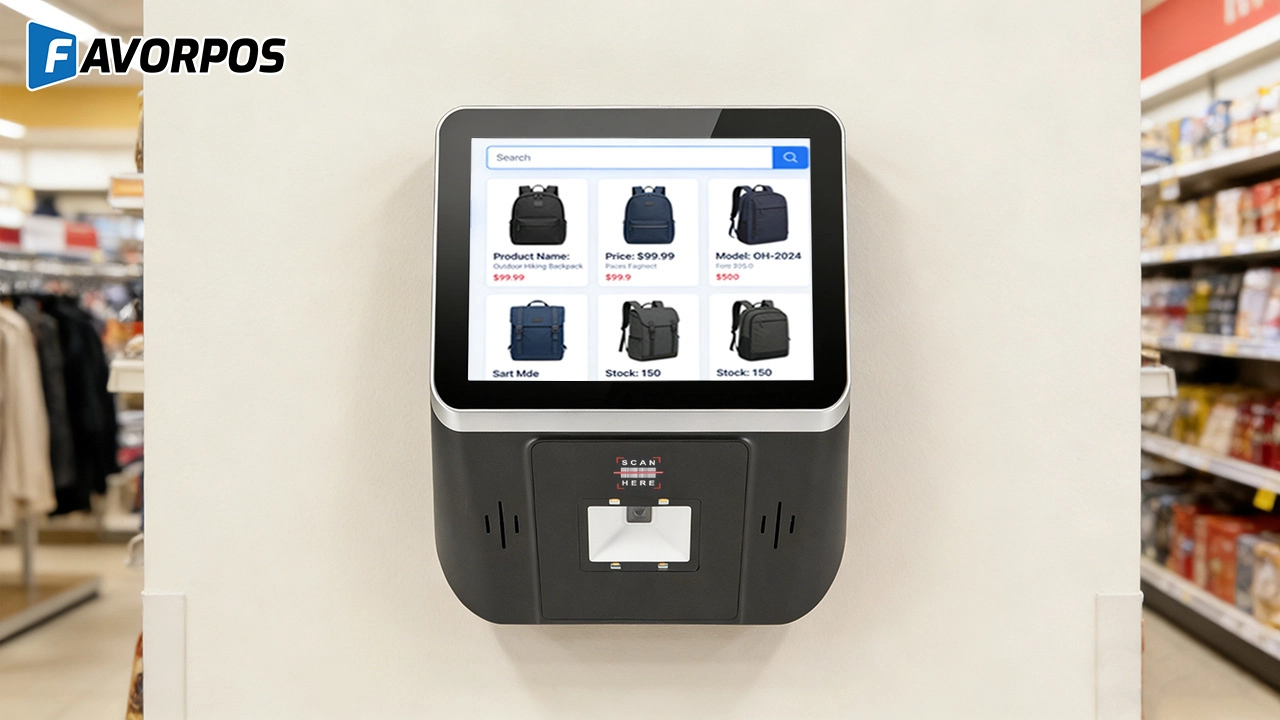
8-Inch Smart Price Checker: A Small Device Powering Smarter Retail Spaces
For E-commerce
What kind of support do you provide after the system is implemented?
We provide 24/7 technical support, regular firmware updates, and ongoing maintenance to ensure that the system always maintains optimal performance.
For Distributor
How often do you update your products and launch new products?
We regularly update our product lines to incorporate the latest technology and meet market needs. Dealers will be kept informed when new products and updates are released.
For ODM
What is the process of ODM service?
Our ODM service process includes the following steps:
1. Preliminary consultation: Discuss project goals, needs and vision with customers.
2. Design and development: Develop and confirm product design.
3. Prototyping & Testing: Prototypes are made, tested and designs are optimized.
4. Production: Carry out mass production, following quality standards and production schedules.
5. Logistics & Delivery: Manage logistics to ensure that products are delivered on time.
6. Post-production Support: Provide technical support and maintenance services.
For company
What kind of certifications do you have?
CE, ROHS, and FCC as standards.
How do you ensure product quality?
We follow stringent quality control processes, including multi-stage testing and compliance with international standards.
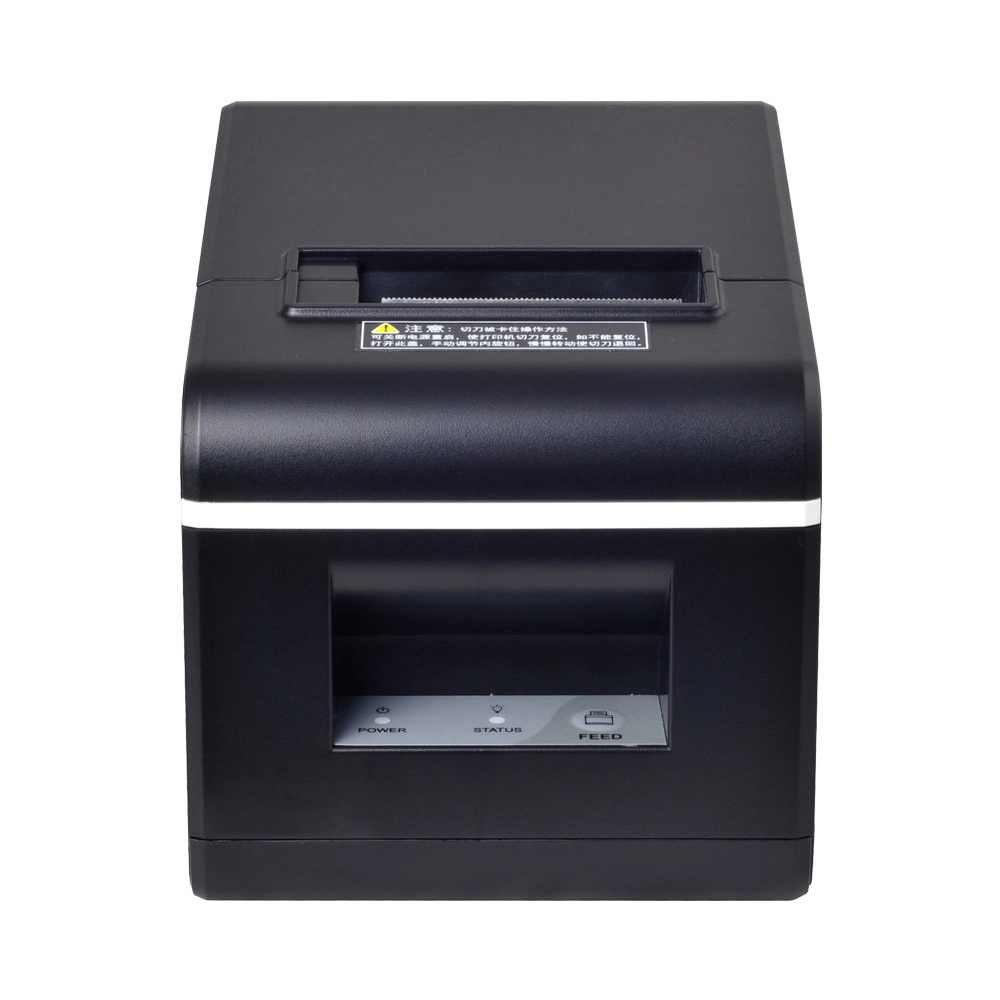
New Model Thermal Printer Bill Printer Manufacturer Portable Printer for Receipt
New Model Thermal Printer, a state-of-the-art bill printer designed for modern retail and hospitality environments. This printer combines advanced technology with user-friendly features, ensuring fast and efficient printing of high-quality receipts. Its sleek design complements any workspace, while multiple connectivity options make it easy to integrate into your existing POS systems.
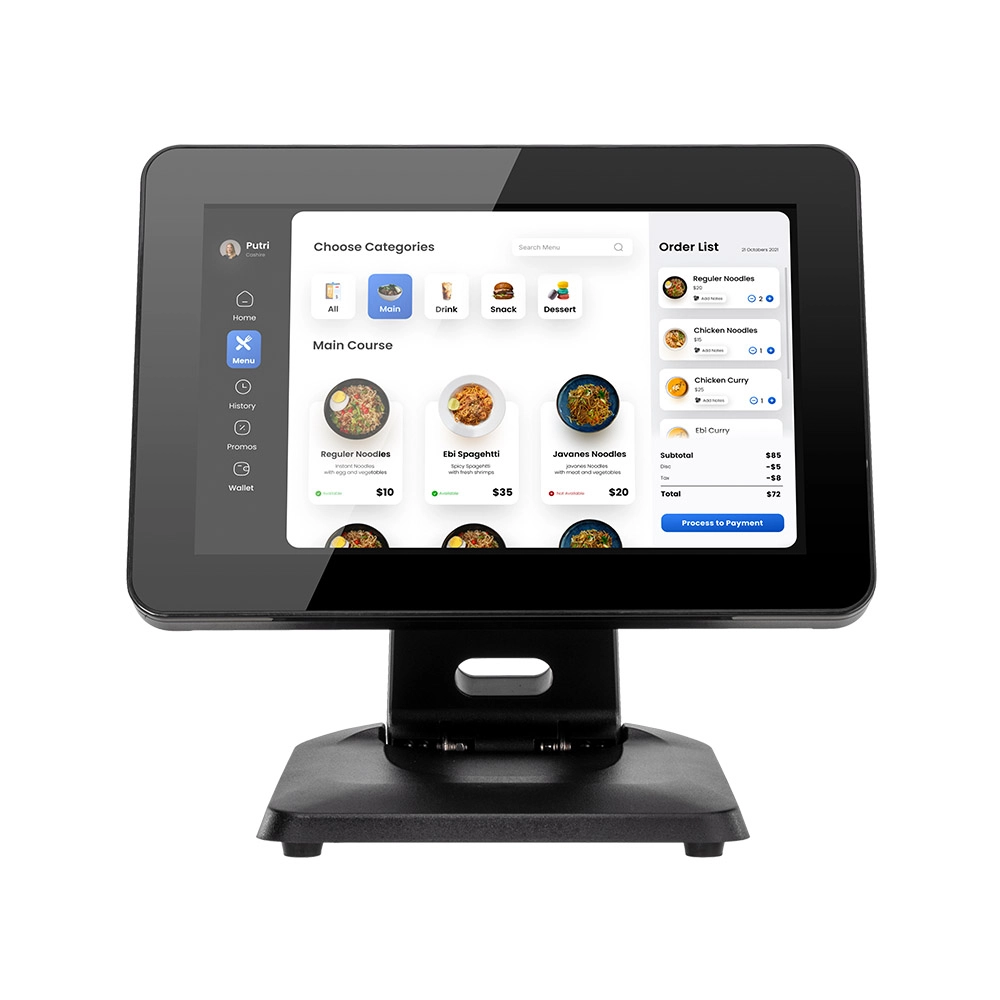
Desktop Touch Screen POS Systems 12.1'' Android Windows Manufacturer
Our Desktop Touch Screen POS Systems feature a 12.1'' display, supporting both Android and Windows platforms. Engineered for high performance. The intuitive touch interface simplifies transactions and enhances customer engagement. With a sleek design and robust construction, our POS systems are perfect for businesses looking to improve efficiency and elevate the shopping experience.
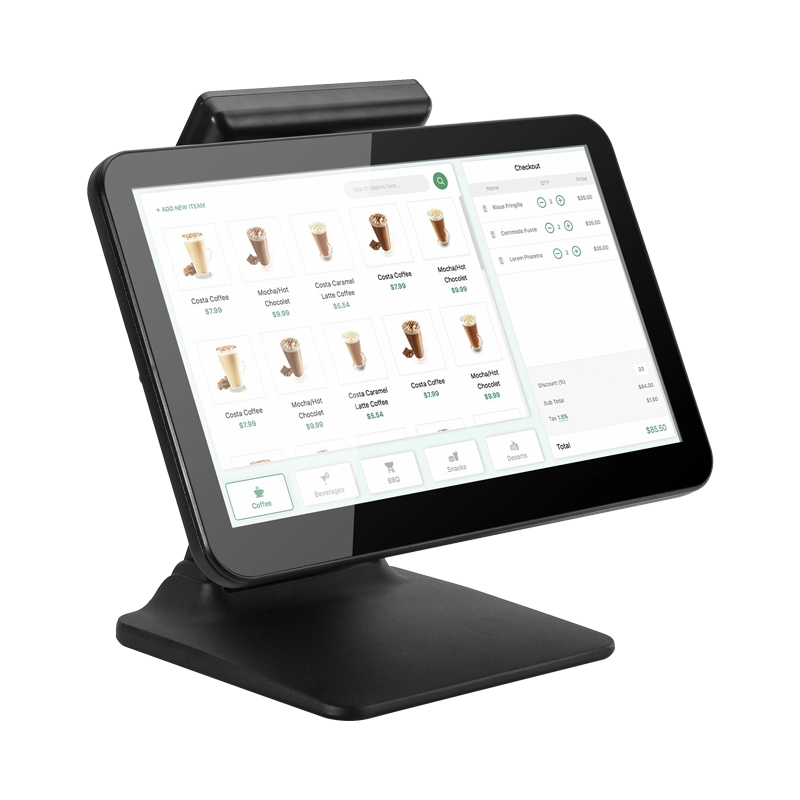
15.6 Inch Windows POS Terminal with VFD Display, Foldable Aluminum Stand Touch Screen POS for Retail & Hospitality
This 15.6-inch POS terminal is built to meet the needs of modern retail and hospitality environments. Powered by a stable Windows operating system, it ensures smooth performance for various point-of-sale applications. The device features a crisp, responsive touch screen and a built-in VFD customer display, allowing customers to view transaction details clearly. Its aluminum alloy stand offers a sleek, professional appearance while providing enhanced durability and stability for busy checkout counters. Ideal for retail stores, restaurants, and service-based businesses, this POS machine delivers a reliable and customer-friendly checkout experience.
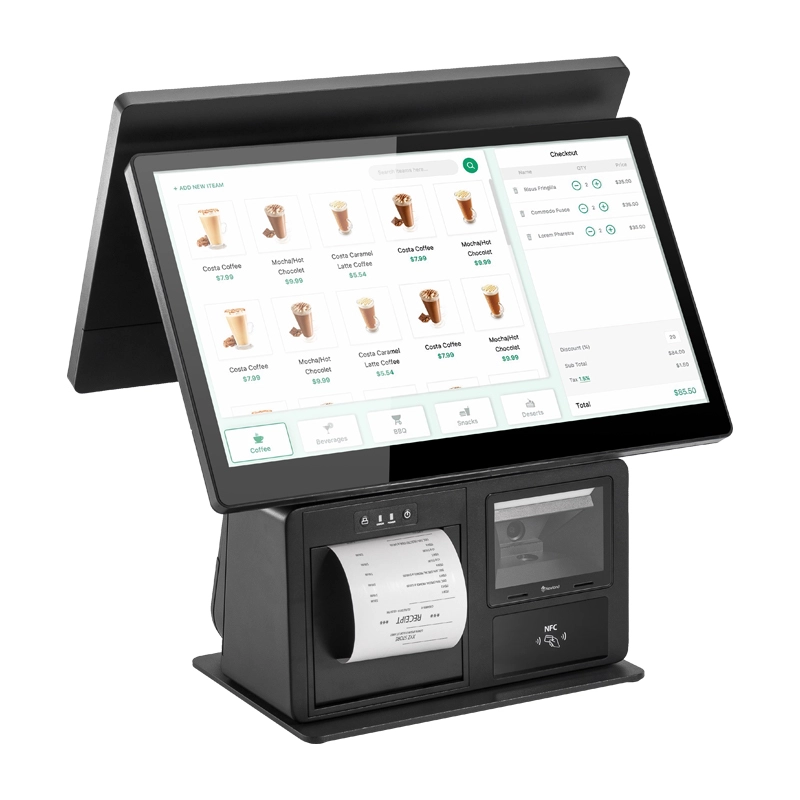
Point of Sale System with Thermal Printer All in One Pos Dual Touchscreen Pos with Barcode Scanner Supplier
FAVORPOS presents the all-in-one Point of Sale System with Thermal Printer, featuring dual touchscreens and an integrated barcode scanner. As a leading POS with NFC factory and barcode scanner supplier, we deliver reliable, efficient solutions tailored for your business needs.
Get in touch
Interested in becoming a POS system dealer? Contact us for more information and start the process of joining our dealer network.
We look forward to working with you to expand the market together.


Copyright © 2025 Favorpos All Rights Reserved.
