
Which mobile POS systems are best for on-the-go services?
- 1) How can I reliably accept EMV and contactless payments at an outdoor event when cellular coverage is poor—and what mobile POS systems handle offline transactions safely?
- 2) How do I keep inventory accurate across my online store, brick-and-mortar, and mobile-only sales without double-selling when operating on-the-go?
- 3) What hardware specs (battery life, printer, ruggedness) should I prioritize for a full-day mobile route, and which mobile POS readers meet those requirements?
- 4) How can I minimize card-present fraud and Bluetooth/NFC skimming risks when using portable POS readers in crowded environments?
- 5) When comparing total cost of ownership (TCO) for mobile POS, what hidden fees and operational costs should I include beyond processing rates?
- 6) Which mobile POS systems are best for on-the-go services—comparative guidance for field service, food trucks, and pop-up retail?
- Conclusion: Advantages of choosing the right mobile POS for on-the-go services
1) How can I reliably accept EMV and contactless payments at an outdoor event when cellular coverage is poor—and what mobile POS systems handle offline transactions safely?
Problem: Field sellers, market vendors, and mobile service technicians often face cellular dead zones. A common beginner mistake is assuming all mobile POS solutions process card-present transactions offline without risk.
Answer: Look for a mobile POS with explicit offline-mode design and clear reconciliation workflows. Many leading providers (eg. Square, Shopify POS, Stripe Terminal) include an offline transaction cache that temporarily stores card data encrypted on the device and attempts capture when connectivity returns. Advantages: uninterrupted sales, continuous receipts, and reduced lost revenue. Risks: higher fraud/dispute exposure and possible failed authorizations when final capture occurs—cards may decline later. Best practices:
- Enable offline mode only when necessary and set transaction amount caps for offline sales (e.g., limit to small-ticket sales to reduce dispute risk).
- Use EMV-capable hardware that supports full-chip reads locally (EMV reduces counterfeit fraud even offline).
- Choose a system that timestamps and logs each offline sale and provides a clear reconciliation report so offline transactions are visible separately in the dashboard.
- Where possible, pre-authorize cards for higher-value services (for appointments, authorize a nominal amount to validate the card before performing work).
Which vendors excel: Square, Shopify POS, and Stripe Terminal provide mature offline workflows; SumUp and Zettle offer simple offline caching in some regions. Always verify the vendor’s offline limits and dispute policy—offline sales can increase chargeback risk and may be processed at different authorization rules.
2) How do I keep inventory accurate across my online store, brick-and-mortar, and mobile-only sales without double-selling when operating on-the-go?
Problem: Beginners frequently report oversells after field sales because stock counts weren’t synchronized in real time or because multiple SKU variants were mis-mapped between systems.
Answer: Prioritize a POS with real-time multichannel inventory synchronization and robust SKU mapping. Key capabilities to require:
- Real-time stock decrement that updates the central inventory immediately upon a mobile sale (or as soon as connectivity resumes with conflict resolution if offline).
- Variant and bundle support so services or kits reduce the correct component SKUs (avoid selling a service bundle that doesn't decrement parts correctly).
- Low-stock thresholds and push notifications for field staff when a product is running low.
- Two-way integrations with your e-commerce platform (Shopify, WooCommerce) and accounting system to ensure sales and returns sync bi-directionally.
Implementation tips:
- Use unique SKU/UPC barcodes and require barcode scanning for mobile sales to reduce human error.
- If your mobile POS has intermittent connectivity, enable transaction queuing plus a reconciliation job that flags conflicts (e.g., when two sellers sell the last unit at the same time).
- Consider centralized inventory rules (a single source of truth) and avoid manual overrides by field staff unless approved.
Systems to consider: Lightspeed and Shopify POS are known for strong omnichannel inventory; Square’s advanced inventory is robust for smaller catalogs. Ask prospective vendors for a demo of SKU mapping and offline reconciliation flows.
3) What hardware specs (battery life, printer, ruggedness) should I prioritize for a full-day mobile route, and which mobile POS readers meet those requirements?
Problem: New mobile merchants often purchase low-cost readers without checking battery life or thermal printer compatibility, leading to mid-shift failures and lost sales.
Answer: Determine your operational profile (average receipts per hour, receipt length, whether you need thermal printing, and environmental conditions). Key hardware factors:
- Battery life: target devices that last a full shift (8–12+ hours). Square Reader for contactless and chip typically suits light use; for route-based or festival work, consider tablet-based terminals (Square Terminal, Clover Flex, or a rugged Android POS with external battery) that advertise multi-shift life or support hot-swappable batteries.
- Printer requirements: portable thermal printers (Bluetooth or integrated) that last a day on a single charge and accept standard thermal rolls. Look for printers with clear specs (mAh battery, prints per charge) and proven driver compatibility with your POS app.
- Ruggedness and weather resistance: IP-rated devices (or protective cases) are crucial outdoors. For high-impact work, consider ruggedized Android POS devices or cases for iPads/terminals.
- Connectivity options: devices with both Bluetooth and Wi‑Fi plus optional external LTE hotspots improve reliability; some terminals include embedded 4G modules.
Examples: For lightweight mobile work, a compact EMV contactless reader (e.g., Square Reader) plus a Bluetooth thermal printer can be sufficient. For multi-stop services or long exhibitions, invest in a dedicated mobile terminal (Square Terminal, Clover Flex, or a Lightspeed-compatible tablet) with longer battery specs and integrated printing. Always test the exact hardware under your expected shift conditions before rollout.
4) How can I minimize card-present fraud and Bluetooth/NFC skimming risks when using portable POS readers in crowded environments?
Problem: Public-facing mobile readers are attractive targets. Many beginners underestimate attack vectors like rogue Bluetooth pairing or visual tampering of devices.
Answer: Implement layered security: hardware, software, user procedures, and monitoring.
- Hardware security: choose EMV-certified readers with authenticated firmware updates and tamper-evident features. EMV chip processing drastically reduces counterfeit card fraud; contactless (NFC) uses tokenization on many platforms.
- Encrypted communications: ensure the POS provider uses end-to-end encryption and tokenization. Tokenization means the card number is never stored in cleartext on your systems—only an irreversible token is retained.
- Bluetooth best practices: disable discoverability when not pairing, use pair-by-confirmation, and choose devices that implement device whitelisting (pair only with known terminals).
- Operational controls: train staff to visually inspect the reader before each sale, verify that receipts show appropriate merchant identifiers, and require employee sign-in to the POS to create an audit trail.
- Monitoring and alerts: enable real-time fraud monitoring in your POS (velocity checks, AVS/address checks for keyed-in sales) and set thresholds for suspicious behavior (multiple refunds or voids from the same device).
Vendors: Reputable POS providers publish security documentation and PCI attestations. Confirm the vendor’s PCI DSS compliance scope and whether they provide a written responsibility matrix showing what security tasks they handle versus what you must maintain.
5) When comparing total cost of ownership (TCO) for mobile POS, what hidden fees and operational costs should I include beyond processing rates?
Problem: Buyers often focus only on per-transaction rates and ignore hardware depreciation, refunds/chargeback fees, connectivity costs, and integration fees, which can double expected costs.
Answer: Build a TCO model that includes:
- Processing fees: in-person swipe/chip/contactless vs keyed-in rates. Example: Square’s in-person rate in the U.S. has been commonly listed at 2.6% + $0.10 (as of 2024) for card-present payments—use vendor pages for current rates.
- Monthly software fees: POS subscription tiers (Shopify POS Pro has a monthly fee per location as an example) and add-on costs for advanced inventory, reporting, or loyalty modules.
- Hardware amortization: divide device cost by useful life (e.g., $299 terminal over 3 years = $8.30/month). Include spare devices and replacement costs for lost or damaged readers.
- Connectivity: mobile data plans, dedicated LTE hotspots, or increased cellular use charges when doing many on-the-go transactions.
- Payment disputes and chargebacks: count average chargeback rate and per-dispute fees—some providers charge administrative fees for disputes even if resolved in your favor.
- Integration and setup: cost for custom integrations, developer time, or third-party middleware to sync inventory and accounting.
- Operational labor: training time, reconciliation labor for offline sales, and time spent handling refunds and reporting.
Make comparative scenarios (low, medium, high monthly volume) and calculate effective blended rate = (processing fees + monthly fees + amortized hardware + extras) / monthly card volume. This reveals that a lower headline swipe rate may not be best if monthly software and integration fees are high.
6) Which mobile POS systems are best for on-the-go services—comparative guidance for field service, food trucks, and pop-up retail?
Problem: “Best” is situational. Beginners want a one-size-fits-all answer but need role-specific guidance.
Answer: Match the POS to your business model and operational needs.
- Field service (house calls, repairs): prioritize CRM, invoicing, offline mode, and scheduling integrations. Look for POS systems that provide on-site estimates, signature capture, and route-friendly hardware. Systems: Square for Service, ServiceTitan (specialized), and Stripe Terminal with a lightweight front-end can work depending on scale.
- Food trucks and concession stands: prioritize fast tap-to-pay, integrated tipping, kitchen/printer routing, and durable terminals. Systems: Square for Restaurants, Toast (restaurant-focused), and Lightspeed for complex menus.
- Pop-up retail and markets: prioritize portability, quick inventory sync, and simple receipts. Systems: Square, SumUp, and Shopify POS provide easy setup and low friction for weekend markets.
Checklist to choose the right mobile POS:
- Confirm required integrations (e-commerce, accounting, payroll).
- Test the exact hardware you’ll use in field conditions (battery, receipt printing, signal variability).
- Ask vendors for references in your vertical and for real-world uptime/offline behavior reports.
- Evaluate the layered costs (see TCO question) using your sales volume and average ticket size.
- Verify security & compliance documents (PCI SAQ guidance, EMV certification, tokenization details).
In short, Square and Shopify are frequently recommended for small-to-medium mobile businesses due to ease-of-use and broad ecosystem support; Stripe Terminal and dedicated restaurant/field solutions may be better for specialized workflows or higher volume operations. Always pilot before commit.
Conclusion: Advantages of choosing the right mobile POS for on-the-go services
Choosing the correct mobile point of sale delivers concrete advantages: uninterrupted on-the-go payments, lower checkout friction with tap-to-pay EMV readers, real-time inventory and sales visibility, reduced fraud with tokenization and EMV, and optimized operational costs when you calculate true TCO. The right portable POS also improves customer experience (digital receipts, tips, loyalty) while enabling audit trails and reconciliation for compliance.
For a tailored recommendation and a formal quote matching hardware, connectivity, and software needs for your mobile business, contact us at www.favorpos.com or email sales2@wllpos.com.
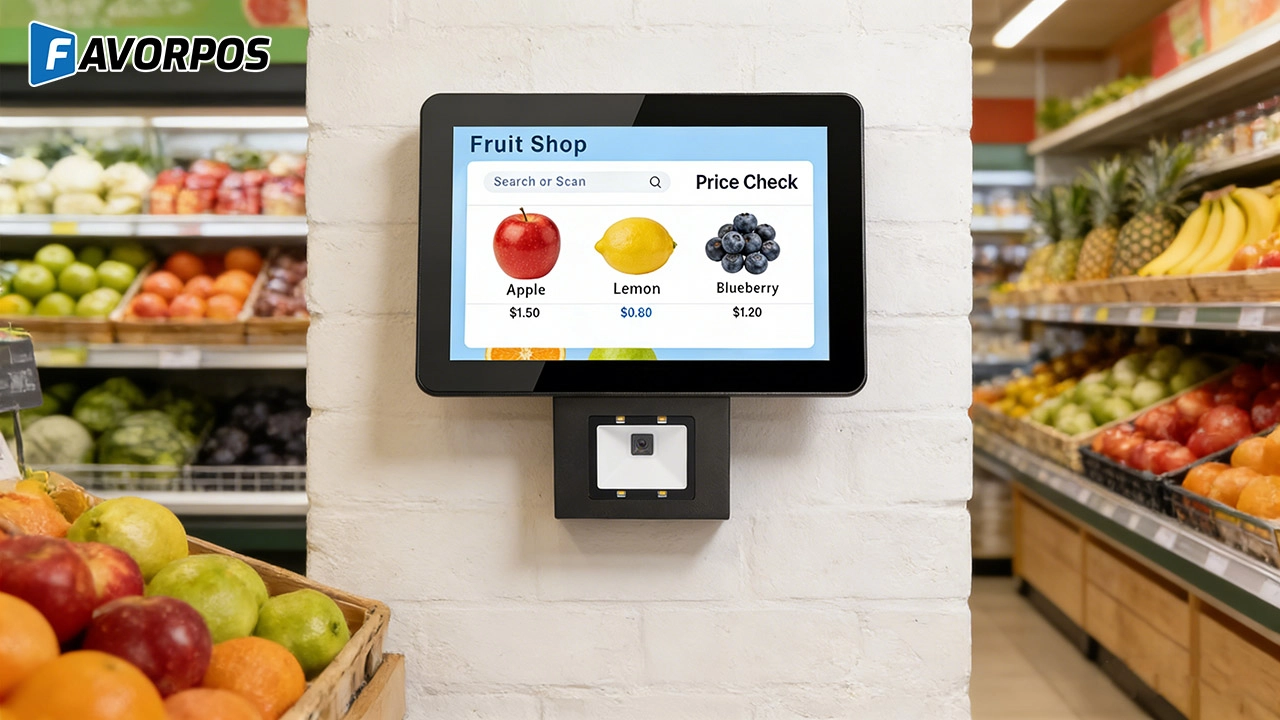
The Smart Way to Check Prices: How a 10.1-Inch Wall-Mounted Price Checker Transforms Retail Stores
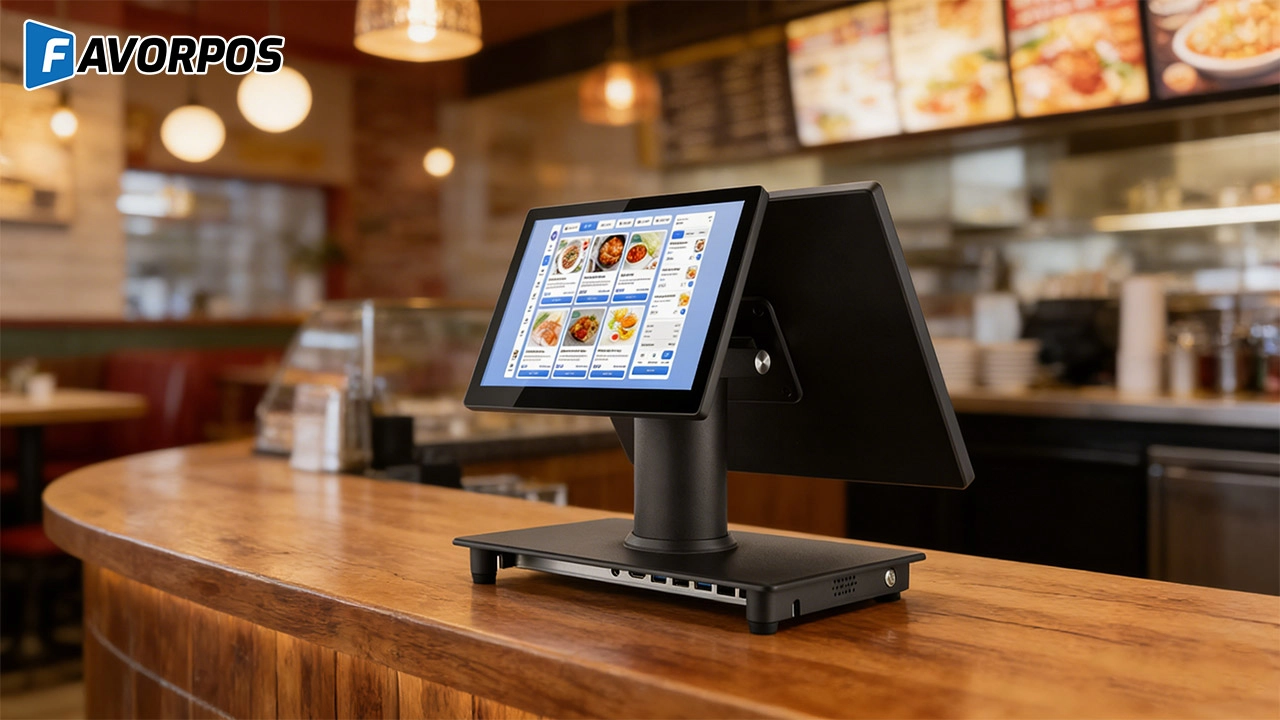
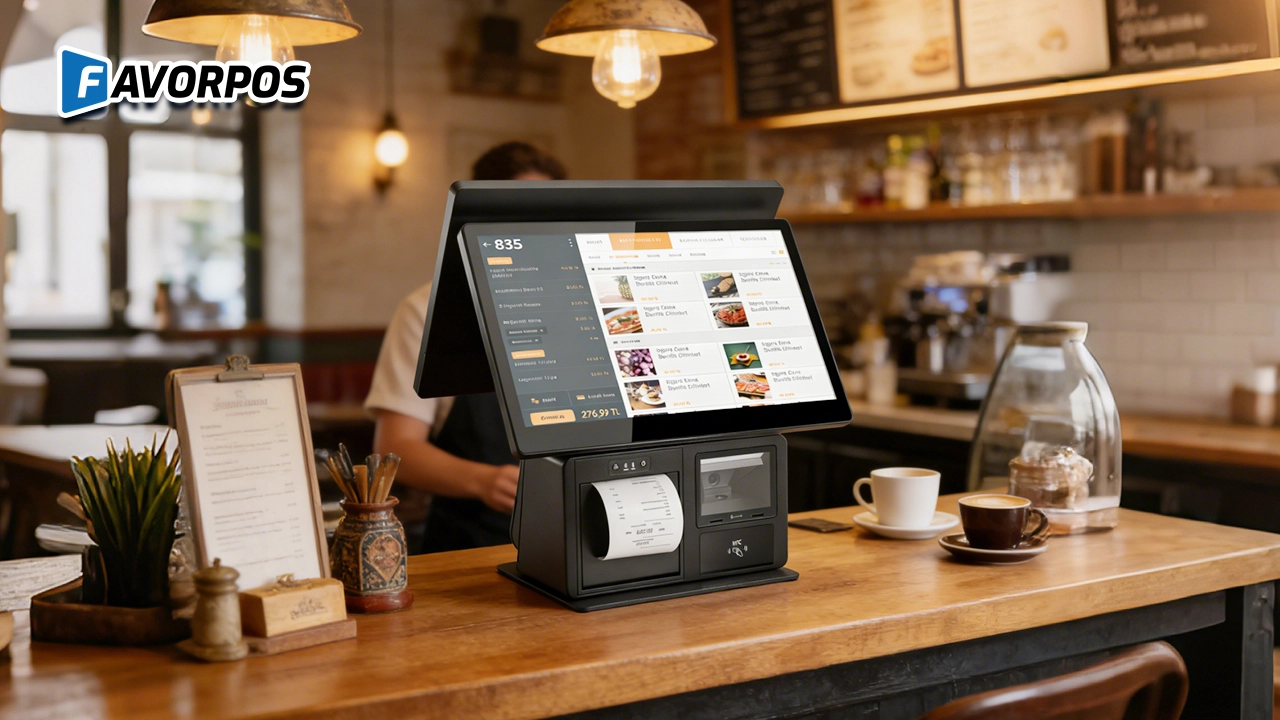
A Smarter Checkout Experience: The 15-Inch Dual-Screen POS Built for Modern Retail
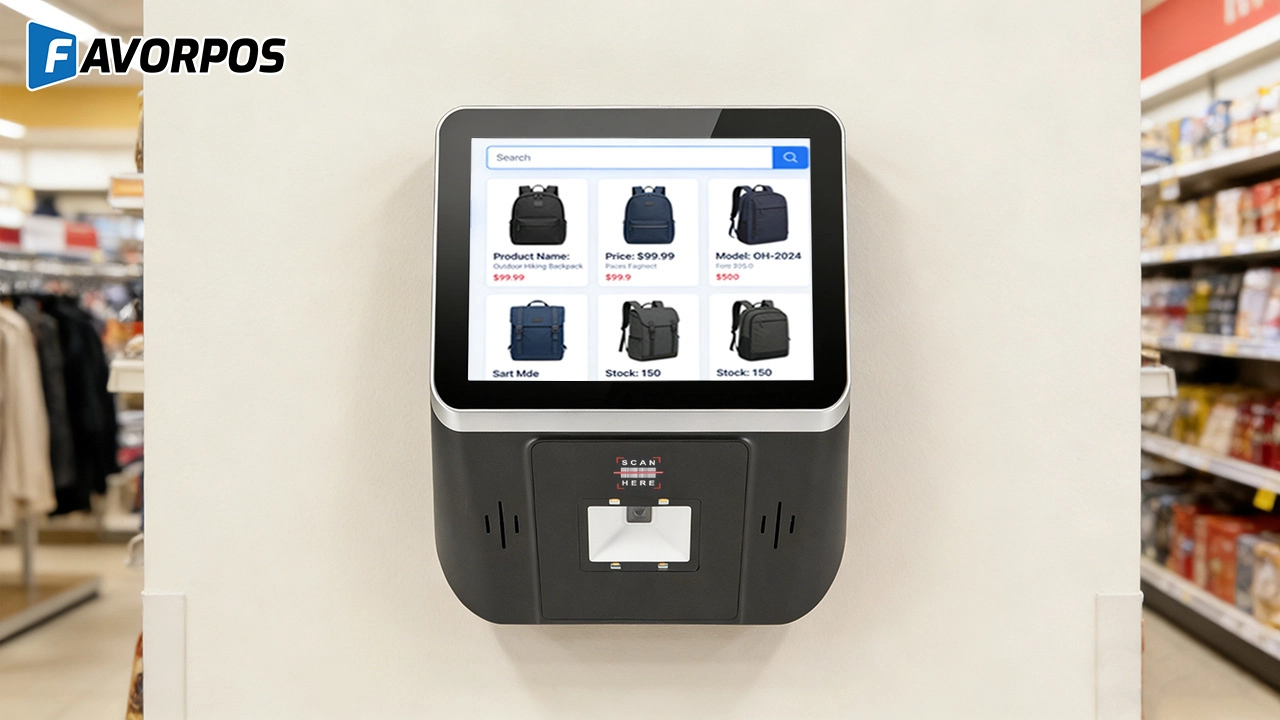
8-Inch Smart Price Checker: A Small Device Powering Smarter Retail Spaces
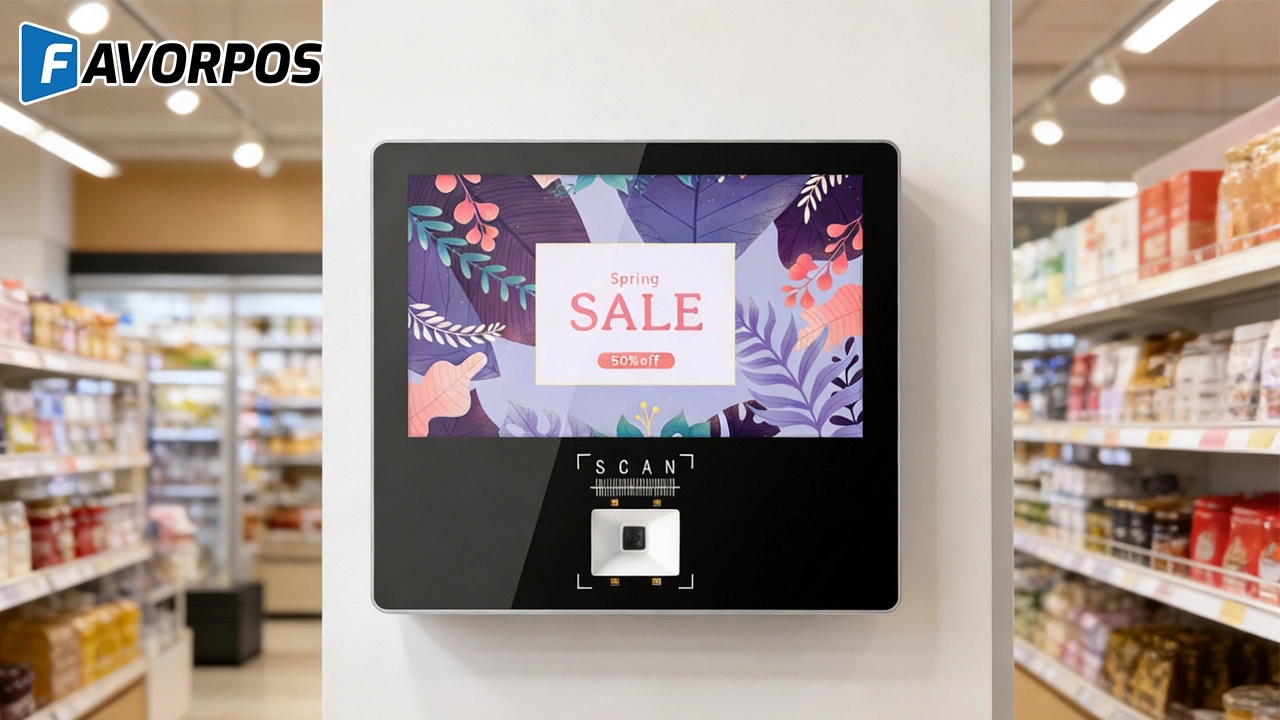
Built for Retail Precision: Manufacturing Excellence Behind the 11.6” Smart Price Checker
Building Stability in an Unstable Market: A 15.6-Inch All-in-One POS Designed for the Long Term
For Bakeries
Can custom cake orders be easily managed?
Yes, our system is designed to handle special orders, allowing customers to easily customize cakes and pastries, and employees can track these orders from start to finish.
For Solutions Retail
Can your equipment support multiple languages and currencies?
Yes, our POS system supports multi-language operation interfaces and multi-currency transactions to meet the needs of the global market. You can set different language and currency options according to the specific requirements of the country or region where your business is located.
For Hotels
What types of reports can I generate through your POS system?
You can generate detailed real-time reports on sales, guest spending patterns, department performance, and more.
For Restaurants & Cafes
Is your POS system suitable for different types of catering businesses?
Yes, our POS system is suitable for a variety of catering businesses, including fast food restaurants, high-end restaurants, cafes, as well as food trucks and pop-up restaurants. The system functions can be customized according to different business types to meet specific needs.
For company
How do you ensure product quality?
We follow stringent quality control processes, including multi-stage testing and compliance with international standards.

Aluminum Dual Screen Pos Terminal Pos Systems 15.6 inch Touchscreen Pos
FAVORPOS Aluminum Dual Screen POS Terminal features a 15.6-inch touchscreen, ideal for seamless transactions. As a trusted OEM Windows POS manufacturer, we deliver durable, high-performance solutions tailored for retail and hospitality businesses.
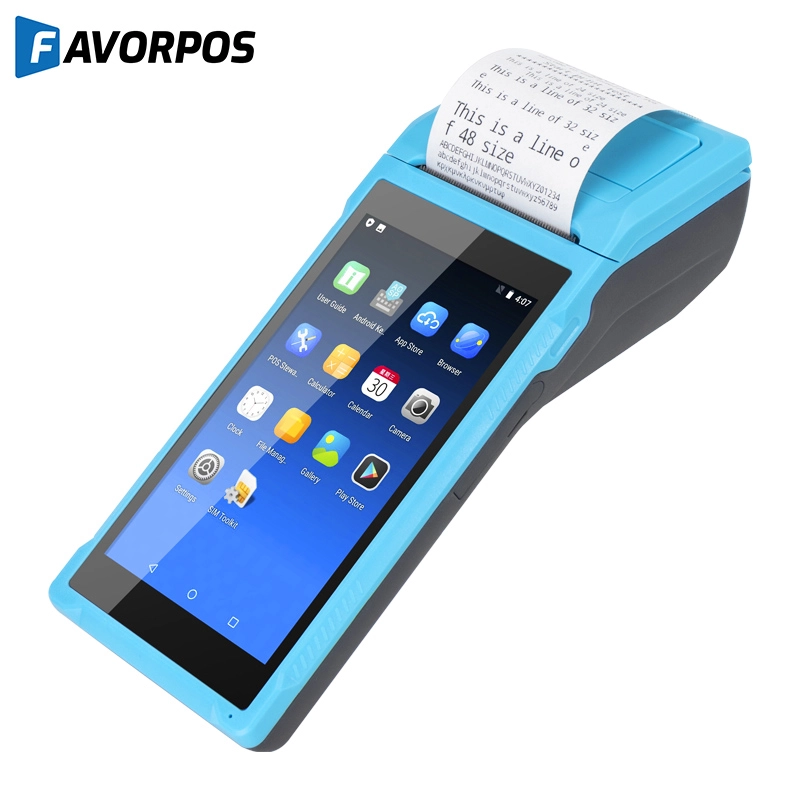
Android Handheld Pos Device Touch Screen Pos Terminal Manufacturer
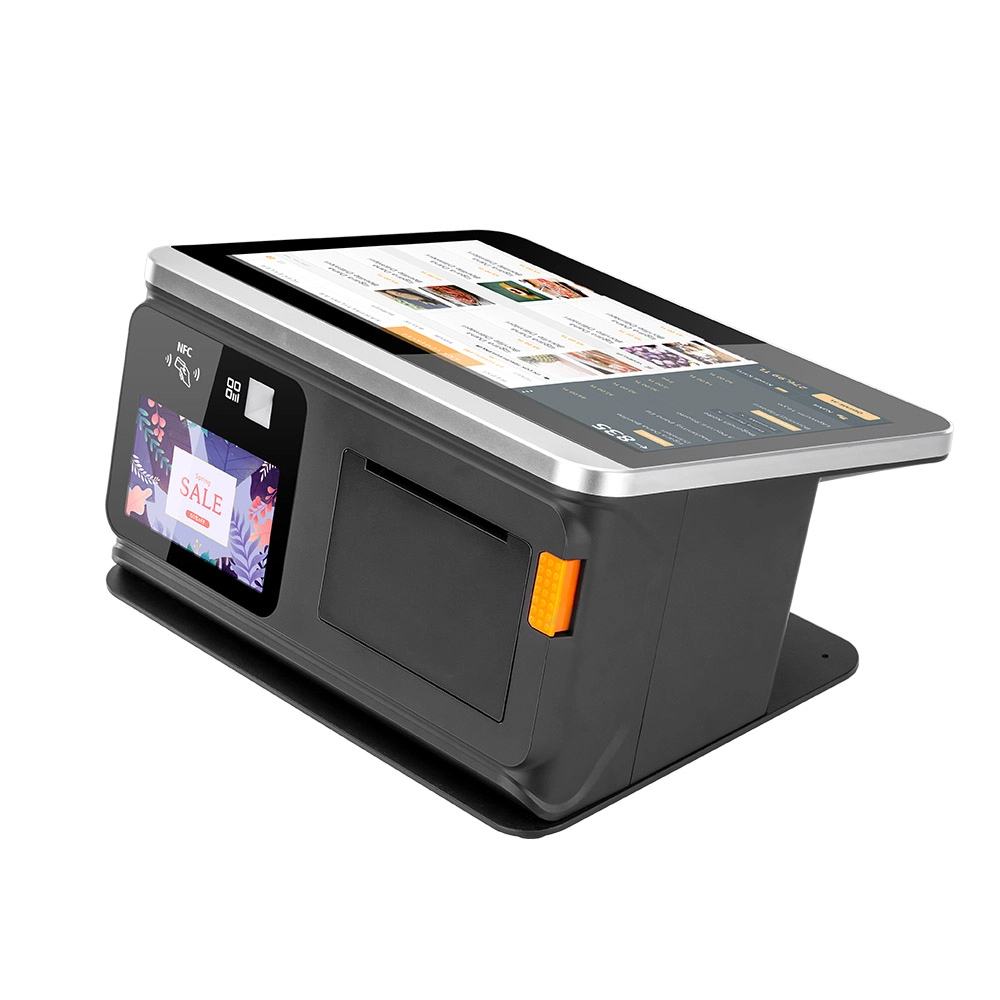
All in One POS Terminal Metal 11.6'' Touchscreen Android Windows with Printer
The All-in-One POS Terminal features an 11.6'' touchscreen display, compatible with both Android and Windows. This metal-constructed terminal combines durability with style, making it a perfect fit for any retail or hospitality environment. Equipped with a built-in printer, it streamlines transactions by allowing for instant receipt printing.
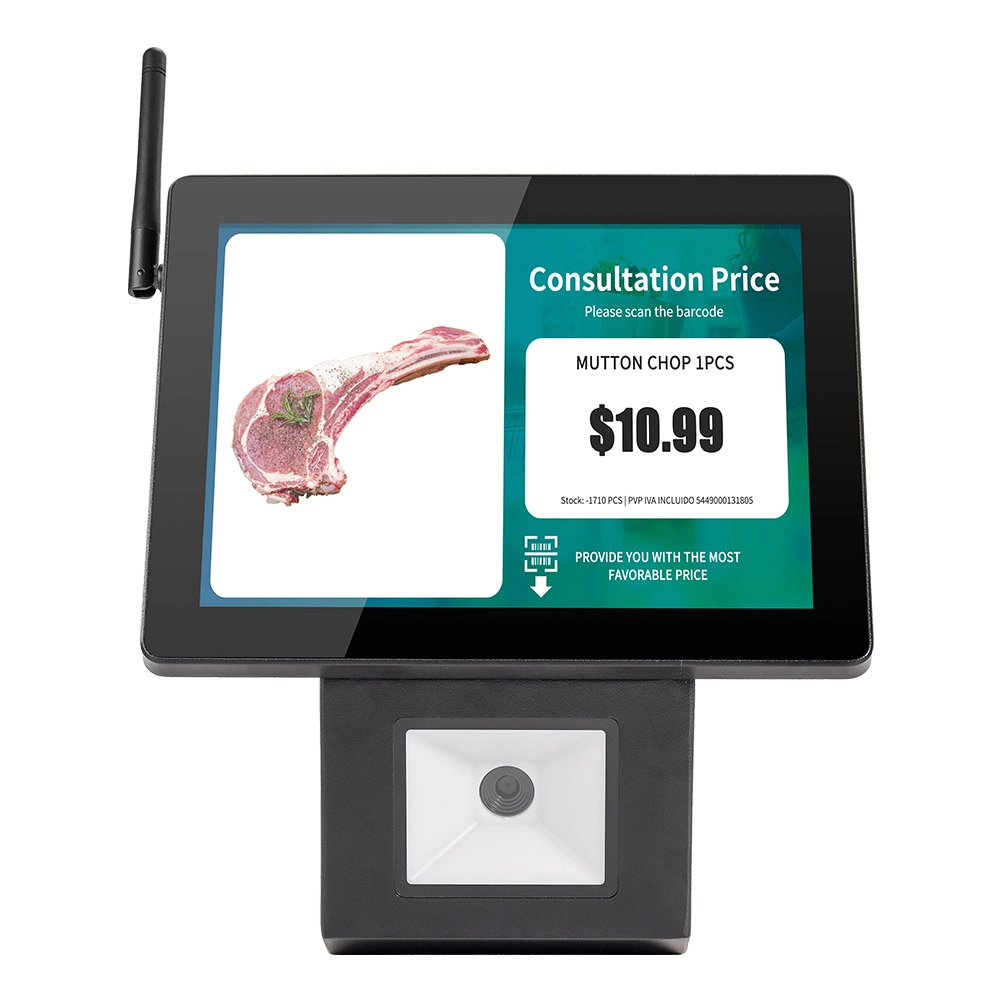
8 inch Touchscreen Price Checker Barcode Scanner Wifi Optional Android Win 10
FAVORPOS Touchscreen Price Checker offers a user-friendly interface, perfect for retail environments. With optional Wi-Fi connectivity, this device runs on Android or Windows, providing flexibility and ease of use. The integrated barcode scanner allows for quick price verification, enhancing the shopping experience for customers. Compact and efficient, it's designed to streamline operations and improve checkout speed.
Get in touch
Interested in becoming a POS system dealer? Contact us for more information and start the process of joining our dealer network.
We look forward to working with you to expand the market together.


Copyright © 2025 Favorpos All Rights Reserved.
