
What is the most affordable POS for boutique retail stores?
- 1) How do I calculate the true 3-year cost of a POS for a boutique store (hardware, software, payments, add-ons, and training)?
- 2) Which affordable POS supports advanced inventory (bundles, variants, matrix) for small boutiques without costing $100+/month?
- 3) Can I use consumer tablets and low-cost receipt printers without risking PCI compliance or losing EMV/NFC acceptance?
- 4) What is the safest process to migrate 10,000 SKUs (with variants and images) from Excel to a new POS without losing sales history or breaking barcodes?
- 5) Which affordable POS systems provide reliable offline-first mobile POS for pop-up events with multi-store inventory sync and conflict resolution?
- 6) How do I evaluate payment processing markup (flat-rate vs interchange-plus) for a seasonal boutique with average transaction $75 and month-to-month volume swings?
- Concluding summary: Advantages of choosing the right retail POS
Best POS Systems for Retail Stores: In-depth Answers for Boutique Buyers
Choosing the right retail POS system affects inventory accuracy, customer experience, margins and compliance. Below are six specific, pain-point questions beginners often search for but rarely find detailed answers to. Each answer gives step-by-step guidance you can apply when comparing retail POS software, cloud-based POS platforms, hardware bundles, payment processing and migration strategies.
1) How do I calculate the true 3-year cost of a POS for a boutique store (hardware, software, payments, add-ons, and training)?
Why this matters: Retailers often see low monthly subscription ads and underestimate one-time hardware, payment processing, add-on modules, and implementation costs. A realistic three-year total cost of ownership (TCO) prevents painful surprises.
Step-by-step TCO method:
- Inventory the components: POS subscription, payment processing fees, hardware (terminal, receipt printer, barcode scanner, tablet), optional payment terminal lease, barcode labels, card reader replacement cycles, and add-on modules (loyalty, advanced inventory, accounting integration).
- Get vendor quotes and classify costs: one-time (hardware purchase), recurring monthly/annual (software subscription, software add-ons, cloud backups), and variable (payment processing, chargebacks, warranty extensions).
- Estimate payment fees: Use your expected monthly card volume and average sale amount. Compare flat-rate platforms (e.g., common flat-rate models) versus interchange-plus merchant account pricing. For example, estimate monthly card volume x (average percent fee) + transactions x per-transaction fee. Ask vendors for sample statements or a fee projection based on your numbers.
- Include implementation & training: allocate a one-time amount for data import, staff training and process changes (many small boutiques spend the equivalent of 1–2 weeks of payroll in staff time learning a new system).
- Apply depreciation and replacement: hardware warranties typically 12–36 months. Budget for a mid-term replacement or spare hardware (especially for mobile/POP-UP use).
- Run scenarios: conservative, expected, and aggressive (higher sales, more transactions). This exposes breakeven points where a higher monthly subscription with lower transaction fees might save money.
Practical tip: Build a small spreadsheet with columns: item, unit cost, quantity, recurrence (one-time/month/year), then calculate 36-month totals. Use that to compare vendors like Square for Retail, Shopify POS, and Lightspeed, focusing on which combination of subscription and processing yields the lowest TCO for your projected volume.
2) Which affordable POS supports advanced inventory (bundles, variants, matrix) for small boutiques without costing $100+/month?
Why this matters: Boutiques sell variants (size, color), bundles (outfit sets), and limited-run SKUs. Many beginner guides list “inventory support” generically without clarifying whether the plan supports matrix variants, bundling/composite SKUs, or counts by location.
Guidance:
- Identify required features precisely: variant matrix (size x color), composite/bundled SKUs with auto-decrement, inventory by location, stock transfers, low-stock alerts, CSV import for bulk SKUs, and barcode generation.
- Affordable tiers to evaluate: Several cloud-based retail POS vendors offer entry-level or free tiers that handle basic inventory; advanced matrix and bundling often sit on mid-tier plans. For boutiques constrained to under ~$50/month, expect basic variant support and single-location counts. If you need multi-location inventory, bundles, and vendor/lot tracking, budget for the mid-level plan (commonly $30–$80/month based on vendor and region).
- Vendor examples (feature-oriented, not exhaustive):
- Square for Retail: has a free plan with core inventory; paid plans add advanced item management and vendor purchase orders.
- Shopify POS: core inventory and variants on Shopify plans; more advanced inventory features appear on higher Shopify plan tiers or via apps.
- Lightspeed Retail (and Vend/Lightspeed): stronger native matrix/variant and bundle features but typically at higher monthly pricing than free-tier options.
- Cost-saving strategy: Start with a lower-tier plan during inventory setup, confirm the CSV import supports your matrix, and then upgrade only if a critical feature (e.g., bundle auto-decrement or multi-location transfer) forces it. Use third-party integrations sparingly — they add subscription fees.
Decision checklist: Test the vendor’s trial with a sample of your most complex SKUs. If you can import your matrix CSV, create one or two bundles and run a mock sale to confirm behavior, you’ll know whether the subscription level meets your needs.
3) Can I use consumer tablets and low-cost receipt printers without risking PCI compliance or losing EMV/NFC acceptance?
Why this matters: Small retailers try to save by using consumer tablets and cheap hardware, but payment acceptance (EMV chip & contactless NFC) and PCI compliance are at stake. Not all hardware combinations maintain PCI scope or certifications.
Key points:
- Card acceptance and EMV: Certified EMV & NFC readers (often provided or approved by the POS vendor) are required to accept chip and contactless payments reliably. Using uncertified devices can prevent EMV support and expose you to fraud liability if a chargeback arises.
- PCI scope and P2PE: Vendors offering PCI-validated Point-to-Point Encryption (P2PE) or tokenized readers reduce your PCI scope. Short answer: using vendor-certified card readers (even with a consumer tablet as the till) typically keeps you within a manageable PCI compliance posture. Using generic, unsupported readers can increase your PCI responsibilities and audit risk.
- Receipt printers and tablets: Consumer tablets (e.g., iPad, Android) are commonly used as POS terminals. Receipt printers are commodity devices; they don’t affect card security if card data never flows through them. The critical factor is the card reader and payment application being certified.
- Practical approach: Purchase vendor-recommended terminals or the vendor’s bundled hardware kit. If cost is a constraint, buy a certified used/refurbished card reader from the vendor’s channel, and use a consumer tablet for the POS app. Ensure the payment application is listed as PCI-compliant and supports EMV/NFC in your region.
Bottom line: You can mix consumer tablets and affordable printers, but always use vendor-certified EMV/NFC readers or you risk losing liability protection and reliable card acceptance.
4) What is the safest process to migrate 10,000 SKUs (with variants and images) from Excel to a new POS without losing sales history or breaking barcodes?
Why this matters: High SKU counts and complex variants are common in boutiques. Poor migrations create inventory mismatches and broken barcodes, disrupting sales and loyalty records.
Migration plan (phased, low-risk):
- Audit current data: Export master SKUs, variant fields, barcode numbers, cost, price, tax codes, vendor, and current stock per location. Note duplicate or missing barcodes and inconsistent variant naming.
- Clean & normalize: Standardize variant naming (e.g., Size: M vs M), consolidate duplicate SKUs, fix or generate consistent barcode formats (EAN/UPC/GS1, or internal UPCs), and resize/rename images for upload.
- Tip: Where barcodes are missing, generate internal barcodes with a clear prefix so you can later replace with supplier barcodes if needed.
- Map fields to POS template: Download the vendor’s CSV import template and map your columns exactly. Create sample imports with 10–50 SKUs to verify mapping and behavior (variant grouping, images, bundle children).
- Preserve historical sales: Most cloud POS systems won’t accept historical transactional imports in the same way. Best practice: keep the legacy system as a read-only archive for historical reports or export sales to your accounting package. If you must import transactions for unified reporting, consult the vendor’s professional services — imports of historical transactions are often manual and costly.
- Inventory reconciliation: Before go-live, perform a physical count and adjust opening stock in the new POS to match counts. For 10,000 SKUs, use cycle counts for high-turn SKUs and full counts for slow movers across days to avoid disrupting sales.
- Pilot and roll-out: Run the new POS in parallel at one register or location for a complete business day. Reconcile sales and stock changes. Iterate until confident, then cut over fully during a low-traffic period.
- Barcodes & labelling: After import, print a batch of barcode labels and test scanning across devices. For bundles and matrix items, confirm scanning a variant decrements the correct child SKU.
Engage vendor support: For high SKU counts, vendor onboarding or a certified implementation partner speeds mapping and import while reducing risk of broken associations between variants, barcodes and images.
5) Which affordable POS systems provide reliable offline-first mobile POS for pop-up events with multi-store inventory sync and conflict resolution?
Why this matters: Boutiques use pop-ups and markets where connectivity is intermittent. Offline mode that caches sales and reconciles inventory later is essential. Not all retail POS platforms handle conflict resolution well when the same SKU is sold in multiple places while offline.
What to look for:
- True offline-first capability: The app must accept card and cash sales offline, queue transactions, and then sync automatically once online. Some vendors support offline card acceptance only if using their specific offline-certified terminal.
- Local cash backup and payment retries: For card transactions attempted offline, choose solutions that either complete the transaction when the network returns or flag for manual batch processing depending on regional regulations.
- Inventory conflict strategy: The system should either reserve stock when a POS goes offline or apply timestamped sync rules and allow manual reconciliation. Better systems provide per-location stock levels in the app so you can see if an item is low elsewhere before selling it at a pop-up.
- Connectivity options: Use devices with cellular data (SIM-capable tablets or mobile hotspots) to reduce offline occurrences. But plan for full offline events by having a limited pop-up catalog (top sellers) staged locally on the device to avoid overselling rare SKUs.
- Examples and configuration: Many mainstream vendors (Square, Shopify POS, Lightspeed) include offline sale caching in their mobile apps. The reliability differs: test vendor offline scenarios (multiple simultaneous offline devices, then sync) before the event.
Operational best practice: For pop-ups, publish a reduced SKU set to the mobile POS, take a printed snapshot of stock levels, and use barcode scanning to reduce manual errors. Reserve high-value or unique pieces in the main system until you confirm them sold at the pop-up to avoid oversell reconciliation headaches.
6) How do I evaluate payment processing markup (flat-rate vs interchange-plus) for a seasonal boutique with average transaction $75 and month-to-month volume swings?
Why this matters: Payment fees eat margin. Seasonal boutiques or those with variable monthly volume need a pricing model that minimizes fees during peaks and troughs.
Comparison framework:
- Flat-rate model: Simple pricing (a single percent + fixed cent per transaction). It’s predictable and easy to compare; good for low-volume or many small transactions. Many integrated POS providers use this model for convenience.
- Interchange-plus model: Breaks down into interchange (pass-through to card networks) + a fixed markup and per-transaction fee. This can be lower-cost for higher average transaction values and higher volumes, but pricing is more opaque and varies by card mix.
- What to calculate: Estimate monthly card volume (transactions x average sale). Then compute monthly fees under both models using vendor-provided flat rates versus an example interchange-plus breakdown. Evaluate scenarios for low, average and peak months to see which model yields lower fees across the year.
- Consider effective rate: Calculate effective fee rate = (total fees / card volume) for each scenario. For an average ticket of $75, interchange costs (which vary by card type) tend to be a smaller percent of the ticket than for a $10 ticket; interchange-plus can therefore be more attractive for higher average tickets.
- Other factors: Monthly minimums, chargeback fees, next-day vs delayed funding, and foreign card surcharges. Also consider whether your POS provider imposes additional gateway or cross-border fees.
Practical action: Request a fee projection from the POS provider using your historical transaction counts and average sale. If evaluating an interchange-plus merchant account, ask for a sample merchant statement to validate real interchange categories affecting your business (reward cards, corporate, cross-border). For seasonal boutiques, a hybrid approach (flat-rate on month-to-month plans or interchange-plus with a volume commitment) can be negotiated.
Concluding summary: Advantages of choosing the right retail POS
Selecting the correct retail POS system and hardware bundle yields better inventory accuracy, faster checkout, reliable card acceptance (EMV/NFC), improved customer loyalty, and clearer margins. For boutique retailers, prioritize inventory features (variant/matrix and bundles), predictable TCO analysis, vendor-certified EMV/NFC hardware, and tested migration paths for large SKU catalogs. For pop-ups, ensure offline-first mobile POS capability and plan SKU subsets to avoid sync conflicts. Finally, analyze payment processing models using your actual sales mix — that often determines long-term cost savings more than small monthly subscription differences.
If you want help building a three-year TCO, testing vendor imports with a sample SKU set, or getting a quote for hardware bundles and software, contact us for a quote. Visit www.favorpos.com or email sales2@wllpos.com.
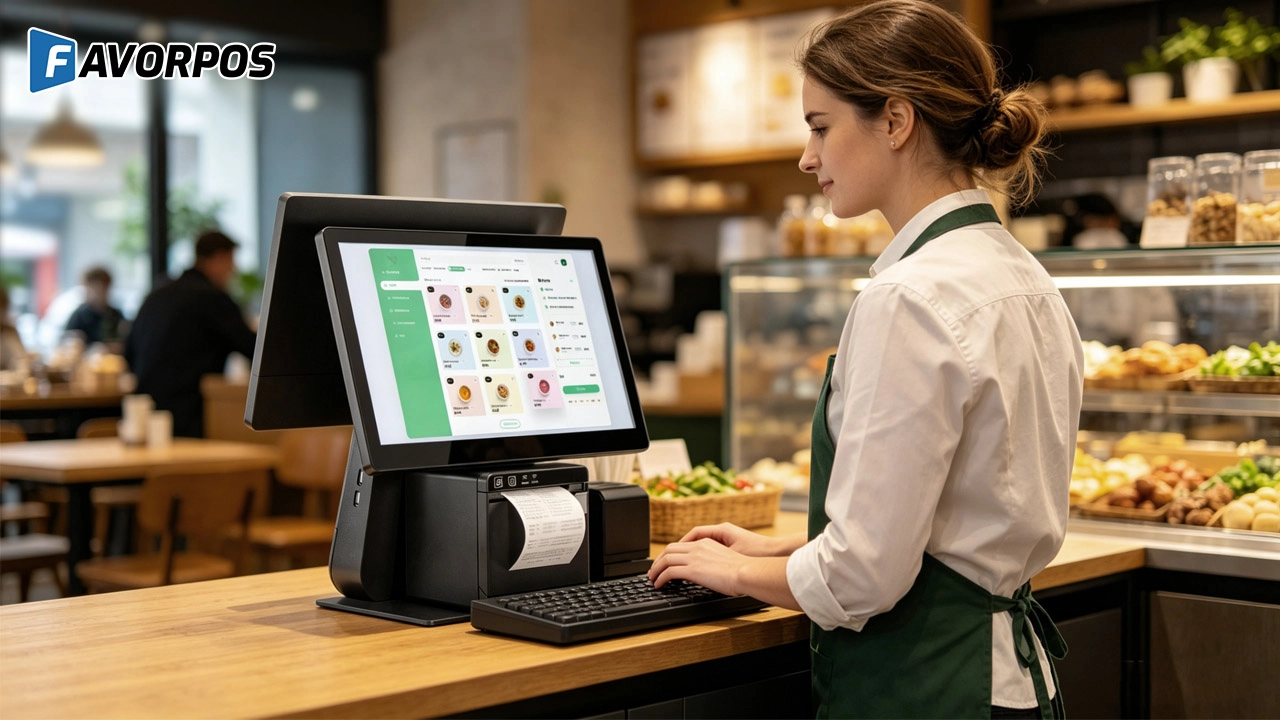
Smart Checkout, Simplified: Exploring the Power of a 15.6-Inch All-in-One POS Terminal
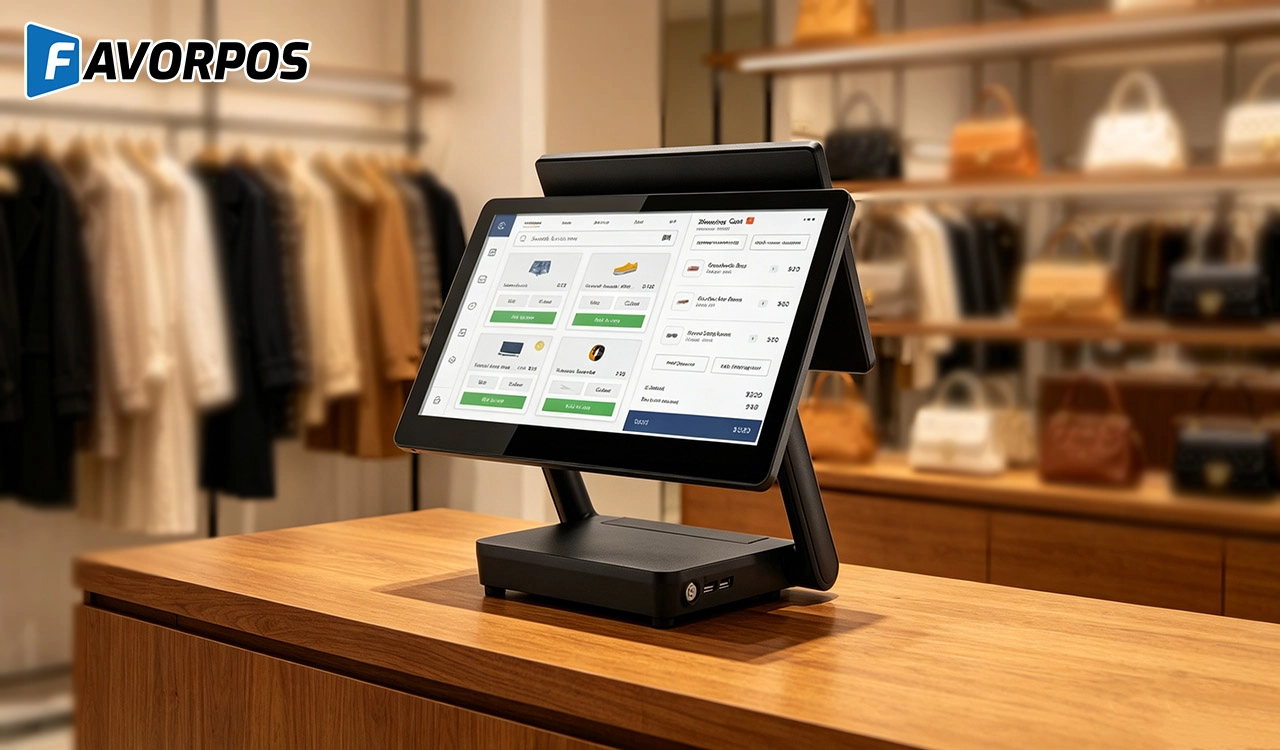
Why a 15.6” Touch POS Terminal Is Becoming the New Standard in High-Traffic Retail
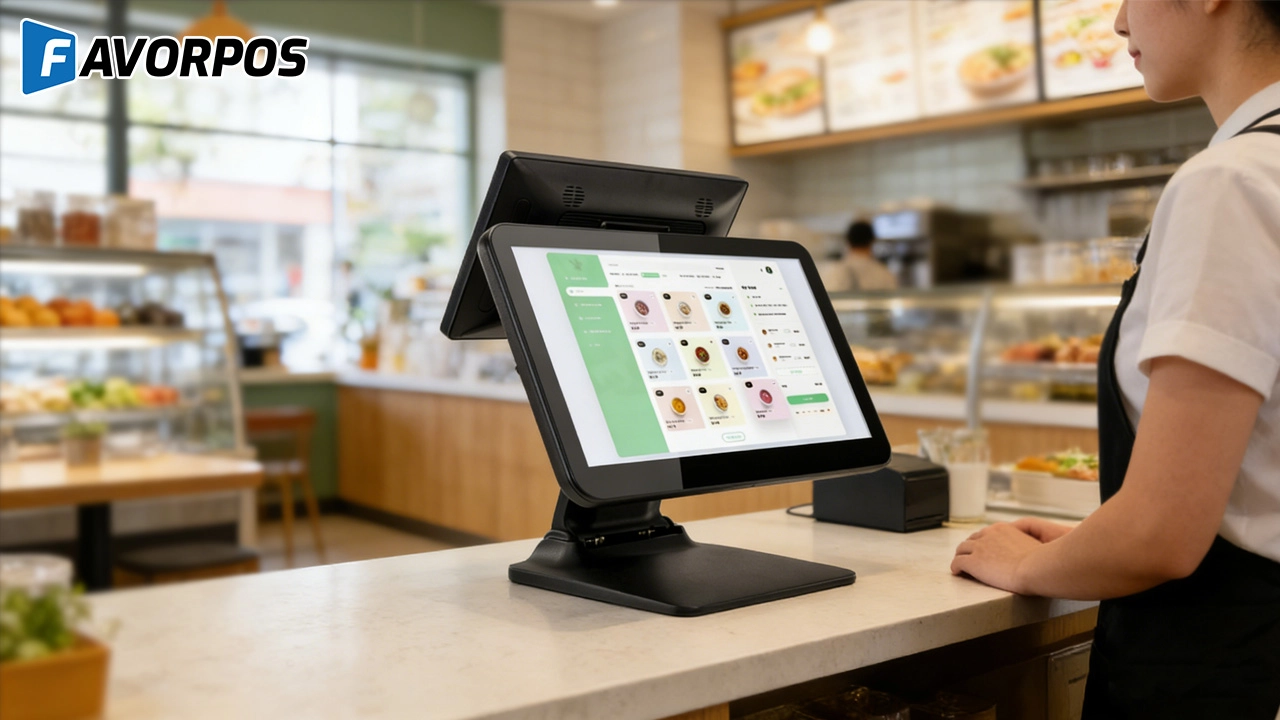
Beyond Checkout: How a 15.6-Inch Aluminum POS System Redefines Retail Efficiency
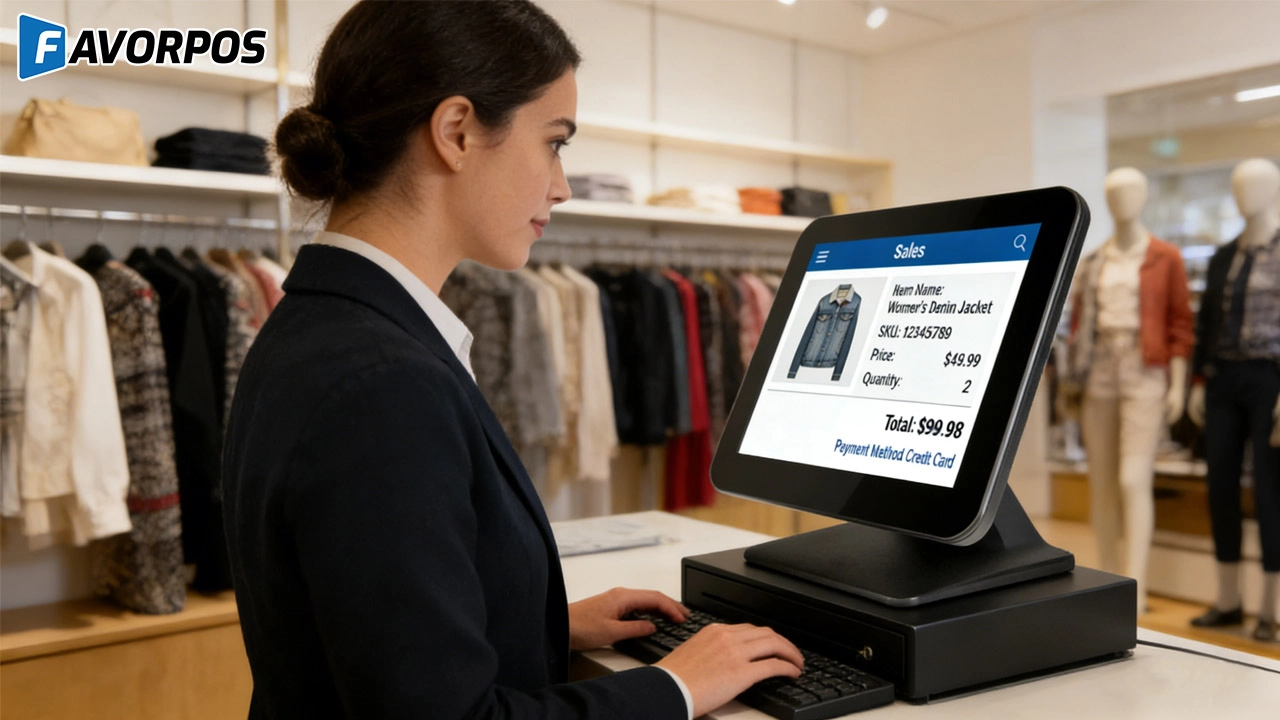
Understanding 15-Inch Aluminum POS Terminals in Modern Commercial Use
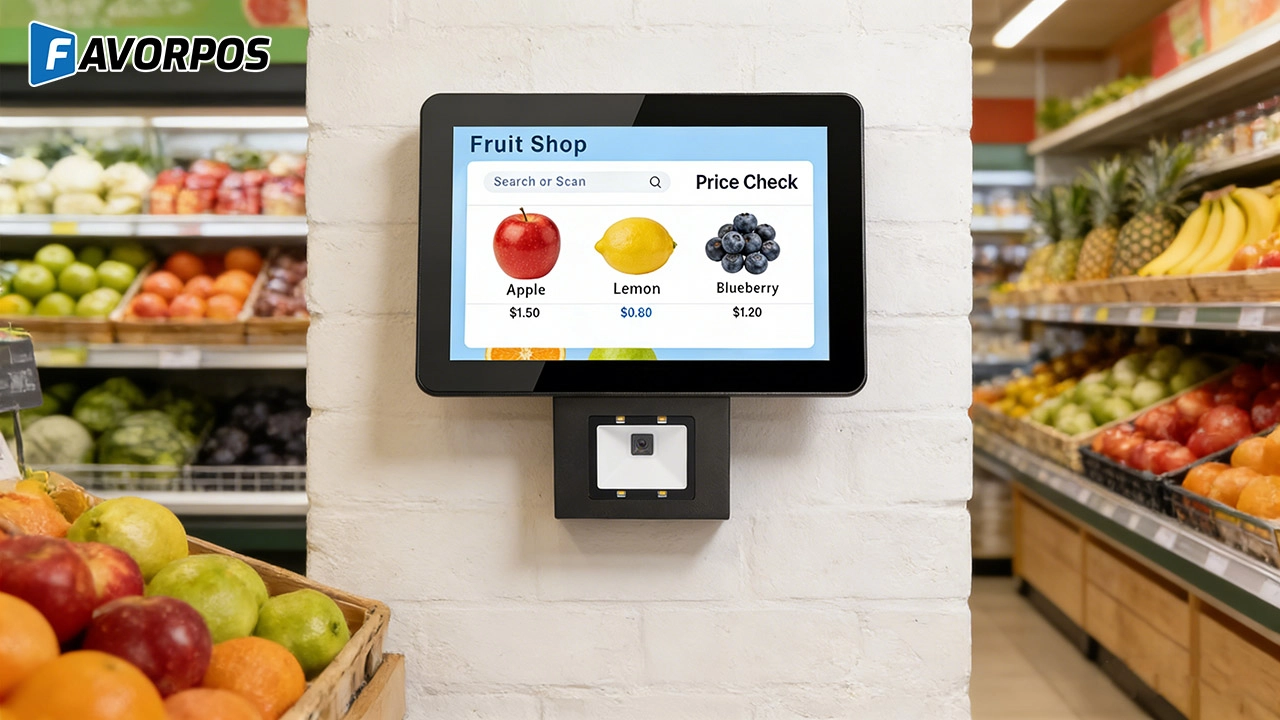
The Smart Way to Check Prices: How a 10.1-Inch Wall-Mounted Price Checker Transforms Retail Stores
For E-commerce
How long does it take to implement a POS system?
Implementation time depends on the complexity of the customization, but it can usually be completed within a few weeks, including testing and training.
For Entertainment & Events
What payment methods does your system support?
Our POS system supports multiple payment methods, including credit cards, digital wallets and contactless payments, providing customers with a convenient payment experience.
For ODM
What is the minimum order quantity for ODM service?
We support different needs, from small batches to large-scale production. The specific minimum order quantity will be determined based on product type, complexity and production requirements. Please contact us for details.
For OEM
Can the POS machine be customized with multiple functions?
Yes, we provide a wide range of functional customization options, including hardware configuration, software functions, brand design, etc. You can choose different processors, screens, connection options, payment modules, etc. according to your business needs.
For Distributor
What are the benefits of joining your reseller network?
Benefits include access to innovative POS products, attractive margins, comprehensive training and support, and the opportunity to work with a globally recognized brand.
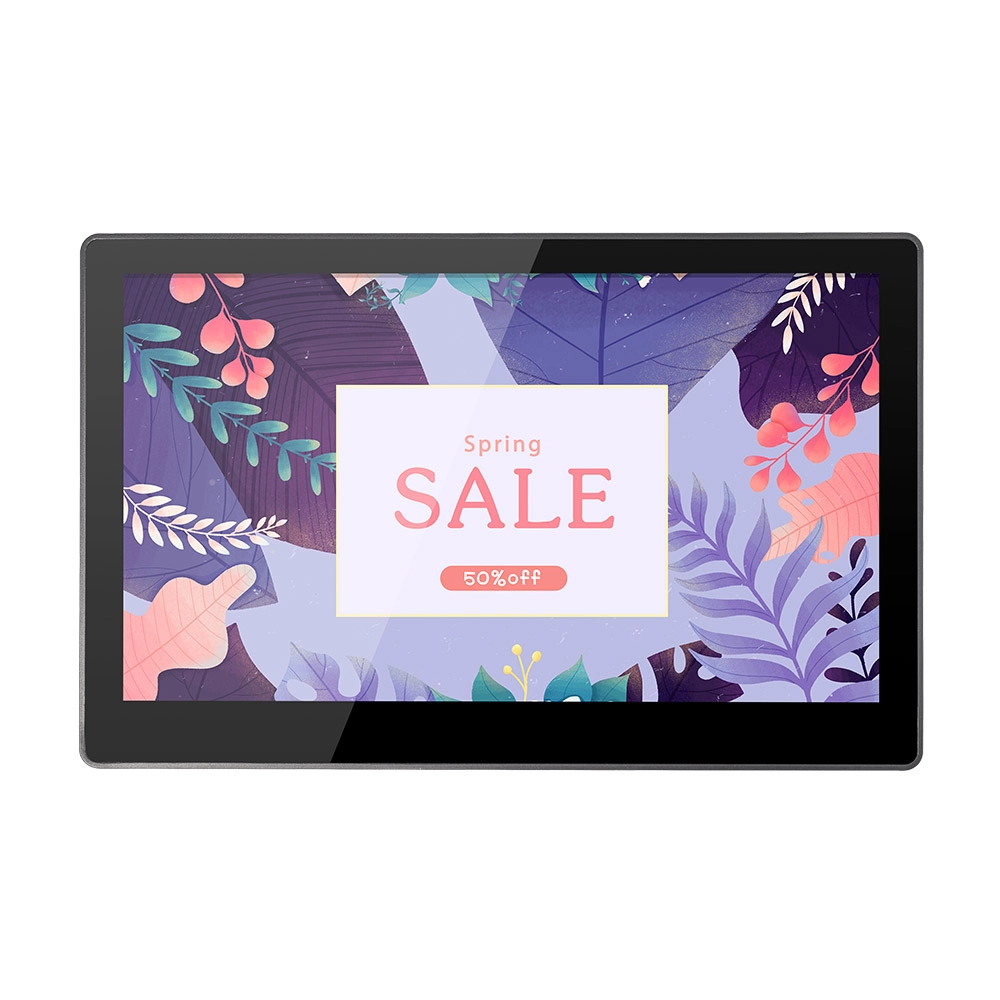
11.6 inch Capacitive Touchscreen for POS Machine POS Monitor
FAVORPOS 11.6-inch capacitive touchscreen, specifically designed for POS machines to deliver a seamless and responsive user experience. This high-definition display offers vibrant visuals and crystal clear clarity, making it easy for staff to navigate through transactions efficiently. The capacitive technology ensures quick and accurate touch recognition, reducing wait times and enhancing customer satisfaction. Built to withstand the rigors of daily use, this touchscreen is perfect for retail and hospitality environments.
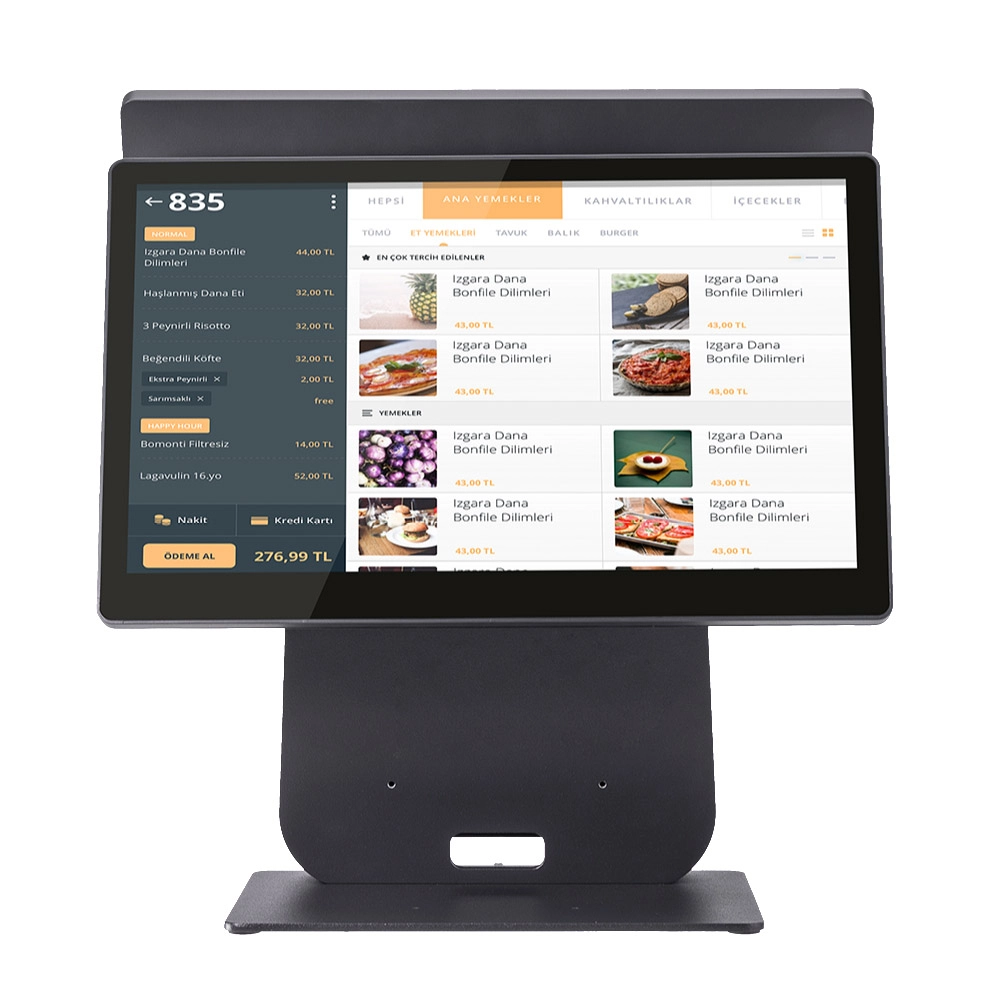
HD Dual Screen POS Machine Aluminum Hardware Android Windows Supplier
This dual-screen POS machine supports both Android and Windows systems, providing flexibility for various applications. The dual screens enhance customer interaction and streamline the checkout process, making transactions quicker and more engaging. Perfect for modern businesses looking to elevate their service and improve customer satisfaction, this POS machine is your ultimate partner in success!
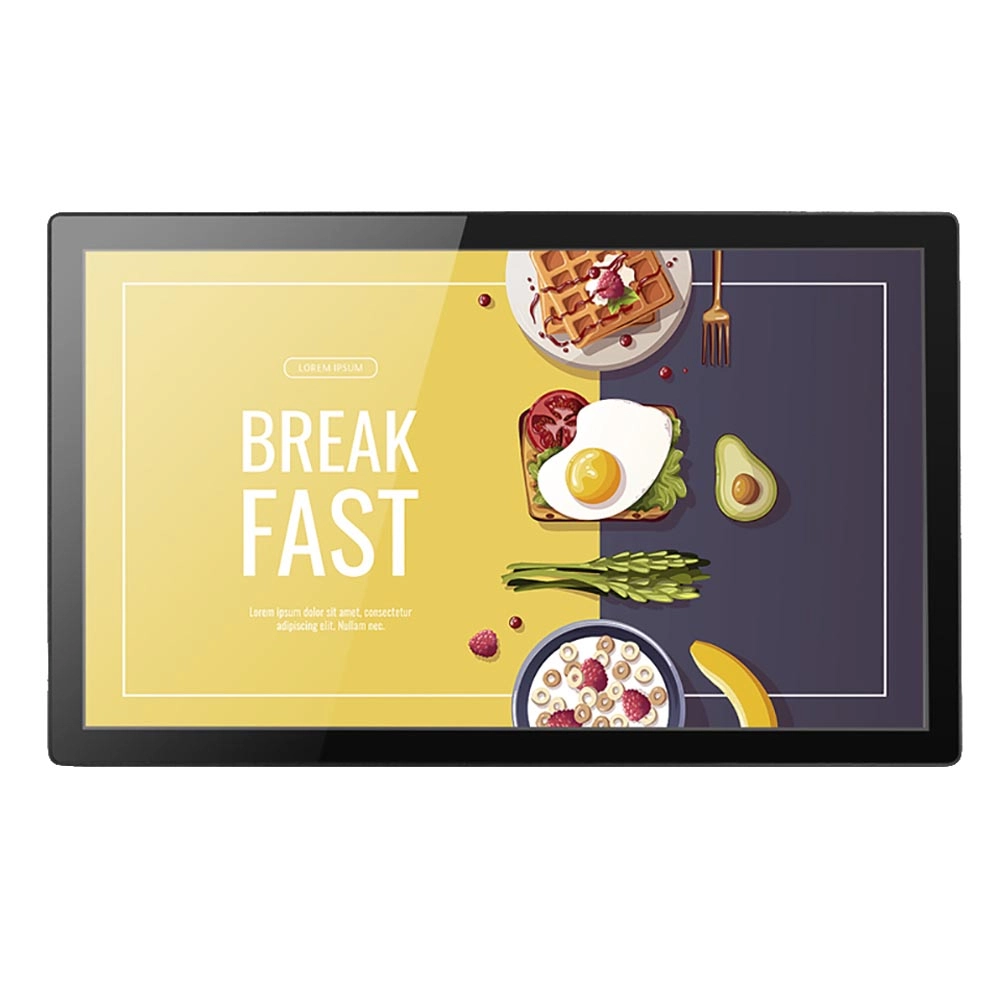
Wall Mount Cash Register POS 21.5 inch for Supermarket Touchscreen Windows Factory
Our sleek and modern wall-mounted POS system features a stunning 21.5-inch LED display, providing exceptional visibility and clarity for seamless customer interactions. The capacitive touchscreen ensures a highly responsive and intuitive user experience, perfect for fast-paced retail environments. With its space-saving wall-mounted design, this POS solution is ideal for optimizing floor space while maintaining a professional and contemporary appearance.
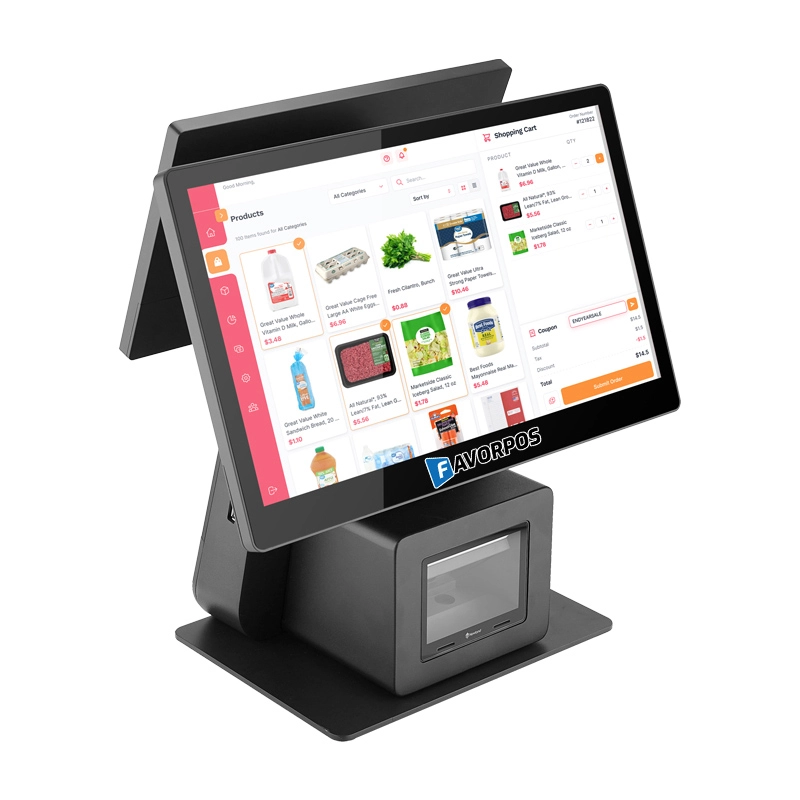
Dual Screen POS With Barcode Scanner Desktop POS Manufacturer POS Factory 15.6 11.6 Client Screen Optional
FAVORPOS: Your leading dual screen POS factory and manufacturer. Our desktop POS with barcode scanner offers 15.6/11.6 client screen options and OS flexibility. Get reliable, efficient dual screen POS with barcode scanner solutions directly from us.
Get in touch
Interested in becoming a POS system dealer? Contact us for more information and start the process of joining our dealer network.
We look forward to working with you to expand the market together.


Copyright © 2025 Favorpos All Rights Reserved.
