
How to choose a desktop POS system for multi-store chains?
- 1) How can a desktop-based POS maintain near real-time inventory sync across 50+ stores when internet is intermittent?
- 2) What backup and disaster recovery architecture should a desktop POS use to prevent data loss across multi-store chains?
- 3) How do you ensure PCI DSS and EMV compliance for in-store payments on a desktop POS across multiple countries?
- 4) What licensing and hardware procurement model minimizes TCO while supporting phased rollouts and rapid scaling for a growing chain?
- 5) How to integrate a desktop POS with central ERP, loyalty platforms and e-commerce without disrupting daily store sales?
- 6) How to measure and optimize terminal performance and transaction latency on legacy desktop POS terminals?
1) How can a desktop-based POS maintain near real-time inventory sync across 50+ stores when internet is intermittent?
Problem: Chain retailers need accurate stock levels for omnichannel sales and transfers but many stores have unreliable connectivity. Naive designs either block sales when offline or create long reconciliation delays, both causing lost sales or oversells.
Solution (hybrid on-premise + sync gateway): Deploy a local database on each store’s POS server (on-premise SQL Server, MySQL/MariaDB, or PostgreSQL). The register writes all sales, returns, transfers and inventory adjustments locally in ACID transactions. A lightweight sync agent batches and queues delta changes (inventory deltas, SKU-level adjustments, timestamped transaction logs) and pushes them to a central message queue or cloud sync gateway whenever the internet is available.
- Local-first logic: Keep price lists, item master, promotions and stock on the local POS for immediate authorizations and scanning without remote roundtrips.
- Queueing and conflict resolution: Use append-only transaction logs with per-record versioning or logical timestamps to reconcile conflicts centrally. Implement last-writer-wins only where acceptable; prefer business rules (e.g., reserve stock for committed sales).
- Latency targets and eventual consistency: Define acceptable window (e.g., 1–15 minutes) for central visibility. High-volume SKUs can be prioritized for immediate sync; low-volume SKUs can be batched.
- Offline reservation and sell-through policies: Implement hold inventory or reserve patterns for online orders that route to stores—either reserve at confirmation or allow pick/cancel logic during reconciliation.
- Tools and tech patterns: Use incremental replication, message brokers (lightweight alternatives like MQTT/RabbitMQ) or change-data-capture (CDC) on databases to minimize payloads and speed retry. Compress payloads and use delta encoding.
Benefit: Stores keep operating when offline; the chain maintains near real-time visibility and predictable reconciliation behavior when connectivity returns.
2) What backup and disaster recovery architecture should a desktop POS use to prevent data loss across multi-store chains?
Problem: Desktop POS systems often keep transactions locally; without a robust backup/DR plan you risk losing sales data, customer history, and financial records essential for audits and reconciliation.
Solution (multi-tier backup strategy): Build backups and DR at both store and central levels.
- Local backup frequency: Configure rolling daily backups of the local POS database plus transaction WAL (write-ahead log) segments. For high-volume stores, include hourly incremental backups or continuous log shipping.
- Central aggregation: Ensure the sync gateway sends transaction logs to a centrally hosted database in near real-time (or as quickly as connectivity allows). The central store should maintain full redundancy and regular snapshots.
- Offsite and immutable backups: Keep encrypted offsite backups (object storage or cold backups) with immutability/versioning for at least the legal retention period in your jurisdiction.
- Recovery objectives: Define RTO (recovery time objective) and RPO (recovery point objective) per store or region. For example, critical flag stores might require lower RPOs (minutes) and faster RTOs, while small outlets might tolerate longer windows.
- Tested runbooks and automation: Automate failover to a secondary data center and practice store-level restore drills. Document step-by-step recovery of local databases, replays of transaction logs, and reconciliation procedures.
- Encryption and access controls: Encrypt backups at rest and in transit, and apply role-based access control (RBAC) so backup data is auditable and protected.
Benefit: A layered backup approach keeps transactional integrity, speeds recovery, and meets audit and tax compliance demands across jurisdictions.
3) How do you ensure PCI DSS and EMV compliance for in-store payments on a desktop POS across multiple countries?
Problem: Payment data handling varies by country and non-compliant implementations can expose cardholder data and lead to fines, fraud and brand damage.
Solution (segmentation, validated payment terminals, and P2PE):
- Use approved payment solutions: Employ EMV-certified payment terminals and payment applications that are validated by payment schemes. Avoid building custom card-handling code; instead use certified payment libraries or gateways.
- Network segmentation: Isolate POS networks from back-office and guest Wi-Fi networks to reduce scope of PCI DSS requirements. Use firewalls and strict ACLs between POS terminals and central servers.
- Point-to-point encryption (P2PE) and tokenization: Implement P2PE or client-side encryption at the terminal so raw PAN (primary account number) never touches the POS application. Tokenize card data for recurring transactions or loyalty linking.
- Compliance lifecycle: Maintain PCI DSS compliance by patching systems, logging and monitoring access, doing regular vulnerability scans and penetration tests as required by the acquiring bank and card schemes.
- Local regulatory nuances: Check local card-acquiring and data residency rules. Some countries require storing transaction records locally for a period; confirm retention policies and encryption standards (e.g., AES-256).
- Vendor attestations: Maintain payment application and terminal certificates (EMVCo, PCI PTS) and request SAQ or ROC details from payment vendors during procurement.
Benefit: Proper segmentation, certified terminals, and P2PE reduce PCI scope, lower audit costs, and protect cardholder data consistently across stores and countries.
4) What licensing and hardware procurement model minimizes TCO while supporting phased rollouts and rapid scaling for a growing chain?
Problem: Retailers often overpay by buying per-terminal perpetual licenses or mismatched hardware, or they face operational pain when hardware break/failures occur mid-rollout.
Solution (mix of flexible licensing, standardized hardware, and staged deployment):
- Evaluate licensing models: Compare per-terminal/per-store/per-seat subscription (OPEX) versus perpetual license + annual maintenance (CAPEX). Subscription lowers entry cost and includes updates; perpetual may be cheaper long-term for mature chains but requires budget for updates/support.
- Standardize hardware SKUs: Choose a narrow list of validated POS terminals, receipt printers (e.g., Epson TM-series), barcode scanners (Zebra/Honeywell), and cash drawers. Standardization reduces spare parts inventory and speeds repair.
- Use thin clients or POS terminals where appropriate: For sites with strong local infrastructure, a thin client connecting to a robust POS server can simplify endpoints and reduce per-terminal software licensing.
- Bulk procurement and staged warranties: Negotiate staged deliveries tied to rollout milestones, include advance replacement (RMA) SLAs, and consider local spares per region for fast swaps.
- Support SLAs and managed options: Consider vendor-managed services or an MSP to handle OS images, remote patching, and terminal provisioning, trading some margin for reduced operational burden.
- Proof-of-concept (PoC) and pilot program: Run a pilot with a subset of stores to validate hardware compatibility, network architecture and local procedures before full deployment.
Benefit: A hybrid licensing and procurement approach minimizes upfront risk, optimizes TCO, and ensures predictable logistics during expansions.
5) How to integrate a desktop POS with central ERP, loyalty platforms and e-commerce without disrupting daily store sales?
Problem: Tight coupling between POS and backend systems often causes downtime during integration or inconsistent data causing order and inventory errors.
Solution (middleware, asynchronous integration and idempotent APIs):
- Introduce a middleware layer: Use an integration platform or message broker that decouples POS from ERP/e-commerce. The middleware normalizes messages, retries, transforms SKUs and handles rate limiting.
- Asynchronous and idempotent patterns: Implement event-driven integration—POS emits sale/return/transfer events into a durable queue. Downstream systems consume events and apply idempotent processing to avoid duplicates during retries.
- Clear data contracts and mapping: Define canonical models for customers, SKUs, prices and promotions. Map local store SKUs to ERP SKUs centrally and handle exceptions in a reconciliation dashboard.
- Promotion and price precedence: Decide precedence rules (central vs local) and cache promotion logic locally to avoid remote dependency at checkout.
- Graceful degradation: When integrations fail, POS should continue accepting transactions and mark them for later reconciliation. Provide clear operator UI messages so clerks know when sync is pending.
- Testing and cutover strategy: Use shadow mode and reconcile logs before turning on live integrations. Employ canary rollouts and monitor reconciliation KPIs like mismatch rates and processing lag.
Benefit: Decoupled, resilient integrations maintain uninterrupted sales, reliable back-office updates and a smaller blast radius during outages or changes.
6) How to measure and optimize terminal performance and transaction latency on legacy desktop POS terminals?
Problem: Legacy desktop POS terminals often suffer from slow barcode scanning, UI freezes during printing, or slow lookups on complex catalog queries—leading to longer queues and poor customer experience.
Solution (profiling, local caching and lightweight clients):
- Establish KPIs and monitoring: Track transaction time (scan-to-receipt), average checkout duration, CPU and IO at the terminal, and network latency to local/central servers. Use lightweight APM or monitoring agents to capture slow database queries and resource spikes.
- Local cache for hot data: Cache commonly sold SKUs, promotions, and price overrides in-memory on the terminal or POS server to eliminate unnecessary DB queries during checkout.
- Optimize database access: Add proper indexes, avoid heavy JOINs on the checkout path, and move reporting/analytics to read-replicas to reduce contention on OLTP systems.
- Use async peripherals handling: Offload receipt printing, loyalty lookups and external webcalls to background threads to keep the checkout UI responsive. Provide clear status indicators for asynchronous tasks.
- Hardware refresh strategy: Upgrade to SSDs, ensure sufficient RAM and modern CPUs on POS servers; replace failing network gear and use VLANs to prioritize POS traffic. For terminals that are too old, migrate them to thin clients or new POS terminals validated for performance.
- Regular maintenance and housekeeping: Compact local databases, rotate logs and apply OS updates during low-traffic windows. Automate disk-cleanup and database optimization tasks.
Benefit: Measuring and addressing terminal bottlenecks reduces queue times, improves throughput, and extends the usable life of store hardware when combined with targeted upgrades.
Conclusion — Advantages of a Desktop-Based POS System for Multi-Store Chains
Desktop-based POS systems built with a hybrid on-premise architecture provide fast, reliable in-store operations, stronger control over local data, and predictable performance for barcode scanning, payment processing and peripherals. When paired with a robust sync gateway, encryption and a layered backup/DR approach, desktop POS deployments support compliance (PCI/EMV), scalable rollouts, efficient hardware management and resilient integrations with ERP and e-commerce platforms. Standardizing hardware, using middleware for integrations, and adopting offline-first inventory logic minimizes downtime and helps chains deliver consistent customer experiences across all outlets.
For tailored recommendations, hardware compatibility lists, or a phased rollout plan and quote, contact us at www.favorpos.com or email sales2@wllpos.com — our team will help you design a desktop based POS system that fits your multi-store needs.
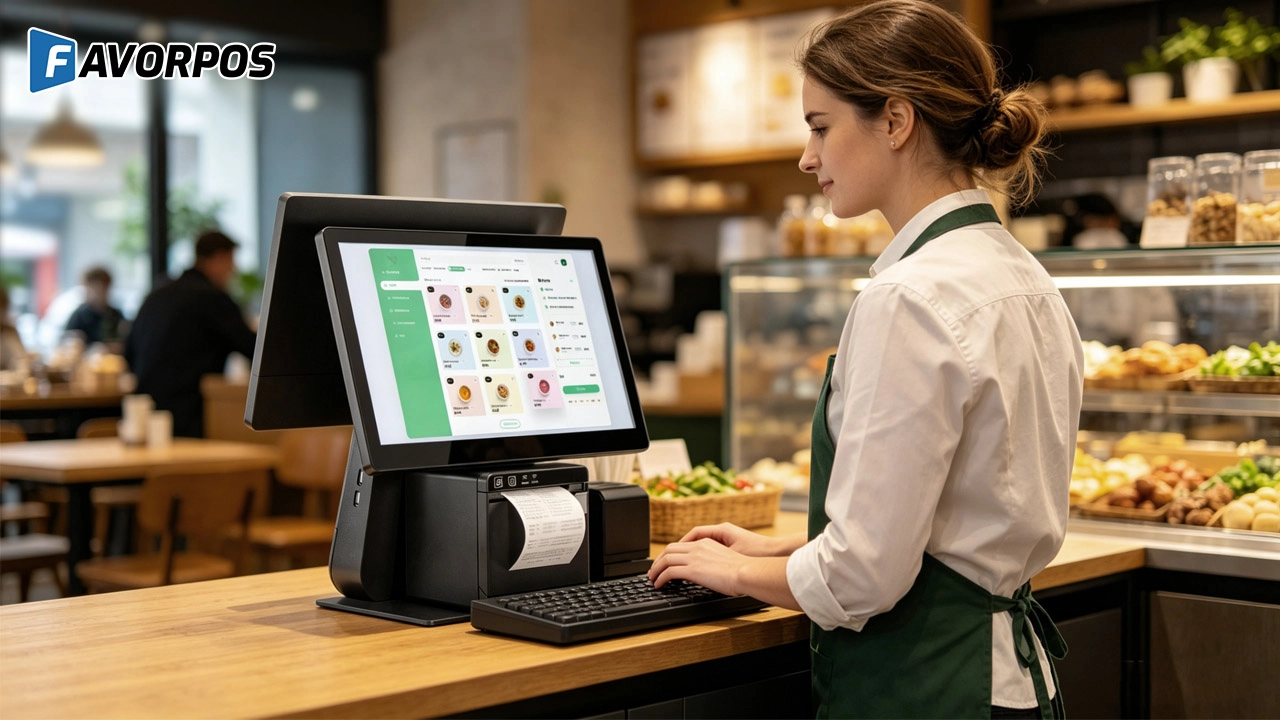
Smart Checkout, Simplified: Exploring the Power of a 15.6-Inch All-in-One POS Terminal
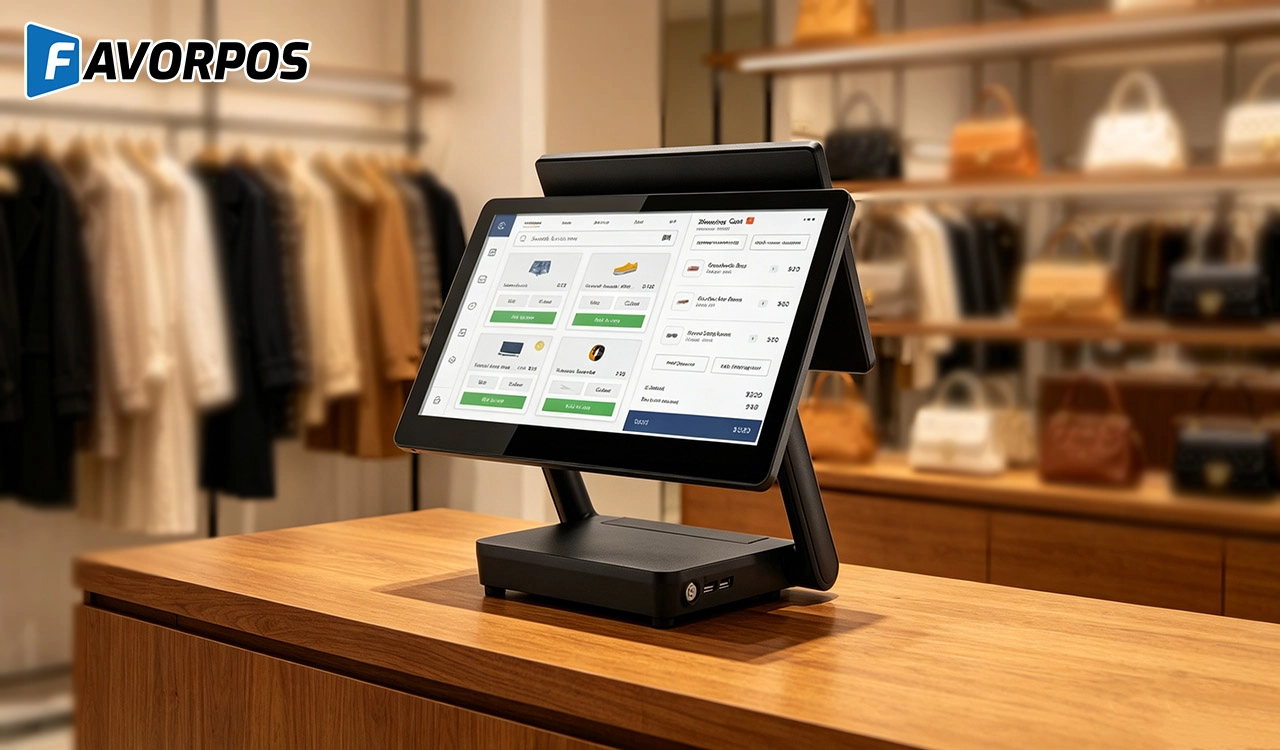
Why a 15.6” Touch POS Terminal Is Becoming the New Standard in High-Traffic Retail
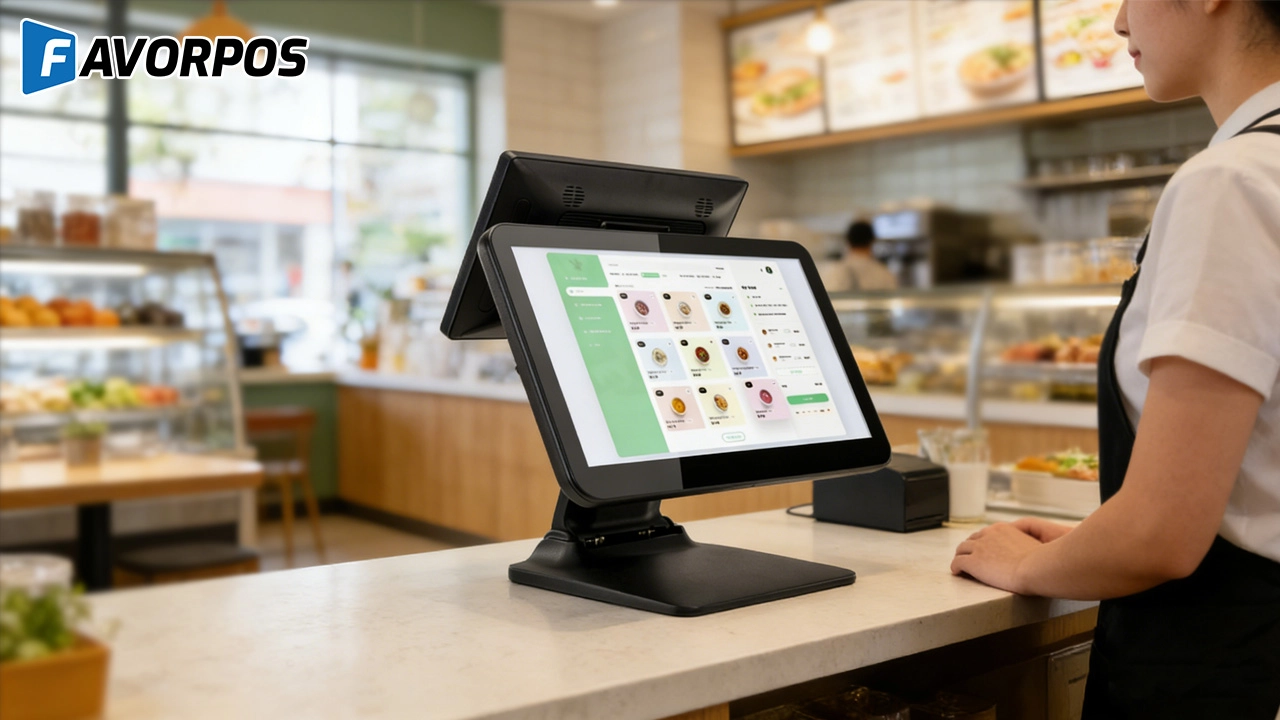
Beyond Checkout: How a 15.6-Inch Aluminum POS System Redefines Retail Efficiency
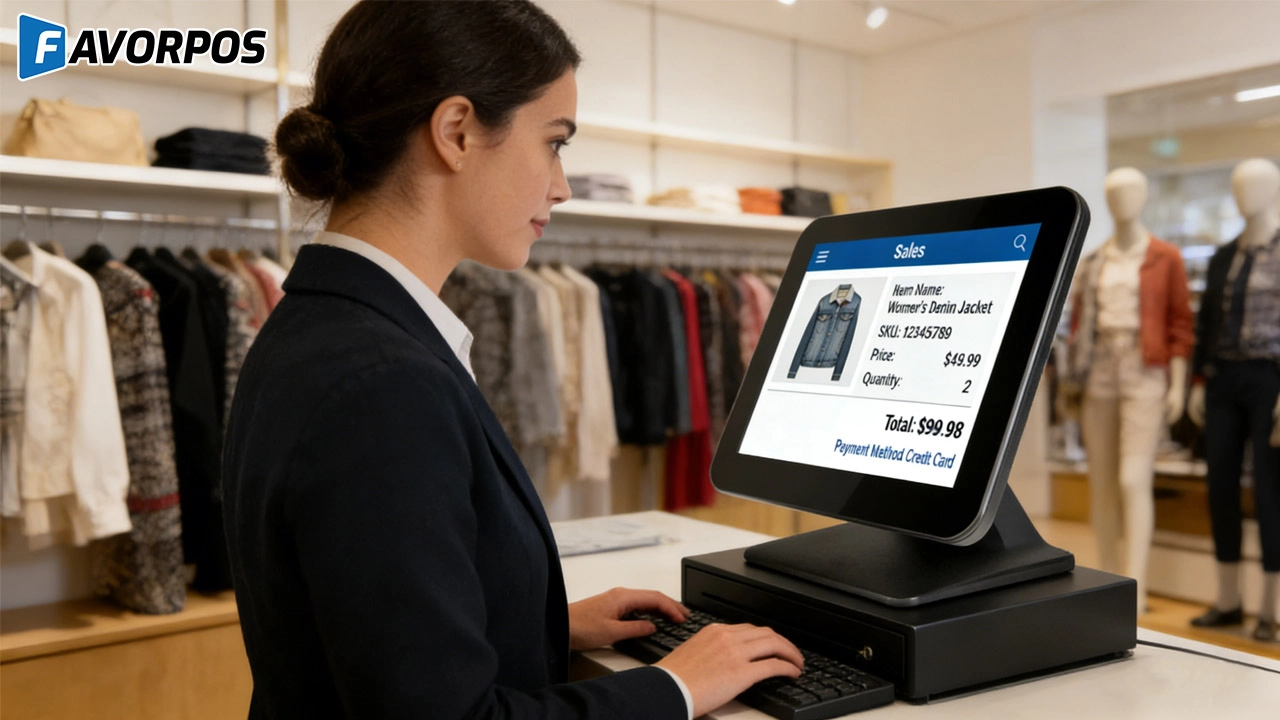
Understanding 15-Inch Aluminum POS Terminals in Modern Commercial Use
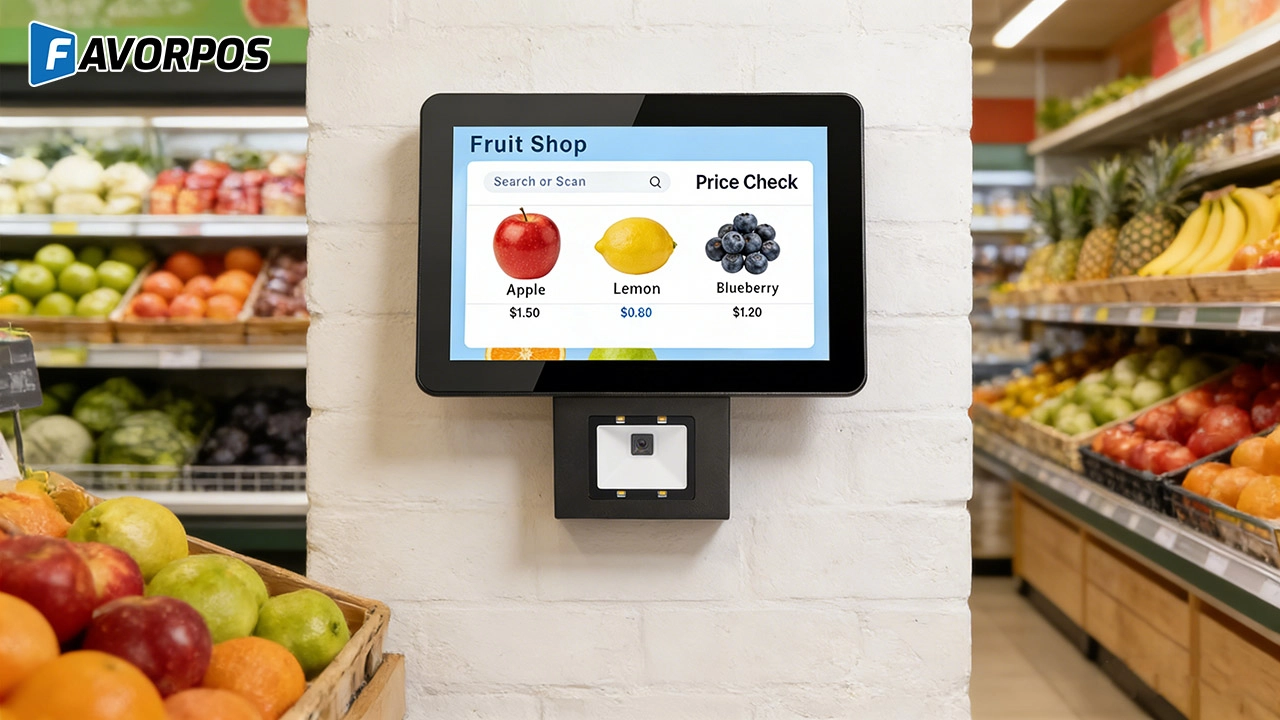
The Smart Way to Check Prices: How a 10.1-Inch Wall-Mounted Price Checker Transforms Retail Stores
For Government and Public
Does your POS system support ticketing and permit issuance?
Of course, our system includes the ability to manage ticketing and permit issuance, with automatic processing and real-time update capabilities.
For E-commerce
Does the POS system support global payments?
Yes, we support multi-currency and cross-border transactions, enabling you to accept payments from customers around the world.
Can I manage inventory across multiple sales channels?
Of course. Our POS system provides real-time inventory synchronization across multiple online and physical stores to prevent inventory issues.
For Distributor
What are the benefits of joining your reseller network?
Benefits include access to innovative POS products, attractive margins, comprehensive training and support, and the opportunity to work with a globally recognized brand.
For Hotels
What types of reports can I generate through your POS system?
You can generate detailed real-time reports on sales, guest spending patterns, department performance, and more.
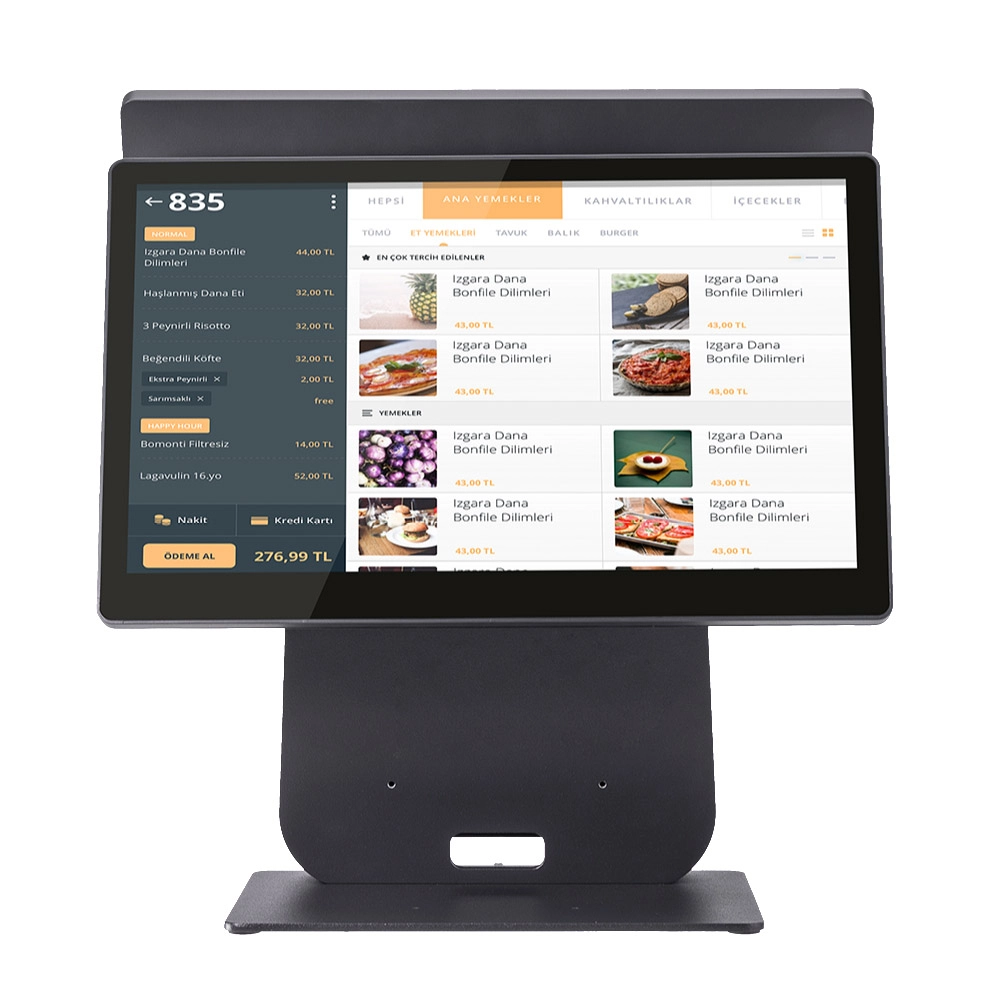
HD Dual Screen POS Machine Aluminum Hardware Android Windows Supplier
This dual-screen POS machine supports both Android and Windows systems, providing flexibility for various applications. The dual screens enhance customer interaction and streamline the checkout process, making transactions quicker and more engaging. Perfect for modern businesses looking to elevate their service and improve customer satisfaction, this POS machine is your ultimate partner in success!
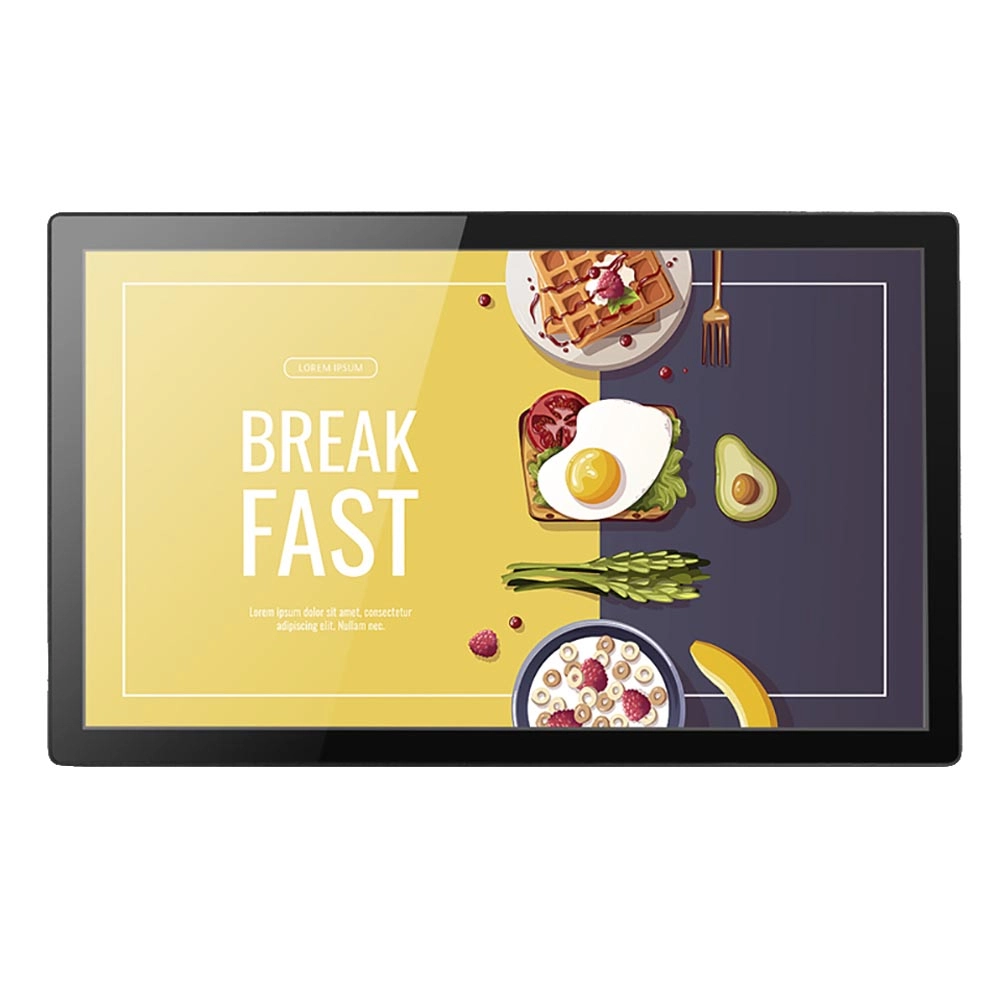
Wall Mount Cash Register POS 21.5 inch for Supermarket Touchscreen Windows Factory
Our sleek and modern wall-mounted POS system features a stunning 21.5-inch LED display, providing exceptional visibility and clarity for seamless customer interactions. The capacitive touchscreen ensures a highly responsive and intuitive user experience, perfect for fast-paced retail environments. With its space-saving wall-mounted design, this POS solution is ideal for optimizing floor space while maintaining a professional and contemporary appearance.
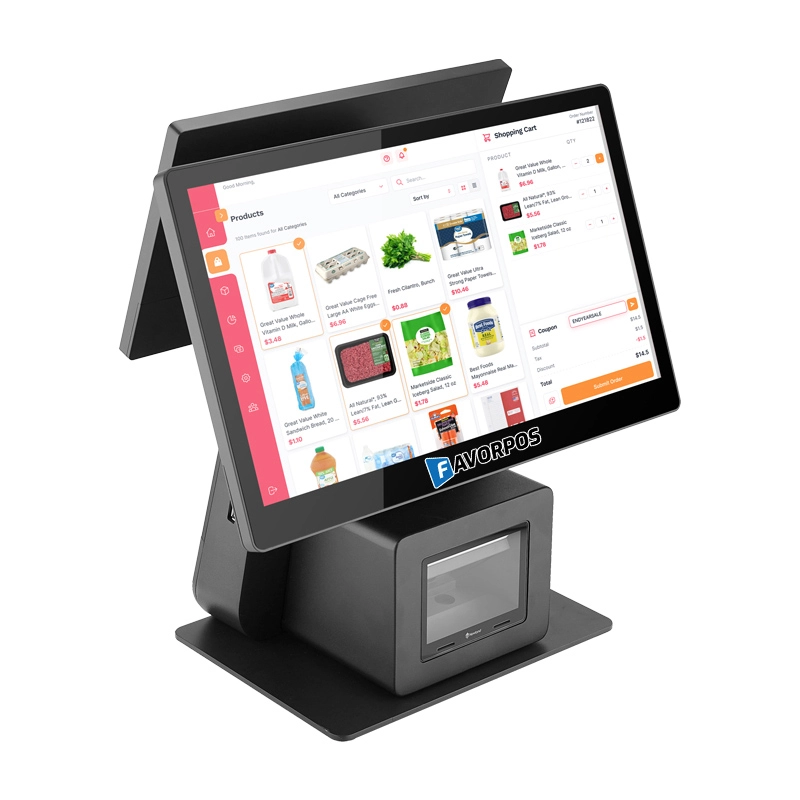
Dual Screen POS With Barcode Scanner Desktop POS Manufacturer POS Factory 15.6 11.6 Client Screen Optional
FAVORPOS: Your leading dual screen POS factory and manufacturer. Our desktop POS with barcode scanner offers 15.6/11.6 client screen options and OS flexibility. Get reliable, efficient dual screen POS with barcode scanner solutions directly from us.
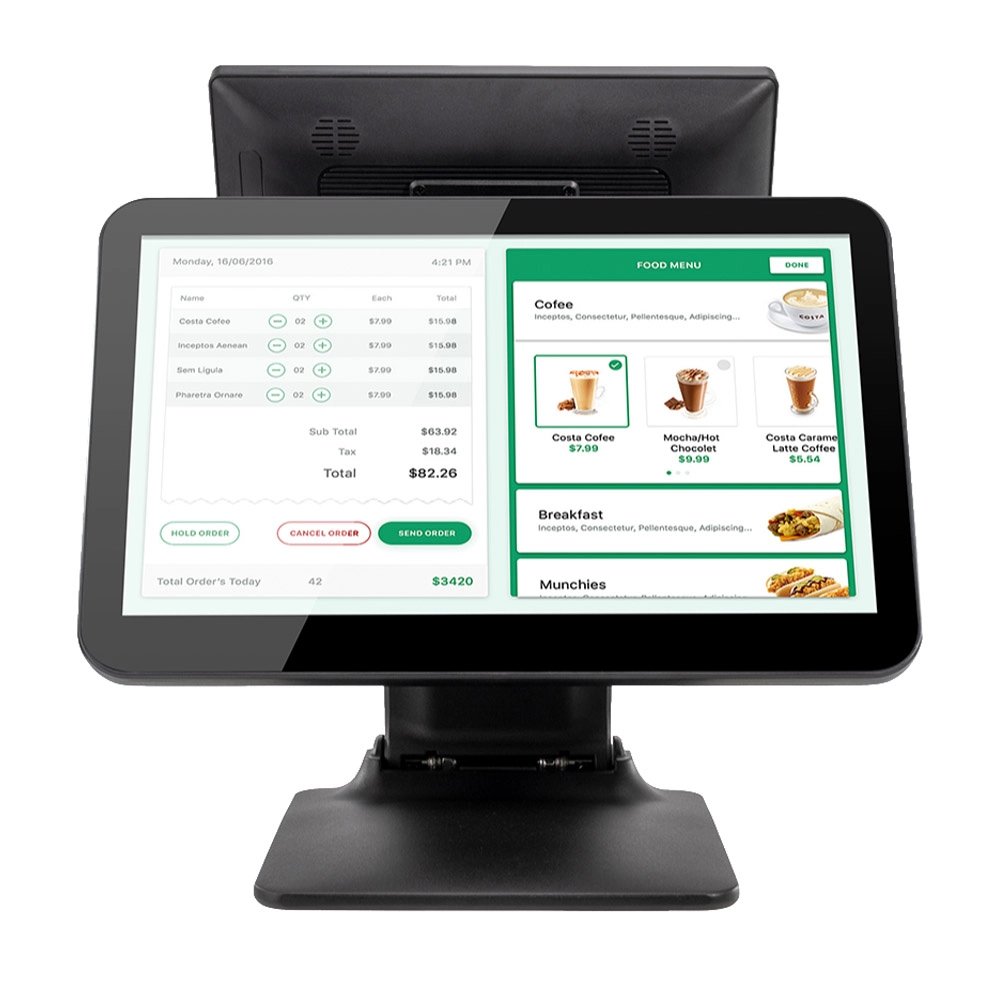
Foldable Touch Screen POS Cash Register 15.6'' Windows Supplier Aluminum
This innovative cash register combines portability with advanced functionality, making it ideal for retail environments. Its aluminum construction ensures durability while maintaining a lightweight design for easy transport and setup. The foldable feature allows for convenient storage and flexibility in various business settings.
Get in touch
Interested in becoming a POS system dealer? Contact us for more information and start the process of joining our dealer network.
We look forward to working with you to expand the market together.


Copyright © 2025 Favorpos All Rights Reserved.
