
Are mobile liquor store POS systems secure for payments?
- How can a liquor store POS system automatically enforce age verification and keep legally admissible records of ID checks?
- What configuration and SKU-management strategies handle split cases, keg fills, bottle deposits and excise taxes in liquor store POS systems?
- Are mobile liquor store POS systems secure for payments, and what specific security measures should I require?
- Can cloud-based or mobile POS systems safely process payments offline during network outages, and how do I reconcile risks later?
- How do I detect and prevent internal shrinkage and employee fraud using liquor store POS features?
- What technical and contractual considerations matter when integrating third-party age-checking and delivery ID verification services with a liquor store POS?
- Vendor selection and purchase checklist for liquor store POS systems
How can a liquor store POS system automatically enforce age verification and keep legally admissible records of ID checks?
A POS for alcohol retail must do more than prompt cashiers to ask for ID. Modern systems integrate dedicated ID scanners or camera-based ID-verify SDKs that: scan driver's licenses or passports, extract fields (DOB, name, ID number), perform barcode/UV checks, and record a timestamped, tamper-evident audit trail linked to the sale. Best practices:
- Use certified ID scanners or an approved ID verification SDK that supports MRZ/2D barcodes and OCR. These reduce manual entry errors and block fake/barcode-mismatched IDs.
- Store only what you legally may retain. Many jurisdictions restrict storing full ID images or sensitive data. Configure the POS to redact or hash ID numbers and retain minimal fields (DOB, partial ID, timestamp, operator ID). Consult local counsel for retention policies.
- Create an immutable audit log. Ensure the POS app writes ID-check events to a server-side, append-only log with operator ID, transaction ID, time, and geolocation (for delivery). Cloud-based logs should be tamper-resistant (write-once buckets or WORM storage) for legal defensibility.
- Enforce SOPs via workflow: the POS should block alcohol SKUs unless an ID-check event occurs within a configurable time window (e.g., 5 minutes). For repeat customers, use tokenized age flags, not stored full IDs.
Implementation checklist for buyers: verify SDK/hardware model, ask for sample audit records, confirm data-retention settings, and require configurable enforcement windows. These reduce liability and make compliance defensible during inspections or disputes.
What configuration and SKU-management strategies handle split cases, keg fills, bottle deposits and excise taxes in liquor store POS systems?
Liquor inventory is more complex than typical retail. A robust liquor store POS must support case-breaks, keg tracking, deposit handling (e.g., state CRV), and excise tax reporting.
Practical configurations:
- Case-break SKUs: Define parent SKUs (case) and child SKUs (bottles). The POS should allow selling individual bottles and decrement the case inventory automatically, with configurable pack size and cost allocation.
- Keg tracking: Create serialized keg records (keg ID, vendor, fill date, liters remaining). Integrate scales or level sensors where available, or update remaining quantity by sale volume (750ml bottles equivalent). Support deposit or tap-return fees linked to a keg SKU.
- Bottle deposits and CRV: Implement automatic deposit lines that apply only in configured jurisdictions. The POS should calculate deposits per SKU and include them in returns and reporting so deposit liability is clear for audits.
- Excise taxes: The system must support per-SKU tax settings (excise %, fixed amount per liter) and produce exportable excise reports (by time period and SKU) for government returns. Many systems provide custom tax rules to accommodate tiered excise or state-specific formulas.
Ask vendors for case-break demos, keg-serialization examples, and the ability to produce excise tax reports in CSV or Excel for your accountant. Confirm the POS can handle promotions that span case and bottle levels (e.g., case discount vs. single-bottle pricing).
Are mobile liquor store POS systems secure for payments, and what specific security measures should I require?
Short answer: Yes—mobile liquor store POS systems can be secure when built and deployed with industry-standard protections: EMV, tokenization, P2PE or end-to-end encryption, PCI DSS alignment, and secure device management.
Key controls to require:
- EMV-capable, PCI-certified card readers: Use Bluetooth or wired readers that are EMV Level 1/2 certified and support contact/contactless transactions. EMV dramatically reduces counterfeit-card fraud.
- Encryption & tokenization: Ensure cardholder data is encrypted at the reader (P2PE or equivalent) and that primary account numbers (PANs) are never stored in your POS. Tokenization replaces PANs with tokens so your system holds non-sensitive references.
- PCI DSS and processor scope: Confirm your payment stack minimizes your PCI scope (e.g., card data never touches your app/server). Ask your vendor for their PCI Attestation of Compliance or evidence their payment integration leverages a certified gateway or SDK.
- Secure mobile app practices: App signing, regular updates, TLS 1.2+/1.3 for API calls, hardening against reverse engineering, and secure storage of keys. For unattended tablets, enable MDM/EMM controls for remote wipe and OS updates.
- Network and endpoint controls: Use merchant-grade Wi‑Fi segmentation or cellular connectivity, disable public Wi‑Fi for payments, and require TLS with strong ciphers. Consider VPNs for back-office sync if required by policy.
- Chargeback and dispute handling: Mobile POS vendors should provide detailed, time-stamped receipts, EMV transaction logs, and AVS/address verification when appropriate. These are essential evidentiary items in disputes.
What mobile POS cannot fully solve: offline authorization risk. If you accept offline-authorized cards, the chance of post-facto declines/chargebacks rises. We'll explain offline tradeoffs in the next section.
Can cloud-based or mobile POS systems safely process payments offline during network outages, and how do I reconcile risks later?
Many stores need a reliable fallback for outages, but offline processing carries increased risk. Real-world behavior:
- Offline mode mechanics: The POS encrypts and queues transaction data locally, then submits to the processor when connectivity returns. For EMV chip cards, full online authorization is preferred; some terminals allow offline EMV approvals using issuer keys, but this is rare for mobile solutions.
- Risk profile: Offline approvals increase the risk of declined or stolen cards and subsequent chargebacks. Processors and acquiring banks often place strict limits on offline transaction volume, per-transaction amount, and require distinct settlement flags.
- Mitigation strategies:
- Configure offline thresholds: limit number and value of offline sales per terminal and per batch. For example, only allow small-value offline sales if your risk appetite is low.
- Use strong local encryption and secure storage: The queued transactions must be encrypted with device-unique keys and deleted immediately after successful settlement.
- Require ID checks above a threshold: If offline, enforce manual ID scan for all alcohol sales above a configurable limit.
- Reconciliation workflows: Ensure the POS provides a clear offline vs online settlement report and automatic re-presentation of queued transactions. Produce daily audit reports that reconcile bank settlements to queued/posted transactions.
If frequent outages are common in your area, consider hybrid architecture: a dedicated cellular-enabled terminal for payments (keeps authorization online) plus the cloud POS for inventory and receipts. This reduces offline payment exposure while keeping sales flowing.
How do I detect and prevent internal shrinkage and employee fraud using liquor store POS features?
Shrinkage is higher in alcohol retail due to high-margin SKUs and small teams. POS controls and operational processes are essential.
Technical and policy measures:
- Role-based access controls (RBAC): Limit actions (price overrides, voids, discounts, refunds) to required roles. Use time-limited supervisor overrides and require a reason code for each override.
- Immutable audit trails: Every price change, void, and refund should be logged with operator, timestamp, and pre/post values. The POS should allow exporting these logs for forensic review.
- Shift and till controls: Implement blind cash drawer counts, mandatory Z-closes, and variance reports that flag dispensations or repeated small-dollar voids. Require reconciliation before closing shifts.
- Item-level manipulation detection: Flag excessive comped items, repeated SKU refunds, or unusual unit-of-measure adjustments (case-to-bottle conversions outside normal patterns).
- Integrated camera & receipt linking: Pair POS transactions with time-synced camera footage for rapid review of suspicious actions. Many systems can jump to camera footage for a selected transaction.
- Behavioral analytics: Advanced POS platforms provide anomaly detection (e.g., same employee doing many discounts during a short period). Implement weekly exception reports and require manager sign-off for anomalies.
Operational SOPs: rotate register assignments, require two-person cash counts for end-of-day, and institute random audits. Combine technical controls with regular review cadence to reduce both opportunistic and collusive theft.
What technical and contractual considerations matter when integrating third-party age-checking and delivery ID verification services with a liquor store POS?
Integrating third-party ID verification or delivery-check tools can improve compliance, but buyers must assess technical fit and contractual risk.
Technical considerations:
- API & webhook support: Confirm the vendor exposes REST APIs or webhooks that the POS can call synchronously (at checkout) and asynchronously (for delivery confirmation). The POS should record verification IDs and checksum receipts returned by the service.
- Latency and availability: ID verification should be fast (<2 seconds ideally) and have an SLA for availability. For deliveries, the verification app should support offline capture with secure queuing.
- Data minimization & privacy: Ensure the integration can be set to return only required verification results (age-pass/fail, verification token) rather than raw PII. Verify storage/retention options to comply with local privacy laws.
- Proof-of-delivery (POD): For delivery, require timestamped photo, driver ID, recipient ID match with geotag, and digital signature. Store these artifacts linked to the POS transaction for dispute resolution.
Contractual and compliance considerations:
- Vendor compliance: Ask for SOC2 or equivalent security attestations and confirmation of data-processing standards. For ID vendors, ask about ISO certifications or evidence of secure data handling.
- Liability & indemnity: Clarify who bears liability for a failed verification that leads to a sale to a minor. Contracts should define responsibilities and limits.
- Localization & legal fit: Not every ID verification method is permitted everywhere. Confirm the service supports your region's ID formats and that storing ID images/data meets local law.
- Cost and billing: Evaluate per-check pricing, monthly minimums, or bundled plans. For high-volume checks (e.g., busy stores or delivery fleets), negotiate volume discounts.
Integration checklist: API docs, SLA, security attestations, demo with your actual checkout flow, and a clear rollback plan if the service is unavailable.
Vendor selection and purchase checklist for liquor store POS systems
When purchasing, prioritize these vendor capabilities:
- Proof of payment security: EMV-ready terminals, PCI-compliant integrations, P2PE/tokenization, and documented processor partnerships.
- Liquor-specific features: case-breaks, keg serialization, deposit support, excise reporting, and ID verification workflows.
- Operational controls: RBAC, immutable logs, shift/till reconciliation, integrated cameras, and shrink analytics.
- Integration ecosystem: accounting (QuickBooks/Xero), ecommerce, delivery platforms, loyalty programs, and third-party ID verification.
- Support & warranties: 24/7 support for payments, SLA, remote device management, and a clear upgrade/migration path.
- TCO transparency: hardware costs, license or subscription fees, payment processing rates, and any transaction surcharges.
Ask for a proof-of-concept using your SKUs and test real-world scenarios: returns, keg sales, case breaks, and ID-check failure flows. This validates both feature fit and vendor responsiveness.
Contact us for a quote at www.favorpos.com or sales2@wllpos.com.
Conclusion: Advantages of modern liquor store POS systems
Modern liquor store POS systems combine secure, PCI-aware payments, robust inventory management (case-breaks, kegs, deposits), automated age verification, shrink-prevention controls, and cloud reporting. Implemented correctly, they reduce compliance risk, speed checkout, improve inventory accuracy, and provide actionable sales analytics that protect margins and simplify excise reporting. For tailored guidance and a no-obligation quote, contact www.favorpos.com or sales2@wllpos.com.
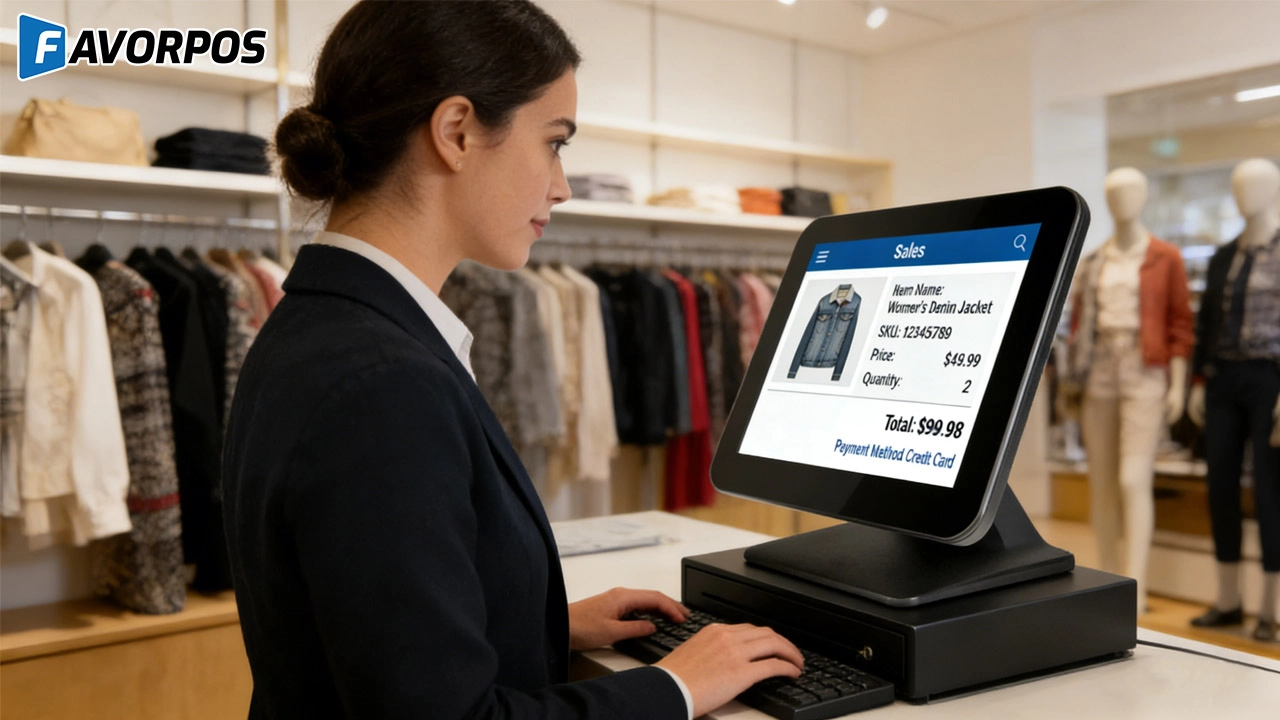
Understanding 15-Inch Aluminum POS Terminals in Modern Commercial Use
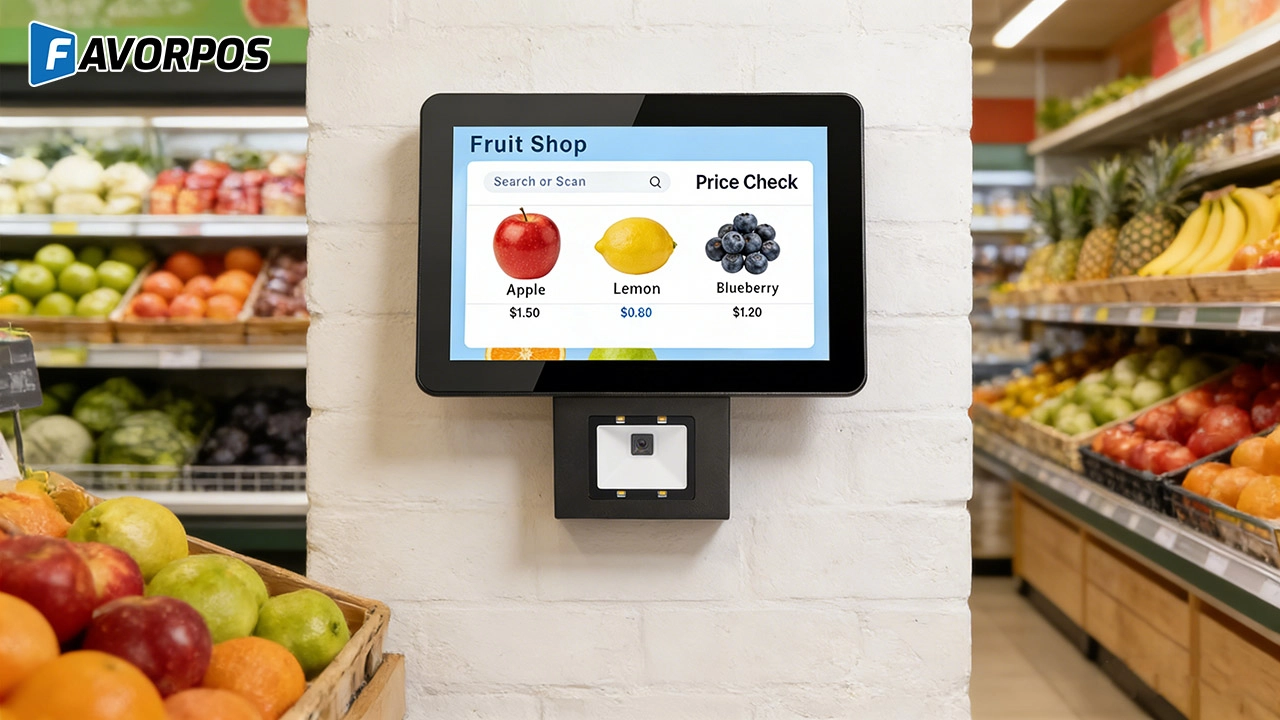
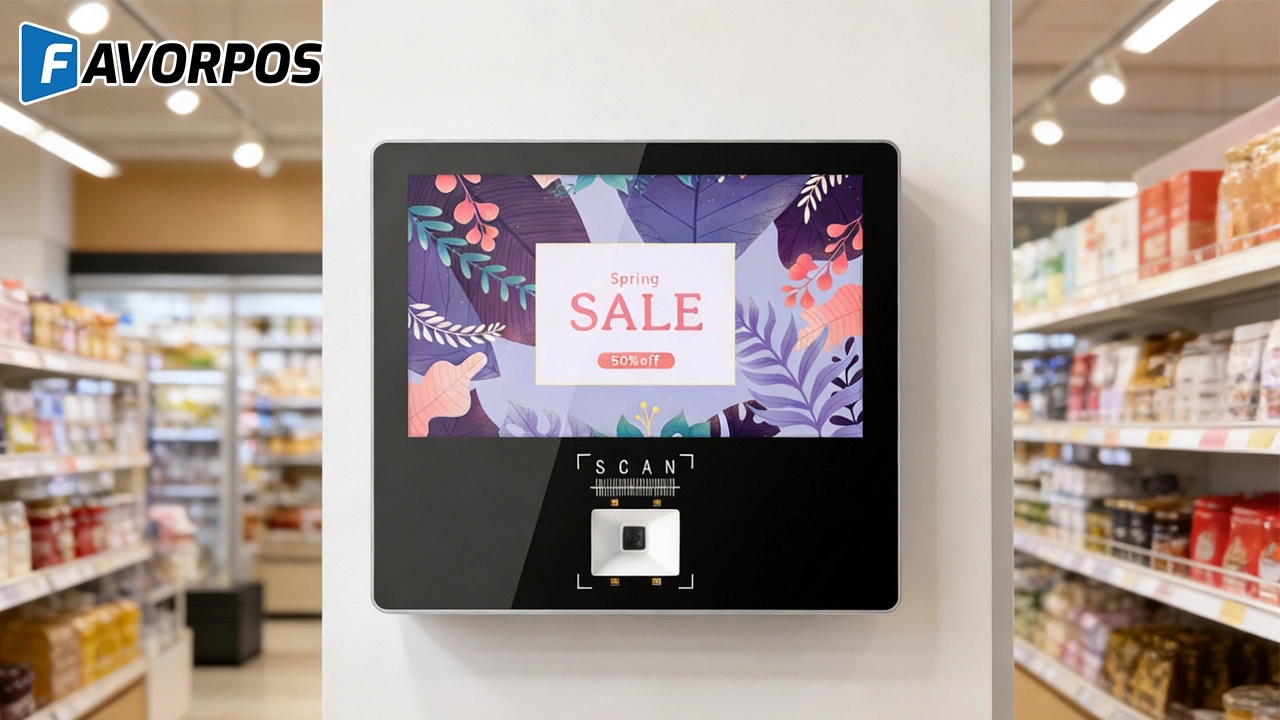
The Smart Way to Check Prices: How a 10.1-Inch Wall-Mounted Price Checker Transforms Retail Stores
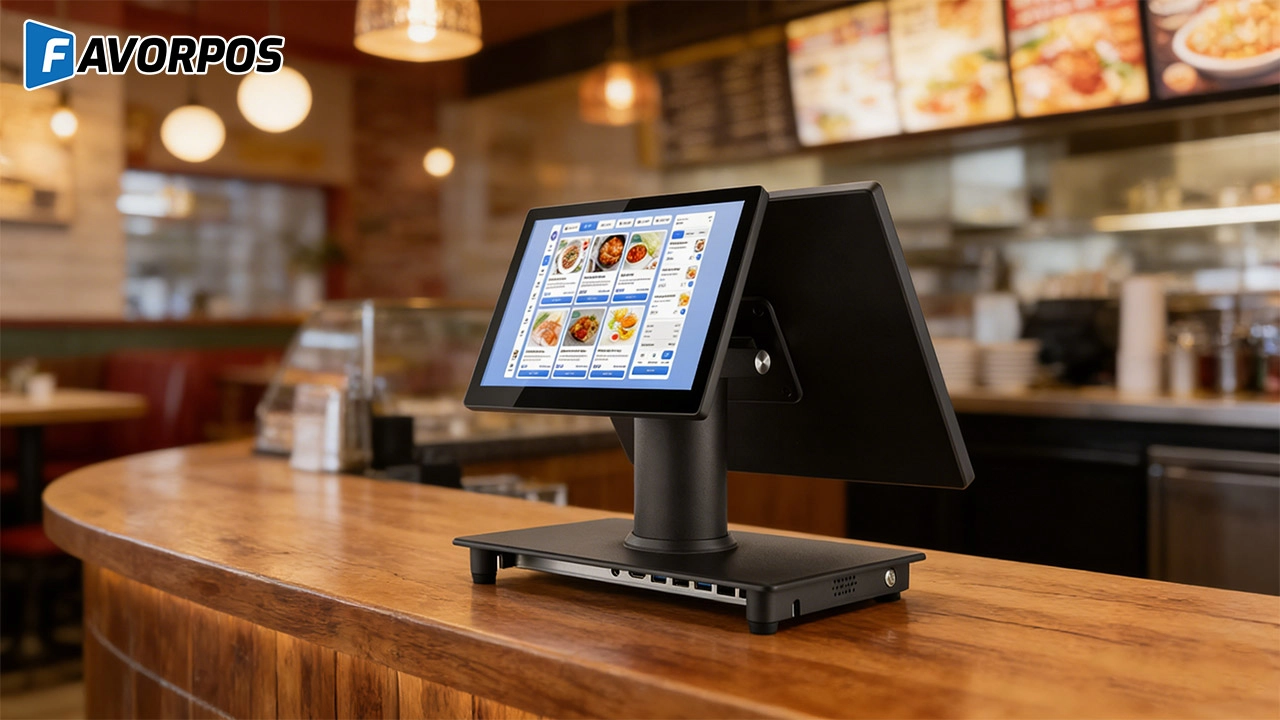
A Smarter Checkout Experience: The 15-Inch Dual-Screen POS Built for Modern Retail
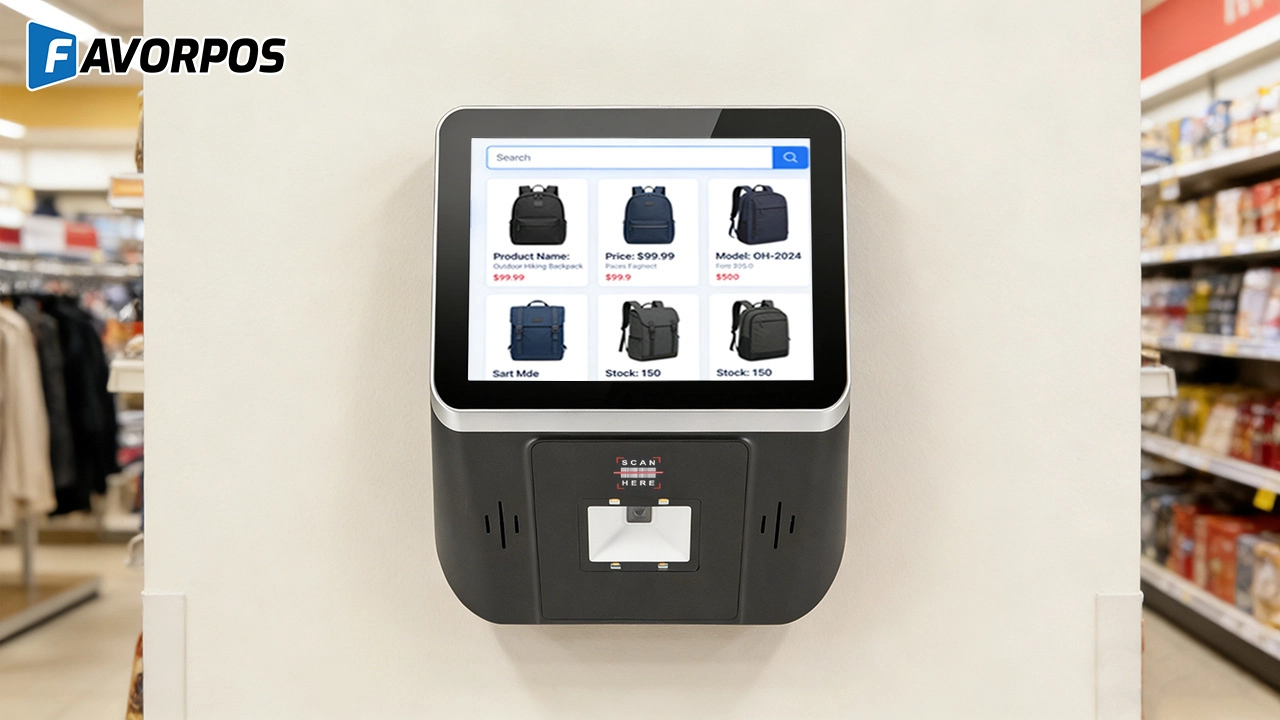
8-Inch Smart Price Checker: A Small Device Powering Smarter Retail Spaces
Built for Retail Precision: Manufacturing Excellence Behind the 11.6” Smart Price Checker
For Entertainment & Events
What payment methods does your system support?
Our POS system supports multiple payment methods, including credit cards, digital wallets and contactless payments, providing customers with a convenient payment experience.
For ODM
What is the process of ODM service?
Our ODM service process includes the following steps:
1. Preliminary consultation: Discuss project goals, needs and vision with customers.
2. Design and development: Develop and confirm product design.
3. Prototyping & Testing: Prototypes are made, tested and designs are optimized.
4. Production: Carry out mass production, following quality standards and production schedules.
5. Logistics & Delivery: Manage logistics to ensure that products are delivered on time.
6. Post-production Support: Provide technical support and maintenance services.
For Restaurants & Cafes
Does your POS system support multiple languages and currencies?
Yes, our POS system supports multi-language operation interfaces and multi-currency transactions to meet the needs of different regions and markets. You can set the corresponding language and currency options according to the specific requirements of the country or region where your business is located.
For E-commerce
Does your POS system provide real-time analytics?
Yes, our system provides detailed real-time analytics to help you track sales performance, customer behavior, and inventory levels.
For Bakeries
What payment methods are supported?
Our POS system accepts a variety of payment methods, including credit cards, mobile wallets, and contactless payments.
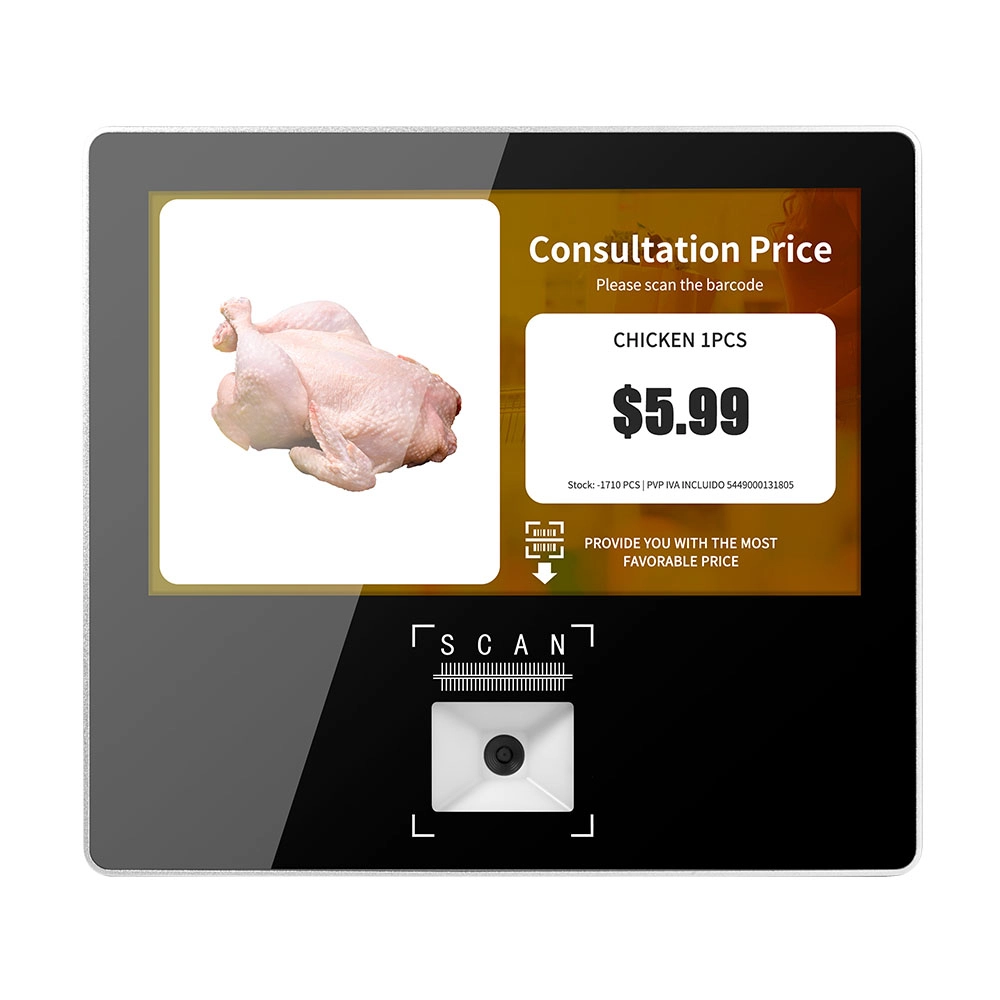
Metal 11.6 inch Price Scanner Machine Android Windows with Wifi Supplier
FAVORPOS Metal 11.6-inch Price Scanner Machine, designed for durability and efficiency in retail environments. This versatile device operates on both Android and Windows, providing seamless functionality for various applications. With built-in Wi-Fi connectivity, it allows for quick access to pricing data and updates. The 11.6'' display ensures clear visibility for easy operation, making it perfect for price checking and inventory management. Enhance your retail experience with this reliable and robust price scanner from a trusted supplier!
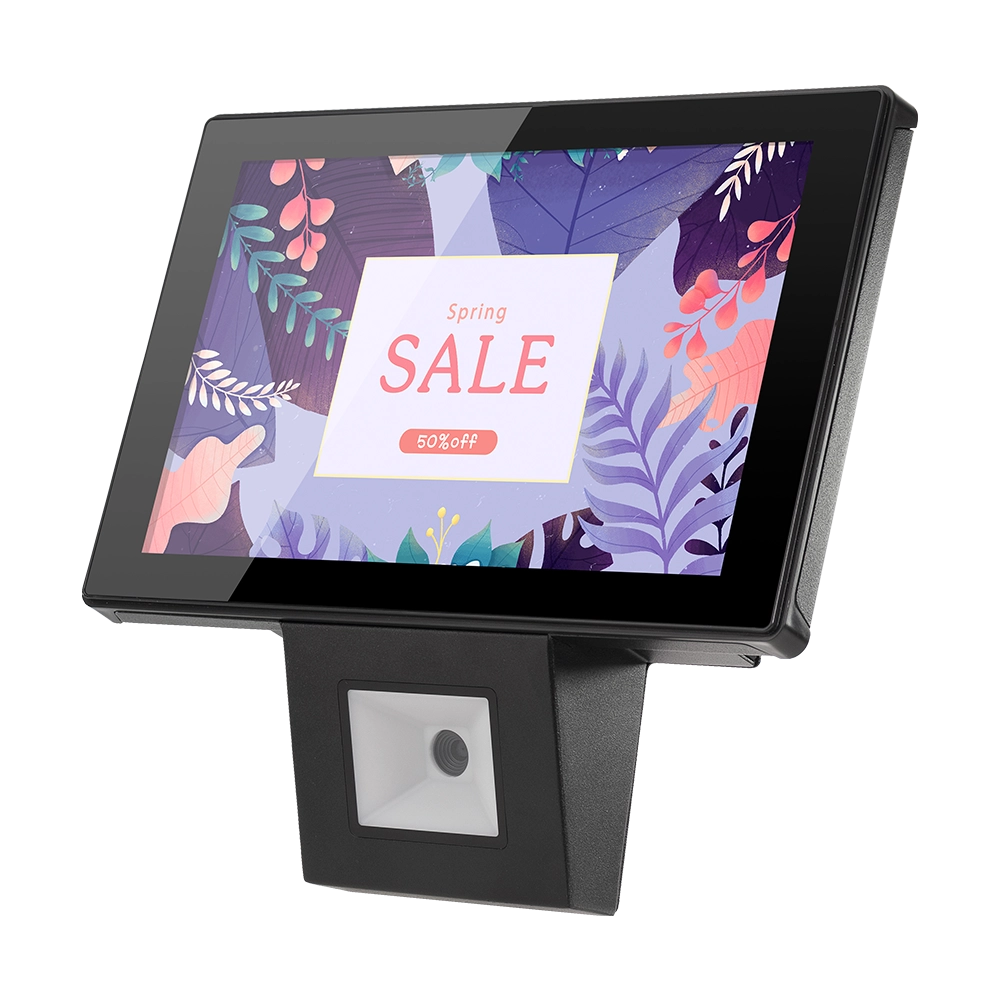
10 inch Price Checker Device Supplier Barcode Scanner for Sale Price Check for Supermarket
FAVORPOS offers 10 inch Price Checker Device, perfect for supermarkets. This wall mounted 10 inch touch screen barcode scanner ensures fast, accurate price checks, enhancing customer experience and operational efficiency. Durable, user-friendly, and perfect for high-traffic retail environments.

Aluminum Dual Screen Pos Terminal Pos Systems 15.6 inch Touchscreen Pos
FAVORPOS Aluminum Dual Screen POS Terminal features a 15.6-inch touchscreen, ideal for seamless transactions. As a trusted OEM Windows POS manufacturer, we deliver durable, high-performance solutions tailored for retail and hospitality businesses.
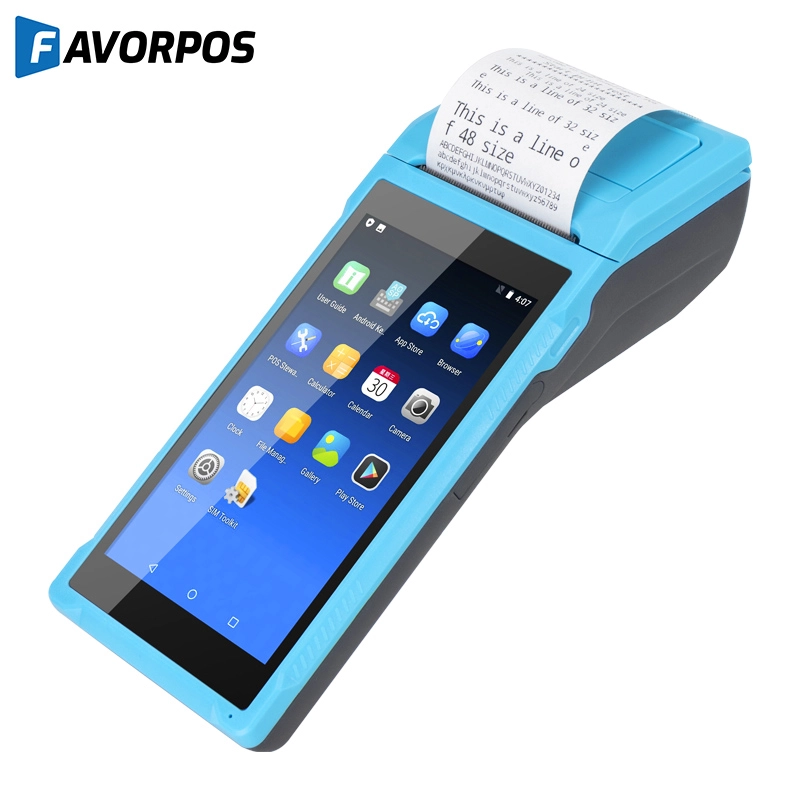
Android Handheld Pos Device Touch Screen Pos Terminal Manufacturer
Get in touch
Interested in becoming a POS system dealer? Contact us for more information and start the process of joining our dealer network.
We look forward to working with you to expand the market together.


Copyright © 2025 Favorpos All Rights Reserved.
