
How to choose a POS systems cash register for multi-store chains?
- 1. How can I guarantee accurate, near real-time centralized inventory and stock reconciliation across 30+ stores with differing local assortments?
- 2. What hardware, EMV and PCI compliance requirements should I plan for when rolling out POS cash registers across different regions?
- 3. How do I design offline transaction handling so registers keep selling during outages without causing duplicate payments or stock mismatches?
- 4. What hidden costs and billing pitfalls should I budget for when deploying POS systems cash register across 30+ stores?
- 5. How do I pick a POS system that supports omnichannel promotions, store-specific pricing tiers, and a centralized loyalty program without creating reconciliation chaos?
- 6. Which KPIs and reporting granularity should I demand from a POS solution to detect shrinkage, cashier fraud, and per-store anomalies in near real-time?
Prepared by FavorPOS product and compliance specialists. This guide answers six high-value, under-addressed questions that multi-store chains face when buying a POS systems cash register solution. Recommendations are grounded in industry standards (PCI DSS, EMVCo) and field-proven architecture patterns.
1. How can I guarantee accurate, near real-time centralized inventory and stock reconciliation across 30+ stores with differing local assortments?
Key pain points: inventory lags, phantom stock, conflicting SKU versions, and slow cycle counts. For multi-store chains you must require a POS solution built on cloud-native inventory with the following capabilities:
- Centralized SKU master and per-store catalogs: The system should support one canonical SKU/UPC per product with store-level assortment overrides (price, pack size, availability). This prevents duplicate SKUs and simplifies promotions.
- Real-time inventory synchronization with conflict resolution: Look for event-driven replication (webhooks or message queues) so sales and returns push updates immediately. The platform should expose clear reconciliation logic (last-write-wins plus audit trails) and transactional integrity for inventory adjustments.
- Offline transaction handling and reconciliation ledger: Each register must keep a local transaction ledger that queues operations during network outages and replays them with idempotent transaction IDs to avoid double adjustments. Ensure the vendor documents the reconciliation window and conflict resolution policy.
- Cycle-count and variance workflows: Built-in cycle-count tooling, automated count scheduling, and variance reports let you reconcile differences without full store shutdowns. Prefer systems that support barcode-based mobile counts and audit logs tied to employee IDs.
- Visibility and alerts: Require near real-time alerts for negative on-hand, sudden sell-through spikes, or inconsistent inventory levels between stores. This reduces phantom stock issues and enables fast correction.
- EMV and contactless support: Use PCI-approved EMV-capable payment terminals that support chip, contactless (NFC), and mobile wallets. EMV liability shifts differ by region — confirm local acquirer rules and ensure terminals are certified with your payment processor.
- Point-to-Point Encryption (P2PE) and PCI DSS: Prefer solutions that use P2PE and tokenization to minimize card data surface. Confirm whether your vendor is listed as a P2PE solution provider and that your deployment architecture supports PCI scope reduction (network segmentation, separate VLANs for payment terminals).
- Secure peripherals and tamper controls: Choose cash drawers, receipt printers, and barcode scanners compatible with your registers. Ensure peripherals have physical security options and the ability to integrate with your POS software (USB, Serial, Ethernet).
- Network and TLS requirements: Ensure all register-to-cloud communication uses TLS 1.2+ and that payment terminal firmware is kept current. Plan for segmented network architecture—separate guest Wi‑Fi, back-office network, and payment network.
- Power and redundancy: Provide UPS for payment terminals and registers in key locations to reduce downtime during power blips. For large stores consider spare hardware stock to minimize RTO (recovery time objective).
- Local transaction queue with idempotency: Each offline sale should generate a globally unique transaction ID (GUID) and a deterministic checksum so the cloud or payment gateway can detect duplicates when the device reconnects.
- Deferred payment capture vs. authorization: For card-present scenarios, prefer terminals that can securely authorize/queue transactions for later capture. Avoid manual card entry or storing raw PANs. Understand issuer policies: some banks limit offline EMV approvals, so coordinate with acquirer and terminal vendor.
- Inventory reservations and timed holds: On offline sales, reserve allocated stock locally and mark items with a timestamp. Implement an automatic reconciliation policy (e.g., if the sale fails to upload within X hours send an alert and unreserve stock) to prevent permanent discrepancies.
- Idempotent reconcile and conflict resolution tooling: When re-synced, the system should reconcile based on transaction IDs, timestamps, and source store. Build automatic duplicate-detection and human-reviewed exception queues for ambiguous cases.
- Testing and limits: Define maximum offline queue size, maximum transaction age allowed for auto-acceptance, and recovery procedures. Run failover tests periodically—network cut, power cycle, and simultaneous multi-register reconnect scenarios.
- Software licensing model: Many vendors charge per terminal, per location, or per user. Clarify whether you pay for backups, development sandboxes, or separate modules (inventory, loyalty, reporting).
- Payment processing and gateway fees: Transaction fees, monthly gateway fees, chargeback reserves, cross-border VAT or FX fees for multi-currency settlements, and interchange-plus vs flat-rate pricing models. Compare effective rates across your transaction mix.
- Integration and middleware costs: Third-party integrations (ERP, accounting like QuickBooks or SAP, e-commerce platforms) often require middleware or custom development. Ask about API rate limits and per-API-call charges for high-volume syncs.
- Hardware lifecycle and refresh: POS terminals, printers, and scanners wear out. Plan for regular hardware refreshes (typical lifecycle 3–5 years) and spare-part inventories. Factor in installation and depot repair costs.
- Compliance and audit costs: PCI remediation, quarterly scans, and any required on-site audits have costs. If you reduce PCI scope via tokenization or P2PE, calculate vendor fees for that service.
- Support SLAs and escalations: Vendor support tiers (business hours vs 24/7), dedicated account management, and elevated-response commitments can carry higher fees. For multi-store chains, prioritize faster SLA options for peak trading hours.
- Training and change management: Onboarding staff across many locations requires structured training, documentation, and possibly training licenses. Allocate budget for initial and refresher training.
- Centralized promotions engine with store overrides: A single rule engine should handle global campaigns, channel-specific conditions (online vs in-store), and store-level overrides (regional pricing, tax differences) while preserving audit trails of applied rules.
- Single customer identity and session stitching: To run centralized loyalty, you need a persistent customer ID across channels (email, phone, loyalty card). The POS must support merging and deduplication to avoid split point balances.
- Real-time pricing and promotions cache: Registers should receive timely price and promotion updates. The vendor should provide a robust cache invalidation strategy and clear TTLs so a limited network outage doesn’t cause stale discounts to apply incorrectly.
- Points accrual and reversal rules: Loyalty should support reversals for returns/exchanges and tie points to specific sale transactions. Ensure rules for expiration, tiering, and cross-channel redemption are explicit and testable.
- Testing, staging, and rollback: Given the risk of promotional errors, require vendor support for staging campaigns, shadow-testing, and immediate rollback capabilities if a promotion triggers unexpected behavior.
- Tiered KPI dashboarding: global, region, store, and cashier levels. Key KPIs: sales per hour, average transaction value, refund/void rate per cashier, discount rate, no-sale drawer openings, cash over/short, and variance between expected and counted cash.
- Transaction-level audit trails: immutable logs showing transaction creation, modifications (voids/refunds), user IDs, device IDs, and timestamps. This is essential for forensic analysis after suspicious events.
- Automated anomaly detection and alerting: set thresholds and use pattern detection (e.g., sudden rise in voids by cashier or repeat refunds at similar amounts). For larger chains, consider vendor solutions that integrate basic ML-based outlier detection to highlight anomalies for human review.
- Inventory shrink KPIs: expected vs actual on-hand, shrink per SKU, variance after returns/adjustments, and thief-prone SKU lists. Combine POS sales data with periodic physical counts for better detection.
- Role-based access and segregation of duties: ensure your POS supports user roles that prevent a single person from performing cashier and manager-level reconciliation actions without oversight. Auditability reduces insider fraud vectors.
- Integration with loss-prevention tools: video POS integration (timestamp/video sync), exception reporting, and scheduled internal audits are valuable. The POS should support event hooks to push suspicious transactions to a loss-prevention system.
Implementation tips: pilot SKU mapping and catalog sync at a small scale (3–5 stores) to validate SKU normalization, sync latency, and edge cases like BOPIS. Validate API throughput and rate limits if you plan bulk updates across many locations.
2. What hardware, EMV and PCI compliance requirements should I plan for when rolling out POS cash registers across different regions?
Rolling out registers at scale exposes you to hardware compatibility, payments compliance, and local certification risks. Key checklist items:
Validation step: require vendor-provided compliance documentation (PCI ROC or Attestation of Compliance where applicable), payment terminal certifications, and a written plan for firmware/security patching. For cross-border chains, validate country-level certifications (e.g., EMVCo approvals) before procurement.
3. How do I design offline transaction handling so registers keep selling during outages without causing duplicate payments or stock mismatches?
Offline resilience is a top concern in multi-store operations. The architecture must preserve transactional integrity and payment security. Critical design elements:
Operational recommendation: document a clear SOP for staff during prolonged outages (manual receipts, manager overrides, temporary SKU substitutions) and train store managers to handle reconciliation exceptions. This minimizes risk of chargebacks and inventory drift.
4. What hidden costs and billing pitfalls should I budget for when deploying POS systems cash register across 30+ stores?
Beyond headline software and hardware prices, multi-store rollouts often incur recurring and one-off costs that planners miss. Budget items to include:
Procurement tip: request a TCO (total cost of ownership) projection from each vendor covering 3–5 years including all of the above. Include contingency for seat expansion and potential interchange rate shifts.
5. How do I pick a POS system that supports omnichannel promotions, store-specific pricing tiers, and a centralized loyalty program without creating reconciliation chaos?
Omnichannel consistency is complex because promotions and loyalty must apply coherently online and in-store while allowing localized rules. Look for these capabilities:
Operational controls: enforce approval workflows for promotions, permissions for who can publish changes, and automated reconciliation reports that compare promotion liabilities vs redemptions daily.
6. Which KPIs and reporting granularity should I demand from a POS solution to detect shrinkage, cashier fraud, and per-store anomalies in near real-time?
Detecting fraud and shrinkage early requires granular, actionable metrics and event-level audit logs. Demand the following reporting and alerting functionality:
Recommendation: run daily automated exception reports and weekly root-cause analysis for stores with persistent anomalies. Use these reports to update SOPs and retrain staff as needed.
Final notes on vendor evaluation and compliance: Require vendor-documentation for PCI DSS scope, EMV/terminal certifications, API SLAs, and references from multi-store customers. Ask for an architecture diagram showing network segmentation, tokenization flow, and offline reconciliation logic. Favor vendors that offer demonstrable uptime SLAs (e.g., 99.9% or better), transparent release and patch schedules, and a clear escalation path for incidents.
Concluding summary: Choosing the right POS systems cash register for multi-store chains yields benefits including centralized inventory control, faster reconciliations, consistent omnichannel customer experiences, stronger payment security, and earlier detection of shrinkage or fraud. With the right cloud POS, certified EMV terminals, robust offline handling, and granular reporting you reduce costs, improve uptime, and scale operations confidently.
For a tailored proposal and rollout quote for your chain, contact FavorPOS at www.favorpos.com or email sales2@wllpos.com. Our team can provide a customized cost estimate and technical validation plan.
Sources and standards referred: PCI Security Standards Council guidance, EMVCo specifications, and industry best practices for multi-site retail POS deployments.
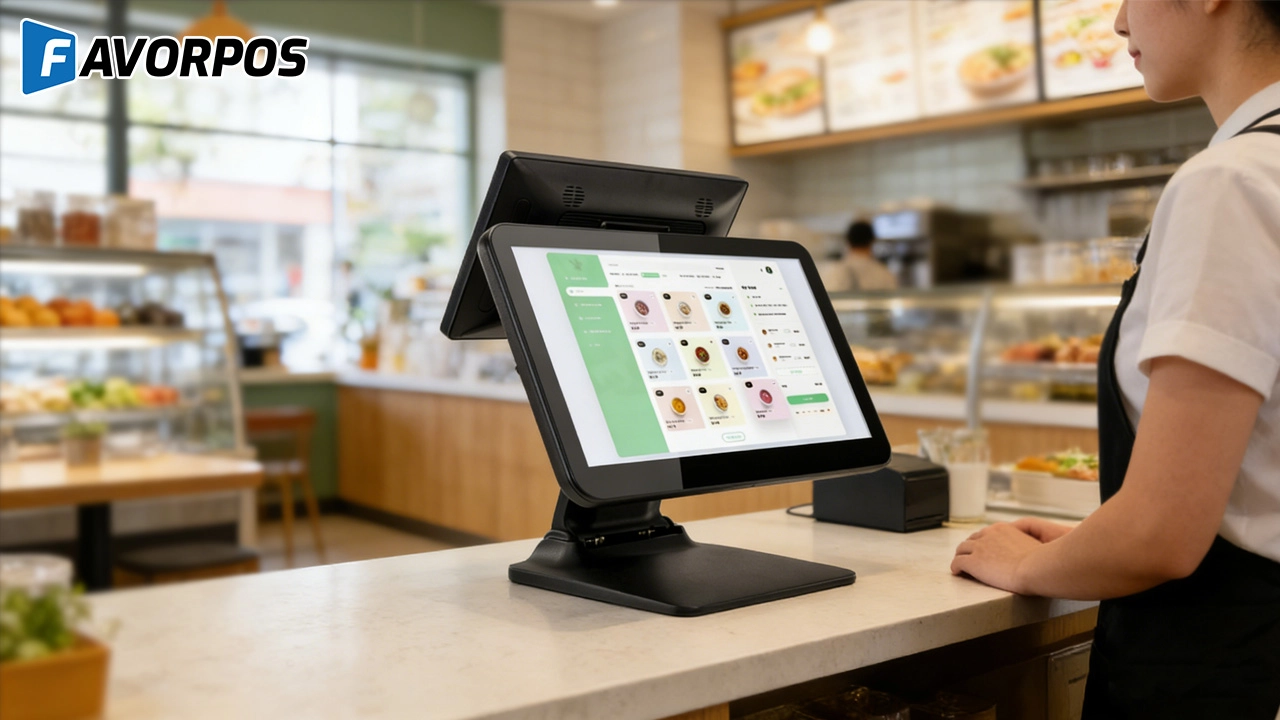
Beyond Checkout: How a 15.6-Inch Aluminum POS System Redefines Retail Efficiency
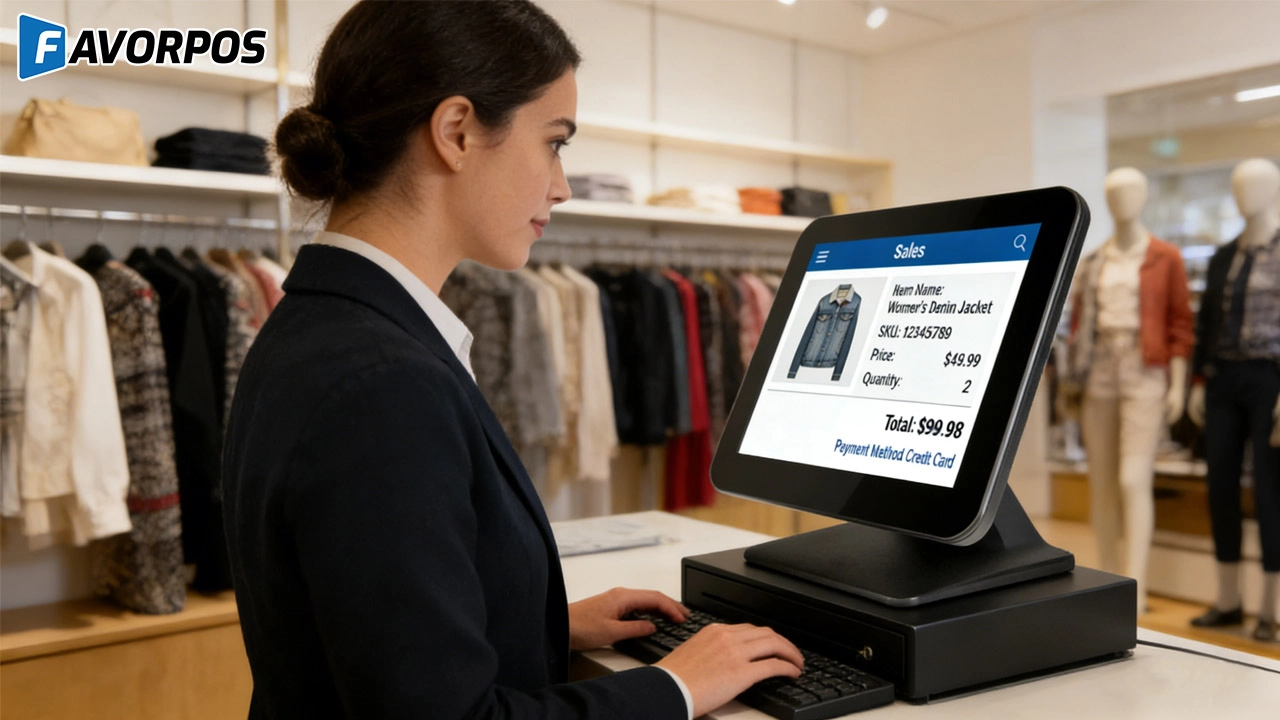
Understanding 15-Inch Aluminum POS Terminals in Modern Commercial Use
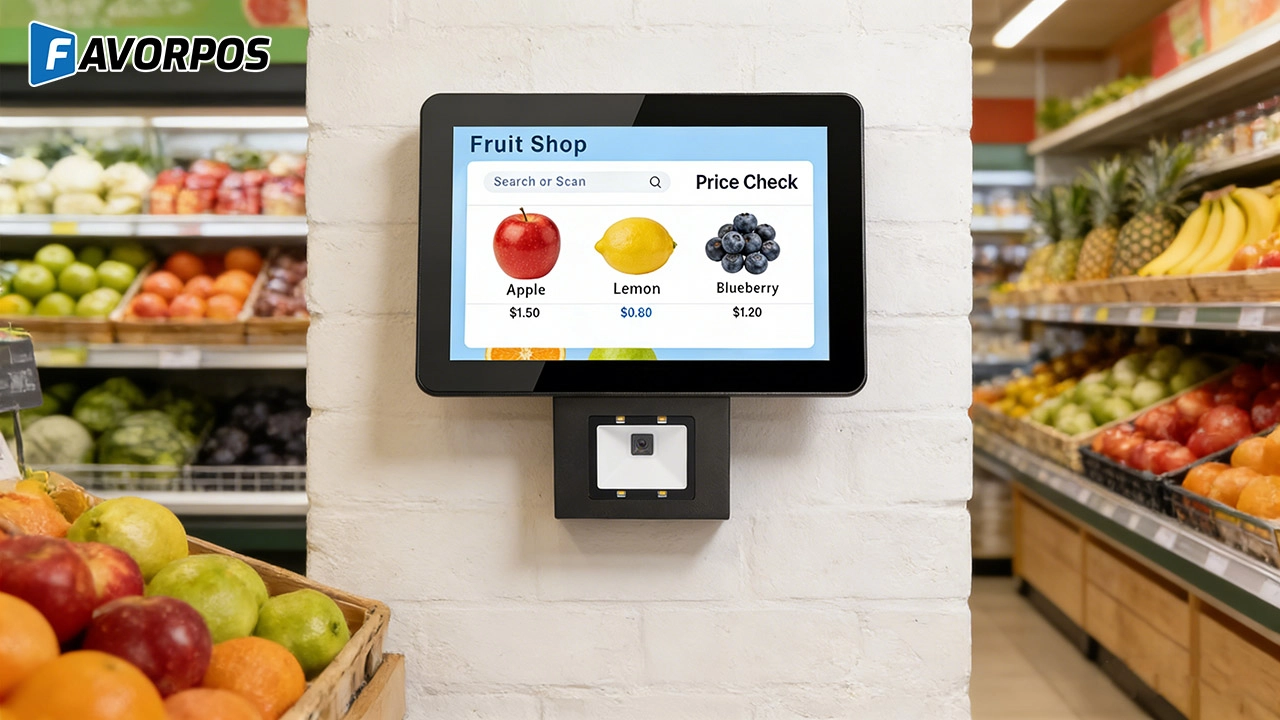
The Smart Way to Check Prices: How a 10.1-Inch Wall-Mounted Price Checker Transforms Retail Stores
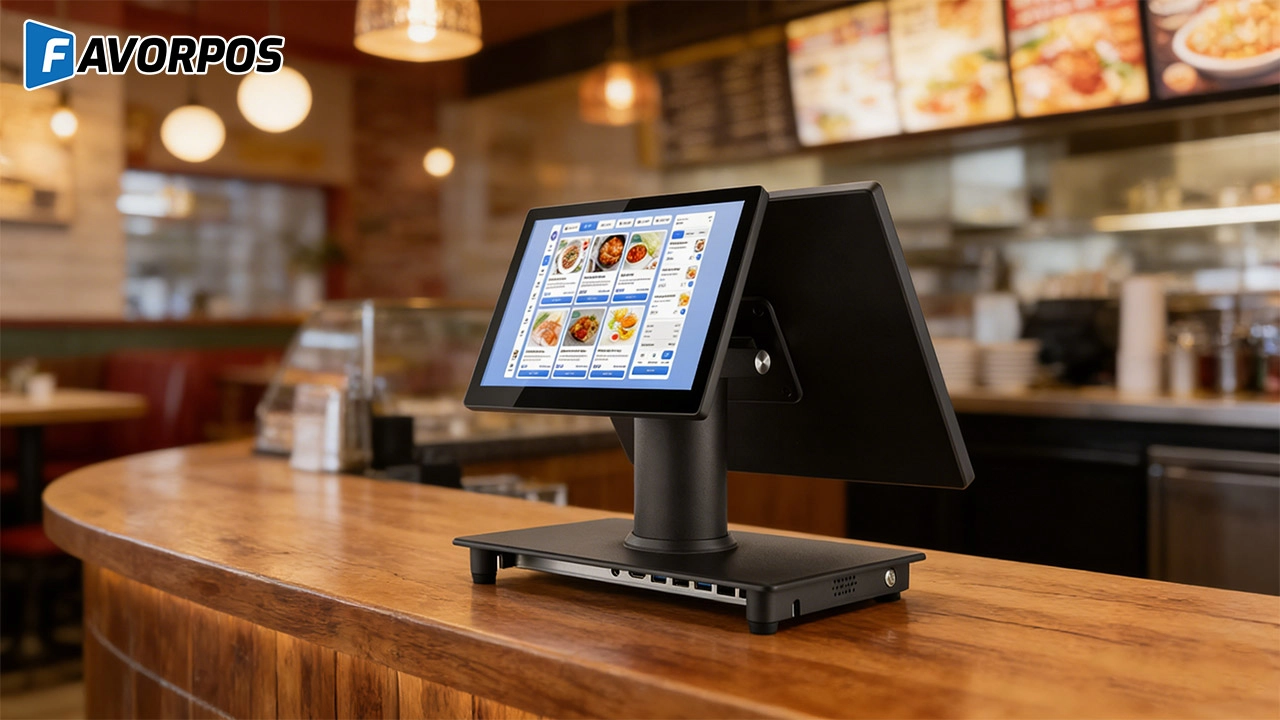
A Smarter Checkout Experience: The 15-Inch Dual-Screen POS Built for Modern Retail
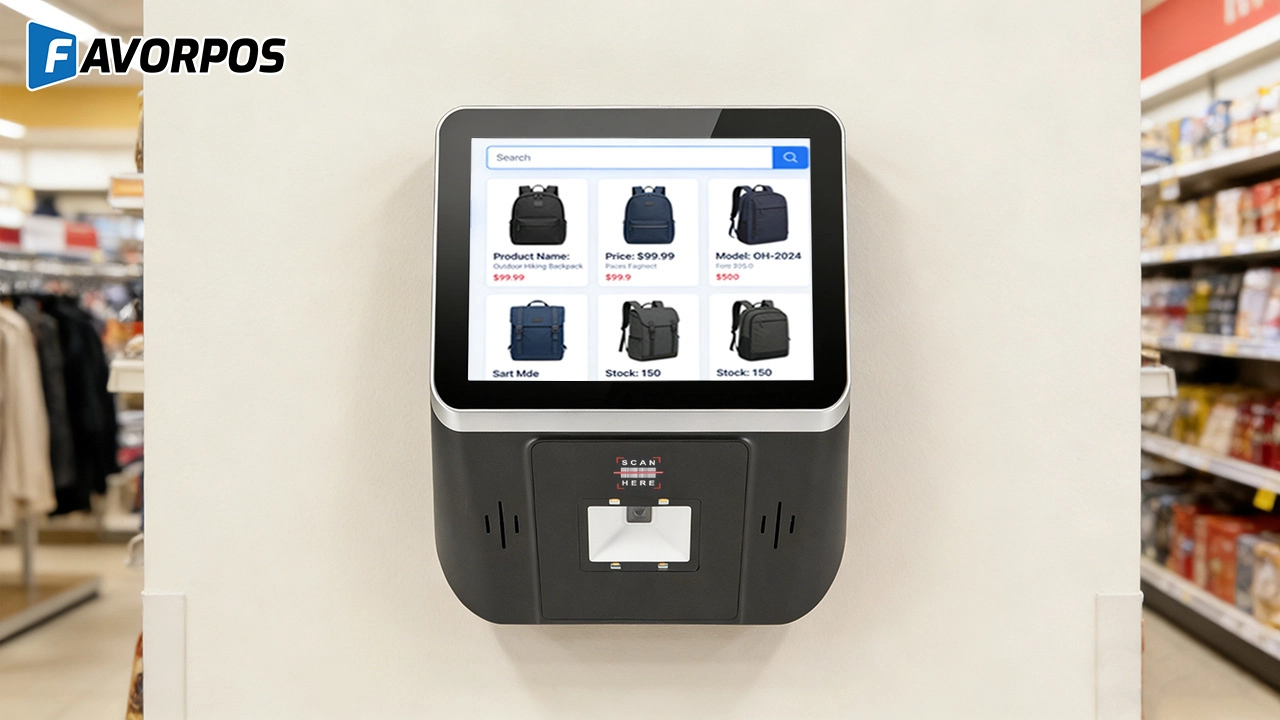
8-Inch Smart Price Checker: A Small Device Powering Smarter Retail Spaces
For Healthcare
What kind of support do you provide after installation?
We provide comprehensive after-sales support, including technical assistance, hardware updates, hardware maintenance and employee training.
Can the POS interface be customized to our specific needs?
The interface is highly customizable. We can customize it to your workflow, terminology and specific operational needs.
For Beauty and Wellness
Does your POS system support loyalty programs?
Of course, our POS solution includes the function of implementing and managing loyalty programs to reward returning customers and promote customer retention.
For Restaurants & Cafes
Does your POS system support a variety of payment methods?
Yes, our POS system supports a variety of payment methods, including credit cards, debit cards, mobile payments (such as Apple Pay, Google Pay) and contactless payments (NFC). We ensure that the transaction process is safe and smooth to meet the various payment needs of customers.
For Bakeries
Can custom cake orders be easily managed?
Yes, our system is designed to handle special orders, allowing customers to easily customize cakes and pastries, and employees can track these orders from start to finish.
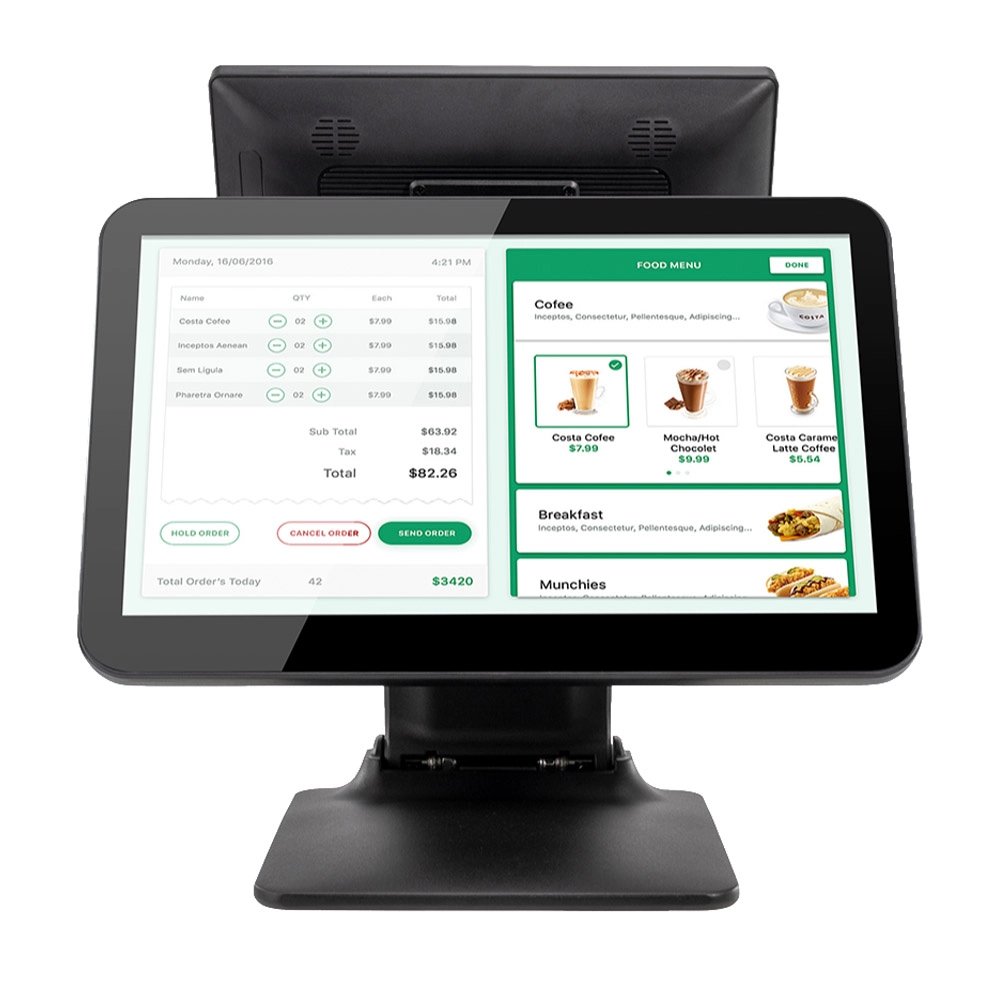
Foldable Touch Screen POS Cash Register 15.6'' Windows Supplier Aluminum
This innovative cash register combines portability with advanced functionality, making it ideal for retail environments. Its aluminum construction ensures durability while maintaining a lightweight design for easy transport and setup. The foldable feature allows for convenient storage and flexibility in various business settings.
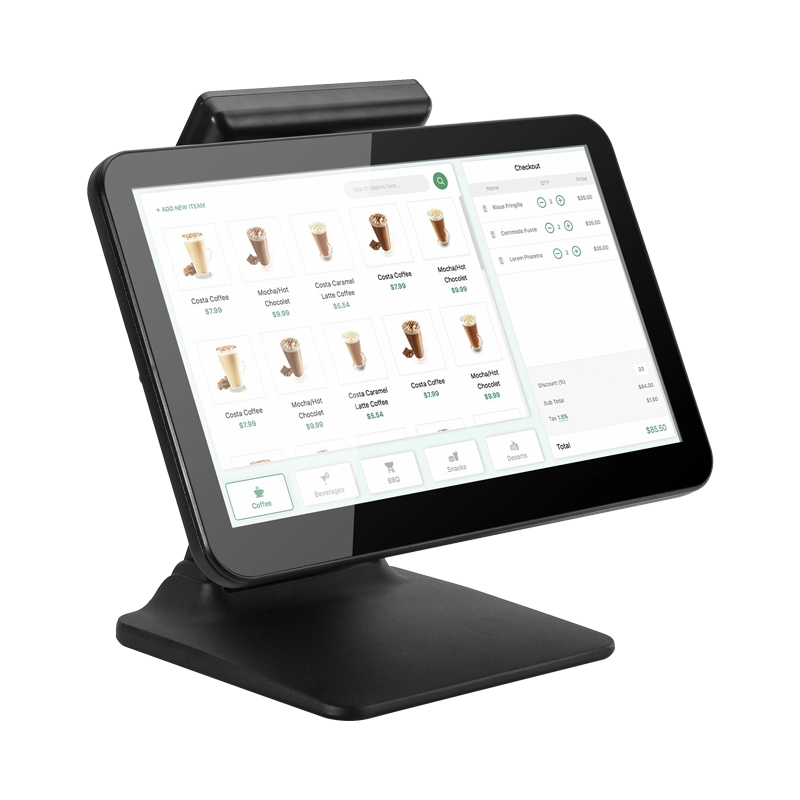
15.6 Inch Windows POS Terminal with VFD Display, Foldable Aluminum Stand Touch Screen POS for Retail & Hospitality
This 15.6-inch POS terminal is built to meet the needs of modern retail and hospitality environments. Powered by a stable Windows operating system, it ensures smooth performance for various point-of-sale applications. The device features a crisp, responsive touch screen and a built-in VFD customer display, allowing customers to view transaction details clearly. Its aluminum alloy stand offers a sleek, professional appearance while providing enhanced durability and stability for busy checkout counters. Ideal for retail stores, restaurants, and service-based businesses, this POS machine delivers a reliable and customer-friendly checkout experience.
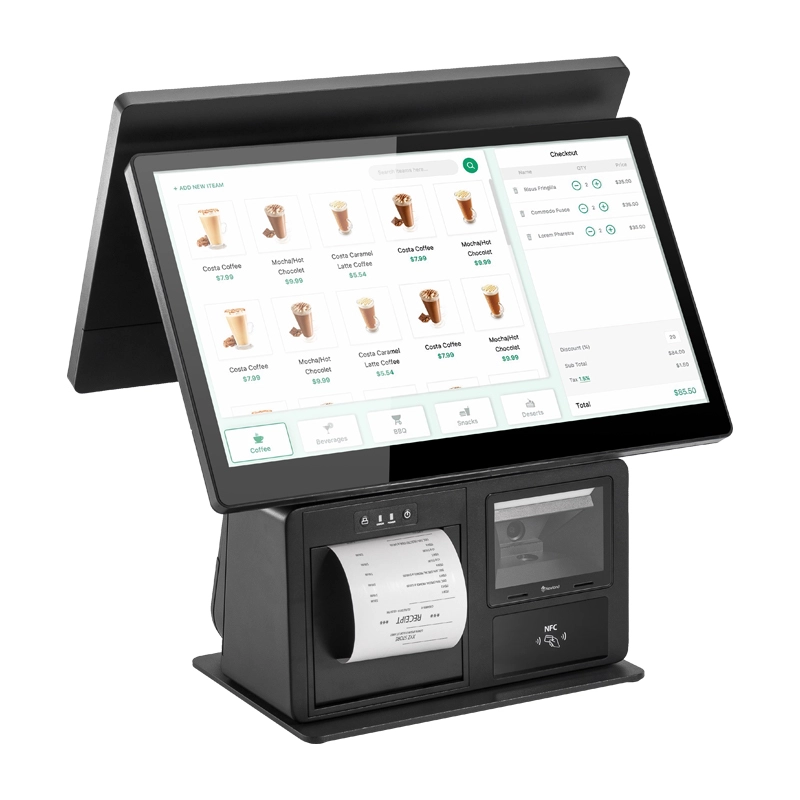
Point of Sale System with Thermal Printer All in One Pos Dual Touchscreen Pos with Barcode Scanner Supplier
FAVORPOS presents the all-in-one Point of Sale System with Thermal Printer, featuring dual touchscreens and an integrated barcode scanner. As a leading POS with NFC factory and barcode scanner supplier, we deliver reliable, efficient solutions tailored for your business needs.
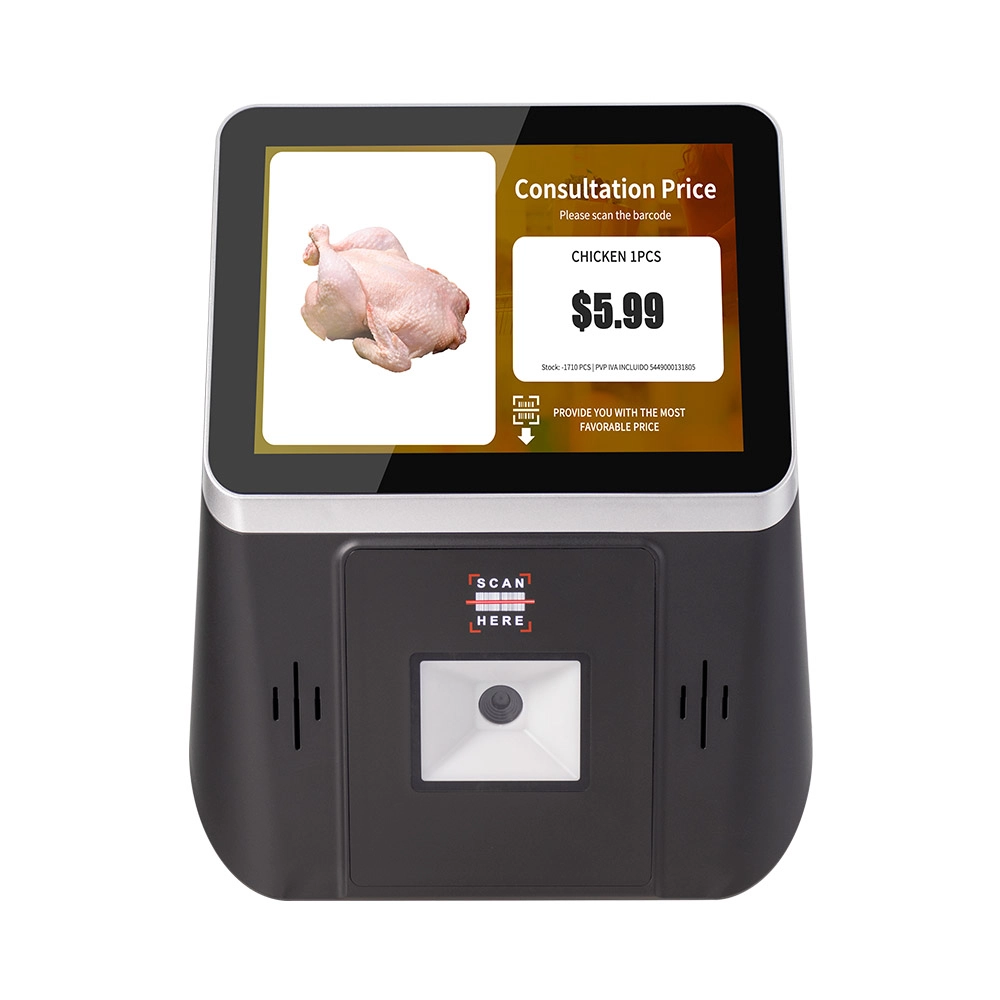
8 inch Wall Mount Price Checker with Scanner Android Windows Factory
Our 8-inch Wall Mount Price Checker is designed for optimal convenience in retail spaces, featuring a sleek design that fits seamlessly into any environment. Compatible with both Android and Windows, this unit includes an integrated scanner for quick and accurate price checks. Its wall-mounted design saves counter space while providing easy access for customers. Ideal for enhancing efficiency and improving the shopping experience.
Get in touch
Interested in becoming a POS system dealer? Contact us for more information and start the process of joining our dealer network.
We look forward to working with you to expand the market together.


Copyright © 2025 Favorpos All Rights Reserved.
