
How to choose a POS system for busy bars and nightclubs?
- 1. How can I ensure a POS can survive peak rushes (50+ simultaneous tabs) without slowing service?
- 2. How do I set up accurate liquor inventory and pour-cost tracking for mixed recipes and house pours?
- 3. How should I configure tipping, tip pooling and service charges across varying local laws?
- 4. How can I run happy hour pricing, combo promotions and age-restricted discounts without breaking compliance or opening fraud windows?
- 5. What specific security controls stop internal theft in bars (voids, comping, and over-pouring)?
- 6. Which hardware is best for sticky, wet, late-night bar environments and what redundancy should I require?
1. How can I ensure a POS can survive peak rushes (50+ simultaneous tabs) without slowing service?
A slow POS during peak service kills throughput and tips. For busy bars and nightclubs you need an architecture that prioritizes concurrency, low latency, and graceful degradation.
Key requirements and checks:
- Concurrency and session handling: Verify the POS vendor publishes concurrent device/session limits and real-world throughput (orders per minute) for live venues. Ask for benchmark data or references from similar-size bars. A cloud POS should support high concurrent socket connections and queueing; an on-premise server should have multi-core CPU and SSD storage.
- Local caching and offline mode: Ensure the system can take orders, open/close tabs, and print receipts when the internet drops. Offline mode should queue transactions and sync securely once restored to avoid lost sales and duplicate charges.
- Network design: Use dual-band Wi-Fi (5 GHz for terminals), separate VLANs for POS traffic, and wired backhaul for stationary terminals/KDS. Consider an LTE backup with automatic failover for payment acceptance continuity.
- POS client performance: Test with the actual UI and payment flow. Emulate staff behavior: open tabs, split checks, apply discounts, send to KDS. A touchscreen that requires fewer taps reduces per-order latency.
- Order routing and KDS throughput: Split order traffic to a dedicated KDS or kitchen printer stream. The KDS should be able to process and display high-rate order bursts and support visual/audio escalation for missed tickets.
- Hardware and peripherals: Use enterprise-grade terminals and printers with fast print buffers. Cheap consumer tablets often lag under concurrent use and become hot spots for failures.
Implementation checklist before purchase:
- Run a vendor-provided load test or request customer references in similar venues.
- Test offline-mode order entry and transaction reconciliation.
- Require documented failover procedures and SLA for cloud systems.
- Verify ability to queue payments safely and reconcile batch settlements.
Embedding features such as handheld ordering terminals, fast tab management, and a robust KDS will prevent bottlenecks and keep service moving under stress.
2. How do I set up accurate liquor inventory and pour-cost tracking for mixed recipes and house pours?
Bars struggle because alcohol is sold in measured pours, cocktails use fractional parts, and bottles yield variable serves. A POS must support recipe-level inventory and real unit conversions.
Core elements to demand:
- Recipe-based inventory (BOM): Catalog every cocktail and modifier as a bill-of-materials (BOM) that references base SKUs (e.g., 750 ml bottle, 1.75 L bottle) and pour sizes (oz, ml, jiggers). The POS should calculate consumption per sale automatically.
- Unit conversion and yield: System must convert bottle sizes to common measure (ml/oz) and account for yield differences (spillage, wastage) with adjustable yield or shrinkage factors in settings.
- Standard pours and modifiers: Support presets for house pour (1.5 oz), double, rocks, and free-pour training offsets. Allow modifiers at order time to adjust inventory usage automatically.
- Inventory counting: Support cycle counts by category, blind counts (to reduce bias), and variance reporting. Mobile counting with barcode or SKU scanning is preferable for speed and accuracy.
- Pour-cost and COGS reporting: Provide pour-cost percentage per SKU and per recipe, and show real-time margin metrics. Drill-down reports should show which items drive variance and theft flags.
- Integration with scales and automated pour systems: If you use bottle scales or automatic pourers, ensure the POS can ingest pour data to reconcile actual pours vs theoretical.
Setup steps:
- Build SKUs for all bottles and set accurate volume measures (ml/oz).
- Create recipes (BOMs) for every menu item, including garnishes and non-alcoholic mixers.
- Configure standard pours and map POS modifiers to inventory adjustments.
- Run an initial full physical count and reconcile to theoretical stock to set baseline shrinkage.
- Schedule regular blind cycle counts and compare variance reports weekly to find leakage points.
A POS with robust bar inventory management and liquor cost control will give you actionable insights to improve margins and reduce shrink.
3. How should I configure tipping, tip pooling and service charges across varying local laws?
Tipping rules differ by jurisdiction and mistakes cause payroll headaches and legal exposure. A POS must make tip capture, allocation, and reporting configurable and auditable.
Essential capabilities:
- Card-tip capture vs cash tips: The POS should distinguish card tips captured at payment from cash tips tracked manually. Card tips must be stored securely for payroll reporting.
- Configurable tip prompts: Customize prompts by terminal type (handheld vs stationary), by percentage presets, and allow guest entry. For busy venues, quick-pick buttons reduce friction and speed checkout.
- Tip pooling and allocation rules: Support multiple pooling models—percentage-based distribution, hours-weighted, or role-based shares—and allow application at shift-close for payroll export.
- Service charges and taxable handling: Let you define mandatory service charges (e.g., venue fee, holiday surcharge), decide whether to treat them as tips for payroll, and mark taxability per local law.
- Payroll & POS integration: Ensure the POS can export tips and service charge allocations to your payroll provider in formats that include gross receipts, tip allocation, and hours worked.
- Audit logs and receipt compliance: Maintain immutable logs for tip entries and show tip amounts on receipts per local requirements.
Practical steps:
- Consult your local labor authority or payroll provider to confirm tip-pooling legality and classification of service charges.
- Configure tip prompts and default percentages to match your venue's practice.
- Map tip pools to employee roles in the POS and test end-of-shift allocations on historical data.
- Enable secure tip reporting for payroll reconciliation and keep retention periods that satisfy local compliance.
This prevents payroll surprises, protects staff rights, and ensures your tax reporting is defensible.
4. How can I run happy hour pricing, combo promotions and age-restricted discounts without breaking compliance or opening fraud windows?
Promotions increase revenue but complicate inventory and compliance (especially with age-restricted items). A capable POS should have a flexible promotions engine with auditability.
Desired features:
- Time-based pricing rules: Schedule automatic pricing changes for happy hour windows, late-night menus, and dayparts. Rules should apply by terminal, location, or menu group.
- Conditional promotions and stackability: Define single-use promotions, stack rules, or exclude certain combos. For example, BOGO only once per tab, or discounts cannot be applied to already-priced combos.
- Age verification workflow: For alcohol discounts or age-restricted items, require staff to perform ID checks and log verifier ID or attach scanned ID data if local law permits. The POS should block discounted sale if age verification isn't logged.
- Audit trail and override controls: Any manual price override should require manager authentication and include reason codes. Maintain a tamper-evident audit history to investigate suspicious discounting.
- Impact on inventory and cost: Ensure promotions decrement inventory properly (e.g., free item still consumes inventory) and show promotion-adjusted margins and COGS.
Implementation checklist:
- Build and test promotion rules in a sandbox environment covering dayparts and overlapping promotions.
- Train staff on ID verification steps and POS prompts; log staff IDs for every age-restricted sale.
- Limit override rights and require manager PINs for voids or price changes.
- Monitor post-promotion variance reports for unexpected inventory depletion or high discount rates.
A well-tested promotions engine reduces fraud, ensures compliance, and keeps your margins predictable.
5. What specific security controls stop internal theft in bars (voids, comping, and over-pouring)?
Internal theft in bars often happens via excessive comps, unauthorized voids, discounting, or bypassing standard pours. A POS must combine technical controls, procedural design, and monitoring.
Technical controls to require:
- Role-based access and least privilege: Define granular roles—server, bartender, manager, auditor—with specific permissions for voids, comping, discounting, refunds, and price overrides.
- Manager approval workflows: Require manager PINs or biometric confirmation for voids, late-night comping, price overrides, and high-value discounts. Log approver IDs and timestamps.
- Immutable audit logs and reporting: Keep tamper-resistant transaction logs with user IDs, terminal IDs, and timestamps. Reports should flag unusual patterns like repeated comping by a single user.
- Shift reconciliation: Enforce blind cash/float counts at shift changes, compare POS-reported sales vs cash drawer and card settlements, and require exceptions to be documented.
- Inventory reconciliation and pour tracking: Use blind cycle counts and compare theoretical vs actual inventory; discrepancies should trigger alerts. If using bottle scales or automated pourers, ingest data to detect over-pours.
- CCTV and POS integration: Correlate suspicious transactions with timestamped video clips to expedite investigations.
Procedural controls:
- Limit manager overrides and rotate manager duties to prevent collusion.
- Institute mandatory daily shift reports and require timely filing of variance explanations.
- Train staff on traceability procedures and make the consequences of fraud clear.
Automated monitoring (alerts for consecutive voids, high comp rates, or high average discount per user) is essential; choose a POS that supports alerting and exports logs for forensic analysis.
6. Which hardware is best for sticky, wet, late-night bar environments and what redundancy should I require?
Bars are harsh on hardware: spills, noise, sticky fingers, late-hour use, and fast turnover. Choose rugged, serviceable hardware and require redundancy.
Hardware guidance:
- Rugged terminals and tablets: Use hospitality-grade terminals or ruggedized Android/iPad devices with protective cases, antimicrobial coatings, and tamper-resistant mounts. Prefer sealed connectors and IP-rated devices where possible.
- Spill-resistant peripherals: Thermal printers and cash drawers should have splash guards. Use printers with reliable auto-cutter and fast print buffers.
- Handhelds and wearable devices: Handheld POS devices for floor ordering should be industrial-grade with hot-swap batteries and rapid charging cradles. Consider Bluetooth or Wi-Fi printers designed for mobile use.
- EMV/contactless readers: Choose EMV-compliant, PCI-validated card readers with NFC for contactless. Ensure reader firmware is updatable and supports merchant-present tokenization.
- Mounts and kiosks: Secure touch terminals on adjustable, lockable mounts. For crowded bars, wall-mounted KDS or printers keep workflows clean.
Redundancy and maintenance:
- Power redundancy: UPS for on-premise servers and KDS; spare batteries for handhelds; consider PoE switches for network resilience.
- Network redundancy: Wired fallback for key terminals; LTE failover for payment terminals.
- Spare hardware pool: Maintain spare tablets, printers, and card readers on-site to swap within minutes.
- Firmware & cleaning schedule: Keep firmware patched and institute regular cleaning protocols with manufacturer-approved products.
Contract requirements:
- SLA for hardware replacement and software uptime.
- Clear support escalation and remote diagnostics.
Choosing rugged, serviceable hardware plus defined redundancy will keep service flowing and reduce late-night downtime.
Conclusion: Advantages of a purpose-built POS for bars
A modern bar POS that combines fast, concurrent order handling, recipe-driven inventory, configurable tipping and promotions, strong security controls, and rugged hardware delivers measurable benefits: faster service, tighter liquor-cost control, reduced shrink, compliant payroll and tax reporting, and reliable uptime during peak nights. Prioritize systems with offline mode, EMV/contactless payments, a flexible promotions engine, handheld ordering, and detailed audit logs. When evaluating vendors, ask for venue-specific references, documented SLAs, and a sandbox test against your busiest night scenario.
For a tailored quote and to discuss mapping these requirements to your venue, contact us at www.favorpos.com or email sales2@wllpos.com.
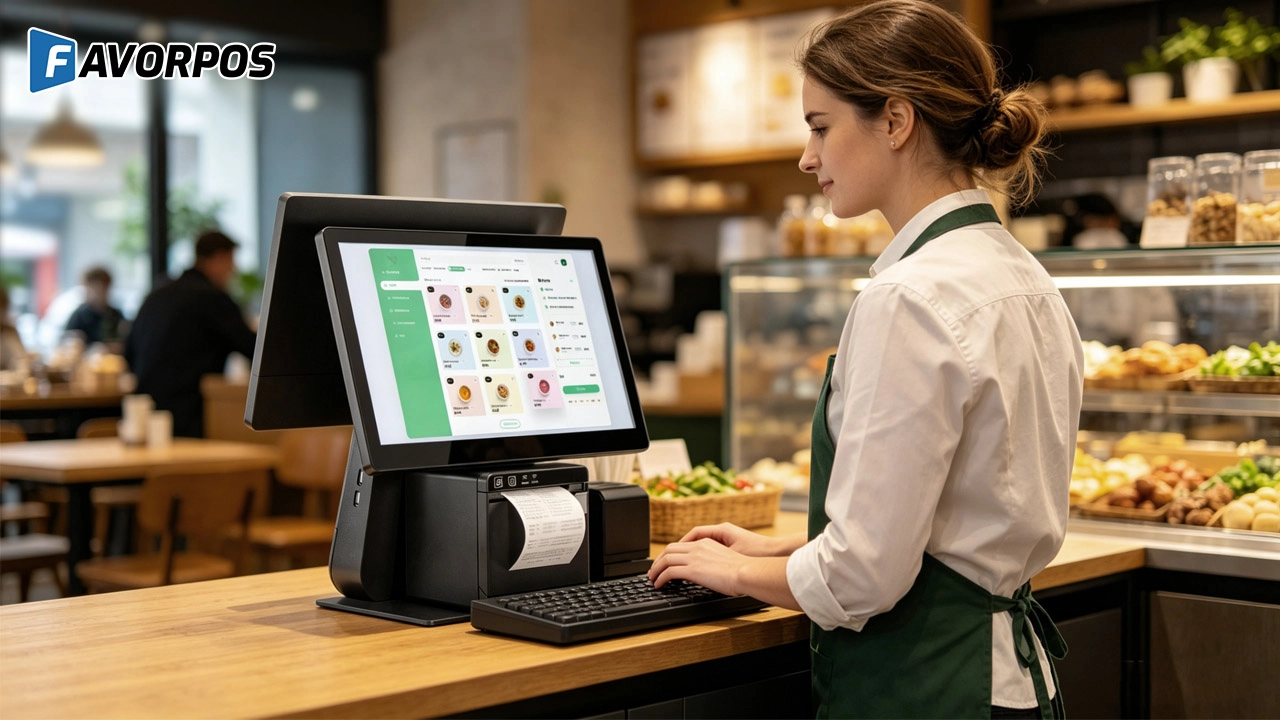
Smart Checkout, Simplified: Exploring the Power of a 15.6-Inch All-in-One POS Terminal
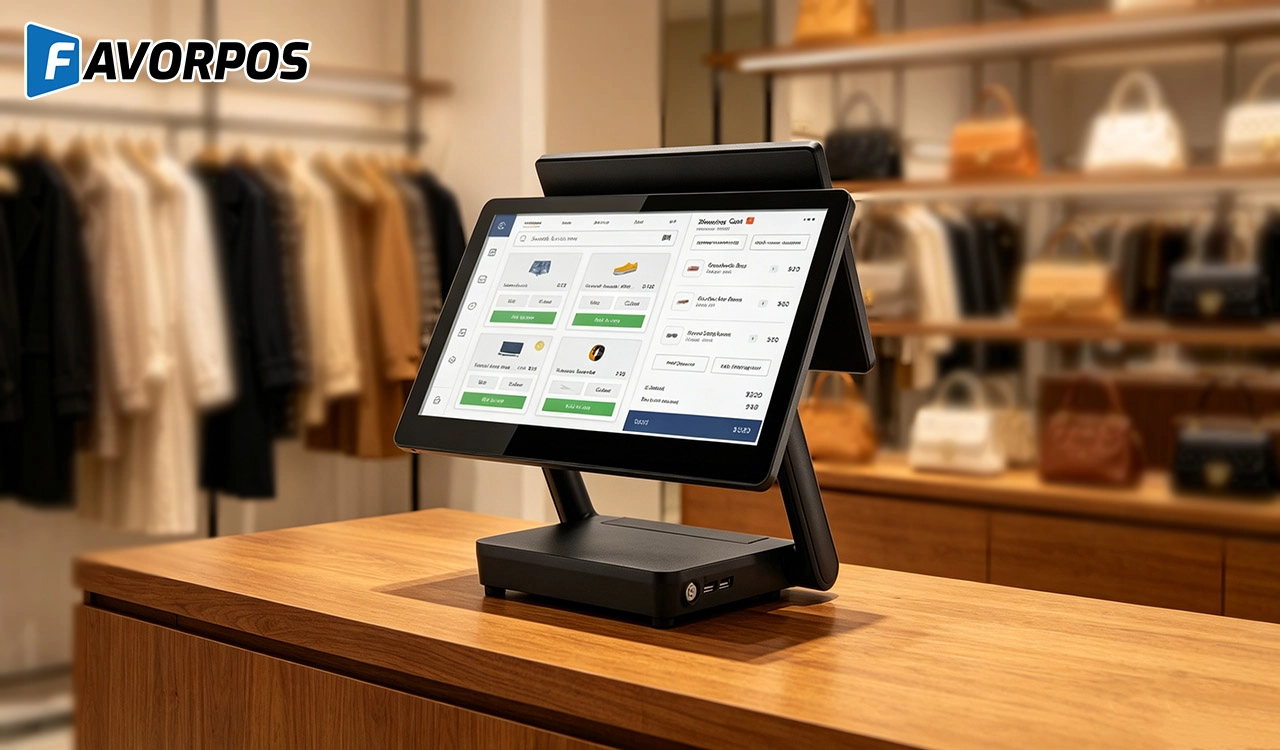
Why a 15.6” Touch POS Terminal Is Becoming the New Standard in High-Traffic Retail
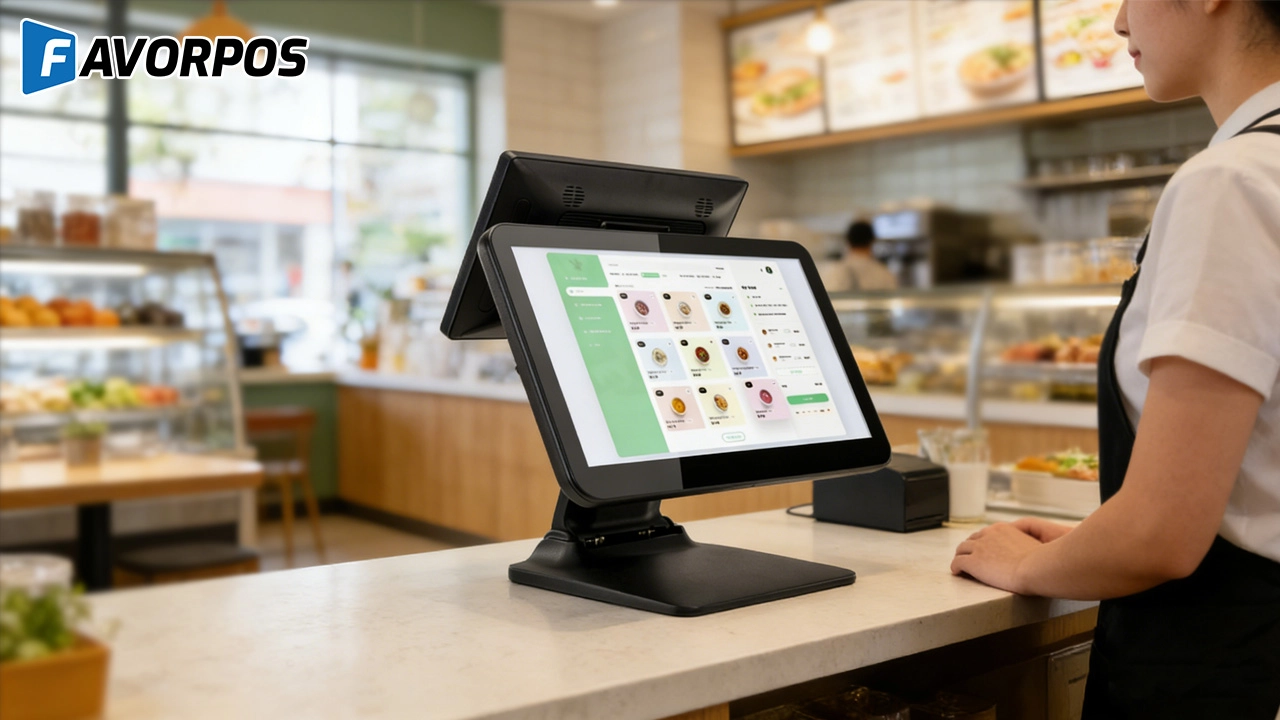
Beyond Checkout: How a 15.6-Inch Aluminum POS System Redefines Retail Efficiency
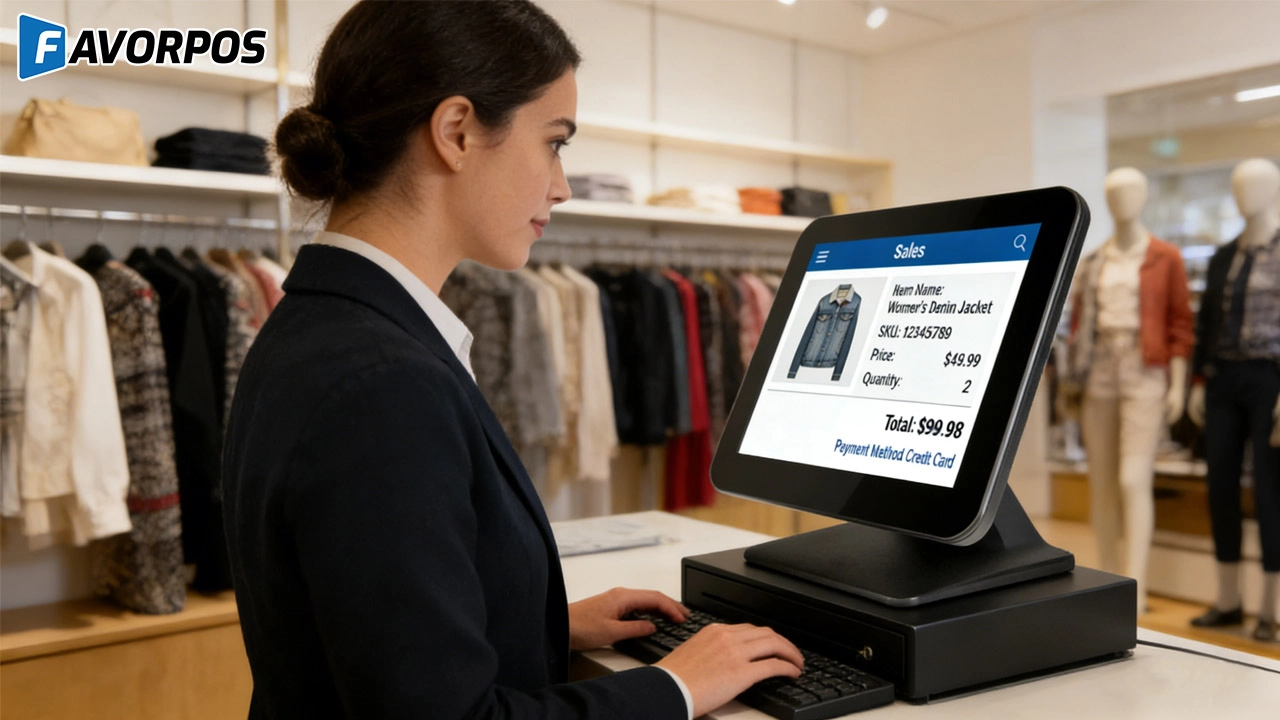
Understanding 15-Inch Aluminum POS Terminals in Modern Commercial Use
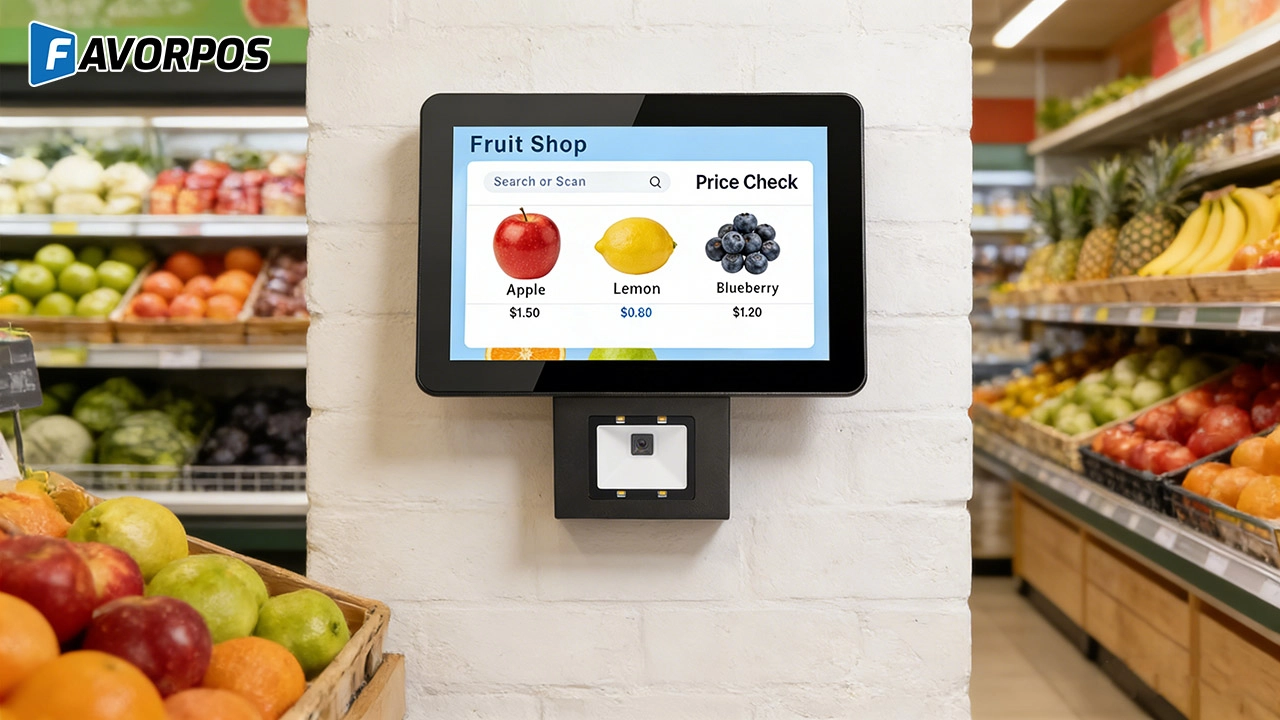
The Smart Way to Check Prices: How a 10.1-Inch Wall-Mounted Price Checker Transforms Retail Stores
For ODM
What are the main advantages of ODM service?
You can enjoy the following advantages by choosing our ODM service:
1. Innovative design: Our team provides cutting-edge design solutions to ensure that products meet the latest market trends.
2. Full process management: Full process management from design to production to reduce your operational complexity.
3. Customization: We provide personalized hardware customization services according to your needs.
4. Quality assurance: Strict quality control procedures ensure high standards for each POS machine.
5. Cost-effectiveness: Efficient production processes help reduce costs while maintaining high quality.
For Beauty and Wellness
What support is provided after the system is deployed?
We provide 24/7 technical support and regular hardware maintenance to ensure that the system continues to operate efficiently.
For company
How many days will I get the sample?
Generally, 3-5 days for production and 3-7 days for transportation, so you will get goods in 6-12 days.
For Restaurants & Cafes
Does your POS system support a variety of payment methods?
Yes, our POS system supports a variety of payment methods, including credit cards, debit cards, mobile payments (such as Apple Pay, Google Pay) and contactless payments (NFC). We ensure that the transaction process is safe and smooth to meet the various payment needs of customers.
For Entertainment & Events
Does the system support the management of multiple venues or locations?
Yes, our system supports multi-location management, allowing you to monitor and manage sales and inventory for all venues from a centralized dashboard.

11.6 inch Capacitive Touchscreen for POS Machine POS Monitor
FAVORPOS 11.6-inch capacitive touchscreen, specifically designed for POS machines to deliver a seamless and responsive user experience. This high-definition display offers vibrant visuals and crystal clear clarity, making it easy for staff to navigate through transactions efficiently. The capacitive technology ensures quick and accurate touch recognition, reducing wait times and enhancing customer satisfaction. Built to withstand the rigors of daily use, this touchscreen is perfect for retail and hospitality environments.
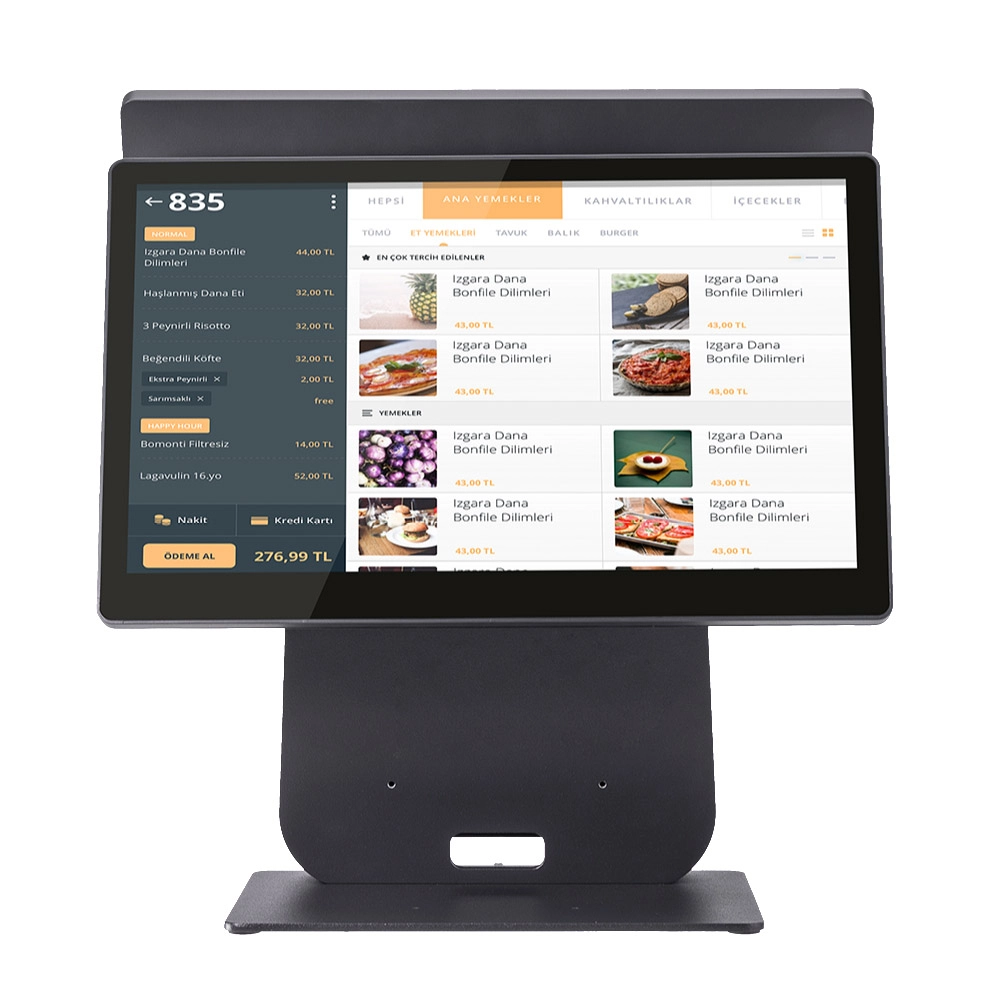
HD Dual Screen POS Machine Aluminum Hardware Android Windows Supplier
This dual-screen POS machine supports both Android and Windows systems, providing flexibility for various applications. The dual screens enhance customer interaction and streamline the checkout process, making transactions quicker and more engaging. Perfect for modern businesses looking to elevate their service and improve customer satisfaction, this POS machine is your ultimate partner in success!
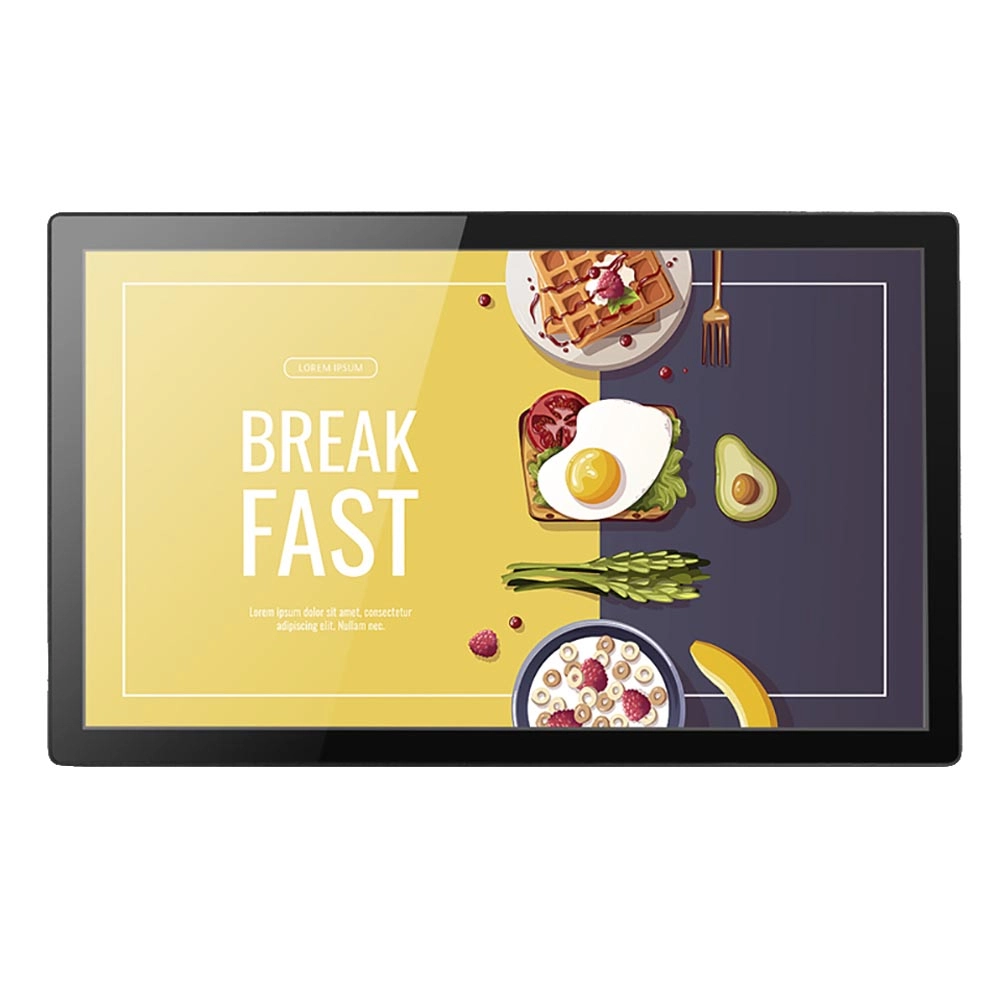
Wall Mount Cash Register POS 21.5 inch for Supermarket Touchscreen Windows Factory
Our sleek and modern wall-mounted POS system features a stunning 21.5-inch LED display, providing exceptional visibility and clarity for seamless customer interactions. The capacitive touchscreen ensures a highly responsive and intuitive user experience, perfect for fast-paced retail environments. With its space-saving wall-mounted design, this POS solution is ideal for optimizing floor space while maintaining a professional and contemporary appearance.
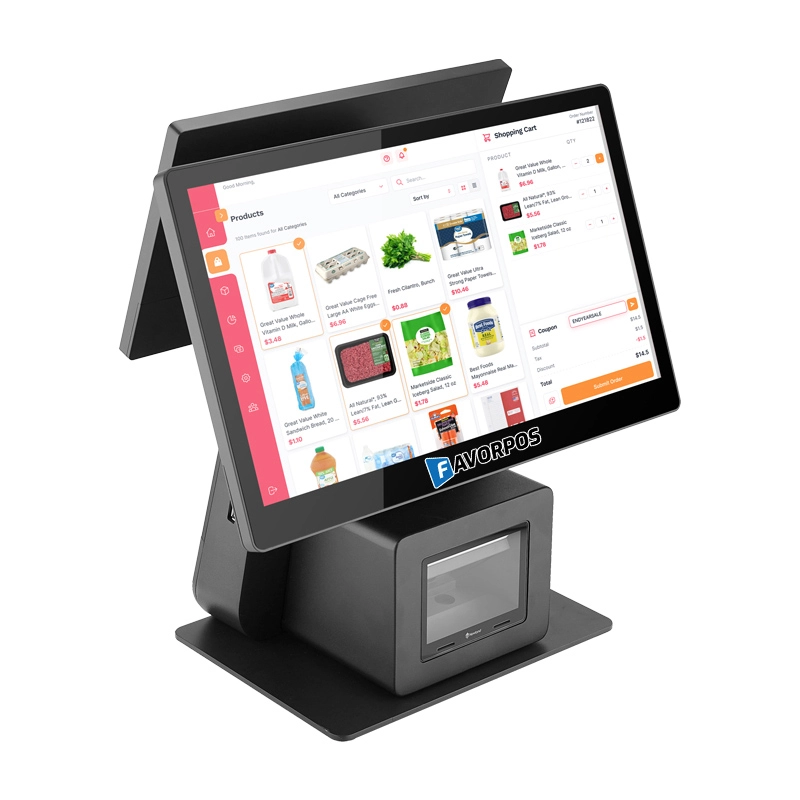
Dual Screen POS With Barcode Scanner Desktop POS Manufacturer POS Factory 15.6 11.6 Client Screen Optional
FAVORPOS: Your leading dual screen POS factory and manufacturer. Our desktop POS with barcode scanner offers 15.6/11.6 client screen options and OS flexibility. Get reliable, efficient dual screen POS with barcode scanner solutions directly from us.
Get in touch
Interested in becoming a POS system dealer? Contact us for more information and start the process of joining our dealer network.
We look forward to working with you to expand the market together.


Copyright © 2025 Favorpos All Rights Reserved.
