
How to choose a POS system for multi-store supermarket chains?
- 1. How can I guarantee near-real-time inventory sync across 50+ supermarket stores when WAN links are intermittent?
- 2. What hardware and scale integration is required to sell weighed produce, loose goods and barcode-bagged items reliably across supermarkets?
- 3. How should I design enterprise-grade payments across multi-store supermarkets—single gateway vs multiple acquirers, EMV/contactless, and tokenization?
- 4. How can I run complex promotions, loyalty and price rollback across stores without creating negative prices, stock distortion or audit nightmares?
- 5. What’s the safest way to operate POS offline (network outage) and reconcile without data loss or duplicate transactions?
- 6. How do I evaluate POS vendors for enterprise needs: SLAs, APIs for ERP integration, multi-tax support and data security (PCI-DSS/SOC2)?
- Conclusion: Advantages of a purpose-built supermarket POS for multi-store chains
POS Systems for Supermarkets: How to Choose for Multi-Store Chains
When buying a supermarket point-of-sale (POS) system for a single store or a chain, decision-makers must evaluate architecture, hardware compatibility (scales, scanners, printers), payments (EMV/contactless/tokenization), inventory and perishables control, offline resilience, promotions and loyalty, and vendor SLAs. Below are six specific, pain-point oriented questions supermarket operators frequently ask but rarely find fully practical answers to.
1. How can I guarantee near-real-time inventory sync across 50+ supermarket stores when WAN links are intermittent?
Problem: Stock discrepancies across stores and warehouses cause overstock, stockouts, and lost sales—especially when networks are slow or outages happen.
Solution (architecture + operational controls):
- Choose a hybrid cloud POS that supports local caching on the POS terminal and background replication to the central inventory service. Local caching (embedded database) lets tills read/write SKUs instantly while a resilient sync agent queues and transmits transactions when bandwidth is available.
- Use an authoritative central master for product, price and catalog data. All stores receive updates via a signed timestamped delta feed. If two stores update the same field, the central system applies defined merge rules (for example: central wins for price changes; store wins for physical count adjustments with audit trail).
- Implement idempotent transaction design and global unique identifiers (GUIDs) for sales, transfers and adjustments so retries do not create duplicates when connectivity is restored.
- Adopt asynchronous messaging (e.g., message queues with guaranteed delivery semantics) or near-real-time replication using HTTP-based APIs with resumable uploads, not periodic CSV drops. This reduces conflict windows and supports scaling to 50+ stores.
- Operational controls: enforce scheduled centralized stocktakes, automated low-stock alerts using safety stock buffers per location, and daily reconciliation jobs to surface discrepancies quickly.
Why it works: Local responsiveness preserves POS performance; robust sync and conflict rules preserve data integrity across unreliable networks.
2. What hardware and scale integration is required to sell weighed produce, loose goods and barcode-bagged items reliably across supermarkets?
Problem: Weighed items, PLUs, and variable-weight barcodes require tight POS-scale integration and support for GS1 standards. Errors cause pricing mistakes, regulatory issues, and customer disputes.
Checklist and configuration guidance:
- Select scales with retail-grade certifications and interface options common in supermarkets: RS-232 (serial), USB HID, or Ethernet. Ensure the POS supports the scale protocol out-of-box or via a certified integrator.
- Support GS1 variable-weight formats (e.g., GS1 DataBar and GS1-128 variants) and local PLU conventions so the POS can parse weight or price encoded in the barcode. Confirm the POS can accept weight as quantity and compute price per kilogram/pound accurately (avoid manual overrides for standard items).
- Configure weighted items with unit-of-measure metadata, scale offsets, tare handling, and allowed variance thresholds. Build cashier workflows that prompt for tare or unexpected readings.
- Integrate scale prints with label printers (thermal) in the produce/scale area for bag tags that show PLU, weight, unit price and expiry/pack date if required by regulation.
- Test edge cases: returns of weighted items, mixed-basket transactions (weighted + scanned packaged), price overrides, and promotions that combine fixed-price discounts with weighed goods.
Result: Proper hardware + GS1-aware POS prevents pricing errors, speeds checkout, and supports regulatory compliance for weighed merchandise.
3. How should I design enterprise-grade payments across multi-store supermarkets—single gateway vs multiple acquirers, EMV/contactless, and tokenization?
Problem: Payment setup affects reconciliation speed, per-transaction cost, PCI scope, and customer experience (EMV/contactless/QR). Multi-store chains must also support chargeback handling and settlement timing across regions.
Recommendations:
- Use EMV-certified terminals (PCI PTS) that support contactless (NFC) and mobile wallets to ensure global acceptance and faster contactless checkouts. Brands like Verifone, Pax and Ingenico are commonly supported by enterprise POS providers.
- Adopt point-to-point encryption (P2PE) or tokenization to reduce PCI scope. With tokenization, the POS transmits a token instead of primary account numbers, minimizing exposure and simplifying compliance.
- Centralized single gateway strategy: simplifies reconciliation and reporting, enabling consolidated settlements and consistent PCI/token management. This is beneficial for chains that want unified reporting and predictable fees.
- Pros: central reporting, unified chargeback handling, simplified integration.
- Cons: may have higher cross-border fees or single-point vendor risk.
- Multi-acquirer strategy: use local acquirers in different currencies/regions to reduce interchange fees and improve settlement speed where local banking networks differ.
- Operational controls: implement transaction routing logic (by store, currency, or card BIN ranges) and maintain a reconciliation engine that maps acquirer settlements to store-level Z-reports. Require EMV/PCI certification evidence from your POS vendor and acquirer.
- Test offline payment policies conservatively: offline EMV approvals exist but carry risk—limit to controlled thresholds and ensure reconciliation and chargeback mitigation policies are in place.
Outcome: A mix of tokenization, EMV terminals and a considered gateway strategy balances cost, compliance and reliability.
4. How can I run complex promotions, loyalty and price rollback across stores without creating negative prices, stock distortion or audit nightmares?
Problem: Promotions that span multiple locations and channels (in-store, click & collect) often create configuration errors, incorrectly stacked discounts, inventory drains, or unintended negative pricing.
Design principles:
- Centralized promotion engine: define promos centrally and publish to stores with controlled effective windows (start/end timestamps). Use a staging/testing environment to preview price impacts and run simulations on historical sales to estimate uplift and inventory impact.
- Rule hierarchy and stacking policy: implement explicit precedence rules (e.g., coupon > loyalty > manufacturer rebate) and caps (one discount per item or maximum discount value). Include guardrails to prevent negative or zero pricing unless explicitly allowed.
- Price rollback and audit trails: every price change should be logged with user, timestamp, and reason. Provide a quick rollback button in the central admin console but require manager approval for chain-wide rollbacks that affect back-dated sales.
- Inventory-aware promotions: tie promotions to available inventory or allocate promotional stock so you don’t oversell limited promo quantities. For perishables, create daily promo quantity caps per store to manage shrinkage and waste.
- Omnichannel consistency: ensure promotions apply consistently to in-store, online ordering, and click & collect channels, with reconciliation rules for partial fulfillments and returns.
Result: A robust promotion engine reduces revenue leakage, prevents price errors, and protects margins during campaigns.
5. What’s the safest way to operate POS offline (network outage) and reconcile without data loss or duplicate transactions?
Problem: Outages are inevitable. Poor offline design can lead to lost or duplicated sales, payment disputes, and inventory mismatches.
Best practices for offline resilience:
- Local transaction queuing: POS terminals must persist sales transactions locally in a transactional store (ACID-like if possible) until they are acknowledged by the central system. Use sequence numbers and GUIDs for each transaction.
- Idempotent reconciliation: when connectivity returns, the sync process must re-send only missing transactions and use idempotency keys so retries do not create duplicates. Reconciliation should provide item-level diffs and a clear audit log.
- Payments during offline mode: limit to cash where feasible. If accepting card offline, use offline-capable EMV terminals with strict offline approval limits and automatic reconciliation once the terminal reconnects to the acquirer. Understand the financial risks (increased chargeback/decline risk) before enabling offline card auth.
- Automated sanity checks: post-reconnect jobs should flag anomalies (e.g., total tender amounts that don’t match expected ranges), and require human review before posting to financial ledgers.
- Testing and runbooks: conduct regular simulated outages to test the offline queue, failover paths, and reconciliation workflows. Maintain clear incident response procedures and designate escalation contacts in your vendor SLA.
Benefit: Proper offline handling preserves sales continuity while maintaining data integrity and reducing post-outage cleanup.
6. How do I evaluate POS vendors for enterprise needs: SLAs, APIs for ERP integration, multi-tax support and data security (PCI-DSS/SOC2)?
Problem: Many vendors advertise features but fail on enterprise-grade requirements like audited security controls, robust APIs, and support for complex tax rules across jurisdictions.
Vendor evaluation checklist:
- SLA and support: insist on written SLAs (uptime target—e.g., 99.9% for cloud services), documented RTO/RPO for backups, response/repair times for on-site hardware, and penalty clauses for missed SLAs.
- Security and compliance: require evidence of PCI DSS compliance for any service handling card data, and look for independent attestations such as SOC 2 Type II or ISO 27001 when the vendor stores or processes PII. Confirm encryption standards (TLS 1.2+, AES-256 at rest) and key management practices.
- API maturity: evaluate RESTful APIs or event streams (webhooks, message queues) for catalog sync, sales exports, inventory updates and payments. Test API rate limits and error handling. Ask for API docs, SDKs, and a sandbox for integration testing with your ERP or WMS.
- Tax and localization: ensure the POS supports multi-tax rules (VAT/GST, city/county levies), tax-exempt items, and rounding rules for your regions. Check support for multi-currency pricing and localized receipts/languages.
- Reference checks: request case studies or references from supermarket chains of similar size and complexity. Ask about real incidents and how the vendor resolved them (outages, breach attempts, hardware failures).
- Extensibility and ownership: verify whether you have data export rights, how easy it is to leave (data extraction formats), and whether the vendor provides local backups and migrations paths to avoid vendor lock-in.
Outcome: A thorough vendor evaluation protects operations, ensures regulatory compliance and guarantees integration quality with ERP, payroll, Treasury and BI systems.
Conclusion: Advantages of a purpose-built supermarket POS for multi-store chains
Choosing the right supermarket POS—one designed for inventory accuracy, GS1/scale integration, EMV/tokenized payments, robust offline handling, centralized promotions and mature APIs—delivers faster checkout, lower shrinkage, predictable reconciliation, and simplified compliance. For multi-store chains, a hybrid cloud architecture with local caching and guaranteed sync minimizes downtime and preserves data integrity; strong vendor SLAs, PCI/ISO attestations, and API-driven integrations ensure scale and security as the business grows.
If you’d like a tailored proposal or an on-site assessment for your supermarket chain, contact us for a quote at www.favorpos.com or email sales2@wllpos.com.
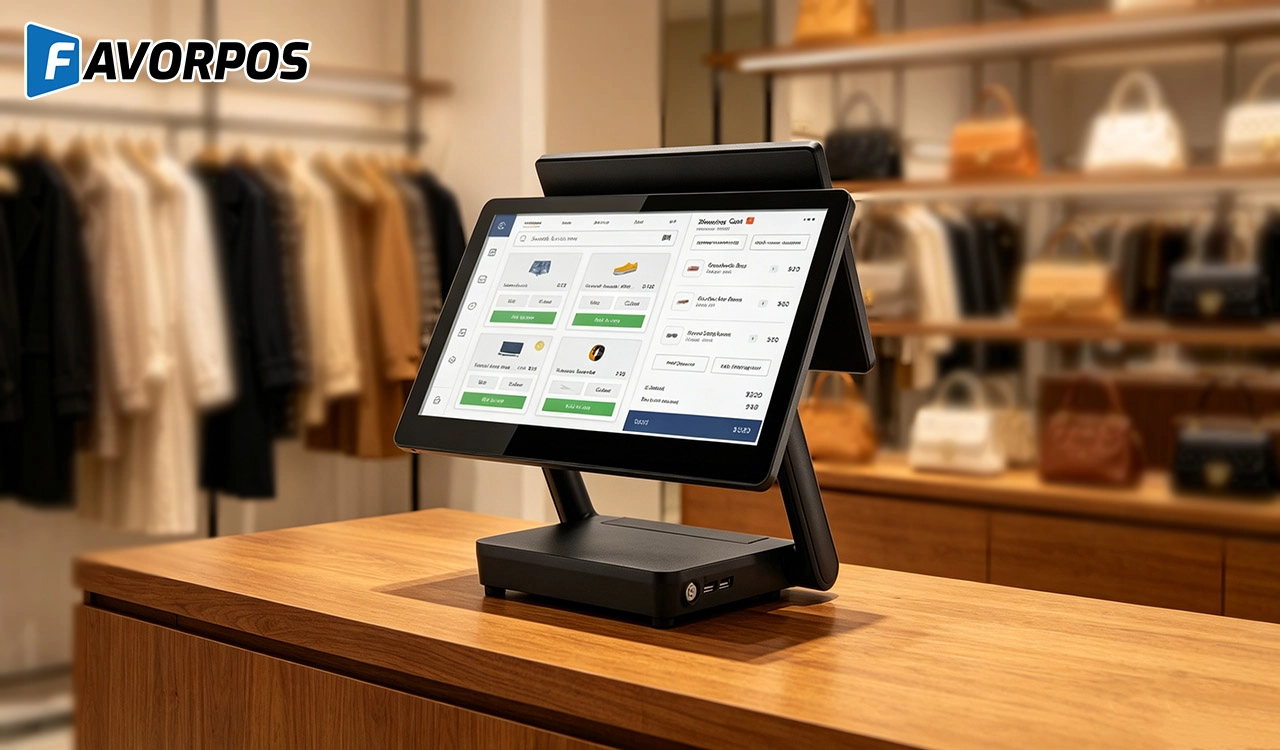
Why a 15.6” Touch POS Terminal Is Becoming the New Standard in High-Traffic Retail
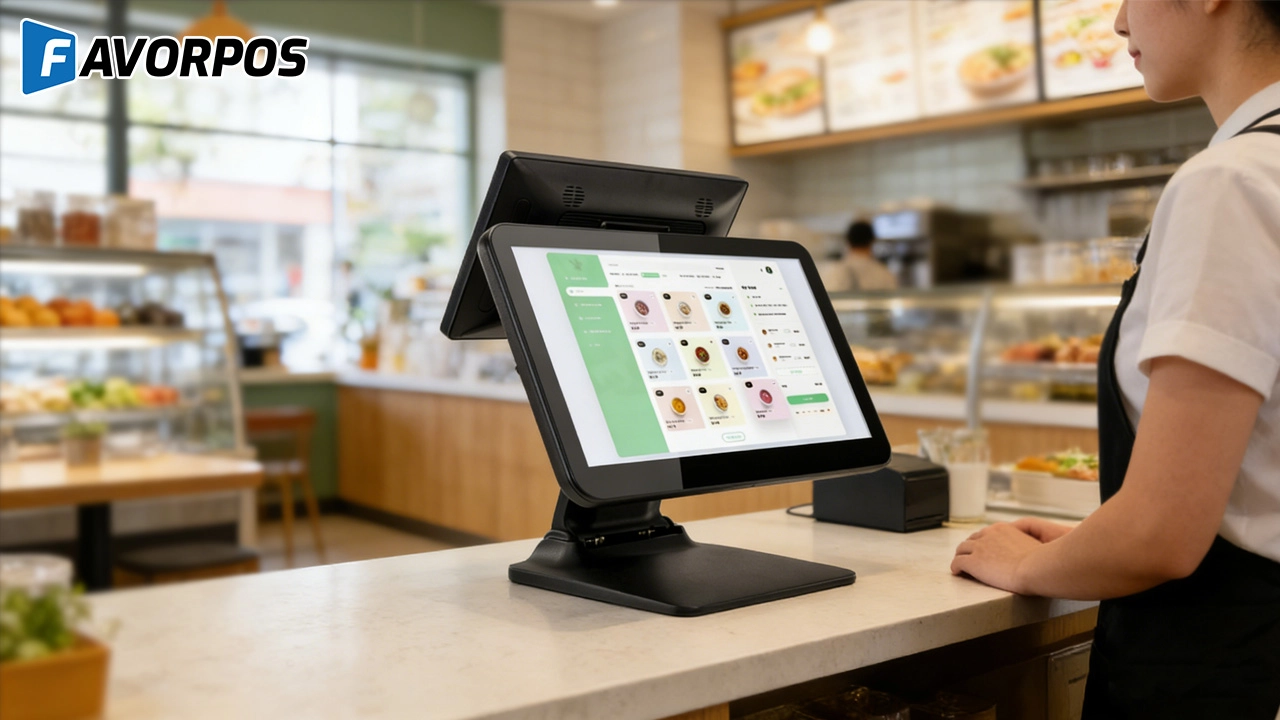
Beyond Checkout: How a 15.6-Inch Aluminum POS System Redefines Retail Efficiency
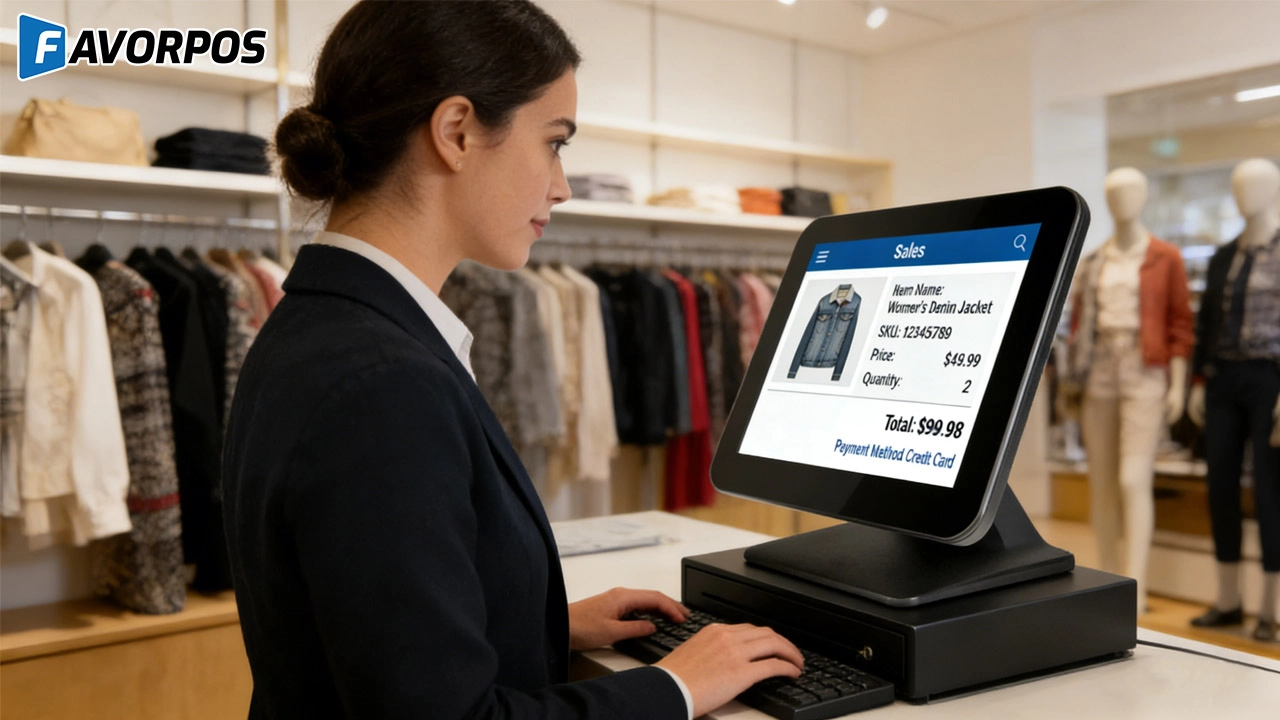
Understanding 15-Inch Aluminum POS Terminals in Modern Commercial Use
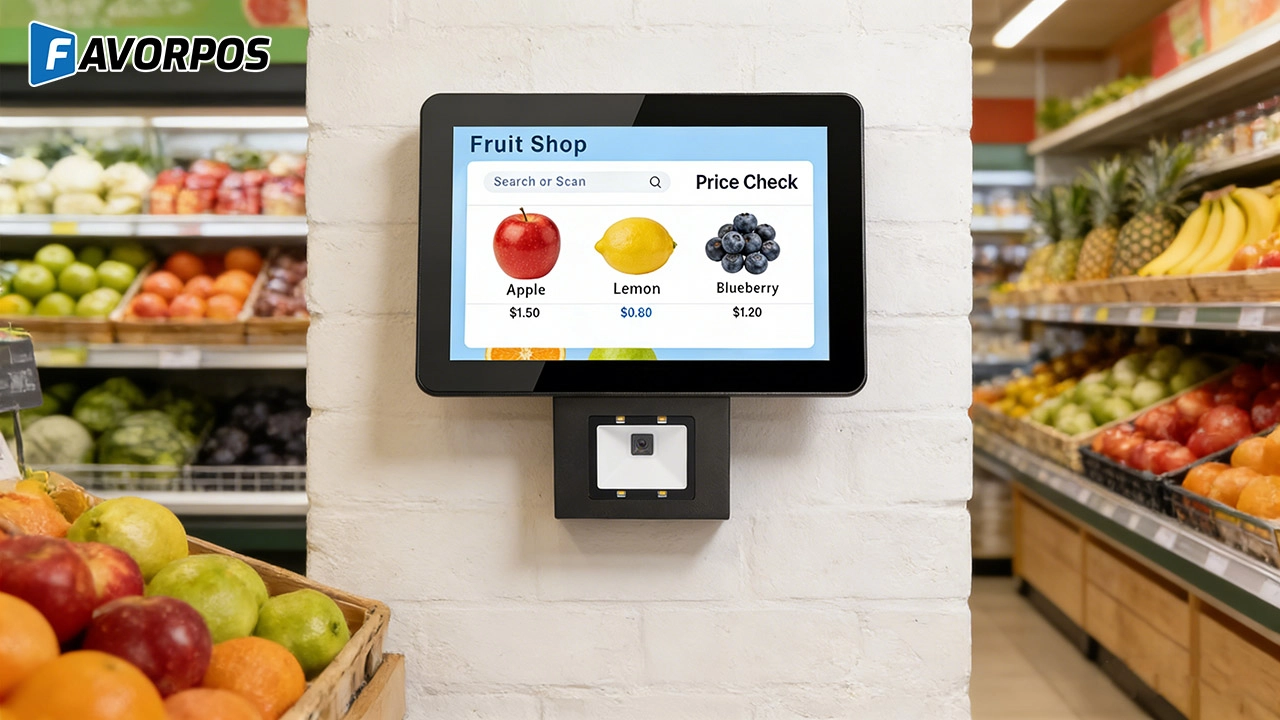
The Smart Way to Check Prices: How a 10.1-Inch Wall-Mounted Price Checker Transforms Retail Stores
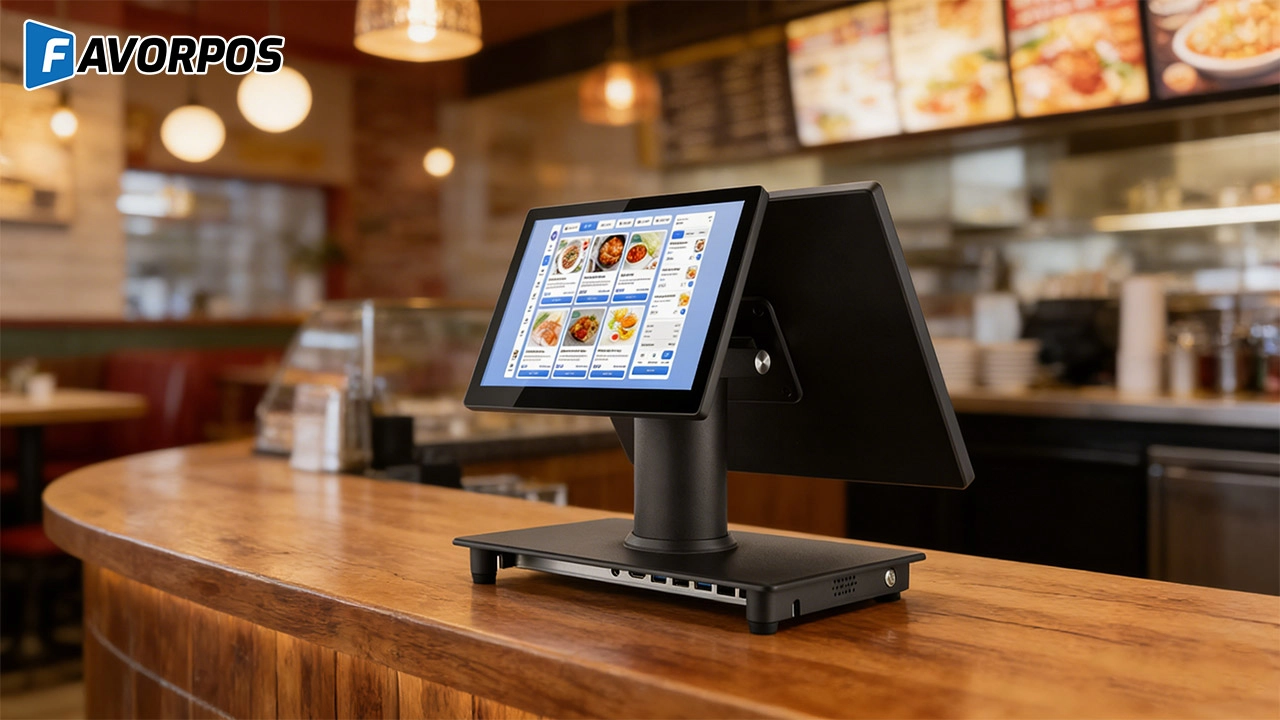
A Smarter Checkout Experience: The 15-Inch Dual-Screen POS Built for Modern Retail
For Beauty and Wellness
What payment methods does the system support?
Our system supports a variety of payment methods, including credit cards, digital wallets and contactless payments, providing customers with a convenient payment experience.
For Grocery and Supermarkets
Does your system support contactless payments?
Absolutely, our POS system supports multiple payment methods, including contactless payments from mobile wallets such as Apple Pay and Google Pay.
What types of reports can I generate?
You can generate detailed reports on sales, inventory, employee performance, and customer behavior, providing valuable insights to optimize store operations.
For Healthcare
What kind of support do you provide after installation?
We provide comprehensive after-sales support, including technical assistance, hardware updates, hardware maintenance and employee training.
For company
What kind of certifications do you have?
CE, ROHS, and FCC as standards.
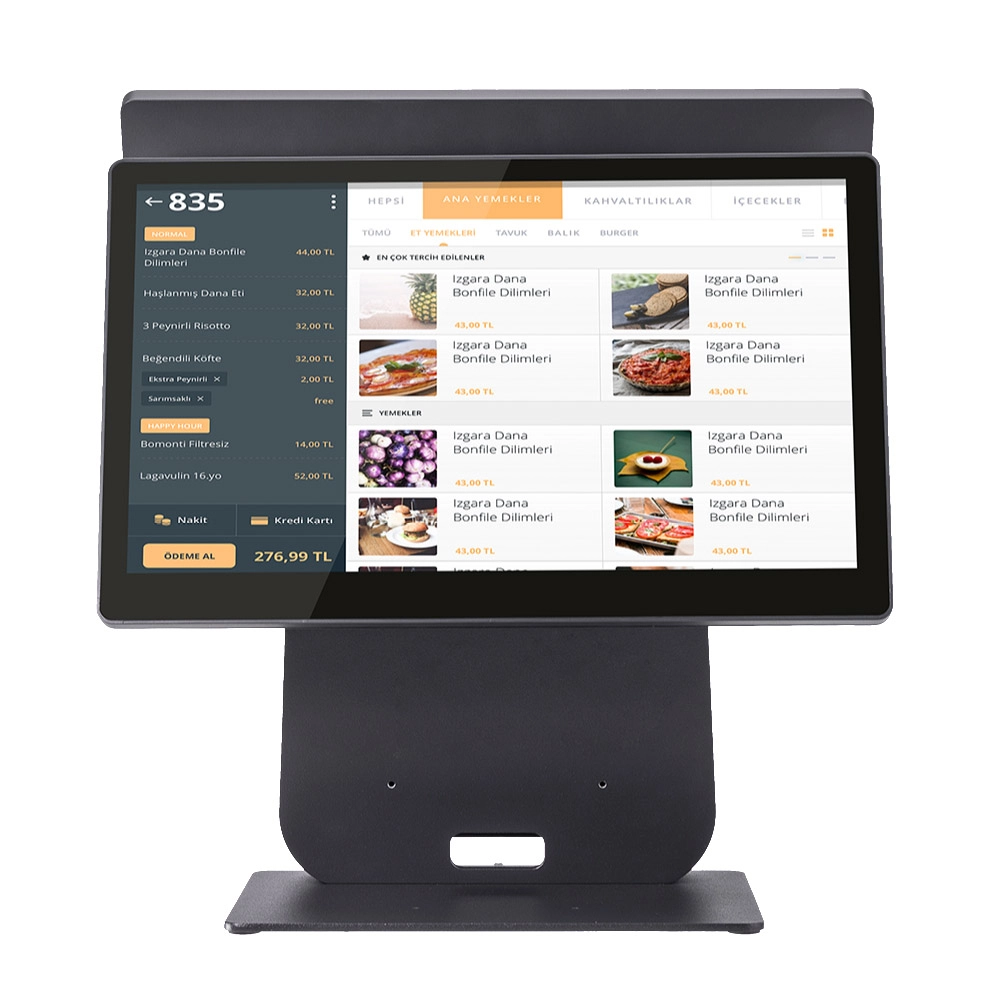
HD Dual Screen POS Machine Aluminum Hardware Android Windows Supplier
This dual-screen POS machine supports both Android and Windows systems, providing flexibility for various applications. The dual screens enhance customer interaction and streamline the checkout process, making transactions quicker and more engaging. Perfect for modern businesses looking to elevate their service and improve customer satisfaction, this POS machine is your ultimate partner in success!
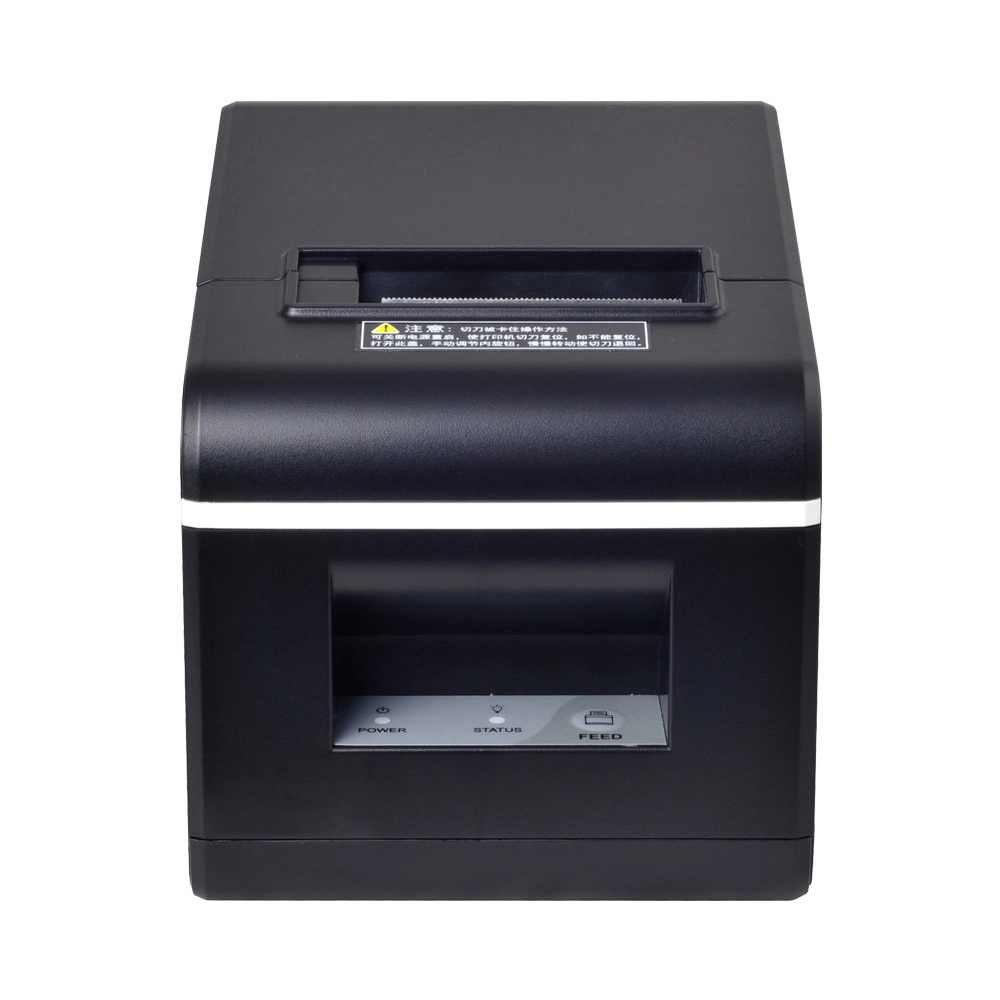
New Model Thermal Printer Bill Printer Manufacturer Portable Printer for Receipt
New Model Thermal Printer, a state-of-the-art bill printer designed for modern retail and hospitality environments. This printer combines advanced technology with user-friendly features, ensuring fast and efficient printing of high-quality receipts. Its sleek design complements any workspace, while multiple connectivity options make it easy to integrate into your existing POS systems.
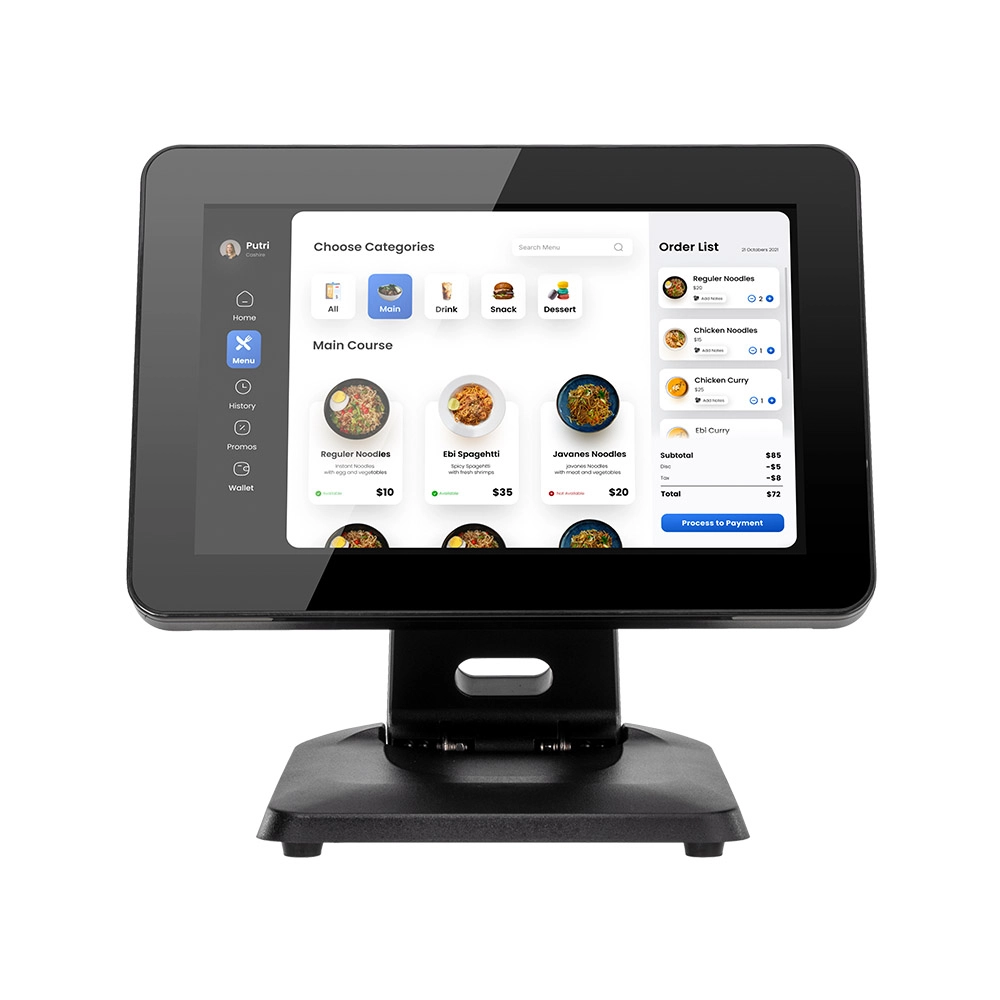
Desktop Touch Screen POS Systems 12.1'' Android Windows Manufacturer
Our Desktop Touch Screen POS Systems feature a 12.1'' display, supporting both Android and Windows platforms. Engineered for high performance. The intuitive touch interface simplifies transactions and enhances customer engagement. With a sleek design and robust construction, our POS systems are perfect for businesses looking to improve efficiency and elevate the shopping experience.
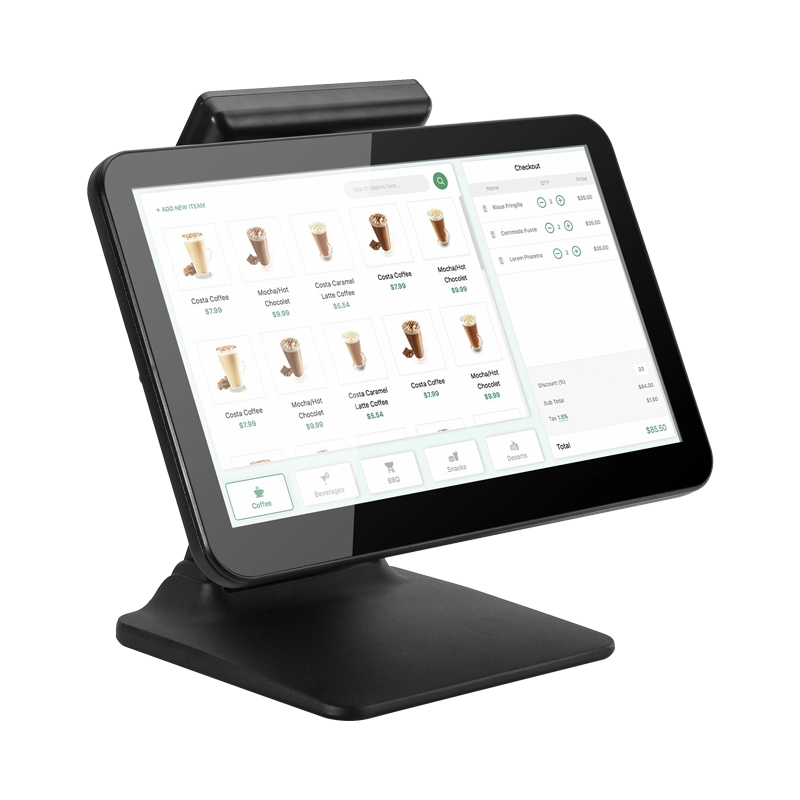
15.6 Inch Windows POS Terminal with VFD Display, Foldable Aluminum Stand Touch Screen POS for Retail & Hospitality
This 15.6-inch POS terminal is built to meet the needs of modern retail and hospitality environments. Powered by a stable Windows operating system, it ensures smooth performance for various point-of-sale applications. The device features a crisp, responsive touch screen and a built-in VFD customer display, allowing customers to view transaction details clearly. Its aluminum alloy stand offers a sleek, professional appearance while providing enhanced durability and stability for busy checkout counters. Ideal for retail stores, restaurants, and service-based businesses, this POS machine delivers a reliable and customer-friendly checkout experience.
Get in touch
Interested in becoming a POS system dealer? Contact us for more information and start the process of joining our dealer network.
We look forward to working with you to expand the market together.


Copyright © 2025 Favorpos All Rights Reserved.
