
How secure are POS systems for supermarkets against data breaches?
- 1) How secure are POS systems for supermarkets against data breaches, and what measurable controls should I expect?
- 2) Can a cloud-based POS reduce my supermarket's PCI scope — exactly what features/configurations must a vendor provide?
- 3) How should supermarket self-checkout kiosks be hardened to prevent tampering and card skimming?
- 4) What specific encryption standards and tokenization practices should POS terminals use to stop card-present skimming?
- 5) What are realistic maintenance and patching SLAs for supermarket POS to avoid breaches, and how do I enforce them across multiple stores?
- 6) When a POS vendor claims 'PCI compliant', what specific documents and test results should I request to validate their claim?
- Conclusion
As supermarket operators evaluate POS systems for supermarkets, they need concrete, auditable answers — not marketing claims. This article answers six long-tail, beginner-focused but technically specific questions about POS security, compliance and integrations so you can buy with confidence. Recommendations reference PCI DSS 4.0 (effective March 31, 2024), PCI P2PE program principles, and industry best practices (e.g., Verizon DBIR and NIST guidance).
1) How secure are POS systems for supermarkets against data breaches, and what measurable controls should I expect?
Short answer: modern supermarket POS systems can be secure if they implement layered controls — encryption in transit and at rest, validated P2PE or tokenization, network segmentation, endpoint hardening, logging/monitoring and formal change/patch processes. Expect measurable, auditable controls, not just claims.
What to expect (measurable checklist):
- Encryption in transit: TLS 1.2+ (prefer TLS 1.3) with strong ciphers between terminals, POS servers and cloud APIs.
- Card data protection: validated PCI P2PE solution or tokenization so PANs never appear in your environment; if PANs flow through merchant systems, expect a full PCI DSS scope.
- Access controls: role-based access control (RBAC), unique user IDs, and multi-factor authentication (MFA) for all administrative access.
- Endpoint security: signed firmware on terminals, application allowlisting/whitelisting on POS endpoints, disk encryption (AES-256) for local data stores.
- Network controls: separate VLANs for POS, payment terminals, back-office and guest Wi‑Fi; firewalls with strict rules and deny-by-default policies.
- Logging and monitoring: centralized SIEM, with 12 months log retention and 3 months readily available for investigation (aligns with PCI expectations).
- Patch management: SLA-based patching (see Q5 for specifics), and verified vendor-signed updates; maintain an inventory of device software/firmware.
- Incident response: documented IR plan, vendor SLA to notify merchant within 24 hours of suspected compromise, forensic readiness.
Why breaches still happen: industry reports (e.g., Verizon DBIR) consistently show stolen credentials, unpatched systems and insecure integrations as leading vectors. So the best measure of security is not marketing language but evidence: Attestation of Compliance (AOC), penetration test reports, ASV (external scan) results and SOC 2 Type II for cloud vendors.
2) Can a cloud-based POS reduce my supermarket's PCI scope — exactly what features/configurations must a vendor provide?
Yes — but only if implemented with the right technical controls. A cloud POS can materially reduce a supermarket's PCI scope when the payment acceptance flow ensures PANs and PINs never touch merchant-owned servers or networks. To achieve that, request these concrete features and contractual assurances from the vendor:
- Validated P2PE solution: the vendor or their payments partner must use a PCI-validated Point-to-Point Encryption solution. Ask for the P2PE solution ID and corresponding Attestation of Validation (AoV).
- Direct-to-acquirer or gateway flow: card data must go directly from the terminal to the payment processor or gateway (not via your POS application servers) using encrypted channels.
- Tokenization: after authorization, a token (not PAN) is stored in the cloud POS for receipts, returns and loyalty linkage. Ask whether the token mapping vault is isolated in a PCI-scoped environment.
- Service isolation: cloud POS components that store/handle merchant data should be isolated from the components that handle payments. A documented data flow diagram (CDE mapping) is essential.
- Attestation documents: AOC for P2PE and, where applicable, a SOC 2 Type II report covering security controls. Also request proof of quarterly ASV scans and recent pentest summaries.
- Integration contracts: require the vendor to limit third-party integrations from handling PANs and to notify you if any partner introduces PAN access.
If these conditions hold, your PCI SAQ (Self-Assessment Questionnaire) obligation can be reduced — merchants using validated P2PE often qualify for SAQ P2PE or SAQ A (depending on other factors). Always confirm SAQ type with your acquiring bank or QSA; the vendor should be able to show how their architecture maps to merchant scope reduction.
3) How should supermarket self-checkout kiosks be hardened to prevent tampering and card skimming?
Self-checkout changes the threat model: kiosks are unattended, public-facing and physically accessible. Hardening must cover physical security, device integrity, software lockdown, and transaction monitoring.
Concrete hardening controls:
- Secure card readers: use tamper-evident, PCI-approved card readers with encrypted PIN entry (PED). Prefer devices that are part of a validated P2PE solution.
- Physical tamper protection: tamper switches and seals, lockable enclosures, and regular physical inspections. Maintain a tamper-evidence log for each kiosk.
- OS and application lockdown: kiosk OS in kiosk mode, disable USB mass storage and local admin accounts, enforce full-disk encryption, enable secure boot and signed firmware updates only.
- Peripheral allowlists: allow only approved printers, scales and barcode scanners at the OS/driver level to prevent rogue peripherals transmitting data.
- Camera monitoring and analytics: integrate point-of-sale cameras with tamper detection and anomaly analytics to flag abnormal interactions or device tampering events.
- Transaction anomaly detection: real-time scoring for unusual patterns (rapid card insert/remove, repeated failed PINs, mismatched weight vs. barcode on weighed items) and automatic hold or staff-assisted mode for flagged transactions.
- Regular firmware validation: inventory and cryptographic verification of terminal firmware; apply security patches according to SLAs and maintain signed update catalogs.
Operational best practice: combine technical hardening with store-level controls — periodic physical checks, staff training to inspect kiosks, and a rapid-response process to remove suspect kiosks from service.
4) What specific encryption standards and tokenization practices should POS terminals use to stop card-present skimming?
Use layered cryptography and validated tooling. Key standards and practices:
- EMV chip processing: EMV reduces counterfeit card fraud. Ensure terminals are EMV-certified and support contactless EMV (NFC) where applicable.
- P2PE: validated PCI P2PE encrypts PAN/PIN at the PIN entry device and only decrypts inside a secure decryption environment controlled by the payment processor. If a vendor claims P2PE, request the solution ID and validation documentation.
- TLS for network transit: use TLS 1.2+ (prefer TLS 1.3) with strong cipher suites (AEAD-based ciphers). Disable older protocols (SSL, TLS 1.0/1.1) across POS-cloud links.
- Tokenization: use a vault-based tokenization where the token cannot be reversed without access to the token vault. Confirm whether tokens are reversible by the merchant or only by the processor.
- Key management: insist on strong key management — hardware security module (HSM) use for key storage, separation of duties for key custodianship, and documented key rotation policies. For cloud or multi-tenant solutions, ask whether the vendor supports BYOK (bring your own key) or customer-managed keys.
- Data-at-rest encryption: AES-256 for any locally stored sensitive data (logs, caches). Ensure that logs and backups which may contain PANs are also encrypted with proper key separation.
Proof to request: P2PE validation documents, HSM vendor/implementation details, tokenization architecture diagram, and evidence that terminals are EMV-certified and firmware updates are cryptographically signed.
5) What are realistic maintenance and patching SLAs for supermarket POS to avoid breaches, and how do I enforce them across multiple stores?
Timely patching is critical. Recommended SLA framework (adopt and adapt to risk profile):
- Critical (actively exploited or CVSS >= 9): patch/mitigate within 72 hours of vendor test/availability.
- High (CVSS 7–8.9): patch within 7 calendar days.
- Medium (CVSS 4–6.9): patch within 30 calendar days.
- Low: schedule via regular release cycles, documented and approved changes.
Operational controls to enforce SLAs across chains:
- Centralized patch orchestration: deploy a central management system (for on-prem POS) or require cloud vendor-managed patching with transparent dashboards and audit logs.
- Change windows and rollback plans: scheduled updates during low-traffic windows with automated rollback on failure and automated health checks post-deploy.
- Compliance monitoring: use endpoint management and vulnerability scanning with automated compliance reports; require vendors to provide quarterly ASV scans and monthly patch status reports.
- Contractual SLAs and penalties: embed patching timelines, breach notification times (e.g., within 24 hours), and remediation commitments into vendor contracts.
- Staged rollouts and canary deployments: patch a subset of stores first and monitor telemetry before full rollout to reduce network-wide outages.
Enforcement tip: tie a portion of vendor payments to demonstrated security KPIs (time-to-patch, number of critical vulnerabilities outstanding) and require real-time dashboards or API access to patch/compliance status.
6) When a POS vendor claims 'PCI compliant', what specific documents and test results should I request to validate their claim?
Don't accept 'PCI compliant' at face value. Request these specific artifacts and verify them:
- Attestation of Compliance (AOC): shows which PCI DSS version the vendor was assessed against and the SAQ or ROC basis. Confirm the date and scope (which components were included).
- Report on Compliance (ROC): for large vendors, request the ROC or a redacted executive summary prepared by a Qualified Security Assessor (QSA).
- PCI P2PE validation or listing: if vendor claims P2PE, request the P2PE solution ID and validation evidence from the PCI SSC list.
- Quarterly ASV scan reports: external vulnerability scan reports from an Approved Scanning Vendor within the last 90 days, with remediation notes for any failed tests.
- Penetration test summary: recent pen test summary (with redactions if needed) showing scope, findings and remediation status, ideally within the last 12 months.
- SOC 2 Type II report: for cloud-hosted POS back-end services, request the latest SOC 2 Type II report covering security and availability controls.
- Data flow diagram (CDE mapping): an up-to-date cardholder data environment map showing how PANs flow (or do not flow) through the vendor environment.
- Incident response and breach notification policy: contractually require notification timelines (e.g., merchant notified within 24 hours) and forensic cooperation clauses.
Validation steps: verify AOC dates and QSA signatures, confirm ASV report freshness, check PCI SSC listing for P2PE solutions, and consider engaging your own QSA for a scope validation if you handle significant transaction volume or have complex integrations.
Final practical checklist to bring to vendor demos: P2PE validation ID, AOC, ASV scan report (<=90 days), recent pen test summary, SOC 2 Type II (if cloud), EMV and terminal certifications, tokenization architecture, and a data flow diagram. If the vendor cannot produce these, treat the claim of 'PCI compliant' as unsubstantiated.
Conclusion
Choosing POS systems for supermarkets is a balance of operations, security and compliance. The advantages of applying the controls above include a reduced PCI scope when using validated P2PE and tokenization, fewer incident response costs, lower fraud loss via EMV and secure PIN entry, better uptime from disciplined patch/maintenance routines, and faster forensic response that limits reputational damage. Prioritize verifiable evidence — AOC, ASV and pen test results — and contractually required SLAs for patching and breach notification.
For a tailored POS security assessment and a quote on secure supermarket POS deployments, contact us at www.favorpos.com or email sales2@wllpos.com.
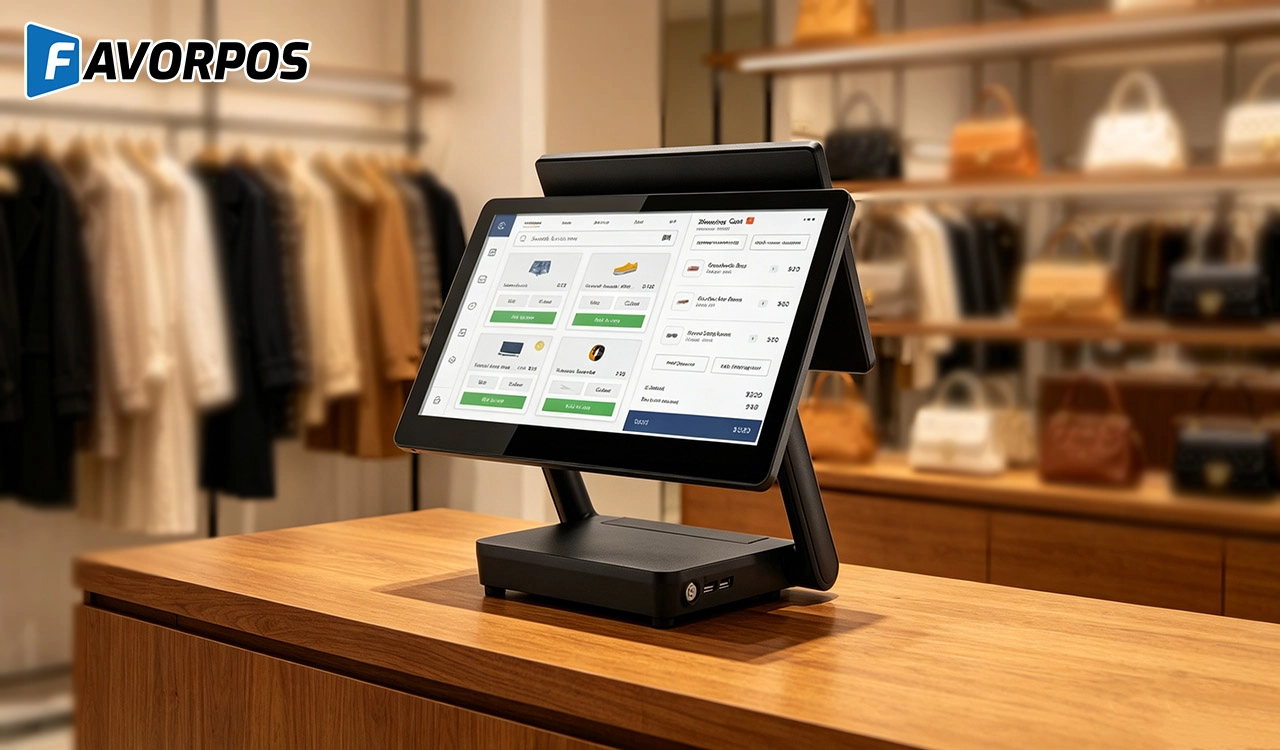
Why a 15.6” Touch POS Terminal Is Becoming the New Standard in High-Traffic Retail
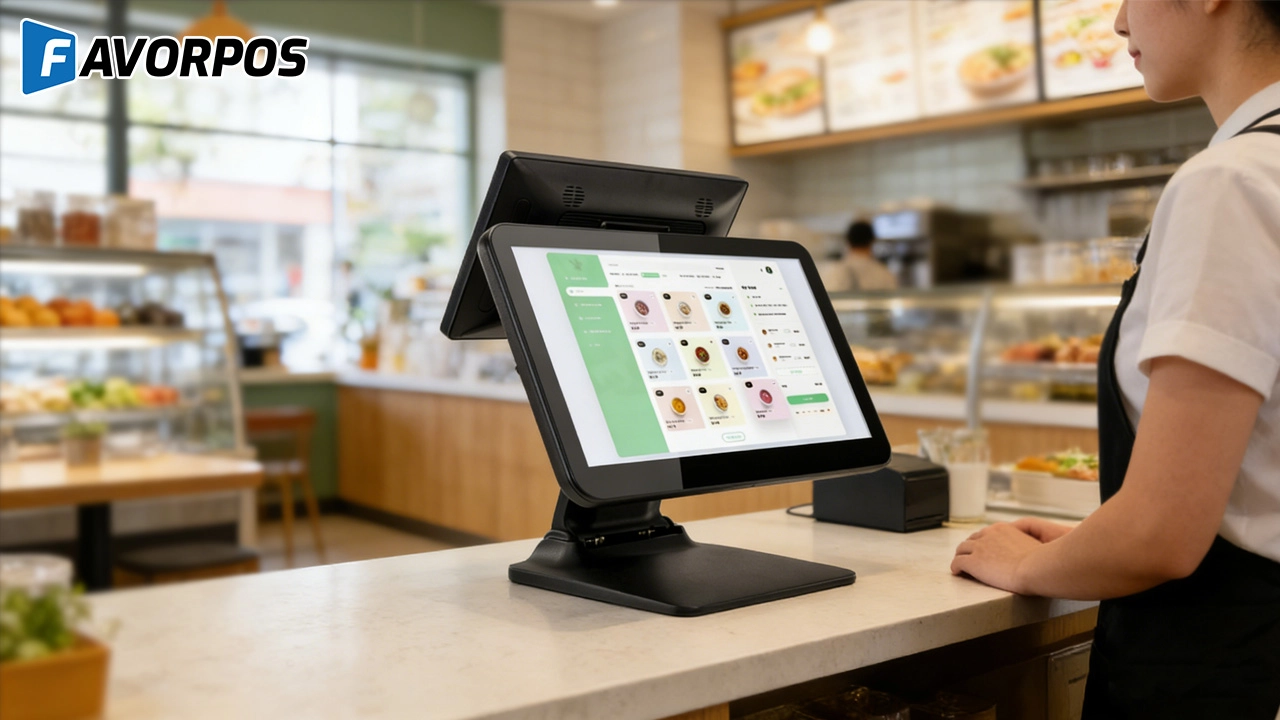
Beyond Checkout: How a 15.6-Inch Aluminum POS System Redefines Retail Efficiency
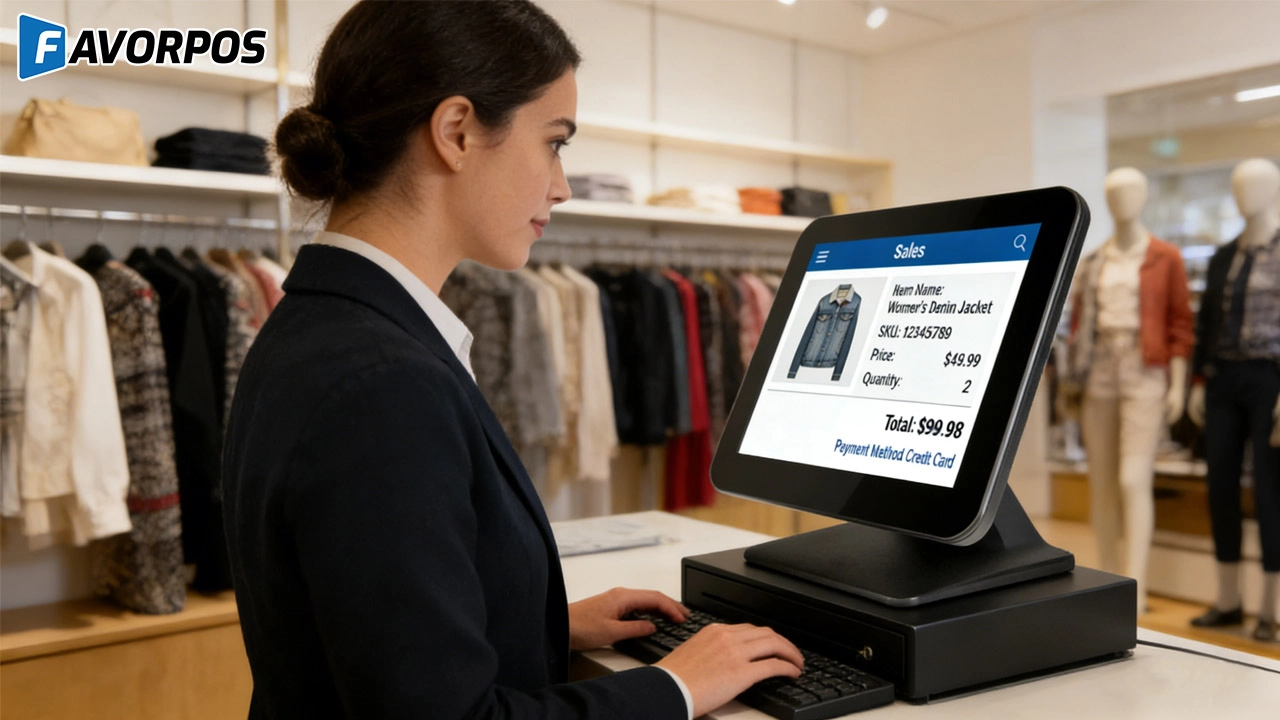
Understanding 15-Inch Aluminum POS Terminals in Modern Commercial Use
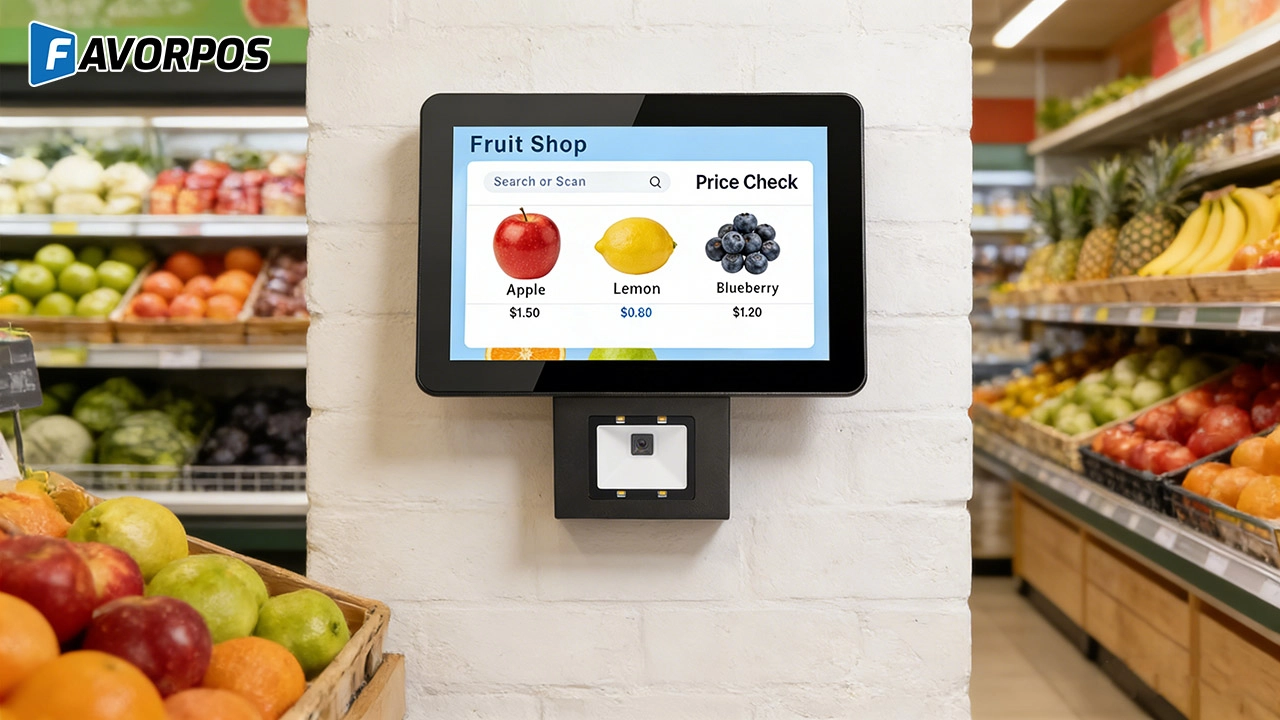
The Smart Way to Check Prices: How a 10.1-Inch Wall-Mounted Price Checker Transforms Retail Stores
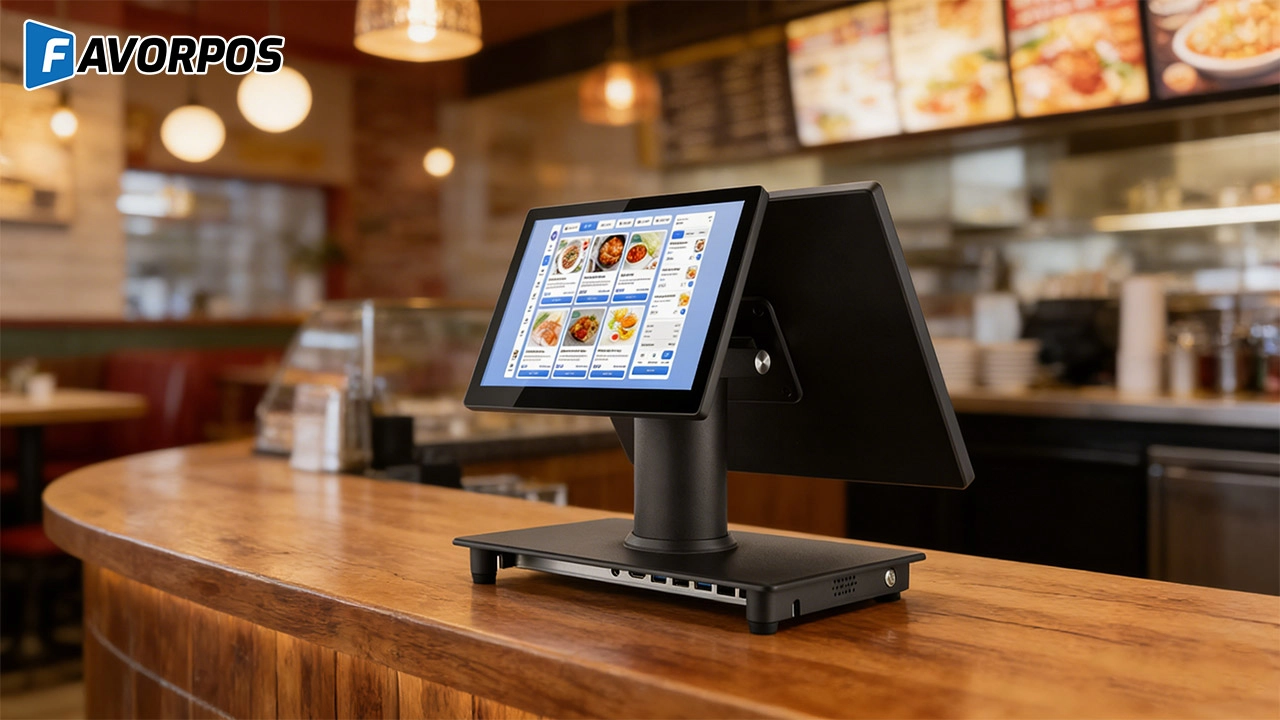
A Smarter Checkout Experience: The 15-Inch Dual-Screen POS Built for Modern Retail
For Grocery and Supermarkets
Can your POS system handle the high volume of transactions in a supermarket?
Yes, our POS system is designed for high-volume environments like supermarkets, ensuring transactions are processed quickly and efficiently even during peak hours.
Does your system support contactless payments?
Absolutely, our POS system supports multiple payment methods, including contactless payments from mobile wallets such as Apple Pay and Google Pay.
How secure is your POS system?
Our POS system is PCI-DSS compliant and uses advanced encryption technology to protect the security of all transactions and customer data.
For Entertainment & Events
How do you ensure data security and prevent fraud?
Our systems comply with industry standards for data security and payment protection and are equipped with advanced fraud prevention features to prevent fraudulent activities and ensure transaction security.
For OEM
Do you provide technical support and training services?
Yes, we provide comprehensive online technical support and training services to help your team become familiar with the operation and maintenance of POS machines.
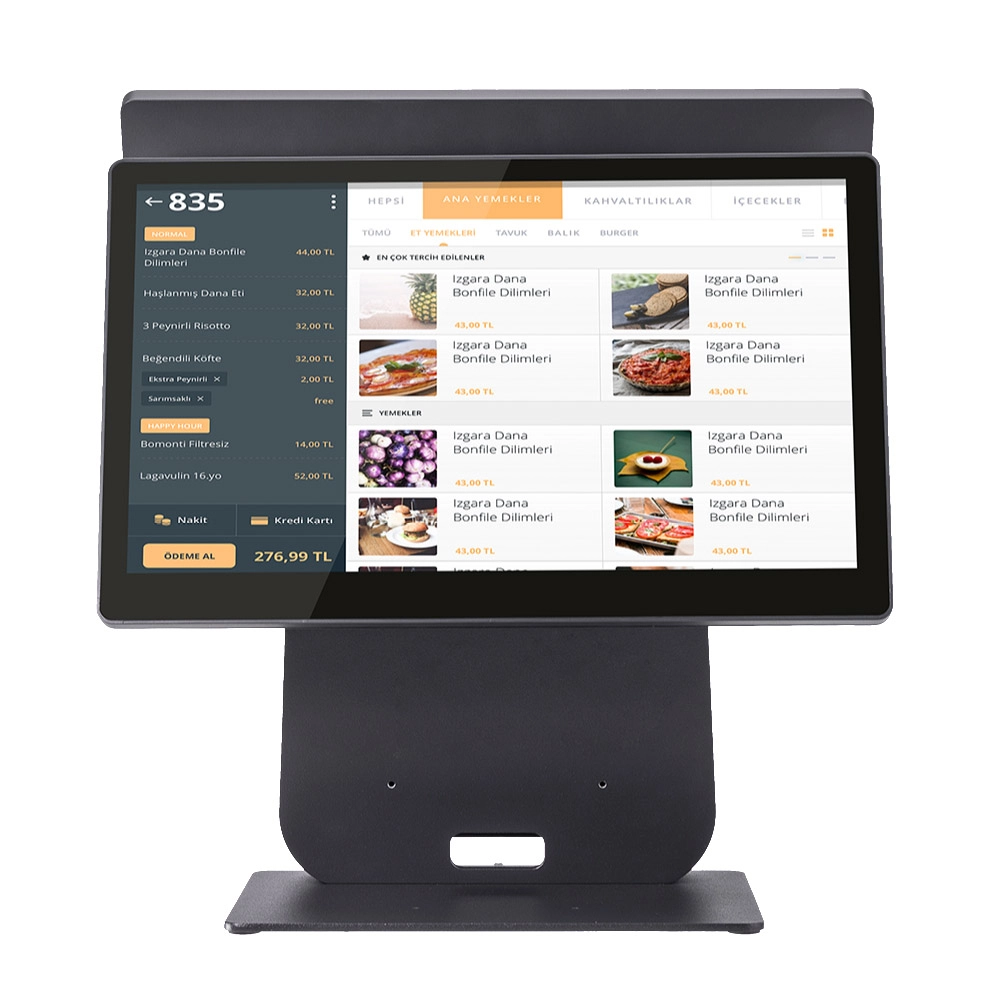
HD Dual Screen POS Machine Aluminum Hardware Android Windows Supplier
This dual-screen POS machine supports both Android and Windows systems, providing flexibility for various applications. The dual screens enhance customer interaction and streamline the checkout process, making transactions quicker and more engaging. Perfect for modern businesses looking to elevate their service and improve customer satisfaction, this POS machine is your ultimate partner in success!
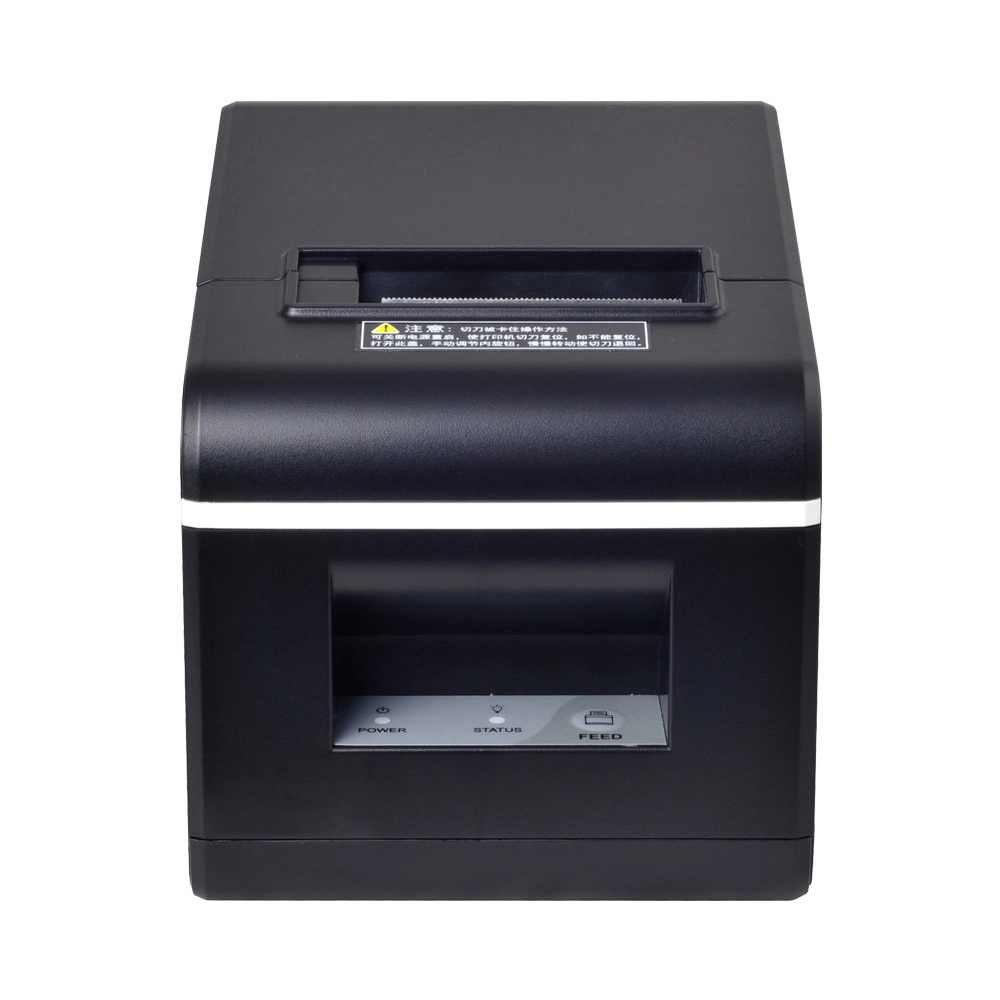
New Model Thermal Printer Bill Printer Manufacturer Portable Printer for Receipt
New Model Thermal Printer, a state-of-the-art bill printer designed for modern retail and hospitality environments. This printer combines advanced technology with user-friendly features, ensuring fast and efficient printing of high-quality receipts. Its sleek design complements any workspace, while multiple connectivity options make it easy to integrate into your existing POS systems.
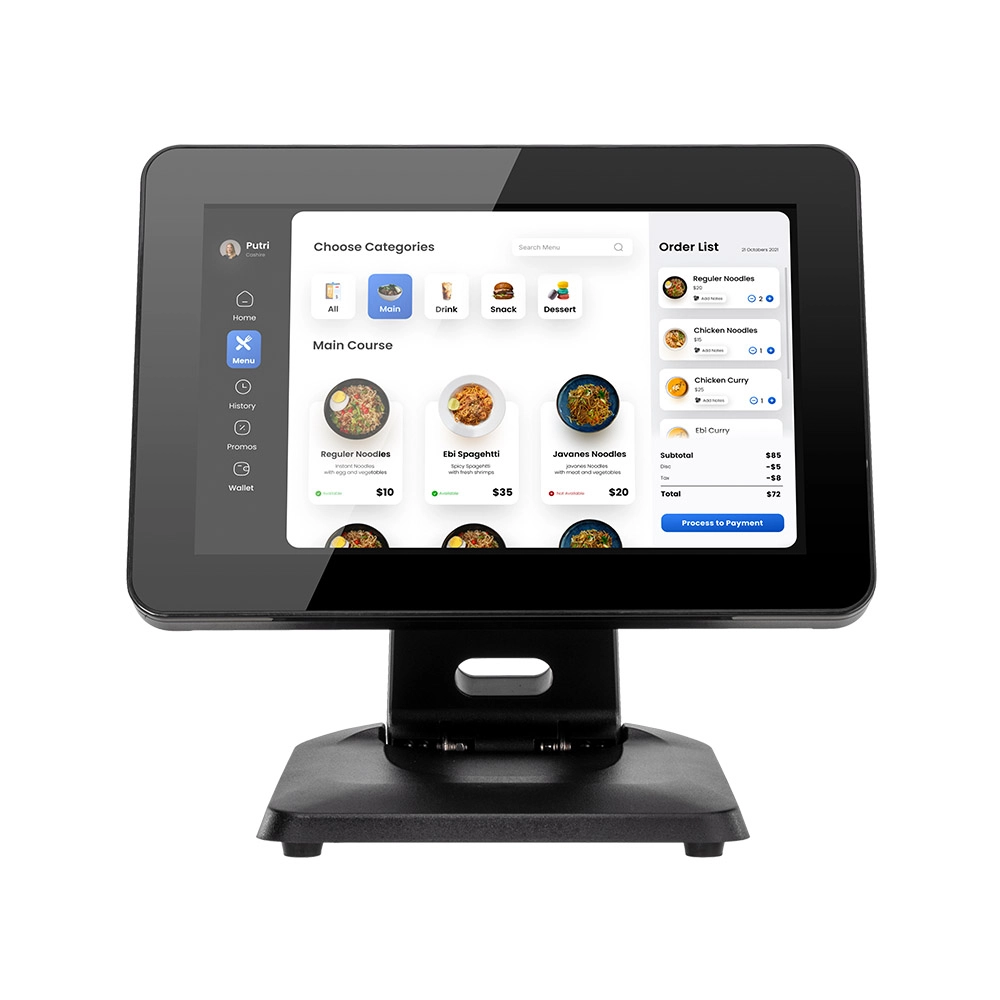
Desktop Touch Screen POS Systems 12.1'' Android Windows Manufacturer
Our Desktop Touch Screen POS Systems feature a 12.1'' display, supporting both Android and Windows platforms. Engineered for high performance. The intuitive touch interface simplifies transactions and enhances customer engagement. With a sleek design and robust construction, our POS systems are perfect for businesses looking to improve efficiency and elevate the shopping experience.
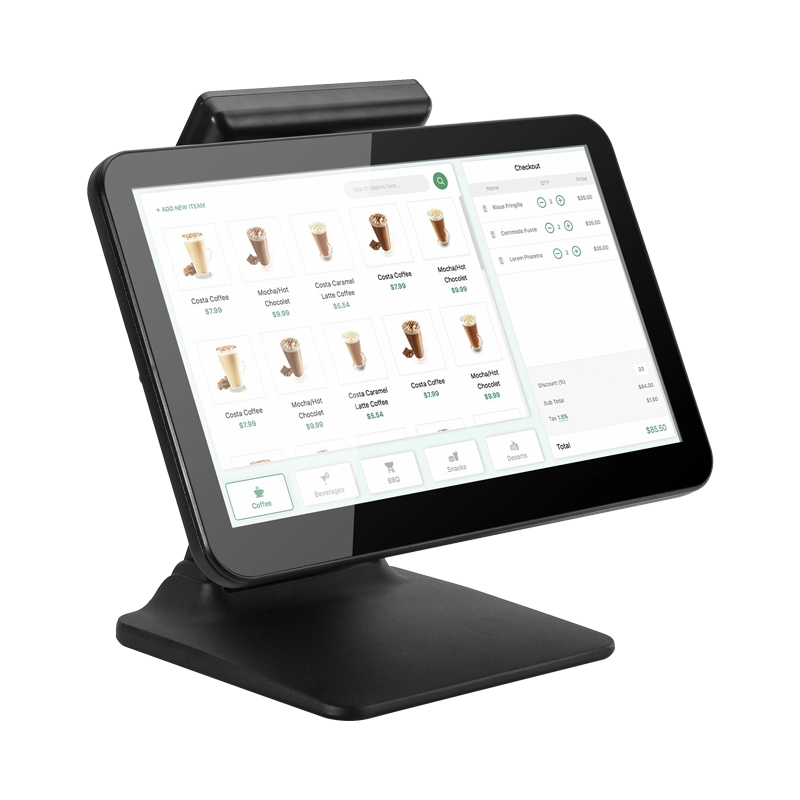
15.6 Inch Windows POS Terminal with VFD Display, Foldable Aluminum Stand Touch Screen POS for Retail & Hospitality
This 15.6-inch POS terminal is built to meet the needs of modern retail and hospitality environments. Powered by a stable Windows operating system, it ensures smooth performance for various point-of-sale applications. The device features a crisp, responsive touch screen and a built-in VFD customer display, allowing customers to view transaction details clearly. Its aluminum alloy stand offers a sleek, professional appearance while providing enhanced durability and stability for busy checkout counters. Ideal for retail stores, restaurants, and service-based businesses, this POS machine delivers a reliable and customer-friendly checkout experience.
Get in touch
Interested in becoming a POS system dealer? Contact us for more information and start the process of joining our dealer network.
We look forward to working with you to expand the market together.


Copyright © 2025 Favorpos All Rights Reserved.
