
How to choose a POS terminal cash register for restaurants?
- 1) How do I calculate the true total cost of a POS terminal cash register for my restaurant (hardware, software, payment fees, migration & depreciation)?
- 2) How can I ensure my POS terminal cash register won’t become a bottleneck during peak service (turnover, kitchen load, printer queues)?
- 3) What specific security certifications and payment flows should I require to ensure my POS terminal cash register meets PCI, EMV, and contactless best practices?
- 4) Which integration capabilities should a POS terminal cash register have to sync reliably with delivery platforms, reservations, inventory, and accounting systems?
- 5) How to choose POS terminal cash register hardware for harsh restaurant environments (spills, grease, outdoor dining) and minimize downtime?
- 6) How do I configure tipping prompts, split-bill flows, and tableside payments on a POS terminal cash register to reduce fraud and speed table turnover?
- Conclusion: Advantages of selecting the right POS terminal cash register for restaurants
How to Choose a POS Terminal Cash Register for Restaurants: 6 Practitioner Questions Answered
Choosing the right POS terminal cash register for a restaurant is more than picking a touchscreen device. You must evaluate transaction throughput, payment security (EMV/NFC/tokenization), integrations with delivery and inventory systems, total cost of ownership, and hardware durability under real restaurant conditions. Below are six specific, pain-point-focused questions beginners and even many buyers find under-answered online, with operationally actionable guidance.
1) How do I calculate the true total cost of a POS terminal cash register for my restaurant (hardware, software, payment fees, migration & depreciation)?
Mistakes around total cost are the most common purchase regretted by restaurants. Break the TCO into explicit line items and use a 3–5 year horizon for depreciation and recurring costs:
- Upfront hardware: countertop terminals, tablets, mobile POS (mPOS), kitchen printers, cash drawer, card reader, and optional customer displays. Typical market ranges: an Android tablet terminal $300–$1,200; fixed countertop systems $600–$2,000 depending on brand and peripherals. Get model-level quotes.
- Software subscription: per-terminal or per-location SaaS fees, including POS app, inventory, KDS, and reporting. Expect $20–$150/month per terminal depending on restaurant features. Clarify whether offline mode, menu size, or user seats trigger higher tiers.
- Payment processing: interchange + markup or flat-rate. Ask vendors for bundled vs unbundled interchange statements. Insist on sample monthly statements showing interchange, assessment, acquirer markup, and per-transaction fees. For accurate forecasting, model expected transaction volume, average ticket, peak-day patterns.
- Hardware rental vs purchase: leasing can lower upfront cost but often increases long-term TCO. Compare total lease payments across contract length vs outright purchase plus warranty.
- Implementation & migration: menu setup, staff training, data migration, and integration development can be sizable—budget one-time fees or internal labor time. Ask vendors for a detailed onboarding scope and estimated hours.
- Connectivity & redundancy: monthly broadband, secondary LTE backup, and any SIM/data plans for terminals. For table-service restaurants, tableside terminals often require robust Wi‑Fi or LTE failover to avoid downtime.
- Maintenance, warranty & spare parts: extended warranties, next-business-day replacement, and spare units cost—negotiate SLAs for busy periods. Factor in on-site technician rates if offered.
- Security & compliance: costs for PCI DSS remediation, quarterly scans, P2PE enrollment, and tokenization if the provider doesn’t handle them fully.
- Depreciation & refresh cycle: plan for 3–5 year refresh windows. Treat hardware replacement as a recurring capital plan in projections.
Actionable checklist: request a 3-year cost projection from each vendor that includes all the above line items with assumptions (transactions/month, average ticket, terminals/location). Compare using per-transaction and per-seat metrics (cost per transaction, cost per terminal per month). Red flags: vendors that refuse to provide an itemized TCO or hide interchange details.
2) How can I ensure my POS terminal cash register won’t become a bottleneck during peak service (turnover, kitchen load, printer queues)?
Performance issues often arise from network design, local caching, printer throughput, and how the POS handles simultaneous operations. Evaluate these technical facets before purchase:
- Local processing vs cloud-only: choose a POS terminal that supports local caching or an on-device database. If the internet drops, the terminal should be able to accept payments, queue tickets, and sync when connectivity returns to avoid lost orders.
- Order concurrency and throughput: ask vendors for benchmark metrics such as transactions per minute, orders per hour, and simultaneous seat counts. Request a load-test report or run a pilot during a real busy service to observe latency.
- Kitchen integration & KDS: ensure the POS supports a robust KDS architecture (parallel routing, priority lanes, and escalation). Verify how many KDS screens a single terminal can feed without lag and whether printing vs KDS routing is configurable by modifier or ticket type.
- Receipt printer speed and queue management: high-volume kitchens need fast thermal printers and configurable cut/print buffering. Ask for printer specs (print speed, buffer size) and test for queuing behavior when many receipts print simultaneously.
- Network architecture: segregate guest Wi‑Fi from POS networks; use VLANs and managed switches. Prefer wired Ethernet for fixed terminals and high-throughput kitchen devices; use enterprise-grade Wi‑Fi with band steering and multiple access points for tableside devices. Plan LTE cellular failover for payment continuity.
- CPU, memory, and storage: for tablet and integrated terminals, confirm CPU class, available RAM, and internal storage. Low-end hardware can cause GUI freezes and transaction delays under load.
- Monitoring & alerts: ensure the vendor provides real-time health monitoring for terminals, printers, and network latency with SLA alerts so you can intervene before a service collapse.
Operational test: simulate peak conditions—concurrent order entry, multiple printers/KDS outputs, and payment captures—to identify bottlenecks. If a vendor resists load testing or provides only theoretical claims, treat that as a concern.
3) What specific security certifications and payment flows should I require to ensure my POS terminal cash register meets PCI, EMV, and contactless best practices?
Payment security is critical for liability reduction and PCI compliance. Look beyond marketing claims and verify certifications and implemented flows:
- PCI DSS & P2PE: confirm whether the POS vendor or payment provider handles PCI DSS scope reduction via validated Point-to-Point Encryption (P2PE). If they provide P2PE, ask for the P2PE solution ID and validation documentation.
- PIN Entry & SRED/PIN Encryption (PIN Transaction Security): for PIN transactions, ensure PIN Entry Devices are PCI-PTS certified and that the payment terminal vendor demonstrates secure key injection and tamper resistance.
- EMV & Contactless (NFC): confirm the card reader is EMV-certified and supports contactless tap-to-pay. Request the EMV L1/L2 certification references or vendor documentation demonstrating compliance. Ensure firmware update processes are secure and documented.
- Tokenization and vaulting: prefer solutions where card data is tokenized by the payment processor or gateway to reduce your PCI scope. Clarify whether tokens are reversible only by the processor and how stored cards for loyalty or reorders are handled.
- Software update & signing: verify the POS vendor uses digitally signed firmware and app updates, with a documented vulnerability disclosure policy and regular security patches.
- Logging & forensic data: ensure the system generates immutable logs for transactions and administrative actions for audit and potential incident response.
Checklist for vendors: ask for P2PE validation number, PCI-PTS certificate for the card reader, EMV certification references, and evidence of tokenization capabilities. Red flags include vague statements like “we’re PCI compliant” without proof, or on-site key injection procedures that have no formal documentation.
4) Which integration capabilities should a POS terminal cash register have to sync reliably with delivery platforms, reservations, inventory, and accounting systems?
Integrations are often the reason restaurants buy a new POS. Confirm technical depth and maintenance burden for each required integration:
- APIs & webhooks: the POS should offer stable RESTful APIs and webhook support for real‑time event-driven sync (orders, voids, tip changes). Check API rate limits, pagination, and field-level documentation.
- Native connectors vs third-party middleware: native integrations to major delivery marketplaces (Uber Eats, DoorDash, ChowNow), reservation systems (OpenTable, Resy), and accounting platforms (QuickBooks, Xero) reduce integration risk. If relying on middleware (Zapier, middleware aggregators), validate latency and error-handling strategies.
- Menu and SKU mapping: ensure the POS can map marketplace SKUs and modifiers to in-house menu items and inventory SKUs. Ask how the system handles composite items, combos, and modifiers to avoid inventory mismatches.
- Inventory & unit-of-measure handling: for restaurants tracking ingredient-level inventory, require two-way sync so POS sales decrement inventory and receiving updates reflect in menu availability. Support for recipe-level BOM and yield adjustments is important for cost control.
- Settlement & payment reconciliation: integrations should push consolidated settlement files to accounting systems and reconcile tips and fees. Request sample settlement exports and automated reconciliation reports.
- Error handling & retries: confirm how the POS handles failed webhooks or API calls—does it queue, retry with backoff, and provide alerting? Manual reconciliation tools are helpful when automated sync fails.
Operational questions to ask vendors: how quickly does the integration sync (seconds/minutes), are there limits on menu size or modifier depth, and who owns the mapping logic when marketplace menu data changes? Always request a sandbox or pilot account and run through end-to-end scenarios (order placed on delivery app → order routing → kitchen print/KDS → inventory decrement → accounting reconciliation).
5) How to choose POS terminal cash register hardware for harsh restaurant environments (spills, grease, outdoor dining) and minimize downtime?
Durability matters. A consumer tablet may reduce initial cost but lead to frequent replacements in a high-turnover environment. Evaluate hardware on these criteria:
- Ingress protection and build: look for splash-resistant designs, sealed ports, and materials rated for food-service environments. IP ratings (e.g., IP54) indicate resistance to dust and splashes—useful for outdoor or open-kitchen sites.
- Fanless and thermally-managed units: reduce ingress points and failure modes by choosing fanless designs with heat-dissipating chassis for continuous operation in warm kitchens.
- Touchscreen durability: tempered or chemically strengthened glass (e.g., Gorilla Glass) and a capacitive touchscreen that tolerates grease and gloved use improves reliability. Test multi-touch responsiveness when hands are wet or greasy.
- Replaceable modules & spare parts: prefer vendors that offer swappable card readers, batteries, and power bricks so stores can replace a single failed part quickly rather than an entire terminal.
- Battery life and hot-swap: for tableside payment devices, confirm real-world battery life under continuous use and whether hot-swap or charging docks are available to avoid service interruptions.
- Thermal printer resilience: choose thermal printers designed for kitchen use with grease shields and robust paper cutters. Check MTBF (mean time between failures) and local support availability for replacement rollers and cutters.
- Service & spare SLA: ensure the vendor provides timely spare-part delivery or on-site swap within your business hours. For multi-location operators, negotiate a pool of spare terminals to rotate across sites.
Practical test: run a 30-day pilot in production conditions (peak service, outdoor seating if applicable) to validate hardware claims. Confirm whether the vendor offers site surveys and recommends protective accessories like docks, splash guards, or secure mounts.
6) How do I configure tipping prompts, split-bill flows, and tableside payments on a POS terminal cash register to reduce fraud and speed table turnover?
User experience around payment directly impacts tip capture, throughput, and chargeback risk. Optimize flows with these principles:
- Tableside payments & pre-auth: enable secure tableside payments that support pre-authorization and final tip capture. Use EMV/contactless devices with tokenization to avoid handling raw card data. For large parties, use split-bill pre-auth sequences to avoid re-auth delays.
- Tipping UI & timing: display suggested tip options (e.g., percentage or dollar amounts) and allow custom entries. Prompt for tip on the payment device to ensure the customer authorizes the final amount; avoid back-office tip adjustments that increase risk and reconciliation overhead.
- Efficient split-bill algorithms: support splitting by item, by seat, or by dollar amount with easy reassignment of line items. For complex splits, allow staff to merge payments and handle multiple cards quickly without leaving the table.
- Partial authorizations & fallback flows: for card limits, implement partial auth support so customers can combine cards without multiple manual steps. Validate how the POS and payment gateway handle partial captures and tips in those cases.
- Receipts & digital options: provide email/SMS receipts and contactless payment confirmations to speed turnover and reduce paper handling. Digital receipts help in post-sale tip adjustments and dispute handling.
- Fraud controls: require AVS/CVV where supported, but balance friction for EMV/contactless. Monitor chargeback ratios and use processor-provided fraud scoring and device-level tokenization to lower risk.
Train staff on ideal flows and edge cases: order splits at the POS vs at the device, how to handle tip changes, and how to re-run saves or voids safely. Testing with real tableside devices during a soft launch will reveal UX friction points that are invisible in demos.
Conclusion: Advantages of selecting the right POS terminal cash register for restaurants
Selecting the correct restaurant POS terminal cash register—one that balances durable hardware, strong payment security (EMV, tokenization, P2PE), cloud and local processing, and deep integrations—delivers faster table turnover, lower fraud liability, accurate inventory and accounting, and reduced long-term operating costs. Prioritize vendors who provide transparent TCO, performance benchmarks, certified payment flows, and robust spare-part SLAs. Pilot systems under real service conditions, demand itemized cost projections, and verify integration capabilities before committing.
For expert consultation, hardware quotes, and a tailored POS solution for your restaurant, contact FavorPOS at www.favorpos.com or email sales2@wllpos.com for a quote.
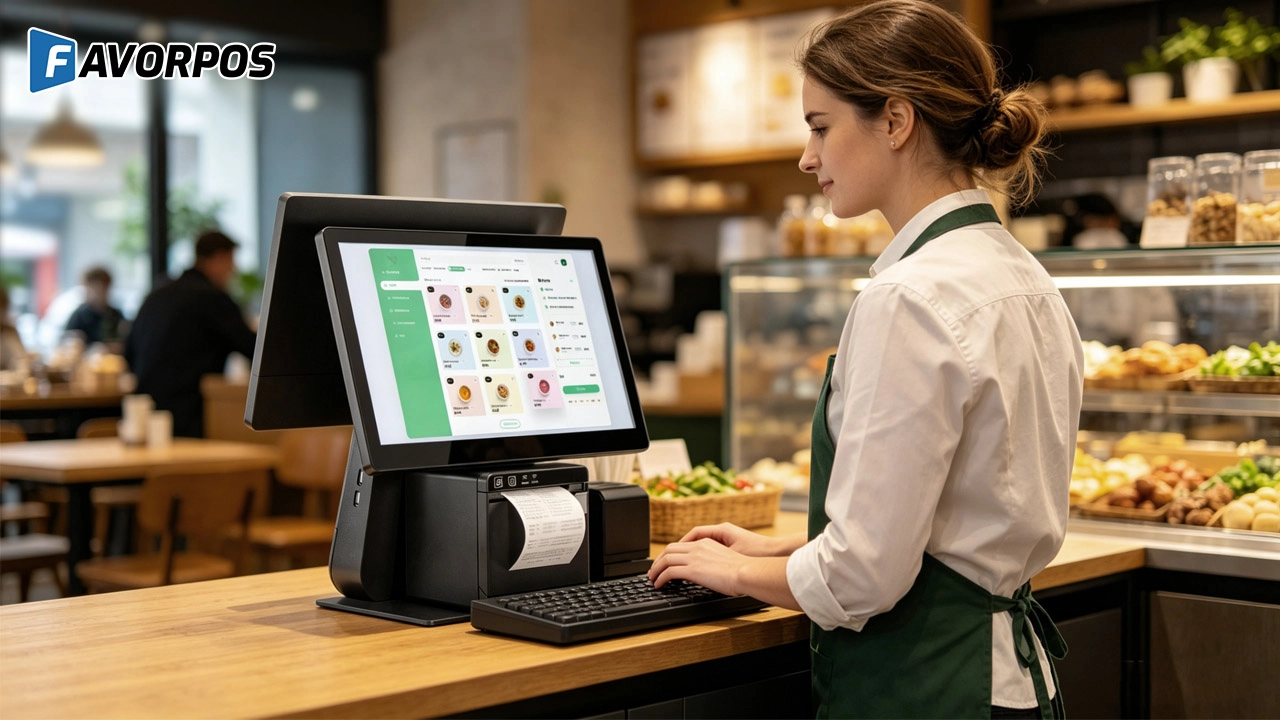
Smart Checkout, Simplified: Exploring the Power of a 15.6-Inch All-in-One POS Terminal
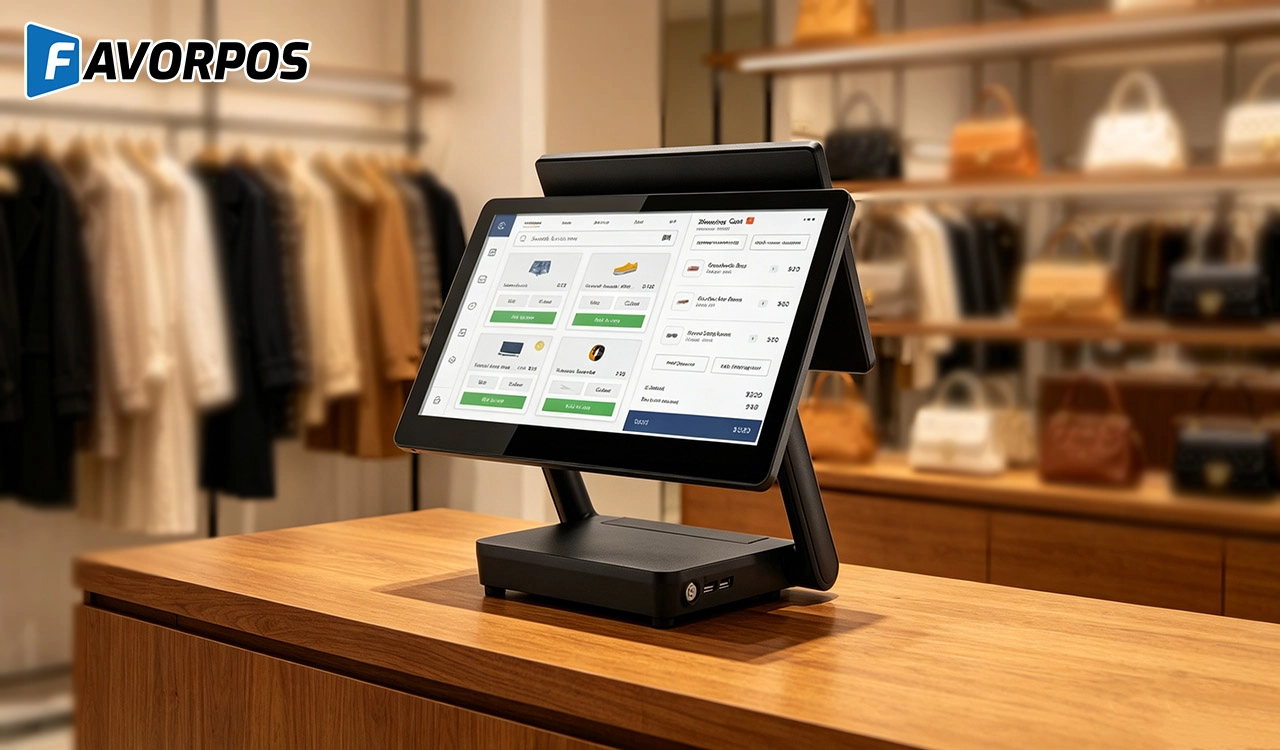
Why a 15.6” Touch POS Terminal Is Becoming the New Standard in High-Traffic Retail
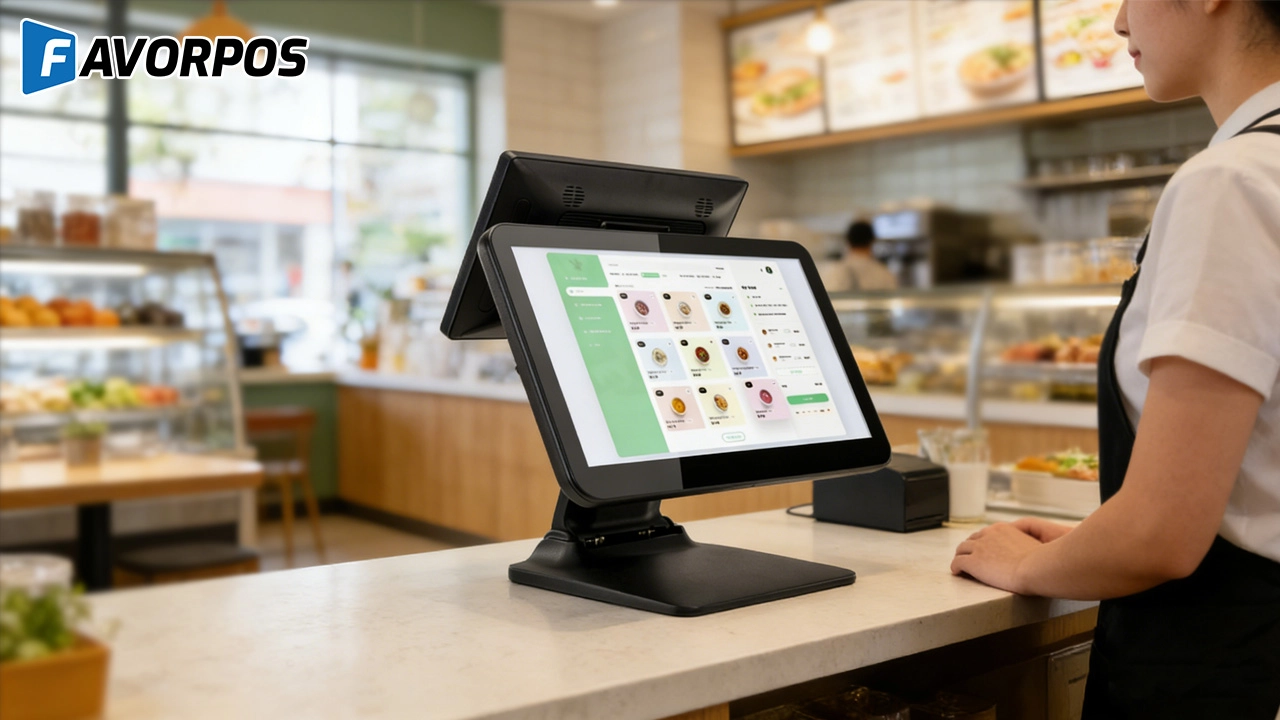
Beyond Checkout: How a 15.6-Inch Aluminum POS System Redefines Retail Efficiency
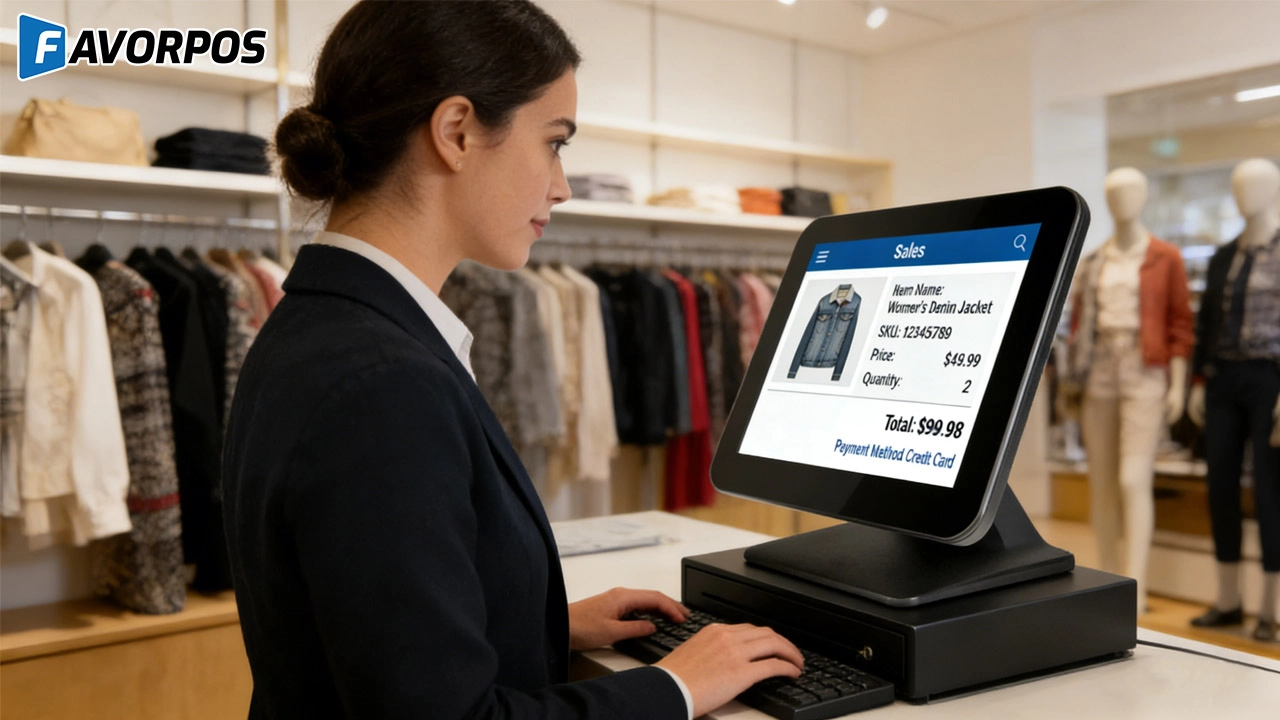
Understanding 15-Inch Aluminum POS Terminals in Modern Commercial Use
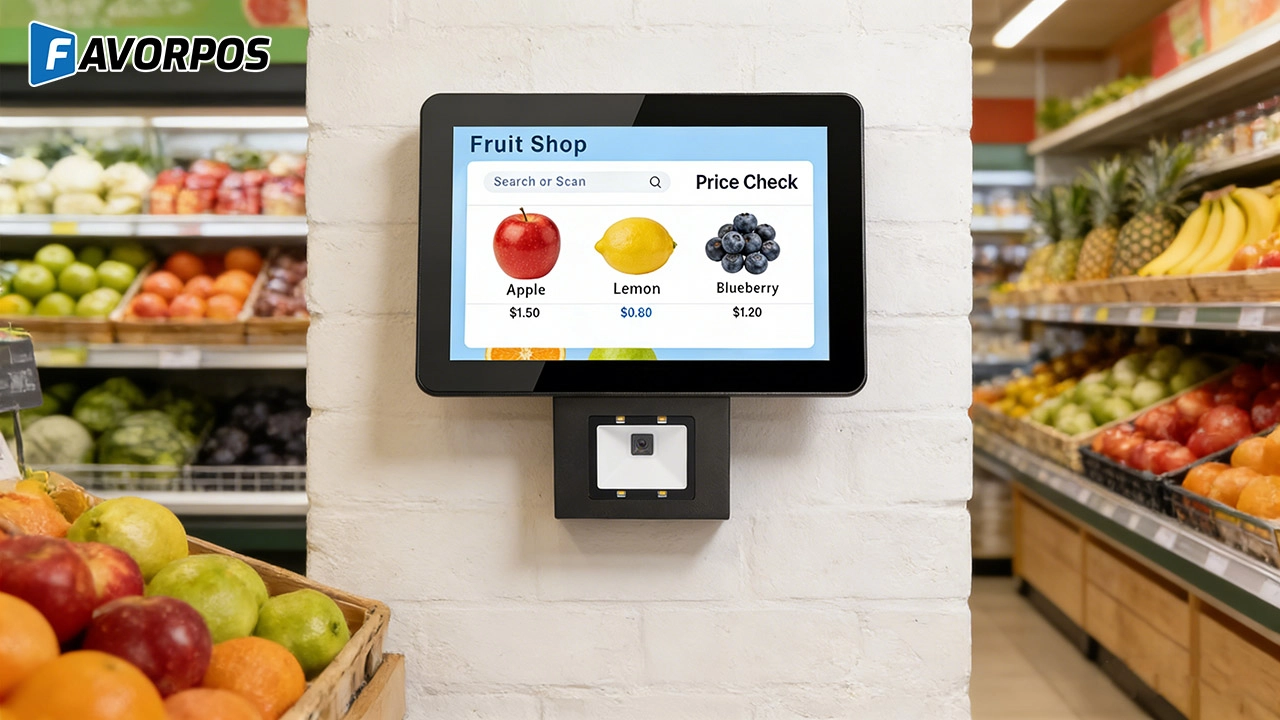
The Smart Way to Check Prices: How a 10.1-Inch Wall-Mounted Price Checker Transforms Retail Stores
For Government and Public
What support is provided after deployment?
We provide 24/7 technical support, regular hardware updates, hardware maintenance, and training resources to ensure your POS system remains operating efficiently.
For Hotels
Does your POS system support multi-currency payments?
Yes, our system supports multi-currency payments, making it convenient for international guests to pay in their preferred currency.
For OEM
How to deal with warranty and repair issues of POS machines?
We provide warranty services for customized POS machines. The warranty period and coverage are subject to specific contracts. During the warranty period, if the device fails, we will provide free repair services. You can submit a repair request through our after-sales service team, and we will handle your problem as soon as possible.
For Entertainment & Events
How do you ensure data security and prevent fraud?
Our systems comply with industry standards for data security and payment protection and are equipped with advanced fraud prevention features to prevent fraudulent activities and ensure transaction security.
For Bakeries
Does the system provide real-time sales reports?
Yes, our system provides real-time reporting and analytics to help you monitor performance, track inventory, and optimize sales strategies.

11.6 inch Capacitive Touchscreen for POS Machine POS Monitor
FAVORPOS 11.6-inch capacitive touchscreen, specifically designed for POS machines to deliver a seamless and responsive user experience. This high-definition display offers vibrant visuals and crystal clear clarity, making it easy for staff to navigate through transactions efficiently. The capacitive technology ensures quick and accurate touch recognition, reducing wait times and enhancing customer satisfaction. Built to withstand the rigors of daily use, this touchscreen is perfect for retail and hospitality environments.
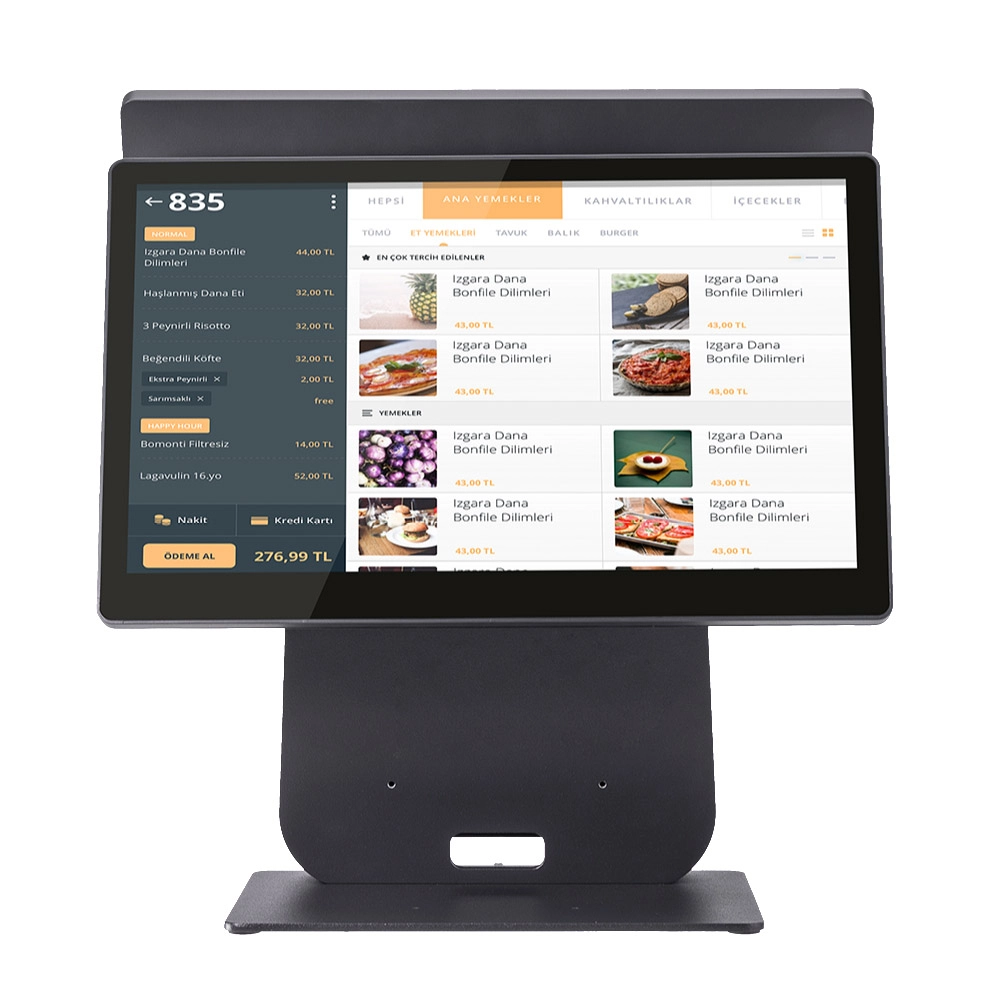
HD Dual Screen POS Machine Aluminum Hardware Android Windows Supplier
This dual-screen POS machine supports both Android and Windows systems, providing flexibility for various applications. The dual screens enhance customer interaction and streamline the checkout process, making transactions quicker and more engaging. Perfect for modern businesses looking to elevate their service and improve customer satisfaction, this POS machine is your ultimate partner in success!
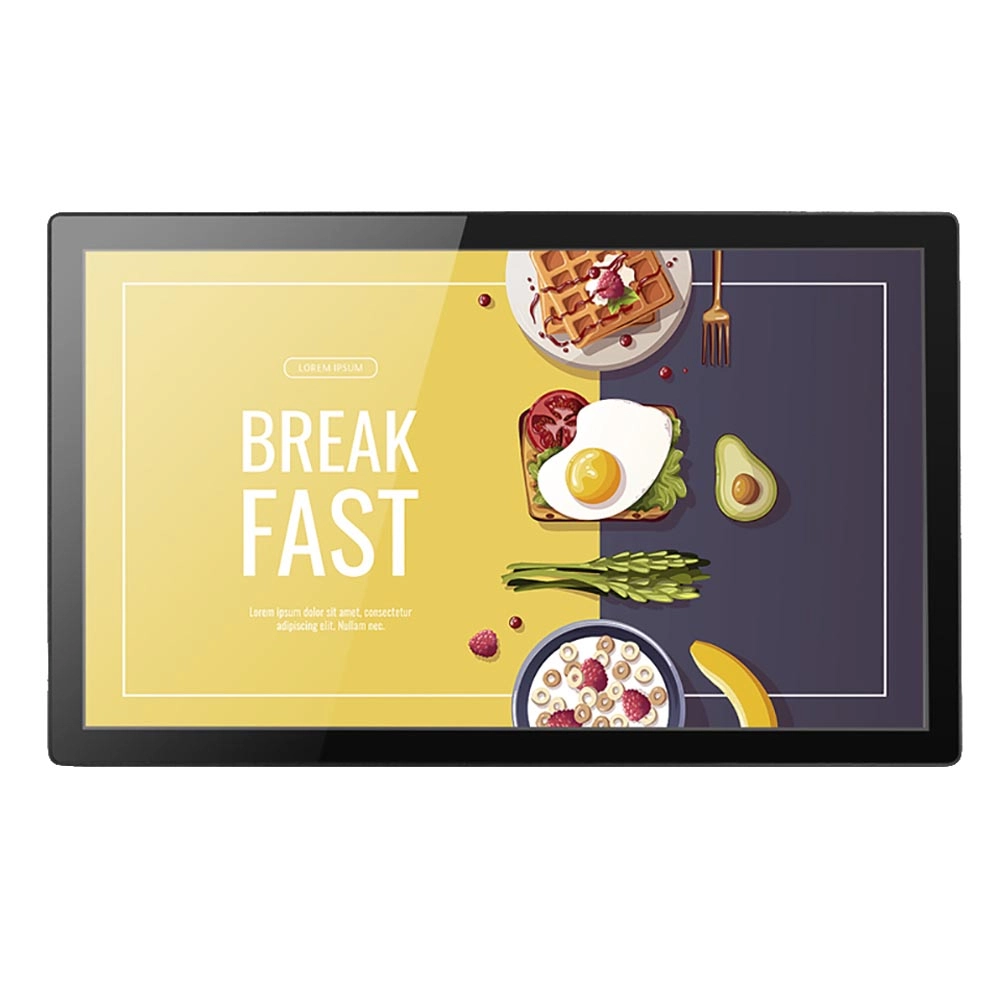
Wall Mount Cash Register POS 21.5 inch for Supermarket Touchscreen Windows Factory
Our sleek and modern wall-mounted POS system features a stunning 21.5-inch LED display, providing exceptional visibility and clarity for seamless customer interactions. The capacitive touchscreen ensures a highly responsive and intuitive user experience, perfect for fast-paced retail environments. With its space-saving wall-mounted design, this POS solution is ideal for optimizing floor space while maintaining a professional and contemporary appearance.
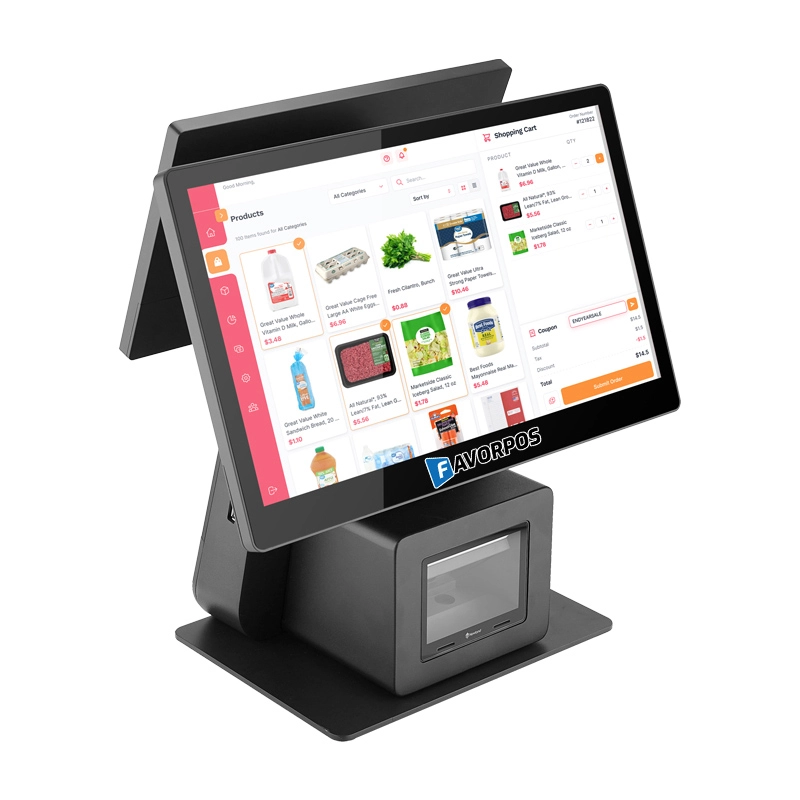
Dual Screen POS With Barcode Scanner Desktop POS Manufacturer POS Factory 15.6 11.6 Client Screen Optional
FAVORPOS: Your leading dual screen POS factory and manufacturer. Our desktop POS with barcode scanner offers 15.6/11.6 client screen options and OS flexibility. Get reliable, efficient dual screen POS with barcode scanner solutions directly from us.
Get in touch
Interested in becoming a POS system dealer? Contact us for more information and start the process of joining our dealer network.
We look forward to working with you to expand the market together.


Copyright © 2025 Favorpos All Rights Reserved.
