
What ROI can restaurants expect from top restaurant POS systems?
- 1. How quickly will a cloud-based POS pay for itself in a single-location, 80-seat full-service restaurant?
- 2. Which exact KPIs should I track after installation to measure ROI, and how do I calculate them monthly?
- 3. Can a POS actually reduce menu-cost overruns and food cost percentage — and by how much in real restaurants?
- 4. How do integrated online ordering and delivery features in top POS systems affect average ticket size and commission costs compared to using third-party marketplaces?
- 5. What hidden costs should I factor into a 3-year ROI calculation (hardware refresh, payment processing, add-on modules, and other traps)?
- 6. How can I run an A/B style trial or pilot to validate ROI before full rollout without disrupting service?
- Conclusion: Advantages of top restaurant POS systems
Top Restaurant POS Systems: 6 Deep ROI Questions Beginners Miss
Choosing one of the leading restaurant POS systems (cloud POS, integrated online ordering, inventory management and payments) is a major decision. Below are six specific, pain-point-focused questions newcomers frequently ask but rarely find up-to-date, operational answers to. Each section shows how to calculate ROI components, what to measure, realistic ranges from recent industry case studies, and step-by-step guidance you can apply to a single-location or small multi-unit restaurant.
1. How quickly will a cloud-based POS pay for itself in a single-location, 80-seat full-service restaurant?
Short answer: Most restaurants that replace outdated systems with modern cloud POS and activate core modules (payments, online ordering, inventory, basic labor) see breakeven in roughly 6–18 months. Speed depends on baseline performance and which revenue and cost levers you enable.
How to model it (example with conservative inputs):
- Assumptions: 80-seat full-service restaurant, average covers/day = 100, average check = $25 → daily sales = $2,500 → monthly sales ≈ $75,000 → annual sales ≈ $900,000.
- Expected conservative improvements after modern POS rollout (industry case-study ranges from vendors and association reports):
- Sales uplift from faster ordering/loyalty/online ordering: 3–8% (conservative).
- Labor cost reduction via scheduling & automation: 5–12% of payroll hours.
- Order error reduction & waste control: lowers food cost by 0.5–2 percentage points.
- Translate to dollars (using midpoints):
- Revenue uplift 5% → +$45,000/year.
- Labor savings 8% on a 30% labor burden: if labor = 30% of sales ($270,000/year), 8% reduction → $21,600/year.
- Food cost improvement 1% point on 30% food cost → saves 1% of sales = $9,000/year.
- Aggregate annual benefit ≈ $75,600.
- Typical 3-year total cost of ownership (TCO) for a cloud POS (hardware refresh, subscription, payment processing High Quality, training): $6,000–$25,000 depending on hardware and modules enabled. Many vendors present financing; monthly subscription ranges $60–$400 per terminal plus add-on fees.
Conclusion: With the example assumptions, a robust cloud POS could pay for itself well within 12 months. If your store is smaller or the baseline already efficient, expect the longer side of the 6–18 month window. (Sources: vendor case studies and industry reports from major providers such as Toast, Square and Lightspeed.)
2. Which exact KPIs should I track after installation to measure ROI, and how do I calculate them monthly?
Track a focused set of KPIs that directly tie to revenue and controllable costs. For fast decision-making, measure these weekly and report monthly:
- Net Sales — total sales after refunds and discounts.
Why: baseline for all percentage metrics. - Average Check = Net Sales / Number of Covers.
Why: shows upsell and pricing impact (useful to evaluate online ordering, menu changes). - Seats × Turnover (covers) per service — tracks table management improvements.
- Labor Hours and Labor Cost % = (Labor Cost / Net Sales) × 100.
Why: automation and scheduling impact payroll directly. - Food Cost % = (Cost of Goods Sold / Net Sales) × 100.
Why: inventory integration reduces waste and shrinkage. - Order Accuracy Rate = (Correct Orders / Total Orders) × 100.
Why: affects guest retention and waste. - Online Order Mix & Commission Saved = volume fulfilled via POS-native ordering vs third-party marketplaces, and dollars saved on commission fees.
Why: direct margin impact. - Percentage of Sales via Loyalty/Promotions — measures repeat business driven by the POS-integrated loyalty program.
How to convert KPI deltas into ROI contributions (monthly example):
- If Average Check rises from $25 → $26 (4% uplift) with same covers: monthly sales uplift = current monthly sales × 4%.
- If Labor % drops from 30% → 27%: payroll savings = (previous labor % − new labor %) × monthly sales.
- If Food Cost % drops 30% → 29%: monthly savings = 1% × monthly sales.
Run a dashboard with these formulas in your POS reporting or BI tool. To claim ROI, compare a 3–12 month post-install period to the 3–12 months before, normalized for seasonality and menu/pricing changes.
3. Can a POS actually reduce menu-cost overruns and food cost percentage — and by how much in real restaurants?
Yes — modern POS systems with recipe-level inventory and ingredient tracking materially reduce food-cost overruns by improving ordering accuracy, preventing over-portioning, and enabling real-time inventory counts. Measured improvements depend on starting discipline.
Realistic ranges from published vendor case studies and operator reports:
- Restaurants with poor manual inventory controls: food-cost improvement of 1–3 percentage points in 6–12 months after activation of recipe and inventory modules.
- Restaurants with already decent controls: improvement of 0.3–1 percentage point.
Concrete example: monthly sales $75,000 at 30% food cost → monthly COGS = $22,500. A 1 percentage point cut (to 29%) saves $750/month or $9,000/year. If you identify overruns (e.g., over-portioning on a $3 topping, 200 portions/day) the savings multiply quickly.
How to capture the savings:
- Enable recipe/portion control and link menu items to inventory SKUs.
- Use par-based ordering and automated purchase orders to reduce overbuying and spoilage.
- Run variance reports weekly and investigate outliers (vendor price spikes, plate waste, theft).
Note: inventory accuracy improves only when the team uses the system (count discipline, void reasons). Combine POS tools with staff training to hit the upper end of improvement ranges.
4. How do integrated online ordering and delivery features in top POS systems affect average ticket size and commission costs compared to using third-party marketplaces?
Integrated online ordering through your POS typically increases average ticket via recommended upsells and fewer menu constraints, while third-party marketplaces can reduce margin via commissions (commonly 10–30% per order depending on model and negotiated rates).
Observed impacts (industry patterns):
- Average ticket uplift: POS-native online ordering with merchandising and upsell prompts commonly delivers a 10–20% higher average ticket than basic third-party orders or phone-in orders (varies by execution and menu).
- Commission savings: If you move orders from a 20% commission marketplace to your own POS-linked ordering with payment processing fees of ~2.5–3.5% + per-order flat fee, you can save ~12–17 percentage points on margin for those orders.
Example calculation (monthly):
- Scenario: 1,000 online orders/month, average third-party ticket $25, commission 20% → commission cost = $5 × 1,000 = $5,000/month.
- If migrating 50% of orders to POS-native ordering and average ticket increases 12% to $28 → revenue = 500 × $28 = $14,000 vs previous 500 × $25 = $12,500 → incremental revenue $1,500 for those orders.
- Processing fees for POS-native at 3% = $420 vs prior commission on those 500 orders at 20% = $2,500 → monthly savings ≈ $2,080 plus the $1,500 ticket uplift = $3,580 impact.
Operational caveat: migrating customers requires marketing (email, signage, loyalty) and frictionless UX. Some restaurants keep marketplaces for customer acquisition while routing repeat customers to POS-native channels to improve margin.
5. What hidden costs should I factor into a 3-year ROI calculation (hardware refresh, payment processing, add-on modules, and other traps)?
Hidden costs often undermine optimistic ROI projections. Account for the following:
- Hardware lifecycle: expect terminals, kitchen printers, handhelds and tablets to require partial refresh every 3–5 years. Budget $300–$1,200 per terminal depending on quality and peripherals.
- Payment processing variability: gateway fees, interchange, card-present vs card-not-present rates change. For delivery-heavy restaurants, CN-P fees will be higher; plan for 0.5–2 percentage points of sales variance versus your initial quote.
- Module add-ons: loyalty, advanced inventory, accounting connectors, labor forecasting, and offline-mode licenses are often sold as extra monthly fees ($25–$200+/month each).
- Integration & customization: third-party integrations (ERP, payroll, back-office analytics) often require professional services or partner fees (one-time $500–$5,000+ depending on complexity).
- Training & onboarding: allow internal labor hours for training, and possibly vendor professional services fees. Underbudgeting training often delays benefits realization.
- Downtime & churn risk: POS outages can cost sales every minute and depress guest satisfaction. Consider SLA credits and redundancy (backup connectivity) costs.
3-year TCO example (conservative small full-service restaurant):
- Initial hardware: $4,000
- Subscription & modules: $250/month × 36 = $9,000
- Payment processing High Quality & variability: estimate $2,000/year High Quality = $6,000
- Training & integrations: $2,000 one-time
- Total 3-year TCO ≈ $21,000
Compare TCO to quantified benefits (revenue lift + labor + food cost savings + commission saved). If benefits exceed TCO within your target payback window, the investment is justifiable.
6. How can I run an A/B style trial or pilot to validate ROI before full rollout without disrupting service?
Design a short, controlled pilot with clear hypotheses and KPIs. A rigorous A/B pilot reduces purchase risk and surfaces integration issues early.
Step-by-step pilot plan (30–60 days recommended):
- Define hypothesis: e.g., Activating POS-native online ordering and automated labor scheduling will increase average check by ≥6% and reduce labor hours by ≥6% within 60 days.
- Select control and test segments: for a single site, run POS-native ordering on one channel (website + curbside) while keeping phone/third-party orders unchanged. For multi-outlet groups, choose one matched location as test and one as control.
- Lock the measurement window and normalize data for day-of-week and promotions. Capture pre-pilot baseline (30–60 days) for the same weekday mix.
- Track primary KPIs daily: sales, average check, covers, labor hours, order accuracy, online order mix, commission dollars.
- Assess statistical significance: for revenue and ticket changes, a 30–60 day window with typical volumes usually shows meaningful directionality; for smaller restaurants, extend trial or increase sample (e.g., run lunch-only pilot first).
- Collect qualitative feedback: staff friction points, guest complaints/praise, and kitchen workflow impact—these often predict long-term adoption success.
- Decision gate: if pilot delivers target KPI improvements or net dollar impact exceeds projected incremental cost for 12 months, proceed to phased rollout; otherwise iterate on configuration and retrain staff before broader deployment.
Using an A/B approach helps you validate vendor claims around table management, handheld ordering, loyalty lift and integrated payments without full-site disruption.
Conclusion: Advantages of top restaurant POS systems
Modern, integrated restaurant POS systems deliver tangible ROI by increasing revenue (better ordering UX, loyalty, and online ordering), lowering controllable costs (labor automation and inventory accuracy), and improving guest experience (order accuracy, faster service, integrated payments). Real-world breakeven typically falls between 6–18 months when you measure the right KPIs, budget for hidden costs, and run a disciplined pilot. Use recipe-level inventory, native online ordering, and labor forecasting to maximize impact and shorten payback.
For a custom ROI model and a quote based on your restaurant size and menu complexity, contact us at www.favorpos.com or email sales2@wllpos.com.
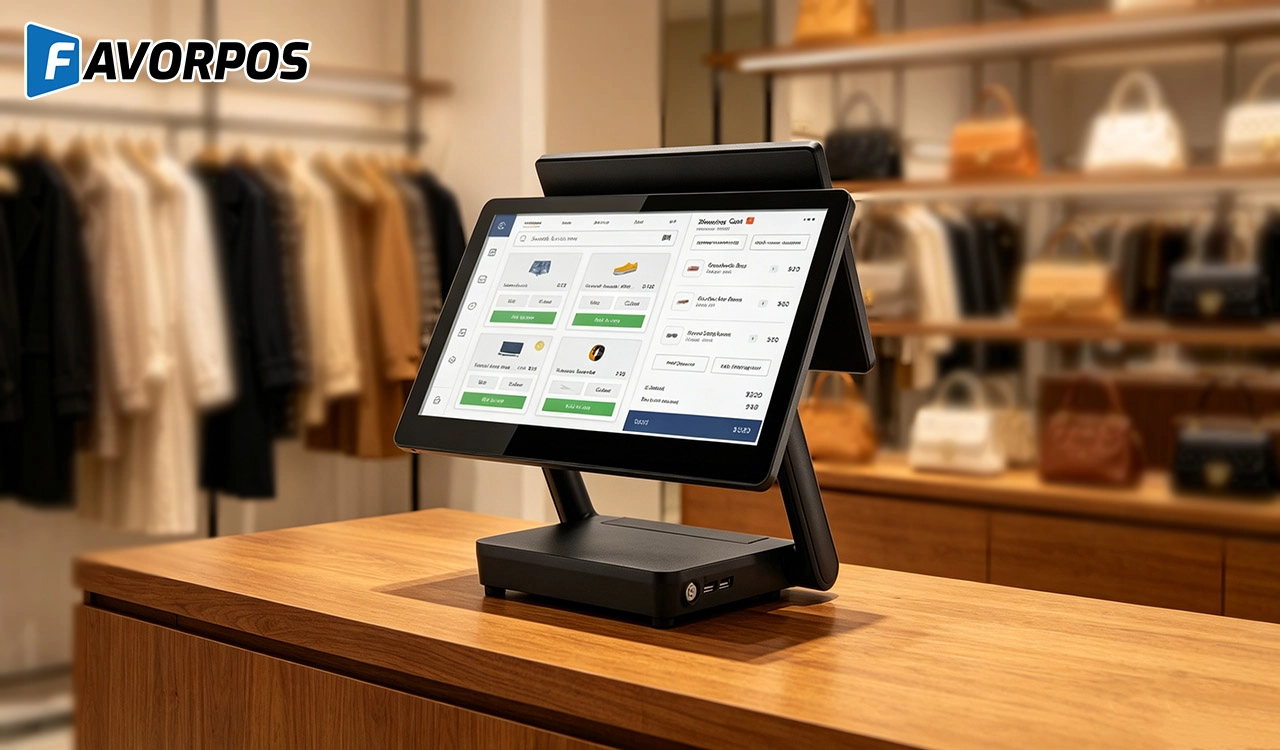
Why a 15.6” Touch POS Terminal Is Becoming the New Standard in High-Traffic Retail
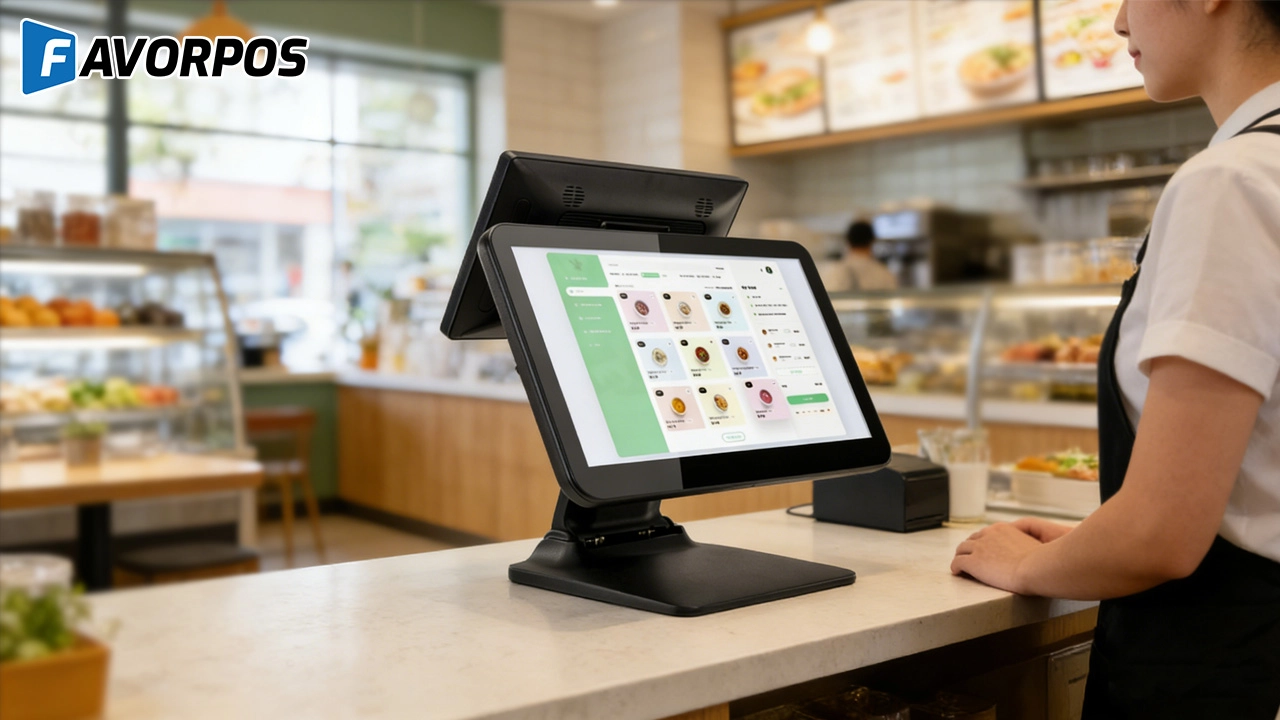
Beyond Checkout: How a 15.6-Inch Aluminum POS System Redefines Retail Efficiency
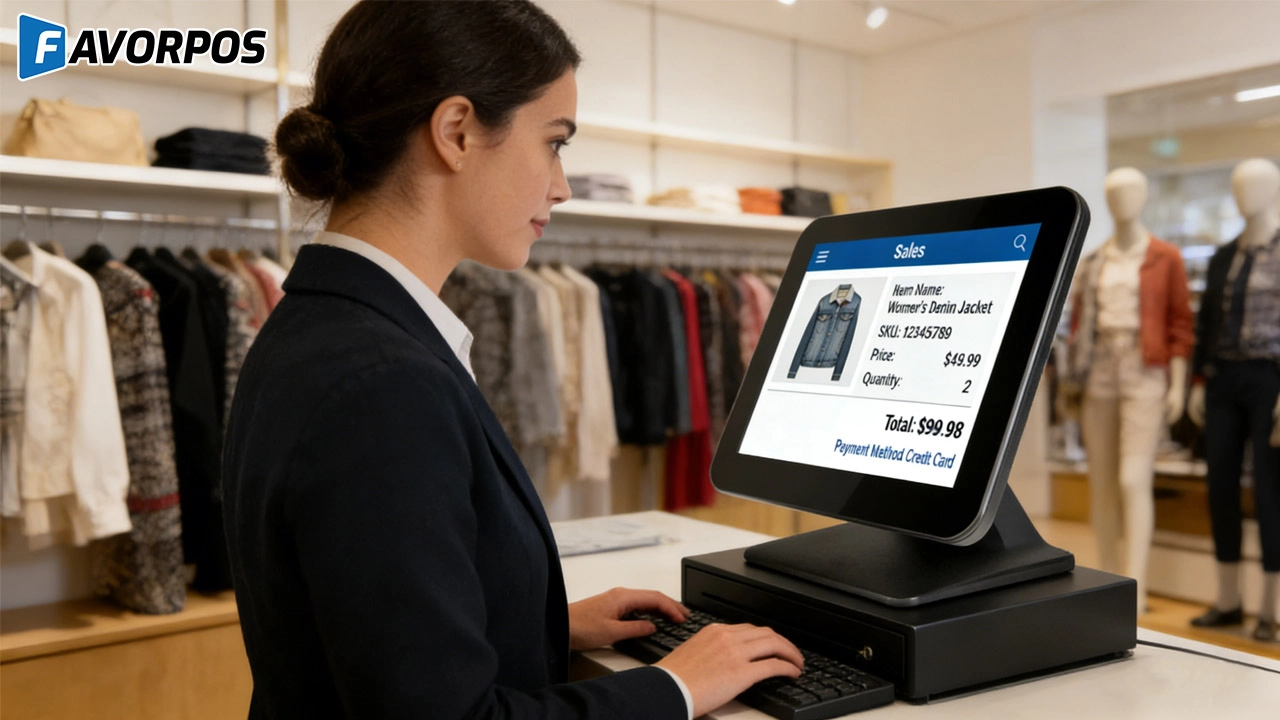
Understanding 15-Inch Aluminum POS Terminals in Modern Commercial Use
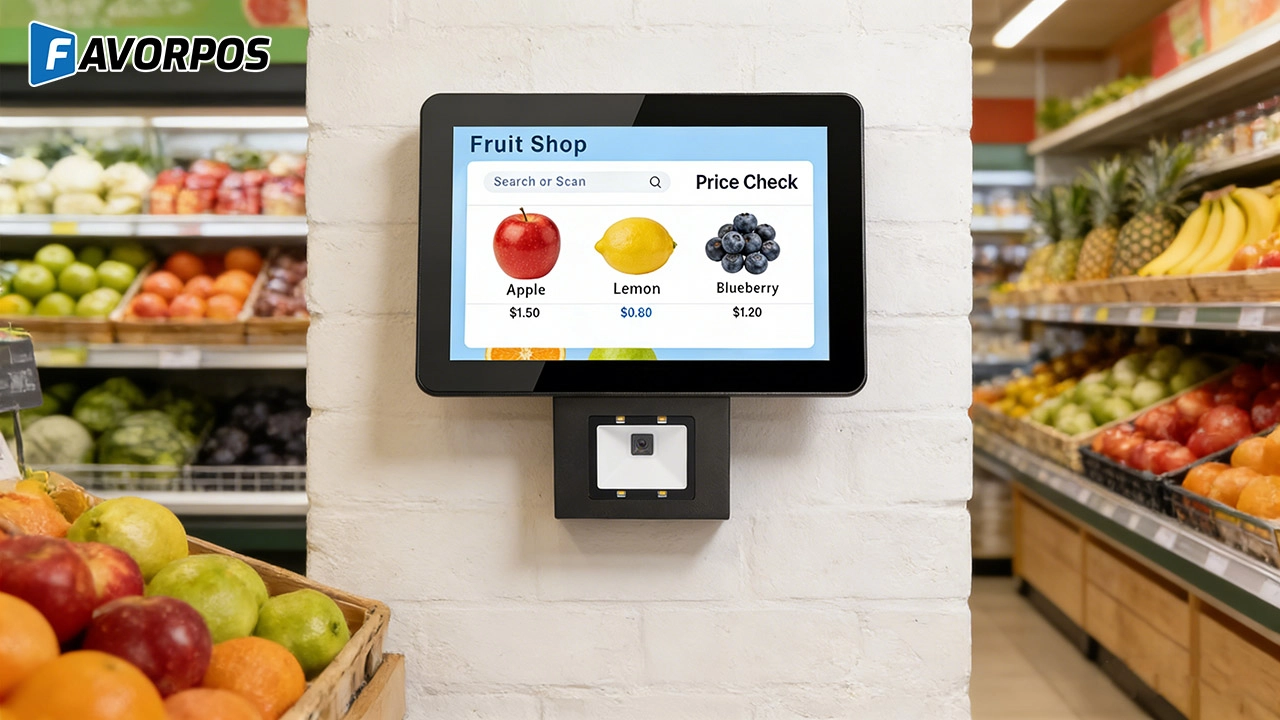
The Smart Way to Check Prices: How a 10.1-Inch Wall-Mounted Price Checker Transforms Retail Stores
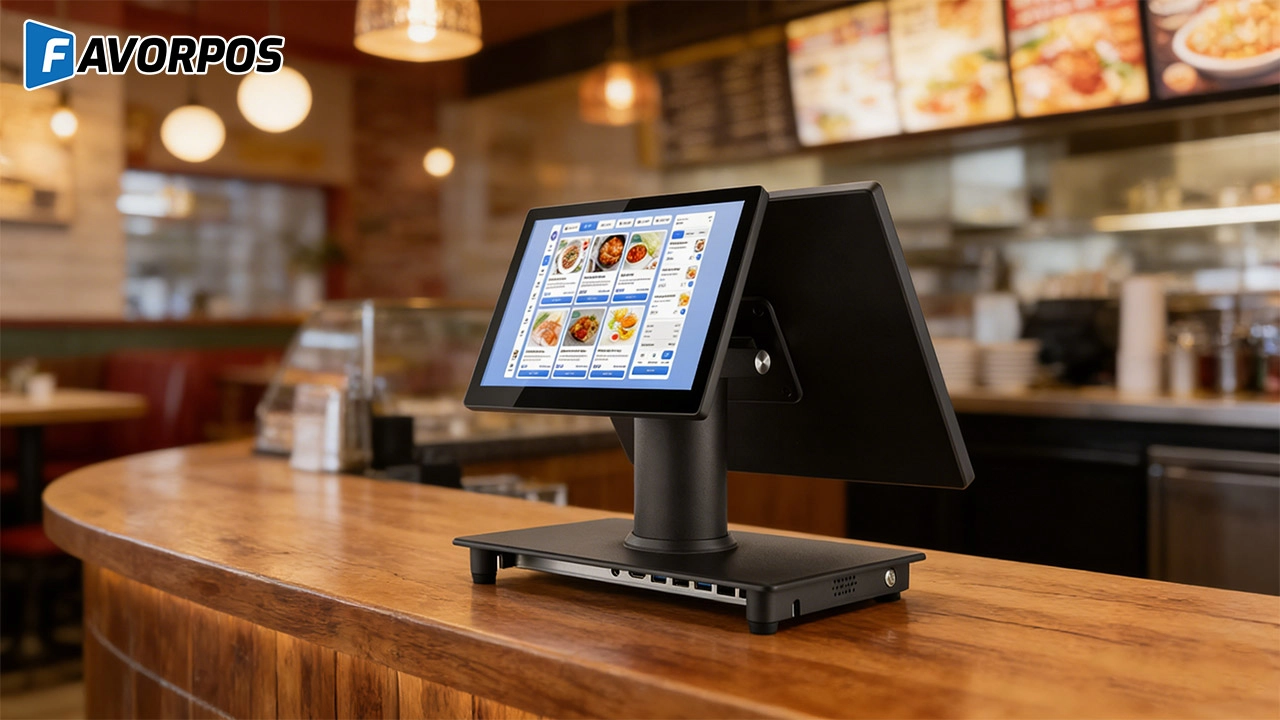
A Smarter Checkout Experience: The 15-Inch Dual-Screen POS Built for Modern Retail
For Restaurants & Cafes
Is your POS system suitable for different types of catering businesses?
Yes, our POS system is suitable for a variety of catering businesses, including fast food restaurants, high-end restaurants, cafes, as well as food trucks and pop-up restaurants. The system functions can be customized according to different business types to meet specific needs.
For ODM
What are the main advantages of ODM service?
You can enjoy the following advantages by choosing our ODM service:
1. Innovative design: Our team provides cutting-edge design solutions to ensure that products meet the latest market trends.
2. Full process management: Full process management from design to production to reduce your operational complexity.
3. Customization: We provide personalized hardware customization services according to your needs.
4. Quality assurance: Strict quality control procedures ensure high standards for each POS machine.
5. Cost-effectiveness: Efficient production processes help reduce costs while maintaining high quality.
For Hotels
What types of reports can I generate through your POS system?
You can generate detailed real-time reports on sales, guest spending patterns, department performance, and more.
For Healthcare
How much does it cost to develop a POS solution?
The cost depends on the level of customization, required functionality, and scale of deployment. We offer competitive pricing and work with you to develop a solution that fits your budget.
Does your POS system comply with healthcare regulations?
Yes, our POS system complies with HIPAA, PCI-DSS, and other relevant healthcare regulations to ensure the security and privacy of patient data.
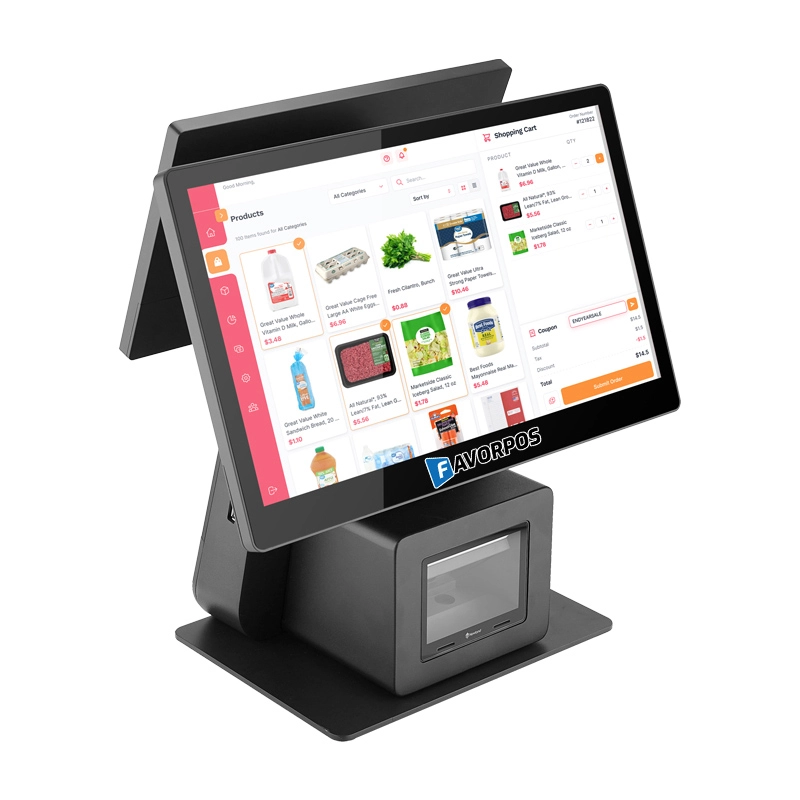
Dual Screen POS With Barcode Scanner Desktop POS Manufacturer POS Factory 15.6 11.6 Client Screen Optional
FAVORPOS: Your leading dual screen POS factory and manufacturer. Our desktop POS with barcode scanner offers 15.6/11.6 client screen options and OS flexibility. Get reliable, efficient dual screen POS with barcode scanner solutions directly from us.
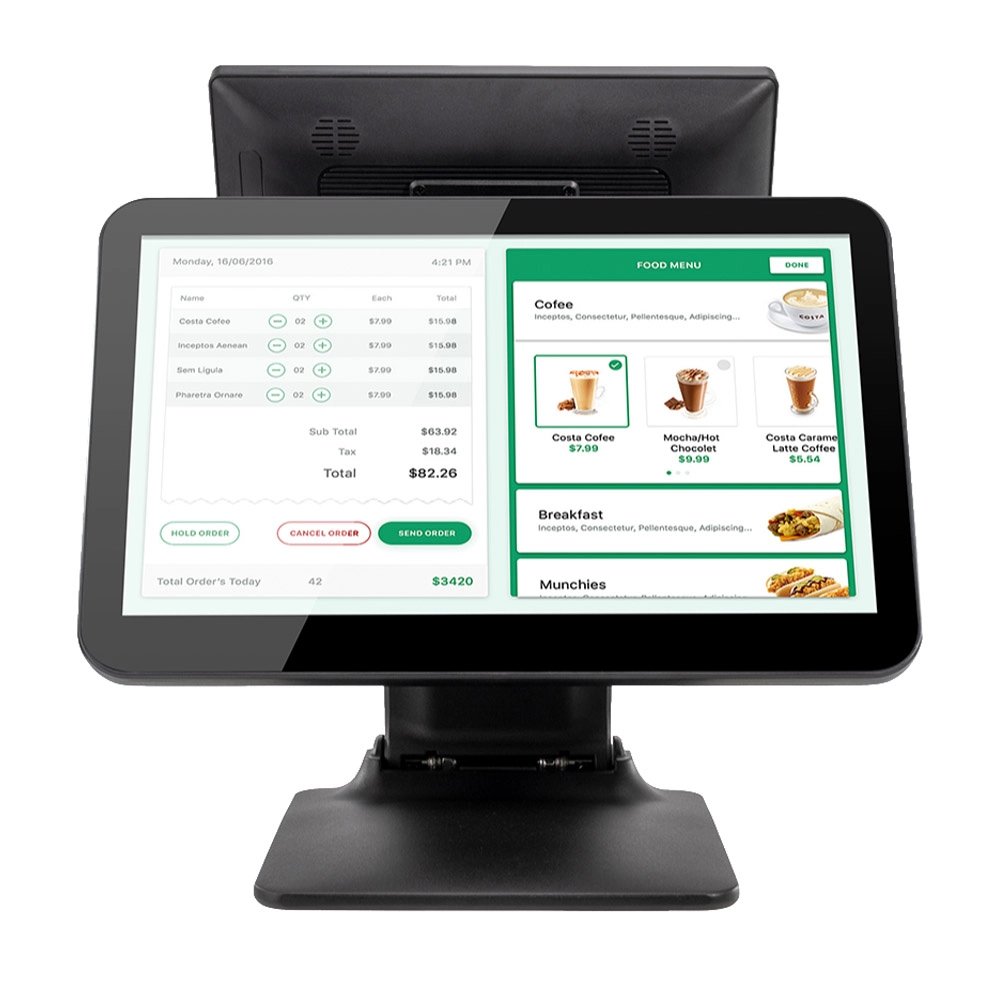
Foldable Touch Screen POS Cash Register 15.6'' Windows Supplier Aluminum
This innovative cash register combines portability with advanced functionality, making it ideal for retail environments. Its aluminum construction ensures durability while maintaining a lightweight design for easy transport and setup. The foldable feature allows for convenient storage and flexibility in various business settings.
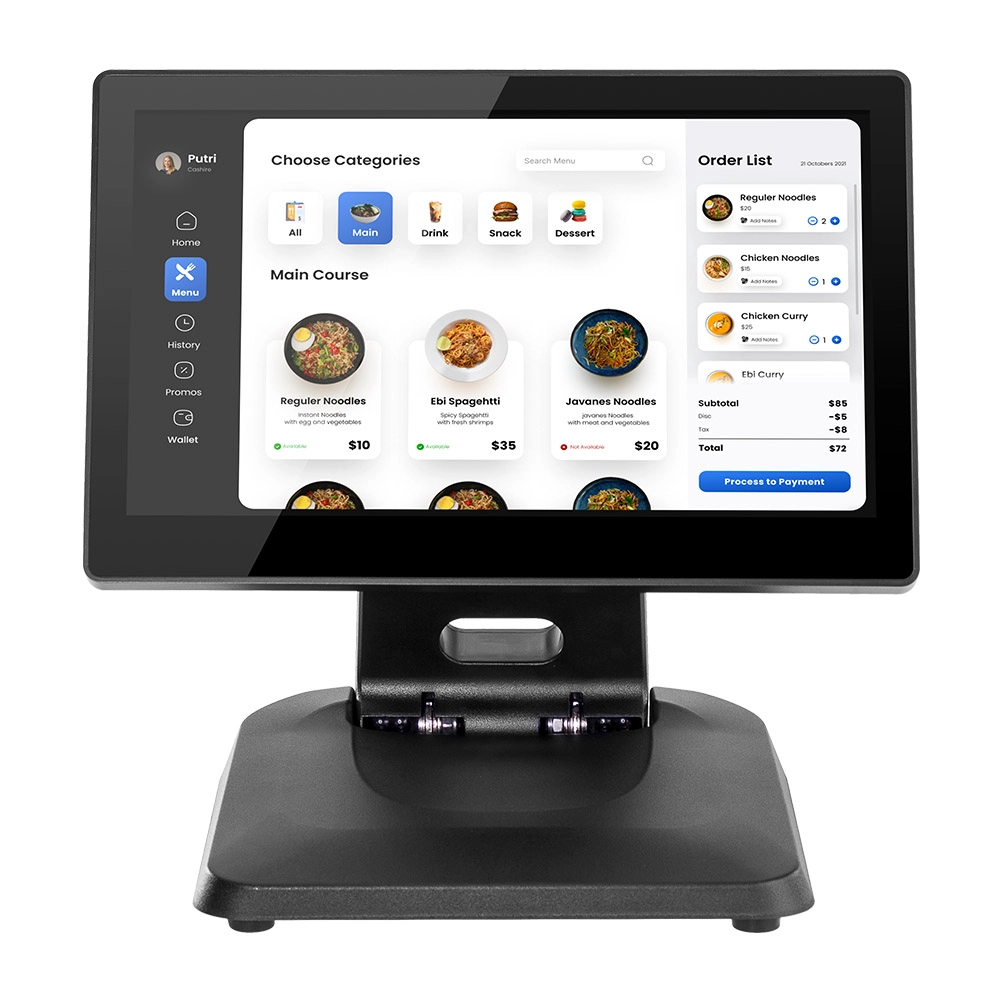
Factory 11.6'' Touch Screen POS Terminal Android Windows
The Factory 11.6'' Touch Screen POS Terminal is a versatile solution that supports both Android and Windows operating systems. Designed for durability and efficiency, this terminal is perfect for various retail environments. Its compact size and responsive touch screen enhance customer interactions, making transactions quick and seamless.
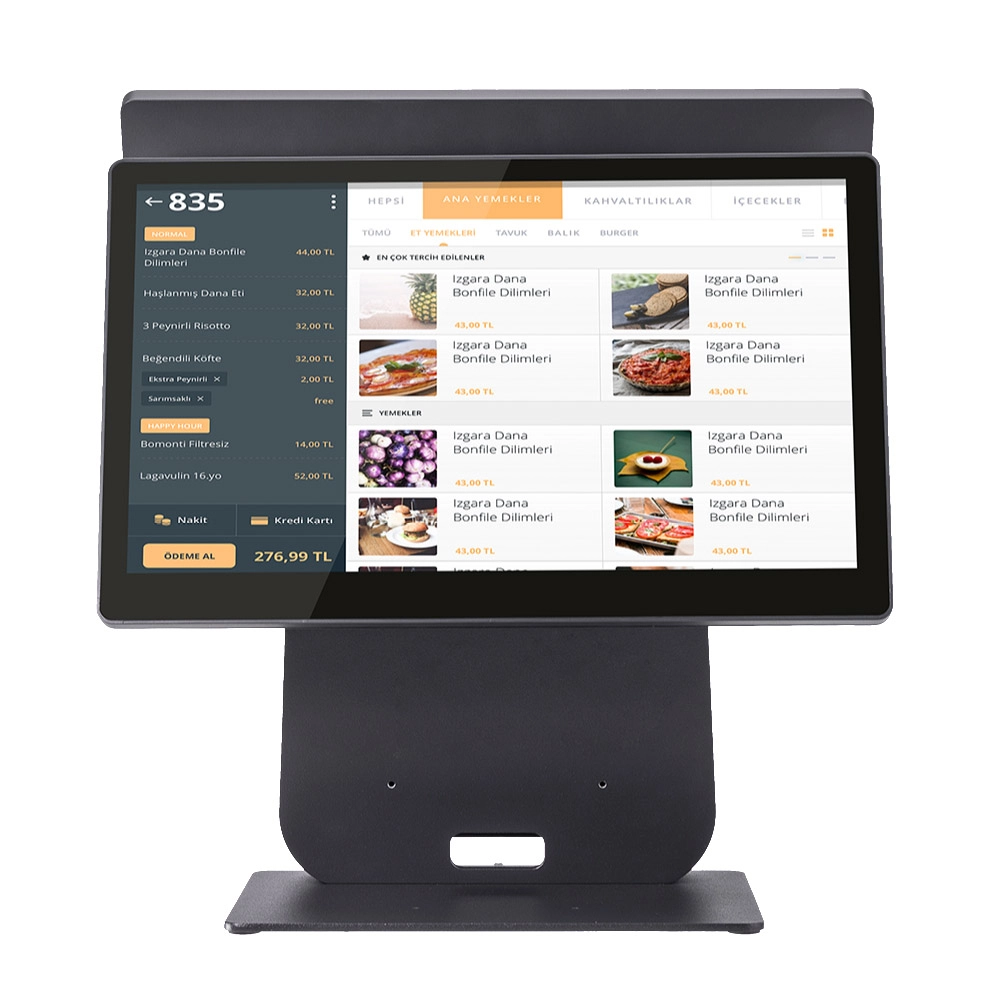
HD Dual Screen POS Machine Aluminum Hardware Android Windows Supplier
This dual-screen POS machine supports both Android and Windows systems, providing flexibility for various applications. The dual screens enhance customer interaction and streamline the checkout process, making transactions quicker and more engaging. Perfect for modern businesses looking to elevate their service and improve customer satisfaction, this POS machine is your ultimate partner in success!
Get in touch
Interested in becoming a POS system dealer? Contact us for more information and start the process of joining our dealer network.
We look forward to working with you to expand the market together.


Copyright © 2025 Favorpos All Rights Reserved.
