
How to set up multi-station touch screen POS terminals?
- 1) How do I configure a multi-station touch screen POS terminal network so inventory updates are truly real-time across 10+ terminals and avoid double-selling?
- 2) What's the best way to ensure EMV/contactless payments work across multiple touch screen POS terminals with a single payment gateway while staying PCI-compliant?
- 3) How can I set up offline transaction failover for multi-station touch screen POS terminals and safely reconcile later without duplicate charges or inventory errors?
- 4) How do I minimize peripheral conflicts (receipt printers, cash drawers, barcode scanners) when adding multi-station touch screen POS terminals on mixed OS environments (Windows Android iPad)?
- 5) What network topology and QoS settings reliably support 20+ touch screen POS terminals, kitchen displays, and handhelds without packet loss or payment timeouts?
- 6) How to implement role-based access control, remote device management, and secure OTA updates for multi-station touch screen POS terminals across multiple locations?
- Conclusion: Advantages of Multi-Station Touch Screen POS Terminal Architectures
How to Set Up Multi-Station Touch Screen POS Terminals: 6 Expert Questions Answered
When evaluating a touch screen POS terminal for single or multi-station deployments, buyers face nuanced technical and compliance trade-offs not well covered by vendor marketing. Below are six long-tail, pain-point-focused questions beginners often ask but rarely find detailed, current answers to. Each question includes concrete, standards-aligned steps and decision criteria so you can evaluate hardware, software, and network design before purchase.
1) How do I configure a multi-station touch screen POS terminal network so inventory updates are truly real-time across 10+ terminals and avoid double-selling?
Why this matters: Fast-moving retail and restaurant environments require inventory state to be consistent across multiple touch screen POS terminals. Naive setups cause oversells or inconsistent stock counts.
Recommended approach:
- Choose a central authoritative database: Use a single source of truth — either a cloud-hosted relational DB (PostgreSQL, MySQL) or an on-premise server running the same DB — rather than peer-to-peer syncing. Relational DBs give transactional (ACID) guarantees which reduce race conditions.
- Use server-side transactions with optimistic locking: Each sale should be processed as a single atomic transaction that decrements inventory and writes an auditable transaction record. Implement optimistic locking (version or timestamp columns) so concurrent writes fail gracefully and can be retried rather than silently creating inconsistent quantities.
- Avoid eventual-only sync for critical SKUs: Eventual consistency (typical of some NoSQL or batch-sync systems) is acceptable for analytics but not for sellable inventory. If you must use eventual models, keep fast-moving SKUs in the relational/ACID store and less-critical data in the async layer.
- Use websocket or push-based cache invalidation: To make changes visible immediately at the UI level on all touch screen POS terminals, push inventory change events from the server to connected terminals via websocket, MQTT, or a managed pub/sub (AWS IoT, Azure Service Bus). Polling every few seconds increases latency and network load.
- Scale with read replicas and API layers: Use read replicas for heavy reporting queries and an API gateway to throttle expensive calls. Ensure transactional writes always hit the primary DB to maintain consistency.
- Test under load: Simulate your expected peak concurrency (orders/minute) with a staging setup. Verify that transactional latency remains low enough to avoid user-facing timeouts on your touch screen POS terminal UI.
Result: A multi-station touch screen POS terminal environment designed this way prevents double-selling while providing near-real-time visibility across terminals.
2) What's the best way to ensure EMV/contactless payments work across multiple touch screen POS terminals with a single payment gateway while staying PCI-compliant?
Why this matters: Payment failures or non-compliance can be costly. Multi-station setups increase the attack surface and complexity for EMV/contactless payment routing.
Practical steps and standards to follow:
- Use certified payment terminals or P2PE modules: Prefer PCI P2PE (Point-to-Point Encryption) certified hardware modules or fully certified EMV card readers. These reduce PCI scope because card data is encrypted at the reader before entering your POS system.
- Tokenize at the gateway: Route payments through a PCI-compliant payment gateway that returns tokens. Store only tokens and authorization IDs in your POS backend; never store raw PAN data.
- Adopt consistent software integration: All touch screen POS terminals should use the same SDK/API version for payment readers and follow EMVCo guidelines. Different firmware/SDK versions across terminals often cause intermittent declines or acceptance issues.
- Network segmentation and TLS: Segment payment traffic onto its own VLAN and use TLS 1.2+ for any control-plane messages with your payment gateway. Ensure strict firewall rules limit traffic to payment gateway IPs and ports.
- Certificate and firmware management: Maintain up-to-date firmware and certificates on card readers. Plan for a managed OTA process for payment peripherals to keep them EMV and gateway-compatible.
- Compliance verification: Work with your acquiring bank or a PCI QSA to validate your architecture. Document tokenization, P2PE usage, and network segmentation in your PCI SAQ or ROC as applicable (PCI DSS v4.0 guidance applies).
Result: A unified, secure payment flow across all touch screen POS terminals minimizes declines, reduces PCI scope, and improves reliability.
3) How can I set up offline transaction failover for multi-station touch screen POS terminals and safely reconcile later without duplicate charges or inventory errors?
Why this matters: Network outages are inevitable. Offline-capable touch screen POS terminals must accept payments and orders locally and later reconcile without duplication or data loss.
Best-practice strategy:
- Design idempotent transactions: Each transaction recorded offline needs a globally unique ID (GUID) generated by the terminal. When the central server receives the record, it should check for that ID to avoid duplicate processing.
- Use local write-ahead logs: Store offline transactions in an encrypted local write-ahead log on the terminal. This allows safe retry after connectivity is restored and provides an audit trail.
- Payment-specific handling: If using P2PE/tokenization, offline card acceptance should either use an offline-approved EMV flow with issuer offline approvals (rare in retail) or require network connectivity for authorization. Many merchants restrict card acceptance offline to avoid chargeback risk; consider business risk tolerance.
- Reconciliation workflow: When connectivity returns, push offline transactions in chronological order. The server should reconcile by checking transaction IDs and matching payment tokens/authorization IDs. Flag any mismatches for manual review.
- Operational controls: Display a clear indicator on the touch screen POS terminal when operating offline and restrict high-risk operations (returns, voids) where necessary until connectivity is restored.
Result: Offline failover with idempotency, encrypted local storage, and clear operational controls prevents duplicate charges and maintains inventory integrity when used correctly.
4) How do I minimize peripheral conflicts (receipt printers, cash drawers, barcode scanners) when adding multi-station touch screen POS terminals on mixed OS environments (Windows Android iPad)?
Why this matters: Peripheral compatibility and driver issues are a common source of deployment delays and user frustration across multi-station touch screen POS terminal environments.
Mitigation and configuration guidelines:
- Prefer networked (Ethernet) receipt printers: Ethernet printers avoid USB driver mismatches across platforms. They also support sharing via a print queue or direct IP printing from each terminal.
- Use standard protocols: Choose peripherals that support ESC/POS, OPOS, or POS for .NET where possible. For cross-platform deployments, ESC/POS (over TCP) or raw socket printing is usually the most portable option.
- Assign dedicated per-terminal devices: When possible, attach a physical cash drawer or dedicated receipt printer per touch screen POS terminal. Shared peripheral scenarios (one printer serving multiple terminals) require a print server or queue and add complexity and single-point-of-failure risk.
- Use middleware for mixed OS: Deploy a small local print/service broker (a lightweight middleware service) on a stable local server to normalize peripheral commands for all terminals. Terminals send standardized API calls to the broker, which handles OS-specific drivers.
- USB & COM handling: For barcode scanners and serial devices, prefer USB-HID scanners (plug-and-play) or Ethernet/serial-bridge devices. Avoid proprietary serial drivers where possible; test each peripheral with every terminal OS in a pilot site.
- Document driver and firmware baselines: Maintain a baseline list of tested OS versions, driver versions, and firmware for each peripheral. Manage updates centrally to avoid inconsistencies across touch screen POS terminals.
Result: Choosing networkable peripherals, standard protocols, and a middleware layer reduces cross-OS friction and increases deployment speed for multi-station touch screen POS terminals.
5) What network topology and QoS settings reliably support 20+ touch screen POS terminals, kitchen displays, and handhelds without packet loss or payment timeouts?
Why this matters: Poorly designed networks cause timeouts, slow UI responses on the touch screen POS terminal, and payment issues — costing sales and customer satisfaction.
Recommended network architecture:
- Segmentation: Create separate VLANs for POS terminals, payment devices, guest Wi‑Fi, and back-office traffic. This limits broadcast domains and reduces interference between traffic types.
- PoE and wired preference: Use wired Ethernet for fixed touch screen POS terminals and kitchen displays where possible to reduce wireless contention. Use PoE switches to power devices and simplify cabling.
- Wi‑Fi design for handhelds: If handhelds or tablets are wireless, design a proper enterprise WLAN: dual 5GHz/2.4GHz SSIDs, controller-based roaming, multiple APs with channel planning, and 802.11r/k for fast roaming. Prefer 5GHz for POS traffic where range permits.
- Quality of Service: Configure QoS to prioritize payment gateway traffic and POS API calls. Prioritize TCP/UDP flows to gateway IPs/ports and reduce latency for websocket or real-time push channels.
- Redundancy: Use redundant uplinks, dual ISPs, or a cellular failover for the point-of-sale network to reduce single points of failure. Locally cache transactions as described previously.
- Switching and wiring: Use managed layer-2+/layer-3 switches, avoid consumer-grade unmanaged switches at scale, and ensure proper CAT6 cabling for gigabit connectivity.
- Monitoring: Implement SNMP or network monitoring (latency, packet loss) and set alerts on jitter or TCP retransmission rate increases. Proactive monitoring prevents slow degradations that affect payment latency.
Result: A segmented, QoS-enabled wired backbone with a managed WLAN for handhelds ensures predictable performance for multi-station touch screen POS terminals and reduces payment timeouts and UI lag.
6) How to implement role-based access control, remote device management, and secure OTA updates for multi-station touch screen POS terminals across multiple locations?
Why this matters: As deployments scale to many touch screen POS terminals and sites, manual device maintenance becomes costly and insecure without centralized controls.
Implementation blueprint:
- Centralized device management (MDM/EMS): Use a mobile device management (MDM) or endpoint management solution that supports your terminal OS (Android, Windows, iPadOS). This enables remote provisioning, configuration profiles, and remote wipe for lost terminals.
- Role-based access control (RBAC): Implement RBAC in both the POS application and back-office systems. Map roles to least privilege (cashier, manager, accountant) and use SSO with SAML or OIDC where possible. Log and audit privilege escalations.
- Secure OTA updates: Sign application and firmware updates. Deliver updates over encrypted channels (HTTPS/TLS) and test them in a canary pool of terminals before full rollout. Maintain rollback capability in case of failures.
- Authentication and keys: Store keys and tokens in a hardware-backed keystore or TPM where available. Rotate API keys and certificates on a regular schedule and immediately when a device is decommissioned.
- Monitoring and alerting: Centralize logs (syslog, application logs) to a secure SIEM or logging service and alert on suspicious behavior (repeated login failures, configuration drift, or unexpected reboots).
- Operational playbooks: Create documented escalation paths for lost devices, failed updates, or security incidents, and train staff across locations to follow them.
Result: Centralized device management plus RBAC and secure OTA reduces operational overhead, tightens security posture, and keeps touch screen POS terminals consistent across sites.
Conclusion: Advantages of Multi-Station Touch Screen POS Terminal Architectures
When designed with a central transactional database, P2PE/tokenized payments, offline idempotency, network segmentation, standardized peripherals, and centralized device management, multi-station touch screen POS terminal systems deliver faster checkout, unified inventory, lower PCI scope, and scalable operations. These patterns reduce double-sells, minimize payment risk, and simplify maintenance across many locations.
For a tailored multi-station touch screen POS terminal solution and hardware/software selection aligned to your store count and transaction volume, contact FavorPOS for a quote at sales2@wllpos.com or visit www.favorpos.com.
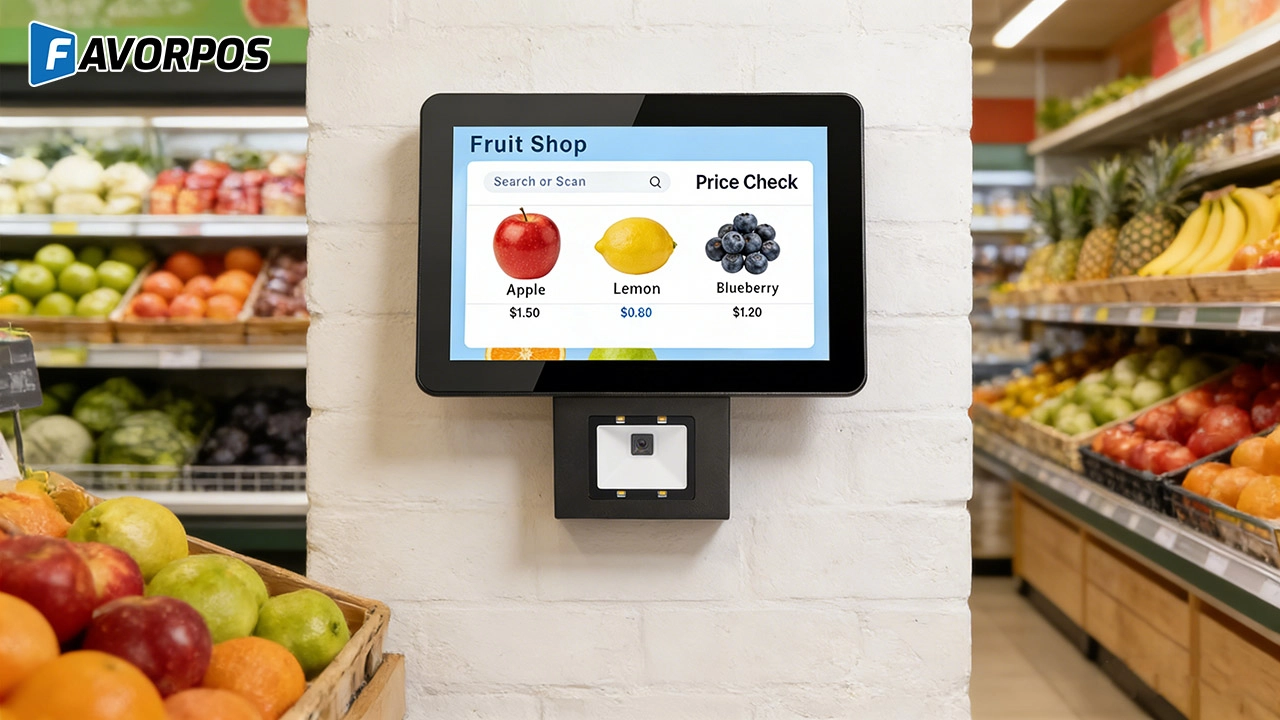
The Smart Way to Check Prices: How a 10.1-Inch Wall-Mounted Price Checker Transforms Retail Stores
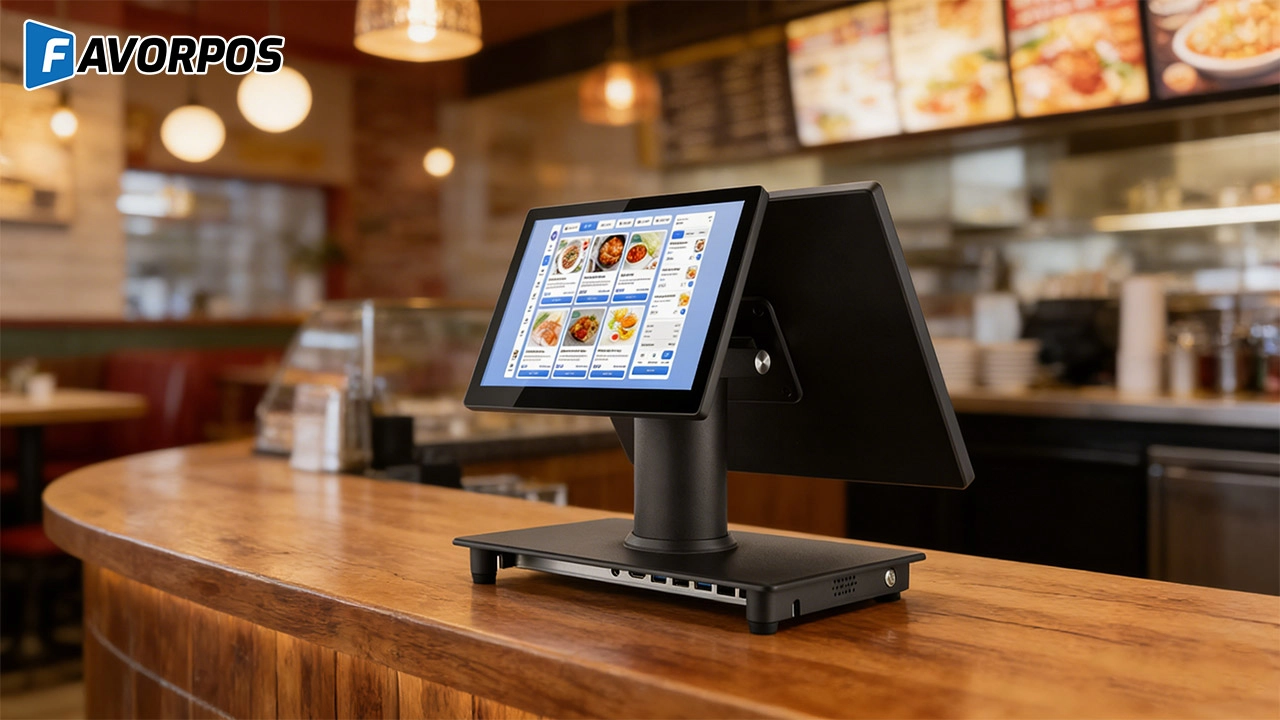
A Smarter Checkout Experience: The 15-Inch Dual-Screen POS Built for Modern Retail
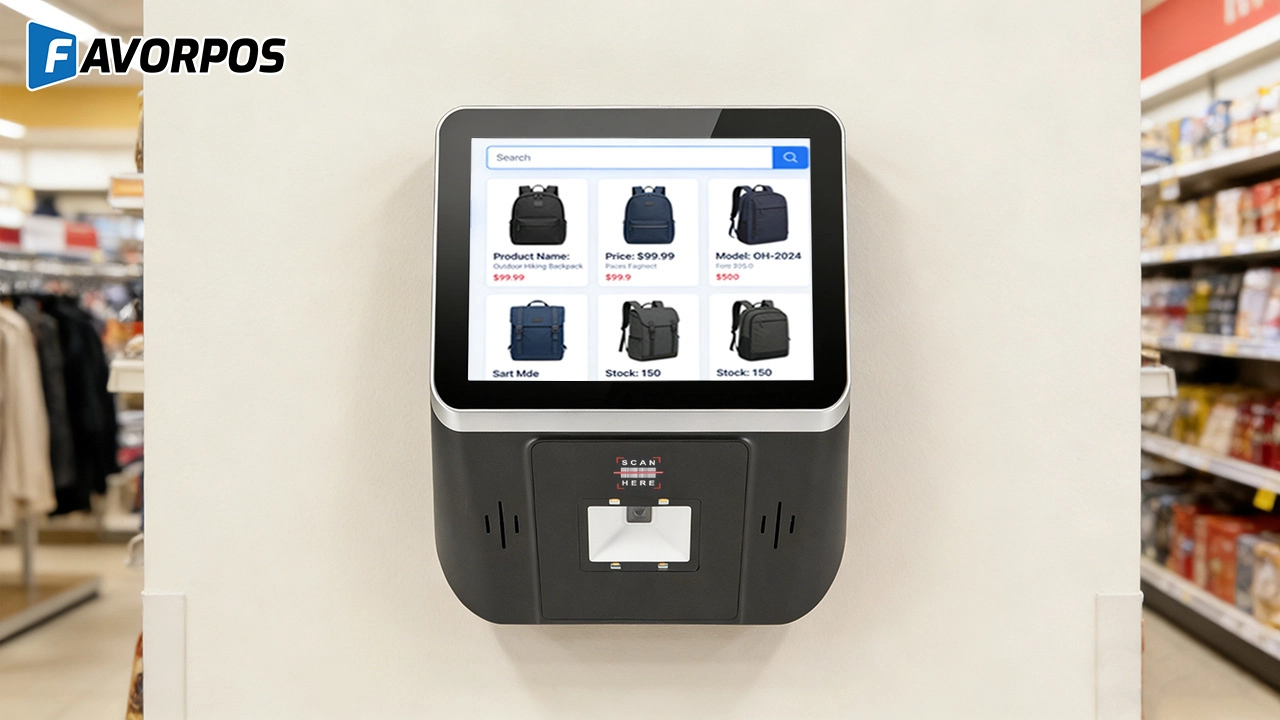
8-Inch Smart Price Checker: A Small Device Powering Smarter Retail Spaces
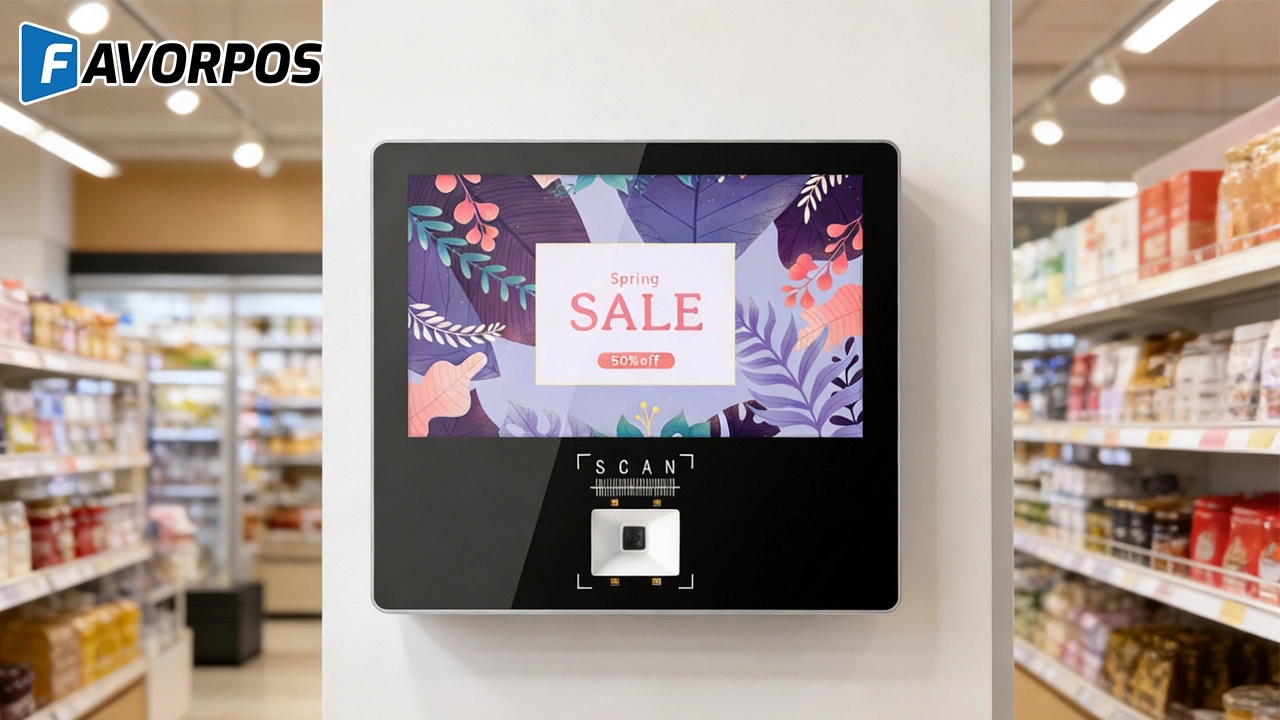
Built for Retail Precision: Manufacturing Excellence Behind the 11.6” Smart Price Checker
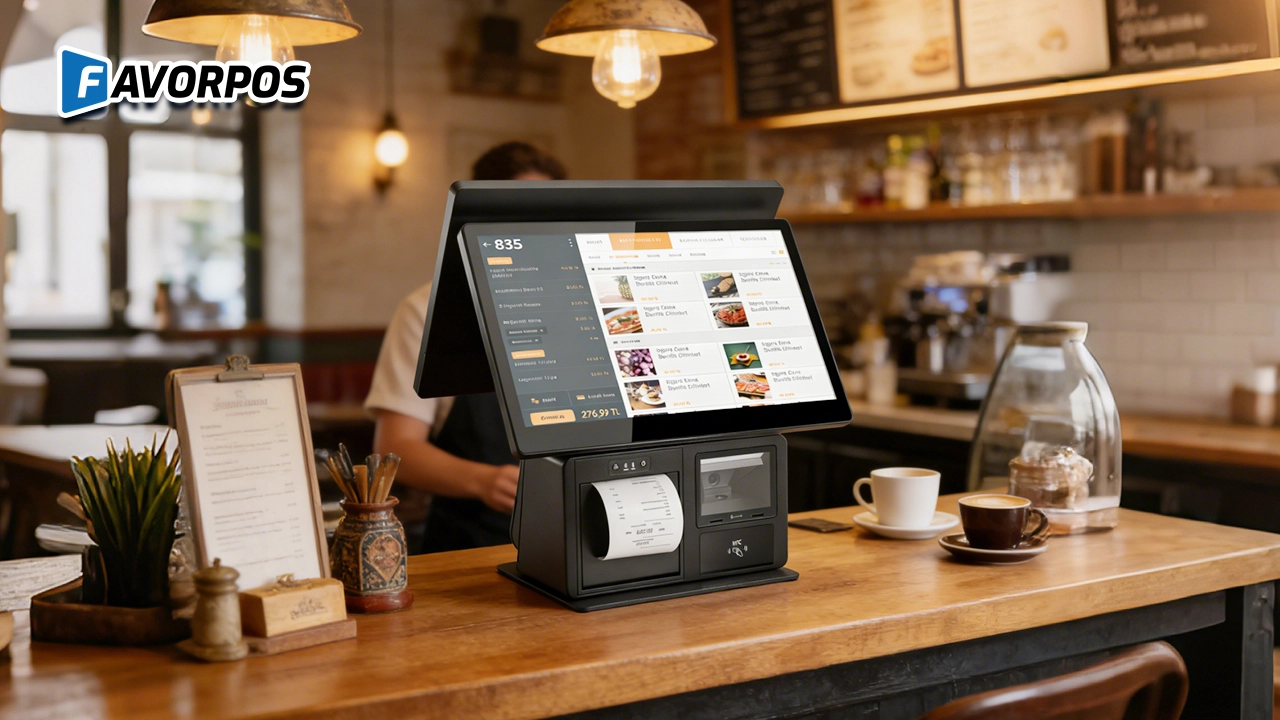
Building Stability in an Unstable Market: A 15.6-Inch All-in-One POS Designed for the Long Term
For Government and Public
What reporting and analysis capabilities does the system provide?
Our system provides detailed financial reports, usage insights and other analytical features to help you track performance, optimize resource allocation and improve service delivery.
For Distributor
What kind of support will I receive as a reseller?
As a reseller, you will receive comprehensive support, including product training, technical assistance, and support from a dedicated account management team.
For OEM
Do you provide technical support and training services?
Yes, we provide comprehensive online technical support and training services to help your team become familiar with the operation and maintenance of POS machines.
How do we start customizing POS machines?
To start customizing POS machines, please first contact our sales team with your needs and specifications. We will arrange a detailed consultation to understand your specific requirements and provide a design plan and quotation.
For Beauty and Wellness
What payment methods does the system support?
Our system supports a variety of payment methods, including credit cards, digital wallets and contactless payments, providing customers with a convenient payment experience.

Aluminum Dual Screen Pos Terminal Pos Systems 15.6 inch Touchscreen Pos
FAVORPOS Aluminum Dual Screen POS Terminal features a 15.6-inch touchscreen, ideal for seamless transactions. As a trusted OEM Windows POS manufacturer, we deliver durable, high-performance solutions tailored for retail and hospitality businesses.

Android Handheld Pos Device Touch Screen Pos Terminal Manufacturer
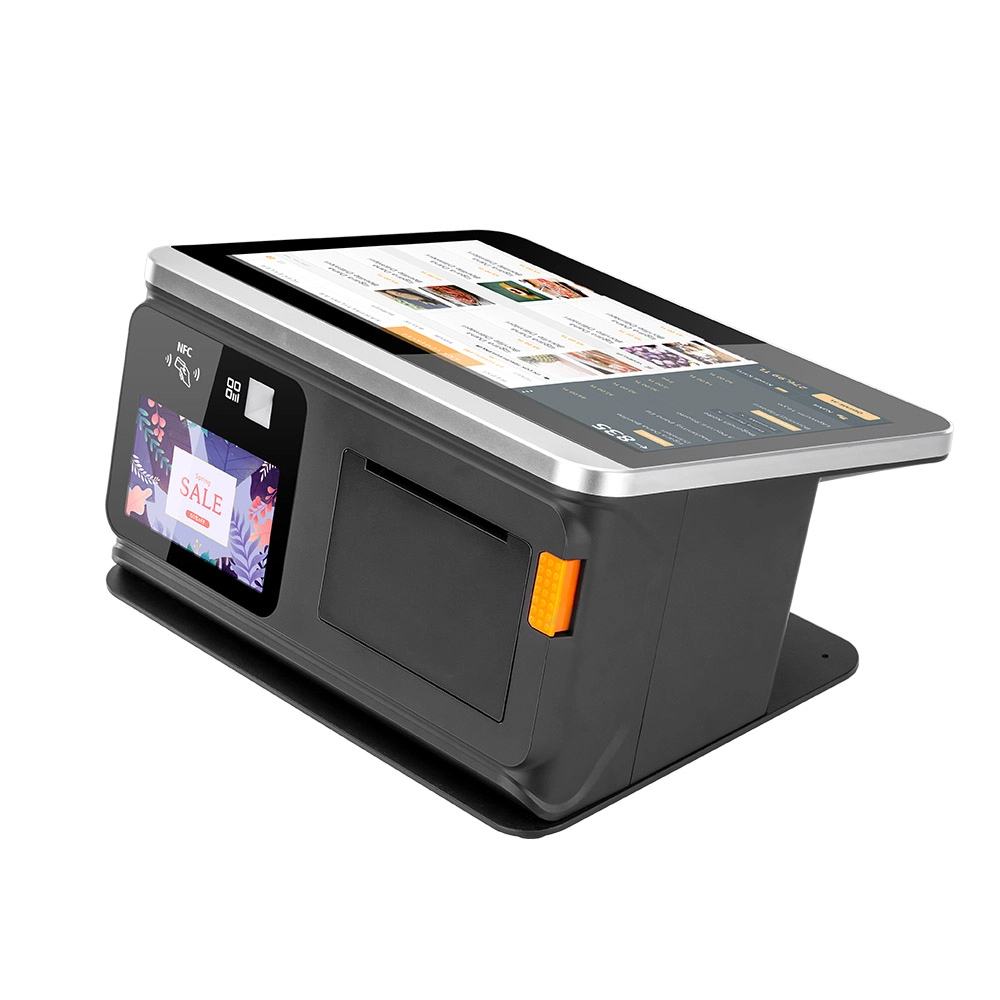
All in One POS Terminal Metal 11.6'' Touchscreen Android Windows with Printer
The All-in-One POS Terminal features an 11.6'' touchscreen display, compatible with both Android and Windows. This metal-constructed terminal combines durability with style, making it a perfect fit for any retail or hospitality environment. Equipped with a built-in printer, it streamlines transactions by allowing for instant receipt printing.
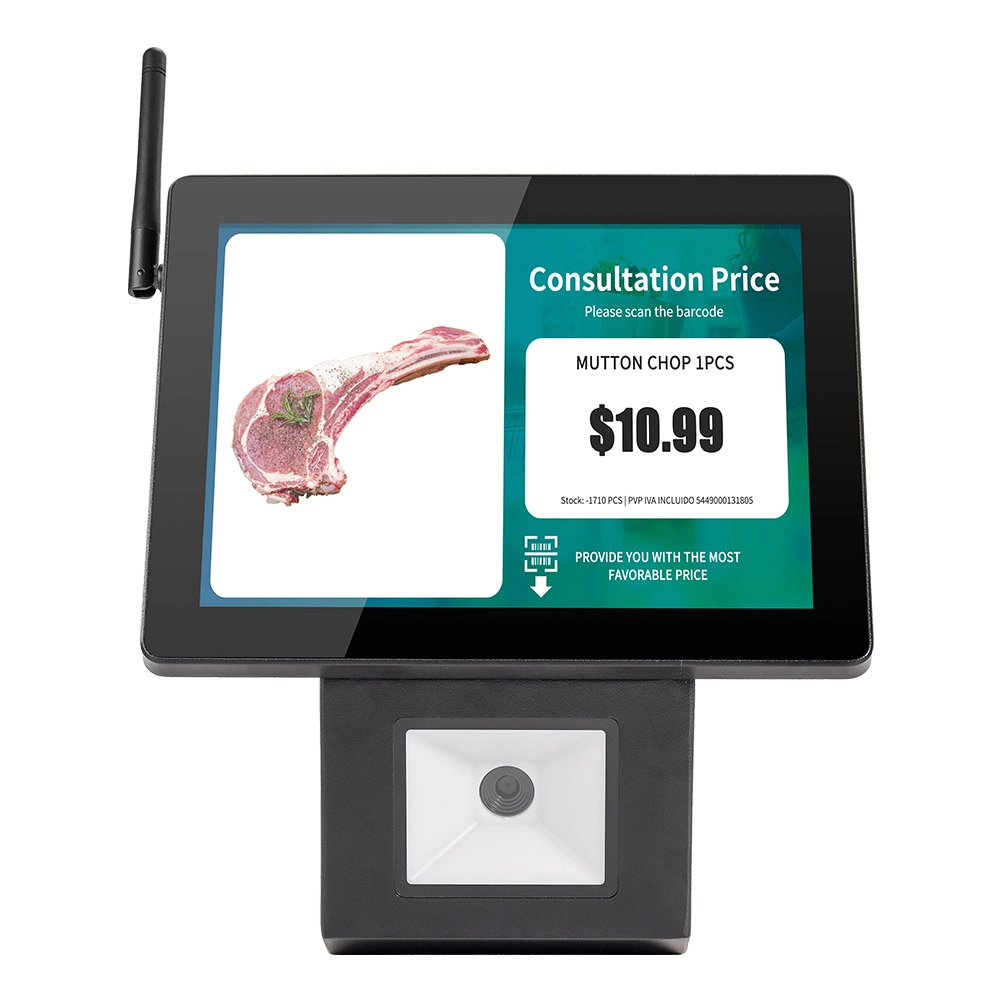
8 inch Touchscreen Price Checker Barcode Scanner Wifi Optional Android Win 10
FAVORPOS Touchscreen Price Checker offers a user-friendly interface, perfect for retail environments. With optional Wi-Fi connectivity, this device runs on Android or Windows, providing flexibility and ease of use. The integrated barcode scanner allows for quick price verification, enhancing the shopping experience for customers. Compact and efficient, it's designed to streamline operations and improve checkout speed.
Get in touch
Interested in becoming a POS system dealer? Contact us for more information and start the process of joining our dealer network.
We look forward to working with you to expand the market together.


Copyright © 2025 Favorpos All Rights Reserved.
