
What are the different types of cost of barcode scanner?
- What are the Different Types of Cost of Barcode Scanner?
- Unveiling the True Cost of Barcode Scanners for Your Business
- Initial Purchase Price: The Gateway to Barcode Scanner Ownership
- Software and Licensing Costs: Powering Your Scanning Operations
- Integration and Setup Costs: Making Your System Work Together
- Training Costs: Equipping Your Team for Efficiency
- Maintenance and Repair Costs: Ensuring Longevity and Performance
- Operational Costs: The Day-to-Day Expenses
- Downtime Costs: The Hidden Drain on Your Business
- Upgrade and Replacement Costs: Future-Proofing Your Investment
- Hidden Costs: The Unforeseen Challenges
- Evaluating ROI and Long-Term Value of Your Barcode Scanner Investment
- Why Choose FAVORPOS for Your Barcode Scanner Needs?
- Conclusion: Making a Smart Barcode Scanner Investment
- Frequently Asked Questions About Barcode Scanner Costs
What are the Different Types of Cost of Barcode Scanner?
Unveiling the True Cost of Barcode Scanners for Your Business
In the fast-paced world of retail, catering, and supermarkets, efficiency and accuracy are paramount. Barcode scanners stand as indispensable tools, streamlining operations from inventory management to checkout processes. As a business owner, when you consider integrating these high-tech devices into your Point of Sale (POS) system, the immediate question that often arises is: What is the cost of barcode scanner? However, the initial purchase price is merely the tip of the iceberg. A comprehensive understanding of the total cost of ownership (TCO) involves delving into various direct and indirect expenses that can significantly impact your budget and operational efficiency in the long run. At FAVORPOS, a trusted provider of advanced POS systems and solutions, we understand that smart investments lead to sustainable success. This guide aims to illuminate the multifaceted financial considerations involved in acquiring and maintaining barcode scanners, empowering you to make well-informed decisions that truly drive your business forward.
Initial Purchase Price: The Gateway to Barcode Scanner Ownership
This is perhaps the most obvious and immediate cost of barcode scanner you'll encounter. The price can vary significantly based on the type, features, brand, and build quality of the scanner.
- Type of Scanner: Handheld scanners (wired or wireless), presentation scanners, in-counter scanners, and industrial-grade scanners each come with different price points. Entry-level 1D handheld scanners, suitable for basic retail needs, might range from $50 to $200. More advanced 2D handheld or wireless models, capable of reading QR codes and digital barcodes, typically fall between $200 and $500. For high-volume environments like supermarkets or manufacturing, industrial-grade or fixed-mount scanners with advanced capabilities and durability can cost upwards of $500 to $2000 or more.
- Features: Wireless capabilities (Bluetooth, Wi-Fi), ruggedness (IP ratings for dust and water resistance), scanning speed, reading distance, and advanced decoding capabilities (e.g., damaged barcodes) all add to the price. For instance, a wireless barcode scanner offers greater mobility but will generally be more expensive than its wired counterpart.
- Brand Reputation: Established brands known for reliability and customer support might command higher prices, but often offer better long-term value through durability and performance.
- New vs. Refurbished/Used: While refurbished or used scanners can offer a lower initial barcode scanner price, they often come with shorter warranties and a higher risk of early failure, potentially leading to increased maintenance or replacement costs down the line. For critical business operations, investing in new, high-quality hardware is often the more prudent choice.
Software and Licensing Costs: Powering Your Scanning Operations
While many barcode scanners operate as simple data input devices, their true value is unlocked when integrated with robust software. This integration can introduce additional cost of barcode scanner considerations:
- POS System Software: Most modern barcode scanners are plug-and-play with contemporary POS systems. However, if your existing POS software requires specific drivers, updates, or modules to fully utilize advanced scanner features (e.g., inventory management, age verification), there might be associated licensing or upgrade fees. FAVORPOS offers comprehensive POS solutions designed for seamless integration with a wide range of peripherals.
- Inventory Management Software (IMS): For businesses heavily reliant on inventory tracking, a dedicated IMS can be crucial. While some POS systems include basic inventory features, advanced IMS solutions often come with their own licensing fees, either as a one-time purchase or a recurring subscription. The scanner serves as the data collection front-end for this software.
- Specific Application Software: Certain specialized applications, such as asset tracking, library management, or mobile retail apps, may require proprietary software licenses to interface with barcode scanners, adding another layer to your total cost of barcode scanner investment.
Integration and Setup Costs: Making Your System Work Together
The physical purchase is just the beginning. Getting your new barcode scanner to seamlessly communicate with your existing POS system and network can incur setup costs:
- IT Services: If you lack in-house IT expertise, you might need to hire external technicians to configure the scanner, install necessary drivers, and ensure it integrates smoothly with your POS software, inventory system, or cloud platform. This can involve hourly rates or a flat project fee, impacting the overall cost of barcode scanner deployment.
- Network Infrastructure: For wireless or networked scanners, you might need to ensure your Wi-Fi network is robust enough, or that you have adequate network ports and cabling. Upgrading network hardware or expanding Wi-Fi coverage can be an unforeseen expense.
- Data Migration/Synchronization: If you're upgrading or switching systems, migrating existing product data (SKUs, prices, descriptions) to ensure compatibility with the new scanner setup and POS system can be a complex task that might require professional assistance, adding to the setup cost of barcode scanner.
Training Costs: Equipping Your Team for Efficiency
A high-tech barcode scanner is only as good as the person operating it. Employee training is an often-overlooked but vital cost of barcode scanner component:
- Staff Productivity Loss: The time employees spend in training is time they are not performing their regular duties, representing an indirect cost. This can range from a few hours for a simple handheld scanner to several days for a complex system involving multiple types of scanners and integrated software.
- Trainer Fees: If you opt for external trainers or specialized courses, these fees can add up. Some POS system providers, like FAVORPOS, offer training as part of their comprehensive solution packages, which can reduce this particular barcode scanner price factor.
- Training Materials: Developing or purchasing training manuals, videos, or e-learning modules also contributes to this cost category.Proper training ensures that your team can efficiently use the scanner, minimizing errors and maximizing productivity, thus delivering a quicker return on your overall cost of barcode scanner investment.
Maintenance and Repair Costs: Ensuring Longevity and Performance
Like any electronic device, barcode scanners require maintenance and can experience wear and tear, leading to repair needs. These recurring costs are crucial for assessing the total cost of barcode scanner ownership:
- Warranties and Service Agreements: Most new scanners come with a manufacturer's warranty (typically 1-3 years). Beyond this period, you might consider purchasing extended warranties or service contracts, which can cost 10-20% of the scanner's purchase price annually. These agreements provide peace of mind and can significantly reduce unexpected repair expenses.
- Replacement Parts: Batteries for wireless scanners, cables for wired ones, and protective casings are common components that may need replacement over time. The availability and price of barcode scanner parts can vary.
- Cleaning and Calibration: Regular cleaning, especially of the scanning window, is essential for optimal performance. While often a simple in-house task, specialized environments might require professional calibration or cleaning services.
- Ad-hoc Repairs: Accidents happen. A dropped scanner or a damaged cable can lead to unexpected repair costs. The robustness of the scanner (e.g., its IP rating) can influence the likelihood and frequency of such repairs.
Operational Costs: The Day-to-Day Expenses
These are the ongoing, often subtle, costs associated with the daily use of your barcode scanner:
- Power Consumption: While minimal, battery-powered wireless scanners require charging, and wired scanners draw power. For a single scanner, this cost of barcode scanner is negligible, but for a large fleet, it adds up over time.
- Consumables: Although not directly part of the scanner itself, some barcode scanning operations might necessitate the use of consumables. For example, if you are printing your own barcodes for inventory, you'll need labels and thermal transfer ribbons, which are recurring expenses. While not a direct barcode scanner price, it's an associated operational cost.
- Software Updates: While some updates are free, others, especially major version upgrades, might incur a fee, particularly for specialized software that integrates with the scanner.
- Network Bandwidth: For cloud-connected or network-dependent scanners, the minimal data usage contributes to your overall internet service provider costs.
Downtime Costs: The Hidden Drain on Your Business
Perhaps the most significant, yet often overlooked, cost of barcode scanner is the expense incurred when a scanner malfunctions or breaks down. Downtime directly impacts productivity and customer satisfaction:
- Lost Sales: If your checkout process is hindered by a faulty scanner, customers might abandon their purchases, leading to direct revenue loss. For a busy retail store, every minute of downtime can mean hundreds of dollars in lost sales.
- Reduced Efficiency: Manual data entry or workarounds take significantly longer and are prone to human error, slowing down operations like inventory receiving, stock counting, or customer service. This translates to higher labor costs for the same output.
- Customer Dissatisfaction: Slow service due to equipment failure frustrates customers, potentially damaging FAVORPOS reputation and leading to lost repeat business.
- Labor Costs for Troubleshooting: Employees or IT staff spending time troubleshooting a faulty scanner are diverted from other productive tasks.Investing in reliable, high-quality scanners and proper maintenance schedules can mitigate these substantial indirect barcode scanner price impacts. FavorPOS emphasizes delivering dependable devices to minimize such disruptions.
Upgrade and Replacement Costs: Future-Proofing Your Investment
Technology evolves rapidly, and your barcode scanners will eventually need to be upgraded or replaced. This long-term cost of barcode scanner needs to be factored into your budgeting:
- Technological Obsolescence: Older 1D scanners might become obsolete as 2D barcodes (QR codes, Data Matrix) become more prevalent, requiring an upgrade to 2D imagers. Similarly, advances in wireless technology or connectivity standards might necessitate new hardware.
- End-of-Life (EOL) Devices: Manufacturers eventually discontinue support or parts for older models, making repairs difficult or impossible. Planning for regular hardware refreshes (e.g., every 3-7 years, depending on usage and type) is a smart financial strategy.
- Increased Performance Needs: As your business grows, you might need faster, more durable, or more feature-rich scanners to handle increased transaction volumes or more complex inventory operations.Factoring in these future upgrade cycles into your total cost of barcode scanner projection ensures your business stays competitive and efficient.
Hidden Costs: The Unforeseen Challenges
Beyond the more quantifiable costs, several 'hidden' expenses can emerge if not properly considered:
- Compatibility Issues: Not all scanners work perfectly with all POS systems or operating environments. Incompatibility can lead to significant troubleshooting time and potential replacement costs if a purchased scanner simply won't integrate. FAVORPOS ensures high compatibility with its POS solutions.
- Poor Performance/Accuracy: A cheap, unreliable scanner might misread barcodes, leading to inventory discrepancies, incorrect pricing, and customer disputes. The time and resources spent correcting these errors can far outweigh any initial savings on the cost of barcode scanner.
- Security Risks: Older scanners or those with outdated firmware might pose security vulnerabilities, especially if they are part of a networked system. Updating or replacing them incurs a cost but is vital for data security.
- Environmental Factors: For industrial or outdoor environments, neglecting to purchase ruggedized scanners can lead to premature failure due to dust, moisture, or impact, significantly increasing replacement frequency and the overall cost of barcode scanner over its lifespan.
Evaluating ROI and Long-Term Value of Your Barcode Scanner Investment
While understanding the various types of cost of barcode scanner is essential, it's equally important to consider the return on investment (ROI). A higher initial barcode scanner price for a quality device can lead to significant long-term savings through:
- Increased Efficiency: Faster checkouts, quicker inventory processes, and reduced manual errors directly translate to time savings and increased labor productivity.
- Improved Accuracy: Accurate data leads to better inventory management, reduced stockouts, fewer pricing errors, and improved financial reporting.
- Enhanced Customer Experience: Seamless and rapid transactions leave customers satisfied and encourage repeat business.
- Reduced Operational Costs: Durable scanners require less frequent repairs and replacements, lowering maintenance expenses. Efficient operations also reduce overtime pay for manual tasks.
At FAVORPOS, we believe in providing not just POS hardware but complete solutions that deliver tangible business value. Our range of handheld terminals and scanners, price checkers, and other peripherals are designed with a long-term perspective, ensuring that your investment in the cost of barcode scanner translates into sustained success and operational excellence.
Why Choose FAVORPOS for Your Barcode Scanner Needs?
As a company committed to providing and developing advanced POS systems and solutions, FAVORPOS understands the critical role of every component, including barcode scanners, in your business's success. When considering the cost of barcode scanner, we offer value through:
- Quality and Reliability: Our products are designed for durability and consistent performance, minimizing downtime and reducing long-term maintenance costs. We have a long-term commitment to quality and industry development.
- Seamless Integration: Our scanners and peripherals are built to integrate effortlessly with our comprehensive POS systems, ensuring a smooth setup and operation, thus reducing integration cost of barcode scanner.
- Diverse Solutions: We offer a wide range of scanners suitable for different market segments – retail, catering, supermarkets – ensuring you find the right device that balances performance with your budget. Our current solutions include POS systems and peripherals, cash registers, handheld terminals and scanners, price checkers, thermal printers, and accessories.
- OEM and ODM Services: We provide OEM and ODM services to fully meet customer needs and optimize their business operations, ensuring customized solutions that precisely fit your requirements and budget, optimizing your overall cost of barcode scanner.
- Dedicated Support: Our vision is to become the world's best manufacturer of Point of Sale (POS) systems and solutions. With outstanding dedication to quality and customers, we strive to find the best solutions to support all businesses and improve their efficiency.
Conclusion: Making a Smart Barcode Scanner Investment
Understanding the comprehensive cost of barcode scanner goes far beyond the initial purchase price. It encompasses a spectrum of expenses including software integration, setup, training, ongoing maintenance, potential downtime, and future upgrades. By considering the total cost of ownership, businesses can make strategic decisions that not only fit their budget but also contribute significantly to operational efficiency, accuracy, and customer satisfaction. Investing in high-quality, compatible, and well-supported barcode scanners, like those offered by FAVORPOS, is not just an expense but a critical investment in your business's long-term success and competitive edge in a highly competitive field. Choose wisely, and your barcode scanners will be powerful assets that drive growth and profitability.
Frequently Asked Questions About Barcode Scanner Costs
What is the average cost of a handheld barcode scanner?Entry-level 1D handheld barcode scanners typically range from $50 to $200. More advanced 2D handheld or wireless models usually cost between $200 and $500. Industrial-grade handheld scanners can exceed $500.
Do I need to pay for software to use a barcode scanner?Often, barcode scanners integrate directly with existing POS or inventory management software without additional specific scanner software fees. However, if your business requires specialized features or a dedicated inventory system, there might be associated software licensing or subscription costs.
How much does it cost to integrate a barcode scanner with a POS system?Integration costs vary. Many modern barcode scanners are plug-and-play with POS systems, incurring minimal to no integration costs. For complex setups or custom integrations, professional IT services might be needed, ranging from a few hundred to several thousand dollars depending on complexity.
What are the ongoing costs of owning a barcode scanner?Ongoing costs include potential maintenance and repair (e.g., battery replacements, cable fixes), extended warranties or service agreements (10-20% of purchase price annually), and minimal operational costs like power consumption. Software updates may also incur fees.
How often do barcode scanners need to be replaced?The lifespan of a barcode scanner depends on its quality, usage, and environment. High-quality, durable scanners can last 5-7 years, while entry-level models might need replacement every 3-5 years. Industrial-grade scanners often have longer lifespans. Regular maintenance can extend their operational life.
Is a wireless barcode scanner more expensive than a wired one?Yes, generally, wireless barcode scanners are more expensive than their wired counterparts. This is due to the added technology for wireless communication (Bluetooth, Wi-Fi) and internal battery components.
Can buying a cheaper barcode scanner save me money in the long run?Not necessarily. While the initial cost of barcode scanner might be lower, cheaper scanners can lead to higher long-term costs due to frequent breakdowns, lower accuracy, incompatibility issues, and increased downtime, ly impacting productivity and customer satisfaction. Investing in a reliable scanner often provides better total cost of ownership.
Case Study: How a Bar Increased Revenue with POS
How to Choose the windows touch screen pos manufacturer and supplier ?
Best restaurant pos systems list manufacturers and supplier brands
Best liquor store pos systems manufacturers and supplier brands in China
For company
How do you ensure product quality?
We follow stringent quality control processes, including multi-stage testing and compliance with international standards.
For Grocery and Supermarkets
What types of reports can I generate?
You can generate detailed reports on sales, inventory, employee performance, and customer behavior, providing valuable insights to optimize store operations.
For Healthcare
Can the POS interface be customized to our specific needs?
The interface is highly customizable. We can customize it to your workflow, terminology and specific operational needs.
For ODM
What ODM services are provided?
We provide a full range of services from product concept development to production manufacturing according to customer requirements and designs. We are responsible for all aspects of product design, prototyping, production, quality control, etc. to ensure that your POS solution meets market needs and quality standards.
For Solutions Retail
How long is the warranty period of the equipment?
We provide a standard warranty period of at least one year, and the specific time can be agreed upon according to the terms of the contract.
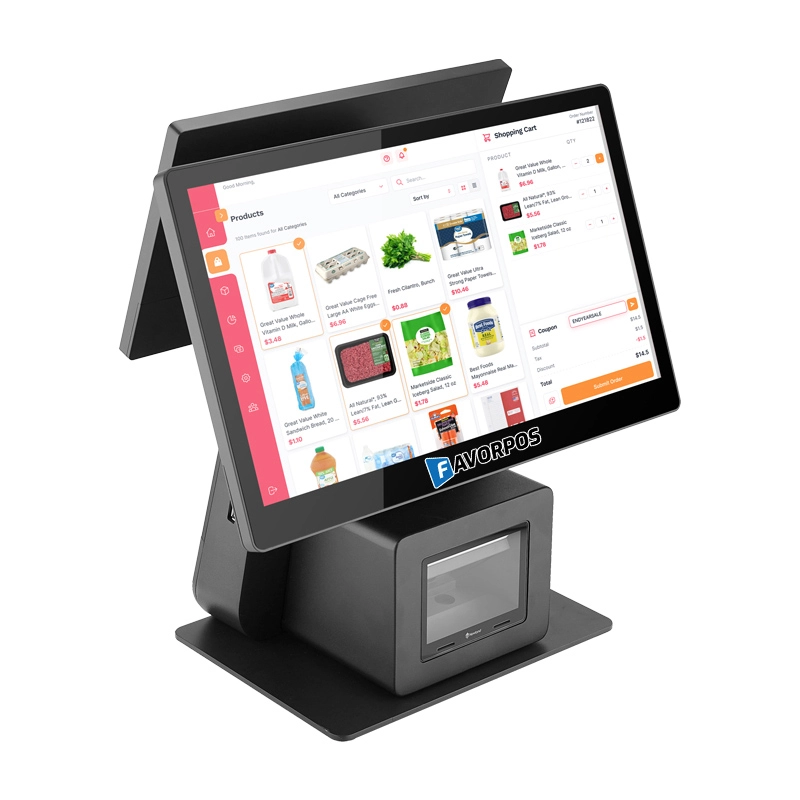
Dual Screen POS With Barcode Scanner Desktop POS Manufacturer POS Factory 15.6 11.6 Client Screen Optional
FAVORPOS: Your leading dual screen POS factory and manufacturer. Our desktop POS with barcode scanner offers 15.6/11.6 client screen options and OS flexibility. Get reliable, efficient dual screen POS with barcode scanner solutions directly from us.
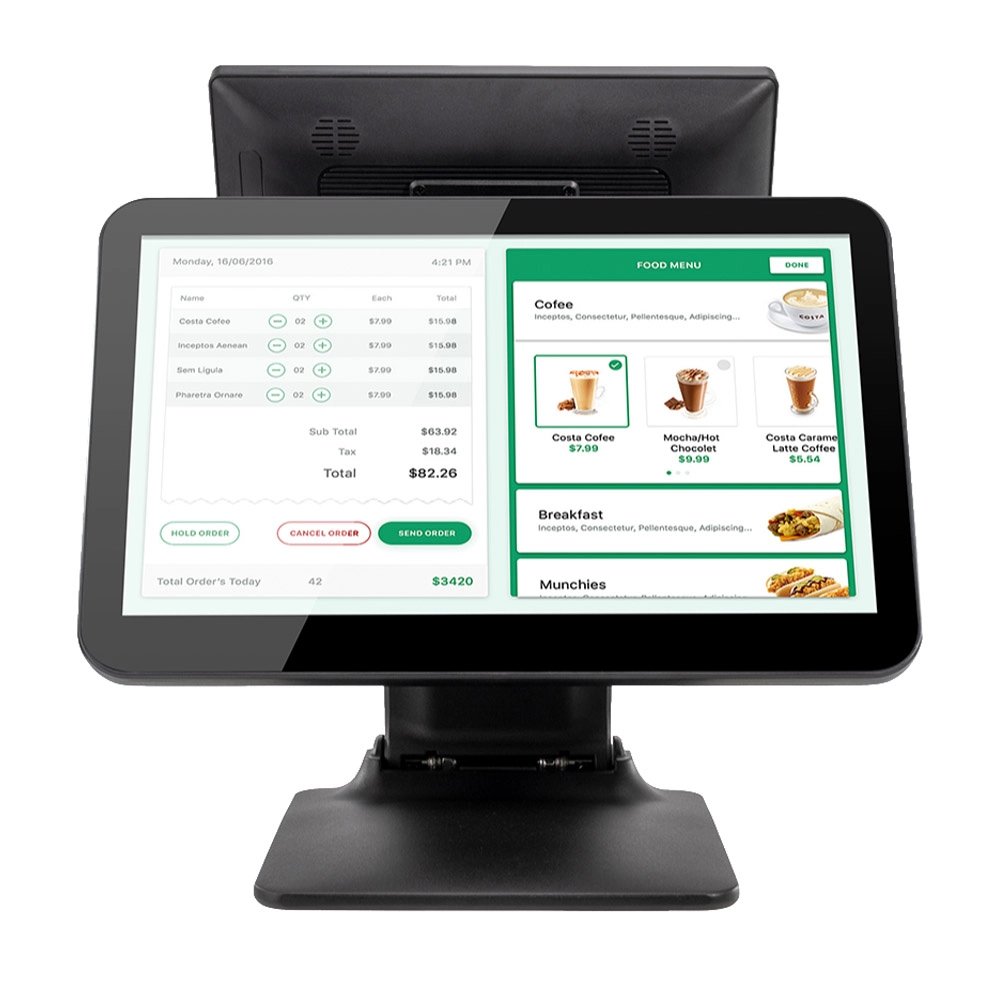
Foldable Touch Screen POS Cash Register 15.6'' Windows Supplier Aluminum
This innovative cash register combines portability with advanced functionality, making it ideal for retail environments. Its aluminum construction ensures durability while maintaining a lightweight design for easy transport and setup. The foldable feature allows for convenient storage and flexibility in various business settings.
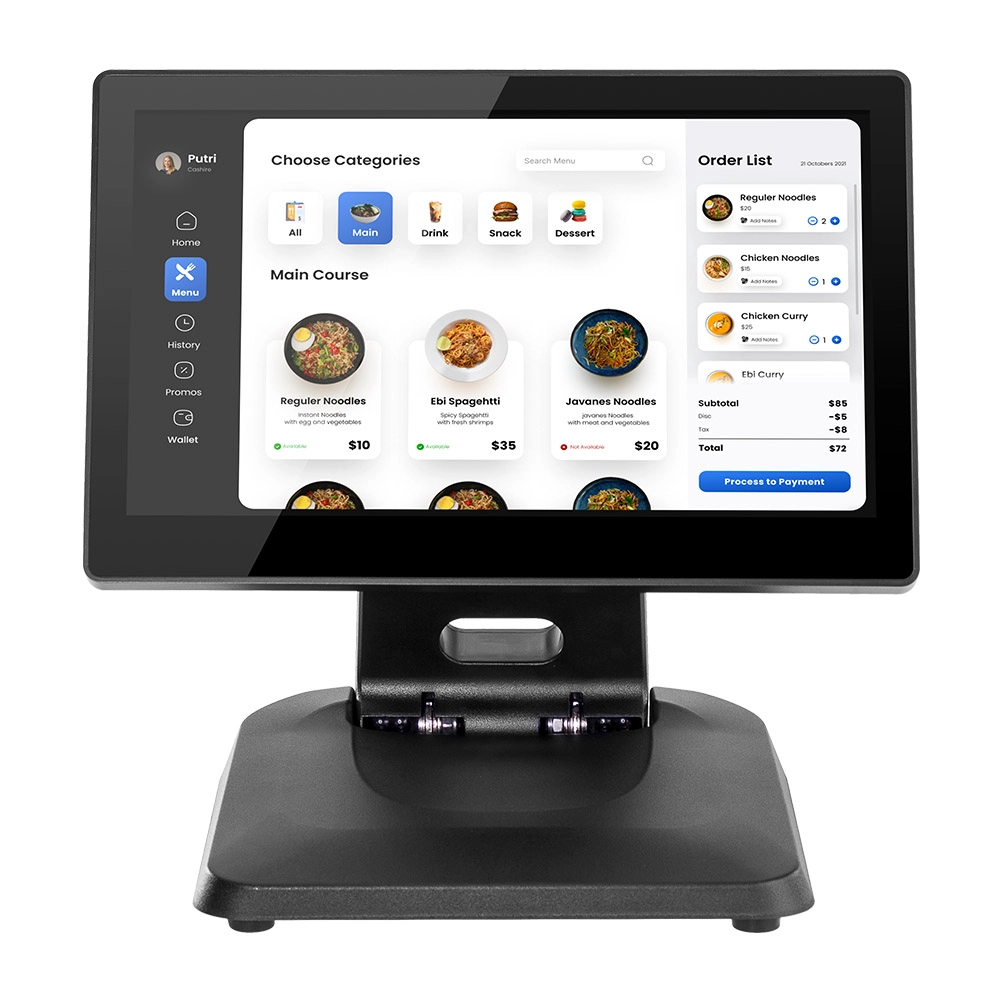
Factory 11.6'' Touch Screen POS Terminal Android Windows
The Factory 11.6'' Touch Screen POS Terminal is a versatile solution that supports both Android and Windows operating systems. Designed for durability and efficiency, this terminal is perfect for various retail environments. Its compact size and responsive touch screen enhance customer interactions, making transactions quick and seamless.
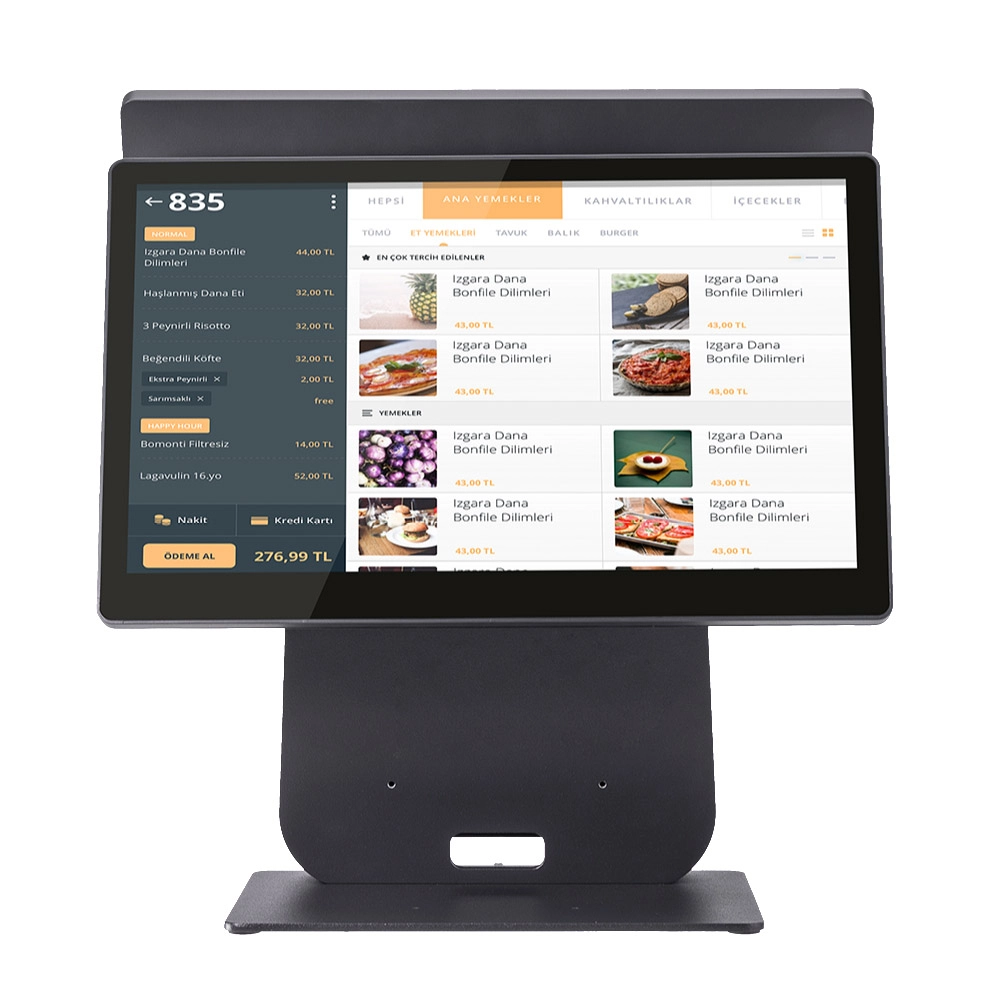
HD Dual Screen POS Machine Aluminum Hardware Android Windows Supplier
This dual-screen POS machine supports both Android and Windows systems, providing flexibility for various applications. The dual screens enhance customer interaction and streamline the checkout process, making transactions quicker and more engaging. Perfect for modern businesses looking to elevate their service and improve customer satisfaction, this POS machine is your ultimate partner in success!


Copyright © 2025 Favorpos All Rights Reserved.
