
What are the top POS systems for small retail shops?
- 1. How do I calculate the true monthly cost of a POS system (hardware, payment fees, add-ons, and inventory) so my small shop won’t get surprise bills?
- 2. When migrating from a legacy desktop POS to a cloud retail POS, how can I migrate SKUs, historical sales, and loyalty data without losing transaction integrity?
- 3. For shops selling both online and in-store, how can I ensure real-time inventory sync to prevent overselling on low-cost POS systems?
- 4. How reliable are offline modes in cloud POS systems during multi-hour internet outages, and what limitations should I expect for returns, gift cards, and EMV payments?
- 5. What POS hardware is guaranteed to work with popular retail POS software and how do I future-proof hardware choices (printers, barcode scanners, terminals)?
- 6. How do I evaluate POS security and PCI compliance for a small shop, including EMV, tokenization, and liability shifts with third-party processors?
1. How do I calculate the true monthly cost of a POS system (hardware, payment fees, add-ons, and inventory) so my small shop won’t get surprise bills?
Many beginners focus only on the monthly software fee and miss recurring payment processing fees, hardware depreciation, and add-on modules. To calculate a reliable monthly cost, follow this step-by-step approach:
- List fixed subscription costs: Base SaaS fee (per register or per location). For cloud POS for retail, vendors commonly charge per-terminal or per-location. Example providers: Square, Shopify, Lightspeed, Clover, Erply.
- Amortize hardware: Sum cost of tablets/terminals, receipt printers, barcode scanners, cash drawers and divide by expected lifespan (typically 3–5 years). That gives a monthly hardware line item.
- Estimate payment processing fees: Break down card-present vs card-not-present sales. Most processors use interchange + markup; small retailers should estimate an average blended rate based on their mix. If you process mostly in-person EMV/chip sales, expect lower blended rates than if you rely heavily on keyed or e-commerce transactions.
- Factor in add-ons and integrations: Loyalty programs, advanced inventory management, third-party accounting connectors, and multi-store inventory transfer modules can be additional monthly or annual charges.
- Include support and backups: High Quality support, dedicated account management, and compliance reporting are sometimes extra. Budget for occasional professional services (data migration, custom reports).
- Calculate variable costs: Chargeback fees, paper/label supplies, and card terminal replacements should be estimated as a monthly average.
Example calculation (method, not exact numbers): SaaS $80 + Hardware amortized $25 + Processing fees (blended) $120 + Add-ons $30 + Misc $15 = $270/month. Always request a cost breakdown from vendors (including interchange pass-through vs flat-rate processors) and run a 12-month projection. Use this to compare best pos systems for retail stores on total cost of ownership rather than headline prices.
2. When migrating from a legacy desktop POS to a cloud retail POS, how can I migrate SKUs, historical sales, and loyalty data without losing transaction integrity?
Migration is a frequent pain point. Incomplete migrations cause inventory mismatches, broken loyalty balances, and accounting reconciliation problems. Use this phased checklist to preserve data integrity:
- Audit current data: Export SKU lists, pricing histories, supplier SKUs, barcode/UPC fields, inventory counts, customers, loyalty balances, taxes and historical sales exports (daily summary and detailed transactions).
- Clean and map fields: Normalize SKU codes, consolidate duplicate SKUs, standardize tax codes, and map legacy fields to the cloud POS schema (e.g., separate SKU, variant, and location-specific inventory fields). Use CSV templates provided by your new POS.
- Test import with a subset: Import a controlled sample of SKUs and recent sales in a sandbox account. Reconcile counts and receipts against the legacy system to ensure formats align (discounts, returns, tax treatments).
- Preserve transactional integrity: For accounting and legal reasons, most cloud POS systems import historical sales summaries or attach legacy transactions as read-only records. If you need full transaction import (line-level receipts), verify the vendor supports line-item imports and if any manual adjustments are required.
- Loyalty and gift balances: Export loyalty IDs and balances and import them into the new loyalty module. If loyalty programs differ in structure, work with the vendor to create an equivalent points-to-dollar mapping to avoid customer frustration.
- Run a parallel period: Operate both systems in parallel for 7–14 days (if feasible), reconcile sales totals daily and inventory at shift close to catch discrepancies early.
- Plan a final cutover: Choose a low-traffic day, take an end-of-day backup of the legacy system, perform the final sync of inventory and open orders, then set the cloud POS live.
Vendors like Lightspeed and Shopify provide professional migration services for SKU and customer data; always request references and a migration plan with milestones and sign-off criteria before starting.
3. For shops selling both online and in-store, how can I ensure real-time inventory sync to prevent overselling on low-cost POS systems?
Omnichannel retail POS synchronization is often touted but not all entry-level systems handle it reliably. Key things to validate:
- Real-time vs scheduled sync: Confirm whether the POS performs instant real-time inventory updates (preferred) or periodic batch updates (e.g., every few minutes). For high-turn SKUs, batch windows can cause oversells.
- Reservation/hold logic: Ensure the system places a temporary reservation when a customer starts checkout (cart hold) — not all low-cost POS platforms do this for online checkout, causing double-sells on limited stock.
- Multi-location allocation: If you use fulfillment-from-store or click-and-collect, validate the allocation rules so web orders reserve stock at the selected pickup location, not the central warehouse, unless intended.
- Latency and API limits: If using an e-commerce platform plus a separate POS, check API rate limits that can delay updates during peak sales (Black Friday). Shopify POS + Shopify ecommerce have tighter native integration; other setups may require middleware.
- Inventory management features: Search for features like per-variant stock level, reorder points, purchase order integration, and stock transfers—these are critical for growing shops and often found in best pos systems for retail stores.
Practical steps: perform a stress test (simulate concurrent in-store and online purchases on the same SKU), review the vendor’s documented sync frequency, and ask for an SLA on inventory synchronization. For mission-critical low-stock SKUs, consider holding a small buffer quantity offline or enabling backorder handling that alerts staff immediately.
4. How reliable are offline modes in cloud POS systems during multi-hour internet outages, and what limitations should I expect for returns, gift cards, and EMV payments?
Offline mode capability differs widely and can be a make-or-break feature for stores in areas with unstable connectivity. Key realities:
- Basic offline functions: Most cloud POS systems support basic checkout (cash sales, stored SKUs, saved pricing) while offline and queue those transactions to sync when connectivity returns.
- EMV/chip transactions: EMV transactions generally require online authorization for the latest risk checks. Some hardware supports offline EMV fallback (limited to issuer rules and with liability implications). For many providers, chip card acceptance is disabled offline or allowed with a fallback to keyed entry (higher risk/fees).
- Gift cards and stored-value: Systems that store gift card balances in the cloud cannot decrement balances reliably offline unless the vendor’s hardware solution stores a local encrypted cache. This can cause duplicate redemptions; vendors address this by recommending only accepting cash during extended outages or enabling a manual log process.
- Returns and exchanges: Returns that require reference to past transactions may be limited offline if the transaction lookup requires cloud data. Best practice: enable local cache of recent receipt lookups and train staff on manual return processes (e.g., manager approval with offline notes).
- Reconciliation after reconnect: Expect to reconcile payments and inventory counts; ensure the vendor timestamps queued transactions and flags conflicts for manual review (e.g., negative inventory occurrences).
Before selecting a system, ask the vendor for an offline-mode feature list, hardware requirements (battery-backed terminals or local server options), documented behaviors for EMV and gift cards, and real-world case studies. For retail stores in connectivity-challenged areas, consider hybrid architectures (local server + cloud sync) offered by some multi-store POS systems.
5. What POS hardware is guaranteed to work with popular retail POS software and how do I future-proof hardware choices (printers, barcode scanners, terminals)?
Hardware compatibility is a practical headache — proprietary terminals can create vendor lock-in. Follow these rules to future-proof hardware investment:
- Buy vendor-certified devices: Use hardware lists from the POS vendor (e.g., supported receipt printers, validated barcode scanners, and card readers). Certified devices are tested for drivers, firmware updates and warranty support.
- Prefer open standards: Ethernet or USB receipt printers, standard HID barcode scanners, and Ethernet LAN cash drawers are more portable between systems than proprietary serial devices. For terminals, choose Android-based or iPad-based terminals that are broadly supported by multiple POS providers.
- EMV and contactless: Ensure card readers are EMV and NFC-capable and support tokenization. Look for devices from payment hardware leaders (e.g., Verifone, Pax, BBPOS) if you plan to switch processors later.
- Cloud and mobile readiness: If you plan to use tablets, verify that the POS has a responsive tablet app and that peripherals (Bluetooth printers/scanners) are supported robustly on iOS and Android.
- Plan for accessories: Consider label printers for barcode price labels, customer-facing displays for receipts and promotions, and spare battery packs for mobile checkout during events.
Action checklist: request the vendor’s current certified hardware list; buy from resellers offering cross-vendor returns; retain serial numbers and firmware images in case you need to reconfigure devices for another POS. This reduces replacement and reconfiguration costs if you change providers.
6. How do I evaluate POS security and PCI compliance for a small shop, including EMV, tokenization, and liability shifts with third-party processors?
Security evaluation should be decisive — breaches and PCI fines are real risks. For buyer-proof evaluation:
- Ask who is the PCI compliant entity: Determine whether the POS vendor or the payment processor holds PCI compliance. Many cloud POS vendors rely on third-party payment gateways (e.g., Square, Stripe, Adyen) that are PCI-compliant, but confirm the scope (SAQ A vs SAQ P2PE-A).
- EMV and liability shift: Confirm EMV-certified hardware and whether the vendor supports point-to-end encryption or P2PE. EMV-capable terminals can shift fraud liability back to the issuer under certain conditions; review your processor’s liability policy.
- Tokenization and data storage: Prefer solutions that tokenize card data so full PANs (primary account numbers) are not stored on your systems. Tokenization reduces PCI burden and exposure.
- Regular updates and breach response: Check the vendor’s patching cadence, incident response policy, and whether they offer breach insurance or support in investigations.
- Access controls and logging: Good retail POS systems provide role-based employee permissions, audit trails for voids and refunds, and exportable logs for accounting and forensics.
Practical steps: request the vendor’s last PCI attestation, ask about P2PE certification if using in-store terminals, verify EMV hardware model numbers and firmware policies, and make sure you have a written SLA describing responsibilities in the event of a breach. For small shops, using an integrated payments provider bundled with the POS simplifies compliance because the vendor handles much of the PCI scope.
Concluding summary: Choosing among the best pos systems for retail stores or the top POS systems for small retail shops requires more than comparing monthly fees — evaluate total cost of ownership, migration and data integrity, omnichannel inventory synchronization, offline capabilities, hardware compatibility, and security/PCI posture. A robust cloud POS with strong inventory management, native ecommerce integration, certified hardware, and clear payment processing terms will reduce daily friction and protect you from financial and operational surprises.
For a tailored quote and to discuss which POS stacks (Square, Shopify POS, Lightspeed, Clover, Erply and others) best match your retail model and growth plans, contact us for a quote at www.favorpos.com or email sales2@wllpos.com.
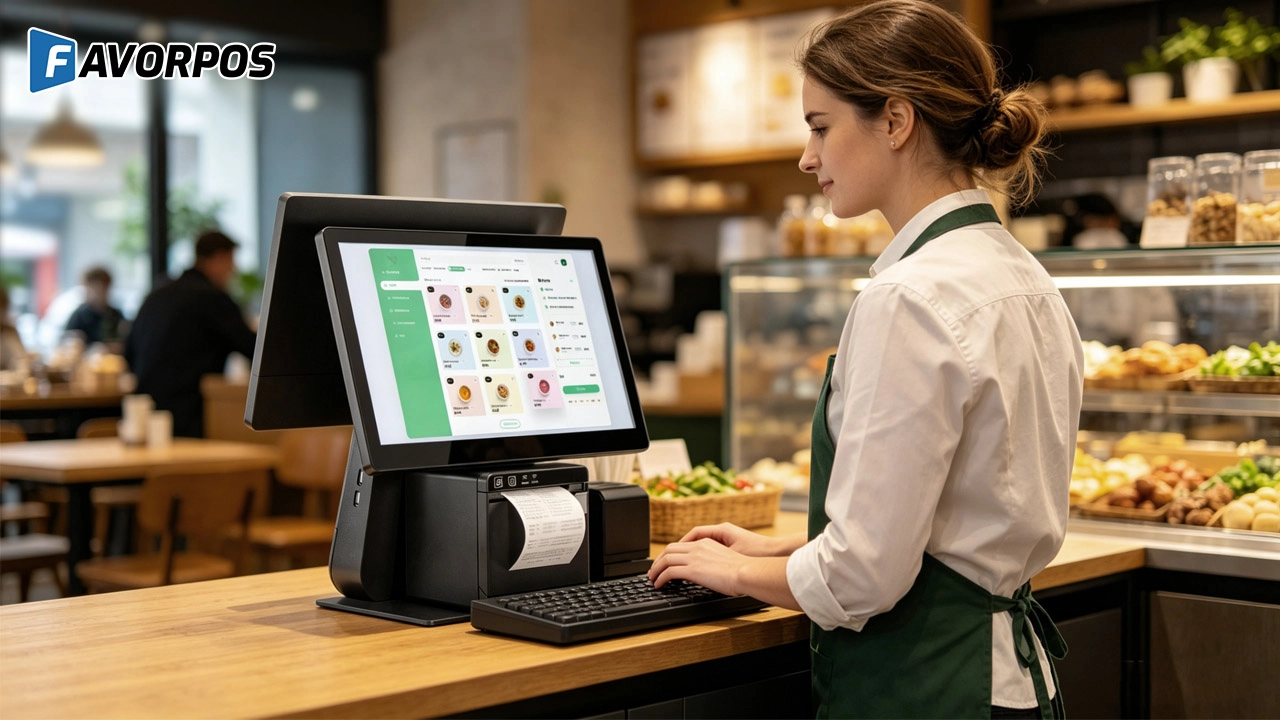
Smart Checkout, Simplified: Exploring the Power of a 15.6-Inch All-in-One POS Terminal
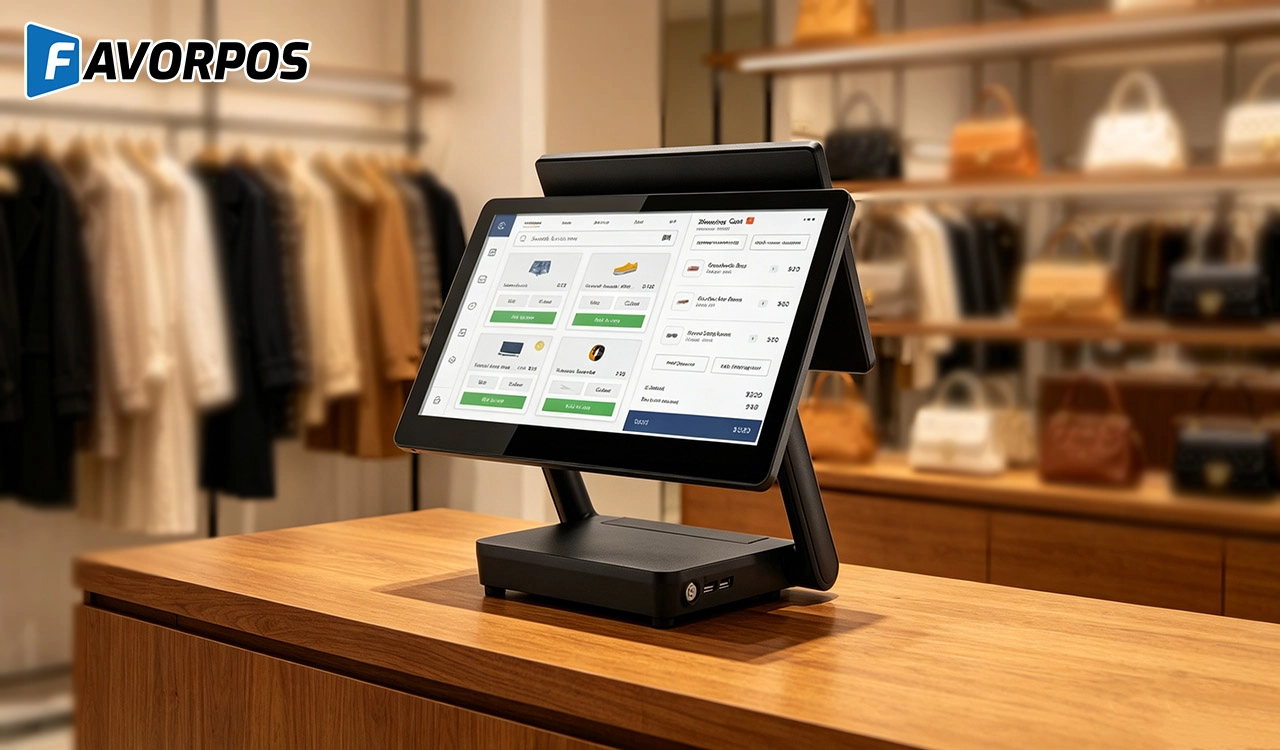
Why a 15.6” Touch POS Terminal Is Becoming the New Standard in High-Traffic Retail
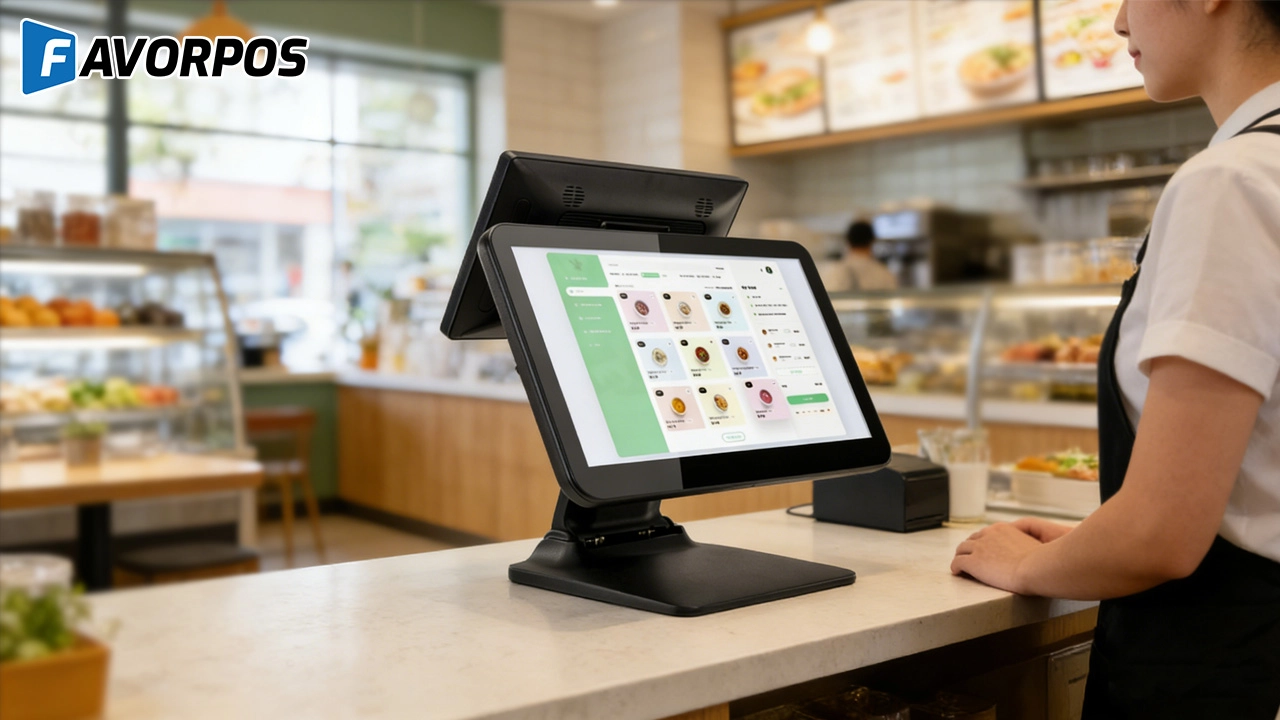
Beyond Checkout: How a 15.6-Inch Aluminum POS System Redefines Retail Efficiency
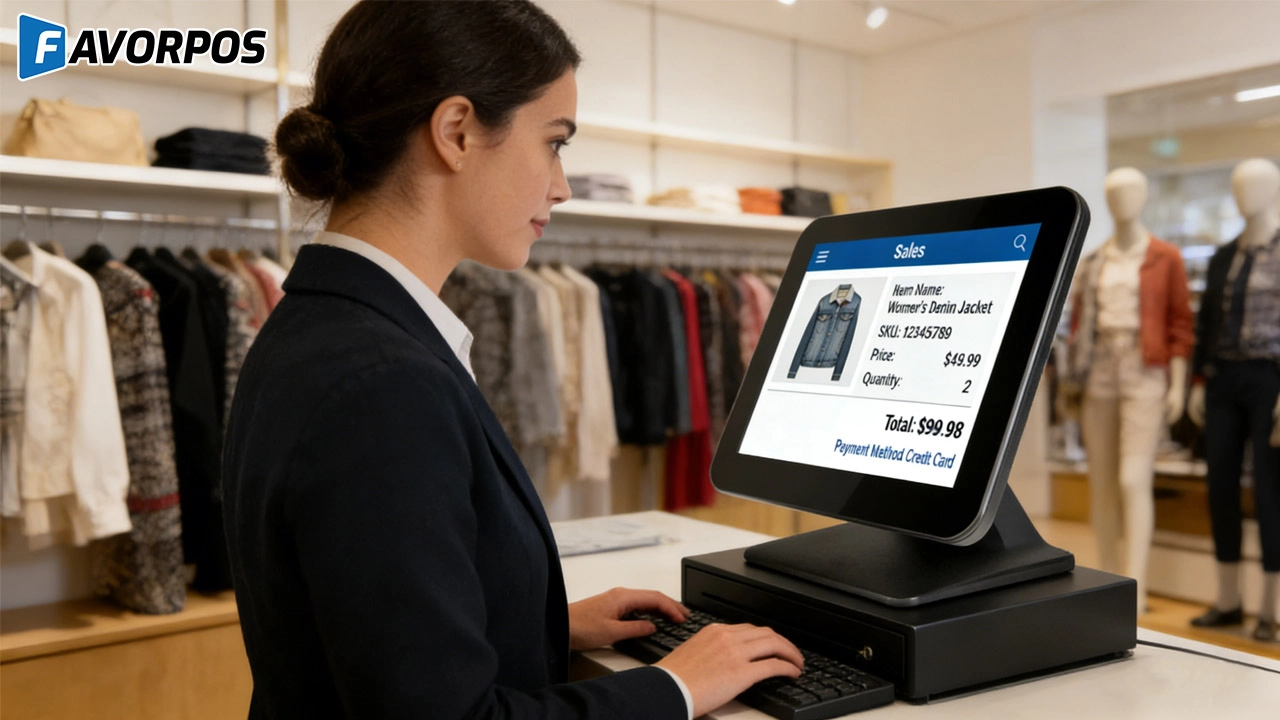
Understanding 15-Inch Aluminum POS Terminals in Modern Commercial Use
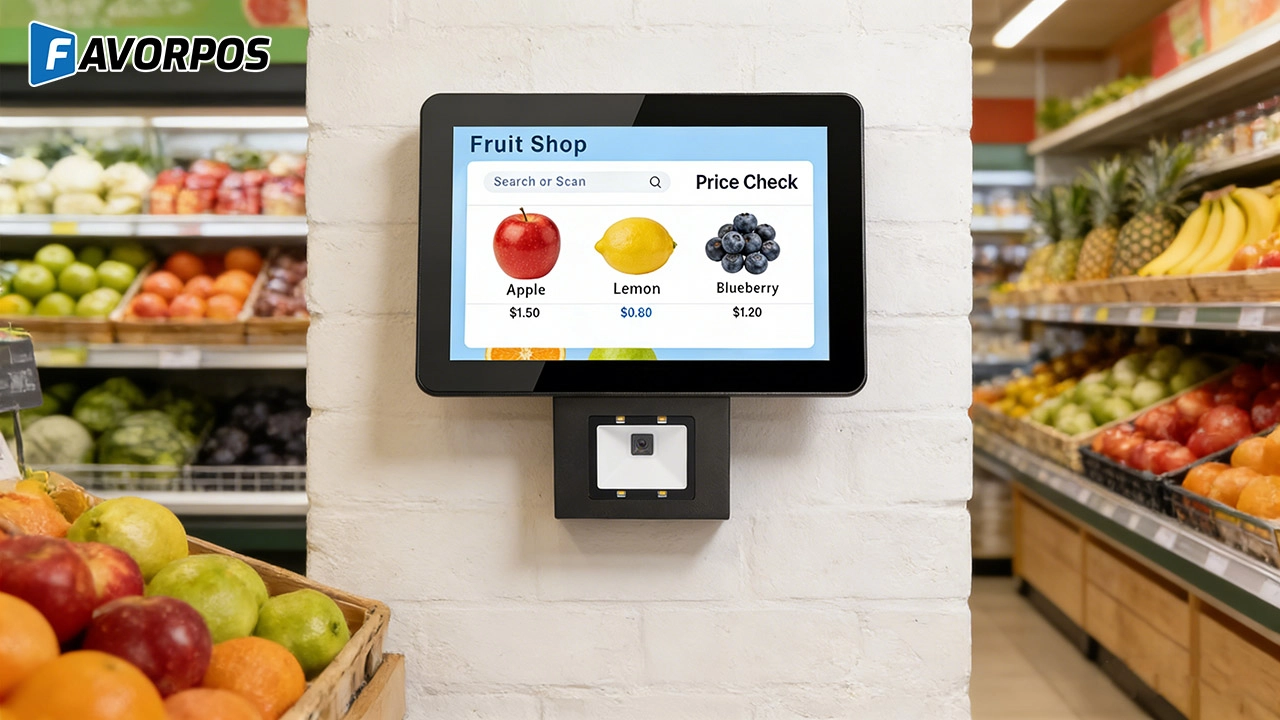
The Smart Way to Check Prices: How a 10.1-Inch Wall-Mounted Price Checker Transforms Retail Stores
For Restaurants & Cafes
How to update the menu or add new items?
After being equipped with the corresponding software, our POS machine allows you to easily update the menu through the backend management interface. You can add new items, modify prices or adjust the menu layout, and all changes will be reflected in the system in real time, ensuring that employees always have the latest menu information.
For Entertainment & Events
How do you ensure data security and prevent fraud?
Our systems comply with industry standards for data security and payment protection and are equipped with advanced fraud prevention features to prevent fraudulent activities and ensure transaction security.
For Bakeries
What payment methods are supported?
Our POS system accepts a variety of payment methods, including credit cards, mobile wallets, and contactless payments.
For Grocery and Supermarkets
Does your system support contactless payments?
Absolutely, our POS system supports multiple payment methods, including contactless payments from mobile wallets such as Apple Pay and Google Pay.
For E-commerce
Can I manage multiple online stores from one system?
Yes, our POS system supports multi-location and multi-store management, allowing you to centrally manage all e-commerce operations.

11.6 inch Capacitive Touchscreen for POS Machine POS Monitor
FAVORPOS 11.6-inch capacitive touchscreen, specifically designed for POS machines to deliver a seamless and responsive user experience. This high-definition display offers vibrant visuals and crystal clear clarity, making it easy for staff to navigate through transactions efficiently. The capacitive technology ensures quick and accurate touch recognition, reducing wait times and enhancing customer satisfaction. Built to withstand the rigors of daily use, this touchscreen is perfect for retail and hospitality environments.
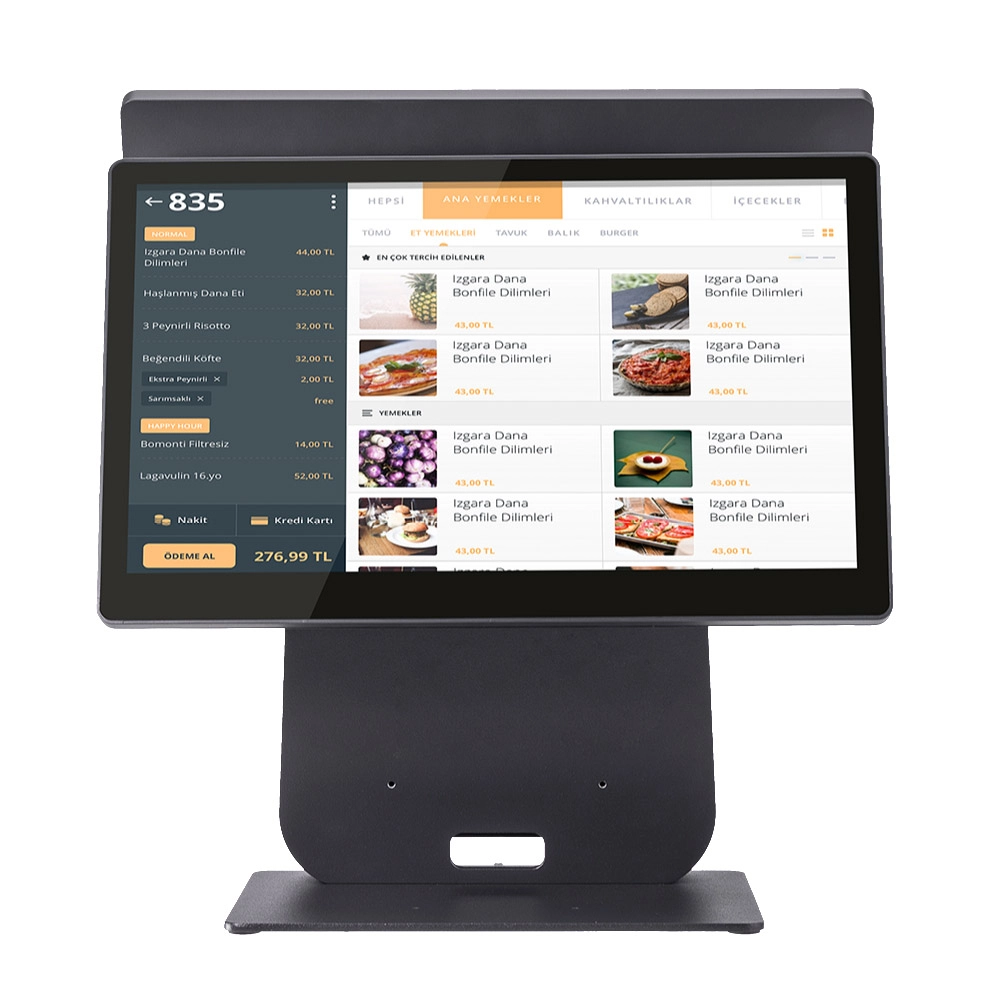
HD Dual Screen POS Machine Aluminum Hardware Android Windows Supplier
This dual-screen POS machine supports both Android and Windows systems, providing flexibility for various applications. The dual screens enhance customer interaction and streamline the checkout process, making transactions quicker and more engaging. Perfect for modern businesses looking to elevate their service and improve customer satisfaction, this POS machine is your ultimate partner in success!
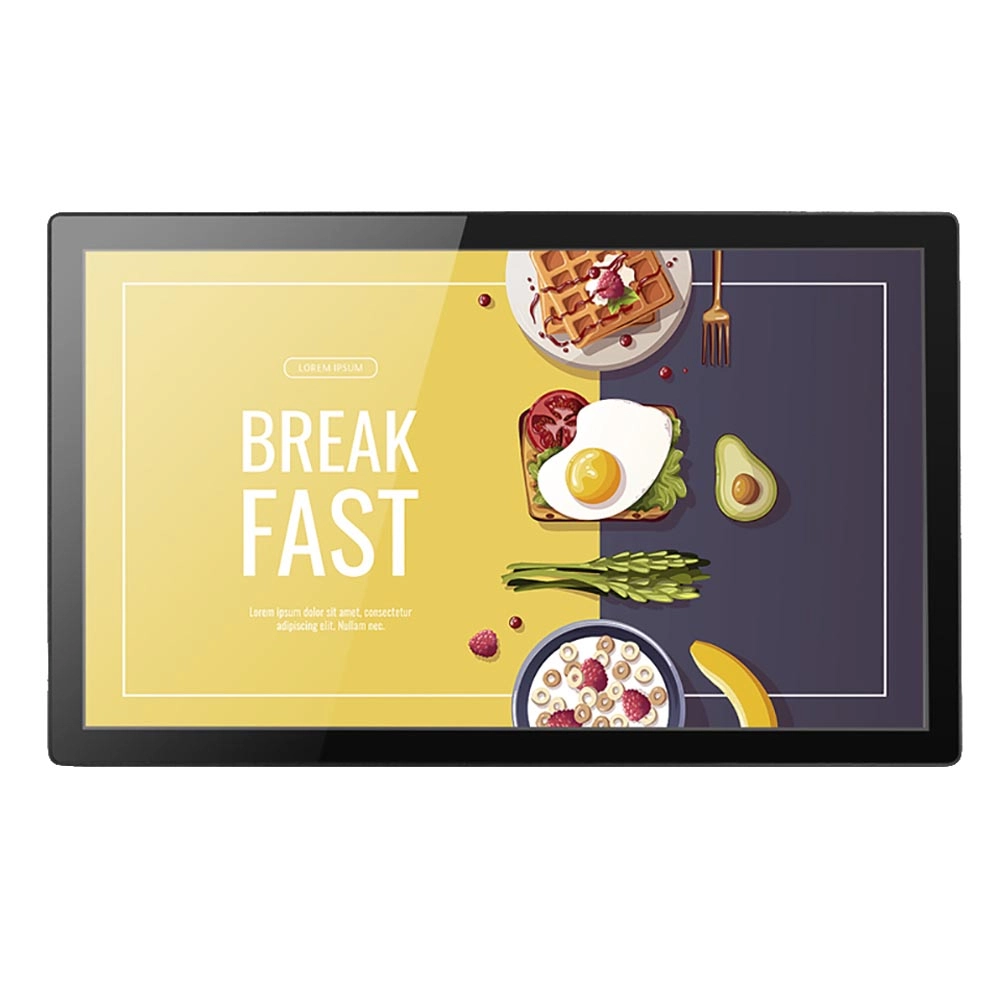
Wall Mount Cash Register POS 21.5 inch for Supermarket Touchscreen Windows Factory
Our sleek and modern wall-mounted POS system features a stunning 21.5-inch LED display, providing exceptional visibility and clarity for seamless customer interactions. The capacitive touchscreen ensures a highly responsive and intuitive user experience, perfect for fast-paced retail environments. With its space-saving wall-mounted design, this POS solution is ideal for optimizing floor space while maintaining a professional and contemporary appearance.
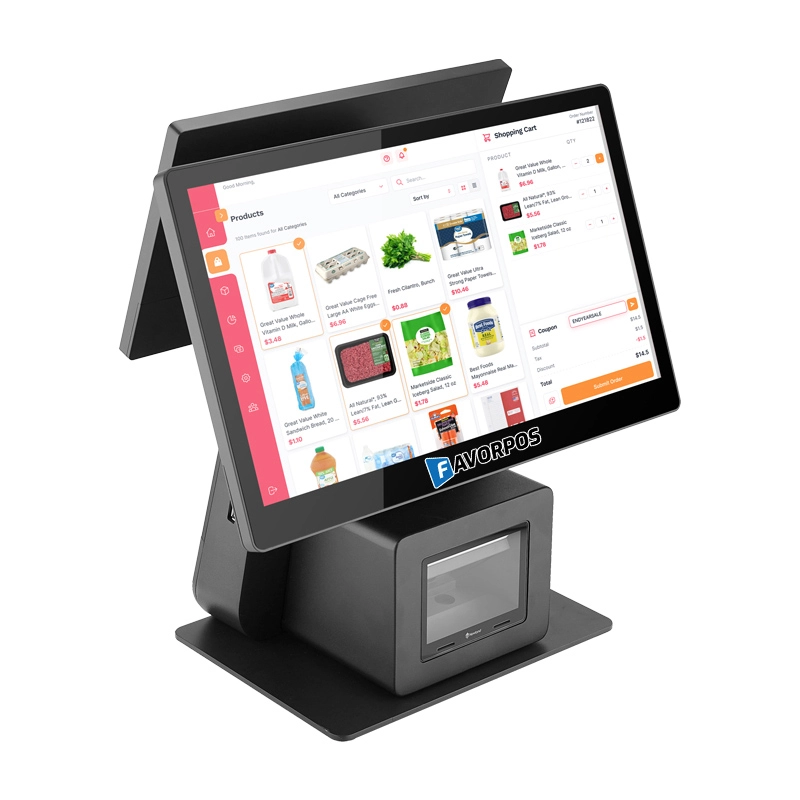
Dual Screen POS With Barcode Scanner Desktop POS Manufacturer POS Factory 15.6 11.6 Client Screen Optional
FAVORPOS: Your leading dual screen POS factory and manufacturer. Our desktop POS with barcode scanner offers 15.6/11.6 client screen options and OS flexibility. Get reliable, efficient dual screen POS with barcode scanner solutions directly from us.
Get in touch
Interested in becoming a POS system dealer? Contact us for more information and start the process of joining our dealer network.
We look forward to working with you to expand the market together.


Copyright © 2025 Favorpos All Rights Reserved.
