
What POS hardware do retail stores need in 2026?
- 1. How do I ensure a POS system provides true real-time inventory and prevents overselling across 5+ retail locations?
- 2. What POS hardware configuration minimizes checkout time for high-volume retail stores in 2026?
- 3. How can I migrate 10 years of legacy POS data to a modern cloud POS without losing sales history or breaking tax reports?
- 4. Which POS platforms actually support seamless omnichannel returns and marketplace reconciliation in 2026?
- 5. How do I choose a retail POS that guarantees zero data loss and consistent operations during extended internet outages?
- 6. What POS security, PCI, and payment features should I mandate in 2026 to avoid fines, liability, and data breaches?
- Conclusion — Advantages of modern POS systems for retail stores
Best POS Systems for Retail Stores in 2026: 6 Deep Questions Beginners Miss
This article answers six specific, frequently overlooked questions retail buyers ask when choosing the best pos systems for retail stores in 2026. Each answer is actionable and grounded in current industry practices (cloud POS, mobile POS, EMV/NFC, tokenization, and multi-store sync).
1. How do I ensure a POS system provides true real-time inventory and prevents overselling across 5+ retail locations?
Real-time inventory is not just a fast database; it requires architecture and workflow alignment across your POS, e-commerce, and backend systems. To avoid overselling you must verify all of the following:
Centralized stock ledger with per-location and consolidated views: The POS must maintain a canonical inventory store (cloud-hosted) that receives all transactions (sales, returns, transfers, PO receipts). Systems marketed as real-time sometimes only replicate data periodically—confirm sub-10-second sync for high-volume retailers.
Transaction locking and reservation logic: At checkout, the POS should reserve an item (temporary hold) while payment authorizes. This prevents race conditions when two terminals or channels sell the same last unit. Ask vendors about their reservation timeout and behavior during payment failure.
Atomic stock operations and conflict resolution: The platform should use atomic transactions (no partial commits) and a deterministic conflict resolution strategy for simultaneous adjustments (first-write wins plus audit trail). Ask for a technical spec or SLA describing how they reconcile concurrent sales.
Accurate transfer and fulfillment workflows: To avoid oversell when moving stock between stores or fulfilling online orders from stores, require a FIFO process: create a transfer request, confirm physical receipt, then make stock available. Platforms that allow manual overrides without audit increase oversell risk.
Testing and recovery: Before go-live, run stress tests (simulated concurrent checkouts) and failure drills (network interruptions, double-tender scenarios). Verify how quickly the POS reconciles after recovery and whether manual corrections are required.
Recommended systems for robust multi-store inventory (as of 2024–2026 market offerings) include cloud-native products with mature multi-location modules—look for vendors that support SKU matrixes, stock transfers, drop-ship flags, and buy-online-pickup-in-store (BOPIS) workflows. When evaluating, request performance metrics for your expected transaction rate and ask for a migration/test plan that preserves historical quantities.
2. What POS hardware configuration minimizes checkout time for high-volume retail stores in 2026?
High-volume retail checkout in 2026 emphasizes contactless payments, fast scanning, and minimal friction. A recommended configuration and rationale:
Primary register: a reliable tablet or Android-powered all-in-one (iPad-based or Sunmi/PAX terminals). Tablets paired with purpose-built stands and secure mounts speed operator workflows.
EMV/NFC contactless payment terminal (PIN pad): An integrated EMV terminal with NFC and contactless reader (Apple Pay, Google Pay) that supports P2PE or gateway tokenization. Ideally the terminal accepts tap-to-pay and contact EMV with offline fallback.
High-speed 2D/omnidirectional barcode scanner: Modern scanners read printed and mobile screen barcodes quickly. Look for models with enterprise-grade decoding and good motion tolerance (Zebra DS2200/DS4308 equivalents).
Thermal receipt printer with fast print speed: 250 mm/sec class printers reduce line time. Consider cloud-printing options for e-receipts and label printing for markdowns or returns.
Low-profile cash drawer with IP-rated cable and media slot: Ensure the cash drawer integrates with the POS printer or system and supports secure tethering.
Customer-facing display or secondary tablet: Displays speed up line accuracy and increase upsell opportunities; for self-checkout, a kiosk or tablet with a rugged housing and integrated scanner is best.
Robust networking: Dual-band Wi-Fi 6 access points with separate SSIDs for POS traffic, wired Ethernet for fixed registers when possible, and a cellular 4G/5G failover gateway for internet resilience.
UPS and surge protection: A UPS for registers and network hardware prevents abrupt shutdowns and database corruption during outages.
Optimization tips: pre-auth and quick-pay options (contactless & mobile wallets) should be enabled for low-value, fast transactions. Configure common SKUs as hotkeys on the POS UI, and implement barcode label standards (EAN/UPC/GS1) to minimize lookup time. For very high throughput retailers, a hybrid of staffed lanes and self-checkout kiosks reduces queues.
3. How can I migrate 10 years of legacy POS data to a modern cloud POS without losing sales history or breaking tax reports?
Migration is often the pain point beginners underestimate. Follow a systematic approach:
Inventory and data mapping: Catalog all legacy tables—customers, SKUs, SKUs with variants, taxes, prices, receipts, payments, exchanges, gift cards, store locations, and inventory history. Map each legacy field to the new system fields. If your legacy system stores receipts as images or binary blobs, plan how to preserve them (attach as documents or keep an archival read-only database).
Decide scope of history: You can migrate full transactional history, summarized history (daily totals), or a hybrid. Full history improves analytics and auditability but increases time and cost. Consult your accountant and legal requirements—some jurisdictions require storing raw receipts for tax audits for specific years.
Data transformation and normalization: Cleanse SKUs (remove duplicates, normalize barcodes), map tax codes to the new jurisdiction settings (rates, nexus), and normalize tender types (cash, card brands, gift cards). Maintain a crosswalk file for old to new IDs.
Reconcile and validate: After the initial import, reconcile opening balances by store (inventory, gift card liabilities, account balances). Run sample audits comparing legacy reports to the new system for the same period (sales totals, taxes collected, COGS if applicable).
Delta migration and cutover planning: Perform a final delta export for transactions between the last full export and go-live. During cutover, freeze processes where possible (e.g., receive POs in legacy, close them before cutover). Plan a fallback period and keep the legacy system read-only for a defined retention window.
Use vendor or migration partner tools: Many established retail POS vendors (Shopify, Lightspeed, Square, Revel, Clover ecosystems) and specialized partners provide migration scripts and concierge services. For complex legacy formats, consider a specialized integrator who will produce extracts, transformations, and validation reports.
Tax and audit proofing: Ensure the new system can reproduce the same tax reporting formats required by your local authorities. Keep an immutable archive of legacy exports (signed/hashed files) in case an auditor requests original data.
Testing and your timeline: Allow 4–12 weeks for medium complexity (dozens of SKUs across multiple stores) migrations and longer for multi-year historical imports. Always run end-to-end reconciliation and a dry-run before the production cutover.
4. Which POS platforms actually support seamless omnichannel returns and marketplace reconciliation in 2026?
Beginners see “omnichannel” on feature lists but receive poor cross-channel returns workflows. Look for these concrete capabilities:
Unified order ID and fulfillment status: The POS must represent sales from all channels (store, online, marketplaces) with the same canonical order record and fulfill/return statuses.
Cross-channel returns policy engine: Support returns from one channel for purchases made in another (e.g., in-store return for an online purchase) and automatically reverse marketplace fees or mark the marketplace transaction as returned so reconciliation matches marketplace settlements.
Marketplace connectors with settlement matching: Platforms with native connectors to Shopify, Amazon, eBay, and other marketplaces that pull orders, fees, and payouts are preferable. They should support reconciliation by matching marketplace settlement reports and have a mechanism to apply marketplace commission adjustments to your accounting.
Standardized refunds and restocking flows: The system must automate restocking rules (return-to-sell, quarantine/inspection, return-to-vendor) and handle partial refunds, multi-tender refunds, and store-credit issuance seamlessly.
Audit trail and reporting: Return reasons, original order references, and staff IDs should be preserved. Robust reporting enables you to understand return rates by channel, SKU, and promotion.
Real vendor examples: In 2024–2026, mature cloud POS vendors (Shopify POS Advanced, Lightspeed Retail, and enterprise systems like Oracle NetSuite Retail) offer stronger omnichannel features. However, third-party middleware (ChannelAdvisor, Celigo, or custom integrations) is often necessary to achieve fully automated marketplace reconciliation.
When evaluating, request a demo return transaction that begins online (marketplace), is returned in-store, and ends with a reconciled ledger entry in accounting. Confirm how marketplace fees and chargebacks are reconciled back into POS reports.
5. How do I choose a retail POS that guarantees zero data loss and consistent operations during extended internet outages?
Offline mode quality varies by vendor. Key technical and operational checks:
Local transaction queuing and durable persistence: The POS must write transactions locally to a journaled, durable store (not just in-memory) while offline. Confirm that writes survive device power cycles and app restarts.
Deterministic sync and idempotent replay: When connectivity returns, the POS should replay queued transactions idempotently (replay won’t double-apply sales). Ask for details about GUIDs/transaction IDs and conflict-handling policies.
Payment authorization fallback: For card payments, ask whether the PIN pad supports offline EMV approvals (not all do) and what your liability and risk profile will be. Many retailers use an offline range for low-value transactions with later settlement but be aware of increased chargeback risk.
Inventory reconciliation after sync: Offline sales must decrement local and cloud stock consistently. The vendor should provide clear reconciliation reports and tools to resolve discrepancies (e.g., duplicate sale, manual stock adjustments).
Network redundancy options: Use a router with cellular 4G/5G failover and separate VLAN for POS traffic to improve uptime. Some vendors offer hybrid modes where critical operations continue locally while analytics and non-critical features defer to the cloud.
Testing and SLA: Run planned outage drills (one hour, four hours, 24 hours) and confirm how the POS behaves and how quickly it recovers. Review the vendor’s documented offline behavior and any limits (maximum queued transactions, memory constraints).
A practical approach: choose a POS vendor with proven offline operation, require a cellular failover gateway, and establish procedures for reconciling large offline batches. For high-regulatory retail (pharmacies, stores requiring controlled substance logs), verify how legal recordkeeping works during offline periods.
6. What POS security, PCI, and payment features should I mandate in 2026 to avoid fines, liability, and data breaches?
Security today requires layered controls across hardware, payments, network, and software:
PCI DSS and P2PE: Confirm the POS provider is PCI DSS compliant for their scope and offers Point-to-Point Encryption (P2PE) or integrates with a payment gateway that handles encryption and tokenization. This reduces your PCI scope and lowers breach risk.
Tokenization and gateway separation: Ensure card data is tokenized at the terminal and never stored in plain text by your POS. Use a reputable payments processor that supports vaulting of payment tokens.
EMV and contactless support: EMV chip and NFC/contactless support is standard. Verify support for dual-interface PIN pads and contactless wallets. This reduces fraud and liability for counterfeit card transactions.
Software update policies and secure boot for hardware: Terminals and tablets should support secure firmware updates and have secure boot features. Vendors should publish security update cadences.
Network segmentation and TLS: Segregate POS traffic on its own VLAN, use TLS encryption for all API calls, and block non-essential outbound connections from POS devices. Require vendors to support strong ciphers and mutual TLS where possible.
Audit logging and role-based access control (RBAC): Ensure user actions are logged (logins, refunds, price overrides). Use RBAC to restrict functions and enforce multi-factor authentication for admin console access.
Data residency and privacy: Know where the vendor stores backups and logs (region or country) to comply with local data protection regulations such as GDPR or local laws. Ask about retention policies and deletion procedures.
Incident response and breach notification: Choose vendors that publish an incident response plan and have contractual SLAs for notification timelines. Confirm they will support forensic analysis and supply necessary logs.
Regular penetration testing and certifications: Prefer vendors with third-party penetration tests and security certifications. Request red-team or pentest summaries where available.
Mandate these items in your procurement checklist and include security acceptance testing as part of your vendor on-boarding.
Conclusion — Advantages of modern POS systems for retail stores
Modern retail POS platforms combine cloud-native multi-store inventory, fast contactless hardware, robust offline modes, marketplace integrations, and hardened security to reduce checkout friction, prevent oversell, and simplify compliance. The right combination of retail POS hardware in 2026—tablet or Android all-in-one registers, EMV/NFC terminals, enterprise barcode scanners, thermal and label printers, reliable networking and UPS—paired with a cloud POS that supports atomic inventory operations, tokenized payments, and marketplace reconciliation will increase throughput, reduce fraud exposure, and deliver better analytics for pricing and promotions.
For a tailored hardware and software configuration or a migration quote, contact us for a personalized plan and pricing: www.favorpos.com — sales2@wllpos.com
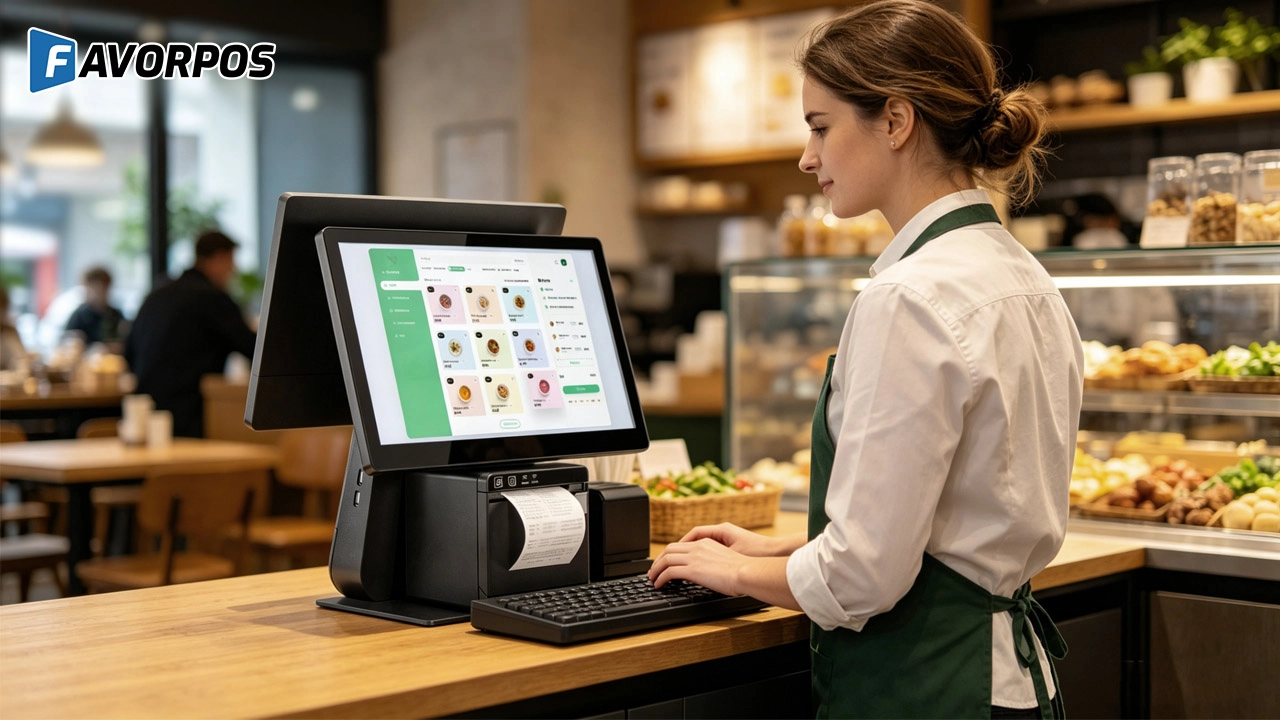
Smart Checkout, Simplified: Exploring the Power of a 15.6-Inch All-in-One POS Terminal
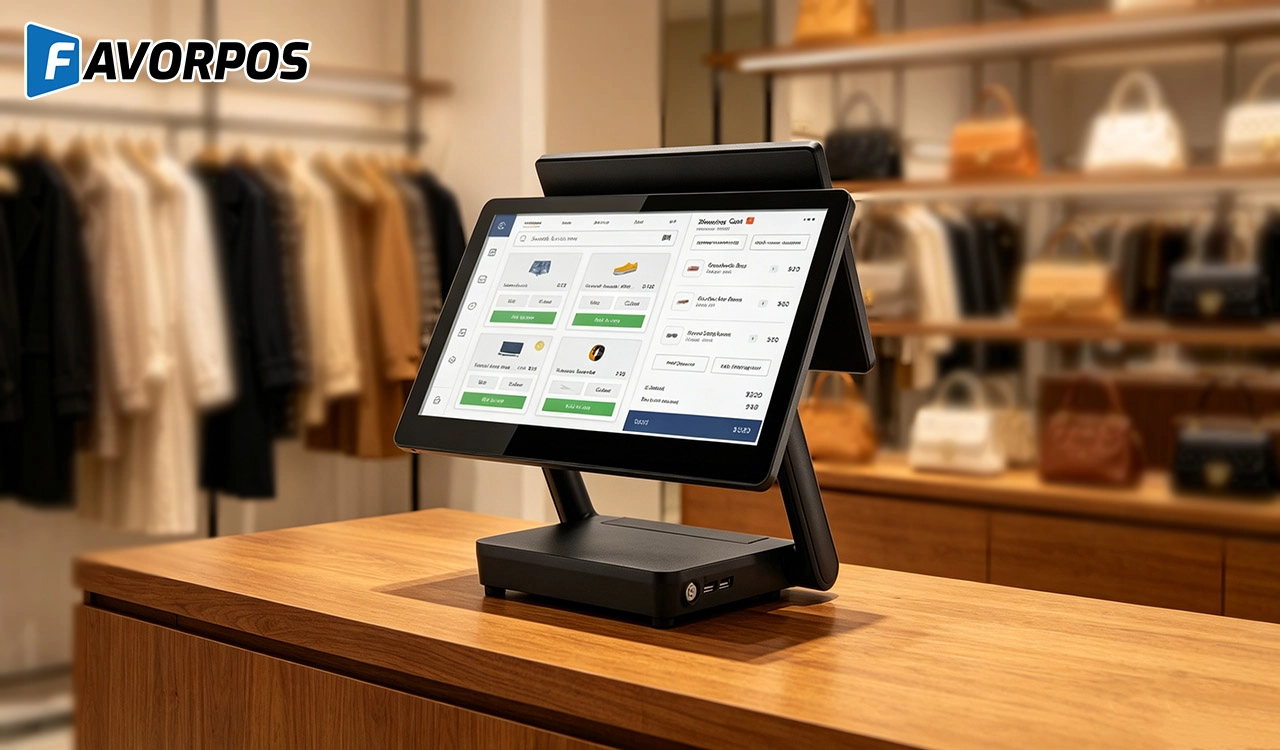
Why a 15.6” Touch POS Terminal Is Becoming the New Standard in High-Traffic Retail
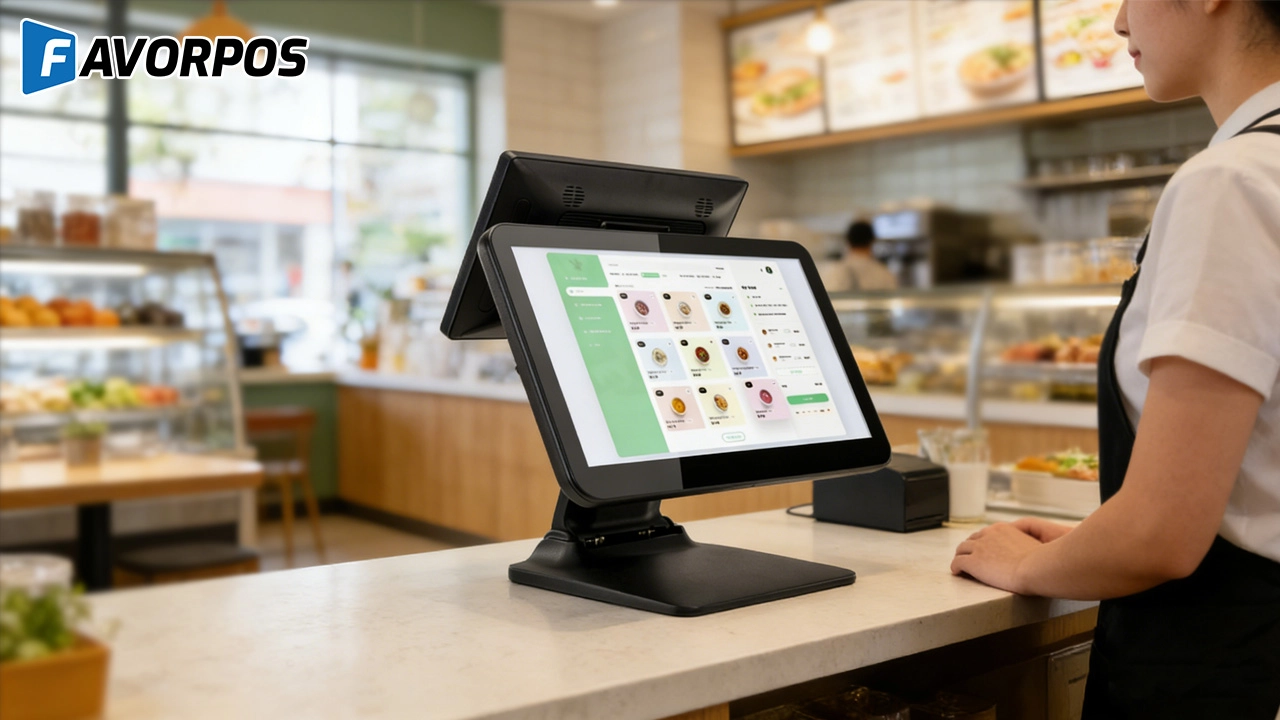
Beyond Checkout: How a 15.6-Inch Aluminum POS System Redefines Retail Efficiency
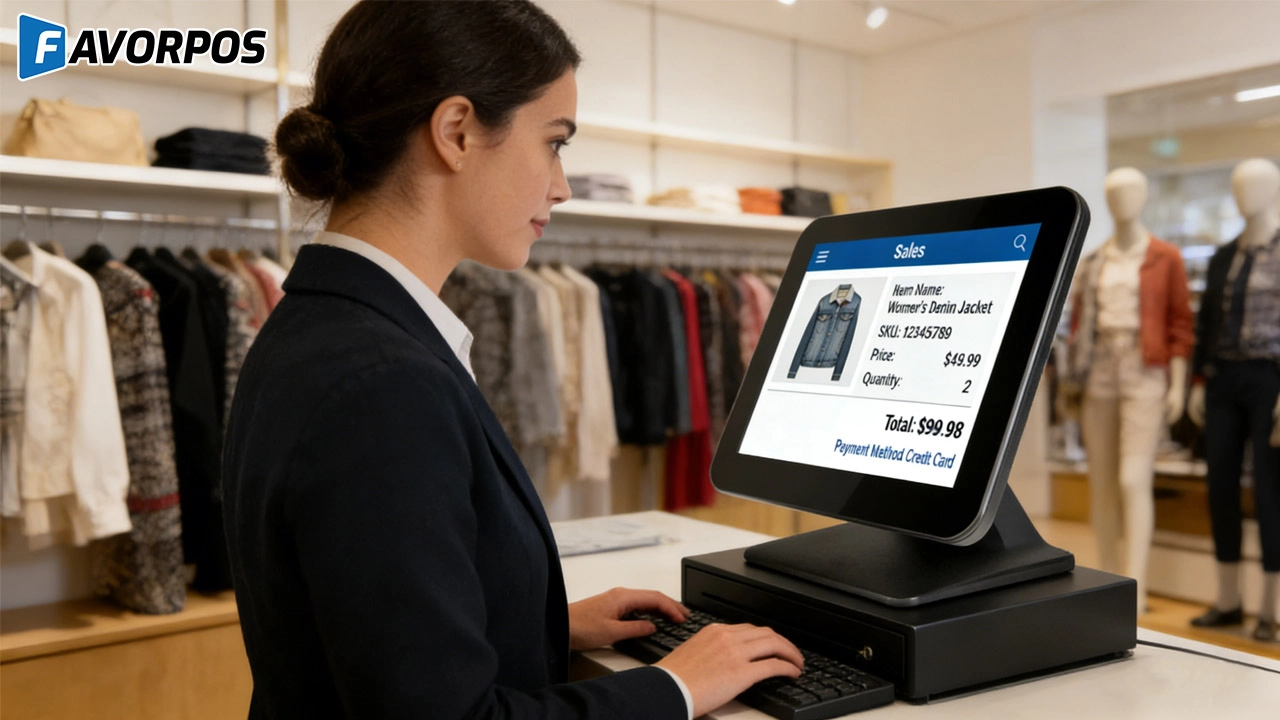
Understanding 15-Inch Aluminum POS Terminals in Modern Commercial Use
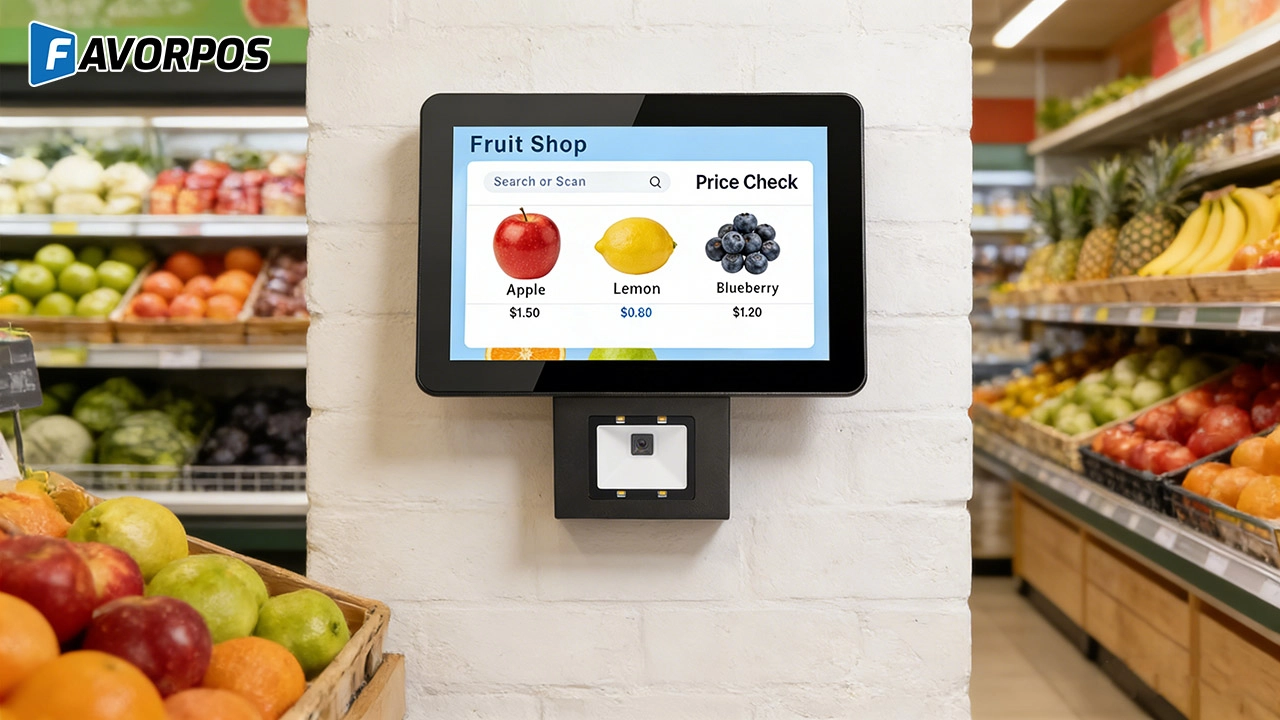
The Smart Way to Check Prices: How a 10.1-Inch Wall-Mounted Price Checker Transforms Retail Stores
For Healthcare
How do you ensure data security and patient privacy?
We implement advanced encryption, user authentication and access control to protect sensitive data and follow industry best security practices.
For Grocery and Supermarkets
What types of reports can I generate?
You can generate detailed reports on sales, inventory, employee performance, and customer behavior, providing valuable insights to optimize store operations.
For Entertainment & Events
What payment methods does your system support?
Our POS system supports multiple payment methods, including credit cards, digital wallets and contactless payments, providing customers with a convenient payment experience.
For Restaurants & Cafes
How to update the menu or add new items?
After being equipped with the corresponding software, our POS machine allows you to easily update the menu through the backend management interface. You can add new items, modify prices or adjust the menu layout, and all changes will be reflected in the system in real time, ensuring that employees always have the latest menu information.
For Distributor
What are the benefits of joining your reseller network?
Benefits include access to innovative POS products, attractive margins, comprehensive training and support, and the opportunity to work with a globally recognized brand.

11.6 inch Capacitive Touchscreen for POS Machine POS Monitor
FAVORPOS 11.6-inch capacitive touchscreen, specifically designed for POS machines to deliver a seamless and responsive user experience. This high-definition display offers vibrant visuals and crystal clear clarity, making it easy for staff to navigate through transactions efficiently. The capacitive technology ensures quick and accurate touch recognition, reducing wait times and enhancing customer satisfaction. Built to withstand the rigors of daily use, this touchscreen is perfect for retail and hospitality environments.
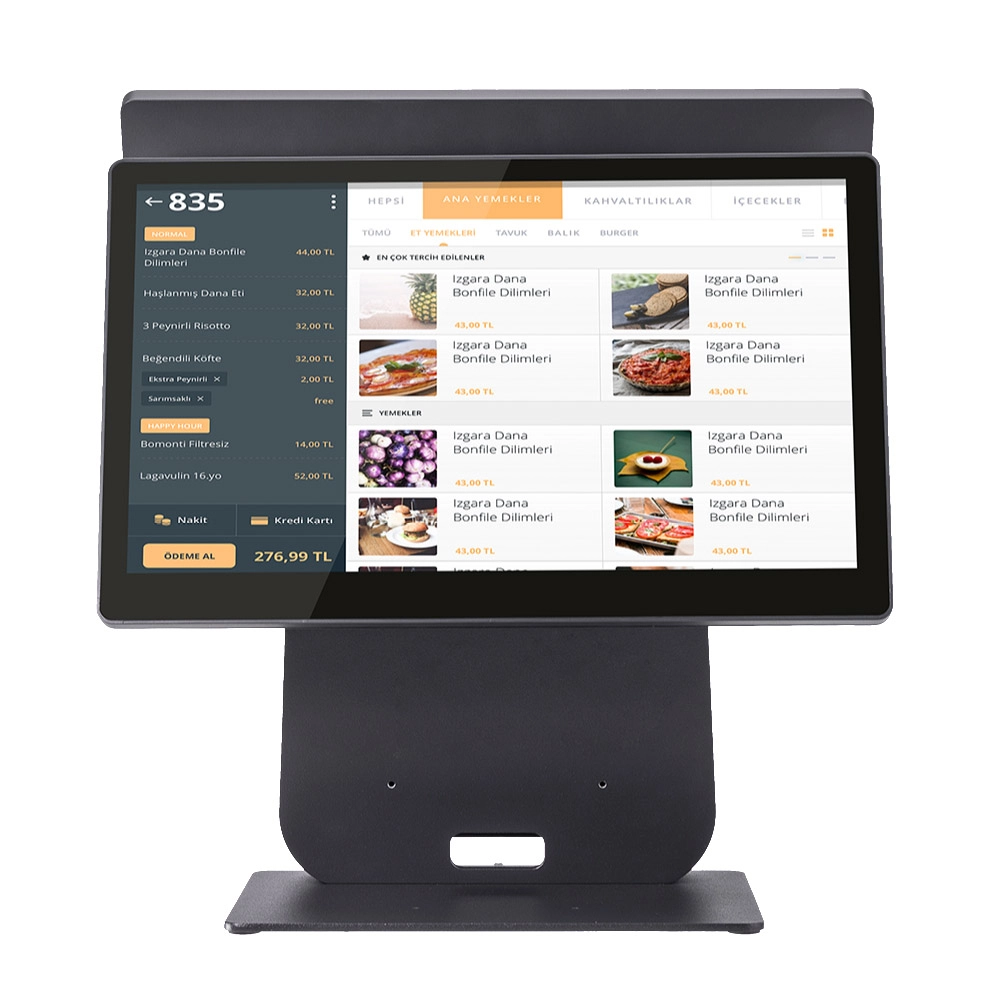
HD Dual Screen POS Machine Aluminum Hardware Android Windows Supplier
This dual-screen POS machine supports both Android and Windows systems, providing flexibility for various applications. The dual screens enhance customer interaction and streamline the checkout process, making transactions quicker and more engaging. Perfect for modern businesses looking to elevate their service and improve customer satisfaction, this POS machine is your ultimate partner in success!
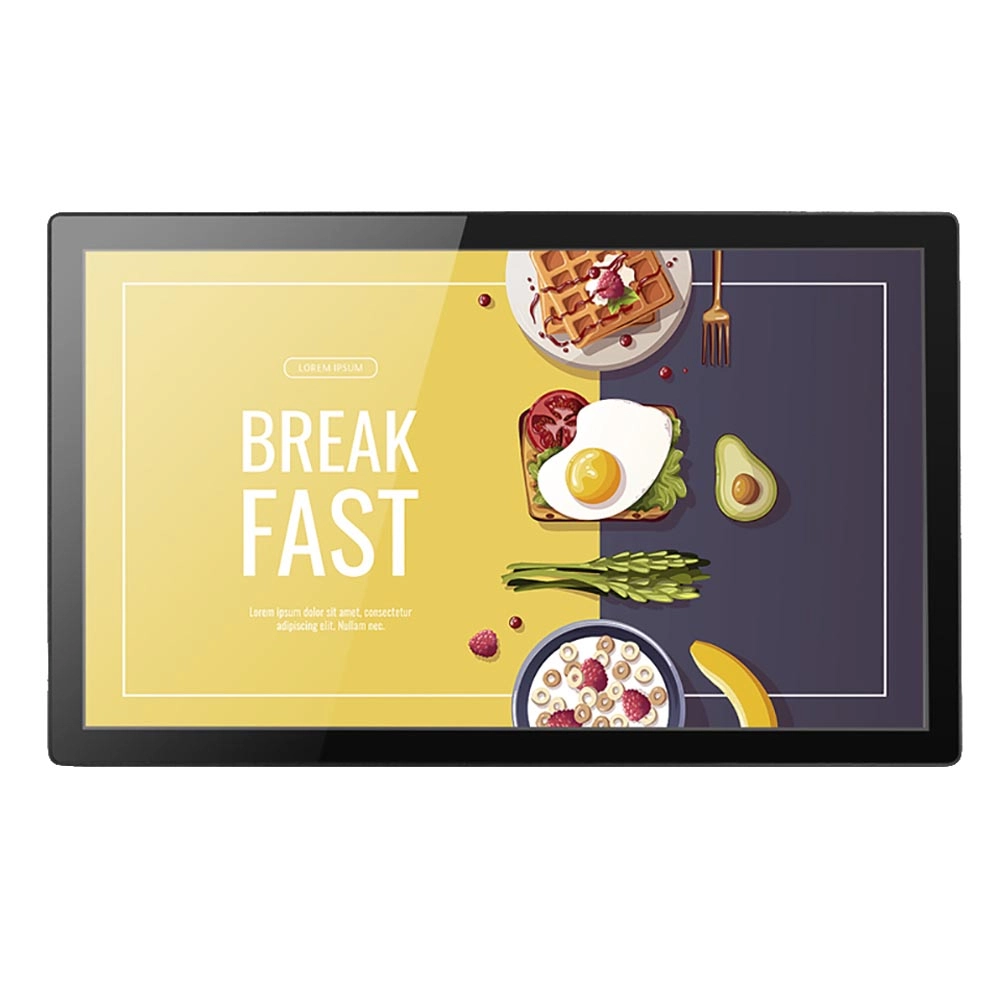
Wall Mount Cash Register POS 21.5 inch for Supermarket Touchscreen Windows Factory
Our sleek and modern wall-mounted POS system features a stunning 21.5-inch LED display, providing exceptional visibility and clarity for seamless customer interactions. The capacitive touchscreen ensures a highly responsive and intuitive user experience, perfect for fast-paced retail environments. With its space-saving wall-mounted design, this POS solution is ideal for optimizing floor space while maintaining a professional and contemporary appearance.
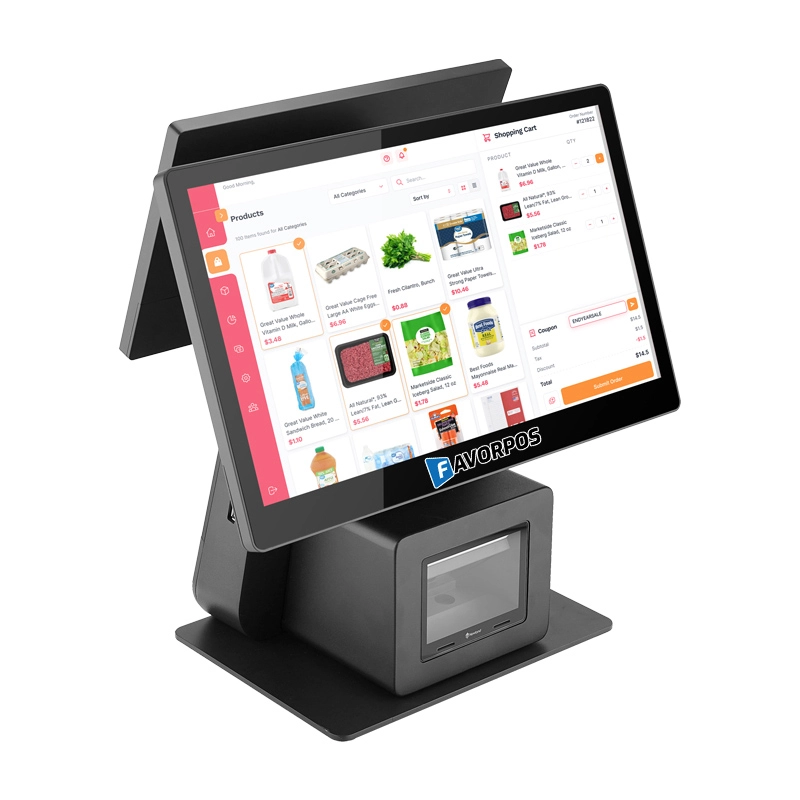
Dual Screen POS With Barcode Scanner Desktop POS Manufacturer POS Factory 15.6 11.6 Client Screen Optional
FAVORPOS: Your leading dual screen POS factory and manufacturer. Our desktop POS with barcode scanner offers 15.6/11.6 client screen options and OS flexibility. Get reliable, efficient dual screen POS with barcode scanner solutions directly from us.
Get in touch
Interested in becoming a POS system dealer? Contact us for more information and start the process of joining our dealer network.
We look forward to working with you to expand the market together.


Copyright © 2025 Favorpos All Rights Reserved.
