
How to improve checkout speed with a fast POS desktop system?
- 1. How do I size CPU, RAM, and storage for a pos desktop system to guarantee consistent sub-3-second checkout times during peak hours?
- 2. What network topology and settings prevent checkout slowdowns on a pos desktop system during peak traffic?
- 3. Which peripherals and driver settings most commonly introduce latency in a pos desktop system — and how do I eliminate them?
- 4. How can I architect database and transaction handling in POS software so the pos desktop system completes checkouts quickly without sacrificing data integrity?
- 5. How do I keep PCI-DSS and EMV compliance while maintaining fast checkout on a pos desktop system?
- 6. What real-world benchmarking steps and KPIs should I run on a candidate pos desktop system before procurement to ensure it meets checkout speed requirements?
When buying or tuning a pos desktop system for retail or hospitality, generic advice like get a faster computer isn’t enough. Below are six specific, long-tail questions buyers and IT teams ask when they need measurable checkout speed improvements. Each answer gives actionable, procurement-ready guidance covering hardware, networking, peripherals, database tuning, payment compliance, and real-world benchmarking.
1. How do I size CPU, RAM, and storage for a pos desktop system to guarantee consistent sub-3-second checkout times during peak hours?
Why it matters: Slow CPU, insufficient RAM, or a hard drive with poor IOPS creates queuing delays at checkout. The key is matching compute and I/O characteristics to your POS software’s architecture (local SQL/NoSQL store vs cloud-first).
Recommended baseline for modern retail checkout (per register / workstation):
- CPU: modern 4-core (or better) processor with strong single-thread performance. Examples: Intel Core i5 / i7 (10th gen or later) or AMD Ryzen 5 / 7. POS software often has single-thread critical paths (UI, barcode parsing, payment SDK calls), so clock speed matters as much as core count.
- RAM: 8 GB minimum; 16 GB preferred if the workstation hosts additional services (local caching, background sync, browser-based admin panels). More RAM increases OS and DB cache hit rate and eliminates paging.
- Storage: NVMe PCIe SSD (local) for the OS and POS data files. NVMe drives deliver orders-of-magnitude better IOPS and latency than HDDs—typical consumer NVMe drives produce tens to hundreds of thousands of IOPS vs HDDs at a few hundred IOPS. High random I/O performance reduces transaction latency noticeably when the POS database commits frequently.
- Network interface: onboard Gigabit Ethernet (1 Gbps) for reliable connectivity to local servers/cloud; prefer wired over Wi‑Fi for lowest latency and jitter.
Sizing approach: profile one busy register during peak: measure average transaction completion (UI + payment authorization + receipt) and percentiles (median, 95th). If disk I/O waits are >20% of transaction time, upgrade to NVMe. If CPU usage is pegged at >70% during peaks, increase CPU/thread capacity or offload non-critical tasks (analytics, reporting) to another machine or background queue.
2. What network topology and settings prevent checkout slowdowns on a pos desktop system during peak traffic?
Why it matters: Network jitter and packet loss create long tail delays for payment authorization, inventory checks, and cloud syncs. A robust network design ensures predictable latency.
Practical network configuration for checkout reliability and speed:
- Prefer wired Gigabit Ethernet for all checkout workstations. Use Cat6 cabling and managed switches with PoE only where needed (cameras, phones), keeping POS traffic isolated.
- Segment POS traffic with VLANs and apply QoS to prioritize payment authorization, inventory, and receipt printing over bulk traffic (backups, video uploads).
- Use a local edge server or cache (store-and-forward) to handle transactions when cloud latency spikes. Local authorization queueing avoids timeouts and perceived slowdowns.
- Configure DNS and keep persistent TLS/TCP connections where the payment gateway supports it (reduces handshake overhead). Monitor latency to gateway endpoints and setup failover routes to alternate endpoints.
- Measure: baseline round-trip times (RTT) to payment gateway and backend; aim for sub-100 ms RTT for local-hosted services and as low jitter as possible. If Wi‑Fi is unavoidable (mobile checkouts), use dedicated enterprise APs, 5 GHz with channel planning, and minimum RSSI thresholds for checkout devices.
3. Which peripherals and driver settings most commonly introduce latency in a pos desktop system — and how do I eliminate them?
Why it matters: Peripherals are often the unnoticed bottleneck — slow barcode scanning settings, poorly configured printers, or serial-to-USB converters can add hundreds of milliseconds or more per transaction.
Common causes and fixes:
- Barcode scanners: Use keyboard wedge/HID or direct COM modes depending on your POS app. In USB HID mode the OS handles events faster; in serial mode, ensure low-latency driver settings and disable aggressive power savings. For 2D imagers, enable continuous scanning only when needed to avoid extra decode time.
- Receipt printers: Use native printer drivers or raw ESC/POS direct sockets where supported to eliminate spooler delays. Configure printers with ample buffer size and ensure USB or Ethernet interfaces are used instead of slow parallel ports.
- Serial devices and converters: Avoid cheap USB-serial converters that have high latency. Choose industrial-grade adapters with low-latency chipsets (e.g., FTDI or Prolific with proper drivers) and set COM port buffers appropriately.
- Power management: On Windows/Linux, disable USB selective suspend and set the workstation to High Performance power profile to prevent devices entering low-power states between scans.
- Driver/firmware: Keep firmware up to date for scanners and payment terminals; older firmware can add processing lag. Use vendor-recommended SDKs for payment terminals (they often support asynchronous callbacks to prevent UI blocking).
4. How can I architect database and transaction handling in POS software so the pos desktop system completes checkouts quickly without sacrificing data integrity?
Why it matters: Database commit strategy and indexing impact both speed and durability. The right choices allow fast checkout while keeping sales and inventory accurate.
Strategies that balance speed and safety:
- Local store-and-forward: keep a small local database (SQLite, RocksDB, or similar) to accept transactions instantly, then asynchronously replicate/commit to upstream systems. This eliminates end-user waiting on cloud round trips.
- Write patterns: group non-critical writes and apply batches for background sync. For critical transactional writes, use WAL (write-ahead logging) modes or transaction batching to reduce fsync frequency while preserving crash resilience. For SQLite, WAL mode reduces contention and improves concurrent reads during writes.
- Indexes: index fields used in lookups (SKU, barcode, active price) but avoid over-indexing, which slows inserts. Monitor index maintenance cost and rebuild schedules during low-traffic windows.
- Connection pooling and prepared statements: re-use DB connections and prepared SQL statements to reduce CPU and parsing overhead per transaction.
- Durability tuning: where PCI or local regulations require immediate persistence, use fast NVMe with power-loss protection. If the business can accept brief async durability, buffer commits to improve checkout latency dramatically.
5. How do I keep PCI-DSS and EMV compliance while maintaining fast checkout on a pos desktop system?
Why it matters: Security and compliance cannot be traded away for speed. The right integration model preserves both.
Compliance-friendly practices that preserve speed:
- Use P2PE and tokenization: Point-to-Point Encryption and tokenization offload sensitive handling to certified providers and reduce the need for your POS workstation to handle raw PANs. This shortens the critical path because card data is encrypted at the terminal and only a token or authorization request needs to traverse your system.
- Integrate via certified SDKs and payment terminals: Use validated payment applications or gateways that support asynchronous authorization callbacks so the POS UI stays responsive while the authorization completes in the background.
- Minimize PCI scope: avoid passing full magnetic stripe or PAN through your desktop OS. Use integrated EMV/contactless terminals connected over secure channels; treat them as black boxes for card handling.
- Pre-auth and capture: where business flow allows, authorize quickly at checkout (pre-auth) and capture later to reduce perceived checkout time, especially in restaurants or service industries.
6. What real-world benchmarking steps and KPIs should I run on a candidate pos desktop system before procurement to ensure it meets checkout speed requirements?
Why it matters: Purchasing without measurable benchmarks risks deploying systems that fail under real load. Define KPIs, run tests that simulate peak load, and measure tail latencies.
Concrete benchmarking plan:
- Define KPIs: median transaction time, 95th and 99th percentile transaction time, maximum sustained throughput (transactions per minute), error rate, and authorization latency to payment gateway.
- Create test scenarios: normal checkout (scan, price lookup, payment auth, receipt print), returns, and multi-item transactions. Include peak concurrency tests with additional background tasks like sync and report generation running simultaneously.
- Use automated tools and scripts: simulate barcode scans, payment responses (use a sandbox gateway), and printer operations to remove human variability. Record timestamps at these points: scan start, price lookup complete, payment authorized, receipt printed.
- Measure system metrics: CPU, RAM, disk I/O wait, network RTT, and queue lengths. Identify whether CPU, memory, disk latency, or network calls drive the long tail.
- Acceptance criteria example (retail baseline): median transaction < 2 seconds, 95th percentile < 5 seconds under peak load. Adjust targets to your customer expectations and transaction complexity.
- Iterate: if benchmarks show disk-bound behaviour, swap to NVMe. If network calls dominate, implement local caching or store-and-forward. Re-run tests after each change.
These steps give procurement teams objective data to compare hardware SKUs, checkout workstation configurations, and software deployment options before purchase.
Concluding summary: A well-specified, fast pos desktop system — combining a responsive CPU, ample RAM, NVMe storage, wired Gigabit networking with VLAN/QoS, tuned peripherals, and an optimized local database/transaction model — reduces median checkout time, tightens tail latency, and improves throughput and reliability. Security and compliance (P2PE, tokenization, certified SDKs) can and should be preserved without sacrificing speed by using asynchronous flows and certified payment terminals. Together, these measures produce faster, more predictable checkout experiences for staff and customers and reduce lost sales from slow registers.
For a tailored configuration and a quote based on your store profile and transaction volumes, contact us: www.favorpos.com or email sales2@wllpos.com.
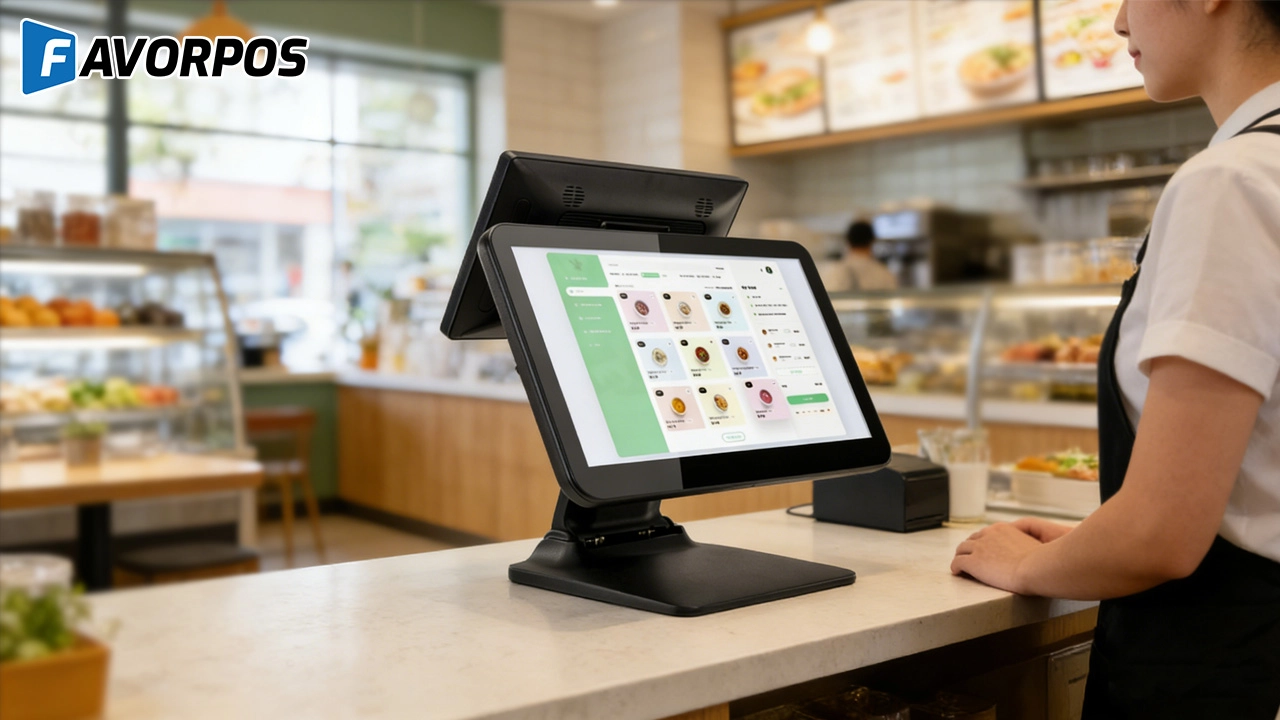
Beyond Checkout: How a 15.6-Inch Aluminum POS System Redefines Retail Efficiency
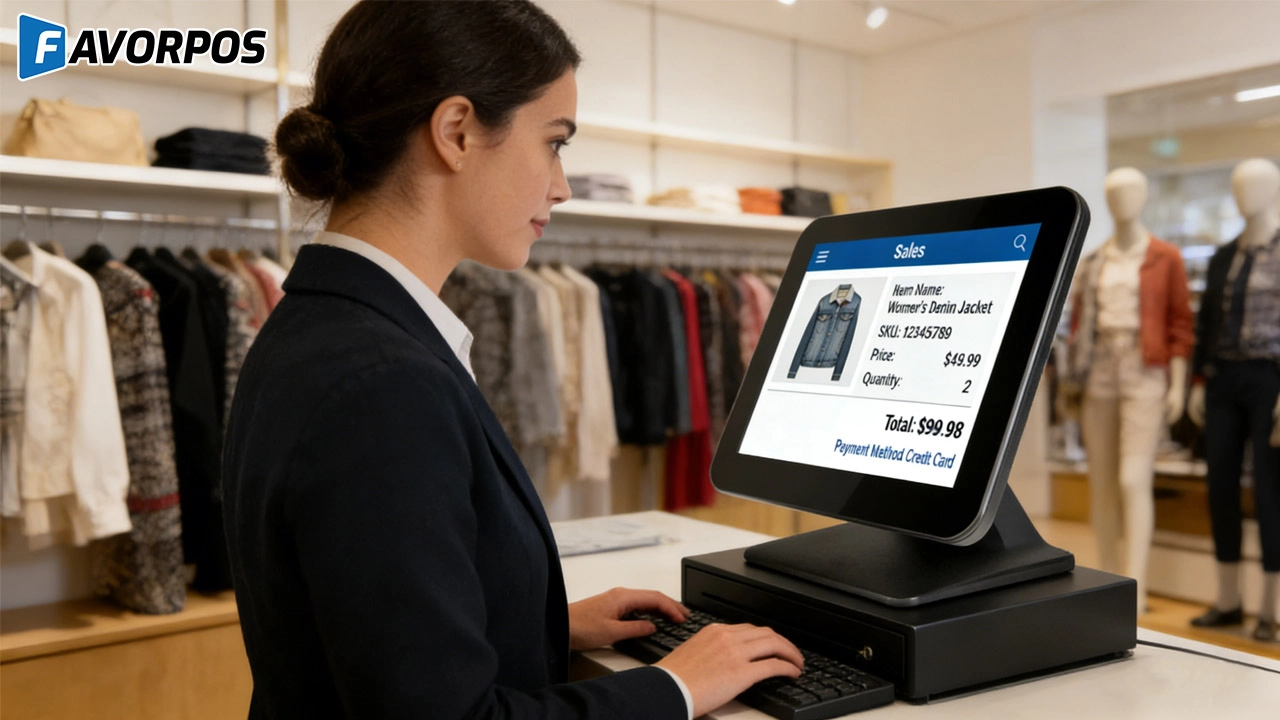
Understanding 15-Inch Aluminum POS Terminals in Modern Commercial Use
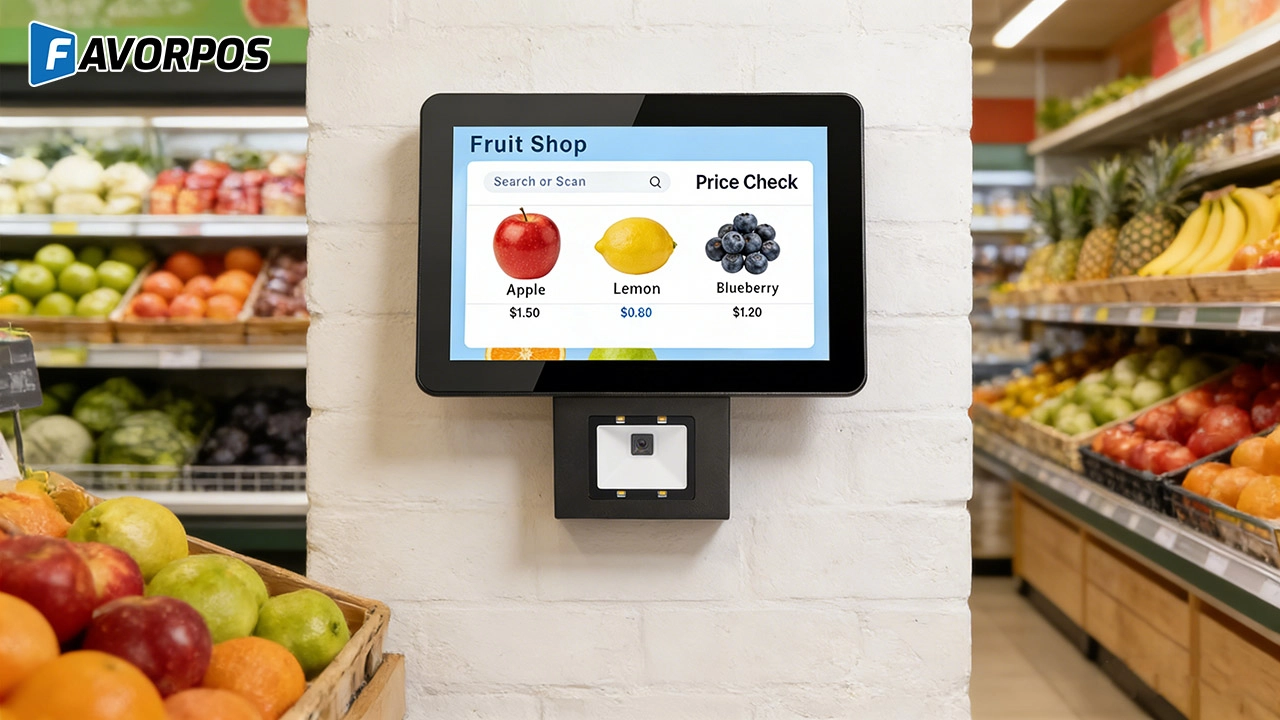
The Smart Way to Check Prices: How a 10.1-Inch Wall-Mounted Price Checker Transforms Retail Stores
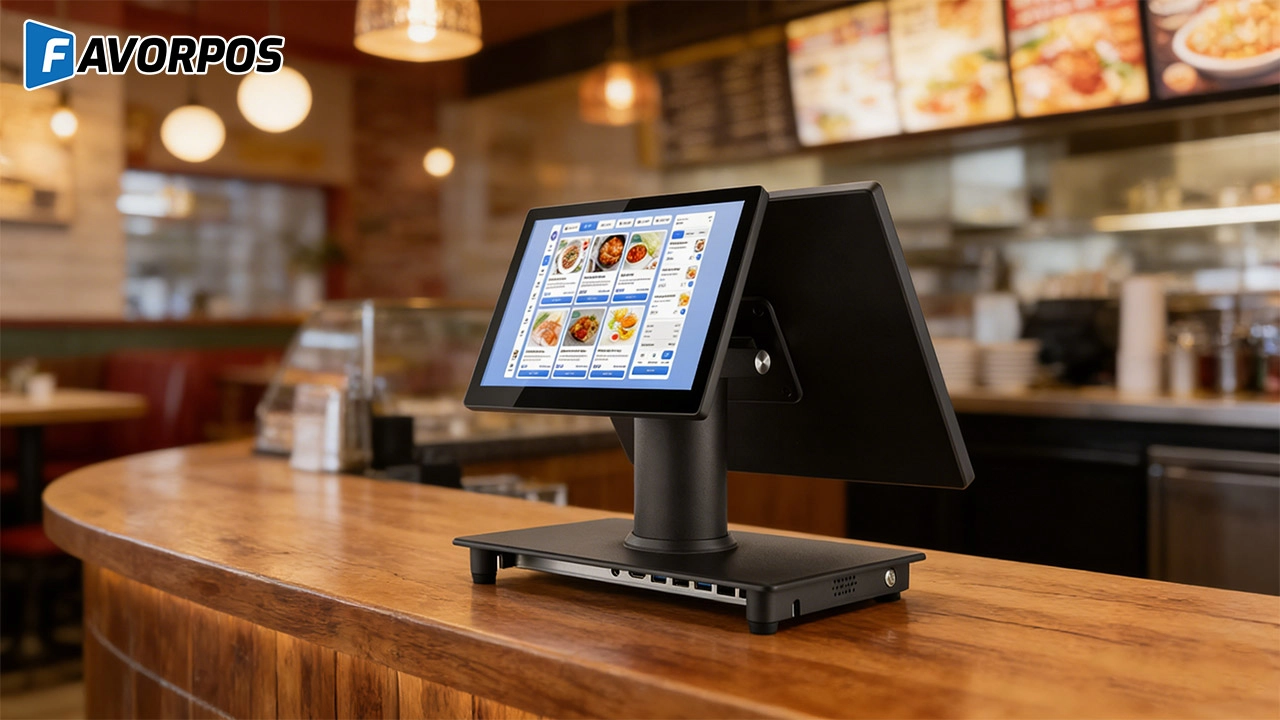
A Smarter Checkout Experience: The 15-Inch Dual-Screen POS Built for Modern Retail
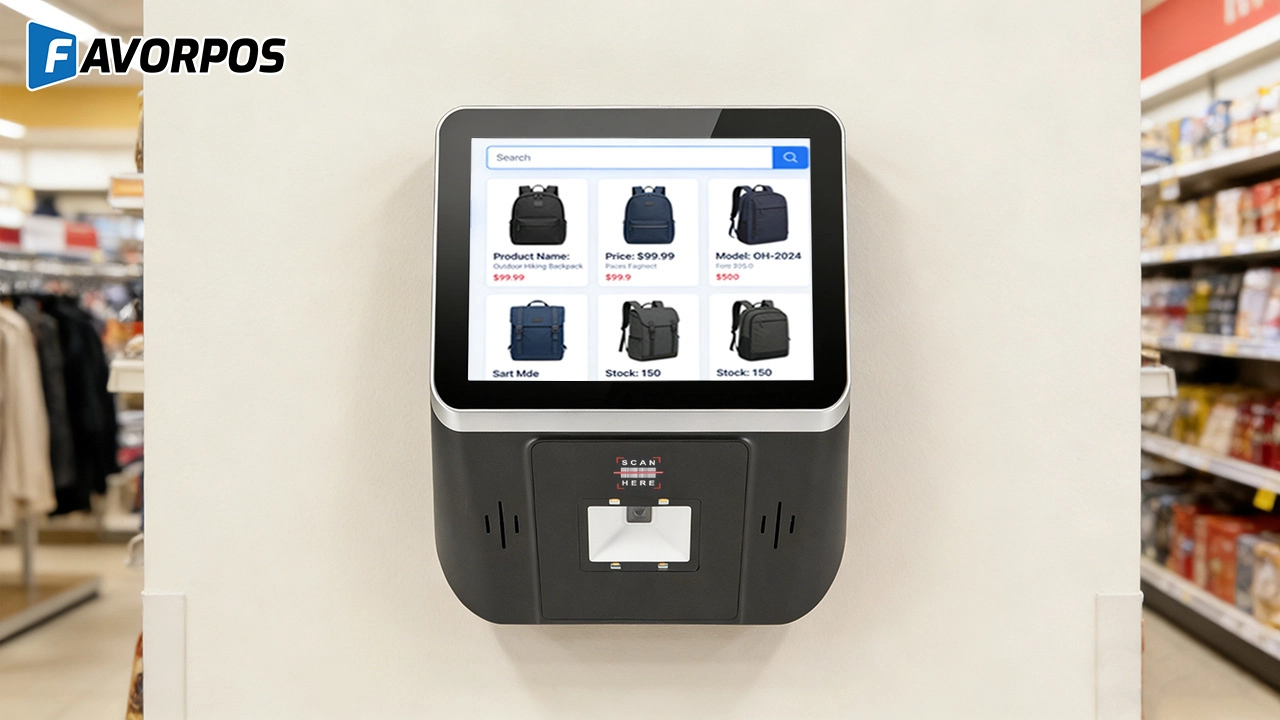
8-Inch Smart Price Checker: A Small Device Powering Smarter Retail Spaces
For Grocery and Supermarkets
Does your system support contactless payments?
Absolutely, our POS system supports multiple payment methods, including contactless payments from mobile wallets such as Apple Pay and Google Pay.
For Entertainment & Events
Can your POS system handle ticket sales and on-site catering at the same time?
Yes, our system can seamlessly manage ticket sales, catering services and merchandise, ensuring efficient and smooth online and on-site sales operations.
Does the system support the management of multiple venues or locations?
Yes, our system supports multi-location management, allowing you to monitor and manage sales and inventory for all venues from a centralized dashboard.
For Distributor
How often do you update your products and launch new products?
We regularly update our product lines to incorporate the latest technology and meet market needs. Dealers will be kept informed when new products and updates are released.
For ODM
What is the minimum order quantity for ODM service?
We support different needs, from small batches to large-scale production. The specific minimum order quantity will be determined based on product type, complexity and production requirements. Please contact us for details.
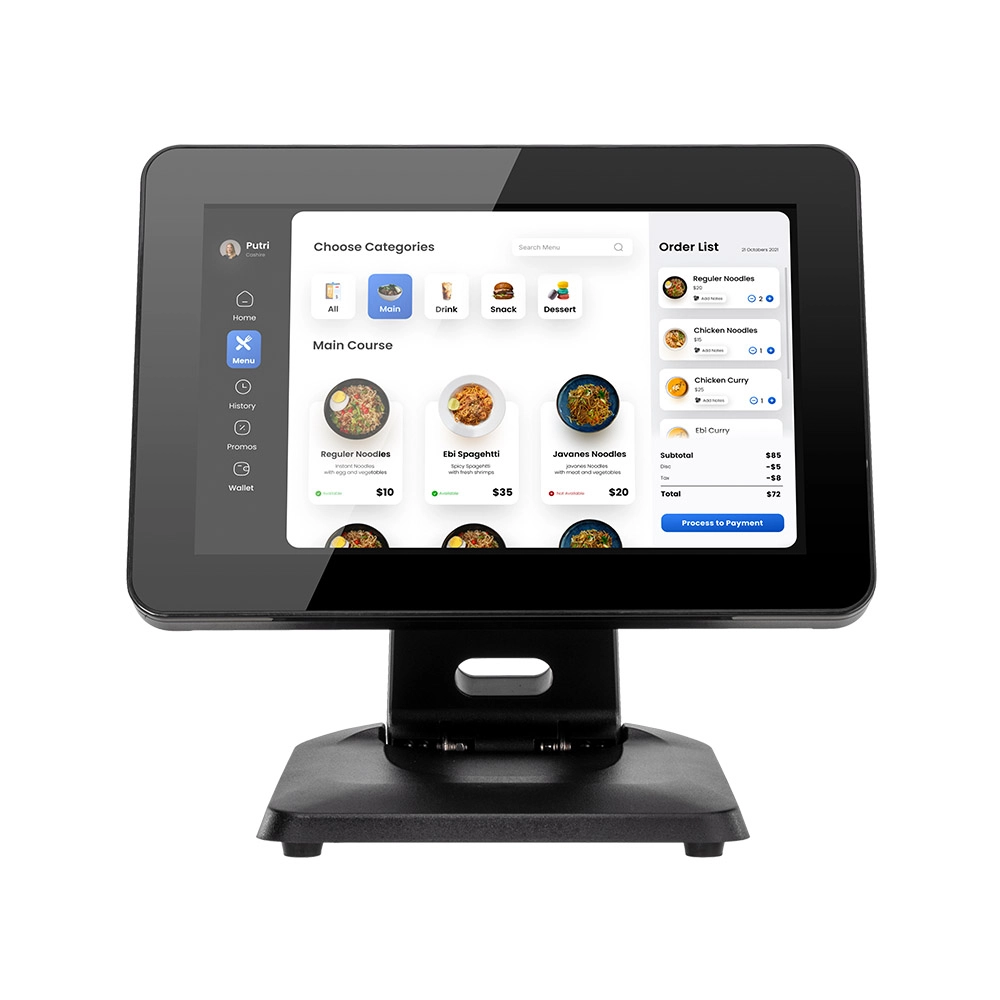
Desktop Touch Screen POS Systems 12.1'' Android Windows Manufacturer
Our Desktop Touch Screen POS Systems feature a 12.1'' display, supporting both Android and Windows platforms. Engineered for high performance. The intuitive touch interface simplifies transactions and enhances customer engagement. With a sleek design and robust construction, our POS systems are perfect for businesses looking to improve efficiency and elevate the shopping experience.
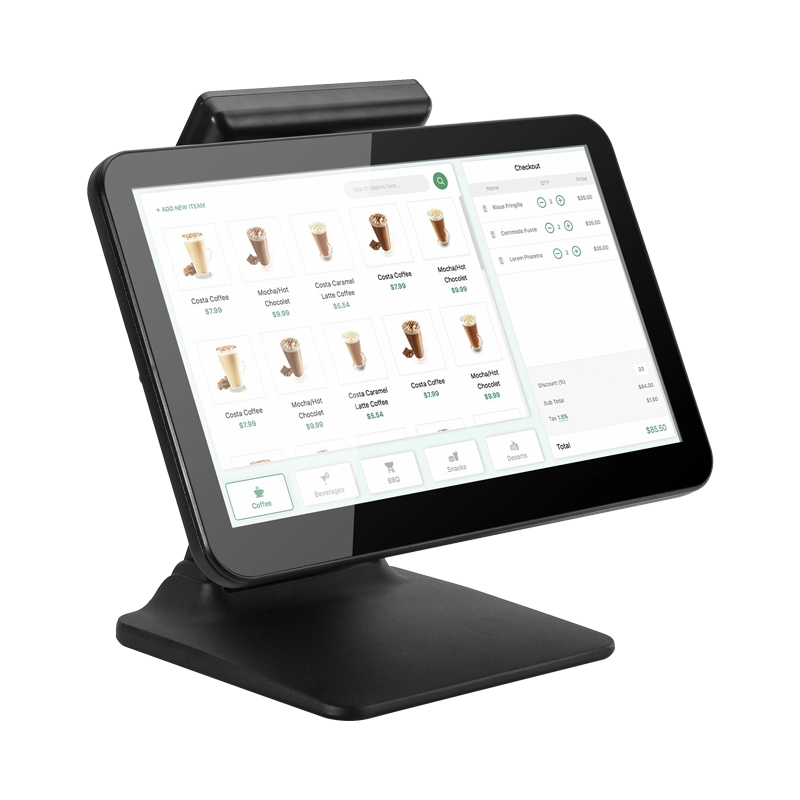
15.6 Inch Windows POS Terminal with VFD Display, Foldable Aluminum Stand Touch Screen POS for Retail & Hospitality
This 15.6-inch POS terminal is built to meet the needs of modern retail and hospitality environments. Powered by a stable Windows operating system, it ensures smooth performance for various point-of-sale applications. The device features a crisp, responsive touch screen and a built-in VFD customer display, allowing customers to view transaction details clearly. Its aluminum alloy stand offers a sleek, professional appearance while providing enhanced durability and stability for busy checkout counters. Ideal for retail stores, restaurants, and service-based businesses, this POS machine delivers a reliable and customer-friendly checkout experience.
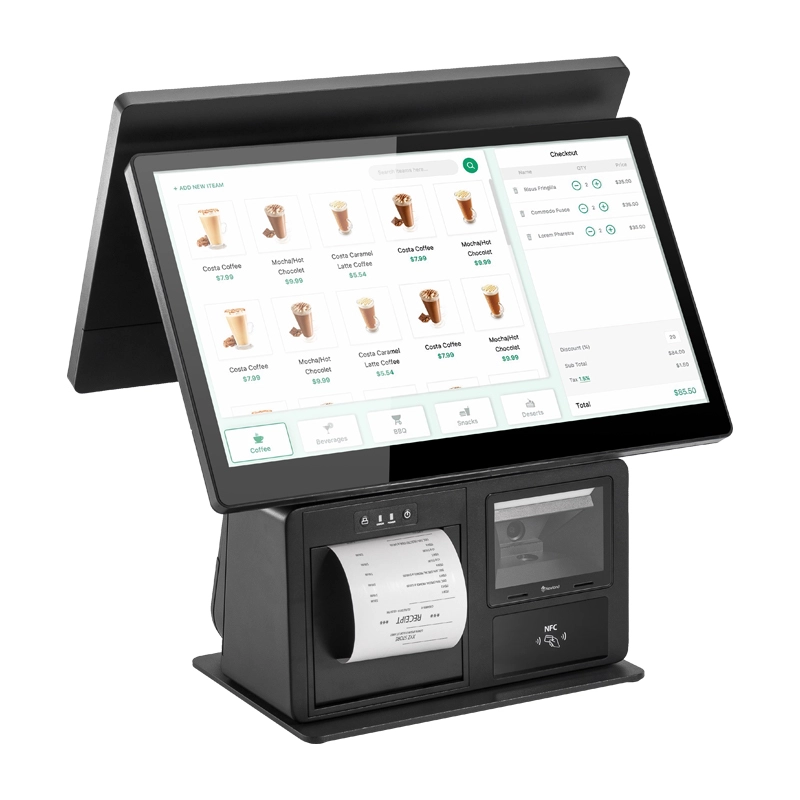
Point of Sale System with Thermal Printer All in One Pos Dual Touchscreen Pos with Barcode Scanner Supplier
FAVORPOS presents the all-in-one Point of Sale System with Thermal Printer, featuring dual touchscreens and an integrated barcode scanner. As a leading POS with NFC factory and barcode scanner supplier, we deliver reliable, efficient solutions tailored for your business needs.
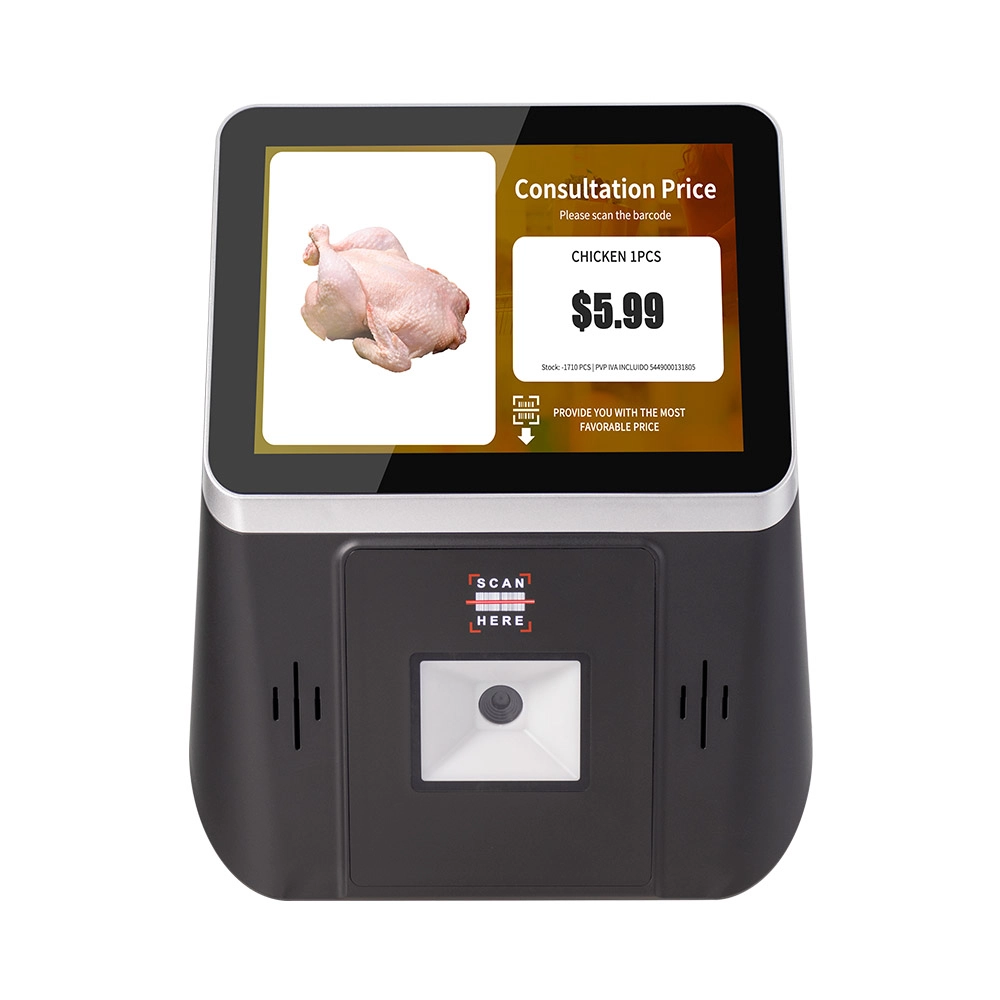
8 inch Wall Mount Price Checker with Scanner Android Windows Factory
Our 8-inch Wall Mount Price Checker is designed for optimal convenience in retail spaces, featuring a sleek design that fits seamlessly into any environment. Compatible with both Android and Windows, this unit includes an integrated scanner for quick and accurate price checks. Its wall-mounted design saves counter space while providing easy access for customers. Ideal for enhancing efficiency and improving the shopping experience.
Get in touch
Interested in becoming a POS system dealer? Contact us for more information and start the process of joining our dealer network.
We look forward to working with you to expand the market together.


Copyright © 2025 Favorpos All Rights Reserved.
