
How secure is a POS desktop system and how to protect payments?
- 1. How can a small retailer verify a POS desktop system vendor actually provides a validated P2PE/E2EE solution and EMV-certified payment terminal before purchase?
- 2. What exact network segmentation rules and firewall configuration prevent cardholder data exposure from a Windows-based POS desktop while allowing cloud sync?
- 3. How to detect and remove POS-specific malware on a desktop POS without destroying daily transactional data or breaking PCI compliance?
- 4. Is consumer-grade antivirus and default Windows Update enough for a POS desktop system or should I use specialized POS endpoint protection?
- 5. How do I enforce PCI DSS controls effectively on hybrid cloud-connected POS desktops that store minimal cardholder data locally?
- 6. What physical and supply-chain controls stop tampering with POS desktop systems during delivery, installation and field maintenance?
- Concluding summary — advantages of implementing rigorous POS desktop security and procurement checks
How Secure Is a POS Desktop System — Protect Payments & Buy Right
As merchants and integrators choose a desktop point of sale (POS desktop system) they need actionable, standards-based guidance — not generic security checklists. Below are six frequently asked, long-tail questions beginners and procurement teams often search for but rarely find complete, current answers to. Each section gives practical steps, standards to verify (PCI DSS, P2PE, EMV/EMVCo, PCI SSF), and purchase/operational controls that reduce fraud and compliance risk.
1. How can a small retailer verify a POS desktop system vendor actually provides a validated P2PE/E2EE solution and EMV-certified payment terminal before purchase?
Why it matters: Vendors sometimes advertise encrypted payments or EMV ready without providing proof of validation or terminal certification. Verifying reduces risk of costly rework and non-compliance.
Step-by-step verification:
- Request documentation: obtain the vendor's PCI P2PE solution ID and the vendor's Attestation of Compliance (AOC) or evidence under the PCI Software Security Framework (SSF). Validated P2PE solutions and AOCs are published by the PCI Security Standards Council (PCI SSC).
- Check the PCI SSC lists: confirm the solution ID appears on the PCI SSC validated P2PE solutions list. If it's not listed, the claim is unsupported.
- EMV terminal certification: ask for the EMVCo terminal certification number and the device’s Payment Card Industry PIN Transaction Security (PCI PTS) certification for PIN entry devices. EMVCo certification confirms the terminal performs EMV chip processing correctly.
- Confirm tokenization/E2EE architecture: request a data-flow diagram showing where cardholder data is plaintext (if anywhere). A correct P2PE/E2EE implementation ensures card data is encrypted at the PIN pad or entry module and not exposed on the POS desktop system.
- Test endpoints and certificates: ask for sample TLS certificate fingerprints and endpoint hostnames so you can whitelist and validate TLS connections from your network. Malformed certificate configurations are a common gap.
- Contractual clauses: include SLA clauses that require vendor-provided proof of continued validation after major upgrades, and liability/incident response terms tied to payment compromise.
- Create dedicated VLANs: place all POS desktops and payment terminals on a single, dedicated VLAN (POS-VLAN). Management consoles live on a separate management VLAN with strict access controls.
- Zero-trust firewall rules: implement deny-by-default policies. Allow only the minimal outbound connections from POS-VLAN to the payment processor’s specific IP ranges and ports (e.g., HTTPS/TLS 443). Block all inbound connections to POS devices unless from a hardened jump host.
- Use NAT and egress filtering: NAT outgoing traffic through a gateway that authenticates and logs flows. Whitelist payment gateway FQDNs/IPs and TLS certificate pins where possible; deny unknown destinations.
- Segregate management protocols: block SMB (445), RDP (3389), Telnet, and administrative ports from the POS-VLAN. Allow remote management only via a hardened management server on the management VLAN using MFA and jump-hosting (bastion) with logging.
- Apply intrusion detection and monitoring: run network-based IDS/IPS sensors near the gateway and monitor for known POS malware signatures (RAM-scraper patterns, suspicious TLS handshakes). Forward logs to a central SIEM for correlation and retention per PCI DSS.
- Use TLS 1.2+ and modern ciphers: ensure payment traffic uses TLS 1.2 or 1.3 and enforce strong cipher suites. Disable obsolete protocols (SSL, TLS 1.0/1.1).
- Periodic validation: perform network segmentation tests and internal scanning quarterly; document scoping decisions in PCI DSS evidence.
- Isolate immediately: remove the POS terminal from network access but keep the device powered to preserve volatile memory for forensic collection (unless instructed otherwise by security responders).
- Capture volatile data and logs: collect RAM snapshots, running process lists, open network connections, and recent logs. EDR solutions simplify this; if you don't have EDR, use validated forensic tools and document chain-of-custody.
- Assess backups and transaction store: confirm encrypted transaction logs and backups exist off-device. If not, prioritize extracting transaction files before system rebuild; ensure extracted files are hashed and stored off-network.
- Use a clean-image rebuild process: do not rely on cleaning malware in place. Re-image POS desktop systems from a known-good master image that has been updated, signed, and validated. Rebuilds are faster and safer than file-level cleaning.
- Rotate credentials and keys: as part of recovery, rotate administrative passwords, API keys, and any payment tokens/keys that might have been exposed. Coordinate with payment processor to rekey if tokenization keys were compromised.
- Post-incident validation: before returning to production, validate the rebuilt system's integrity: E2E tests, transaction reconciliation with processor, and external scans. Retain forensic evidence for breach reporting and PCI incident requirements.
- Preventive measures: deploy EDR with behavior-based detection and application whitelisting on POS desktops, maintain immutable transaction logs to a secure remote location, and perform periodic integrity checks (file hashes).
- Use enterprise endpoint protection: choose an EDR/XDR solution that supports application behavior monitoring, memory-scan for RAM scrapers, and centralized policy management. These detect techniques used by POS threats (e.g., memory scraping) that signature AV misses.
- Application whitelisting: implement allow-listing so only approved POS applications, services and signed drivers run. This is one of the most effective defenses against unknown malware.
- Controlled patching: adopt a scheduled, tested patch process. Do not apply critical updates blindly during business hours. Use a staging environment to validate patches against the POS application and peripherals (card readers, printers, scales).
- Use hardened OS builds: where possible use purpose-built embedded/IoT POS OS versions (Windows IoT, Linux point-of-sale distributions) or locked-down Windows builds with Secure Boot, BitLocker, and UEFI passwords. Avoid using unsupported OS versions; for example Windows 10 reached end of support on Oct 14, 2025, increasing risk if still in use.
- Centralized management and logging: manage endpoints centrally for patch status, AV signatures, and policy enforcement. Keep logs forwarded to SIEM for correlation with network events.
- Minimize scope: implement P2PE/E2EE and tokenization so PANs are never stored on local POS desktops. If card data is truly not stored or only transiently cached encrypted in memory, document and validate that scope reduction per PCI DSS guidance.
- Document data flows and scoping: produce a cardholder-data flow diagram that shows exactly where PANs touch systems. Use this to determine in-scope components and required controls.
- Strong key management: cloud tokenization providers must manage keys per industry standards; verify KMS, HSM usage, and key rotation policies. For on-prem keys, use TPM or HSM-backed key storage and limit key access.
- MFA and least privilege for cloud access: enforce MFA for administrative access to cloud-hosted payment consoles, and role-based access that follows least privilege principles.
- Logging, monitoring and retention: ensure POS desktops send logs to a secure cloud SIEM, retain logs for the period required by PCI DSS and local regulations, and configure alerts for anomalous activity (failed logins, unusual transaction patterns).
- Regular attestations and penetration testing: perform unit-level and network-level penetration tests annually or after significant changes. Maintain evidence for assessors that cloud and on-prem controls were validated.
- Secure chain of custody: require your vendor to provide documented chain-of-custody for devices from factory to delivery. For high-risk deployments use sealed shipments with tamper-evident packaging and serial-number reconciliation.
- Tamper-evident seals and labels: apply tamper-evident seals on chassis panels, USB ports, and enclosure screws. Log seal IDs in asset inventory and inspect seals on every scheduled maintenance visit.
- Firmware signing and secure boot: mandate that POS hardware supports signed firmware and Secure Boot. Validate firmware hash against vendor-published values before commissioning devices.
- Disable unused physical ports: during setup disable or lock unused USB/Aux ports, and use port-blockers where feasible. Maintain a policy for authorized USB devices only and log any use of external drives.
- Local administrative controls: set BIOS/UEFI passwords and require TPM use for disk encryption (e.g., BitLocker). Limit on-site administrative accounts and require MFA or an on-site supervisor for privileged maintenance actions.
- Vendor maintenance practices: require vendors to document remote maintenance methods (jump host, MFA, signed maintenance sessions), and prohibit unscheduled field engineers accessing POS systems without prior authorization and documented sign-off.
Red flags: vendor can't provide a P2PE solution ID/AOC, uses proprietary unclear encryption, or claims EMV compatibility without certification. These indicate you must budget for compensating controls or choose another solution.
2. What exact network segmentation rules and firewall configuration prevent cardholder data exposure from a Windows-based POS desktop while allowing cloud sync?
Why it matters: Many breaches occur because POS devices are in the same flat network as corporate desktops or guest Wi‑Fi. Proper segmentation reduces scope of PCI DSS and limits lateral movement.
Recommended configuration (practical and enforceable):
3. How to detect and remove POS-specific malware on a desktop POS without destroying daily transactional data or breaking PCI compliance?
Why it matters: Merchants fear losing transaction history and downtime. Malware removal must balance forensics, data integrity and continuity.
Detection and response steps:
4. Is consumer-grade antivirus and default Windows Update enough for a POS desktop system or should I use specialized POS endpoint protection?
Why it matters: Off-the-shelf consumer AV and uncontrolled updates can be incompatible with POS software, create downtime, and still miss modern threats like fileless malware or RAM scrapers.
Best-practice approach:
5. How do I enforce PCI DSS controls effectively on hybrid cloud-connected POS desktops that store minimal cardholder data locally?
Why it matters: Many merchants move POS functions to cloud-hosted backends while keeping local desktops for user interface or local caching. That hybrid model changes PCI scope and responsibilities.
Actionable steps for enforcement:
6. What physical and supply-chain controls stop tampering with POS desktop systems during delivery, installation and field maintenance?
Why it matters: Physical tampering and rogue peripherals are common vectors for card data theft and persistent backdoors.
Controls to require in procurement and operations:
Concluding summary — advantages of implementing rigorous POS desktop security and procurement checks
Adopting the above measures—validated P2PE/E2EE and EMV terminals, strict network segmentation, enterprise-grade endpoint protection, controlled patching, robust incident response and physical/supply-chain controls—reduces PCI scope, lowers fraud and breach risk, shortens recovery times, and protects brand reputation. For buyers, requiring documented validations (P2PE IDs, EMV certifications, AOCs) and contractual SLAs prevents downstream surprises and aligns vendor responsibility with merchant liability. In practice, these controls make desktop point of sale deployments more resilient, auditable and cost-effective over the device lifecycle.
Need a vendor-validated POS desktop system or a security review before purchase? Contact us for a tailored quote at www.favorpos.com or email sales2@wllpos.com.
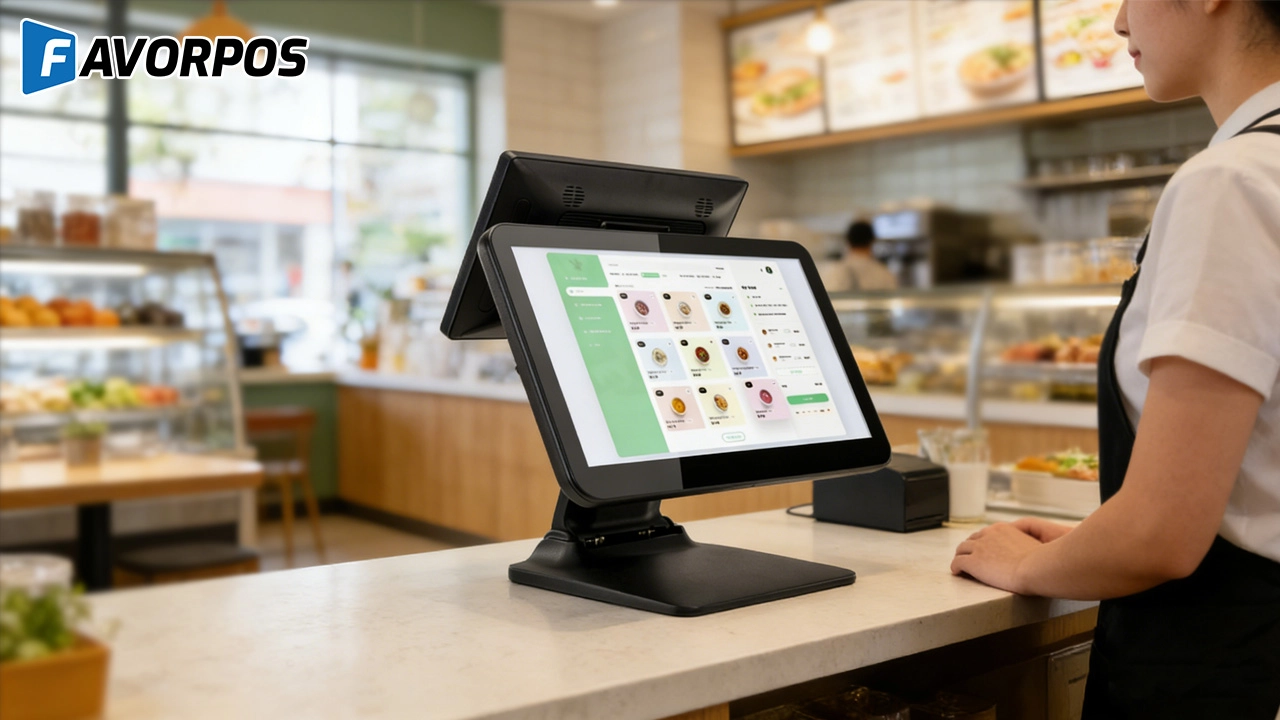
Beyond Checkout: How a 15.6-Inch Aluminum POS System Redefines Retail Efficiency

Understanding 15-Inch Aluminum POS Terminals in Modern Commercial Use
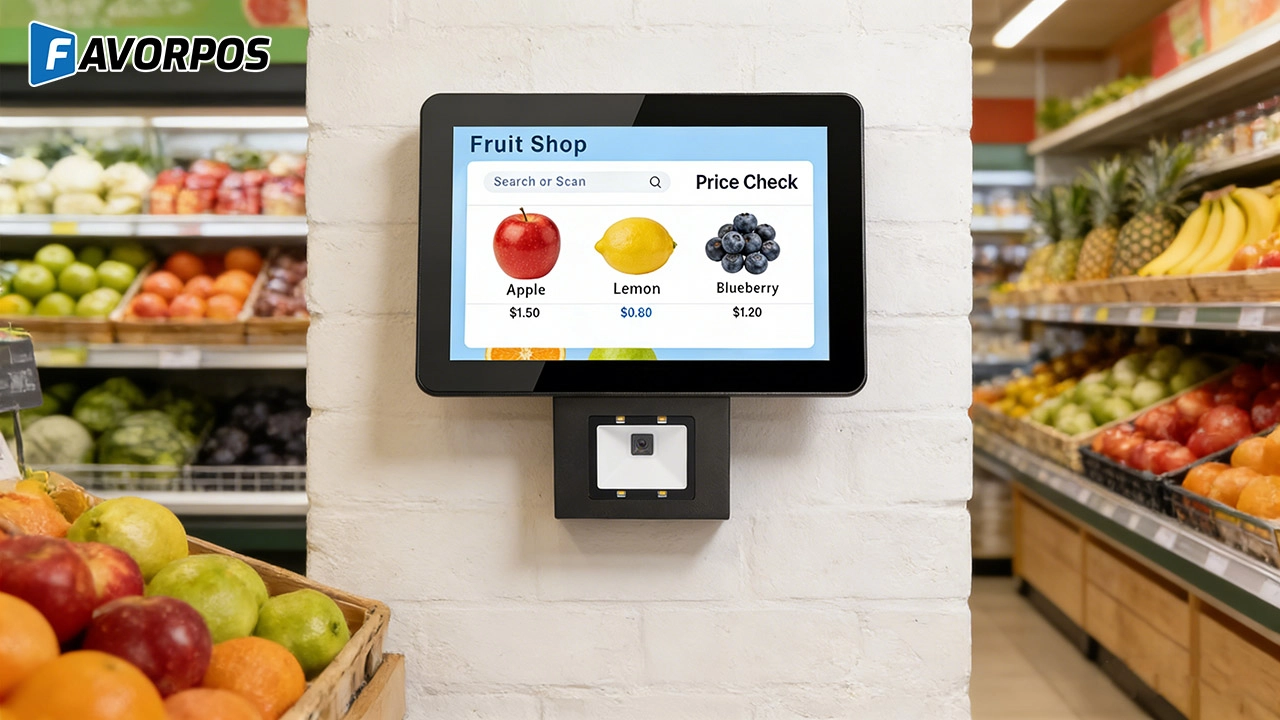
The Smart Way to Check Prices: How a 10.1-Inch Wall-Mounted Price Checker Transforms Retail Stores
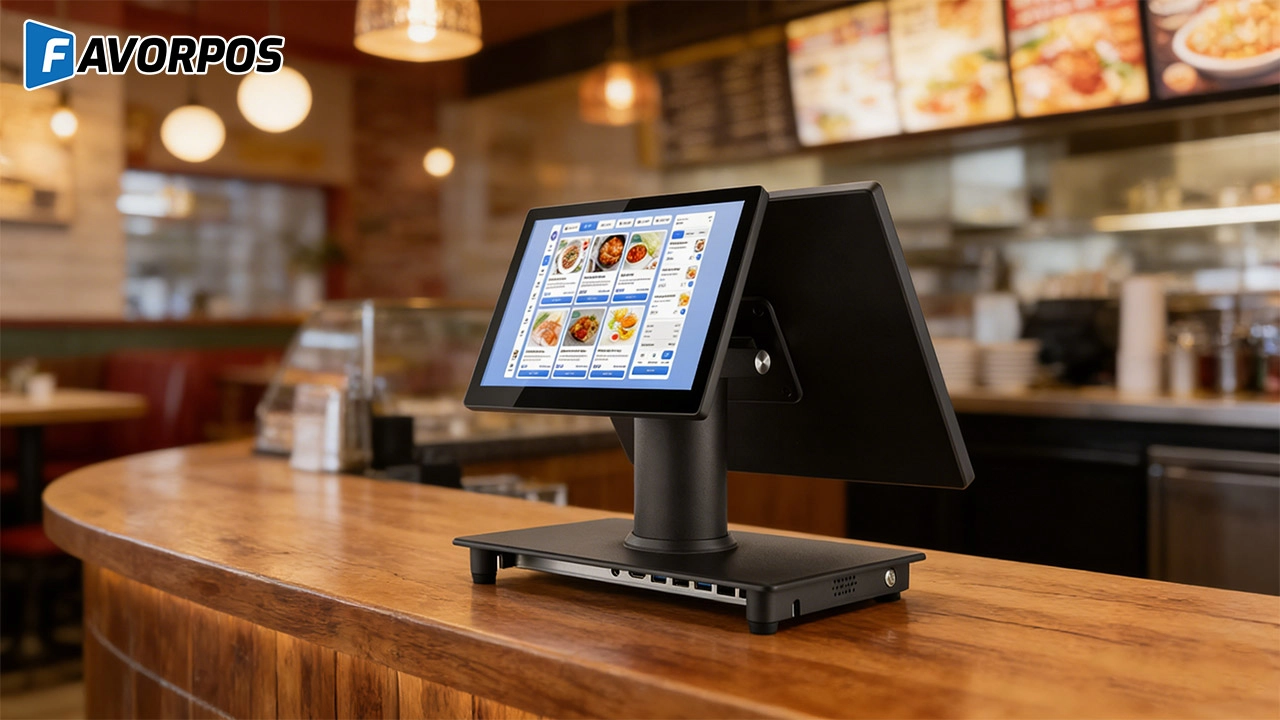
A Smarter Checkout Experience: The 15-Inch Dual-Screen POS Built for Modern Retail
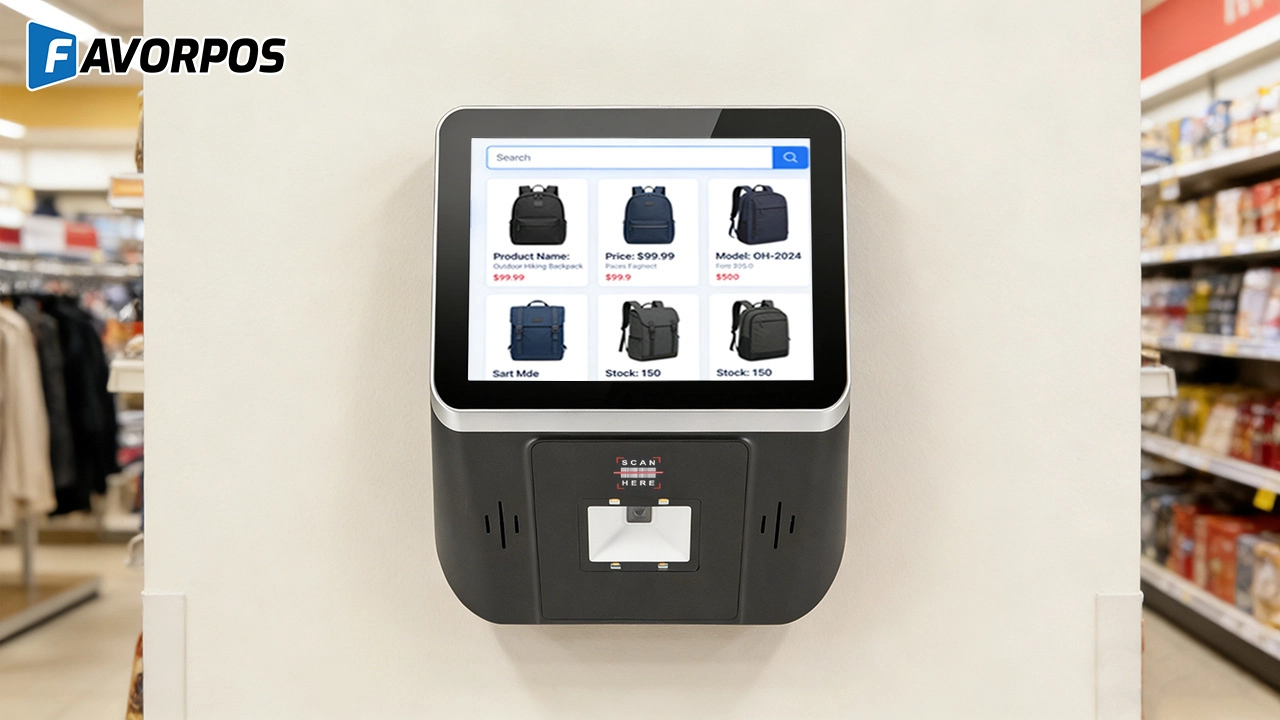
8-Inch Smart Price Checker: A Small Device Powering Smarter Retail Spaces
For E-commerce
Can I manage multiple online stores from one system?
Yes, our POS system supports multi-location and multi-store management, allowing you to centrally manage all e-commerce operations.
Does the POS system support global payments?
Yes, we support multi-currency and cross-border transactions, enabling you to accept payments from customers around the world.
For ODM
What is the lead time for ODM production?
The lead time depends on multiple factors, including product complexity, production volume and material availability. Generally speaking, the time from design confirmation to delivery may range from a few weeks to a few months. We will provide a detailed schedule at the start of the project and try our best to deliver on time.
For company
May I have your product catalog?
Yes, contact us and we will send you the catalog for reference.
For OEM
How do we start customizing POS machines?
To start customizing POS machines, please first contact our sales team with your needs and specifications. We will arrange a detailed consultation to understand your specific requirements and provide a design plan and quotation.
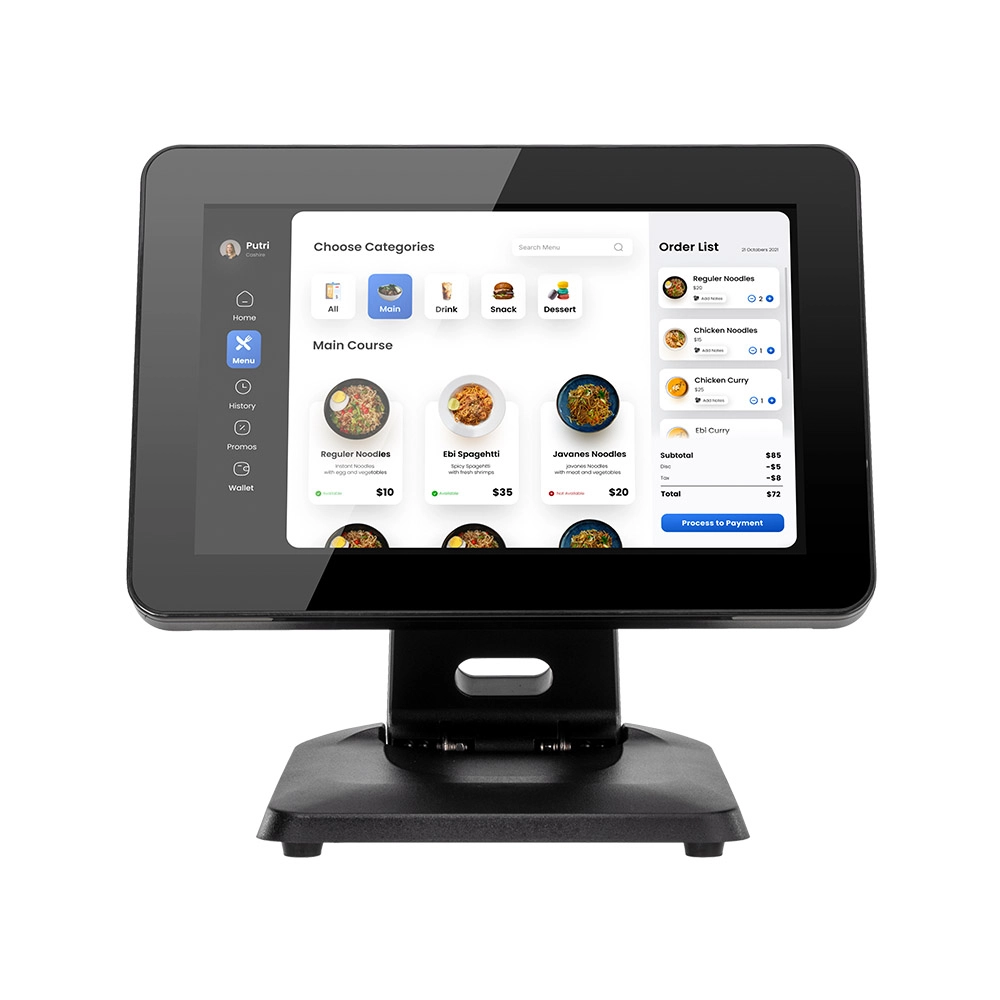
Desktop Touch Screen POS Systems 12.1'' Android Windows Manufacturer
Our Desktop Touch Screen POS Systems feature a 12.1'' display, supporting both Android and Windows platforms. Engineered for high performance. The intuitive touch interface simplifies transactions and enhances customer engagement. With a sleek design and robust construction, our POS systems are perfect for businesses looking to improve efficiency and elevate the shopping experience.
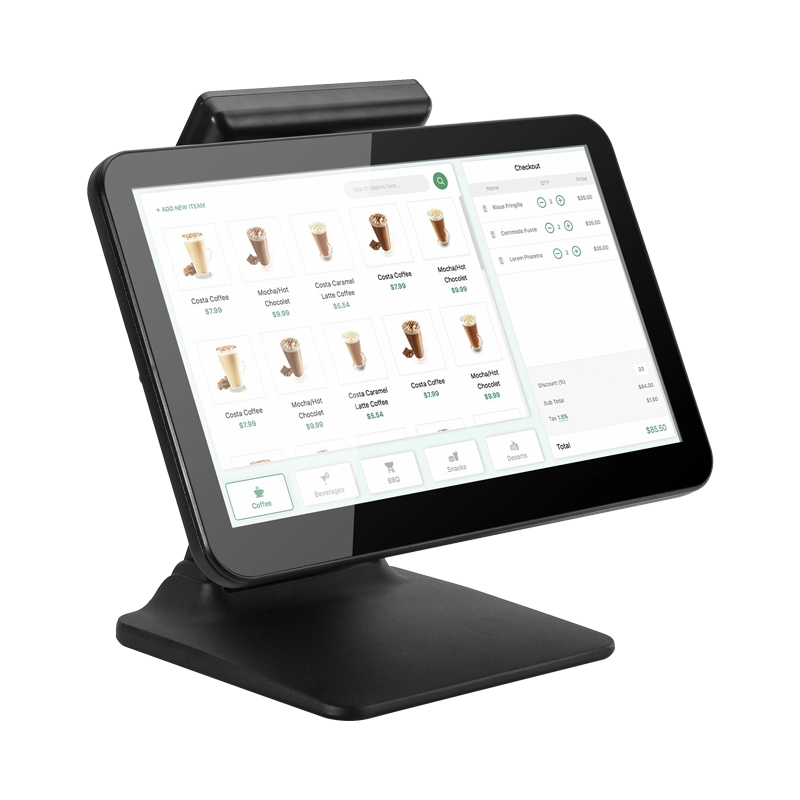
15.6 Inch Windows POS Terminal with VFD Display, Foldable Aluminum Stand Touch Screen POS for Retail & Hospitality
This 15.6-inch POS terminal is built to meet the needs of modern retail and hospitality environments. Powered by a stable Windows operating system, it ensures smooth performance for various point-of-sale applications. The device features a crisp, responsive touch screen and a built-in VFD customer display, allowing customers to view transaction details clearly. Its aluminum alloy stand offers a sleek, professional appearance while providing enhanced durability and stability for busy checkout counters. Ideal for retail stores, restaurants, and service-based businesses, this POS machine delivers a reliable and customer-friendly checkout experience.
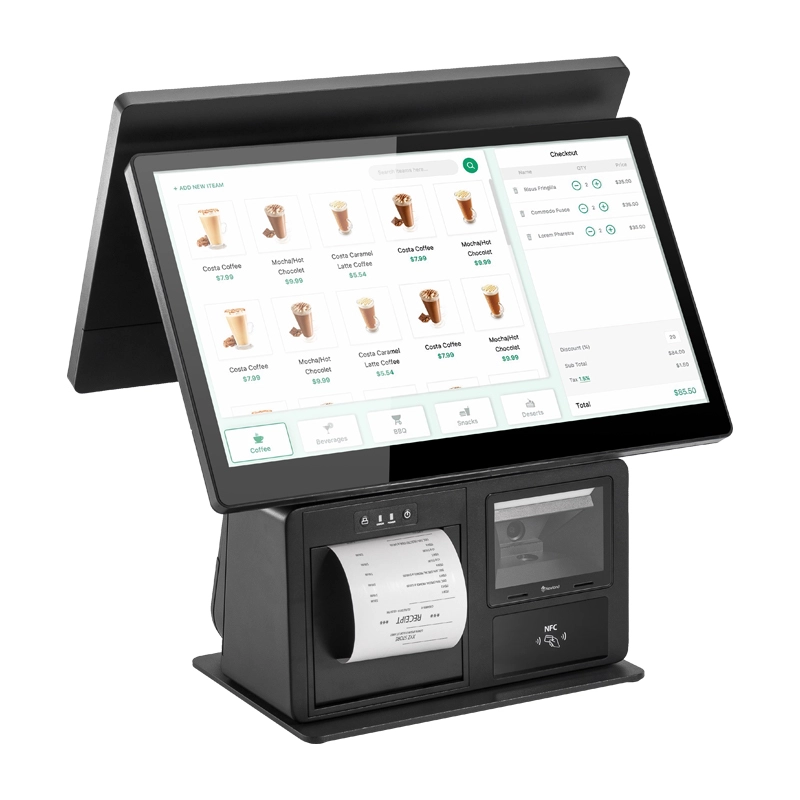
Point of Sale System with Thermal Printer All in One Pos Dual Touchscreen Pos with Barcode Scanner Supplier
FAVORPOS presents the all-in-one Point of Sale System with Thermal Printer, featuring dual touchscreens and an integrated barcode scanner. As a leading POS with NFC factory and barcode scanner supplier, we deliver reliable, efficient solutions tailored for your business needs.
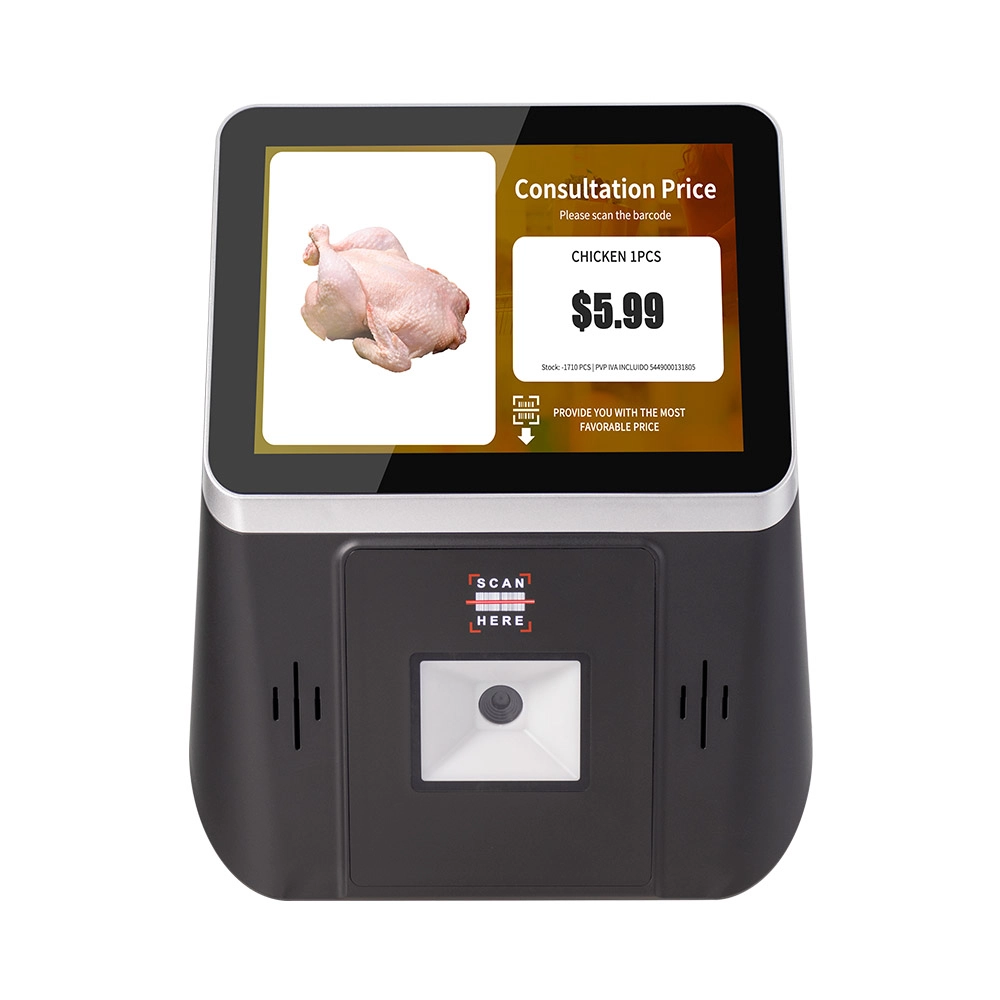
8 inch Wall Mount Price Checker with Scanner Android Windows Factory
Our 8-inch Wall Mount Price Checker is designed for optimal convenience in retail spaces, featuring a sleek design that fits seamlessly into any environment. Compatible with both Android and Windows, this unit includes an integrated scanner for quick and accurate price checks. Its wall-mounted design saves counter space while providing easy access for customers. Ideal for enhancing efficiency and improving the shopping experience.
Get in touch
Interested in becoming a POS system dealer? Contact us for more information and start the process of joining our dealer network.
We look forward to working with you to expand the market together.


Copyright © 2025 Favorpos All Rights Reserved.
