
What are the must-have features in gas station POS systems?
- 1) How can I get EMV pay-at-pump and PCI DSS compliance on existing dispensers (Gilbarco/Wayne/Tokheim) without replacing the whole forecourt?
- 2) What redundancy and offline capabilities should a gas station POS have to avoid downtime during internet outages?
- 3) How do I accurately reconcile pump volume, in-store sales, and card settlements to prevent shrink and accounting variances?
- 4) For a multi-island station scaling to 8–12 islands, what hardware topology and POS architecture prevent costly rework later?
- 5) Which loyalty and fleet card integrations actually increase margin without creating PCI or operational complexity?
- 6) How do I implement inventory controls and age-verification for tobacco, alcohol (and cannabis where legal) so I don’t fail compliance audits?
1) How can I get EMV pay-at-pump and PCI DSS compliance on existing dispensers (Gilbarco/Wayne/Tokheim) without replacing the whole forecourt?
Short answer: choose a certified forecourt integration path using merchant-grade payment modules (P2PE/tokenization) and vendor-certified pump interfaces. Many stations think they must rip and replace dispensers; in practice you can often add an EMV-certified pay module and update software if the dispenser controller and card readers are supported.
Detailed steps and checklist:
- Inventory current forecourt hardware: model/year of dispensers, controller (e.g., Gilbarco, Wayne, Tokheim), existing pay-at-pump terminals.
- Confirm vendor compatibility: get a compatibility matrix from your POS vendor that lists supported dispenser controllers and pay modules. Verified integrations reduce certification costs and downtime.
- Adopt P2PE or tokenization: implement point-to-point encryption (P2PE) or third-party tokenization so PANs never touch your POS. This minimizes PCI scope and is required by many acquirers for pumps.
- Contract with an EMV Level 2-certified pump solution: pay-at-pump requires Level 2 software on the dispenser side and Level 1/2 certifications for payment modules; your POS vendor or certified integrator should coordinate this certification with the pump manufacturer.
- Plan staged deployment and certification: vendors typically allow phased rollouts by island to limit business interruption. Expect testing with acquirers and fuel controller vendors (certification windows vary by vendor and region).
- Budget for firmware and service visits: older dispensers may need firmware upgrades or certified hardware modules. This is usually less costly than full dispenser replacement.
Why this matters: EMV at the pump and PCI DSS v4.0 controls dramatically reduce fraud liability and chargeback risk. Integrating via tested forecourt interfaces preserves existing capital while meeting modern security requirements.
2) What redundancy and offline capabilities should a gas station POS have to avoid downtime during internet outages?
Gas stations are high-risk for lost revenue during connectivity problems. The right architecture prevents lost sales and fuel pump lockups.
Key resilience features to insist on:
- Local transaction caching: the POS must authorize and temporarily store card and transaction data locally in encrypted form when the WAN is down, then reconcile and settle automatically once connectivity returns.
- Automatic failover for authorizations: integrate with multiple payment gateways/acquirers or an aggregator that offers automatic outbound routing to prevent single-point failures.
- Isolated forecourt control: ensure forecourt controllers can operate in limited offline mode for pump-start/stop and that the POS can accept fuel transactions with offline approval logic tied to pre-authorizations or fleet card limits.
- Dual-network hardware: use terminals with both wired and cellular connectivity for payments and telemetry (4G/5G backup) to maintain pay-at-pump and mobility payments.
- Battery-backed hardware and UPS: keep critical devices (POS server, forecourt controller, network gateway) on UPS to survive short power events and brownouts common at remote sites.
- Clear offline policies: configure risk-based limits (transaction size thresholds) for offline transactions to balance revenue capture and fraud exposure.
Implementation tip: test failover monthly. Many stations discover gaps only after a real outage; controlled drills will reveal configuration issues and reconciliation edge cases early.
3) How do I accurately reconcile pump volume, in-store sales, and card settlements to prevent shrink and accounting variances?
Reconciliation issues are a primary cause of cash shrink, misreported fuel loss, and payment disputes. A modern gas station POS should provide end-to-end reconciliation tools and integrate directly with fuel controller telemetry.
Essential reconciliation features and process:
- Real-time forecourt telemetry integration: ingest pump-level volume, grade, and transaction IDs from the forecourt controller (Gilbarco/Wayne/Tokheim interfaces). This allows line-item matching between pump events and POS sales.
- Unified transaction IDs: ensure the POS, forecourt controller, and payment gateway use a shared unique identifier for each sale to cross-reference card settlements, receipt numbers, and pump-totals.
- Automated settlement matching: the back-office should auto-match acquirer batch settlements to POS transactions, flagging discrepancies for review and providing exception workflows for chargebacks and refunds.
- Daily fuel reconciliation report: automatic end-of-day reports that compare meter reads, pump volumes, sales by grade, and expected cost-of-goods-sold (COGS) help catch meter drift or theft quickly.
- Audit trail and forensic logs: detailed logs (timestamped) for pump authorizations, reversals, and offline approvals are essential for disputes and insurance claims.
Best practice: set up automated alerts for variance thresholds (e.g., >0.5% volume mismatch or cash drawer variances) and require supervisor sign-off on exceptions.
4) For a multi-island station scaling to 8–12 islands, what hardware topology and POS architecture prevent costly rework later?
Planning hardware and network topology up front avoids forklift upgrades. Consider these design principles.
Recommended topology:
- Headless POS server with tablet/terminal front-ends: run a central on-site POS server (or edge-cloud hybrid) that coordinates the forecourt controller, inventory, and payments. Use rugged terminals or tablets at the counter for staff.
- Forecourt controller as single source of truth: ensure one certified controller per site mediates dispenser commands. Keep pumps connected via a local CAN or serial network to that controller.
- Pay-at-pump controllers at the island: install modular pay modules that can be added per island without affecting the rest of the site.
- Network segmentation: separate the forecourt network, payments network, and guest Wi‑Fi. This simplifies compliance and reduces blast radius for compromises.
- Scalable cabling infrastructure: run fiber or high-quality Cat6 to an island distribution point so adding islands or EV chargers later is plug-and-play.
- Edge compute for cloud-connected POS: choose a POS that can operate offline locally but replicate data to cloud back-office for reporting. This hybrid model avoids constant bandwidth needs while giving centralized management as you scale.
Procurement checklist: choose hardware vendors that provide mapping of costs for incremental expansion (per-island pay module vs full dispenser swaps) and ensure warranty/SLAs cover forecourt functions.
5) Which loyalty and fleet card integrations actually increase margin without creating PCI or operational complexity?
Loyalty and fleet programs can raise customer retention and basket size but are often implemented poorly, creating reconciliation and compliance headaches.
How to select and implement:
- Prefer tokenized loyalty accounts: store loyalty IDs as tokens linked to customer profiles rather than raw card data. This prevents PCI scope creep while enabling personalized offers.
- Native fleet card integration (WEX/Voyager/Comdata): choose a POS that supports direct fleet card processing and mapping of fleet IDs to vehicle/fuel type to avoid manual adjustments and chargebacks.
- Real-time discounting at pump: integrate loyalty rules into the forecourt transaction flow so discounts apply at the pump and are reflected instantly in reconciliation.
- Campaign management in back office: a centralized promotion engine that targets offers by SKU, grade, time, and customer segment reduces the need for multiple third-party tools.
- Audit and settlement transparency: ensure the loyalty/fleet integration provides clear reporting for redeemed discounts and separate settlement files to reconcile with acquirers and fuel suppliers.
Example outcome: properly integrated loyalty increases frequency and basket size while tokenization and P2PE keep the station's PCI scope small and auditable.
6) How do I implement inventory controls and age-verification for tobacco, alcohol (and cannabis where legal) so I don’t fail compliance audits?
Age-restricted products are high-risk for fines and license revocations. A gas station POS must combine hardware, software, and procedural controls.
Must-have capabilities:
- SKU-level age flagging: mark age-restricted SKUs in the POS catalog so the POS enforces age prompts at sale and logs clerk responses.
- ID scanning integration: integrate ID scanners (barcode/MRZ) that read driver’s licenses and automatically verify age and capture a non-sensitive hash or token for audit trails (avoid storing raw ID images unless required and secured).
- Locking cabinets and staff workflows: connect POS to electronic cabinet locks or timed safes for controlled products so sales trigger an unlock only after verified authorization.
- Shift-level audit logs: require manager overrides for questionable sales and keep immutable logs showing who verified age, the method used, and transaction details for compliance reviews.
- Automated reporting for regulators: configure the back office to generate periodic reports required by local regulators (sales volume by SKU, age verification logs, inventory shrink by batch).
Operational tip: train staff on refusal policies and keep in-store signage aligned with POS prompts. Technology helps, but consistent procedures and documentation close most compliance gaps.
Conclusion — Advantages of a modern, integrated gas station POS system
Implementing a purpose-built gas station POS with forecourt integration, EMV/pay-at-pump compliance, offline resilience, real-time reconciliation, scalable hardware topology, and secure loyalty/fleet integrations reduces fraud exposure, minimizes downtime, and improves margins. These features together streamline operations, simplify audits (PCI/age-restricted product compliance), and give clearer financial control so owners can scale confidently.
For a tailored site assessment and quote, contact us at www.favorpos.com or email sales2@wllpos.com.
8-Inch Smart Price Checker: A Small Device Powering Smarter Retail Spaces
Built for Retail Precision: Manufacturing Excellence Behind the 11.6” Smart Price Checker
Building Stability in an Unstable Market: A 15.6-Inch All-in-One POS Designed for the Long Term
A Smarter Way to Check Prices: How Wall-Mounted Price Checkers Are Reshaping Retail Stores
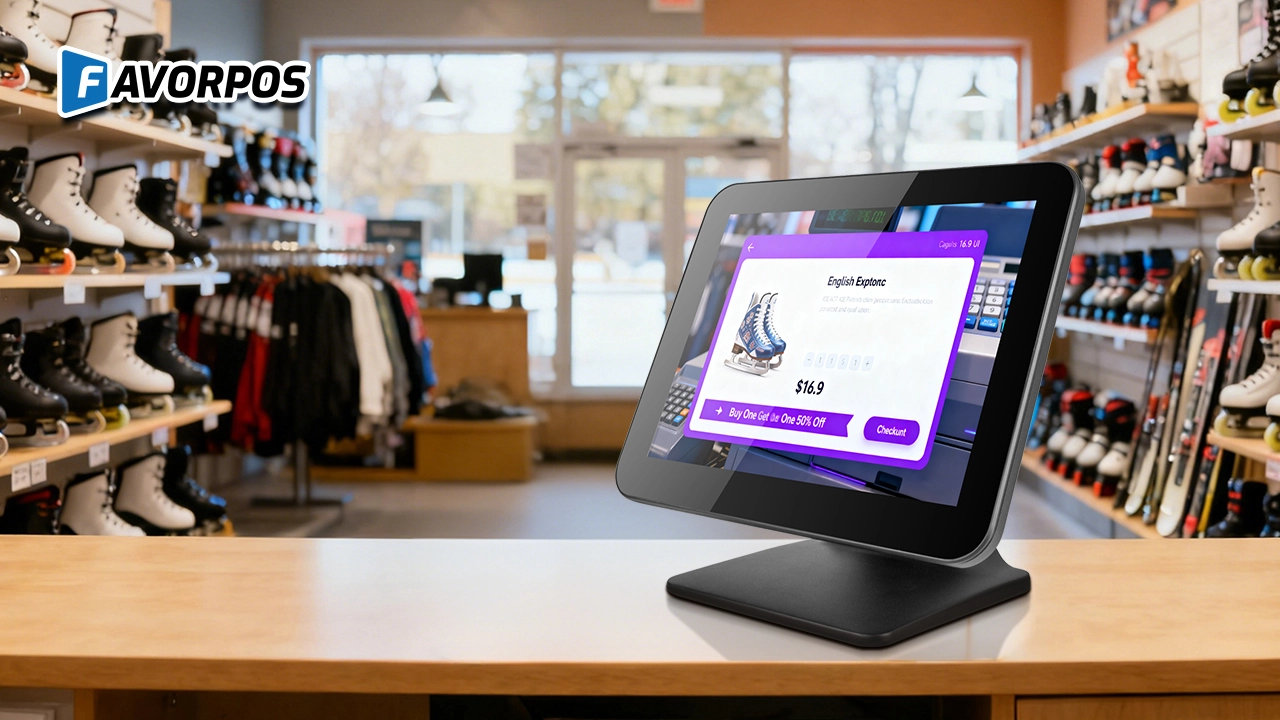
Why a Well-Designed 15-Inch POS Terminal Still Matters in Modern Retail
For Hotels
Can your POS system be integrated with my hotel's PMS system?
Yes, our POS system is designed to integrate seamlessly with most major hotel management systems (PMS), ensuring smooth integration of guest services and billing processing.
For Grocery and Supermarkets
Can I manage multiple stores with your POS system?
Yes, our POS solution provides multi-store management capabilities, allowing you to control pricing, inventory, and promotions for all stores from a single platform.
For Healthcare
What kind of support do you provide after installation?
We provide comprehensive after-sales support, including technical assistance, hardware updates, hardware maintenance and employee training.
For Government and Public
How does your system ensure data security?
We use advanced encryption and security measures to protect all financial and personal data, ensuring compliance with industry standards and regulations.
For Restaurants & Cafes
Is your POS system suitable for different types of catering businesses?
Yes, our POS system is suitable for a variety of catering businesses, including fast food restaurants, high-end restaurants, cafes, as well as food trucks and pop-up restaurants. The system functions can be customized according to different business types to meet specific needs.
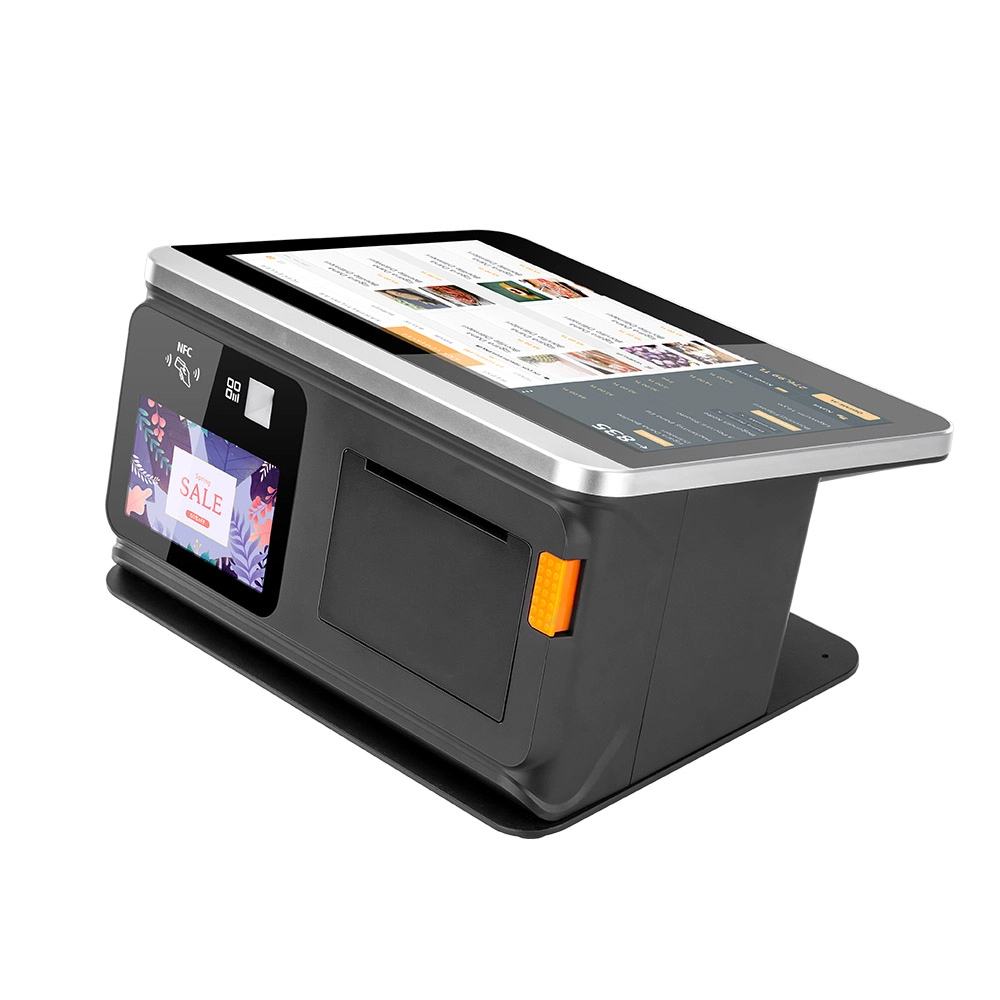
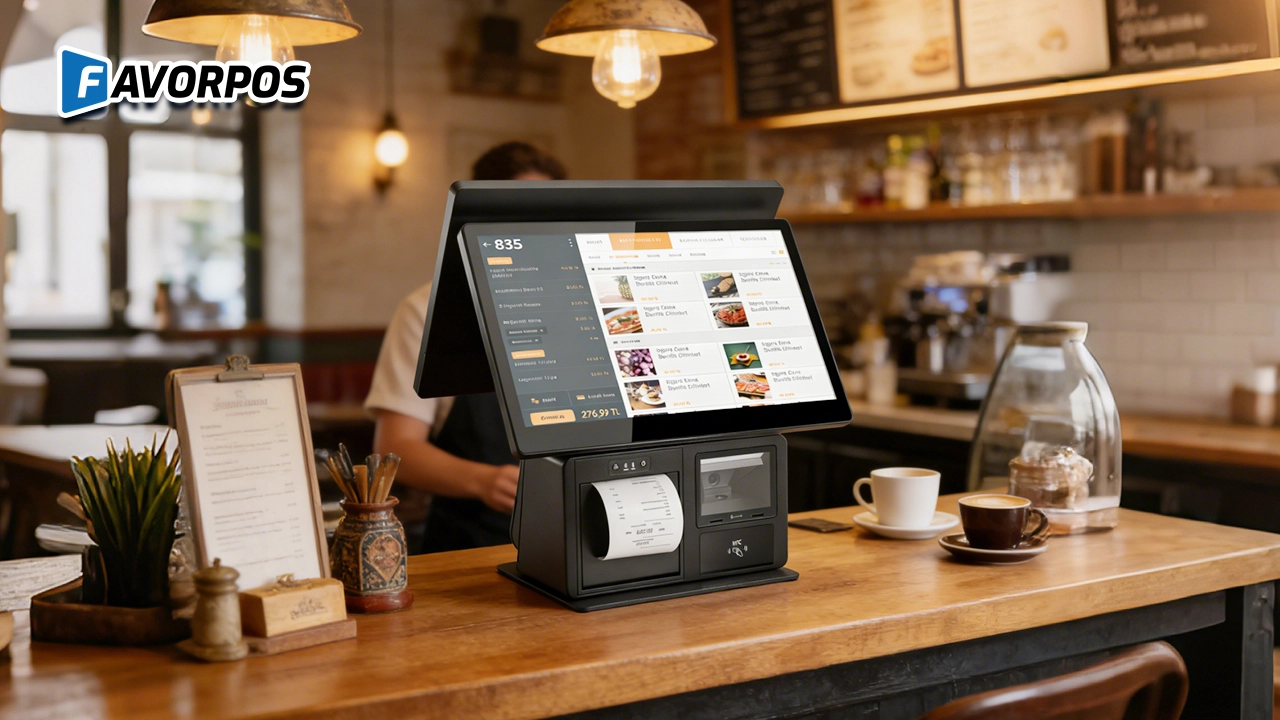
All in One POS Terminal Metal 11.6'' Touchscreen Android Windows with Printer
The All-in-One POS Terminal features an 11.6'' touchscreen display, compatible with both Android and Windows. This metal-constructed terminal combines durability with style, making it a perfect fit for any retail or hospitality environment. Equipped with a built-in printer, it streamlines transactions by allowing for instant receipt printing.
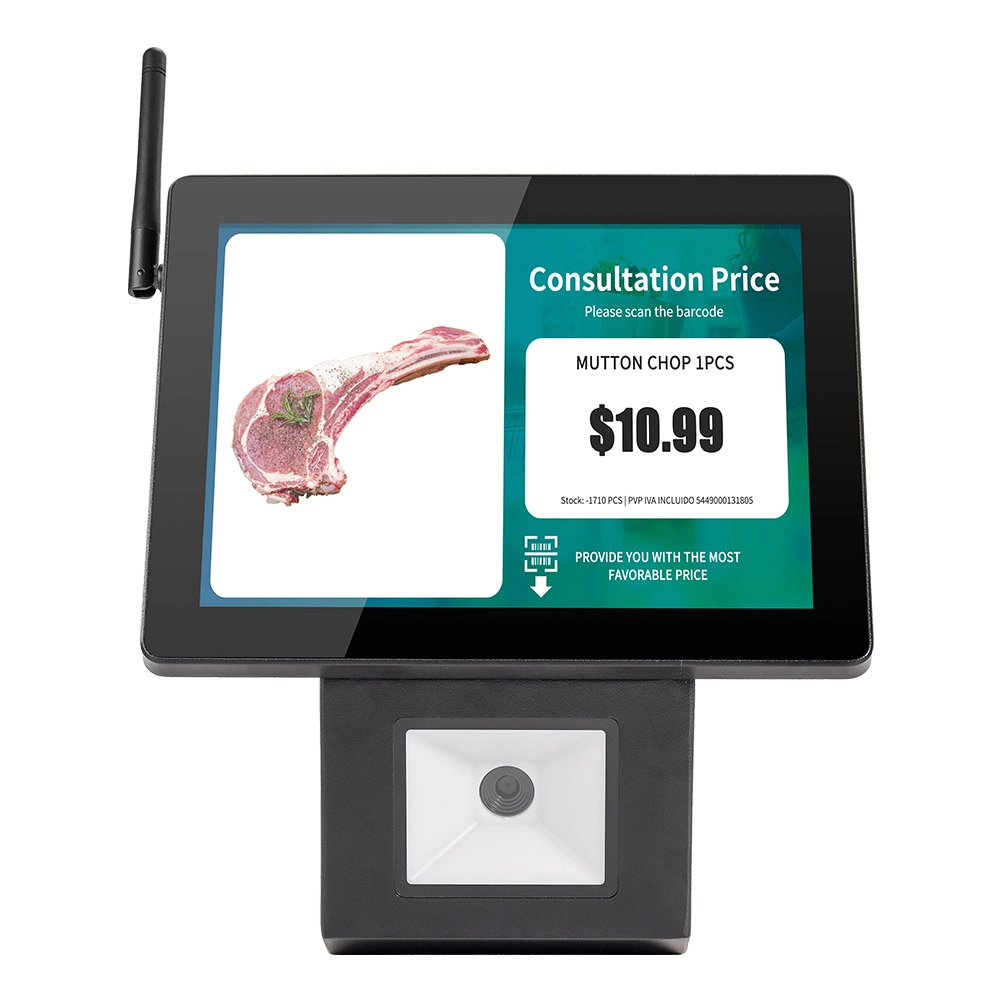
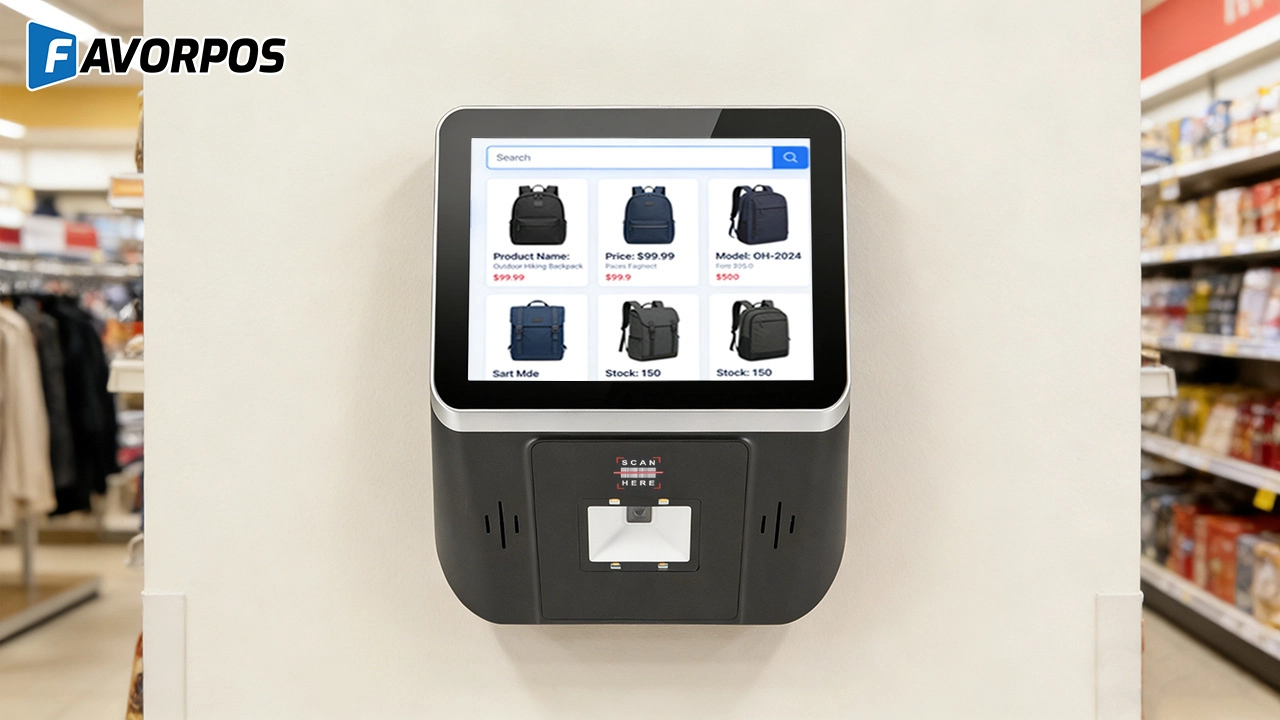
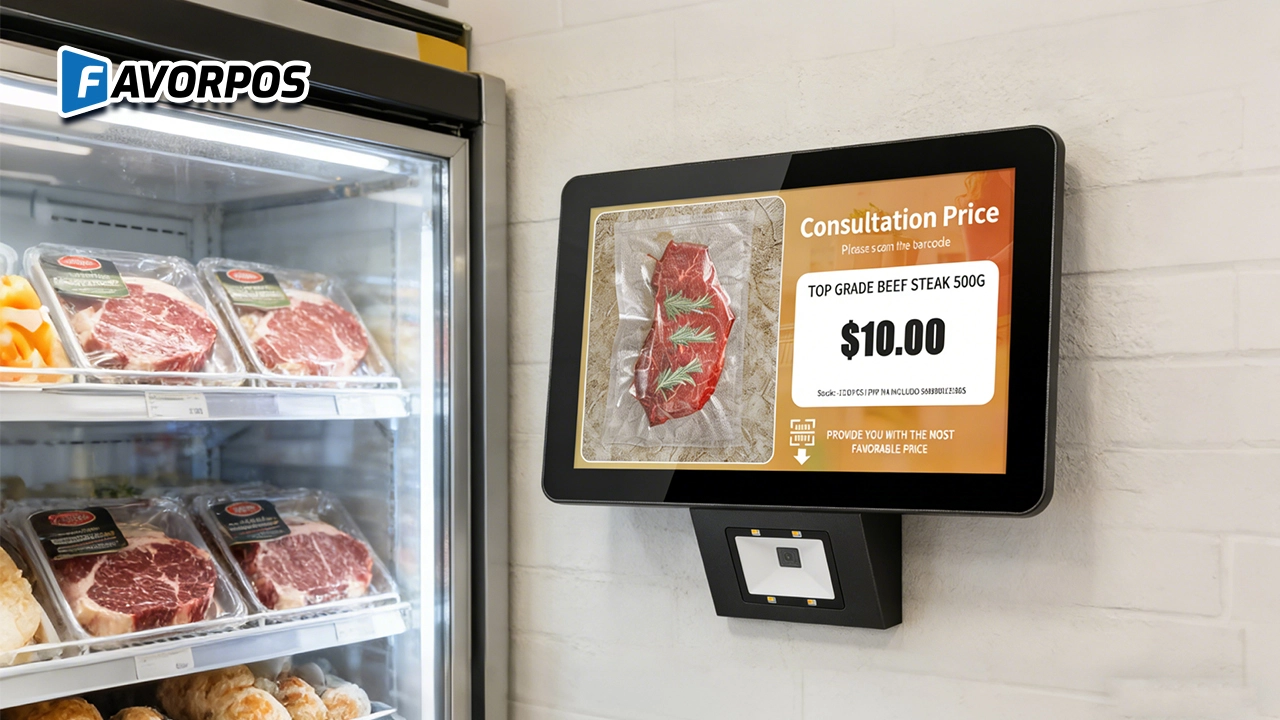
8 inch Touchscreen Price Checker Barcode Scanner Wifi Optional Android Win 10
FAVORPOS Touchscreen Price Checker offers a user-friendly interface, perfect for retail environments. With optional Wi-Fi connectivity, this device runs on Android or Windows, providing flexibility and ease of use. The integrated barcode scanner allows for quick price verification, enhancing the shopping experience for customers. Compact and efficient, it's designed to streamline operations and improve checkout speed.

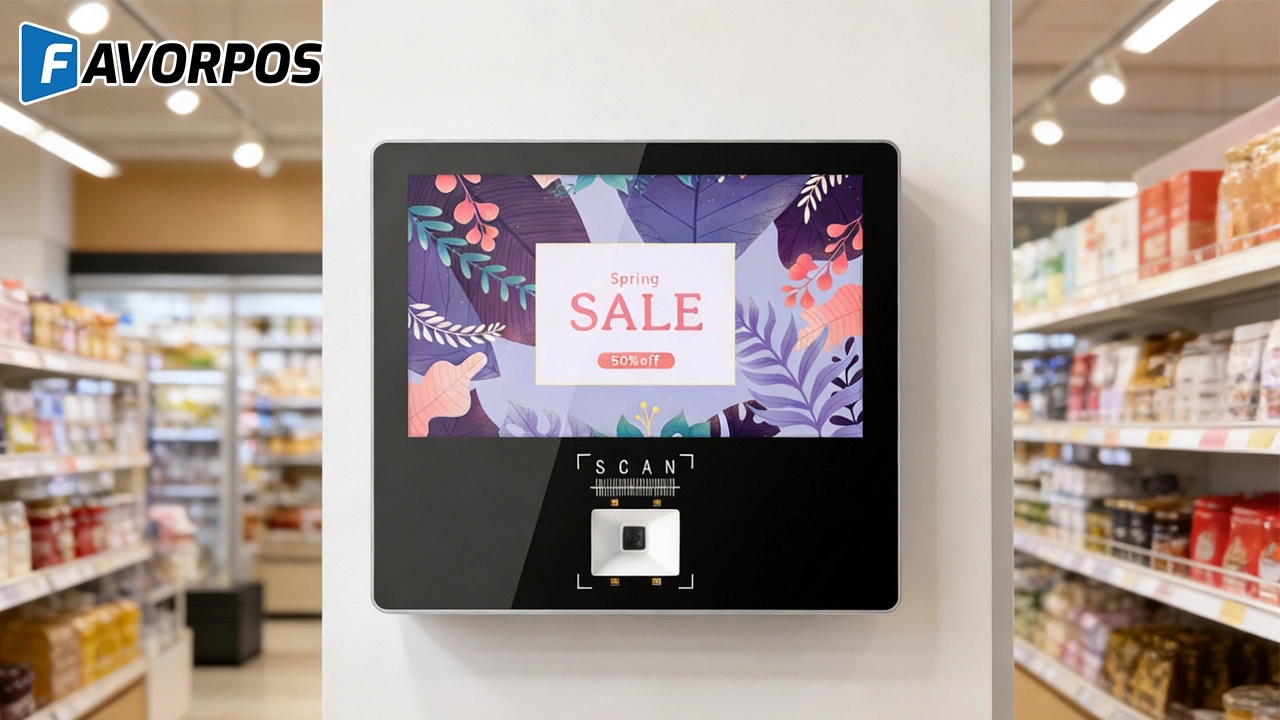
Factory Fast Scan Barcode QR Code Scanner for Supermarket Price Check Device Manufacturer
FAVORPOS is a manufacturer specializing in Barcode/QR Code device. This new designed price check machine have thinner screen, more fashion appearance. 10.1 inch touch screen can bring convenience to customers. This machine can greatly improve the operational efficiency of a business environment.

New Dual Touch Screen Pos Factory Aluminum Adjustable Screen Pos Machine Manufacturer
This new-generation POS terminal features a durable aluminum alloy body and a flexible dual-screen design. The customer-facing secondary display can be adjusted vertically and horizontally to achieve the ideal viewing angle, with multiple screen size options available to meet different retail needs. Powered by either Windows or Android operating systems, the system offers strong compatibility with various POS software solutions. With its modern design, stable performance, and adaptable configuration, this POS machine is well suited for supermarkets, specialty retail stores, and other high-traffic commercial environments.
Get in touch
Interested in becoming a POS system dealer? Contact us for more information and start the process of joining our dealer network.
We look forward to working with you to expand the market together.


Copyright © 2025 Favorpos All Rights Reserved.
