
What are must-have features in a modern POS desktop system?
- 1. How can I ensure a POS desktop system remains PCI-DSS compliant after software updates and third-party integrations?
- 2. What hardware specs (CPU, SSD, RAM) should a pos desktop system have to reliably run 500 SKUs with mixed peak transaction volume?
- 3. How do I implement reliable offline-first syncing in a POS desktop system to prevent data loss and ensure accurate reconciliation?
- 4. Which peripheral compatibility issues most commonly break deployments of a pos desktop system and how can I prevent them?
- 5. How should I calculate total cost of ownership (TCO) for a pos desktop system over 5 years including software updates, payment fees, and hardware depreciation?
- 6. What user-permission and security controls should a modern pos desktop system include to prevent internal fraud without reducing staff productivity?
- Concluding summary: Advantages of a modern POS desktop system
POS Desktop System: 6 Critical Buyer Questions & Must-Have Features
As POS system specialists working with multi-store retailers and hospitality operators, FavorPOS provides technical guidance and procurement help for desktop POS deployments. Below are six frequent, specific beginner questions that lack in-depth coverage online—each answered with practical, standards-aligned detail so you can make confident buying and implementation decisions for your desktop POS (pos desktop system).
1. How can I ensure a POS desktop system remains PCI-DSS compliant after software updates and third-party integrations?
Why this matters: Compliance gaps commonly appear after an update or when a new integration changes how cardholder data is transmitted or stored. Maintaining PCI-DSS compliance (current standard: PCI DSS 4.0) requires process + technical controls, not just ticking a checkbox.
Practical steps:
- Change control and documentation: Maintain a formal change-control process. Every update or integration must include a risk assessment, roll-back plan, and updated System Component Inventory (software, libraries, endpoints).
- Segmentation and network isolation: Ensure the POS terminals and card-handling systems are segmented from general-purpose networks. Use firewalls and VLANs so third-party services cannot introduce lateral access to cardholder zones.
- Use tokenization and payment connectors: Prefer tokenization or hosted payment pages (P2PE/PCI-validated solutions) that remove sensitive PANs from your desktop POS. If you integrate with a gateway, verify their Attestation of Compliance (AOC) and P2PE status.
- Secure communications: Require TLS 1.2 or 1.3 for all payment and API traffic. Disable deprecated ciphers and monitor certificate expiry.
- Patch and vulnerability management: Apply OS and POS application patches in a controlled cadence. Use internal or third-party vulnerability scans after major updates and maintain logs of scans and remediation.
- Access control and logging: Enforce least privilege for service accounts and admins. Enable tamper-evident audit logs with time-sync (NTP) and retain logs per compliance requirements; configure alerts for abnormal admin activity.
- QA and test environments: Test updates first in an isolated staging environment with masked or synthetic payment data. Automate regression tests that include payment flows, transaction logging, and reconciliation.
- Periodic review and third-party attestations: Maintain SAQ/PQSA documentation, and require vendor SOC 2 or AOC documentation for third-party payment integrations.
Result: You convert discrete compliance tasks into repeatable controls—reducing surprise failures post-update and preserving your audit posture.
2. What hardware specs (CPU, SSD, RAM) should a pos desktop system have to reliably run 500 SKUs with mixed peak transaction volume?
Why this matters: Beginners often under-spec machines, resulting in slow checkout, long barcode scans, or timeouts during end-of-day reporting.
Recommended baseline (retail / moderate concurrency):
- CPU: Modern mid-range multicore CPU (Intel Core i3/i5 or AMD Ryzen 3/5 class). For multi-terminal server-hosted deployments, prefer i5/Ryzen 5 or Xeon-class for on-premise servers.
- Memory (RAM): 8 GB minimum for single-terminal Windows/Linux desktop POS; 16 GB recommended if running local database plus desktop OS, anti-malware, and browser-based integrations.
- Storage: NVMe or SATA SSD (256 GB+). SSDs dramatically reduce database and app startup latency compared to HDDs and reduce write latency during peak syncs.
- Network: Gigabit Ethernet for wired POS; dual-band Wi‑Fi 5/6 as backup. Use wired network for terminals where possible to avoid intermittent packet loss during peak hours.
- Ports and peripherals: Native USB-A/USB-C, COM/serial (or reliable USB-to-serial), and spare USB for scanners/printers. Check vendor lists for required drivers.
- UPS and power: Small UPS (500–1000 VA) for back-office desktops and servers to prevent data corruption on sudden power loss.
Throughput considerations: If you expect 50+ transactions per hour per terminal, optimize DB indices and use a server-class machine for on-premise transaction synchronization. For cloud-first POS with local caching, client terminals can be lighter but still need fast SSDs and 8+ GB RAM to handle offline buffers and sync queues.
Why these specs: 500 SKUs is a modest catalog, but real-world performance depends on concurrent operations (price lookups, promotions, reporting). SSDs and sufficient RAM prevent IO wait and slow UI responses—common complaints in under‑spec deployments.
3. How do I implement reliable offline-first syncing in a POS desktop system to prevent data loss and ensure accurate reconciliation?
Why this matters: Many businesses face intermittent internet; poor sync design causes duplicate transactions, missed sales, or reconciliation drift.
Architecture and processes to implement:
- Local durable store: Maintain a local transactional database (SQLite for single-terminal or PostgreSQL/MySQL for multi-terminal local server). Use write-ahead logging (WAL) to ensure atomic writes and quick crash recovery.
- Operation log (oplog): Record immutable, time-ordered operation logs (sales, returns, refunds) with monotonic IDs/sequence numbers. Sync by sending oplog batches to the server; server acknowledges highest contiguous sequence number applied.
- Idempotency and dedupe: Use globally-unique transaction IDs (UUID + terminal ID + timestamp). Server-side deduplication ensures replayed batches do not create duplicate sales.
- Conflict resolution: For catalog or price changes applied offline, use last-write-wins only for non-financial fields; for financial conflicts (e.g., forced refunds), require manual reconciliation and create exception workflows.
- Payment handling offline: Prefer deferred authorization models for non-card payments. For card-present EMV, use payment terminals that support offline approvals securely (following EMVCo guidelines and acquirer rules). Avoid local storage of sensitive PAN data—use tokenization or P2PE-capable terminals.
- Retry and backoff: Implement exponential backoff with jitter for sync retries. Use small batch sizes for faster acknowledgement and clearer failure diagnosis.
- Reconciliation UI and reports: Provide daily sync status, pending transactions, conflict lists, and a reconciliation dashboard that highlights un-synced totals per terminal and payment type.
- Test plan: Simulate network outages, partial syncs, and replays in QA. Verify end-to-end totals match after multiple offline/online cycles.
Result: This approach minimizes data loss risk, ensures accurate accounting, and produces auditable reconciliation trails even when internet connectivity is intermittent.
4. Which peripheral compatibility issues most commonly break deployments of a pos desktop system and how can I prevent them?
Why this matters: Peripheral failures (printers, scanners, cash drawers, PIN pads) cause transaction slowdowns and lost sales at launch.
Common issues and mitigations:
- Driver and OS mismatches: Vendors often produce drivers for specific Windows versions. Standardize on a supported OS image (e.g., Windows 10 IoT/Windows 11 or a certified Linux build) and use only peripherals listed on the POS vendor’s compatibility matrix.
- USB-to-serial adapters: Many legacy receipt printers use serial. Cheap USB-to-serial adapters have unstable COM assignments. Use industrial-grade adapters with fixed drivers or prefer USB/ethernet-native printers.
- Printer language mismatches: Confirm ESC/POS, StarPRNT, or PJL support. Mismatched printer languages result in garbled receipts—test page prints and logo prints during deployment.
- Cash drawer kick codes and wiring: Validate drawer opener codes and ensure the printer supports the expected pulse. Test coin/cash workflows end-to-end.
- Barcode scanner configuration: Scanners can prefix or postfix characters. Standardize configuration so POS software parses barcodes correctly (no hidden control characters).
- PIN pad and EMV firmware: Use P2PE / PCI-validated PIN terminals. Ensure firmware versions are compatible with your acquiring bank and POS software; schedule firmware updates through vendor channels only.
- Power and USB hubs: Avoid daisy-chaining low-power hubs for multiple power-hungry devices. Use powered hubs or dedicated ports to prevent intermittent disconnects.
- Certification and staging: Maintain a hardware test lab with the exact combination of terminal, printer, scanner, and drawer used in production. Run scripted end-to-end tests during onboarding.
Result: A certified hardware stack, standardized OS image, and pre-deployment testing eliminate the majority of peripheral-related failures in desktop POS rollouts.
5. How should I calculate total cost of ownership (TCO) for a pos desktop system over 5 years including software updates, payment fees, and hardware depreciation?
Why this matters: Sticker price hides real recurring costs—payment fees and compliance can double multi-year costs if not planned.
Key TCO components (5-year window):
- Upfront hardware: Desktop terminals, receipt printers, scanners, cash drawers, PIN pads, networking, UPS. Account for shipping and installation labor.
- Software licensing: Per-terminal subscription vs. perpetual license. Include modules: inventory, loyalty, multi-store management, and API/integration fees.
- Payment processing: Interchange + fees (per-transaction), gateway fees, monthly gateway/acquirer fees, PCI-related fees (patching, attestations). Model typical monthly volume and transaction average to estimate annual fees.
- Maintenance and support: SLA tiers (onsite vs. remote), annual maintenance contracts, and support for hardware break/fix.
- Compliance costs: PCI-DSS self-assessment or QSA fees, penetration testing, and potential costs of remediation from scans (estimate annually or per compliance cycle).
- Upgrades and replacements: Hardware refresh (typical 3–5 years), firmware upgrades, and planned OS refreshes. Budget for spare units and replacement parts.
- Integration and customization: One-time professional services to integrate with accounting, ERP, loyalty platforms, and ongoing integration maintenance.
- Operational costs: Training, change management, downtime risk (quantify lost sales during outages), and network/data costs for cloud sync.
Simple TCO formula example (annualized):Total annual cost = (Hardware CapEx / 5) + Annual software subscription + Annual payment processing fees + Annual maintenance & compliance + Annual support and ops costs.
Practical advice: Build a 3-scenario model—conservative (low growth), expected, and high-usage—to stress test payment fee sensitivity and maintenance needs. Track actuals against budget post-deployment to refine forecasts and vendor negotiations.
6. What user-permission and security controls should a modern pos desktop system include to prevent internal fraud without reducing staff productivity?
Why this matters: Insider fraud often exploits weak overrides, generic manager codes, and missing audit trails. A modern POS desktop system must balance control with workflow efficiency.
Essential controls and implementation guidance:
- Role-based access control (RBAC): Define granular roles (cashier, supervisor, manager, inventory clerk). Restrict actions like price override, refund, or deletion to specific roles; require supervisor approval for exceptions.
- Granular overrides: Implement time-limited override flows where managers approve via their unique credentials or 2FA; avoid shared supervisor codes.
- Audit trails and immutable logs: Record every critical action (logins, voids, discounts, refunds) with user ID, terminal ID, timestamp, and prior state. Store logs off-terminal (central log server) and protect retention per policy.
- Shift and float reconciliation: Enforce cashier shifts with close-out procedures, blind cash totals, and automated variance reporting. Alerts should trigger on repeated shortfalls/overages by user.
- Session management and inactivity timeout: Auto-logout inactive sessions; require re-authentication for sensitive operations. Use biometric or secure badge login to speed re-auth without weakening control.
- Dual control and segregation: Require two-person approvals for high-risk operations (refunds above threshold, comp items beyond a limit).
- Real-time anomaly detection: Configure alerts for patterns like frequent refunds, excessive comps, or duplicate voids. Integrate with a central SIEM or reporting engine to escalate suspicious trends.
- Least privilege for integrations: API keys and service accounts should have minimal scopes. Rotate keys and audit API usage to detect misuse.
Result: These controls reduce internal fraud vectors while preserving productivity via efficient login options, configurable thresholds, and automated alerts—allowing managers to intervene where required rather than micromanaging every transaction.
Concluding summary: Advantages of a modern POS desktop system
Modern pos desktop systems combine robust local performance with cloud-enabled management—delivering reliable offline-first operation, strong PCI-aligned security, and rapid peripheral integration. Benefits include faster checkout, auditable transaction trails, centralized inventory and multi-store management, and predictable TCO when you account for payments and compliance. Selecting the right hardware, implementing disciplined change control, and architecting reliable sync and logging are the top determinants of long-term success.
For an implementation plan, hardware compatibility list, or a tailored quote for your desktop POS rollout, contact FavorPOS at www.favorpos.com or email sales2@wllpos.com. Contact us for a quote.
FavorPOS—expert guidance for POS desktop system procurement and deployment.
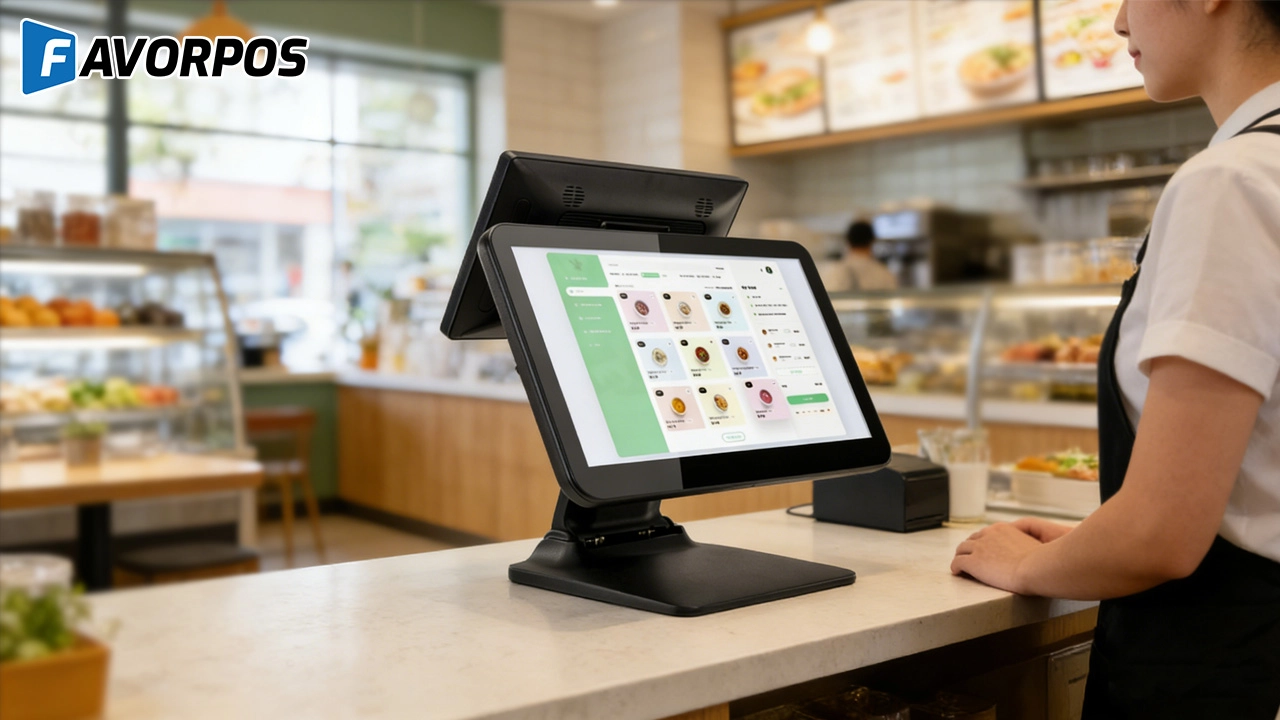
Beyond Checkout: How a 15.6-Inch Aluminum POS System Redefines Retail Efficiency
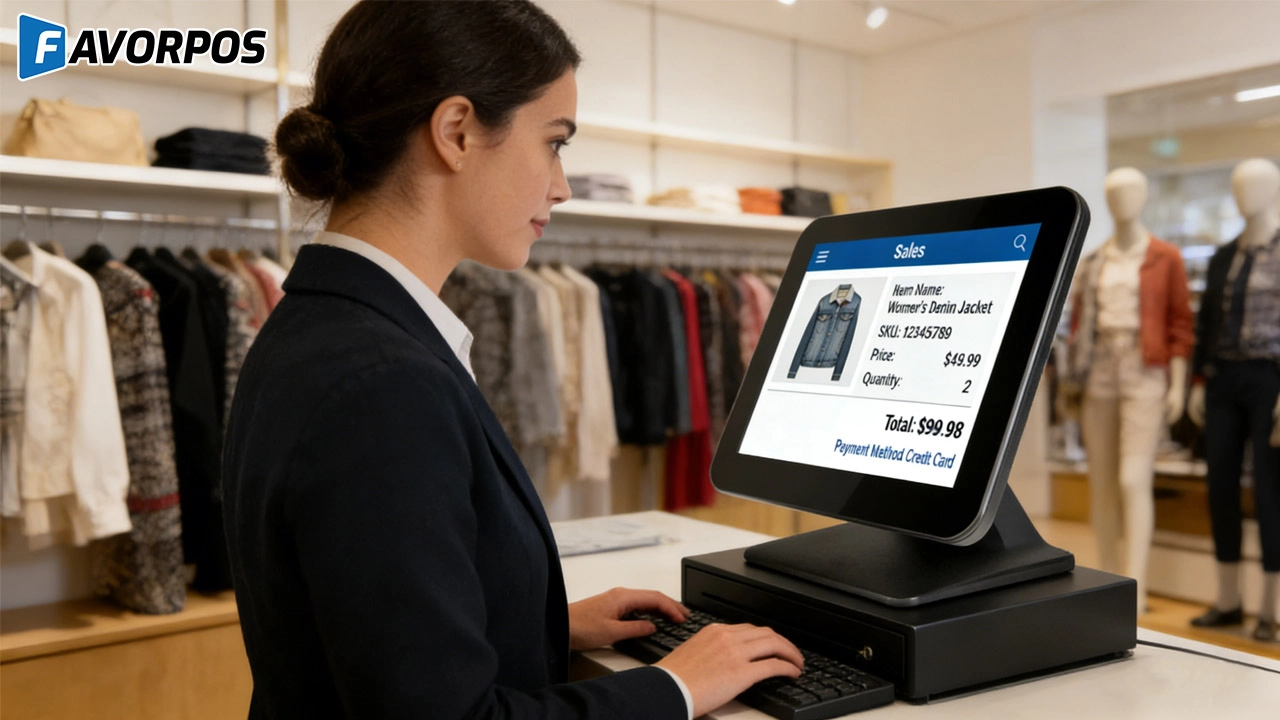
Understanding 15-Inch Aluminum POS Terminals in Modern Commercial Use
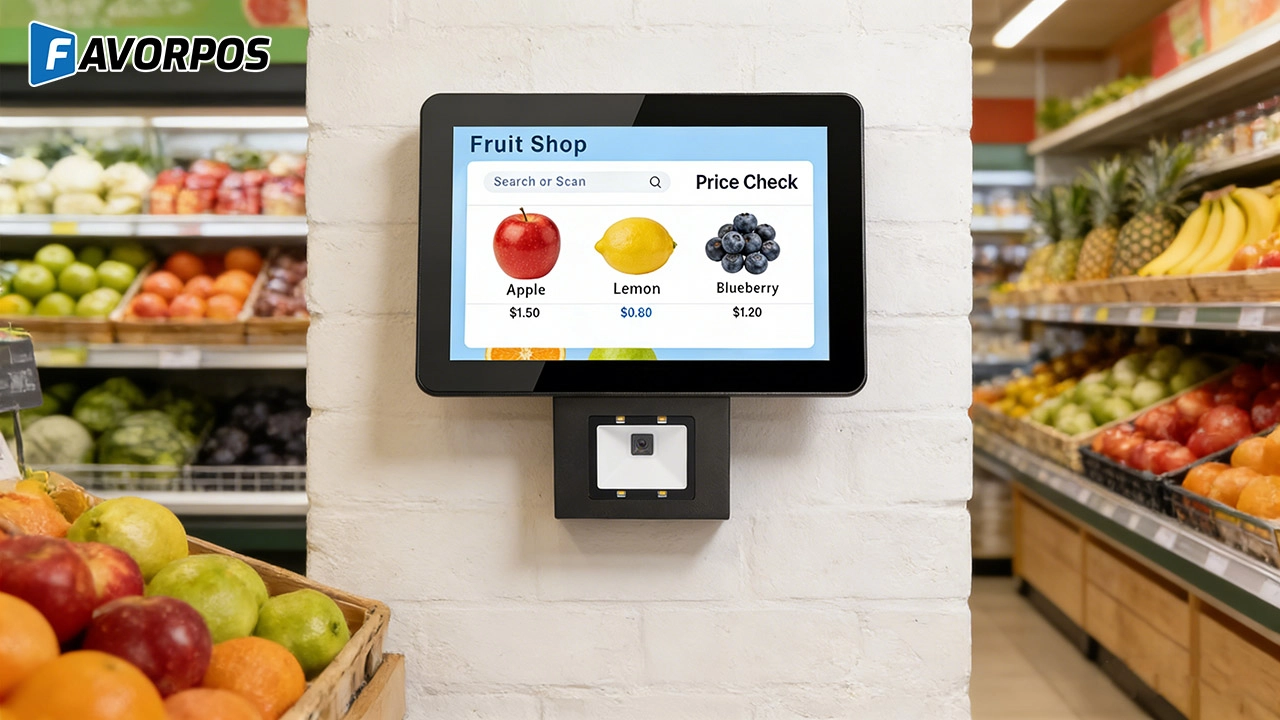
The Smart Way to Check Prices: How a 10.1-Inch Wall-Mounted Price Checker Transforms Retail Stores
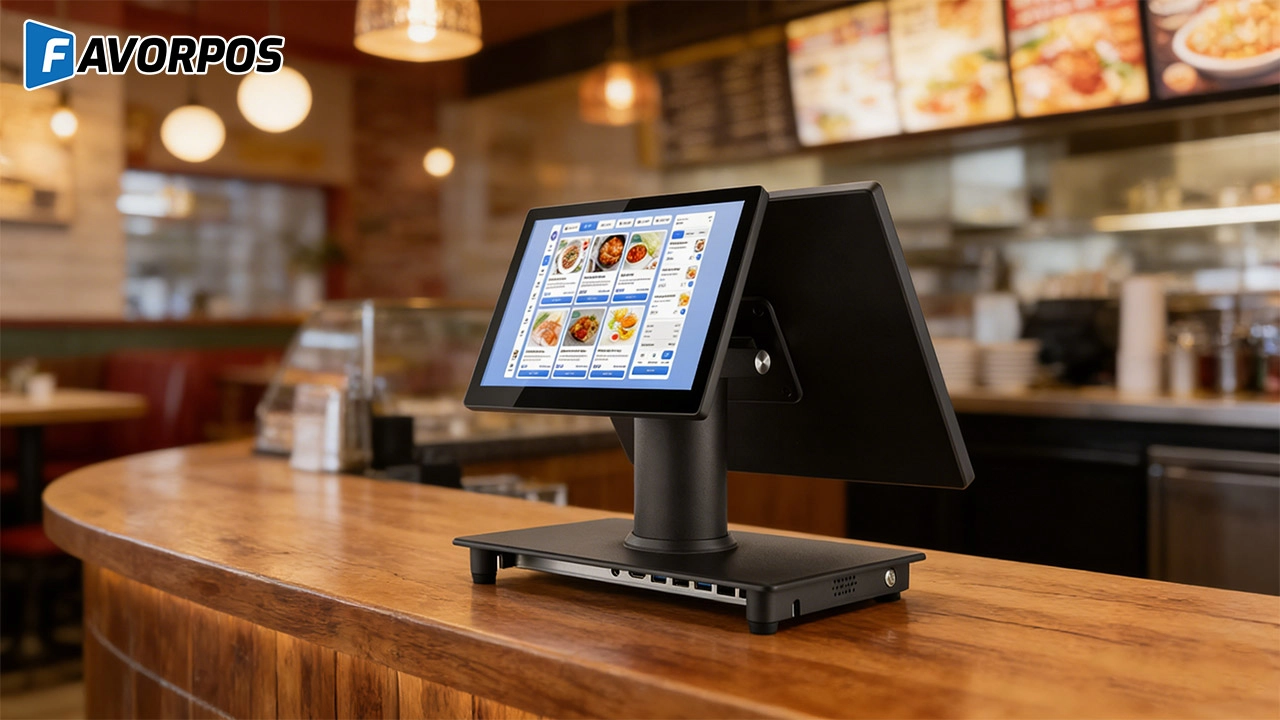
A Smarter Checkout Experience: The 15-Inch Dual-Screen POS Built for Modern Retail
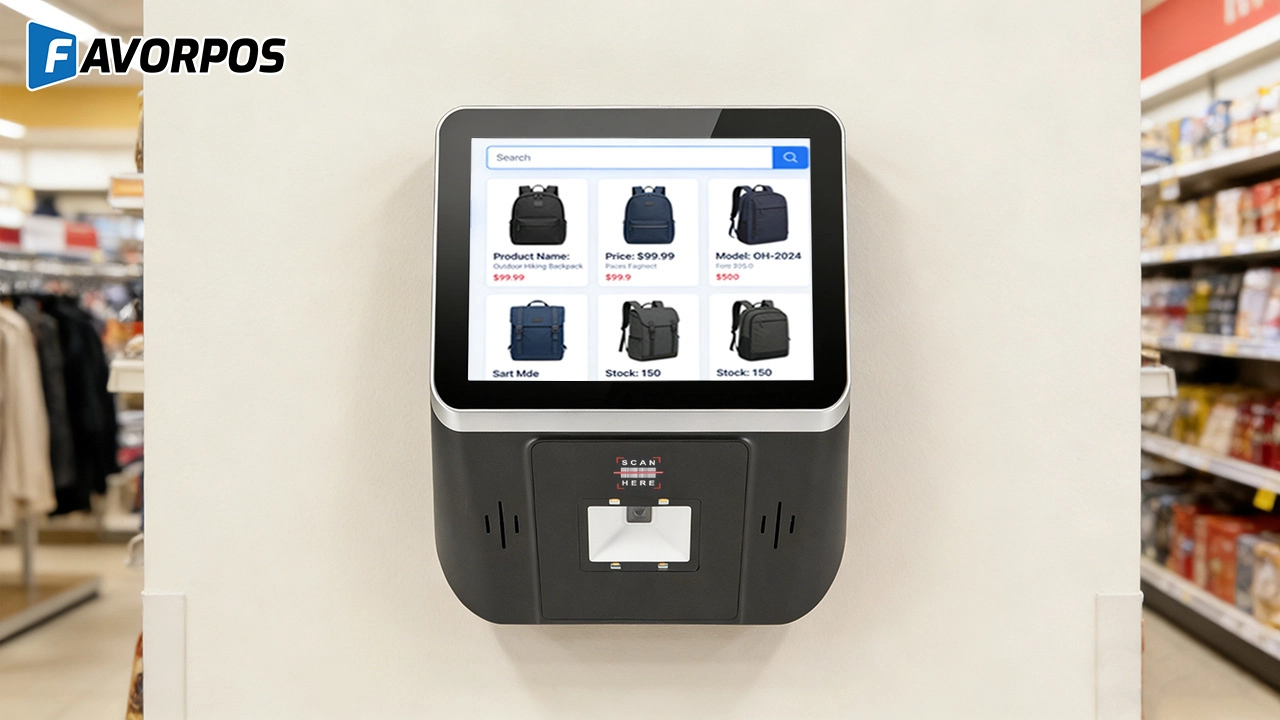
8-Inch Smart Price Checker: A Small Device Powering Smarter Retail Spaces
For Solutions Retail
If there is a problem with the device, how can I contact your after-sales support?
You can contact our after-sales team by phone, email or online customer service. We provide 7x24 hours of technical support to ensure timely response and resolution of your problems.
For Healthcare
Does your POS system comply with healthcare regulations?
Yes, our POS system complies with HIPAA, PCI-DSS, and other relevant healthcare regulations to ensure the security and privacy of patient data.
For OEM
How long is the delivery time for customizing POS machines?
The delivery time depends on the complexity of the order and the production scale. Generally speaking, the whole process from confirming the design to delivery may take 6 to 12 weeks. We will provide a detailed delivery schedule at the beginning of the project and try our best to meet your time requirements.
For Beauty and Wellness
Does your POS system support loyalty programs?
Of course, our POS solution includes the function of implementing and managing loyalty programs to reward returning customers and promote customer retention.
For Restaurants & Cafes
How long does it take to deliver the equipment?
The delivery time for standard equipment is generally 3 to 4 weeks. For customized equipment, the delivery time may be 6 to 8 weeks. The specific time will be provided after the order is confirmed to ensure timely delivery to meet your needs.
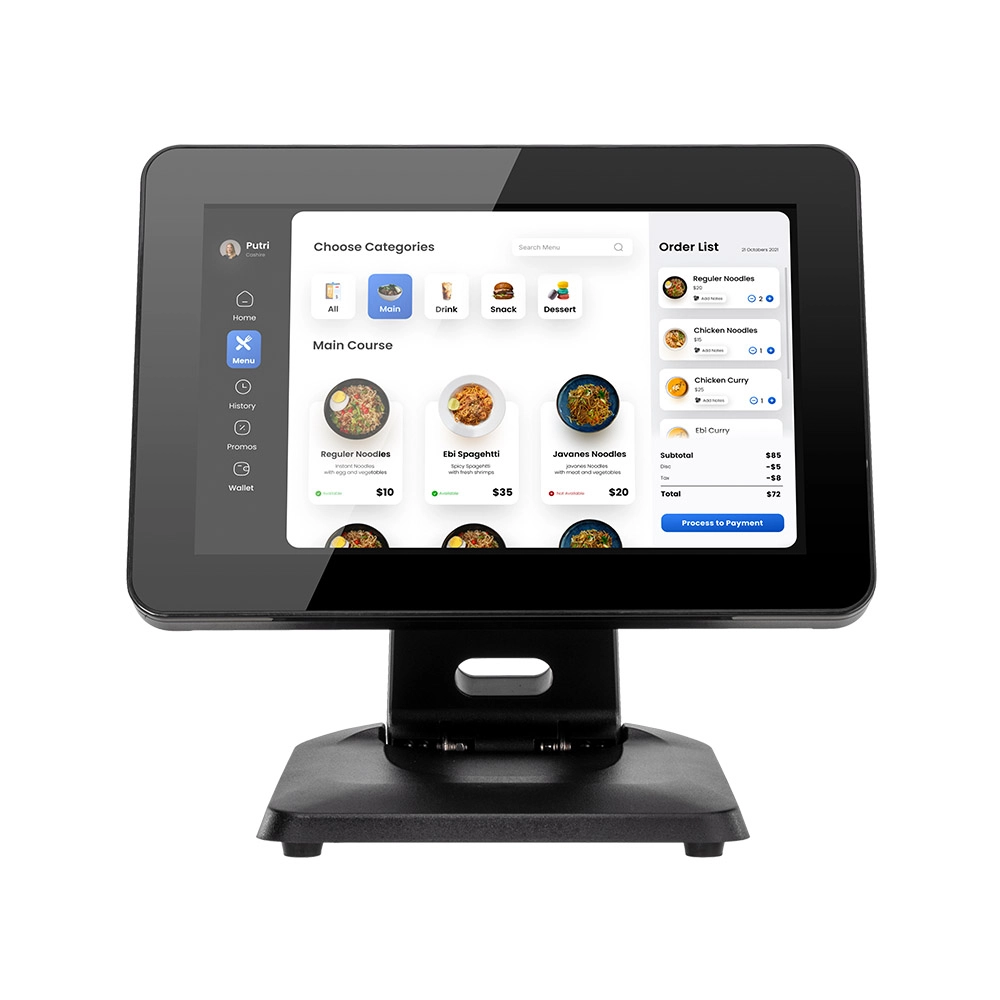
Desktop Touch Screen POS Systems 12.1'' Android Windows Manufacturer
Our Desktop Touch Screen POS Systems feature a 12.1'' display, supporting both Android and Windows platforms. Engineered for high performance. The intuitive touch interface simplifies transactions and enhances customer engagement. With a sleek design and robust construction, our POS systems are perfect for businesses looking to improve efficiency and elevate the shopping experience.
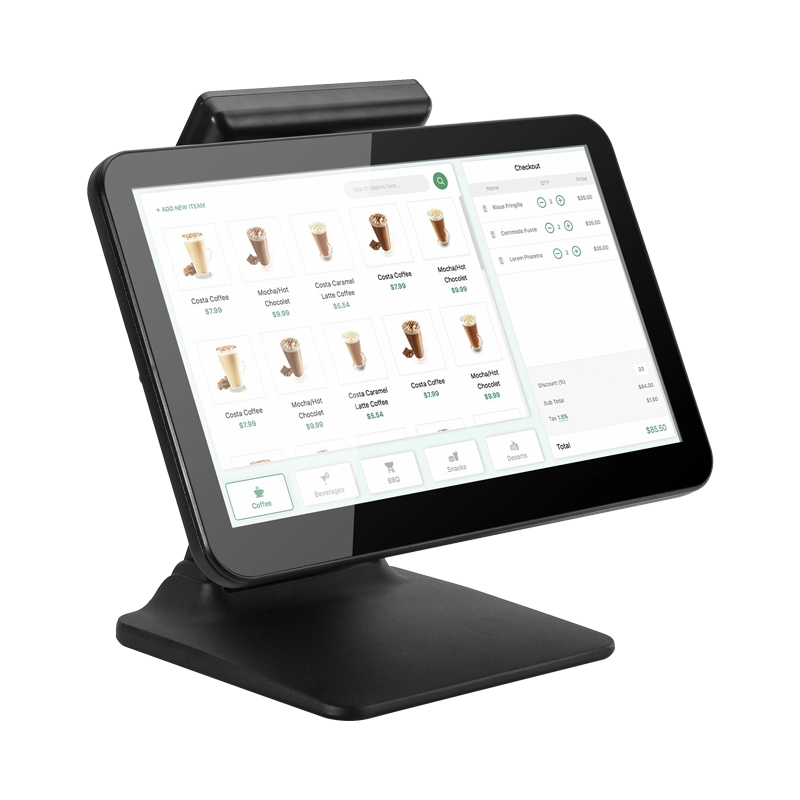
15.6 Inch Windows POS Terminal with VFD Display, Foldable Aluminum Stand Touch Screen POS for Retail & Hospitality
This 15.6-inch POS terminal is built to meet the needs of modern retail and hospitality environments. Powered by a stable Windows operating system, it ensures smooth performance for various point-of-sale applications. The device features a crisp, responsive touch screen and a built-in VFD customer display, allowing customers to view transaction details clearly. Its aluminum alloy stand offers a sleek, professional appearance while providing enhanced durability and stability for busy checkout counters. Ideal for retail stores, restaurants, and service-based businesses, this POS machine delivers a reliable and customer-friendly checkout experience.
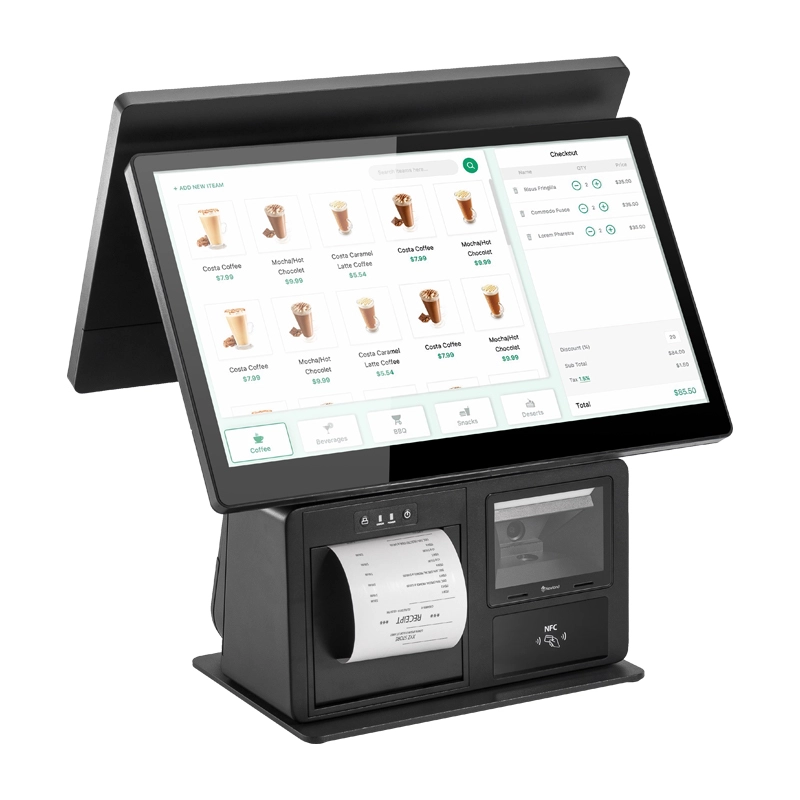
Point of Sale System with Thermal Printer All in One Pos Dual Touchscreen Pos with Barcode Scanner Supplier
FAVORPOS presents the all-in-one Point of Sale System with Thermal Printer, featuring dual touchscreens and an integrated barcode scanner. As a leading POS with NFC factory and barcode scanner supplier, we deliver reliable, efficient solutions tailored for your business needs.
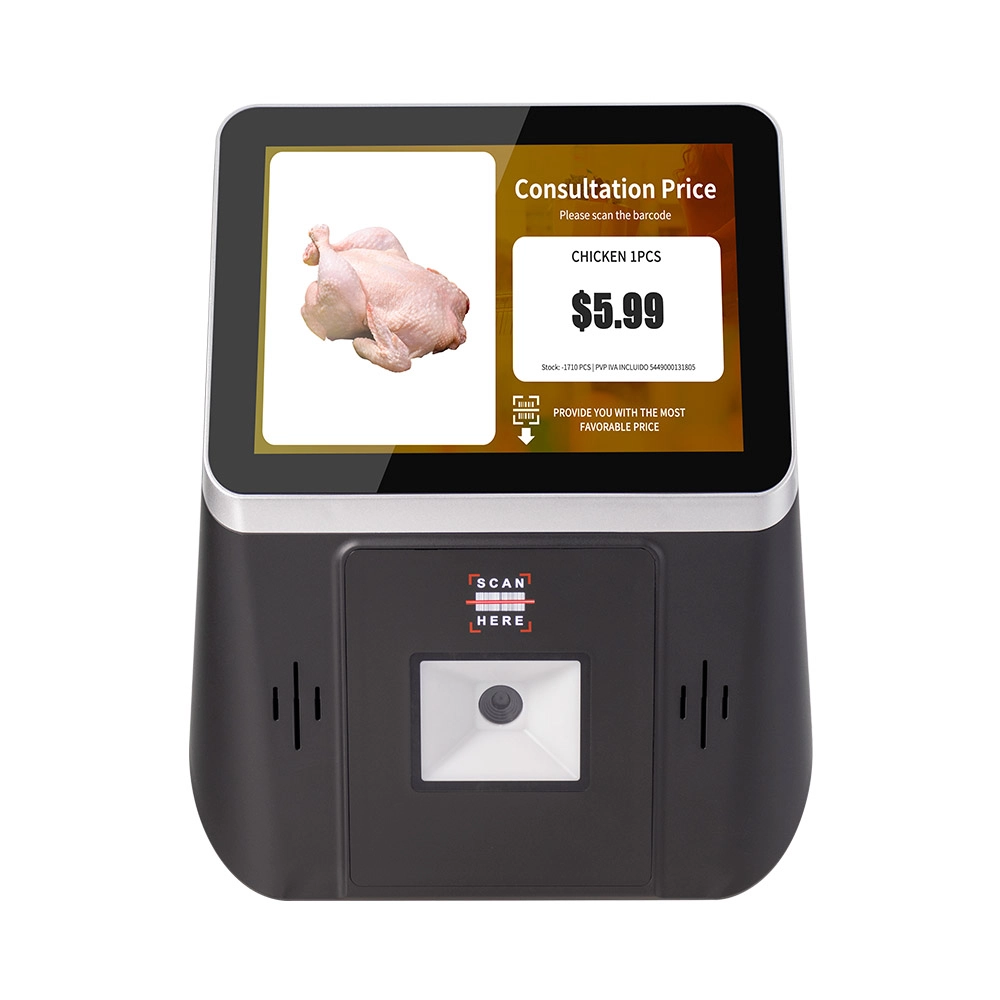
8 inch Wall Mount Price Checker with Scanner Android Windows Factory
Our 8-inch Wall Mount Price Checker is designed for optimal convenience in retail spaces, featuring a sleek design that fits seamlessly into any environment. Compatible with both Android and Windows, this unit includes an integrated scanner for quick and accurate price checks. Its wall-mounted design saves counter space while providing easy access for customers. Ideal for enhancing efficiency and improving the shopping experience.
Get in touch
Interested in becoming a POS system dealer? Contact us for more information and start the process of joining our dealer network.
We look forward to working with you to expand the market together.


Copyright © 2025 Favorpos All Rights Reserved.
