
Which top restaurant POS systems are most secure and compliant?
- 1) How can I verify a restaurant POS vendor’s PCI DSS, P2PE and EMV claims for a multi-location group so I don’t inherit liability?
- 2) Which top restaurant POS systems support validated P2PE or tokenization to materially reduce my PCI scope, and what questions should I ask to confirm?
- 3) How do I audit a cloud POS provider’s update, backup and data residency policies so they meet my compliance and operational continuity needs?
- 4) What specific POS configuration, role-based access controls and audit log settings should I enforce to prevent employee theft and support compliance audits?
- 5) For cloud restaurant POS systems, how does offline mode affect security and compliance — what should I demand from a vendor before relying on offline transactions?
- 6) Which top restaurant POS systems provide verifiable SOC 2/ISO 27001 evidence and enterprise-grade encryption, and how should I request that evidence during procurement?
1) How can I verify a restaurant POS vendor’s PCI DSS, P2PE and EMV claims for a multi-location group so I don’t inherit liability?
Why this matters: Merchants often assume vendor claims mean they’re out of scope. In reality, liability and scope depend on implementation: your payment flow, terminals, network segmentation, and contract terms.
Actionable verification steps:
- Request the vendor’s current Attestation of Compliance (AOC) for PCI DSS (preferably v4.0-aware). An AOC demonstrates the vendor’s cardholder data environment (CDE) meets PCI requirements for the assessed period.
- Ask for validated P2PE evidence — specifically the P2PE Solution Summary and the P2PE Instruction Manual. If the vendor uses a payment processor providing validated P2PE, request the processor’s P2PE solution ID and proof of validation.
- Confirm EMV certification for the point-of-interaction (POI) hardware you'll deploy. EMV-capable terminals should be listed in the terminal vendor’s approved devices and show chipset/firmware build that matches the P2PE/processor documentation.
- Validate whose merchant account is used (your merchant ID vs provider aggregator). Aggregated models (e.g., some integrated payments) can reduce your scope but may also affect chargeback liability and reporting.
- Get an explicit diagram of the payment data flow, including every third party that touches PAN (primary account number). If PAN never enters your servers (tokenization or P2PE direct-to-processor), your PCI scope can shrink — but have that confirmed in writing.
What to include in procurement: require the vendor to supply AOC, P2PE documents, EMV terminal lists, SOC 2 Type II (if cloud-hosted), and a data processing addendum (DPA) with breach notification SLAs. Have your acquirer or PCI QSA (Qualified Security Assessor) review the materials for your deployment model.
2) Which top restaurant POS systems support validated P2PE or tokenization to materially reduce my PCI scope, and what questions should I ask to confirm?
Why this matters: P2PE (validated point-to-point encryption) and tokenization are the two most effective industry mechanisms for reducing PCI scope if implemented correctly. Many cloud POS vendors advertise “encrypted payments,” but implementations differ.
How to evaluate:
- Don’t accept marketing language alone. Ask whether the vendor uses a validated P2PE solution (PCI SSC validated) or a processor-provided P2PE offering. Request the P2PE solution identifier and the vendor’s P2PE Instruction Manual.
- If the vendor uses tokenization, determine who holds the PAN-to-token mapping (processor vs vendor). If the processor holds it and you never store PAN, your PCI obligations are lower.
- Confirm that terminals encrypt card data at the POI (terminal) and that encryption keys are managed per P2PE standards — not merely TLS on the LAN. TLS-only between POS and cloud does not equal P2PE.
- Ask for confirmation that any fallback (manual entry, magstripe) is either disabled or routed through a P2PE-approved flow, and ask how the vendor mitigates fallback risk.
Practical examples: Popular restaurant POS vendors (Toast, Square, Lightspeed, Clover, TouchBistro, Revel) support EMV and tokenization or integrated payments, but their P2PE posture depends on payment partners and terminal models. Always request proof for the specific hardware and payment integration you plan to deploy.
3) How do I audit a cloud POS provider’s update, backup and data residency policies so they meet my compliance and operational continuity needs?
Why this matters: For multi-site operations, software update practices and data residency/backups affect uptime, forensics after an incident, and legal compliance (e.g., GDPR for EU customers).
Checklist for vendor audit:
- Software update policy: Ask for a documented release cadence, staging/testing procedures, and rollback options. Confirm whether critical security patches are applied automatically and how emergency patches are communicated to customers.
- Backup and retention: Request details on backup frequency, retention windows, encryption at rest, and restore SLAs. For transactional systems, backups should be daily at minimum with 24–72 hour restore targets for operational continuity.
- Data residency and exportability: Confirm where customer data and logs are stored (region/datacenter). If you require EU or country-specific residency, ensure the vendor can contractually guarantee this and provide data exports on demand in standard formats (CSV, JSON).
- Forensics and logging: Verify that the vendor retains immutable audit logs for a period aligned to your compliance needs and that logs include user actions, device IDs, and timestamps in ISO 8601. Ask whether those logs are accessible to your security team or via API for SIEM ingestion.
- Third-party attestations: Request SOC 2 Type II report (security category) and ISO 27001 certificate if available. These reports demonstrate operational controls and can be reviewed under NDA.
Put these requirements into the contract: SLAs for restoration, notification windows for breaches, and contractual audit rights (or at minimum, access to third-party audit reports) are essential for enterprise procurement.
4) What specific POS configuration, role-based access controls and audit log settings should I enforce to prevent employee theft and support compliance audits?
Why this matters: Insider fraud and misconfiguration are leading causes of revenue loss and audit failures. Many vendors ship default settings that are insecure for busy restaurants.
Configuration and policy checklist:
- Unique user accounts and SSO/2FA: Never share generic manager accounts. Enforce unique logins and enable two-factor authentication for admin roles.
- Granular RBAC (role-based access control): Define minimal permissions — e.g., servers should not have access to price overrides, refunds, or cash drawer adjustments. Create separate roles for POS users, managers, and administrators.
- Limit price/discount overrides: Require manager approval for any price change or comp and log who approved it with a reason code.
- Audit log configuration: Ensure logs capture user IDs, device IDs, IP addresses, timestamps, and a human-readable action description. Keep logs tamper-resistant and retained for at least 90 days (longer for multi-location chains or if local regulations require it).
- Cash handling and shift controls: Configure mandatory end-of-shift reconciliation with blind cash counts before reporting and require manager sign-off for discrepancies.
- Endpoint hygiene: For tablet-based POS, use Mobile Device Management (MDM) to enforce OS updates, app whitelisting, screen lock policies, and remote wipe capability for lost/stolen devices.
Operational steps: Pair these technical controls with regular surprise audits, integrated inventory cycle counts, and a reconciliation workflow between POS sales, cash deposits, and bank statements. These combined controls both deter and detect malfeasance.
5) For cloud restaurant POS systems, how does offline mode affect security and compliance — what should I demand from a vendor before relying on offline transactions?
Why this matters: Many restaurants need offline mode for reliability but storing transactions locally can increase PCI risk and complicate audits.
What to require from vendors:
- Encrypted local storage: Any locally-stored transaction data during offline mode must be encrypted at rest with keys not stored in plain text on the device.
- Tokenization for card-on-file or card-present fallbacks: If the terminal can still accept cards offline, ensure it stores only tokens or cryptograms — never raw PAN. If a processor’s integrated terminal supports offline EMV authorization, require proof that the crypto is compliant with EMV specs.
- Automatic re-submission and reconciliation: Offline transactions should be automatically forwarded when connectivity returns and should be tagged as offline in reports for auditing. Reconciliation reports must reconcile with acquirer settlements including any offline-auth IDs.
- Timeout and transaction limits: Require the vendor to offer configuration for maximum offline duration and per-transaction limits to reduce fraud exposure (e.g., disallow high-ticket offline transactions by default).
- Forensics access: If an incident occurs while offline, ensure the vendor can provide decrypted, forensically sound logs under NDA so you can prove compliance and support an investigation.
Bottom line: Offline is operationally valuable but must be designed to maintain encryption, tokenization, and auditability. Do not accept plaintext local storage or manual processes that put you back into full PCI scope.
6) Which top restaurant POS systems provide verifiable SOC 2/ISO 27001 evidence and enterprise-grade encryption, and how should I request that evidence during procurement?
Why this matters: SOC 2 Type II and ISO 27001 demonstrate ongoing operational controls and are commonly required by enterprise purchasers. Encryption alone is necessary but not sufficient; you need operational assurance.
How to request and validate evidence:
- Request the latest SOC 2 Type II report (Security category at minimum). Vendors typically provide these under NDA. Review the report’s period (e.g., the 12 months covered) and any exceptions called out by the auditor.
- Ask for an ISO 27001 certificate and check scope — does it cover the POS application, payment processing, and the hosting environment?
- Encryption specifics: Request documentation of encryption at rest and in transit (algorithms and key lengths), key management practices, and whether keys are customer-specific or shared.
- Ask for penetration test reports and remediation timelines, or at least a summary of external security assessments and their remediation status.
- Include contractual security obligations: require breach notification timelines (e.g., 72 hours), a DPA, indemnities tied to data breaches, and rights to audit or review third-party attestations.
Vendors to evaluate: Leading restaurant POS platforms such as Toast, Square, Lightspeed, Clover, TouchBistro and Revel typically offer enterprise features like tokenization, EMV terminals and security attestations — but the presence and scope of SOC 2/ISO certifications vary by vendor and by the specific product tier. Always verify current documentation relevant to the exact product and region you will deploy it in.
Contact us for a quote and a guided vendor-evaluation checklist at www.favorpos.com or email sales2@wllpos.com.
Conclusion — advantages of choosing secure, compliant top restaurant POS systems
Selecting a secure, compliant restaurant POS reduces your PCI scope, lowers fraud and chargeback risk, protects guest card data, and simplifies audits. Prioritizing validated P2PE or processor-held tokenization, EMV-capable terminals, SOC 2/ISO evidence, documented update and backup practices, strict RBAC and audit logging, and hardened offline behavior will provide both operational continuity and regulatory confidence. Embedding these requirements in procurement contracts (AOC, P2PE docs, SOC 2/ISO reports, DPAs and breach SLAs) gives multi-location operators the operational and legal protections needed for growth.
For a vendor-specific checklist, procurement templates, or help validating vendor documentation, contact www.favorpos.com or sales2@wllpos.com for a tailored quote and assessment.
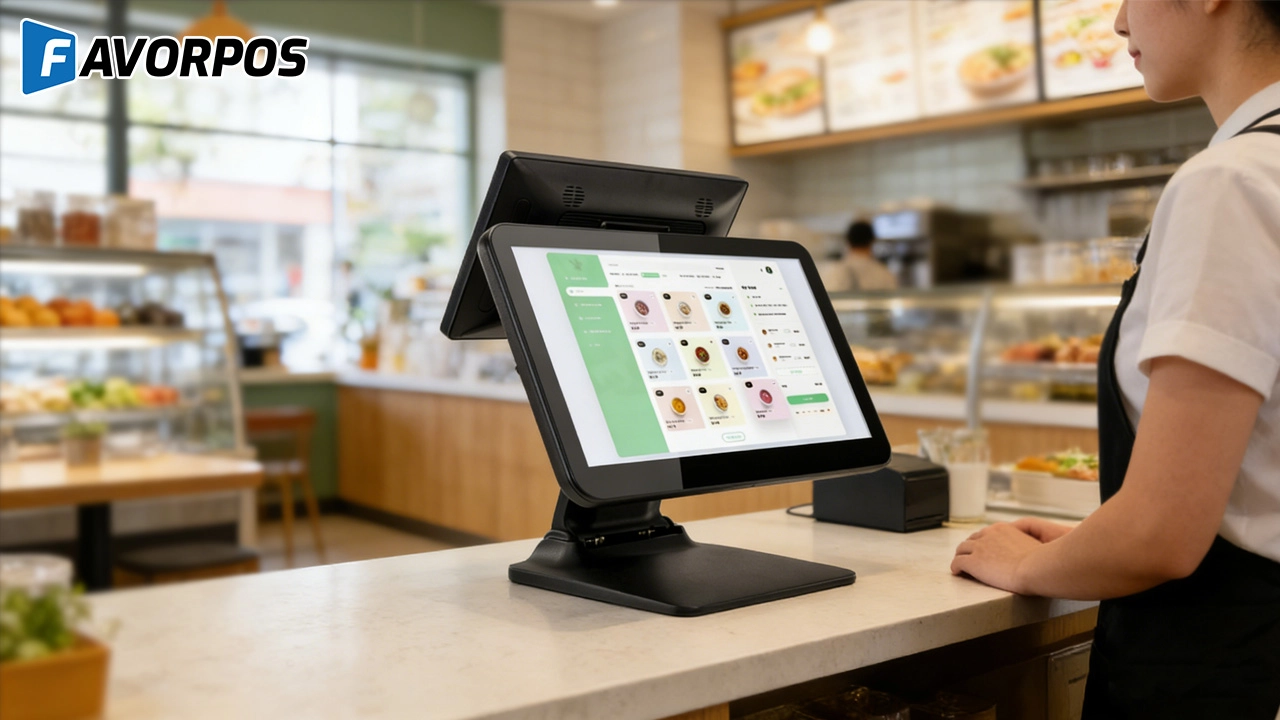
Beyond Checkout: How a 15.6-Inch Aluminum POS System Redefines Retail Efficiency
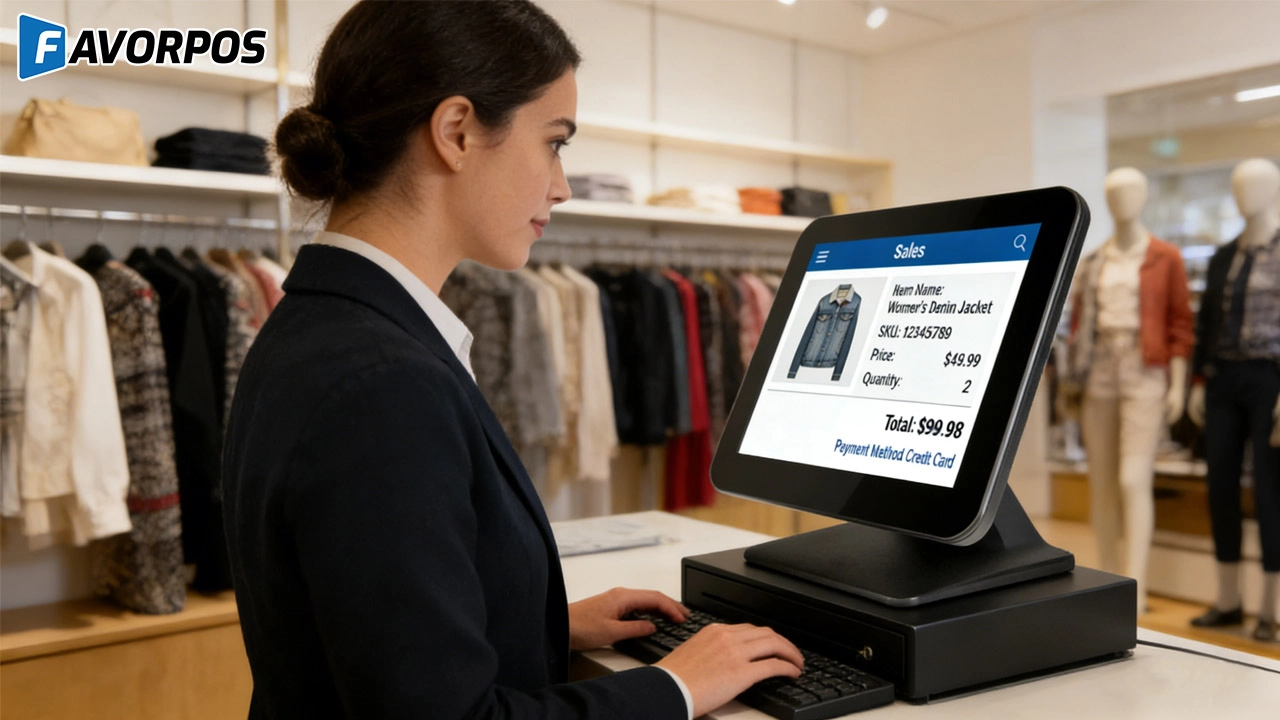
Understanding 15-Inch Aluminum POS Terminals in Modern Commercial Use
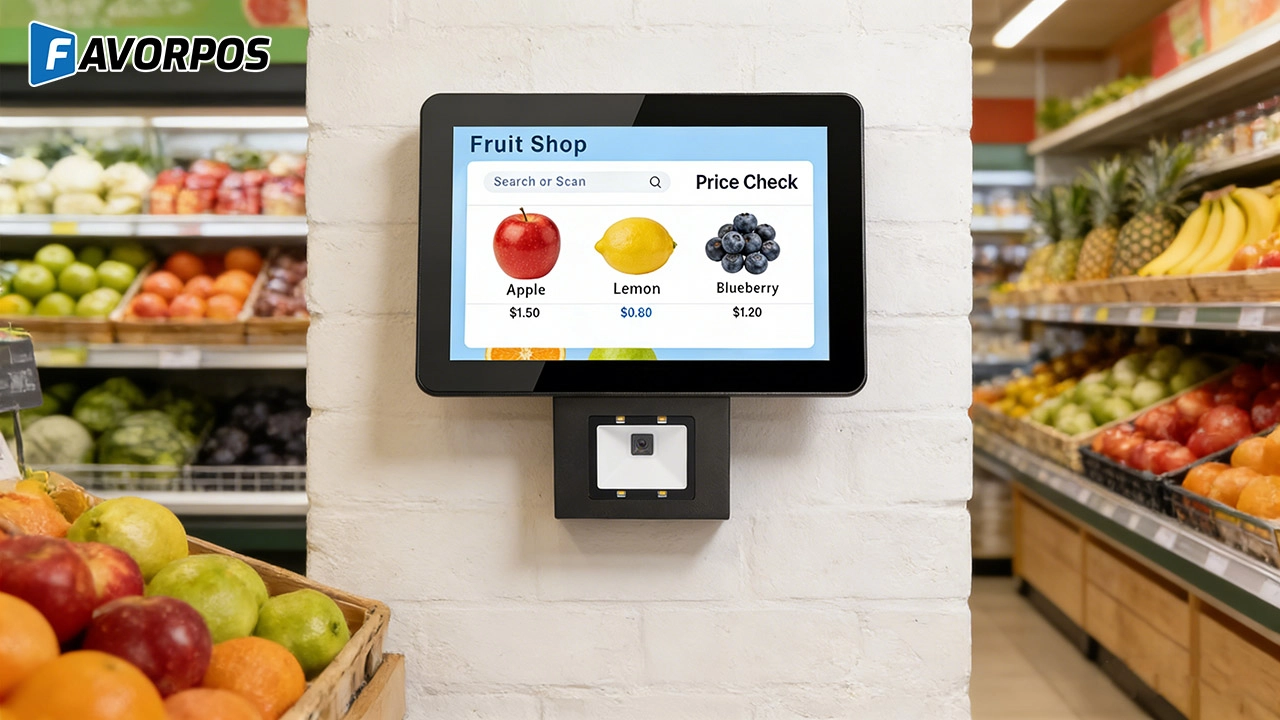
The Smart Way to Check Prices: How a 10.1-Inch Wall-Mounted Price Checker Transforms Retail Stores
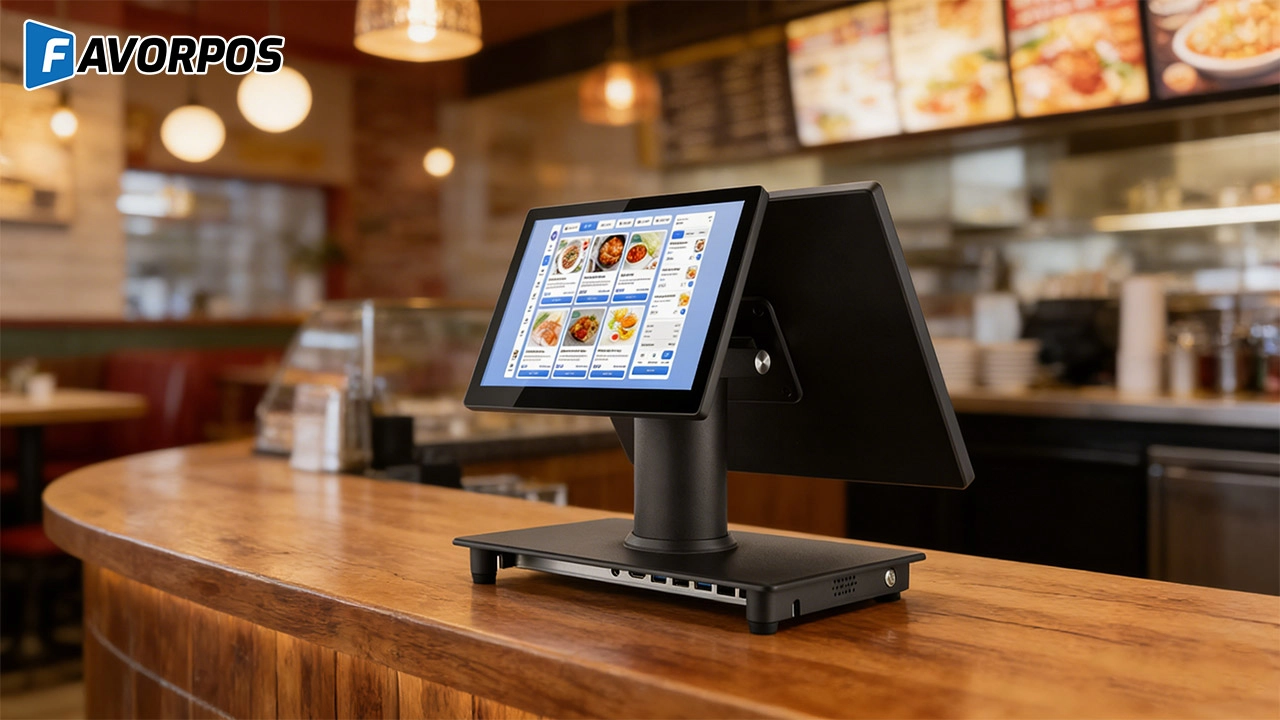
A Smarter Checkout Experience: The 15-Inch Dual-Screen POS Built for Modern Retail
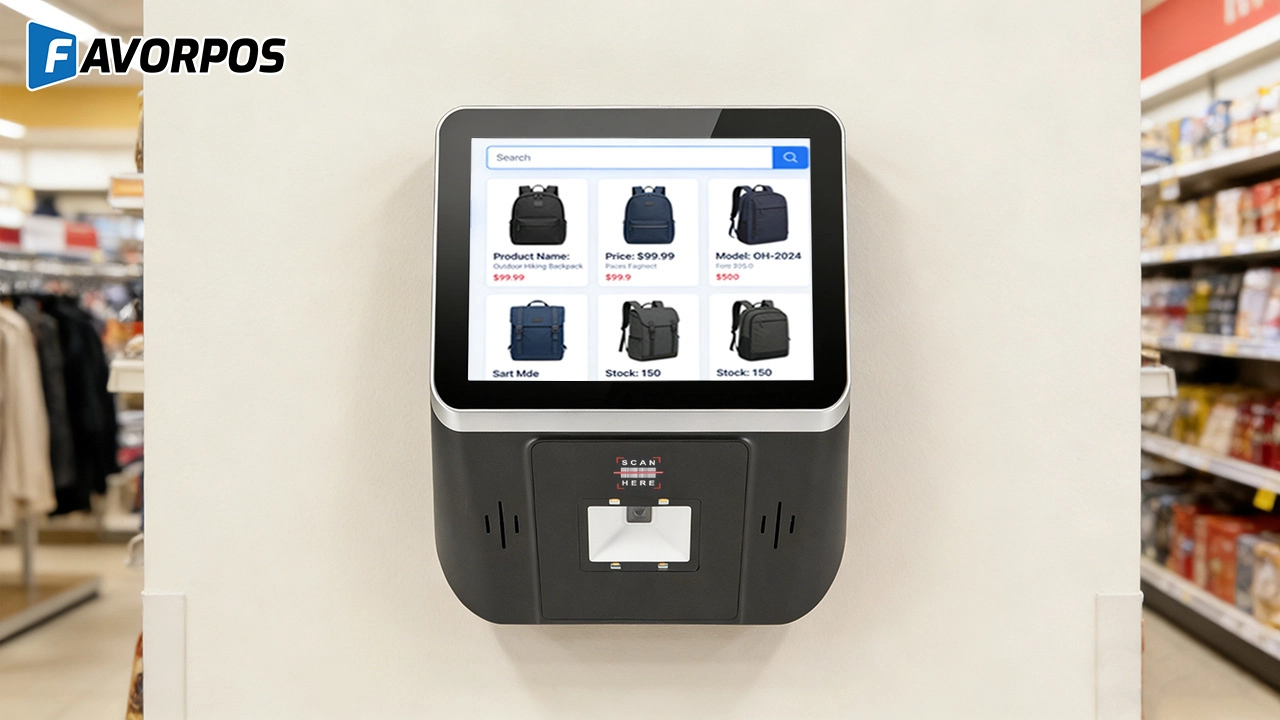
8-Inch Smart Price Checker: A Small Device Powering Smarter Retail Spaces
For ODM
Can we provide our own designs?
Of course. We welcome customers to provide their own design concepts and specifications. Our design team will work with you to ensure that your design is implemented in the manufacturing process and make necessary optimizations.
For E-commerce
What kind of support do you provide after the system is implemented?
We provide 24/7 technical support, regular firmware updates, and ongoing maintenance to ensure that the system always maintains optimal performance.
For Bakeries
What payment methods are supported?
Our POS system accepts a variety of payment methods, including credit cards, mobile wallets, and contactless payments.
For Government and Public
How does your system ensure data security?
We use advanced encryption and security measures to protect all financial and personal data, ensuring compliance with industry standards and regulations.
For Solutions Retail
Do you provide customized POS design services?
Yes, as an OEM/ODM manufacturer, we provide fully customized POS design services. Whether it is hardware appearance design or function integration, we can tailor it according to your brand needs.
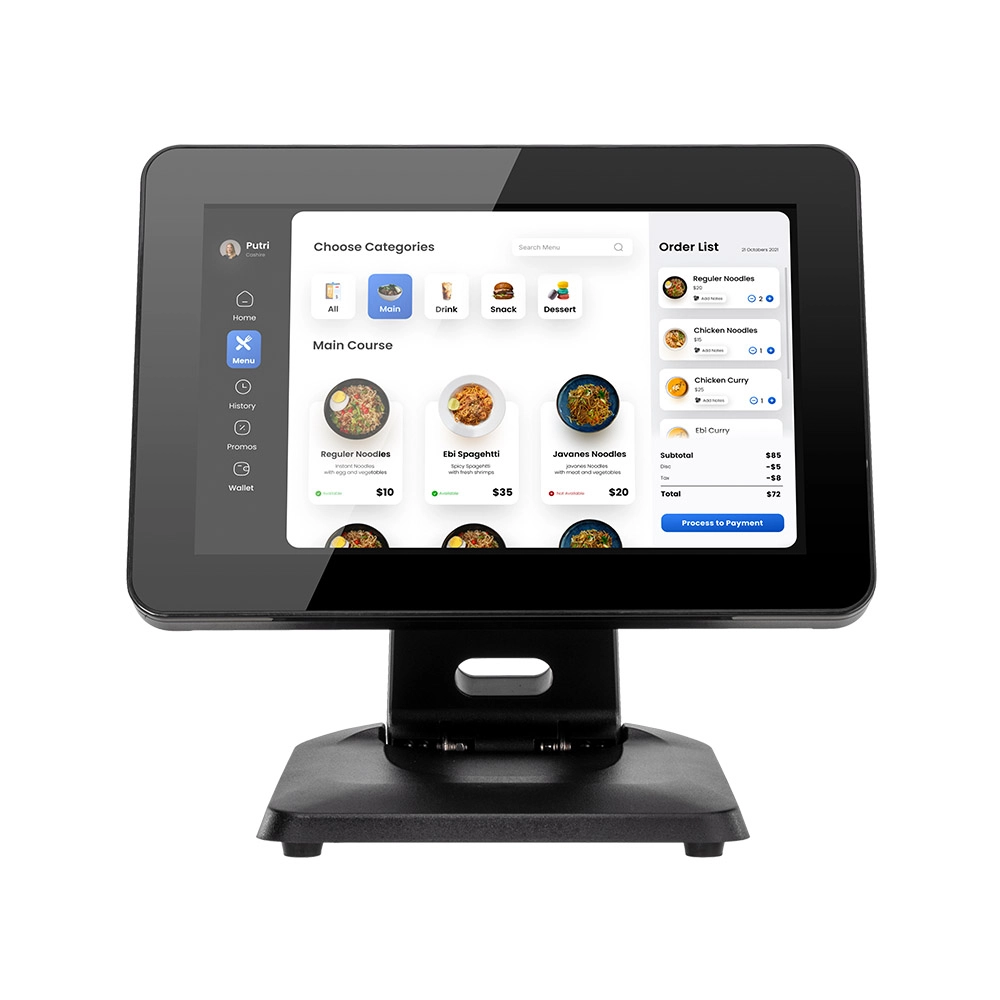
Desktop Touch Screen POS Systems 12.1'' Android Windows Manufacturer
Our Desktop Touch Screen POS Systems feature a 12.1'' display, supporting both Android and Windows platforms. Engineered for high performance. The intuitive touch interface simplifies transactions and enhances customer engagement. With a sleek design and robust construction, our POS systems are perfect for businesses looking to improve efficiency and elevate the shopping experience.
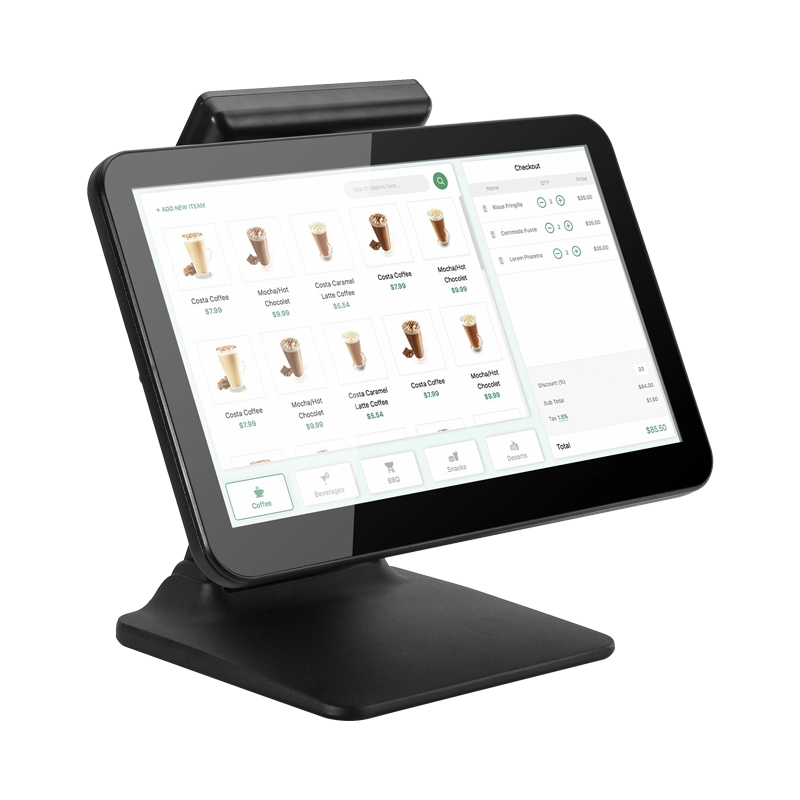
15.6 Inch Windows POS Terminal with VFD Display, Foldable Aluminum Stand Touch Screen POS for Retail & Hospitality
This 15.6-inch POS terminal is built to meet the needs of modern retail and hospitality environments. Powered by a stable Windows operating system, it ensures smooth performance for various point-of-sale applications. The device features a crisp, responsive touch screen and a built-in VFD customer display, allowing customers to view transaction details clearly. Its aluminum alloy stand offers a sleek, professional appearance while providing enhanced durability and stability for busy checkout counters. Ideal for retail stores, restaurants, and service-based businesses, this POS machine delivers a reliable and customer-friendly checkout experience.
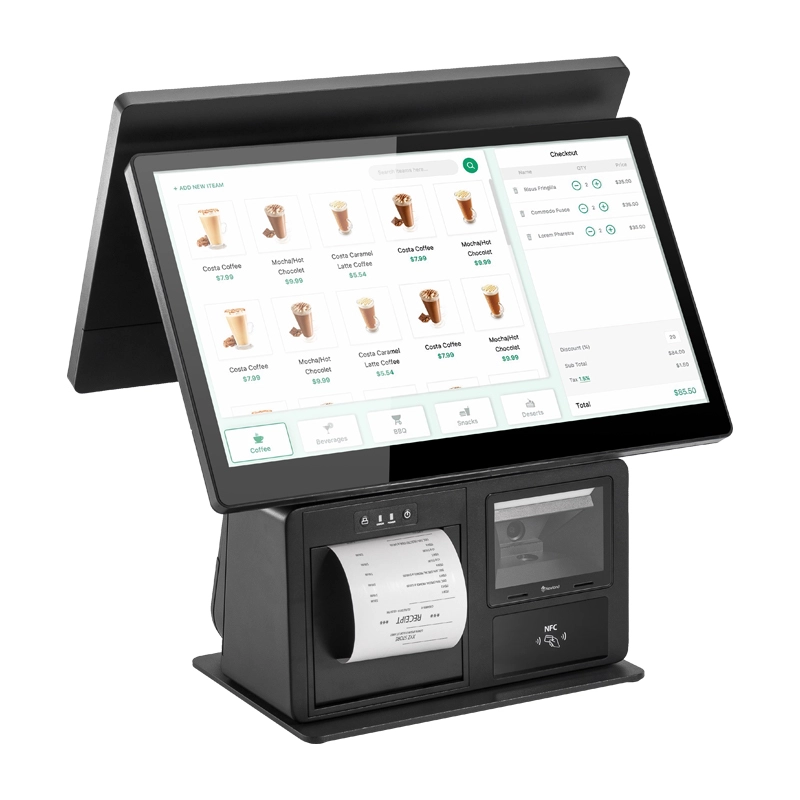
Point of Sale System with Thermal Printer All in One Pos Dual Touchscreen Pos with Barcode Scanner Supplier
FAVORPOS presents the all-in-one Point of Sale System with Thermal Printer, featuring dual touchscreens and an integrated barcode scanner. As a leading POS with NFC factory and barcode scanner supplier, we deliver reliable, efficient solutions tailored for your business needs.
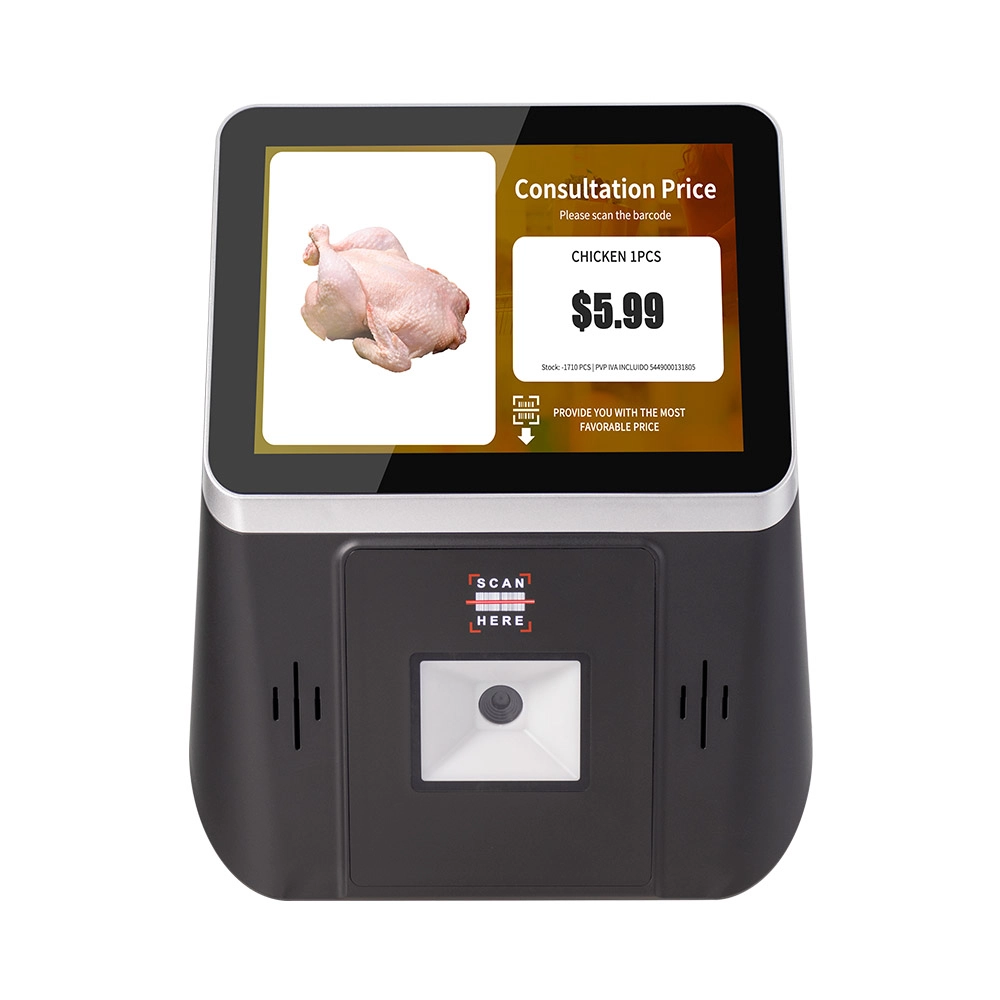
8 inch Wall Mount Price Checker with Scanner Android Windows Factory
Our 8-inch Wall Mount Price Checker is designed for optimal convenience in retail spaces, featuring a sleek design that fits seamlessly into any environment. Compatible with both Android and Windows, this unit includes an integrated scanner for quick and accurate price checks. Its wall-mounted design saves counter space while providing easy access for customers. Ideal for enhancing efficiency and improving the shopping experience.
Get in touch
Interested in becoming a POS system dealer? Contact us for more information and start the process of joining our dealer network.
We look forward to working with you to expand the market together.


Copyright © 2025 Favorpos All Rights Reserved.
