
Which restaurant POS systems are best for multi-location chains?
- 1) Which restaurant POS systems are best for multi-location chains that need centralized menu control with local overrides and franchisee reporting?
- 2) How do I ensure PCI compliance and EMV support across 50+ locations using a cloud POS?
- 3) What are realistic implementation timelines and hidden costs when migrating 20 restaurants from legacy POS to a cloud POS?
- 4) How do network outages affect cloud POS across multi-site chains, and which systems offer true offline mode with sync integrity?
- 5) How do I manage ingredient-level inventory, commissary transfers, and per-location costing across multiple kitchens in one POS?
- 6) Which restaurant POS systems are best for franchise models that require enterprise-grade APIs, multi-store labor scheduling, and automated royalty/marketing reporting?
Choosing among the top restaurant POS systems is more than feature-checking: multi-location chains need centralized control, reliable offline behavior, enterprise-grade APIs, and clear cost forecasts. Below are six specific, pain-point-oriented questions beginners frequently ask but rarely find in-depth answers to. Each answer includes actionable checks, vendor patterns (Toast, Lightspeed, Revel, Oracle MICROS, Square for Restaurants, TouchBistro) and purchase-stage guidance.
1) Which restaurant POS systems are best for multi-location chains that need centralized menu control with local overrides and franchisee reporting?
Why this matters: Chains must push corporate menu changes quickly while allowing legal or regional price/tax overrides at the location level. Franchise reporting must show royalty bases and local P&L without breaking corporate controls.
What to evaluate (step-by-step):
- Centralized menu manager: Look for a single-pane “master” menu that pushes versions to locations and supports staged releases (canary rollouts).
- Local override policy: The system must support hierarchical permissioning—corporate locks down SKU and recipe BOM while allowing store managers to set local prices or promotions with audit trails.
- Franchise accounting: Ability to export per-location sales, royaltyable sales, and item-level breakdowns in CSV/Excel and to integrate with accounting systems (QuickBooks, Xero, Netsuite).
- Version control + rollback: Menu changes should be reversible and timestamped so you can roll back a bad promotion quickly.
Systems that commonly match these needs: enterprise-focused cloud solutions such as Toast (strong for U.S. full-service chains), Revel Systems (enterprise multi-store control), Lightspeed (good for international multi-site operations after the Upserve integration), and Oracle MICROS (traditional enterprise solution for large-scale deployments). Square for Restaurants and TouchBistro can work for smaller chains but may require third-party tools or custom integrations for complex franchise reporting.
Technical questions to ask vendors:
- Can corporate lock specific fields (price, SKU, modifier) while letting stores override others?
- Do you provide a sandbox for staged menu releases and QA?
- How are menu changes propagated—real-time sync or batch—and what is the expected propagation latency?
- Can you generate royalty and franchise reports automatically on a configurable cadence?
2) How do I ensure PCI compliance and EMV support across 50+ locations using a cloud POS?
Why this matters: Non-compliance risks fines, reputational damage, and costly remediation. Large chains amplify risk surface—many terminals, multiple processors, and different payment flows (counter, tableside, online ordering, gift cards).
Practical checklist:
- Payment processing model: Prefer vendors who offer an integrated payments option with tokenization and point-to-point encryption (P2PE) to reduce your cardholder data environment (CDE).
- Ask for vendor documentation: Request the POS vendor’s PCI Attestation of Compliance (AOC), P2PE certificate (if offered) and sample SAQ type they expect franchisees to fill out. Validate vendor claims with their payment processor.
- EMV & contactless: Verify the specific EMV-capable card readers supported and whether contactless (NFC, Apple Pay, Google Pay) and mobile wallets are supported across all terminals.
- Network segmentation: Ensure the POS vendor’s recommended reference architecture isolates POS terminals from back-office networks and public Wi‑Fi. For large chains, standardize VLANs and use internal firewalls to keep CDE segmented.
- Logging & monitoring: Ensure centralized logging of payment-related events and a defined retention period for audit purposes. Confirm role-based access with SSO options and multi-factor authentication for management consoles.
Red flags: Vendors that won’t share AOC/P2PE documentation, require you to maintain large portions of the CDE without tokenization, or lack a clear plan for firmware and security patching.
3) What are realistic implementation timelines and hidden costs when migrating 20 restaurants from legacy POS to a cloud POS?
Why this matters: Owners and finance teams get surprised by project services, network upgrades, and training expenses—resulting in extended downtime or budget overruns.
Typical timeline and milestones (common industry pattern):
- Discovery & scoping: 2–4 weeks — gather menus, modifiers, vendor lists, hardware inventory, network diagrams.
- Configuration & pilot: 4–8 weeks — configure menus, taxes, comps; run a single-site or 2–3 site pilot (critical).
- Hardware provisioning & network upgrades: 2–6 weeks — depends on whether you standardize terminals and need new routers, cellular failover, or PoE switches.
- Rollout per site: 1–3 days/site for in-person swaps; large multi-site projects often roll out 2–5 sites per week with dedicated installers.
- Optimization & hypercare: 2–8 weeks post-rollout with vendor SLA on-site or remote support during peak hours.
Common hidden costs to budget for:
- Hardware refresh: New terminals, printers, card readers, KDS displays, and cabling. Typical per-terminal hardware ranges widely—many buyers plan for $400–$1,200 per station depending on brand and peripherals.
- Network upgrades & failover: Business-class routers, dedicated internet circuits, or LTE/5G failover can add $50–$300/month per site plus installation costs.
- Data migration services: Converting legacy sales history, recipes, loyalty balances often requires vendor professional services or third-party integrators.
- Training & change management: Budget for in-person or remote training sessions, manager refresher courses, and printed SOPs.
- Integration & custom development: Back-office integrations (ERP, payroll, accounting) or custom API work can be a one-time cost or recurring subscription for middleware.
How to minimize risk: Run a staged pilot, insist on a detailed Statement of Work (SOW) that lists exclusions (e.g., existing cabling or electrical work), and negotiate a phased payment tied to milestones.
4) How do network outages affect cloud POS across multi-site chains, and which systems offer true offline mode with sync integrity?
Why this matters: Outages during service hours can stop revenue; poor offline handling causes duplicate charges, inventory mismatches, and reconciliation headaches.
Key technical behaviors to require and verify:
- Order capture during offline: The POS must be able to take orders and print receipts locally if internet is down. Confirm where data is queued (local terminal RAM, local server, or on-prem gateway) and persistence guarantees across power loss.
- Payment handling: Most systems will accept card-present transactions in offline mode by storing authorization attempts, but offline card authorization is limited—chip cards often require online validation. Clarify vendor policy: do they support offline EMV authorization or only allow offline cash/house accounts? Understand risk of chargebacks for offline-authorized payments.
- Sync reconciliation: Confirm how the system handles sequence conflicts (two locations changing the same master record) and inventory reconciliation after reconnect. Look for timestamped transactions and deterministic conflict resolution (e.g., server wins vs. last-write wins).
- Failover architecture: Prefer vendors that support a hybrid model: cloud-native with optional local gateway appliance (on-prem cache) and cellular/LTE failover to minimize downtime for each location.
Systems & patterns: Toast, Revel, and Lightspeed provide robust offline order-capture modes and have documented approaches for sync reconciliation; Oracle MICROS historically used local-server-first architectures for resilience. Smaller vendors or purely cloud-only players may have limited offline payment capability—verify with a practical test on the vendor’s demo hardware.
5) How do I manage ingredient-level inventory, commissary transfers, and per-location costing across multiple kitchens in one POS?
Why this matters: Chains with central production (commissaries) and many kitchens need accurate ingredient-level tracking for cost-of-goods, vendor PO consolidation, and shrinkage control.
Feature checklist for commissary-aware inventory:
- Recipe/BOM at ingredient level: System must support recipe yields, portion sizes, trim/waste factors, and unit conversions (lbs → grams → portions).
- Multi-location inventory & transfers: Ability to create transfer orders from commissary to stores, track lot numbers or batches, and receive/acknowledge deliveries at the store level.
- Costing methods: Support for FIFO and weighted average costing, and per-location purchase price overrides. The POS should attribute costs to menu items automatically during sales.
- Waste and variance logging: Mobile-friendly usage by managers to record prep waste, theft, and spoilage with reason codes and photos if needed.
- Vendor/invoice reconciliation: Ability to match vendor invoices to POs and receipts to maintain AP accuracy and reconcile cost variances.
Vendors & integrations: Oracle MICROS and Revel have mature inventory modules for enterprise kitchens. Toast’s inventory module is commonly used by U.S. operators and integrates with third-party inventory systems (e.g., Yellow Dog, MarketMan) if you need advanced commissary features. Lightspeed (after merging with Upserve) has strong inventory-management integrations. When commissary complexity is high, plan for a dedicated inventory or ERP integration rather than relying solely on the POS’s built-in features.
6) Which restaurant POS systems are best for franchise models that require enterprise-grade APIs, multi-store labor scheduling, and automated royalty/marketing reporting?
Why this matters: Franchisors need programmatic access for BI, payroll sync, loyalty marketing segmentation, and automated royalty calculation. The ability to integrate with CRM, workforce management, and marketing tools is essential.
Evaluation matrix:
- APIs & Webhooks: Ensure the vendor provides a documented REST API, sandbox environment, rate limit policy, and webhook events for sales, refunds, loyalty activity, and employee events.
- Data exports & ETL: Can you schedule automated exports (SFTP, direct DB, or cloud data warehouse connectors) for centralized BI? Look for native connectors to Snowflake, BigQuery, or established ETL tools.
- Labor & scheduling: Native shift scheduling, clock-in/out geofencing, labor forecasting, and payroll exports are crucial. Check whether the system supports role-based labor approvals and multi-site labor pools.
- Royalty & marketing reports: The POS should be able to tag sales as royaltyable and support campaign-level tracking (coupon, coupon code, digital ad attribution) with drill-down by item, location, and date range.
Vendors typically recommended: Revel Systems and Oracle MICROS are known for enterprise API capabilities. Toast provides a range of APIs and webhooks and is widely used by franchise operators in the U.S. Lightspeed (and the legacy Upserve APIs) can be suitable for international chains. For franchise models, ensure you receive an API SLA, production support contact, and a clear roadmap for API versioning to avoid breaking integrations during upgrades.
Concluding summary: Choosing the right POS across multiple locations gives chains centralized control over menus and pricing, reliable offline order capture, enterprise security compliance, accurate commissary-to-store inventory control, and API-driven integrations for payroll, BI, loyalty, and royalties. These advantages reduce shrinkage, speed new-store rollouts, and enable data-driven operations at scale.
For a customized comparison, rollout estimate, and quote tailored to your region and store count, contact us: www.favorpos.com or sales2@wllpos.com.
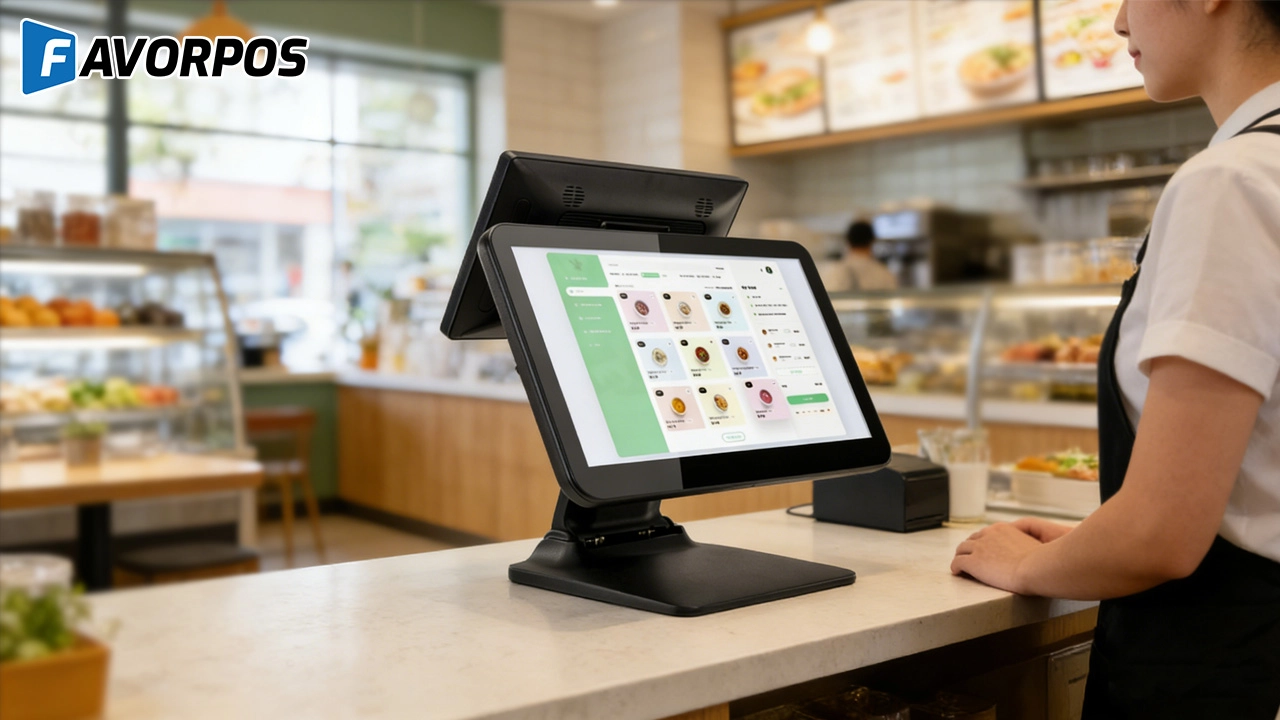
Beyond Checkout: How a 15.6-Inch Aluminum POS System Redefines Retail Efficiency
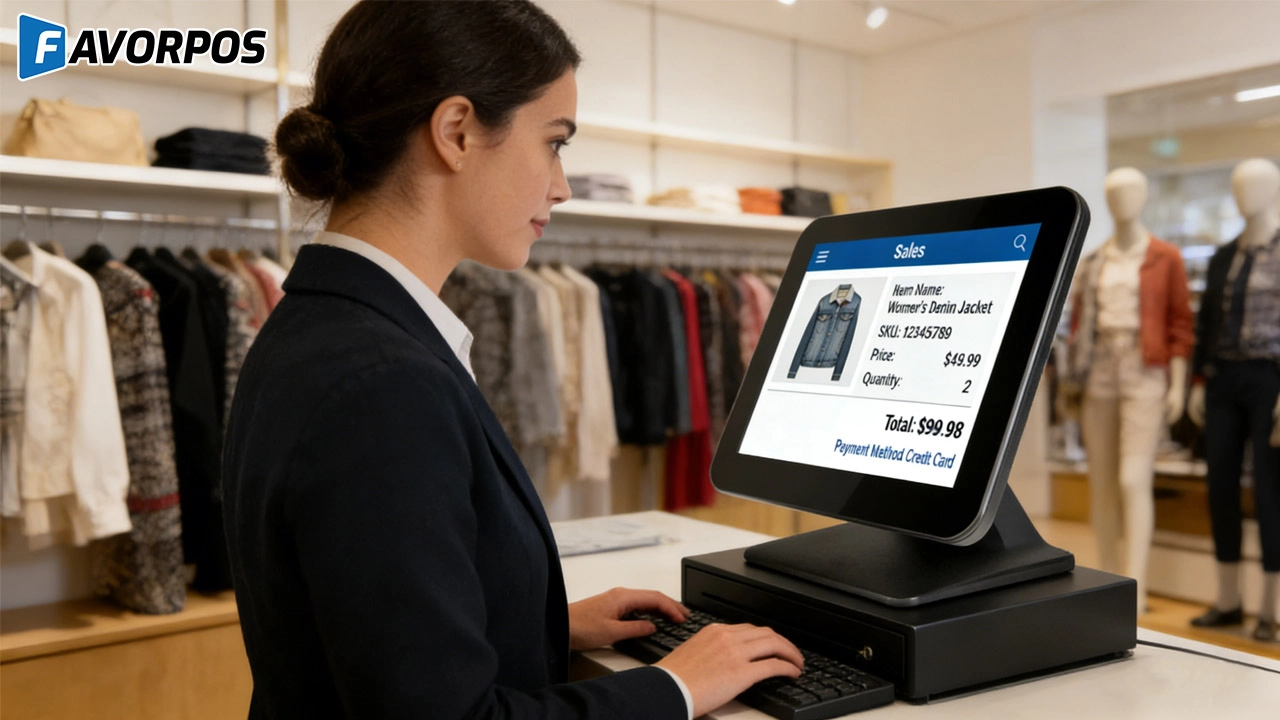
Understanding 15-Inch Aluminum POS Terminals in Modern Commercial Use
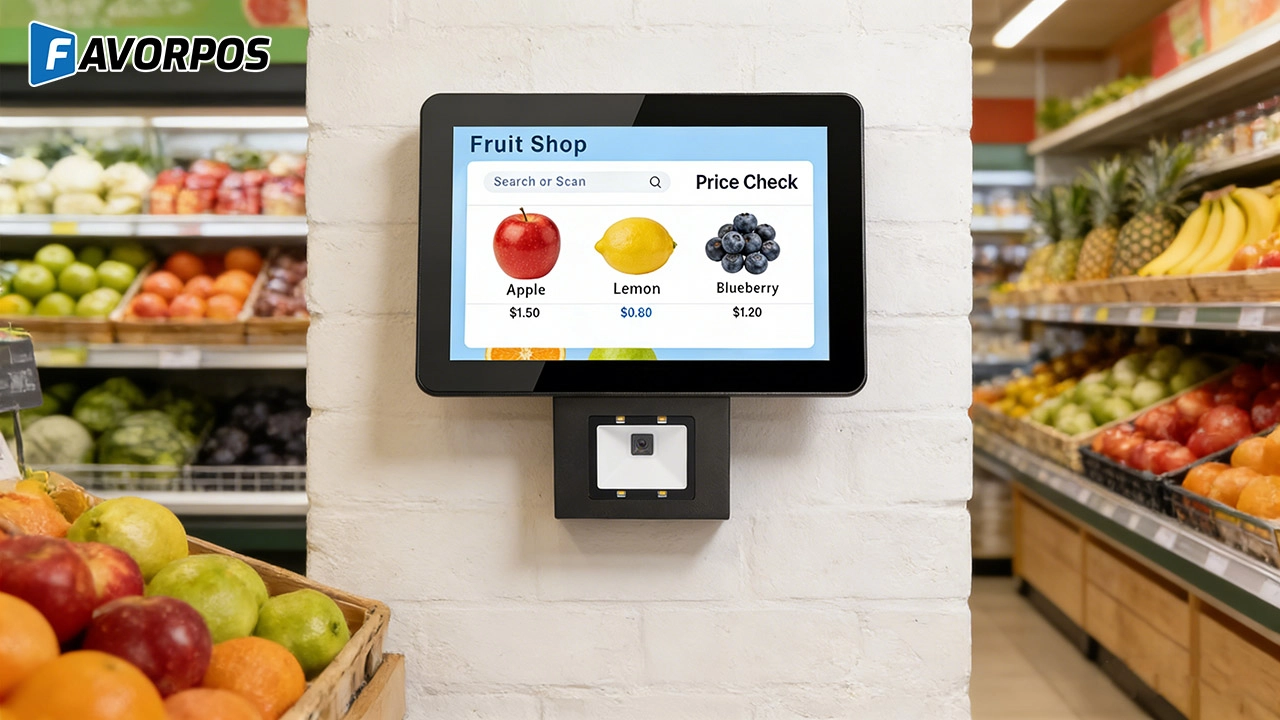
The Smart Way to Check Prices: How a 10.1-Inch Wall-Mounted Price Checker Transforms Retail Stores
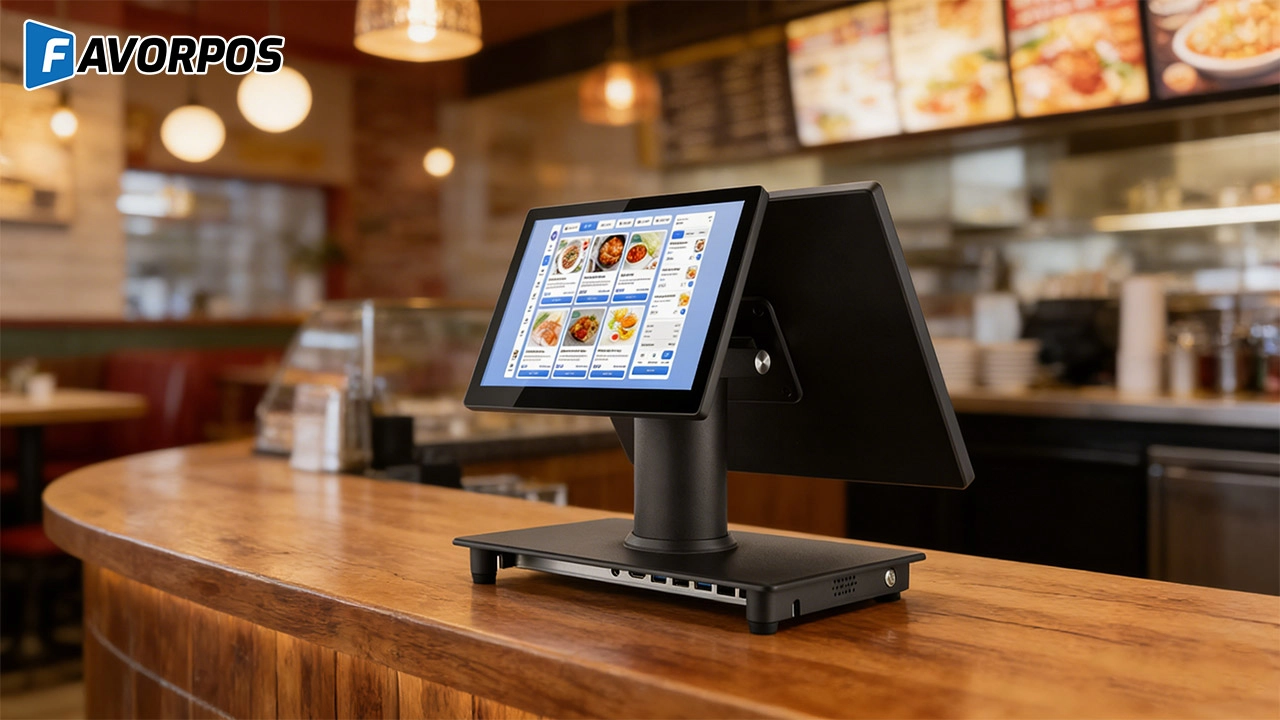
A Smarter Checkout Experience: The 15-Inch Dual-Screen POS Built for Modern Retail
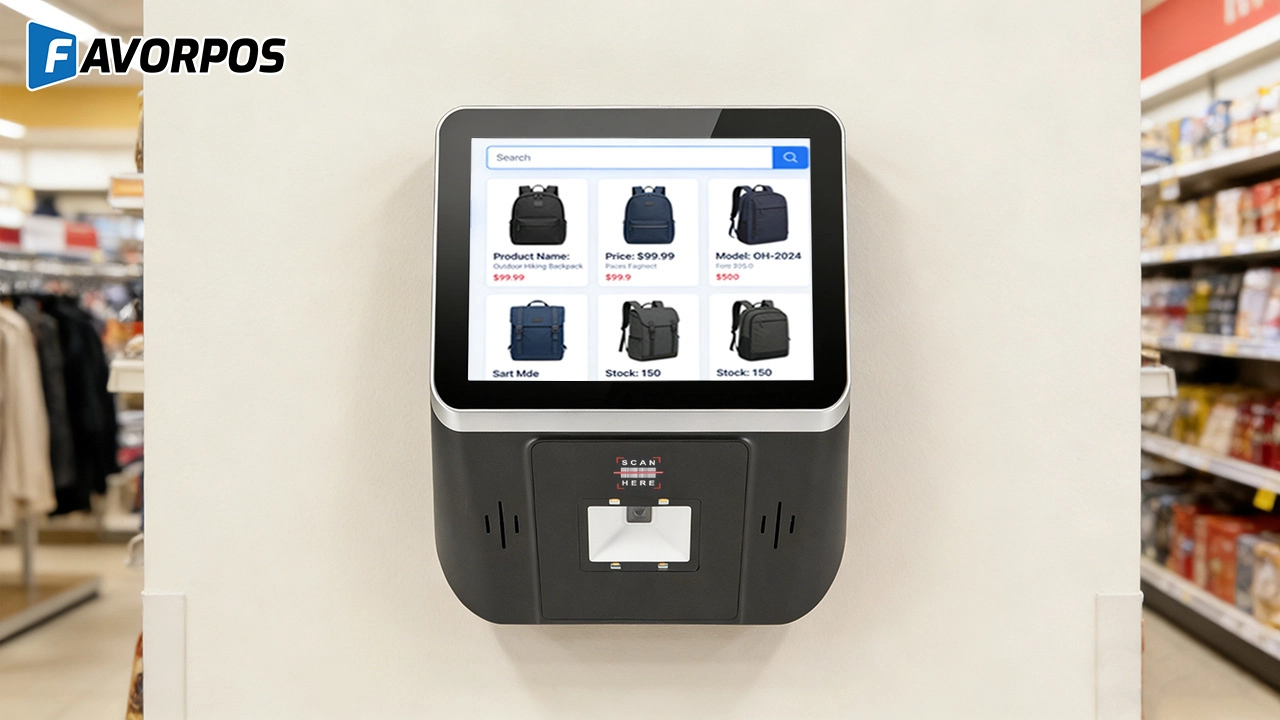
8-Inch Smart Price Checker: A Small Device Powering Smarter Retail Spaces
For ODM
Does ODM service provide product warranty and after-sales support?
Yes, we provide product warranty and after-sales support. Our technical support team can assist with any problems that arise after production and provide maintenance and repair services to ensure the long-term use of the product.
Can we provide our own designs?
Of course. We welcome customers to provide their own design concepts and specifications. Our design team will work with you to ensure that your design is implemented in the manufacturing process and make necessary optimizations.
For Beauty and Wellness
What support is provided after the system is deployed?
We provide 24/7 technical support and regular hardware maintenance to ensure that the system continues to operate efficiently.
For Hotels
What types of reports can I generate through your POS system?
You can generate detailed real-time reports on sales, guest spending patterns, department performance, and more.
For Entertainment & Events
Does the system support the management of multiple venues or locations?
Yes, our system supports multi-location management, allowing you to monitor and manage sales and inventory for all venues from a centralized dashboard.
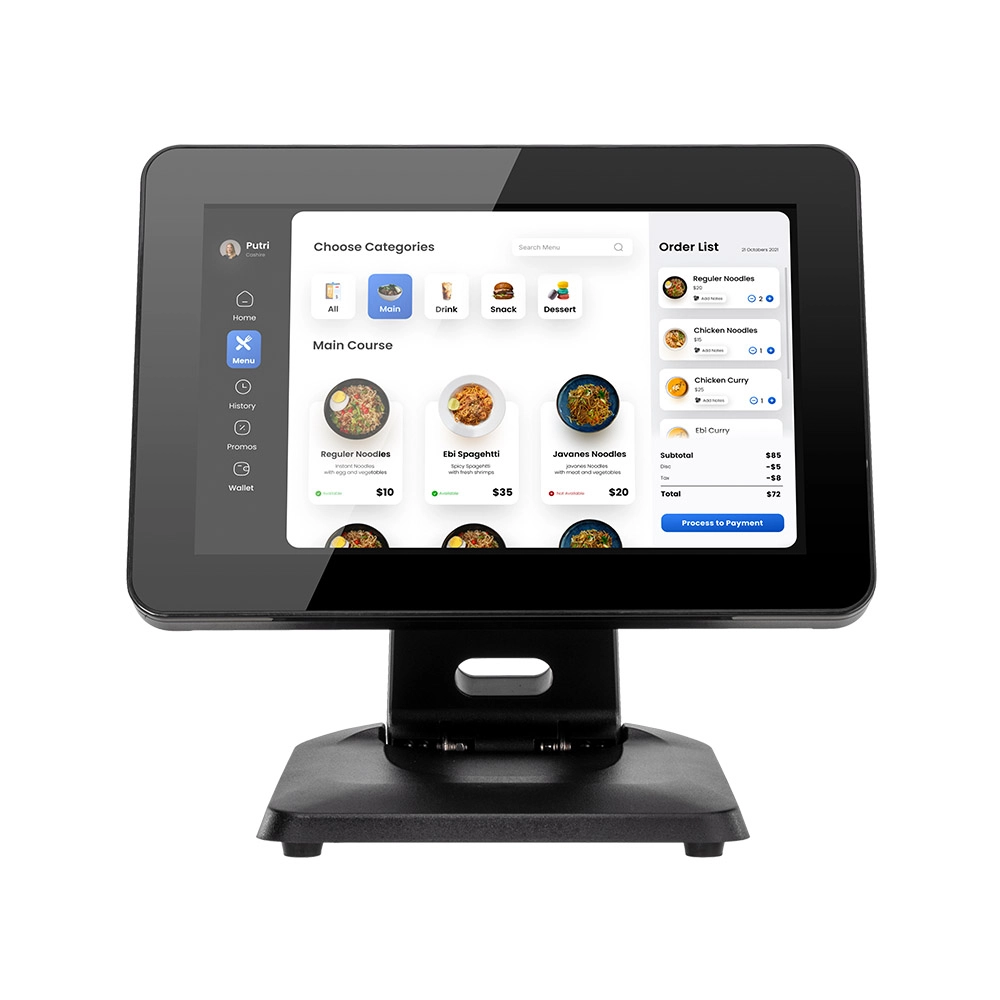
Desktop Touch Screen POS Systems 12.1'' Android Windows Manufacturer
Our Desktop Touch Screen POS Systems feature a 12.1'' display, supporting both Android and Windows platforms. Engineered for high performance. The intuitive touch interface simplifies transactions and enhances customer engagement. With a sleek design and robust construction, our POS systems are perfect for businesses looking to improve efficiency and elevate the shopping experience.
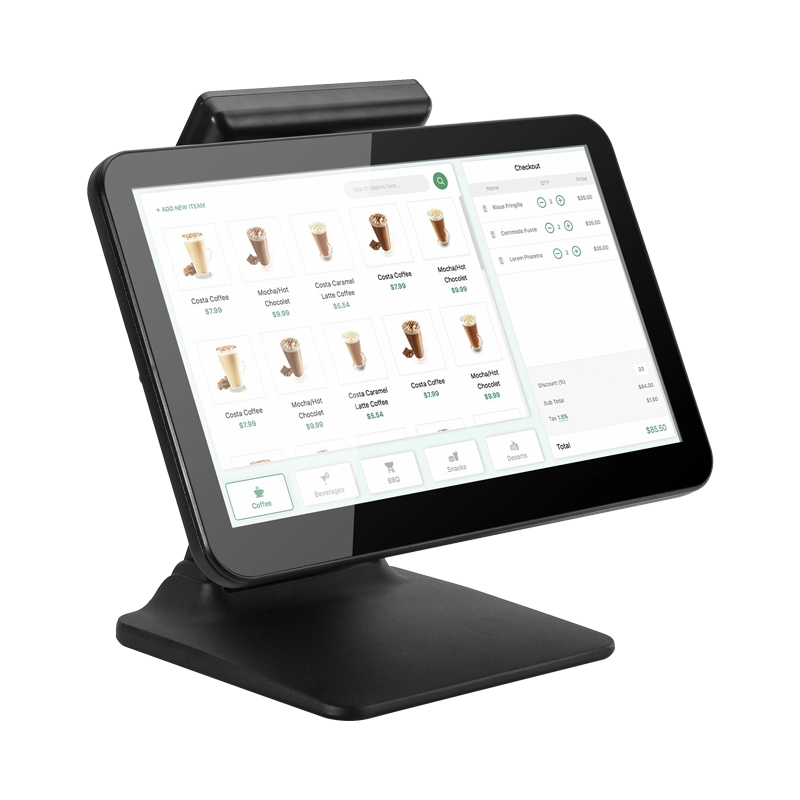
15.6 Inch Windows POS Terminal with VFD Display, Foldable Aluminum Stand Touch Screen POS for Retail & Hospitality
This 15.6-inch POS terminal is built to meet the needs of modern retail and hospitality environments. Powered by a stable Windows operating system, it ensures smooth performance for various point-of-sale applications. The device features a crisp, responsive touch screen and a built-in VFD customer display, allowing customers to view transaction details clearly. Its aluminum alloy stand offers a sleek, professional appearance while providing enhanced durability and stability for busy checkout counters. Ideal for retail stores, restaurants, and service-based businesses, this POS machine delivers a reliable and customer-friendly checkout experience.
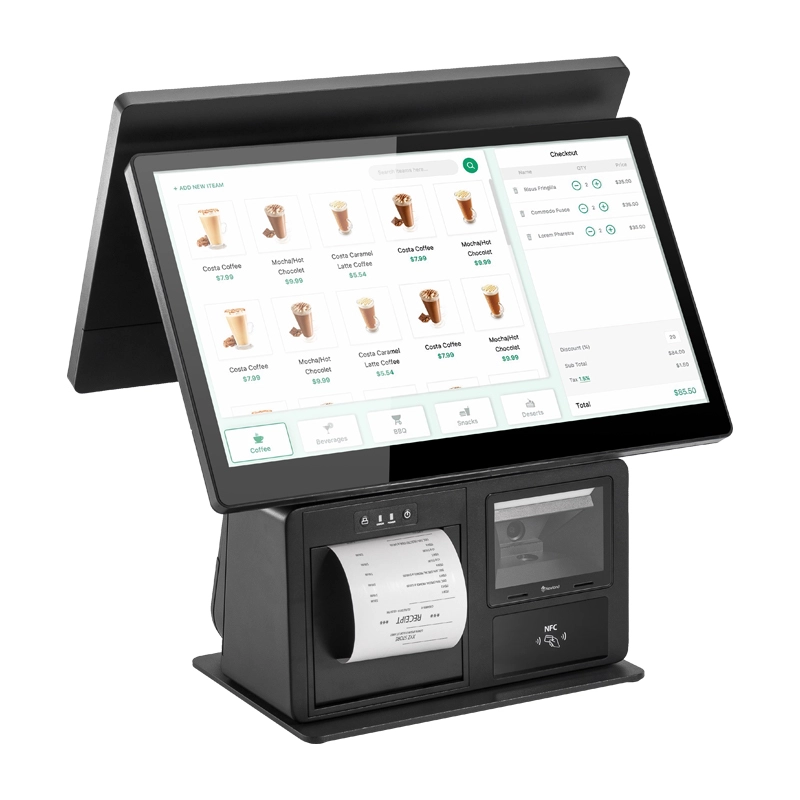
Point of Sale System with Thermal Printer All in One Pos Dual Touchscreen Pos with Barcode Scanner Supplier
FAVORPOS presents the all-in-one Point of Sale System with Thermal Printer, featuring dual touchscreens and an integrated barcode scanner. As a leading POS with NFC factory and barcode scanner supplier, we deliver reliable, efficient solutions tailored for your business needs.
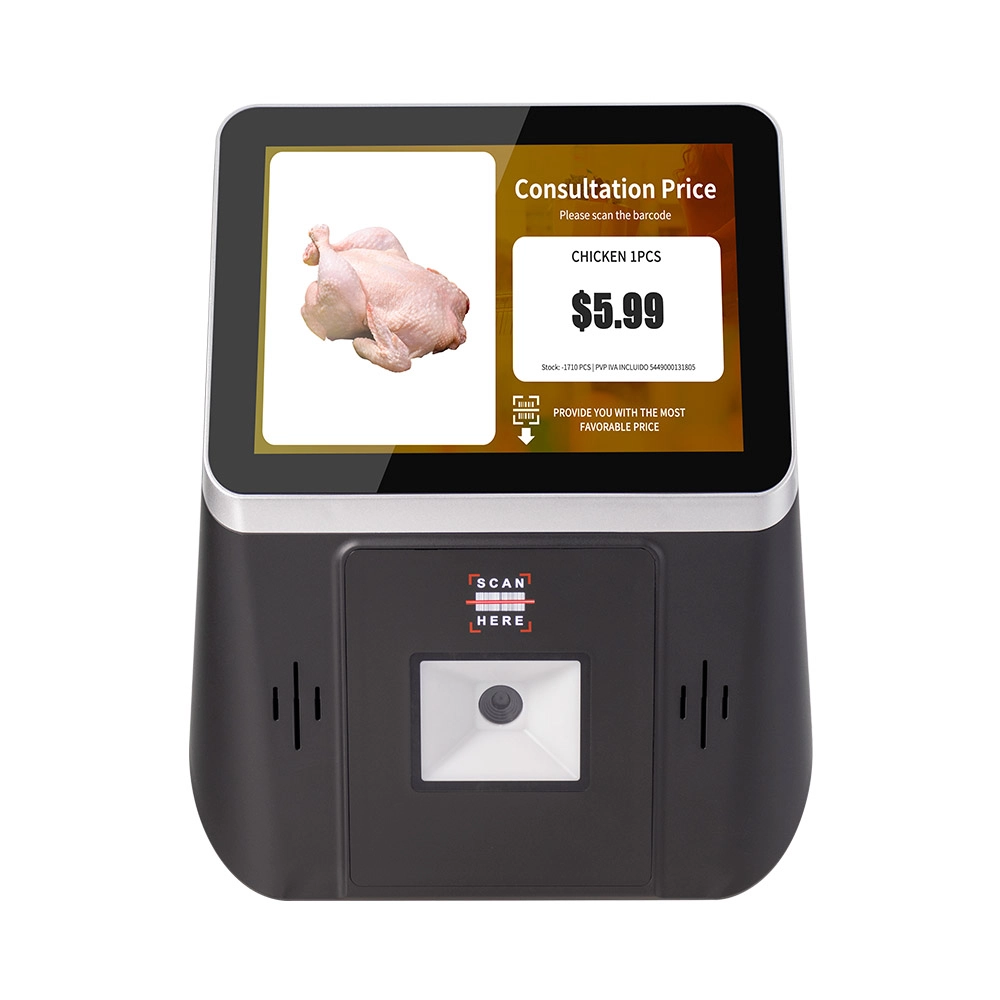
8 inch Wall Mount Price Checker with Scanner Android Windows Factory
Our 8-inch Wall Mount Price Checker is designed for optimal convenience in retail spaces, featuring a sleek design that fits seamlessly into any environment. Compatible with both Android and Windows, this unit includes an integrated scanner for quick and accurate price checks. Its wall-mounted design saves counter space while providing easy access for customers. Ideal for enhancing efficiency and improving the shopping experience.
Get in touch
Interested in becoming a POS system dealer? Contact us for more information and start the process of joining our dealer network.
We look forward to working with you to expand the market together.


Copyright © 2025 Favorpos All Rights Reserved.
