
Cloud vs on-premise POS: which is best for gas stations?
- 1) How does pay-at-pump EMV transaction flow work with a cloud POS during intermittent internet outages, and how do I avoid chargebacks?
- 2) What hidden recurring costs should I expect when choosing cloud POS for a multi-site gas station chain vs on-premise?
- 3) For a gas station using an on-premise POS plus third-party forecourt controllers, who is responsible for PCI DSS and EMV compliance, and what paperwork/trust boundaries must be established?
- 4) How can I reliably reconcile fuel inventory discrepancies between dispenser telemetry (meter totals) and POS sales, and what thresholds indicate theft or system error?
- 5) What disaster recovery and downtime mitigation strategies should a gas station deploy for on-premise POS to keep forecourt operations running and limit lost sales?
- 6) If I'm adding EV chargers and advanced loyalty programs, which POS architecture (cloud vs on-premise) is better for future-proof extensibility and third-party integrations?
As POS specialists with experience in forecourt integration, EMV/pay-at-pump and multi-site retail operations, this guide answers 6 specific buyer questions often missing in online resources. The recommendations reflect industry best practices and technical constraints from forecourt controller vendors, PCI standards, and fuel-retail telemetry systems through 2024. For a custom quote and system design, contact us at sales2@wllpos.com or visit www.favorpos.com.
1) How does pay-at-pump EMV transaction flow work with a cloud POS during intermittent internet outages, and how do I avoid chargebacks?
Why this matters: Gas stations rely on continuous forecourt payments. Network outages create exposure to unpaid fuel, customer disputes and card brand chargebacks.
How it works: In a robust architecture, the dispenser communicates with a forecourt controller which in turn interfaces with the POS and payment gateway. For EMV pay-at-pump, the terminal or pump head performs card authentication and PIN capture where required; tokenization or point-to-point encryption (P2PE) secures card data before it traverses your network. With a cloud POS, the payment authorization request goes to the gateway, then to the card networks. If connectivity to the cloud is lost, store-and-forward and local authorization caching are the two mitigation patterns.
Recommended configuration and best practices:
- Use a certified P2PE solution and EMV-ready pump terminals from established vendors (e.g., Gilbarco, Wayne, Tokheim) to ensure data encryption at the point of interaction.
- Implement an on-site edge controller or POS appliance that can do local authorizations against tokenized credentials, queue encrypted transactions, and hold them until the cloud/gateway link is restored. This reduces exposure relative to a pure cloud-only terminal that cannot operate offline.
- Maintain an LTE/secondary WAN path (automatic failover) for forecourt communications. Cellular backup reduces outage duration and the need for offline fueling modes.
- Set strict offline fueling limits: configure pump amounts and time windows for manual or offline modes. For pay-at-pump, limit offline approvals or disable them entirely to reduce fraud risk.
- Log and timestamp all local authorizations, store cryptographic proof (e.g., token IDs, E2E logs), and reconcile with gateway batches to defend against chargebacks. Regularly test the store-and-forward mechanism.
Tradeoffs: A cloud POS with a hardened edge device gives the agility of remote management plus local resiliency. Pure cloud without edge caching is cheaper but exposes you to higher risk during outages; pure on-premise can continue local processing but lacks central reporting and remote updates.
2) What hidden recurring costs should I expect when choosing cloud POS for a multi-site gas station chain vs on-premise?
Why this matters: Initial hardware costs often obscure long-term operating expenses that determine TCO and ROI.
Common recurring costs for cloud POS:
- Monthly SaaS subscription per site or per terminal (license tiers for back-office analytics, loyalty, and API access).
- Payment gateway and tokenization fees (per-transaction fees, gateway monthly minimums, chargeback handling fees).
- Connectivity costs: primary broadband + cellular failover, static IPs, VPN services for secure forecourt links.
- API call or integration fees for third-party services (loyalty platforms, ATG/ATG telemetry feeds, fuel pricing services).
- Remote key injection (RKI) and EMV/PCI re-certification services—often charged annually or per event.
- Support and SLA tiers: 24/7 phone support, on-site technician visits, remote monitoring subscriptions.
- Data retention and reporting: charges for long-term cloud storage, backup retention, and advanced analytics modules.
Common recurring costs for on-premise POS:
- Higher upfront CAPEX for servers, redundant appliances and specialized forecourt controllers, but reduced monthly SaaS fees.
- Ongoing IT labor for patching, backups, database administration, and site visits — often underestimated for multi-site operations.
- Hardware maintenance contracts, spare parts inventory, and local backup connectivity (still recommended).
- Payment gateway fees remain; however, some processing or routing choices may be cheaper if negotiated at scale.
How to compare properly:
- Calculate three- to five-year TCO including SaaS, connectivity, payment processing, on-site support, and scheduled hardware refresh cycles.
- Include soft costs: lost sales during downtime, administrative overhead for reconciliation and manual reporting, and compliance costs (PCI audits are required regardless of architecture).
- Ask vendors for transparent itemized quotes: include per-terminal, per-site, per-API call, and support SLA pricing. Negotiate volume discounts for chains.
3) For a gas station using an on-premise POS plus third-party forecourt controllers, who is responsible for PCI DSS and EMV compliance, and what paperwork/trust boundaries must be established?
Why this matters: Misunderstanding responsibility domains causes failed audits and fines.
Responsibility model:
- Cardholder data environment (CDE) boundaries must be documented. If your on-premise POS or forecourt controller processes, stores, or transmits card data, your station is in scope for PCI DSS.
- If the dispenser or pump head encrypts card data using P2PE and the flow sends only tokens to the POS, your scope is reduced, but you must maintain evidence of vendor P2PE certification and proper RKI practices.
- Payment processors and gateway providers are responsible for their service compliance, but you must maintain a shared responsibility matrix and obtain Attestation of Compliance (AoC) or relevant certificates from them.
Practical steps and paperwork:
- Define and document an architecture diagram showing all points where card data is captured, transmitted, or stored: pump head, forecourt controller, POS, gateway, backup devices.
- Request vendor PCI documentation: P2PE AoC, EMV terminal certification, SAQ guidance (e.g., SAQ A, SAQ B-IP, SAQ P2PE) for your deployment. Choose the SAQ that matches your data flow and environment.
- Ensure the forecourt controller vendor supports secure RKI and can provide key custodianship logs; require annual re-certification and key rotation policies in contracts.
- Implement network segmentation: separate CDE VLANs, strict firewall rules, IDS/IPS, and encrypted tunnels to cloud services. Maintain logs with tamper-evident storage for incident response.
- Perform regular vulnerability scanning and penetration tests; document remediation timelines and responsibilities in your contracts and internal policy.
Conclusion: Responsibility is shared. Obtain vendor certificates, map your CDE, and use P2PE and tokenization to reduce scope. If you cannot validate vendor claims with official AoCs and evidence, treat the environment as fully in-scope and prepare to meet the full PCI DSS control set.
4) How can I reliably reconcile fuel inventory discrepancies between dispenser telemetry (meter totals) and POS sales, and what thresholds indicate theft or system error?
Why this matters: Fuel shrink is costly. Reconciling meter totals, ATG (automatic tank gauging) reports and POS sales is critical to identify leaks, theft, meter drift or configuration errors.
Reconciliation workflow and best practices:
- Collect three independent data sources: POS sales (by pump and grade), forecourt dispenser meter totals, and ATG tank volume readings. Time-sync all systems to a single NTP server to avoid mismatched intervals.
- Automate daily reconciliation by shift and by pump: match meter gallons to POS gallons sold. Use gross margin thresholds (e.g., typical authorized variance ±0.25%–0.5% depending on local conditions) to trigger investigations. Note: exact thresholds depend on activity level, typical calibration drift, and calibration intervals — consult your ATG vendor for baseline tolerances.
- Investigate variance patterns: per-pump consistent variance suggests calibration/meter issues; random short bursts suggest skimming or fraud; steady increase suggests tank leak or measuring error.
- Use pump-level event logs and CCTV correlation to validate suspicious transactions. Combine forecourt logs with EMV transaction tokens to confirm the card used at a time correlates to pump activity.
- Schedule regular meter calibrations and ATG probes per manufacturer guidance; retain calibration certificates and build them into your reconciliation audit trail.
Advanced techniques:
- Integrate POS and ATG data in near real-time and implement anomaly detection (threshold and machine-learning approaches) to flag unusual shrink patterns across sites.
- Use tamper-evident device management (signed firmware, secure boot, and signed configuration files) on forecourt controllers to reduce the risk of fraudulent meter manipulation.
5) What disaster recovery and downtime mitigation strategies should a gas station deploy for on-premise POS to keep forecourt operations running and limit lost sales?
Why this matters: Fuel sales are time-sensitive and per-minute revenue loss compounds quickly. On-premise systems must plan for power, hardware failure and data integrity.
Key strategies:
- Redundant edge hardware: deploy dual POS appliances or a clustered on-site server with automatic failover. Use RAID for disk redundancy and replicate the database to a local hot-spare.
- Uninterruptible power supplies (UPS) and generator support for critical components: forecourt controller, POS edge node, pump network switches and wireless gateways to allow orderly shutdowns or continued operation.
- Implement a read-only local mode that allows pump authorizations to continue using cached tokenization keys or pre-authorized session logic; ensure logs are persisted and synced when connectivity resumes.
- Maintain a well-documented runbook and emergency access credentials for staff: manual pump-start procedures, reconciliation steps, batch upload instructions for queued transactions and contact lists for vendor escalation.
- Automated off-site backups (encrypted) with a tested restore procedure. Test recovery quarterly and after major changes to ensure RTO/RPO objectives are met.
Testing and SLAs:
- Define and test your Recovery Time Objective (RTO) and Recovery Point Objective (RPO). For busy sites, aim for minutes of RTO and RPO measured in seconds or single-digit minutes for transactions.
- Ensure vendor support SLAs cover after-hours incidents and on-site dispatch if necessary. Maintain spare terminals and replacement modules on-site for quick swaps.
6) If I'm adding EV chargers and advanced loyalty programs, which POS architecture (cloud vs on-premise) is better for future-proof extensibility and third-party integrations?
Why this matters: EV charging, digital payments and loyalty demand flexible integrations and dynamic pricing that push the limits of legacy systems.
Cloud advantages for extensibility:
- APIs and webhooks: cloud POS vendors typically expose standardized REST APIs and event webhooks for real-time integration with EV charging platforms, loyalty engines, and mobile apps.
- Scale and feature delivery: cloud platforms can roll out loyalty, coupons, dynamic pricing and data analytics centrally; updates propagate instantly across sites.
- Centralized data: cross-site behavioral analytics (fuel vs EV charging patterns) and centralized loyalty balances are easier to manage in the cloud.
On-premise considerations and hybrid approach:
- Latency-sensitive functions (local authorization of EV sessions or pump starts) may require edge logic. Even in cloud-first architectures, deploy an edge gateway or containerized microservice to maintain low-latency control paths.
- Hybrid (cloud control plane + edge data plane) is often the best compromise: the cloud handles orchestration, loyalty, billing, and analytics; the edge handles immediate forecourt or charger authorization and caching.
- Ensure the POS or edge platform supports SDKs and plugin architectures so EV provider integrations and loyalty providers can be added without expensive custom engineering.
Recommendation: For future-proofing, choose a cloud-native POS with strong, documented APIs and a hardened edge/bridge appliance for local control. Validate vendor integration partners for EV charging and loyalty; require sandbox access and integration support in your contract.
Concluding summary of advantages of cloud and on-premise POS for gas stations
Cloud POS systems offer centralized management, rapid feature delivery, advanced analytics, and easier API-based integrations for EV charging and loyalty programs. On-premise solutions give lower latency for local authorization, potentially lower ongoing SaaS fees, and complete local control of data and operations. The optimal deployment for most modern fuel retailers is a hybrid model: cloud-based orchestration and reporting with an edge appliance that provides secure pay-at-pump handling, offline resilience, and local failover. This approach balances the security and compliance needs (EMV, PCI DSS, P2PE), the operational resilience required for forecourt commerce, and the extensibility needed for EV and loyalty growth.
For a tailored architecture review and a quote for gas station POS systems and forecourt integration, contact us at sales2@wllpos.com or visit www.favorpos.com.
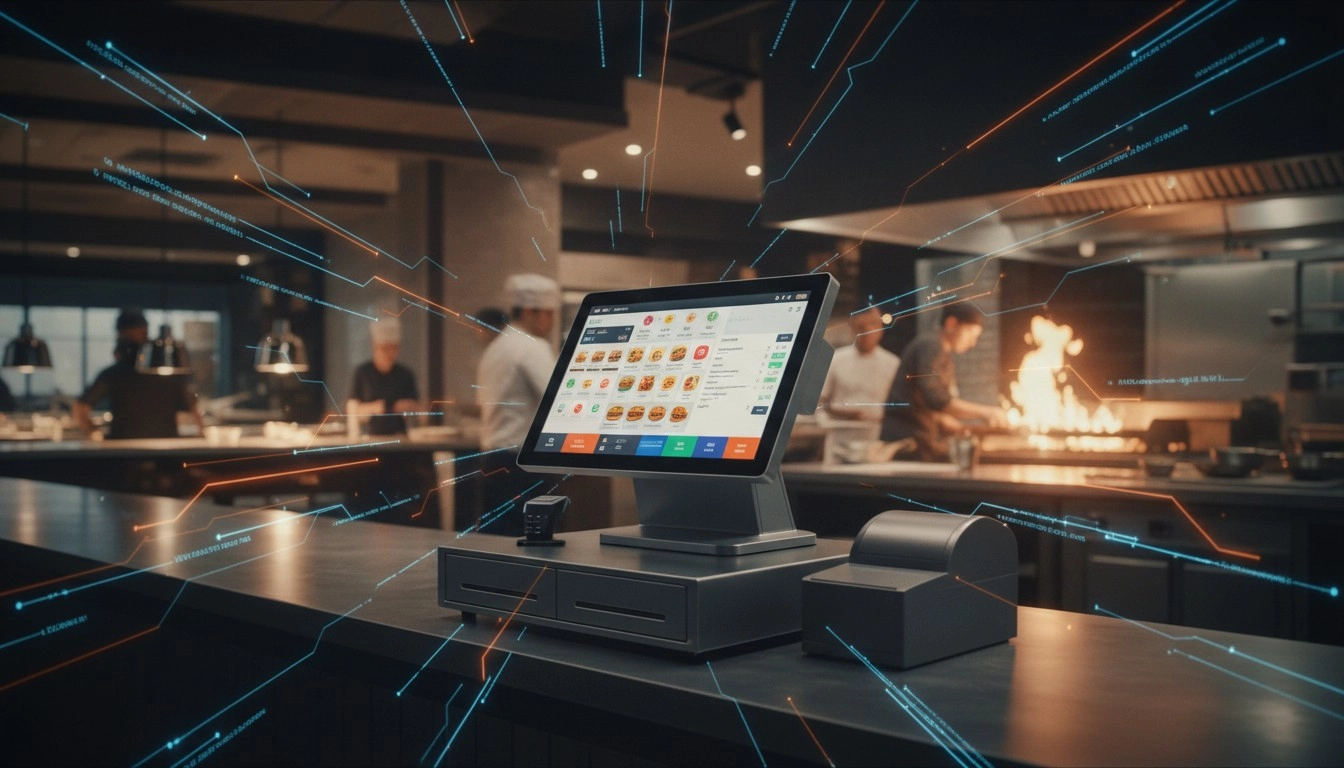
High-Traffic Restaurant POS Hardware: Touchscreens Built for Spills and Speed
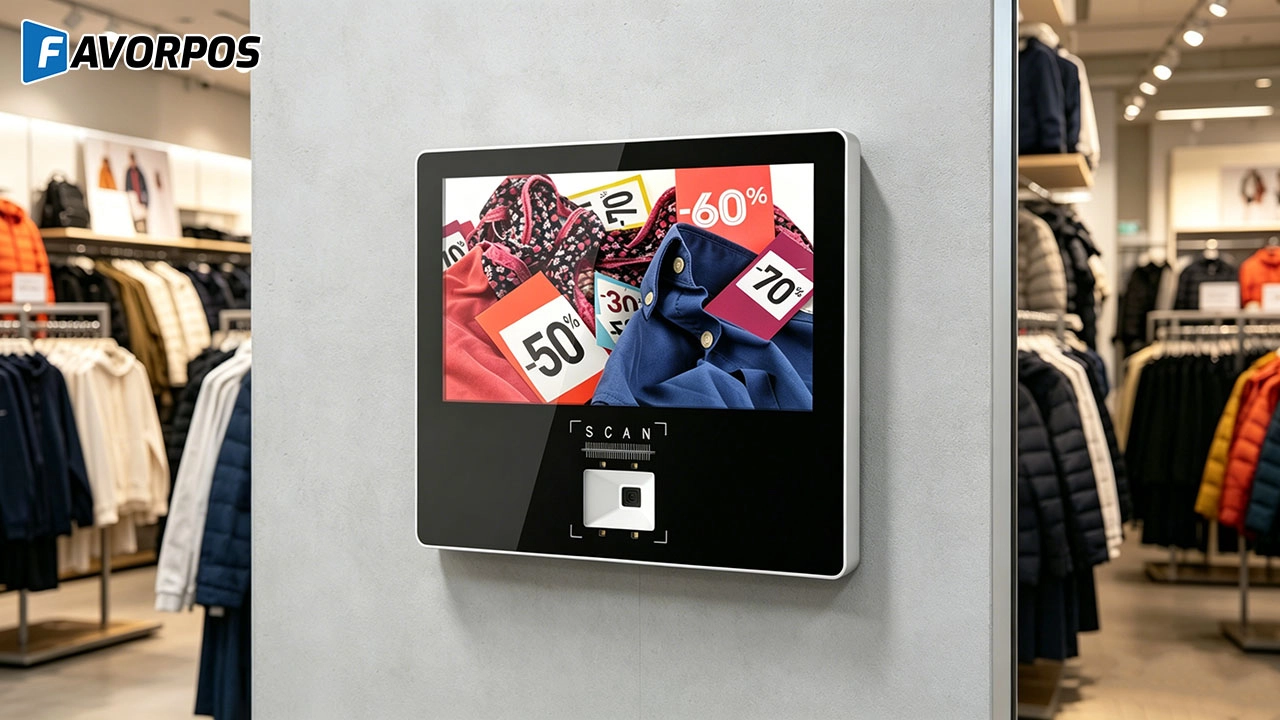
Why Smart Retail Starts with a Screen: The Hidden Power of an 11.6” Wall-Mounted Price Checker
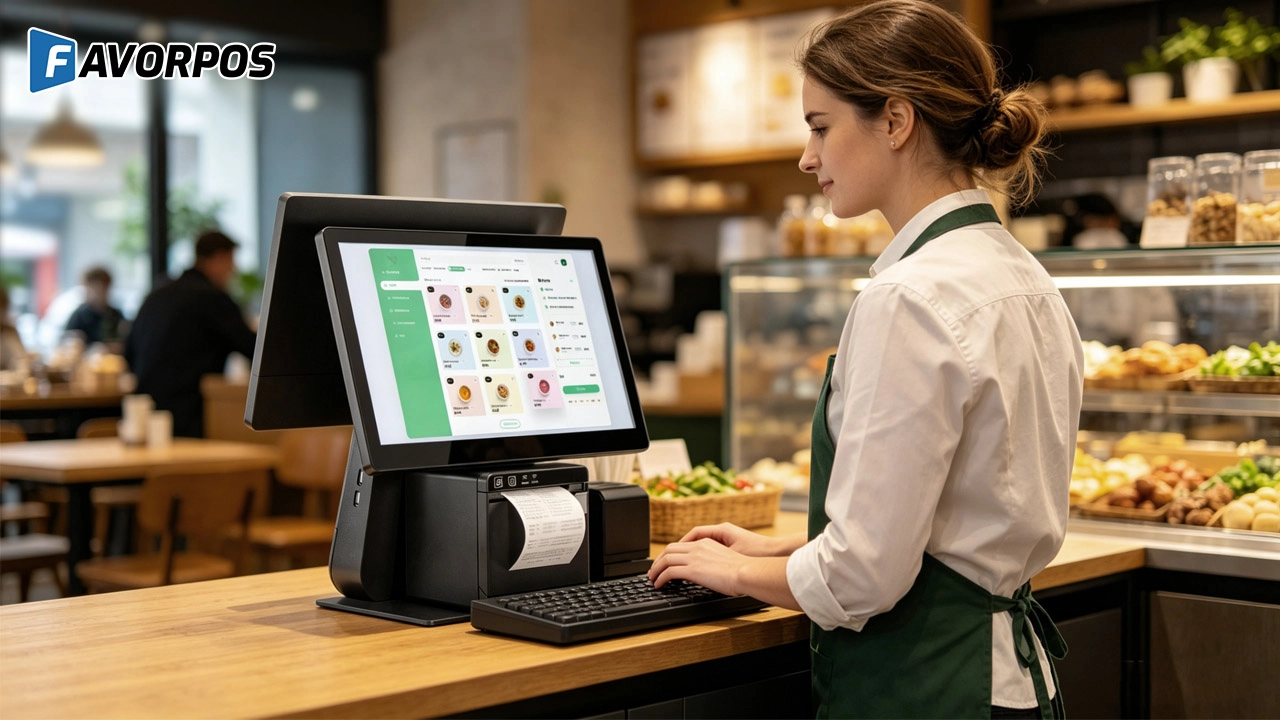
Smart Checkout, Simplified: Exploring the Power of a 15.6-Inch All-in-One POS Terminal
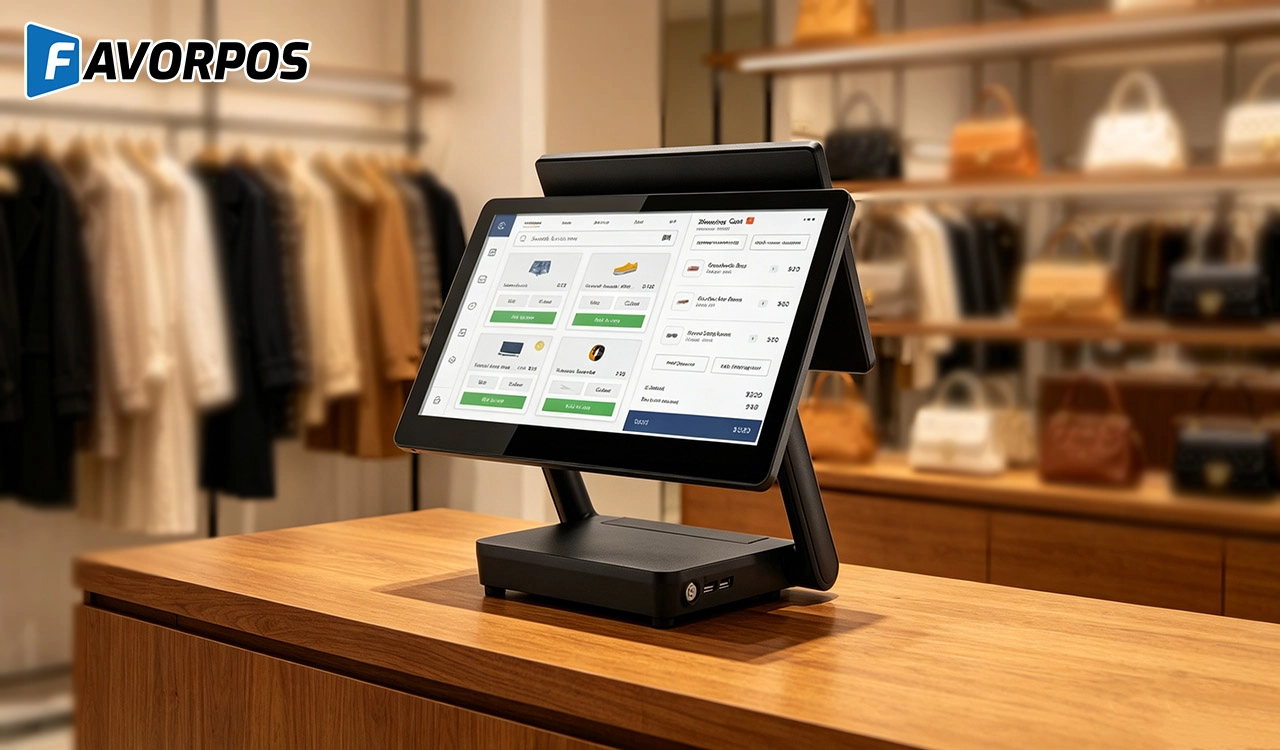
Why a 15.6” Touch POS Terminal Is Becoming the New Standard in High-Traffic Retail
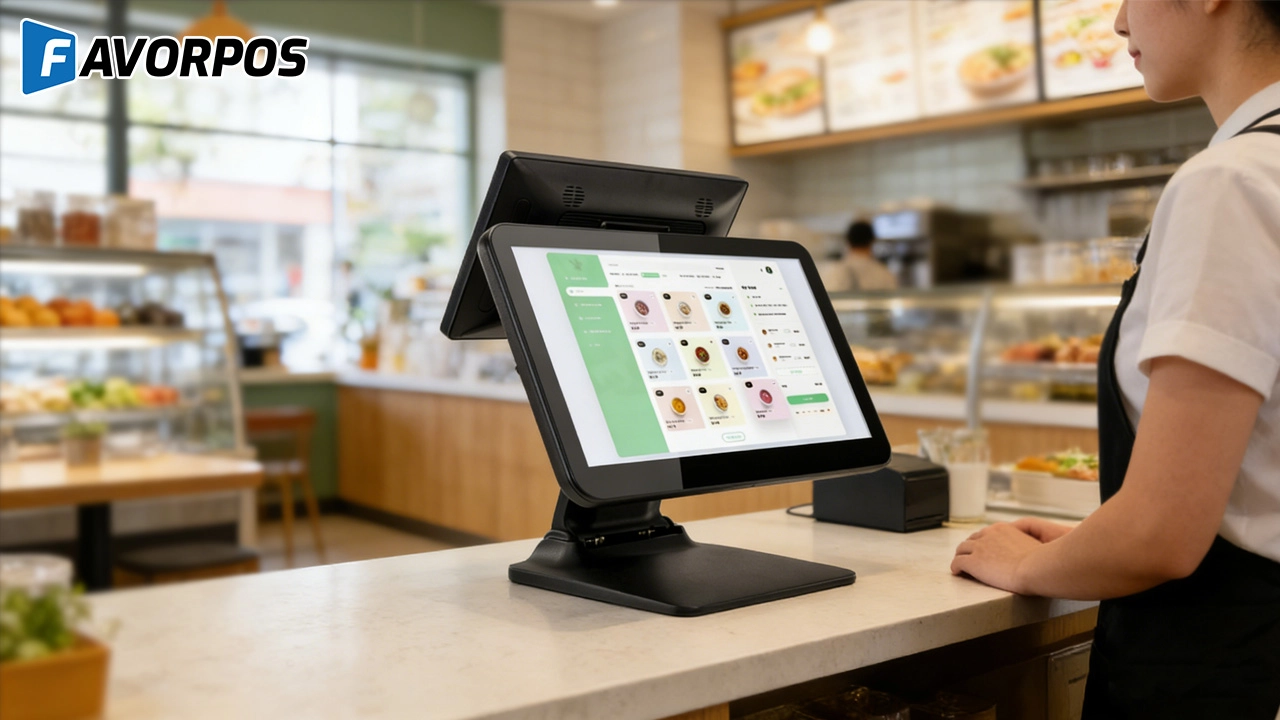
Beyond Checkout: How a 15.6-Inch Aluminum POS System Redefines Retail Efficiency
For OEM
How long is the delivery time for customizing POS machines?
The delivery time depends on the complexity of the order and the production scale. Generally speaking, the whole process from confirming the design to delivery may take 6 to 12 weeks. We will provide a detailed delivery schedule at the beginning of the project and try our best to meet your time requirements.
How do we start customizing POS machines?
To start customizing POS machines, please first contact our sales team with your needs and specifications. We will arrange a detailed consultation to understand your specific requirements and provide a design plan and quotation.
For Grocery and Supermarkets
Can I manage multiple stores with your POS system?
Yes, our POS solution provides multi-store management capabilities, allowing you to control pricing, inventory, and promotions for all stores from a single platform.
For Hotels
Does your POS system support room service billing?
Absolutely, our system allows guests to charge services such as food and beverage, spa treatments, etc. directly to the room account, and all charges will be settled at the time of checkout.
For E-commerce
Is your POS solution scalable to accommodate business growth?
Yes, our POS system is designed to be scalable, and you can easily add new sales channels, locations, and features to accommodate business growth.

Factory Smart 4 inch Mobile PDA Data Collector with Keyboard
Our Factory Smart 4-Inch Mobile PDA Data Collector is equipped with a convenient keyboard for easy data entry. This compact device is designed for efficient inventory management and logistics operations, offering robust performance in a lightweight design. With a bright display and user-friendly interface, it allows for quick access to essential data on the go. Its durable construction ensures reliability in demanding environments, making it an ideal choice for retail, warehousing, and field operations.

11.6 inch Capacitive Touchscreen for POS Machine POS Monitor
FAVORPOS 11.6-inch capacitive touchscreen, specifically designed for POS machines to deliver a seamless and responsive user experience. This high-definition display offers vibrant visuals and crystal clear clarity, making it easy for staff to navigate through transactions efficiently. The capacitive technology ensures quick and accurate touch recognition, reducing wait times and enhancing customer satisfaction. Built to withstand the rigors of daily use, this touchscreen is perfect for retail and hospitality environments.
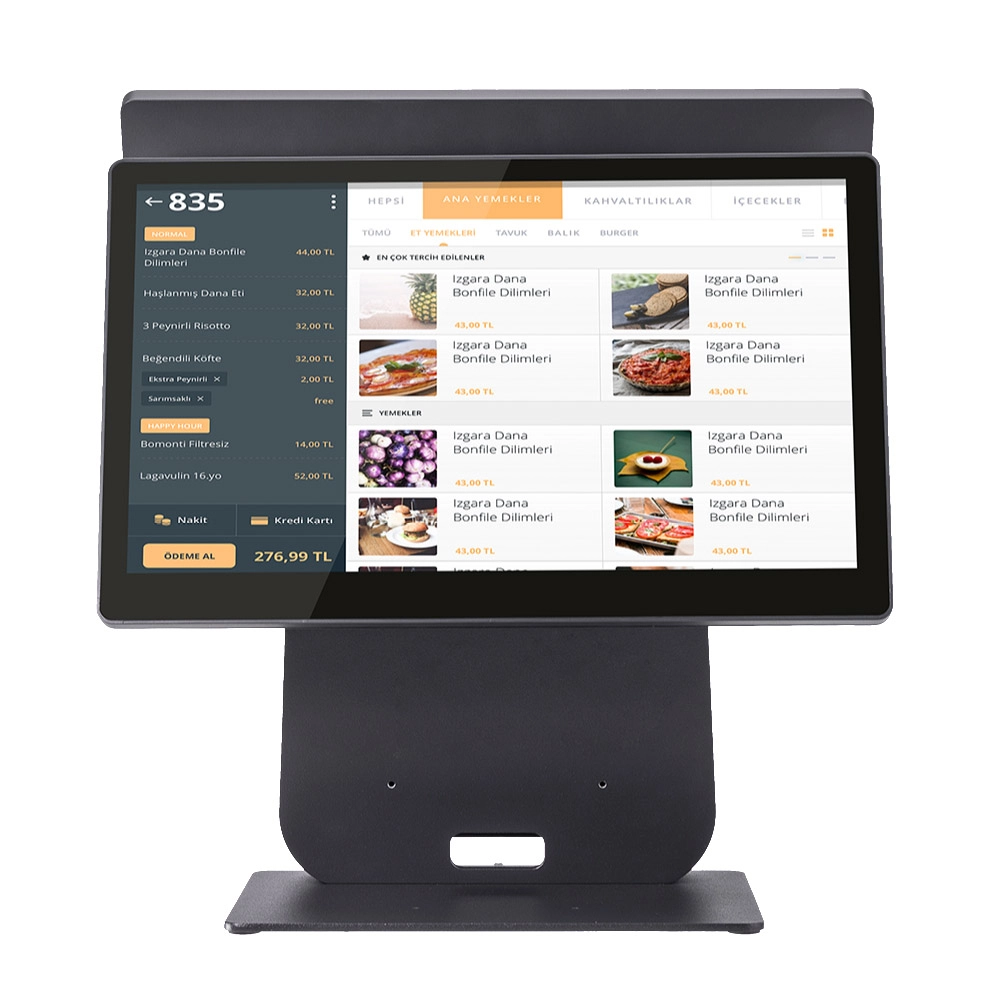
HD Dual Screen POS Machine Aluminum Hardware Android Windows Supplier
This dual-screen POS machine supports both Android and Windows systems, providing flexibility for various applications. The dual screens enhance customer interaction and streamline the checkout process, making transactions quicker and more engaging. Perfect for modern businesses looking to elevate their service and improve customer satisfaction, this POS machine is your ultimate partner in success!
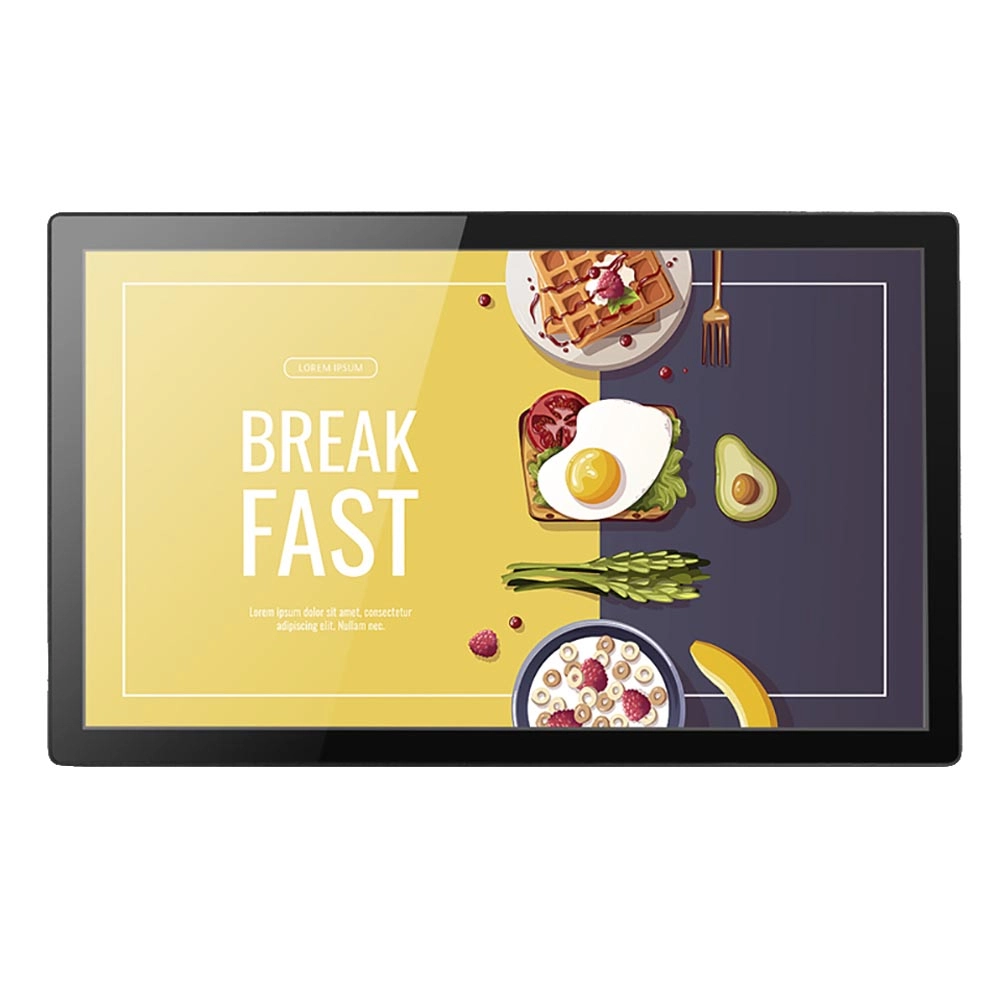
Wall Mount Cash Register POS 21.5 inch for Supermarket Touchscreen Windows Factory
Our sleek and modern wall-mounted POS system features a stunning 21.5-inch LED display, providing exceptional visibility and clarity for seamless customer interactions. The capacitive touchscreen ensures a highly responsive and intuitive user experience, perfect for fast-paced retail environments. With its space-saving wall-mounted design, this POS solution is ideal for optimizing floor space while maintaining a professional and contemporary appearance.
Get in touch
Interested in becoming a POS system dealer? Contact us for more information and start the process of joining our dealer network.
We look forward to working with you to expand the market together.


Copyright © 2025 Favorpos All Rights Reserved.
